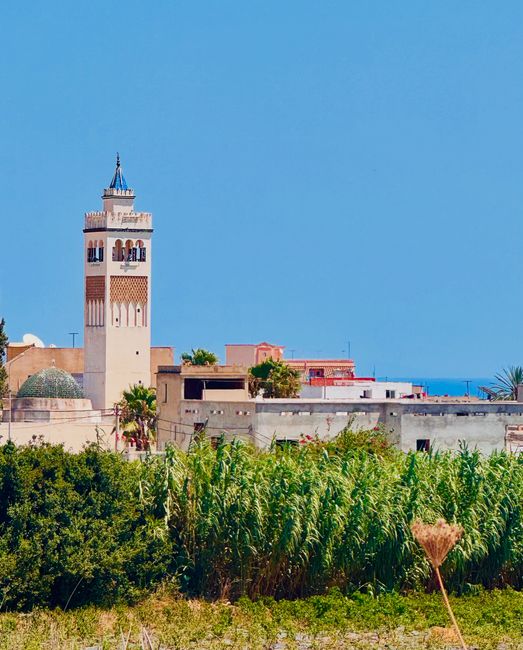
Hammamet, on the Gulf of Hammamet at the base of the Cap Bon peninsula, about an hour southeast of Tunis, was Tunisia’s first beach resort and is still one of its most popular. Long before the hotels arrived, artists and writers came here for the light, the jasmine-scented gardens and the small walled medina that rises straight out of the sea, with its kasbah, whitewashed houses and blue doors. Today the town has two faces. Old Hammamet spreads along the bay around the medina, with low-rise hotels set in gardens among orange and lemon groves, the International Cultural Center in a villa by the sea and fish restaurants on the beach. To the south, Yasmine Hammamet is a modern purpose-built resort with a large marina, a recreated “medina” of shops and restaurants, a theme park and a long line of resort hotels on the sand. Between them, about 15 km (9 miles) of fine sandy beaches face the calm, shallow sea. Hammamet is known for thalassotherapy, golf and family holidays, and makes a good base for day trips to Tunis, Carthage and Sidi Bou Said, the pottery town of Nabeul and the Punic ruins of Kerkouane. About 100,000 people live in the wider Hammamet area. Hammamet has a mild Mediterranean climate: hot summers with average highs of about 32 °C (89–90 °F), and mild, wetter winters with average highs of about 16–17 °C (61–63 °F).
Right now in Hammamet
- Wed 20–28°C 67–83°F Partly cloudy
- Thu 21–31°C 70–88°F Partly cloudy
- Fri 21–24°C 70–75°F 3 mm Light rain
Weather: MET Norway (CC BY 4.0) · Sea temperature: NOAA CoastWatch
Top tours in Hammamet
See all tours for Hammamet →
From local operators, with prices and reviews; you check availability and book on Viator, our partner. We may earn a commission at no extra cost to you. How we earn money
Hammamet at a glance
- Best months: May, June, September and October, with warm weather and a warm sea; July and August are peak season; winter is mild and quiet.
- Time needed: two days for the medina, the kasbah and the beach; a week for a beach holiday with day trips to Tunis, Nabeul and Cap Bon.
- Getting there: Enfidha-Hammamet International Airport (NBE) is about 40–50 minutes south, and Tunis-Carthage about an hour north. Citizens of many countries can visit Tunisia for up to 90 days without a visa.
- Costs (as of October 2026): the Kasbah of Hammamet costs TND 8 (about US$2.70) and the Roman site of Pupput TND 5 (about US$1.70) for non-residents.
- Before you go: visas, the closed dinar, the hotel tax and laws are covered in our Tunisia travel guide.
Hammamet areas and who each one suits
The medina and town center
The compact walled medina by the sea and the streets around it have cafes, souvenir souqs, the fish market and a few small guesthouses. Lively in the evenings and the best base for walking and local restaurants.
Hammamet Nord
North of the center, older resort hotels sit in gardens along the beach toward Nabeul, with a quieter, greener feel. Good for couples and longer stays.
Hammamet Sud
The long stretch south of the medina toward Yasmine, with resort hotels on the beach, the International Cultural Center and thalasso centers. A good middle ground between the old town and the new resort.
Yasmine Hammamet
The modern resort at the southern end of the bay, with a marina, the Medina Mediterranea shopping complex, a theme park, golf courses, nightlife and many all-inclusive hotels. Best for families and those who want everything in one place.
Where to stay in Hammamet
- Medina and center: small hotels and guesthouses near the sea and the souqs.
- Hammamet Nord and Sud: garden resort hotels on the beach.
- Yasmine Hammamet: large all-inclusive resorts and marina hotels.
- Nabeul: cheaper hotels in the neighboring town, about 10 km (6 miles) north.
July and August are the busiest and most expensive months, with many hotels sold through package operators. A tourist tax of TND 8 to 12 per person per night is added to hotel bills.
Top things to see in Hammamet
The medina and the kasbah
Hammamet’s small medina, enclosed by walls along the shore, has lanes of white houses with blue doors and windows, a mosque, souvenir shops and the kasbah, the citadel at its northwestern corner, whose ramparts look over the beach, the bay and the cemetery by the sea. Non-residents pay TND 8 for the kasbah; it’s open every day from 8:30 a.m. to 6 p.m. in winter and 8 a.m. to 7 p.m. in summer.
The beaches
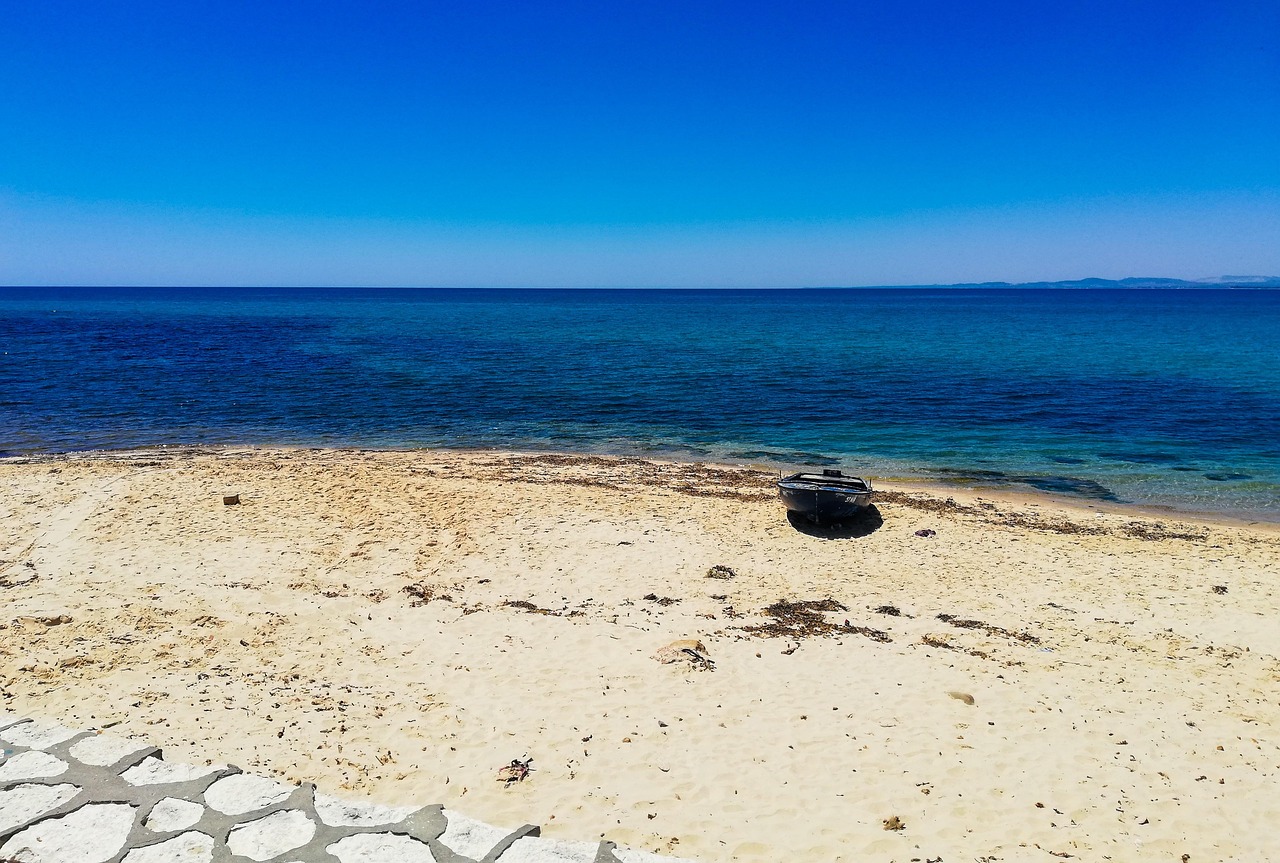
Fine sand and calm, shallow water run almost the whole length of the bay, from Hammamet Nord to Yasmine. Beaches next to the medina are busy with locals; hotel beaches have sunbeds and water sports, and the water is generally calm enough for children.
The International Cultural Center of Hammamet
In the gardens of Dar Sebastian, a villa built in the 1920s by a Romanian aristocrat and admired by many visiting artists, the center hosts exhibitions and, in July and August, the International Festival of Hammamet in its open-air amphitheater by the sea, with concerts, theater and dance.
Pupput
The remains of the Roman town of Pupput, near the hotels of Hammamet Sud, include houses with mosaic floors and baths. Non-residents pay TND 5; it opens from 9:30 a.m. to 4:30 p.m. in winter and 9 a.m. to 5 p.m. in summer.
Yasmine Hammamet marina and the Medina Mediterranea
The marina has restaurants, cafes and boat trips, and the nearby Medina Mediterranea is a modern walled complex built in traditional style, with shops, restaurants and entertainment. The Carthage Land theme park is a favorite with children.
Thalassotherapy
Hammamet is one of Tunisia’s main centers for thalassotherapy, seawater-based spa treatments, with dozens of hotels offering hammams, seawater pools, massages and wraps.
Other things to do in Hammamet
- Golf: several 18-hole courses around Hammamet and Yasmine.
- Water sports: jet skis, parasailing, windsurfing and pedal boats from the hotel beaches; diving at sites along Cap Bon.
- Boat trips: pirate-ship cruises along the coast from the Yasmine marina.
- Horse and camel rides: short rides on the beach and in the countryside.
- Hammams: traditional bathhouses in the town and spa hotels.
- Shopping: souqs in the medina, the Medina Mediterranea and Nabeul’s pottery shops.
Hammamet with children
Hammamet is one of Tunisia’s most family-friendly resorts. The sea is usually calm and shallow, many hotels have kids’ clubs, children’s pools and water slides, and Yasmine Hammamet’s theme park and marina keep older children busy. Camel and horse rides on the beach, pirate-ship cruises and pedal boats are popular. In July and August, plan outings for the morning and late afternoon and keep little ones in the shade at midday.
Shopping in the medina and Nabeul
The medina’s souvenir souqs sell ceramics, leather sandals, rugs, brass, perfumes and jasmine, Hammamet’s emblem; bargain politely, as prices are rarely fixed. For a wider choice of pottery, drive to Nabeul, where workshops and showrooms line the main roads and the Friday market draws shoppers from across Cap Bon. Government-run craft shops sell at fixed prices and are a useful guide to quality.
Food and drink
Hammamet’s restaurants specialize in fresh fish and seafood, grilled and sold by weight, alongside couscous, brik, ojja and Cap Bon’s spicy harissa, which is made from local chilies. Nabeul is known for harissa and for its ceramics, used to serve food across Tunisia. Cafes by the medina serve mint tea and coffee with views of the sea. Alcohol is served in hotels and licensed restaurants, and Cap Bon produces wines, including the dry Muscat of Kelibia.
Day trips from Hammamet
Nabeul
About 10 km (6 miles) north, Nabeul is famous for pottery, ceramics and harissa, with a large weekly market on Fridays. Its archaeological museum displays finds from Cap Bon (non-residents TND 8; closed on Mondays), and the nearby Roman site of Neapolis has mosaics (TND 5; closed on Mondays).
Kerkouane and Kelibia
About 1.5 hours northeast, near the tip of Cap Bon, Kerkouane is a rare Punic town with houses, baths and streets laid out by the sea, a UNESCO World Heritage Site; non-residents pay TND 8. The nearby fortress of Kelibia overlooks a fishing port and beaches.
Tunis, Carthage and Sidi Bou Said
About an hour north, a long day covers the Bardo Museum or the medina of Tunis, the ruins of Carthage and the clifftop village of Sidi Bou Said. See our Tunis guide.
Sousse, El Jem and Kairouan
About an hour south, Sousse has a UNESCO-listed medina, and the amphitheater of El Jem and the holy city of Kairouan are each about 1.5–2 hours from Hammamet. See our Sousse guide.
A Cap Bon road trip
With a car, a loop around the Cap Bon peninsula makes a full day: north from Nabeul past the beaches of Korba to Kelibia’s fortress and Kerkouane, around the tip at El Haouaria with its ancient Punic quarries and views over the sea, and back through the vineyards and orchards of the interior. Allow plenty of time, as roads are slow through villages.
Getting there and getting around
Airports
Enfidha-Hammamet International Airport (NBE), about 40–50 minutes south of Hammamet, handles many charter and low-cost flights from Europe, especially in summer. Tunis-Carthage (TUN), about an hour north, has the most international and domestic connections. Most package holidays include transfers; otherwise, take a taxi or a louage.
By train and louage
SNCFT’s Tunis–Nabeul line serves the area, with a change at Bir Bou Rekba for some trains, and intercity trains toward Sousse stop nearby. Louages, the shared minibuses, link Hammamet and Nabeul with Tunis, Sousse and other towns quickly and cheaply.
Getting around
Yellow taxis are plentiful; use the meter. A small tourist train and local buses run along the hotel zone between the medina and Yasmine. The medina is best explored on foot. Renting a car for a day or two is the easiest way to explore Cap Bon; Tunisia drives on the right, roads through villages are slow, and many towns have unmarked speed bumps, so avoid driving outside towns at night. Police checkpoints are common: slow down and have your passport and license ready.
When to go and how long to stay
May, June, September and October are the best months, with warm, sunny weather and a pleasant sea. July and August are hot, with average highs of about 32 °C (89–90 °F), and the busiest time, when the festival is on. Winter (November to March) is mild but wetter, with average highs of 16–21 °C (61–70 °F) and rain on about 5 or 6 days a month; many hotels close or offer long-stay deals, and thalasso centers stay busy.
| Month | Average high / low | Rain (days with 1 mm or more) | What to expect |
|---|---|---|---|
| January | 16 °C (61 °F) / 9 °C (48 °F) | 51 mm (2.0 in), 6 days | Mild, wet; quiet |
| February | 16 °C (62 °F) / 9 °C (48 °F) | 36 mm (1.4 in), 6 days | Mild, showers |
| March | 18 °C (65 °F) / 11 °C (51 °F) | 36 mm (1.4 in), 5 days | Mild; spring |
| April | 21 °C (69 °F) / 13 °C (55 °F) | 32 mm (1.2 in), 5 days | Mild; very good |
| May | 24 °C (76 °F) / 16 °C (60 °F) | 20 mm (0.8 in), 3 days | Warm; excellent |
| June | 29 °C (84 °F) / 20 °C (67 °F) | 6 mm (0.2 in), 1 day | Hot; beach season |
| July | 32 °C (89 °F) / 22 °C (72 °F) | 4 mm (0.2 in), 0 days | Hot; festival, peak |
| August | 32 °C (90 °F) / 23 °C (74 °F) | 12 mm (0.5 in), 2 days | Hottest; peak season |
| September | 29 °C (84 °F) / 21 °C (70 °F) | 47 mm (1.9 in), 5 days | Warm sea; storms possible |
| October | 26 °C (78 °F) / 18 °C (65 °F) | 60 mm (2.4 in), 5 days | Warm; excellent |
| November | 21 °C (70 °F) / 14 °C (57 °F) | 55 mm (2.2 in), 6 days | Mild; rainy spells |
| December | 17 °C (63 °F) / 10 °C (51 °F) | 50 mm (2.0 in), 6 days | Mild, wet; quiet |
Hammamet has no station with published World Meteorological Organization normals, so the figures are the 1991–2020 normals that Tunisia’s National Institute of Meteorology submitted for Nabeul, about 10 km (6 miles) up the coast: average daily highs and lows, average monthly rainfall and days with at least 1 mm of rain.
Events worth planning around
- International Festival of Hammamet: July and August, in the open-air theater of the International Cultural Center.
- Nabeul’s Friday market: every week, all year.
- Ramadan: in 2027 expected from about 8 February to 9 March; resort hotels carry on as usual.
Dates change each year; check with the organizers.
How long to stay: 2, 4 and 7 days
- Two days: the medina and kasbah, the beach and a seafood dinner by the walls.
- Four days: add Nabeul’s market and pottery, Pupput, and a thalasso session.
- Seven days: add day trips to Tunis, Carthage and Sidi Bou Said, and to Kerkouane and Kelibia.
Typical costs in Hammamet
| Item (as of October 2026) | Tunisian dinars | About US dollars |
|---|---|---|
| Kasbah of Hammamet, non-resident | TND 8 | $2.70 |
| Pupput Roman site, non-resident | TND 5 | $1.70 |
| Nabeul Archaeological Museum, non-resident | TND 8 | $2.70 |
| Kerkouane, non-resident | TND 8 | $2.70 |
| Hotel tax per person per night (3-star / 4–5-star) | TND 8 / 12 | $2.70 / $4 |
| Taxi from Enfidha airport | about TND 60–90 | about $20–30 |
| Thalasso treatment | about TND 60–150 | about $20–50 |
| Seafood dinner by the medina | about TND 40–80 | about $13–27 |
| Mid-range beach hotel, per night for two | about TND 180–400 | about $60–135 |
Site fees are those published by the Agency for the Development of Heritage and Cultural Promotion (AMVPPC); other prices are typical ranges. The dinar is worth about US$0.33.
Safety in Hammamet
Hammamet is a relaxed, well-established resort, and most visits are trouble-free. The main issues are the sea, the sun and petty theft.
- Sea safety: follow beach flags and lifeguards, take care where there are none, and keep children close; watch for jet skis near swimming areas.
- Sun and heat: avoid the midday sun in summer and drink plenty of water.
- Petty theft: keep valuables out of sight on beaches and in the souqs.
- Water sports and quad bikes: use reputable operators and wear life jackets and helmets.
- Dress codes: swimwear is fine on beaches and at pools; cover up in the medina and in town.
- Summer power cuts: heatwaves can bring temporary power cuts affecting air-conditioning and ATMs.
- Emergencies: ambulance 190, police 197, fire 198.
Practical tips for Hammamet
- Time zone: UTC+1 all year.
- Money: ATMs are in the center, Yasmine and many hotels; keep exchange receipts, as dinars can’t be taken out of Tunisia.
- Winter: some hotels and beach restaurants close from about November to March.
- Power: 230 V, with two-pin European sockets.
What to pack for Hammamet
Pack swimwear, beach cover-ups, sandals, a sun hat, sunglasses and sunscreen, plus clothes that cover shoulders and knees for the medina and day trips. Add a light jacket and umbrella from November to March, comfortable shoes for ruins and a plug adapter.
Hammamet travel FAQ
Which airport is closest to Hammamet?
Enfidha-Hammamet, about 40–50 minutes south; Tunis-Carthage is about an hour north.
What is the difference between Hammamet and Yasmine Hammamet?
Old Hammamet has the medina and garden hotels; Yasmine Hammamet is a modern resort to the south with a marina, shopping complex, theme park and large all-inclusive hotels.
How much does the Kasbah of Hammamet cost?
TND 8 for non-residents. It’s open every day.
Are Hammamet’s beaches good for children?
Yes. The sand is fine and the sea is usually calm and shallow; swim where lifeguards are on duty.
When is the International Festival of Hammamet?
In July and August, at the International Cultural Center’s open-air theater by the sea.
What is the best time to visit Hammamet?
May, June, September and October; July and August are hot and busy.
Can I visit Tunis and Carthage from Hammamet?
Yes, both are about an hour away by road for a long day trip.
What is Nabeul known for?
Pottery, ceramics, harissa and its Friday market.
Is Hammamet good in winter?
It’s mild but wetter and quiet, with some hotels closed; thalasso centers and long-stay offers make it popular with older travelers.
Do I need a visa for Hammamet?
Citizens of many countries, including the US, Canada, the UK and EU countries, can visit Tunisia for up to 90 days without a visa. See our Tunisia guide.
Sources and last review
Researched and last reviewed on 5 October 2026. Fees and opening hours for the Kasbah of Hammamet, Pupput, the Nabeul Archaeological Museum, Neapolis and Kerkouane come from the Agency for the Development of Heritage and Cultural Promotion (AMVPPC); Kerkouane’s World Heritage status from UNESCO; the Tunis–Nabeul line from SNCFT; airports and thalassotherapy from the Tunisian National Tourist Office; the hotel tax, beach flags, quad bikes, power cuts and emergency numbers from GOV.UK’s Tunisia travel information (updated 24 July 2026), used for practical facts only; climate normals for Nabeul from Tunisia’s National Institute of Meteorology via the World Meteorological Organization; population and coordinates from Wikidata. The International Cultural Center and Dar Sebastian, Yasmine Hammamet’s attractions, the beach length, golf courses, Nabeul’s market day, transfer times, festivals, Ramadan 2027 dates and taxi, thalasso, meal and hotel prices are general references and flagged for checking. For entry rules and money, see our Tunisia travel guide.
Plan your trip
Partner links: TravelerCenter may earn a commission if you book, at no extra cost to you.
🇪🇬 Useful Arabic phrases for Hammamet
All 38 Arabic phrases: restaurant, hotel, emergencies, romance (printable) →