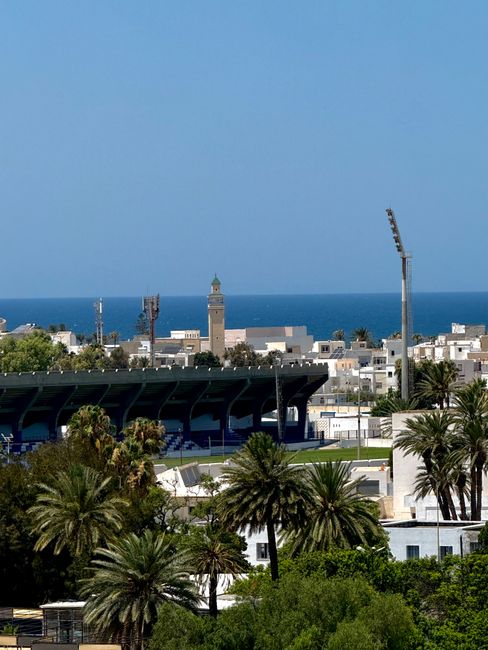
Tunisia, the northernmost country in Africa, packs Mediterranean beaches, Roman ruins, whitewashed villages, walled medinas and the edge of the Sahara into a country smaller than the state of Florida. About 1,300 km (800 miles) of coastline, from the green hills of the north to the palm-fringed island of Djerba, draw sun-seekers to resorts such as Hammamet, Sousse and Monastir, while history lovers come for the ruins of Carthage, the great Roman amphitheater of El Jem, the mosaics of the Bardo Museum and the hilltop city of Dougga. The capital, Tunis, has a UNESCO-listed medina of souqs and mosques, with the blue-and-white village of Sidi Bou Said, newly added to UNESCO’s list in 2026, just outside. In the south, oasis towns such as Tozeur and Douz lead to the dunes of the Grand Erg Oriental, salt lakes and Berber villages carved into the hills, famous as film sets. Tunisians are welcoming, French is widely spoken alongside Arabic, and prices are low by Mediterranean standards. Citizens of many countries, including the US, the UK, Canada and EU countries, can visit for up to 90 days without a visa. Remember that the Tunisian dinar is a closed currency: you can’t take it in or out of the country, so plan to change money on arrival and keep your receipts.
Right now in Tunisia
- Wed 21–31°C 70–88°F Partly cloudy
- Thu 22–33°C 71–91°F Partly cloudy
- Fri 22–24°C 71–76°F 5 mm Rain
Weather: MET Norway (CC BY 4.0)
Multi-day tours of Tunisia
Multi-day tours from local operators. You check dates and book on Viator, our partner; we may earn a commission at no extra cost to you. How we earn money
Tunisia at a glance: governorates and regions
Tunisia covers about 163,600 km² (63,200 square miles), with a population of about 12 million. Arabic is the official language, French is widely spoken, and English is understood in tourist areas; most signs are bilingual in Arabic and French. The country is divided into 24 governorates. The north has the Mediterranean coast around Tunis, Bizerte and Tabarka and the wheat fields and forests of the Tell; the Sahel, the central east coast, has the resorts of Sousse, Monastir and Mahdia among olive groves; and the south has the Gulf of Gabès, Djerba, the salt lake of Chott el Jerid and the Sahara.
Time and the weekend: Tunisia uses Central European Time (UTC+1) all year, with no daylight saving. Saturday and Sunday are the weekend for government offices, while Friday is the main day of prayer.
The main regions for visitors
- Tunis and the north: the capital’s medina and the Bardo Museum, Carthage, Sidi Bou Said, La Marsa, Bizerte, Dougga and Tabarka.
- Cap Bon: Hammamet and Yasmine Hammamet, Nabeul’s pottery, the Punic town of Kerkouane and Kelibia’s fortress.
- The Sahel: Sousse and Port El Kantaoui, Monastir, Mahdia and El Jem’s amphitheater.
- Kairouan and the center: the holy city of Kairouan, the Roman site of Sbeitla and the interior.
- The south and the islands: Djerba, the Kerkennah Islands, Gabès, Matmata and Tataouine’s ksour.
- The Sahara and the oases: Tozeur, Nefta, Douz, Chott el Jerid and the Grand Erg Oriental.
Where to go: medinas, ruins, beaches and the desert
For a first trip of a week to ten days, many visitors combine a few days in Tunis with Carthage and Sidi Bou Said, a beach stay in Hammamet, Sousse or Monastir with a day at El Jem and Kairouan, and either Djerba or a short desert trip to Douz and Tozeur.
Tunis, Carthage and Sidi Bou Said
The medina of Tunis, a UNESCO site since 1979, is a maze of souqs around the Zitouna Mosque. The Bardo National Museum holds one of the world’s finest collections of Roman mosaics. A short ride away on the TGM light railway, the ruins of Carthage spread among villas by the sea, and Sidi Bou Said’s whitewashed houses with blue doors overlook the gulf. See our Tunis guide.
Hammamet and Cap Bon
Tunisia’s original beach resort has a small walled medina by the sea, long sandy beaches and the purpose-built resort of Yasmine Hammamet with a marina. Nearby, Nabeul is known for pottery, and Kerkouane is a rare intact Punic town. See our Hammamet guide.
Sousse and Port El Kantaoui
Sousse’s UNESCO-listed medina, with its ribat and Great Mosque, sits next to a long beach of resort hotels, with the marina of Port El Kantaoui to the north. Its archaeological museum has superb mosaics. See our Sousse guide.
Monastir
A compact resort town with an imposing ribat (fortified monastery) on the waterfront, the marble mausoleum of Habib Bourguiba, Tunisia’s first president, and its own international airport. See our Monastir guide.
El Jem and Kairouan
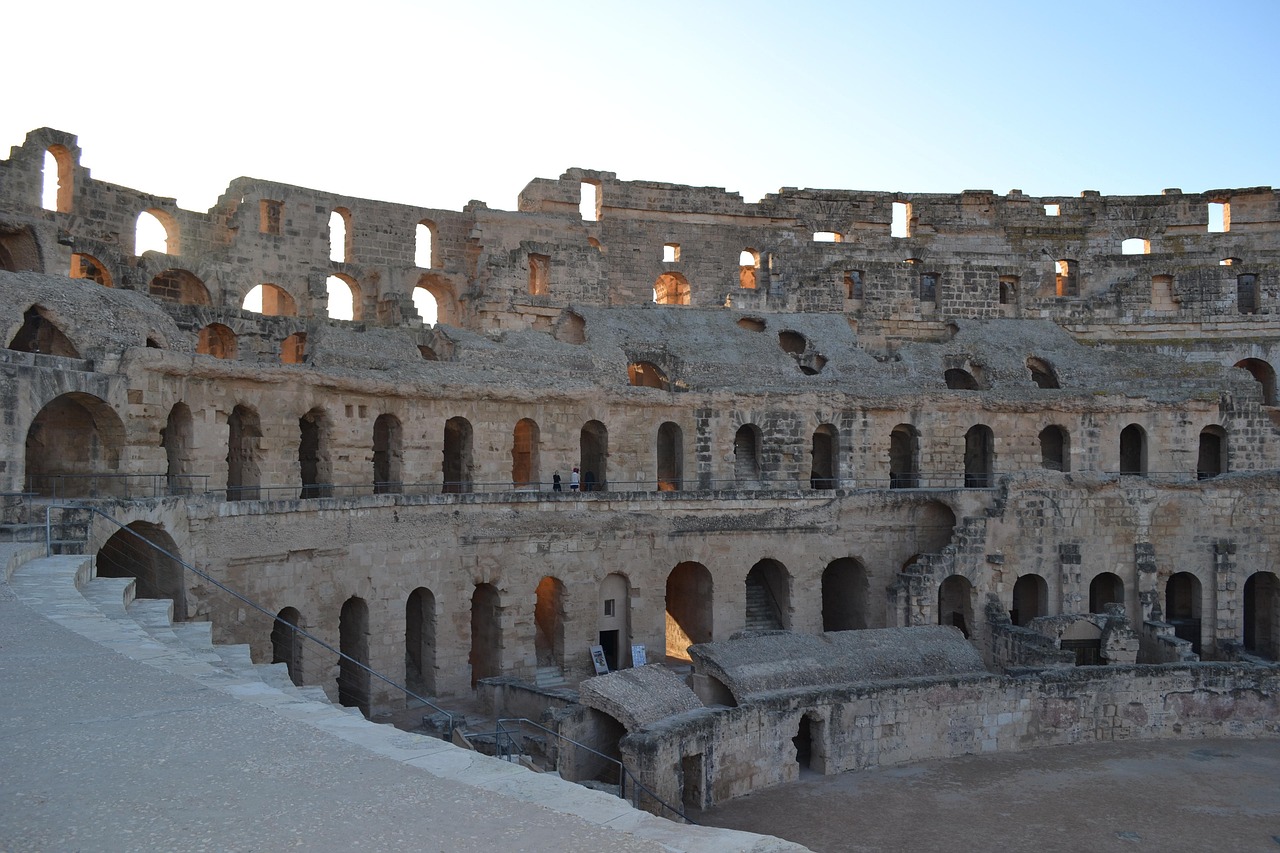
The amphitheater of El Jem, one of the largest Roman amphitheaters in the world and a UNESCO site since 1979, rises above a small town between Sousse and Sfax. Kairouan, founded in the 7th century and a UNESCO site since 1988, has the Great Mosque, the Aghlabid basins and a medina known for carpets and makroudh pastries.
Djerba
A flat island of olive groves, palms, white beaches and fortified mosques, connected to the mainland by a causeway and ferry. In 2023, UNESCO listed “Djerba: Testimony to a settlement pattern in an island territory.” See our Djerba guide.
Dougga and the north
In the hills west of Tunis, Dougga is one of the best-preserved Roman towns in North Africa, with a capitol, theatre and houses on a hillside. Bizerte has an old port, Tabarka coral and forested coast, and Ichkeul National Park is a UNESCO-listed wetland for birds.
The Sahara: Douz, Tozeur and Matmata
Douz is the gateway to the dunes of the Grand Erg Oriental, with camel treks and desert camps. Tozeur and Nefta are oasis towns with brick architecture and palm groves, close to the mountain oases of Chebika and Tamerza and the salt flats of Chott el Jerid. Matmata’s underground troglodyte houses and Tataouine’s ksour (fortified granaries) are known from the Star Wars films.
Djerba Travel Guide
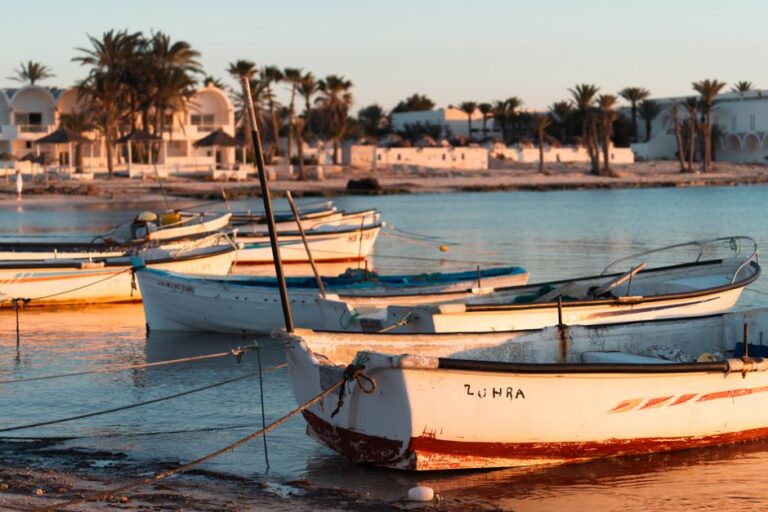
Plan a trip to Djerba, Tunisia's UNESCO-listed island (2023): Houmt Souk's souqs and fort, the El Ghriba synagogue, Djerbahood murals, Guellala pottery, fortified mosques,…
Hammamet Travel Guide
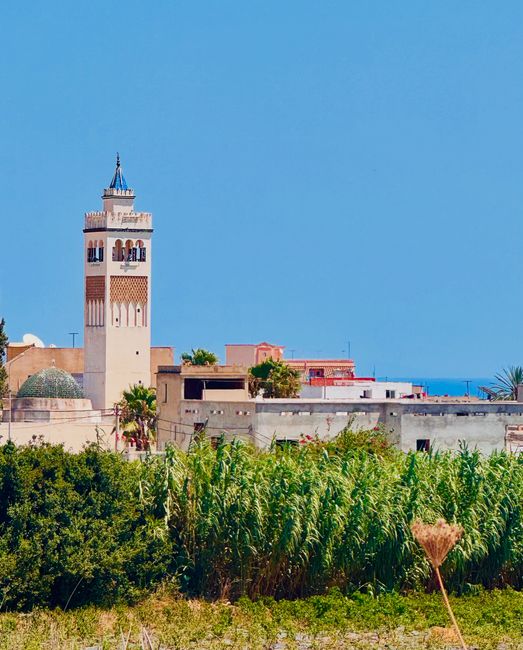
Plan a trip to Hammamet: the walled medina and kasbah, beaches from Hammamet Nord to Yasmine Hammamet, the International Cultural Center and summer festival,…
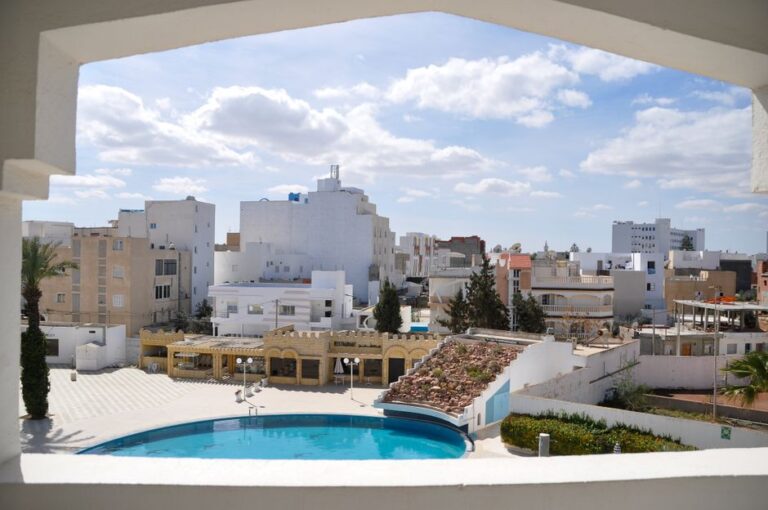
Monastir Travel Guide
Plan a trip to Monastir: the 8th-century Ribat with ticket price and hours, the Bourguiba Mausoleum, the medina and marina, Skanes beaches, the Kuriat…
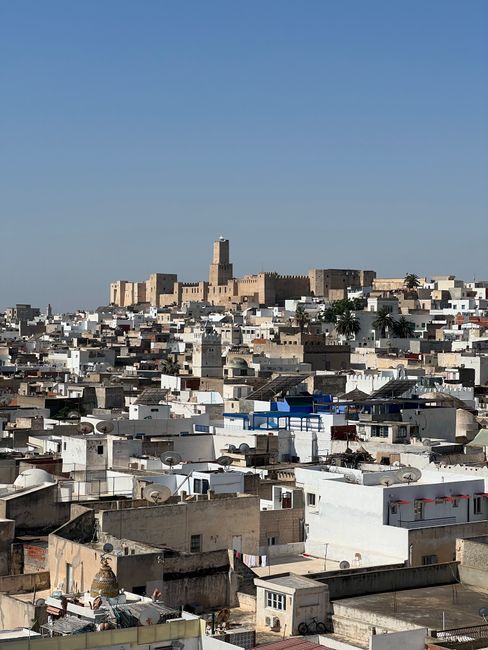
Sousse Travel Guide
Plan a trip to Sousse: the UNESCO-listed medina, the Ribat and Great Mosque with ticket prices and hours, the Archaeological Museum's mosaics, beaches and…
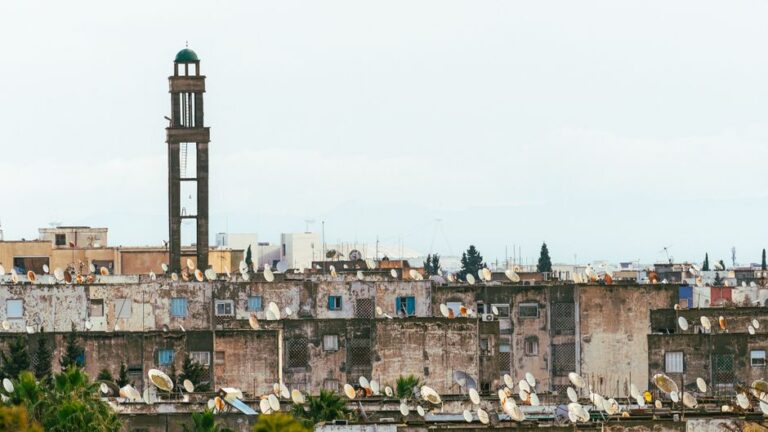
Tunis Travel Guide
Plan a trip to Tunis: the UNESCO-listed medina and Zitouna Mosque, the Bardo Museum's mosaics, Carthage's group ticket and sites, Sidi Bou Said (UNESCO…
Best time to visit Tunisia
Spring (April to June) and autumn (September to October) are the best seasons: warm, sunny days, a pleasant sea from June and fewer crowds. Summer (July and August) is hot, with average highs of 32–34 °C (90–93 °F) on the coast and about 40 °C (104 °F) in the desert, and it’s peak season for beach resorts. Winter (November to March) is mild on the coast, with average highs of 16–18 °C (61–65 °F) and some rain in the north, and the best time for the Sahara, where days are pleasant though nights are cold. Most rain falls between September and March, and the north is much wetter than the south.
| Month | Tunis: high / low | Monastir: high / low | Djerba: high / low | Tozeur: high / low |
|---|---|---|---|---|
| January | 16 / 8 °C (62 / 47 °F) | 17 / 9 °C (62 / 48 °F) | 17 / 10 °C (63 / 49 °F) | 17 / 7 °C (63 / 44 °F) |
| February | 17 / 8 °C (62 / 47 °F) | 17 / 9 °C (63 / 48 °F) | 18 / 10 °C (64 / 50 °F) | 19 / 8 °C (67 / 47 °F) |
| March | 19 / 10 °C (67 / 50 °F) | 20 / 11 °C (67 / 52 °F) | 21 / 12 °C (69 / 54 °F) | 23 / 12 °C (74 / 53 °F) |
| April | 22 / 12 °C (72 / 54 °F) | 22 / 14 °C (71 / 56 °F) | 24 / 15 °C (74 / 58 °F) | 27 / 15 °C (81 / 59 °F) |
| May | 26 / 15 °C (80 / 60 °F) | 26 / 17 °C (78 / 62 °F) | 27 / 18 °C (81 / 65 °F) | 32 / 20 °C (90 / 67 °F) |
| June | 31 / 19 °C (88 / 67 °F) | 30 / 20 °C (85 / 69 °F) | 30 / 21 °C (87 / 71 °F) | 37 / 24 °C (99 / 74 °F) |
| July | 34 / 22 °C (93 / 72 °F) | 32 / 23 °C (90 / 74 °F) | 33 / 24 °C (92 / 75 °F) | 40 / 26 °C (104 / 80 °F) |
| August | 34 / 23 °C (94 / 73 °F) | 33 / 24 °C (92 / 75 °F) | 34 / 25 °C (93 / 77 °F) | 40 / 27 °C (103 / 80 °F) |
| September | 30 / 21 °C (87 / 69 °F) | 30 / 22 °C (86 / 72 °F) | 31 / 24 °C (89 / 74 °F) | 35 / 24 °C (95 / 74 °F) |
| October | 27 / 17 °C (80 / 63 °F) | 26 / 19 °C (80 / 66 °F) | 28 / 20 °C (83 / 68 °F) | 30 / 19 °C (85 / 66 °F) |
| November | 22 / 13 °C (71 / 55 °F) | 22 / 14 °C (71 / 56 °F) | 23 / 15 °C (73 / 59 °F) | 23 / 12 °C (73 / 54 °F) |
| December | 18 / 9 °C (64 / 49 °F) | 18 / 10 °C (65 / 50 °F) | 18 / 11 °C (65 / 53 °F) | 18 / 8 °C (64 / 46 °F) |
| Rain a year | 486 mm (19.1 in) | 365 mm (14.4 in) | 209 mm (8.2 in) | 97 mm (3.8 in) |
The figures are average daily highs and lows and annual rainfall from the 1991–2020 climate normals that Tunisia’s National Institute of Meteorology (INM) submitted to the World Meteorological Organization for Tunis-Carthage, Monastir, Djerba and Tozeur.
Crowds and prices through the year
- Peak (July and August): European and Tunisian summer holidays, the highest hotel prices and full beaches; book early.
- Shoulder (May, June, September and October): warm sea, lower prices and good sightseeing weather.
- Winter (November to March): quiet, cheap coastal hotels, many offering long-stay deals; the best season for the desert.
- Ramadan: daytime is quiet, and evenings are lively; some restaurants outside resorts close during the day.
Festivals and events
- International Festival of Carthage (July and August): concerts in Carthage’s restored Roman theatre.
- International Festival of Hammamet (July and August): performances in the open-air theatre of the International Cultural Center.
- International Festival of the Sahara, Douz (usually late December): camel races, horsemanship and Bedouin music.
- Ramadan (in 2027 expected from about 8 February to 9 March): quiet days and festive evenings.
Public holidays
Holidays include New Year’s Day, Revolution and Youth Day (14 January), Independence Day (20 March), Martyrs’ Day (9 April), Labour Day (1 May), Republic Day (25 July), Women’s Day (13 August), Evacuation Day (15 October) and Revolution Day (17 December), plus the Islamic holidays: Eid al-Fitr at the end of Ramadan (about 10 March 2027), Eid al-Adha (about 16 May 2027), the Islamic New Year and the Prophet’s Birthday. Islamic dates follow the lunar calendar. Government offices close; resorts and most sites stay open.
How long to stay: sample itineraries
5 days: Tunis and the north
Two days in Tunis for the medina and the Bardo, a day for Carthage and Sidi Bou Said, and day trips to Dougga and to Cap Bon’s Kerkouane and Hammamet.
7 to 10 days: the classic loop
Tunis, Carthage and Sidi Bou Said; Hammamet or Sousse for the beach; El Jem and Kairouan; then south to Douz and Tozeur for the desert and Chott el Jerid, ending in Djerba.
A week on the beach
Base yourself in Hammamet, Sousse, Monastir or Djerba, with day trips to El Jem, Kairouan or the desert.
4 to 5 days: Djerba and the desert
Two days on Djerba for Houmt Souk, Guellala and the beaches, then a loop through Matmata and Douz to Tozeur, with a night in a desert camp and a sunrise drive across Chott el Jerid.
Combining Tunisia with other countries
Tunis is a short flight or an overnight ferry from Italy and France, and flights connect with Malta. See our Italy, Sicily, Malta and France guides, and for another North African trip, our Morocco and Egypt guides. Land borders with Algeria and Libya pass through areas that are closed or restricted, so check access before you plan any overland route.
Entry, money and costs
Entry: visa-free stays (last reviewed October 2026)
Citizens of many countries, including the US, Canada, the UK, EU countries and Japan, can visit Tunisia without a visa for up to 90 days. Your passport should be valid for the duration of your stay and in good condition. Other nationalities need a visa issued in advance; check the current list with the Tunisian Ministry of Foreign Affairs before you travel.
- At the border: officials may ask for your contact details, a return or onward ticket and proof of accommodation. Make sure your passport is stamped on arrival; overstays are fined on departure.
- Hotel tax: a tourist tax of TND 8 per person per night at three-star hotels and TND 12 at four- and five-star hotels is charged for up to 10 nights.
The dinar is a closed currency
The Tunisian dinar (TND), divided into 1,000 millimes, can’t be taken into or out of the country. Change money on arrival at airports, banks and hotels, or withdraw cash from ATMs, and keep your official exchange receipts. If you bring a large amount of foreign currency, check whether you need to declare it on arrival, as undeclared currency can be confiscated. You can change leftover dinars back at the airport when you leave with your receipts. The Central Bank of Tunisia’s interbank rate was about TND 3.00 to the US dollar on 2 October 2026. Cards are accepted in hotels and larger shops, but cash is needed for souqs, louages and small restaurants.
Customs and electronics
Drones are illegal without authorization and will be held until you leave. Some smart devices with recording or transmission functions, such as smart glasses and walkie-talkies, can be restricted or held on arrival; check before you travel. Exporting antiquities needs permission.
Tipping
Tips of about 10% in restaurants, a dinar or two for porters and guides at sites, and rounding up taxi fares are appreciated.
Typical travel costs
| Item (as of October 2026) | Tunisian dinars | About US dollars |
|---|---|---|
| Carthage group ticket, non-resident | TND 12 | $4 |
| Bardo National Museum, non-resident | TND 13 | $4.30 |
| Amphitheater and museum of El Jem, non-resident | TND 12 | $4 |
| Ribat of Sousse or Monastir, non-resident | TND 8 | $2.70 |
| Dougga, non-resident | TND 8 | $2.70 |
| Hotel tax per person per night (3-star / 4–5-star) | TND 8 / 12 | $2.70 / $4 |
| Casual restaurant meal | about TND 15–35 | about $5–12 |
| Mid-range hotel room, per night | about TND 150–350 | about $50–115 |
Site fees are those published by the Agency for the Development of Heritage and Cultural Promotion (AMVPPC); the hotel tax is from GOV.UK. Meals and hotels are typical ranges.
Getting there and getting around
Arrival airports
Tunisia’s main international airports are Tunis-Carthage (TUN), close to the capital; Enfidha-Hammamet (NBE), between Hammamet and Sousse; Monastir Habib Bourguiba (MIR); and Djerba-Zarzis (DJE). Tozeur, Tabarka, Sfax, Gabès and Gafsa have smaller airports. Tunisair, Nouvelair and many European airlines, including charter and low-cost carriers, fly to Tunisia, especially in summer.
By sea
Ferries link Tunis’s port of La Goulette with Italian ports such as Genoa, Palermo and Civitavecchia and with Marseille in France.
Trains
The national railway, SNCFT, runs intercity “Grandes Lignes” from Tunis to Sousse, Monastir, Mahdia, Sfax, Gabès, Gafsa and Tozeur, to Nabeul, and to Bizerte and the northwest. The Métro du Sahel links Sousse with Monastir, its airport and Mahdia, with 31 stations and about 48 trains a day. Tunis has suburban lines and the TGM light railway to Carthage, Sidi Bou Said and La Marsa. In the south, the restored Lézard Rouge tourist train runs through the Selja gorges from Métlaoui.
Louages and buses
Louages are shared minibuses that leave from stations in every town when full, linking almost any two places quickly and cheaply; fares are fixed. Intercity buses also connect the main towns. Yellow taxis in cities use meters; check that the meter is running.
Domestic flights and the Djerba ferry
Tunisair Express flies between Tunis and Djerba and a few other regional airports, saving a long drive south. Djerba is linked to the mainland by an ancient causeway at El Kantara, used by cars and louages, and by a short car ferry between Ajim and Jorf.
Driving
Tunisia drives on the right. Roads are generally reasonable, with fast toll motorways from Tunis toward Sousse, Sfax and Bizerte, but potholes can appear after rain, many towns have unmarked speed bumps, and sand can drift onto desert roads. Driving at night outside towns is hazardous because of unlit roads, vehicles without lights and livestock. Drink-driving limits are strict. Police and National Guard checkpoints are common: slow down and have your ID and license ready. Many visitors can drive on their home license with an International Driving Permit.
Culture, food and everyday etiquette
Desert trips in practice
Most visitors see the Sahara on a two- or three-day tour from Djerba, Sousse or Tozeur, or by basing themselves in Douz or Tozeur. Licensed operators run camel treks into the dunes, nights in fixed camps with dinner around the fire, 4×4 trips to the Ksar Ghilane oasis and its hot spring, and drives across the salt flats of Chott el Jerid. The best months are October to April; in winter, nights can be close to freezing.
Customs and dress
Tunisia is a predominantly Muslim country with a long tradition of openness. Beachwear is fine at resorts and beaches, but dress modestly in medinas, villages and religious sites, covering shoulders and knees. Most mosques are closed to non-Muslims, though the Great Mosques of Kairouan and Sousse admit visitors to their courtyards at set hours. Greet with “salam alaykum” or “bonjour,” and use your right hand for eating and passing things.
Layers of history
Tunisia’s sights span about 3,000 years. Phoenician traders founded Carthage, which grew into a Mediterranean power and later became a great Roman city; the Roman province of Africa left El Jem, Dougga and thousands of mosaics now in the Bardo and Sousse museums. Arab armies founded Kairouan in the 7th century, and later dynasties built the ribats, Great Mosques and medinas of the coast. Ottoman rule and the Husseinite beys followed, then a French protectorate from 1881 until independence in 1956, which left wide boulevards in Tunis and the French language. Andalusian, Turkish, Italian, Jewish and Berber influences shape the food, crafts and architecture you see today.
Shopping and bargaining in the souqs
Prices in medina souqs are rarely fixed, so bargaining is expected: start by asking the price, offer well below it, and settle somewhere in between with good humor. Government-run craft shops sell at fixed prices and are a useful guide to quality. Look for Nabeul and Guellala pottery, Kairouan carpets, chechia caps, olive-wood bowls, harissa and dates. Some “guides” in medinas steer visitors to particular shops; a polite “no, thank you” is enough.
Food and drink
Tunisian cooking is spicy and Mediterranean. Couscous with lamb, fish or vegetables is the national dish; brik is a crisp pastry with egg and tuna; lablabi is a chickpea soup with harissa, bread and cumin; ojja is a spicy egg and tomato dish; and mechouia is a grilled pepper and tomato salad. Fresh fish is excellent on the coast, and pastries such as makroudh from Kairouan and bambalouni doughnuts from Sidi Bou Said are worth trying. Mint tea with pine nuts is a ritual. Alcohol is legal and served in hotels, bars and licensed restaurants; supermarkets don’t sell it on Fridays, and during Ramadan its sale is banned outside tourist resorts.
Ramadan etiquette
During Ramadan, avoid eating, drinking or smoking in public during the day outside resorts, dress more conservatively, and expect shorter opening hours. Hotels serve guests as usual.
Where to stay
Beach resorts in Hammamet, Sousse, Monastir and Djerba range from all-inclusive hotels to boutique stays. Tunis has hotels in the modern center and La Marsa, and restored “dar” guesthouses in the medina and Sidi Bou Said. Djerba has traditional menzels and fondouks converted into guesthouses. In the south, choose from oasis hotels in Tozeur and desert camps near Douz. Many coastal hotels sell all-inclusive packages through tour operators, often cheaper than booking directly, while independent travelers will find good-value small hotels in town centers. Outside July and August, prices fall sharply, and winter long-stay rates are common. Remember that the hotel tax is added per person per night, and that some hotels quote prices in euros but bill in dinars.
Laws visitors need to know
- ID: carry a copy of your passport’s photo page; officials may ask for it.
- Drugs: possession of any illegal drug carries severe penalties, including prison.
- LGBT+ travelers: same-sex sexual activity is illegal.
- Photography: don’t photograph government buildings, police or military sites.
- Antiquities: you need permission to export them.
- Drones and smart devices: drones need authorization, and some recording devices may be held on arrival.
Safety, health, accessibility and connectivity
Safety
Most visits to Tunisia are trouble-free. The main risks for visitors are petty theft, the sea, the heat and the desert, and a few closed areas.
- Closed areas: military zones and areas near the Algerian and Libyan borders, including some mountain areas in the west and desert areas in the far south, are closed to visitors or restricted; check access before you travel off the main routes, and expect police checkpoints.
- Heat and desert: summer temperatures in the south reach 40 °C (104 °F). Desert trips should be with licensed operators who carry water and communications; never head into the dunes alone. Wear a helmet on quad bikes.
- Sea safety: some beaches use a flag system; follow the flags and lifeguards, take care where there are none, and watch children closely.
- Power cuts: in summer heatwaves, the electricity company may cut power temporarily, affecting air-conditioning, phones and ATMs.
- Theft and harassment: keep valuables out of sight and stay alert in busy places, especially at night; women may face unwanted attention.
- Dress codes: cover shoulders and knees away from beaches and resorts.
- Demonstrations and strikes: avoid protests, and allow for disruption to transport during strikes.
- Emergencies: ambulance 190, police 197 (in towns), National Guard 193 (in rural areas), fire 198.
Health and insurance
Private clinics in Tunis and the resorts are good but must be paid for on the spot, sometimes before treatment; buy travel insurance that covers medical costs and evacuation. Keep prescription medicines in their original packaging with a doctor’s note. Drink bottled water.
Accessibility
Resort hotels are generally accessible, but medinas, ruins and old towns have uneven paving, steps and few ramps.
Connectivity and power
Mobile coverage is good in towns and along main roads, and patchy in the desert. Prepaid SIM cards are sold at airports and phone shops. Power is 230 V, 50 Hz, with two-pin European sockets (types C and E).
Things to do: ruins, medinas, beaches and the Sahara
Tunisia’s highlights include the ruins of Carthage and the Bardo’s mosaics; the medinas of Tunis, Sousse and Kairouan; Sidi Bou Said; El Jem’s amphitheater; Dougga; Djerba’s villages and beaches; and the dunes and oases of the south. Tunisia has ten World Heritage Sites on UNESCO’s list: the Amphitheatre of El Jem, the Archaeological Site of Carthage, the Medina of Tunis, Ichkeul National Park, the Punic town of Kerkuane, Kairouan, the Medina of Sousse, Dougga, Djerba and, since 2026, the Village of Sidi Bou Saïd.
- Beaches: Hammamet, Sousse and Port El Kantaoui, Monastir, Mahdia and Djerba.
- Roman and Punic sites: Carthage, El Jem, Dougga, Bulla Regia, Thuburbo Majus, Sbeitla and Kerkouane.
- Desert adventures: camel treks and desert camps from Douz, 4×4 trips across Chott el Jerid, and the mountain oases.
- Thalasso and spas: seawater therapy centers in Hammamet, Sousse, Monastir and Djerba.
- Crafts: pottery in Nabeul and Guellala, carpets in Kairouan, and the souqs of the Tunis medina.
- Golf and water sports: golf courses in Hammamet, Port El Kantaoui, Monastir and Djerba; sailing, diving and kitesurfing on the coast.
What to pack
Pack swimwear and beach clothes, plus light clothes that cover shoulders and knees for medinas and villages, a scarf, a sun hat, sunglasses and sunscreen, and comfortable shoes for ruins and cobbled streets. Add a warm jacket for desert nights and winter evenings, a rain jacket from November to March in the north, and a plug adapter. Don’t bring a drone without authorization.
Tunisia travel FAQ
Do I need a visa for Tunisia?
Citizens of many countries, including the US, Canada, the UK, EU countries and Japan, can visit for up to 90 days without a visa. Other nationalities need a visa issued in advance.
Can I take Tunisian dinars out of the country?
No. The dinar is a closed currency and can’t be imported or exported. Change money in Tunisia, keep your receipts and change leftover dinars back at the airport.
What is the best time to visit Tunisia?
April to June and September to October for touring and beaches; November to March for the Sahara.
How much does it cost to visit Carthage?
The Carthage group ticket costs TND 12 for non-residents and covers several of the site’s monuments and museums.
Is the El Jem amphitheater worth visiting?
Yes. It’s one of the largest Roman amphitheaters in the world, a UNESCO site, and entry with the museum costs TND 12.
What is a louage?
A shared minibus that leaves when full and links towns across Tunisia quickly and cheaply at fixed fares.
Can I travel around Tunisia by train?
Yes. SNCFT trains link Tunis with Sousse, Monastir, Mahdia, Sfax, Gabès and Tozeur, and the Métro du Sahel links Sousse, Monastir and Mahdia.
Is Djerba a UNESCO World Heritage Site?
Yes. UNESCO listed “Djerba: Testimony to a settlement pattern in an island territory” in 2023.
Is there a tourist tax in Tunisia?
Yes, TND 8 per person per night at three-star hotels and TND 12 at four- and five-star hotels, for up to 10 nights.
Can tourists drink alcohol in Tunisia?
Yes, in hotels, bars and licensed restaurants. Supermarkets don’t sell alcohol on Fridays, and sales are banned during Ramadan outside resorts.
Is it safe to visit the Sahara in Tunisia?
Yes, with licensed operators on established routes. Some border areas in the far south are closed to visitors, so check access first.
Are drones allowed in Tunisia?
No, not without authorization; drones are held at the airport until you leave.
What are the emergency numbers in Tunisia?
Ambulance 190, police 197, National Guard 193 and fire 198.
Sources and last review
Researched and last reviewed on 5 October 2026. The 90-day visa-free stay for UK citizens, border checks, the hotel tax, currency rules, drones, electronic devices, laws, alcohol rules, driving conditions, beach flags, quad bikes, summer power cuts, healthcare and emergency numbers come from GOV.UK’s Tunisia travel information (updated 24 July 2026), used for practical facts only; the closed currency, airports, airlines and languages from the Tunisian National Tourist Office (ONTT); site fees and hours from the Agency for the Development of Heritage and Cultural Promotion (AMVPPC); train lines, the Métro du Sahel and the Lézard Rouge from the national railway SNCFT; the exchange rate from the Central Bank of Tunisia; World Heritage listings, including Djerba (2023) and Sidi Bou Saïd (2026), from UNESCO; climate normals from Tunisia’s National Institute of Meteorology via the World Meteorological Organization; area, population and capital from Wikidata. The visa-free list beyond the UK (the Ministry of Foreign Affairs site couldn’t be read), the weekend, holidays and Ramadan 2027 dates, festivals, ferries, louages, motorways, foods, tipping, power sockets and typical prices are general references and flagged for checking. Entry rules can change at short notice, so check official sources before you travel.
Plan your trip
Partner links: TravelerCenter may earn a commission if you book, at no extra cost to you.
🇪🇬 Useful Arabic phrases for Tunisia
All 38 Arabic phrases: restaurant, hotel, emergencies, romance (printable) →