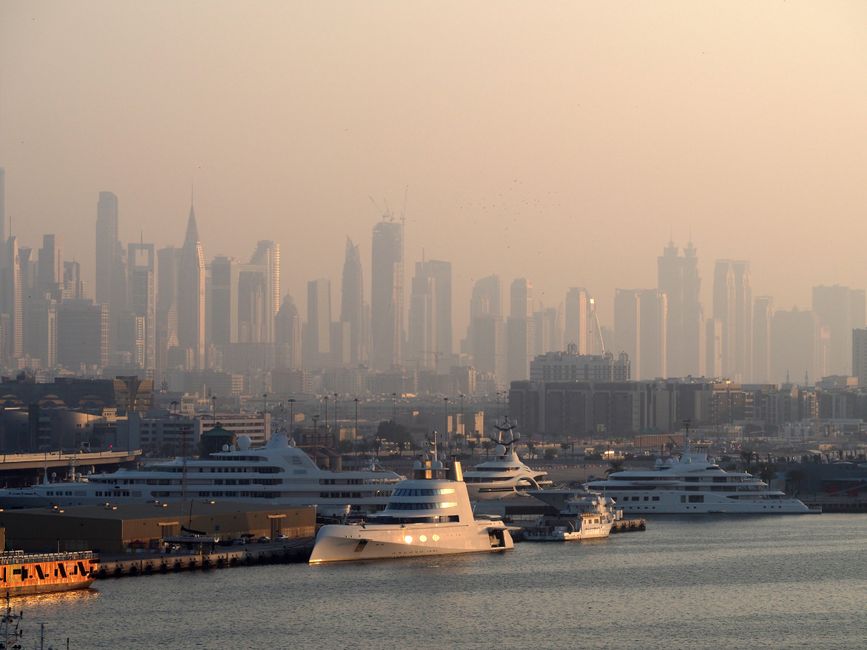
Dubai is the Gulf’s great showpiece city: a skyline of record-breaking towers rising from the desert, a creek lined with wooden dhows and spice souks, and a long coastline of beaches, marinas and artificial islands on the Arabian Gulf. A small pearling and trading port has grown into a global hub of about four million people, most of them from abroad. Visitors come for the Burj Khalifa and the Dubai Fountain, the old quarters of Al Fahidi and Deira, beaches and hotel pools, enormous malls, desert evenings among the dunes, and one of the busiest airports on Earth, which makes Dubai an easy stopover between Europe, Asia, Africa and Australia. It is one of the seven emirates of the United Arab Emirates, about 140 km (87 miles) up the coast from the capital, Abu Dhabi. Dubai has a hot desert climate: winters (November to March) are warm and sunny, while summers are extremely hot and humid, with daytime highs above 40 °C (104 °F) from June to September.
Right now in Dubai
- Wed 31–43°C 88–109°F Mostly clear
- Thu 31–42°C 87–107°F Clear
- Fri 32–37°C 90–98°F Clear
Weather: MET Norway (CC BY 4.0) · Sea temperature: NOAA CoastWatch · Air quality: OpenAQ
Top tours in Dubai
See all tours for Dubai →
From local operators, with prices and reviews; you check availability and book on Viator, our partner. We may earn a commission at no extra cost to you. How we earn money
Dubai at a glance
- Best months: November to March, when days are about 24–31 °C (76–87 °F) and evenings are pleasant outdoors. October and April are hot but manageable; May to September is extreme heat, best for indoor attractions and discounted hotels.
- Time needed: three days for Downtown, the old town and a desert evening; five days with the beach and a day trip to Abu Dhabi; a week to add Sharjah, Hatta or the east coast.
- Getting there: Dubai International Airport (DXB) is about 5 km (3 miles) from Deira and 15 km (9 miles) from Downtown, linked by the Dubai Metro Red Line. Etihad Rail passenger trains to Abu Dhabi and Fujairah started from a new Dubai station on 30 September 2026.
- Costs (as of October 2026): a Dubai Metro ride within one zone costs AED 3 (about US$0.80) with a nol Silver card; the classic Burj Khalifa observation-deck ticket starts at about AED 189 (about US$51).
- Before you go: visas on arrival, the weekend, alcohol and medicine rules are covered in our United Arab Emirates travel guide.
Dubai areas and who each one suits
Deira and Bur Dubai (Old Dubai)
The historic heart of the city sits on both banks of Dubai Creek. Deira, on the north side, has the Gold Souk, the Spice Souk, dhow wharves and busy streets of small shops and South Asian restaurants; Bur Dubai, on the south side, has the Al Fahidi Historical Neighbourhood, the Al Seef waterfront and the textile souk. Old Dubai has the cheapest hotels, the best street food and the most character, and it is close to the airport.
Downtown Dubai and Business Bay
Downtown is the city’s showcase: the Burj Khalifa, The Dubai Mall, the Dubai Fountain and the Dubai Opera, surrounded by high-rise hotels. Business Bay, along the canal next door, has newer and often better-value hotels. Stay here for first visits and evening walks by the fountain lake; the Metro Red Line runs along Sheikh Zayed Road.
Jumeirah and Umm Suqeim
The low-rise coastal strip between Downtown and the Burj Al Arab has public beaches, villas, beach hotels and the Madinat Jumeirah souk complex. It suits families and beach lovers; you will rely on taxis, as the Metro runs 2 to 3 km (1 to 2 miles) inland.
Dubai Marina, JBR and Palm Jumeirah
At the western end of the city, Dubai Marina is a canal lined with towers, restaurants and yachts, and Jumeirah Beach Residence (JBR) has a busy beachfront promenade. Palm Jumeirah, the palm-shaped artificial island, has big resorts such as Atlantis The Palm and beach clubs. This is the place for beach holidays and nightlife; the Dubai Tram links the Marina and JBR with the Metro and the Palm Monorail.
Top things to see in Dubai
Burj Khalifa and the Dubai Fountain
At 828 m (2,717 feet), the Burj Khalifa has been the world’s tallest building since it opened in 2010. The At the Top observation decks on levels 124 and 125 give sweeping views over the city, the desert and the Gulf; pricier tickets add level 148 or a lounge on levels 152 to 154. Sunset slots sell out, so book ahead. Below the tower, the Dubai Fountain dances to music on the lake in front of The Dubai Mall every evening; watching from the promenade is free.
Al Fahidi Historical Neighbourhood and Dubai Creek
Wander the narrow lanes of wind-tower houses in Al Fahidi, now home to galleries, cafes and small museums, including the Sheikh Mohammed Centre for Cultural Understanding, which hosts talks and traditional meals that explain Emirati customs. From the Bur Dubai abra station, cross the creek on an abra, a traditional wooden water taxi, for about a dirham. On the Deira side, the Spice Souk and Gold Souk are a short walk away; bargaining is normal.
The beaches
Dubai’s public beaches have fine sand and calm, warm water most of the year. Kite Beach and Umm Suqeim have Burj Al Arab views, running tracks and food trucks; JBR Beach has lifeguards and a lively promenade; Al Mamzar, near Deira, has sheltered lagoon beaches. Swim only where lifeguards are on duty.
Museum of the Future and the Dubai Frame
The Museum of the Future, a stainless-steel ring covered in Arabic calligraphy beside Sheikh Zayed Road, houses immersive exhibitions about technology, space and nature; book a timed ticket. The Dubai Frame, a 150 m (490-foot) picture frame in Zabeel Park, has a glass-floored bridge with views of old and new Dubai on either side.
Desert evenings
A late-afternoon trip into the dunes is a classic: dune driving in a 4×4, sandboarding, camel rides, sunset and dinner at a camp. Choose a licensed operator, check that seat belts are provided, and skip dune driving if you are pregnant or have back or heart problems. The Dubai Desert Conservation Reserve limits numbers and offers calmer wildlife drives and falconry displays.
Other things to do in Dubai
- Expo City Dubai: the former Expo 2020 site, at the end of the Metro Red Line, is now a district of parks and pavilions; Terra (the sustainability pavilion) and the Vision pavilion are ticketed, and the Surreal water feature and Al Wasl Plaza are free to see.
- Palm Jumeirah: ride the Palm Monorail, visit the View at the Palm or spend a day at a water park or beach club.
- Global Village: a seasonal fair of national pavilions, food stalls and shows, usually open from late October to spring.
- Hatta: Dubai’s mountain enclave near the Oman border, with kayaking on the dam lake, bike trails and a heritage village, about 1.5 hours’ drive.
Food and drink
Dubai’s food scene mirrors its population. In Deira, Karama and Bur Dubai, look for Indian, Pakistani, Iranian, Filipino and Lebanese canteens, shawarma stands and juice bars where a meal costs very little. Emirati dishes to try include machboos (spiced rice with meat or fish), harees (wheat and meat porridge) and luqaimat (sweet dumplings with date syrup), with Arabic coffee and dates as the traditional welcome. Alcohol is served only in licensed venues, mostly hotels, clubs and some restaurants. Bills include VAT and often a service charge; extra tipping is appreciated but not required.
Day trips from Dubai
Abu Dhabi
The capital is about 1.5 hours by road, or about an hour by Etihad Rail. See the Sheikh Zayed Grand Mosque (book online in advance), the Louvre Abu Dhabi and the museums of the Saadiyat Cultural District, and Qasr Al Watan. See our Abu Dhabi guide.
Sharjah and Ajman
Next door, Sharjah is the UAE’s cultural capital, with the Museum of Islamic Civilization and the restored Heart of Sharjah; it is a dry emirate. Beyond it, Ajman has a quiet corniche and a fort museum. Traffic between Dubai and Sharjah is heavy at rush hour. See our Sharjah and Ajman guides.
Ras Al Khaimah, Fujairah and Al Ain
About an hour north, Ras Al Khaimah has Jebel Jais, the UAE’s highest mountain road, with a long zipline. About two hours east, across the Hajar Mountains, Fujairah and the Gulf of Oman coast have snorkeling off Snoopy Island and the Al Bidya Mosque. About 1.5 to 2 hours inland, Al Ain has the UNESCO-listed oases and Jebel Hafit. See our Ras Al Khaimah, Fujairah and Al Ain guides.
Nearby destinations
Getting there and getting around
Dubai International Airport (DXB)
DXB is the home of Emirates and flydubai. The Dubai Metro Red Line stops at Terminal 1 and Terminal 3 stations, reaching Downtown in about 30 minutes; trains run from 5 a.m. to midnight Monday to Thursday and Saturday, until 1 a.m. on Friday nights, and from 8 a.m. on Sundays. Taxis wait outside every terminal and take 15 to 30 minutes to Downtown. Some airlines use Al Maktoum International (DWC) at Dubai South, 45 to 60 minutes from the center by road.
Flight disruptions
Since early 2026, regional tensions have led to periodic airspace closures across the Gulf, so flights can be delayed, rerouted or canceled at short notice; check your flight with the airline and the airport’s status before you travel.
Dubai Metro, tram and buses: the nol card
The Roads and Transport Authority (RTA) runs the Metro (Red and Green lines), the Dubai Tram, buses and water buses on one fare system with seven zones. Pay with a nol card: the Silver card costs AED 25 including AED 19 of credit, and the paper Red ticket costs AED 2 and holds up to ten single trips. Tap in and tap out; a Metro-bus transfer within 30 minutes counts as one journey. Each train has a Gold Class car and a car for women and children only; eating and drinking are not allowed on board.
| RTA fare (as of October 2026) | nol Silver card | Red ticket | nol Gold card (Gold Class) |
|---|---|---|---|
| Within 1 zone | AED 3 | AED 4 | AED 6 |
| 2 adjacent zones | AED 5 | AED 6 | AED 10 |
| More than 2 zones | AED 7.50 | AED 8.50 | AED 15 |
| 7-day pass, all zones | AED 110 | — | AED 220 |
Children aged five and under travel free. The Dubai Tram runs through the Marina and JBR and connects with the Metro at Sobha Realty and DMCC stations.
Taxis, ride-hailing and driving
Licensed taxis are cream with colored roofs, and Careem and Uber operate across the city. Taxis are metered, with a higher starting fare from the airport. Roads are wide but congested at rush hour, and Salik road tolls are charged automatically to rental cars.
Etihad Rail and intercity buses
The UAE’s new national railway opened its Dubai station near Jumeirah Golf Estates on 28 September 2026, with passenger services to Abu Dhabi and Fujairah from 30 September. A footbridge links it to the Jumeirah Golf Estates Metro station; fares start at AED 39 in Comfort Class and AED 109 in Premium, bookable in the Etihad Rail app, on its website or at station machines. Intercity buses also link Dubai with the other emirates.
When to go and how long to stay
November to March is the outdoor season, with sunny days of about 24–31 °C (76–87 °F), cooler evenings, warm seas and occasional short downpours that can flood roads; it is also peak season, with the highest hotel prices. April, May and October are hot, above 34 °C (93 °F), but prices fall. June to September brings average highs of 40–42 °C (104–107 °F), humid nights near 30 °C (86 °F) and days that have reached 48 °C (119 °F). Sightsee early or after sunset, and spend middays indoors.
| Month | Average high | Average low | Rain | Highest recorded |
|---|---|---|---|---|
| Jan | 24 °C (76 °F) | 15 °C (60 °F) | 21 mm (0.8 in) | 32 °C (89 °F) |
| Feb | 26 °C (79 °F) | 16 °C (62 °F) | 10 mm (0.4 in) | 38 °C (100 °F) |
| Mar | 29 °C (84 °F) | 19 °C (65 °F) | 22 mm (0.9 in) | 41 °C (106 °F) |
| Apr | 34 °C (93 °F) | 22 °C (72 °F) | 3 mm (0.1 in) | 44 °C (110 °F) |
| May | 38 °C (101 °F) | 26 °C (79 °F) | 0 mm (0 in) | 46 °C (115 °F) |
| Jun | 40 °C (105 °F) | 29 °C (83 °F) | 0 mm (0 in) | 48 °C (118 °F) |
| Jul | 42 °C (107 °F) | 31 °C (88 °F) | 1 mm (0 in) | 48 °C (119 °F) |
| Aug | 42 °C (107 °F) | 32 °C (89 °F) | 0 mm (0 in) | 49 °C (120 °F) |
| Sep | 40 °C (103 °F) | 29 °C (84 °F) | 0 mm (0 in) | 46 °C (115 °F) |
| Oct | 36 °C (97 °F) | 25 °C (78 °F) | 2 mm (0.1 in) | 42 °C (108 °F) |
| Nov | 31 °C (87 °F) | 21 °C (70 °F) | 6 mm (0.2 in) | 38 °C (100 °F) |
| Dec | 26 °C (80 °F) | 17 °C (63 °F) | 15 mm (0.6 in) | 33 °C (92 °F) |
| Year | 34 °C (93 °F) | 24 °C (74 °F) | 79 mm (3.1 in) | 49 °C (120 °F) |
Figures are the 1991–2020 climate normals for Dubai International Airport that the UAE submitted to the World Meteorological Organization; “highest recorded” is the hottest day in each month over those 30 years. Humidity is high from July to September, so it feels hotter than the numbers suggest.
Events worth planning around
- Dubai Shopping Festival (December to January): sales, fireworks and concerts.
- UAE National Day (2 December): fireworks and celebrations.
- Dubai World Cup (late March): the richest day of horse racing, at Meydan.
- Ramadan: in 2027 expected from about 8 February to 9 March, depending on the moon; days are quieter and evenings lively.
Dates change each year; check with the organizers.
How long to stay: 3, 5 and 7 days
- Three days: Downtown, the Burj Khalifa at sunset and the fountain; Al Fahidi, an abra ride and the souks; a desert evening.
- Five days: add a beach day, the Museum of the Future and a day trip to Abu Dhabi.
- Seven days: add Sharjah, Hatta or the east coast, or two nights in Ras Al Khaimah or Fujairah.
Where to stay in Dubai
- Downtown and Business Bay: central for sightseeing and the Metro.
- Deira and Bur Dubai: budget and mid-range hotels near the souks and airport.
- Jumeirah: beach resorts and boutique hotels with Burj Al Arab views.
- Dubai Marina, JBR and Palm Jumeirah: beach and resort hotels, nightlife and restaurants.
- Al Barsha: value hotels near Mall of the Emirates and the Metro.
Hotels charge the Tourism Dirham, AED 7 to AED 20 per room per night depending on the hotel’s category, for up to 30 consecutive nights, on top of VAT and service charges. In May 2026 Dubai approved a temporary exemption from collecting it as part of an economic support package, so check your 2026 bill.
Typical costs in Dubai
| Item (as of October 2026) | UAE dirhams | About US dollars |
|---|---|---|
| Metro ride, 1 zone / more than 2 zones (nol Silver) | AED 3 / 7.50 | $0.80 / $2.05 |
| nol Silver card (includes AED 19 credit) | AED 25 | $6.80 |
| Etihad Rail ticket, Comfort / Premium, from | AED 39 / 109 | $10.60 / $29.70 |
| Burj Khalifa At the Top, levels 124–125, from | about AED 189 | about $51 |
| Tourism Dirham, per room per night | AED 7–20 | $1.90–5.45 |
| Abra ride across the creek | about AED 1 | about $0.30 |
| Casual restaurant meal | about AED 40–80 | about $11–22 |
| Mid-range hotel room, per night in winter | about AED 450–900 | about $120–245 |
RTA fares, Etihad Rail fares and the Tourism Dirham range are official; the Burj Khalifa price is the operator’s starting price; the abra, meals and hotels are typical ranges. The dirham is pegged at about AED 3.67 to US$1.
Safety in Dubai
Dubai has very low street crime and visible, responsive police. The main risks for visitors are the heat, the roads and strictly enforced laws.
- Heat: from May to September, temperatures above 40 °C (104 °F) are normal and can approach 50 °C (122 °F). Drink plenty of water, wear a hat and sunscreen, avoid outdoor activity from about 11 a.m. to 4 p.m., and watch children for signs of heat exhaustion.
- Dress code and decency: swimwear is for beaches and pools. In malls and public places, cover shoulders and knees and avoid see-through clothing. Kissing in public, swearing and rude gestures, including online and on the road, can lead to arrest.
- Alcohol: drink only in licensed venues; the legal age is 21, being drunk in public is an offense, and there is zero tolerance for drink-driving. Neighboring Sharjah is dry.
- Ramadan: during daylight hours, don’t eat, drink, smoke or chew gum in public.
- Drugs and medicines: penalties for drugs, including residual amounts and CBD products, are severe. Some prescription and over-the-counter medicines need approval from the UAE Ministry of Health before travel; see our UAE guide.
- Photography: don’t photograph people without permission, or government, military and airport sites; drones need permits.
- Desert and sea: book dune drives and water sports with licensed operators and swim only at lifeguarded beaches.
- Flight disruptions: since early 2026, regional tensions have led to periodic airspace closures across the Gulf, and flights can be delayed, rerouted or canceled at short notice. Check your flight with the airline and the airport’s status before you travel, and follow instructions from the local authorities, including emergency alerts sent to phones.
- Emergencies: police 999, ambulance 998, fire 997.
Practical tips for Dubai
- Time zone: Gulf Standard Time (UTC+4) all year, with no daylight saving.
- Weekend: Saturday and Sunday; Friday is a working day with midday prayers.
- Money and plugs: cards and phone payments work almost everywhere; carry some cash for souks and abras. VAT is 5%. Sockets are type G (British three-pin) at 230 V.
What to pack for Dubai
Pack light, breathable clothes that cover shoulders and knees, a scarf (women need a headscarf for mosques), swimwear, sunglasses, a sun hat and high-SPF sunscreen. Bring a light sweater for icy air-conditioning and winter desert evenings, comfortable shoes and a refillable water bottle. Keep medicines in their original packaging with a copy of the prescription.
Dubai travel FAQ
How do I get from Dubai Airport to the city?
Take the Metro Red Line from Terminal 1 or Terminal 3, about 30 minutes to Downtown for AED 5 to AED 7.50 with a nol Silver card. Taxis take 15 to 30 minutes.
Do I need a nol card for the Dubai Metro?
Yes. Buy a nol Silver card (AED 25, including AED 19 credit) or a paper Red ticket (AED 2) at any station and tap in and out. The card also works on buses and the tram.
How much does it cost to go up the Burj Khalifa?
At the Top tickets for levels 124 and 125 start at about AED 189; sunset slots and level 148 cost more. Book online in advance.
What is the best time to visit Dubai?
November to March, when it is warm and sunny rather than extremely hot. June to September is very hot and humid but cheapest.
Can tourists drink alcohol in Dubai?
Yes, in licensed venues such as hotel bars and restaurants, if you are 21 or older. Drinking or being drunk in public is illegal.
What should I wear in Dubai?
Cover shoulders and knees in malls, souks and the old town; swimwear is fine at beaches and pools. Women cover their hair to visit mosques.
Is there a train from Dubai to Abu Dhabi?
Yes. Etihad Rail trains between Dubai, Abu Dhabi and Fujairah started on 30 September 2026 from a station linked to Jumeirah Golf Estates Metro. Fares start at AED 39.
What is the Tourism Dirham fee?
A fee of AED 7 to AED 20 per room per night charged by Dubai hotels, depending on category, for up to 30 nights. A temporary exemption was approved in 2026, so check your bill.
Are flights to Dubai ever disrupted?
Sometimes. Since early 2026, regional tensions have led to periodic airspace closures across the Gulf, and flights can be delayed, rerouted or canceled at short notice. Check your flight with the airline and the airport’s status before you travel.
Is Dubai good for a stopover?
Yes. Many nationalities get a free visa on arrival, the Metro links the airport and city, and two or three days cover the highlights. Transit passengers who stay airside don’t need a visa.
Sources and last review
Researched and last reviewed on 5 October 2026. Metro, tram and bus fares, nol cards and opening hours come from Dubai’s Roads and Transport Authority; Etihad Rail’s Dubai station, service start and fares from the Dubai Media Office and Etihad Rail; the 2026 Tourism Dirham exemption from the Dubai Media Office; the Tourism Dirham range from the Department of Economy and Tourism; visa-on-arrival rules from Emirates and the UAE government; laws, medicines, emergency numbers and the factual background on local rules from GOV.UK’s UAE travel information (updated 24 July 2026); airspace disruption from the European Union Aviation Safety Agency; climate from the 1991–2020 normals the UAE submitted to the World Meteorological Organization; population from Wikidata. The Burj Khalifa price, Expo City and attraction details, events, Ramadan 2027 dates, drive times and typical prices are general references and flagged for checking. For entry rules and money, see our United Arab Emirates travel guide.
Plan your trip
Partner links: TravelerCenter may earn a commission if you book, at no extra cost to you.
🇪🇬 Useful Arabic phrases for Dubai
All 38 Arabic phrases: restaurant, hotel, emergencies, romance (printable) →