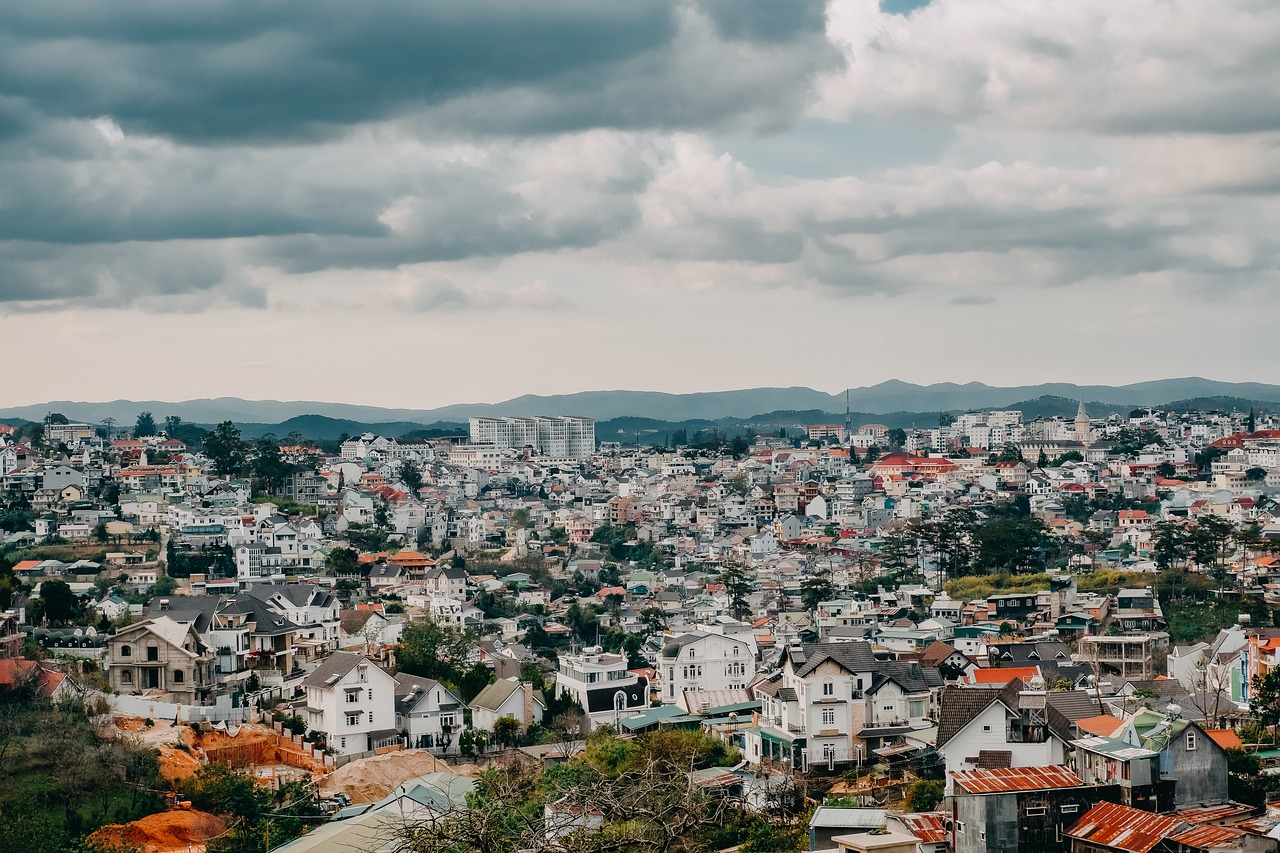
Da Lat (Đà Lạt) sits at about 1,500 m (4,900 ft) on the Lang Biang plateau in Vietnam’s southern Central Highlands, and its mild, spring-like climate has made it the country’s favorite escape from the heat since French doctors founded a hill station here in the 1890s. It is a city of pine forests, lakes and valleys, of French colonial villas, a pastel-colored railway station and a Gothic cathedral, of flower farms and greenhouses that supply much of the country, and of coffee, strawberries and artichokes grown on the surrounding hills. Vietnamese couples come for honeymoons and weekend breaks; foreign travelers come for the cool air, the eccentric architecture, the night market, canyoning and waterfalls, and the countryside rides of the Easy Riders. In 2023, UNESCO named Da Lat a Creative City of Music. Since the 2025 provincial merger, Da Lat is the administrative center of an enlarged Lam Dong province, which now also includes the coast around Mui Ne. The driest, sunniest months are December to April; from May to October, afternoon rain is frequent.
Right now in Da Lat
- Wed 15–24°C 59–75°F 20 mm Heavy showers
- Thu 16–24°C 60–75°F 10 mm Heavy showers
- Fri 16–22°C 60–71°F 4 mm Showers
Weather: MET Norway (CC BY 4.0)
Top tours in Da Lat
See all tours for Da Lat →
From local operators, with prices and reviews; you check availability and book on Viator, our partner. We may earn a commission at no extra cost to you. How we earn money
Da Lat at a glance
- Best for: cool weather, colonial architecture, lakes and pine forests, flower gardens, coffee, food markets, canyoning and countryside motorbike tours.
- How long: 2–3 days for the city and nearby waterfalls; 4 with Lang Biang, a coffee farm or a canyoning trip.
- Best time: December to April, when it is dry and sunny, with cool nights; the Flower Festival is held in December in some years.
- Getting there: Lien Khuong Airport (DLI), about 30 km (19 miles) south, has flights from Hanoi, Ho Chi Minh City and Da Nang; buses take about 6 to 8 hours from Ho Chi Minh City.
- Getting around: on foot around Xuan Huong Lake and the center; by Grab, taxi or rented motorbike to outlying sights.
- Good to know: nights are cool all year, often 12–16 °C (53–61 °F), so bring a jacket.
- Before you go: the e-visa, visa-free stays, money and general safety are in our Vietnam travel guide.
Da Lat’s areas and where to stay
Da Lat is spread over hills around Xuan Huong Lake, a crescent-shaped artificial lake in the city center, with the market and old town to its west and villas, gardens and forests around it.
The center and the market
West of the lake, the streets around the Da Lat Market and the roundabout of Hoa Binh have most of the budget hotels and hostels, cafés, restaurants and the night market, within walking distance of the lake.
Around Xuan Huong Lake
The lakeshore and the hills above it have upmarket hotels, including grand colonial-era properties, the flower park, the golf course and Lam Vien Square, with its giant glass artichoke and wild-sunflower buildings.
The villa quarter and Tran Hung Dao
South and east of the lake, tree-lined streets of French-era villas, some turned into boutique hotels, lead toward Bao Dai’s Summer Palace and the railway station.
Tuyen Lam Lake and the countryside
About 6 km (4 miles) south of the center, the pine-ringed Tuyen Lam Lake has resorts, glamping and the Truc Lam Zen monastery; farm stays and homestays dot the valleys around the city.
Top things to see in Da Lat
Xuan Huong Lake and the Flower Park
The lake, created in the 1920s, is circled by a 5 km (3-mile) path, ideal for walking, cycling or a swan-shaped pedal boat; at its northern end, the Da Lat Flower Park displays hydrangeas, orchids, roses and other highland flowers.
Da Lat Railway Station
Built in the 1930s in Art Deco style with three steep gables echoing the peaks of Lang Biang, the station is one of the city’s landmarks. A short tourist line runs about 7 km (4 miles) to Trai Mat, where the Linh Phuoc Pagoda is decorated with mosaics of broken pottery and glass and has a dragon made of beer bottles.
Hang Nga Guesthouse (the “Crazy House”)
An architect’s fantasy of tree trunks, caves, spider webs and twisting stairways, begun in 1990 by architect Dang Viet Nga and still growing; you can climb its walkways or stay overnight in its themed rooms.
Bao Dai’s Summer Palace
The 1930s Art Deco villa of Vietnam’s last emperor, Bao Dai, with its original furniture, family rooms and gardens, is one of several royal residences preserved in the city.
Truc Lam Zen Monastery and the cable car
A cable car of about 2.3 km (1.4 miles) glides over pine forest from Robin Hill near the center to the Truc Lam Zen Monastery, with gardens and views over Tuyen Lam Lake.
More classic sights
- Da Lat Cathedral: the pink-walled Saint Nicholas Cathedral, known locally as “Chicken Church” for the rooster on its spire, from the 1930s.
- Domaine de Marie: a pink convent church on a hill with a quiet garden.
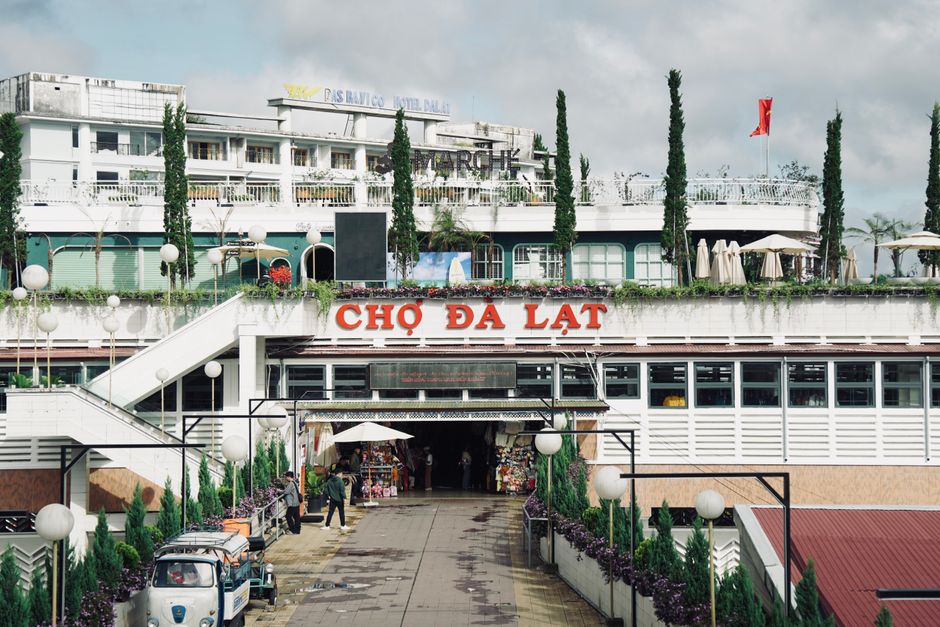
- Da Lat Market and the night market: stalls of dried fruit, artichoke tea, sweaters and street food, busiest in the evening.
- Lam Vien Square: the city’s main square on the lake, with its striking glass buildings.
- Da Lat Flower Gardens and greenhouses: visit a flower farm or the Van Thanh flower village on the city’s edge.
Other things to do in Da Lat
Food and drink
Da Lat’s cool climate gives it a food scene unlike anywhere else in Vietnam. Try banh trang nuong (“Vietnamese pizza,” grilled rice paper with egg, spring onion and dried shrimp) at the night market; banh can, small rice-flour pancakes; lau ga la e, chicken hotpot with aromatic e leaves; hot soy milk with pastries in the evening; avocado ice cream; and fresh strawberries and persimmons. Artichoke tea, dried fruit and preserves make good souvenirs. The hills around the city grow arabica coffee, and Da Lat’s café scene, from hilltop terraces to tiny lanes, is one of the best in Vietnam.
Coffee and cafés
Lam Dong is one of Vietnam’s main coffee regions, and the hills around Da Lat grow arabica as well as robusta. Specialty roasters and farm cafés around Cau Dat, about 20 km (12 miles) southeast, let you walk through the plantations, see the harvest from about October to January, and taste pour-overs and the strong local ca phe sua da (iced coffee with condensed milk). In town, cafés range from tiny wooden rooms with jazz records to hillside terraces overlooking the pines and Xuan Huong Lake; on cool evenings, locals sit outside with hot soy milk and grilled corn.
Shopping
The Da Lat Market and night market sell dried and candied fruit (persimmons, strawberries, mulberries), artichoke tea, local wine, wool hats and sweaters, and fresh flowers. The XQ Historical Village shows the art of hand embroidery, and silk workshops in the countryside sell scarves and fabrics.
Music and festivals
UNESCO added Da Lat to its Creative Cities Network for music on October 31, 2023, recognizing the city’s musical traditions and festivals. Live acoustic cafés play every evening. The Da Lat Flower Festival, held in December in some years, fills the city with floral displays and parades; Tet in early 2027 is celebrated with flower markets.
Canyoning, waterfalls and adventure
The waterfalls south of the city, such as Datanla, reached by an alpine coaster through the forest, and the more remote Pongour and Elephant falls, are popular half-day trips. Canyoning companies offer abseiling and jumping in the gorges around Datanla; choose licensed, well-reviewed operators, and avoid trips after heavy rain, when water levels rise quickly. Mountain biking, zip-lining and paragliding are also offered. See our hiking and cycling guides.
Lang Biang Mountain
The twin peaks of Lang Biang, about 2,167 m (7,110 ft), rise 12 km (7.5 miles) north of the city in the Lang Biang Biosphere Reserve. You can hike to the summit in 3 to 4 hours or ride a jeep to a viewpoint at Radar Hill.
Easy Riders and countryside tours
Local motorbike guides, known as Easy Riders, take visitors on day trips and multi-day rides through the highland countryside to coffee farms, silk factories, flower villages, ethnic minority villages and waterfalls, or all the way to the coast.
Day trips from Da Lat
- Coffee and silk farms: a half-day ride to arabica plantations around Cau Dat and silk-weaving workshops in the valleys south of the city.
- Lang Biang and the K’Ho villages: at the foot of the mountain, Lat village has K’Ho communities and gong performances.
- Pongour and Elephant falls: larger waterfalls about 45 to 60 minutes’ drive from the city.
- Mui Ne: about 4 hours by road to the coast, through the mountains. See our Mui Ne guide.
- Nha Trang: about 3.5 to 4 hours by road over the mountains. See our Nha Trang guide.
Nearby destinations
- Nha Trang89 km
- Mui Ne108 km
- Ho Chi Minh City229 km
Getting there and getting around
By air
Lien Khuong Airport (DLI), about 30 km (19 miles) south of the city, has domestic flights from Hanoi (about 1 hour 45 minutes), Ho Chi Minh City (about 50 minutes), Da Nang and other cities on Vietnam Airlines, Vietjet Air and Bamboo Airways, and a few international routes. Airport buses, taxis and Grab cars take 30 to 45 minutes to the center.
By bus and road
Sleeper buses and limousine vans connect Da Lat with Ho Chi Minh City (about 300 km / 185 miles, 6 to 8 hours), Nha Trang (3.5 to 4 hours), Mui Ne and Phan Thiet (about 4 hours) and Da Nang. Mountain roads such as the Prenn, Mimosa and Khanh Le passes are steep and winding.
Around the city
The center is walkable, though hilly. Grab and taxis are cheap and plentiful, and motorbikes and bicycles can be rented if you are licensed and experienced; the roads are steep, with fog on cool mornings.
When to go and how long to stay
Da Lat has a highland tropical climate: cool all year, with little change in temperature but a marked dry and wet season. The dry season, from December to April, brings sunny days, cool nights and the best conditions for outdoor activities; February and March are the driest. The rainy season, from May to October or November, brings afternoon showers and downpours most days, with fog and mist; September and October are usually the wettest months. Neither the WMO nor Vietnam’s National Center for Hydro-Meteorological Forecasting (NCHMF) publishes 1991–2020 normals for Da Lat on the WMO’s public lists, so the temperatures below come from Vietnam’s national technical regulation on natural conditions for construction, QCVN 02:2022/BXD, issued by the Ministry of Construction, for the Da Lat station at 1,513 m (4,964 ft); rainfall is described from general sources.
| Month | Average high / low | Typical rain | What to expect |
|---|---|---|---|
| January | 22 °C (72 °F) / 12 °C (53 °F) | Dry | Sunny days, chilly nights; Tet flower markets in some years |
| February | 24 °C (75 °F) / 12 °C (53 °F) | Driest month | Sunny and dry; Tet on February 6 in 2027 |
| March | 25 °C (77 °F) / 13 °C (55 °F) | Dry | Warm days; cherry blossoms in some years |
| April | 25 °C (78 °F) / 15 °C (58 °F) | First showers | Warmest month; storms begin late in the month |
| May | 25 °C (76 °F) / 16 °C (61 °F) | Rainy season begins | Afternoon showers; green hills |
| June | 24 °C (74 °F) / 16 °C (62 °F) | Frequent showers | Rain most afternoons |
| July | 23 °C (73 °F) / 16 °C (61 °F) | Wet | Cool and misty |
| August | 23 °C (73 °F) / 16 °C (61 °F) | Wet | Frequent showers |
| September | 23 °C (73 °F) / 16 °C (61 °F) | Very wet | One of the rainiest months |
| October | 23 °C (73 °F) / 15 °C (60 °F) | Very wet | Heavy rain; storms possible |
| November | 22 °C (71 °F) / 15 °C (58 °F) | Rain easing | Wild sunflowers bloom; drying out |
| December | 21 °C (71 °F) / 13 °C (56 °F) | Mostly dry | Cool and sunny; Flower Festival in some years |
2 days in Da Lat
Day one, walk around Xuan Huong Lake, visit the Flower Park, the cathedral and the railway station, ride the train to Trai Mat, and end at the night market. Day two, the cable car to Truc Lam and Tuyen Lam Lake, Datanla Falls, the Crazy House and Bao Dai’s Summer Palace.
4 days with the countryside
Add a canyoning trip or a hike up Lang Biang, and a day with an Easy Rider through coffee farms, silk workshops and flower villages.
Where to stay in Da Lat
- Center and market area: budget hotels, hostels and guesthouses, close to restaurants and the night market.
- Lakeside hills: upscale and historic hotels with views over Xuan Huong Lake.
- Villa quarter: boutique hotels in restored French villas.
- Tuyen Lam Lake and the countryside: resorts, glamping sites and farm stays among the pines.
Hotels fill on weekends, Vietnamese public holidays and during Tet and the Flower Festival, when prices rise sharply.
What a trip to Da Lat costs
Prices are approximate, for October 2026, converted at about 26,000 dong (VND) to the US dollar.
| Item | Typical cost |
|---|---|
| Banh trang nuong at the night market | 20,000–40,000 VND (about US$0.75–1.55) |
| Coffee at a local café | 25,000–60,000 VND (about US$1–2.30) |
| Lau ga la e hotpot for two | 250,000–450,000 VND (about US$10–17) |
| Cable car to Truc Lam, return | 100,000–150,000 VND (about US$3.85–5.80) |
| Crazy House entry | 80,000–120,000 VND (about US$3–4.60) |
| Half-day canyoning trip | 1,000,000–1,600,000 VND (about US$38–62) |
| Grab car from Lien Khuong Airport | 200,000–350,000 VND (about US$7.70–13.50) |
| Mid-range hotel double, per night | 600,000–1,500,000 VND (about US$23–58) |
Practical tips for Da Lat
- Pack warm clothes: nights are cool year-round, and mornings can be foggy and damp.
- Plan outdoor trips for the morning: in the rainy season, showers usually arrive in the afternoon.
- Avoid weekends and holidays: if you want quiet; Vietnamese visitors flock in from Ho Chi Minh City.
- Choose licensed adventure operators: for canyoning, check safety equipment and weather.
- Ride carefully: if you rent a motorbike, you need a license valid in Vietnam, and roads are steep and slippery in the rain.
Safety
Da Lat is safe and relaxed, with little crime beyond occasional bag snatching and overcharging. The main risks are outdoors. Canyoning in the gorges around Datanla can be dangerous after rain, when water levels rise fast; a sudden flood in 2015 killed foreign tourists on a canyoning trip, so go only with licensed operators and in good conditions. In the rainy season, from May to October, heavy downpours cause landslides on the mountain passes into the city, which can close roads; check conditions before traveling by road. Steep, winding roads and fog make motorbike riding risky: helmets are compulsory, and a license valid in Vietnam is required. Nights are cold enough for hypothermia on hikes if you get wet. In an emergency, call 113 for police, 114 for fire and 115 for an ambulance.
What to pack for Da Lat
A warm jacket or fleece and long trousers for the evenings, a rain jacket and quick-drying shoes from May to October, sturdy shoes for hiking and waterfalls, and sunscreen for sunny dry-season days at altitude. Vietnam uses 220 V, with sockets for flat (type A) and round (type C) two-pin plugs. See our rain jackets, hiking shoes and travel adapters guides.
Da Lat travel FAQ
How cold does Da Lat get?
Average lows are about 12–16 °C (53–61 °F) all year, according to Vietnam’s construction climate standard, and highs rarely exceed 25 °C (77 °F); bring a jacket for the evenings.
What is the best time to visit Da Lat?
December to April, for dry, sunny weather. May to October is the rainy season, with afternoon showers most days.
How many days do I need in Da Lat?
Two or three days for the city, the lake, the cable car and waterfalls; four with a countryside tour or canyoning.
How do I get from Ho Chi Minh City to Da Lat?
By air to Lien Khuong in about 50 minutes, or by sleeper bus or limousine van in about 6 to 8 hours.
What food is Da Lat famous for?
Banh trang nuong (grilled rice paper), banh can, lau ga la e (chicken hotpot with e leaves), soy milk, strawberries, avocado ice cream, artichoke tea and highland coffee.
Is canyoning in Da Lat safe?
It is generally safe with licensed operators in good weather, but conditions change quickly after rain; check the operator’s safety record and equipment.
Is Da Lat worth visiting?
Yes, for its cool climate, lakes, pine forests, French architecture, food and café culture, a contrast to Vietnam’s tropical coast.
Can I travel from Da Lat to Mui Ne?
Yes, by bus or private car in about 4 hours through the mountains. Both are now in Lam Dong province.
Is Da Lat a UNESCO site?
Da Lat is a UNESCO Creative City of Music, designated in 2023, and the nearby Lang Biang plateau is a UNESCO Biosphere Reserve.
What is the Crazy House in Da Lat?
Hang Nga Guesthouse, a fantastical building of organic shapes and tunnels designed by architect Dang Viet Nga, which you can visit or stay in.
Sources and last review
Researched and last reviewed on 4 October 2026. Monthly temperatures for the Da Lat station: Vietnam’s Ministry of Construction, QCVN 02:2022/BXD (read via the legal database luatvietnam.vn); the Creative City of Music designation: UNESCO; the 2025 provincial merger and Lam Dong’s administrative center: the Government of Vietnam’s news portal; exchange rate: Vietcombank. City history, the 2015 canyoning accident, sight descriptions and dates, the Flower Festival, airline routes, rainfall seasons, travel times and all typical prices are general references or estimates, flagged for checking. Prices and hours change, so check the official sites before you go. For entry rules, money and general safety, see our Vietnam travel guide.
Plan your trip
Partner links: TravelerCenter may earn a commission if you book, at no extra cost to you.
🇻🇳 Useful Vietnamese phrases for Da Lat
All 38 Vietnamese phrases: restaurant, hotel, emergencies, romance (printable) →