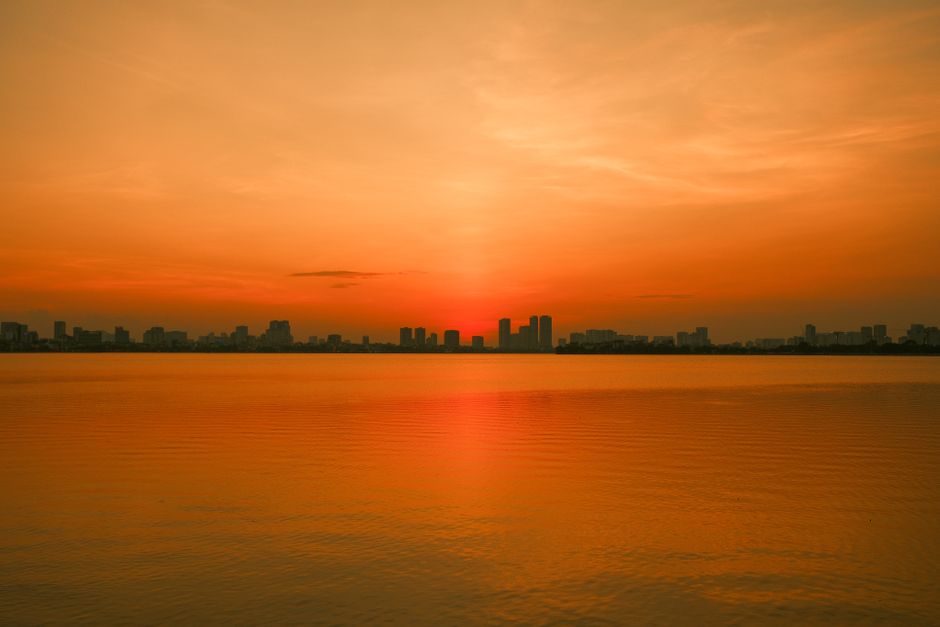
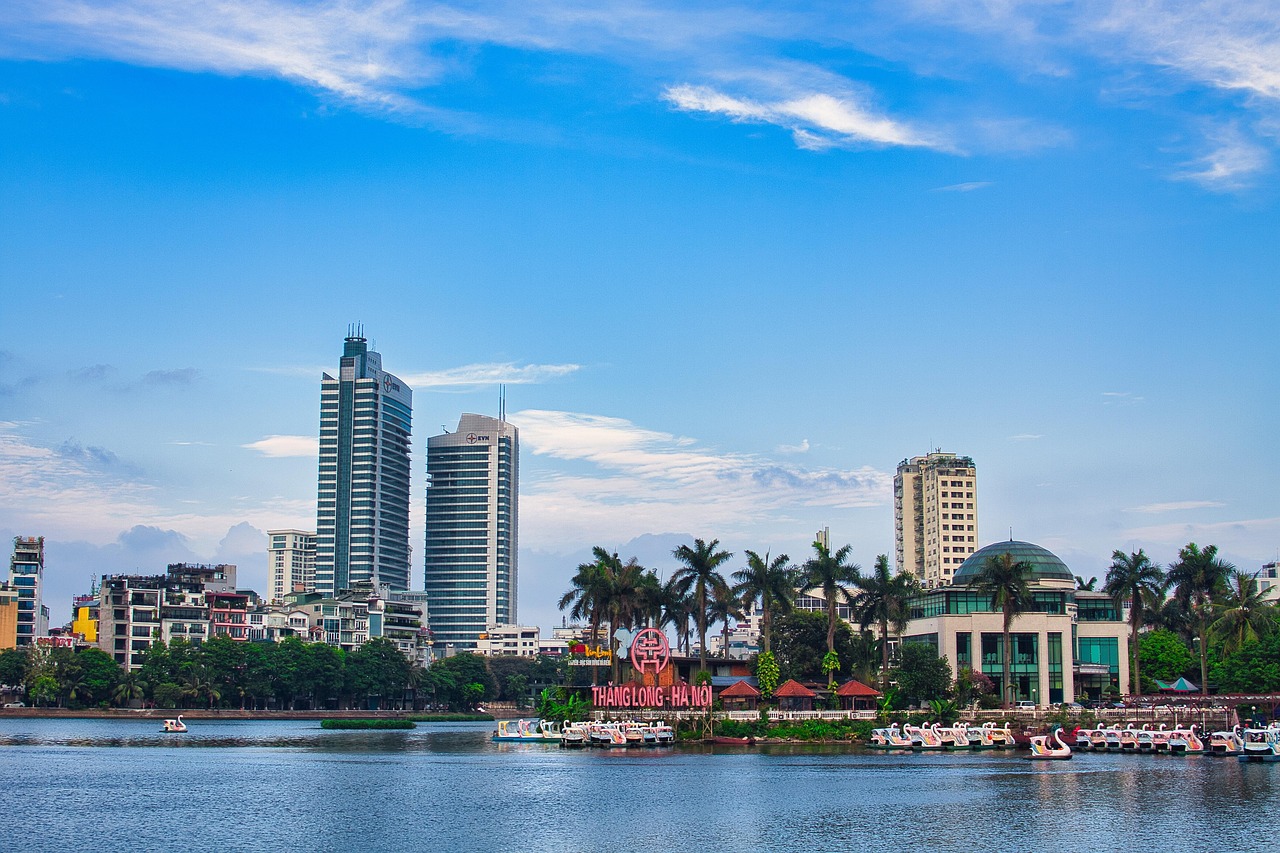
Hanoi, the capital of Vietnam, is a thousand-year-old city of lakes, temples, tree-lined French boulevards and crowded market lanes on the banks of the Red River in the north of the country. Its heart is the Old Quarter, a maze of narrow tube houses, street-food stalls and craft shops beside Hoan Kiem Lake, and around it lie the Temple of Literature, the Imperial Citadel of Thang Long, a UNESCO World Heritage Site, the Ho Chi Minh Mausoleum and the wide expanse of West Lake. Hanoi is the best place to eat pho and bun cha where they were born, to watch a water puppet show, to sip egg coffee on a balcony above the motorbike traffic, and to set out for Ha Long Bay, Ninh Binh and the mountains of Sa Pa. Unlike southern Vietnam, Hanoi has four seasons: hot, wet summers, mild and often gray winters, and two short, lovely seasons in between, from October to November and from March to April.
Right now in Hanoi
- Wed20–29°C68–84°FClear
- Thu20–29°C68–84°FClear
- Fri22–30°C71–86°FMostly clear
Top tours in Hanoi
See all tours for Hanoi →
From local operators, with prices and reviews; you check availability and book on Viator, our partner. We may earn a commission at no extra cost to you. How we earn money
Hanoi at a glance
- Best for: street food, the Old Quarter, temples, museums and colonial architecture, lakeside walks, and day trips to Ha Long Bay and Ninh Binh.
- How long: 2 to 3 days for the city; 4 to 5 with a day trip or two.
- Best time: October to early December and March to April, when days are mild and fairly dry; summer highs reach about 34 °C (93 °F), and January lows dip to about 15 °C (59 °F).
- Getting there: Noi Bai International Airport is about 30 km (19 miles) north of the center; overnight trains run from Lao Cai (for Sa Pa) and from Hue, Da Nang and Ho Chi Minh City on the Reunification Express line.
- Getting around: on foot in the Old Quarter, by Grab or Xanh SM car and motorbike taxi, by city bus and on two metro lines.
- Good to know: Tet, the Lunar New Year, falls on February 6, 2027, and much of the city closes for several days around it.
- Before you go: the e-visa, visa-free stays, money and general safety are in our Vietnam travel guide.
Hanoi’s areas and where to stay
Hanoi spreads over a large, mostly flat area, but visitors spend most of their time in a few central districts within walking distance of Hoan Kiem Lake. Since the 2025 local-government reform, the old districts have been replaced by wards, but the familiar names are still used.
The Old Quarter
North of Hoan Kiem Lake, the Old Quarter is a grid of narrow streets, many still named after the goods once sold on them, such as Hang Bac (silver) and Hang Gai (silk). It is noisy, crowded and endlessly atmospheric, packed with budget and boutique hotels, street-food stalls, cafés, temples and the Dong Xuan Market. On Friday, Saturday and Sunday evenings, streets around the lake and the Old Quarter are closed to traffic and fill with families, street performers and night-market stalls.
Hoan Kiem Lake and the French Quarter
South and east of the lake, the French Quarter has wide boulevards, colonial villas, the Opera House and the grand old hotels, including the Sofitel Legend Metropole. It is calmer than the Old Quarter but still central, with upscale hotels, embassies and good restaurants.
Ba Dinh
West of the Old Quarter, Ba Dinh is the political center, with the Ho Chi Minh Mausoleum, the Presidential Palace grounds, the One Pillar Pagoda and the Imperial Citadel, and the Temple of Literature on its southern edge. It has fewer hotels but is a short Grab ride from everything.
Tay Ho (West Lake)
Around West Lake, the city’s largest lake, Tay Ho is a leafy, residential area popular with long-term foreign residents, with lakeside cafés, international restaurants, serviced apartments and the Tran Quoc Pagoda. It is 15 to 20 minutes by car from the Old Quarter.
Top things to see in Hanoi
Hoan Kiem Lake and the Old Quarter
Start at Hoan Kiem Lake, the “Lake of the Returned Sword,” where a red bridge, The Huc, leads to Ngoc Son Temple on a small island. At dawn, residents practice tai chi on the shore. From there, wander north into the Old Quarter: see the Bach Ma Temple, the restored merchant house at 87 Ma May and the old city gate of O Quan Chuong, and end at the vast, covered Dong Xuan Market.
Temple of Literature
Founded in 1070 to honor Confucius, the Temple of Literature (Van Mieu – Quoc Tu Giam) later housed Vietnam’s first national university. Its five walled courtyards hold gardens, ponds, gateways and stone turtles carrying stelae engraved with the names of successful candidates in the royal examinations. According to the site’s management, it is open daily from 8 a.m. to 5 p.m., and a standard adult ticket costs 70,000 VND (about US$2.70); children under 16 enter free. An evening tour program runs from 6:30 to 10 p.m. on Wednesdays, Saturdays and Sundays, with separate tickets.
Imperial Citadel of Thang Long
The Imperial Citadel, the seat of Vietnamese dynasties for more than a thousand years, was inscribed as a UNESCO World Heritage Site in 2010. Inside the walls you can see the Doan Mon gate, the foundations of royal palaces uncovered by archaeologists, the Kinh Thien Palace terrace, the Hau Lau (Princess Pagoda) and the bunkers and command rooms used during the war. According to the Thang Long–Hanoi Heritage Conservation Center, the central area is open from 8 a.m. to 5 p.m., and from January 1, 2025, the ticket costs 100,000 VND (about US$3.85) for Vietnamese and foreign visitors alike.
Ho Chi Minh Mausoleum and Ba Dinh Square
The granite mausoleum on Ba Dinh Square, where Ho Chi Minh’s embalmed body lies, is open on some mornings and closes for maintenance for a period each year, usually in autumn. Visitors file past in silence; dress modestly (no shorts or sleeveless tops), leave bags and cameras at the check-in, and don’t put your hands in your pockets. Nearby are the stilt house where Ho Chi Minh lived, the Presidential Palace (seen from outside) and the tiny One Pillar Pagoda.
Hoa Lo Prison
Built by the French in the 1890s to hold Vietnamese political prisoners, Hoa Lo was later known to American prisoners of war as the “Hanoi Hilton.” What remains is a museum about the prison’s history. According to its management board, the daytime ticket has cost 50,000 VND (about US$1.90) since January 1, 2024.
More classic sights
- Vietnam Museum of Ethnology: an excellent museum about the country’s 54 ethnic groups, with full-size traditional houses in the garden, in the Cau Giay area west of the center.
- Tran Quoc Pagoda and West Lake: one of the oldest pagodas in the city, on a small island linked to the lakeshore; sunset over West Lake is a local ritual.
- Long Bien Bridge: the iron railway bridge completed in 1902, with views over the Red River.
- Thang Long Water Puppet Theatre: a traditional art from the Red River Delta, with wooden puppets dancing on water to live music, beside Hoan Kiem Lake; book a day ahead in high season.
- Hanoi Opera House and St. Joseph’s Cathedral: landmarks of the French period.
Other things to do in Hanoi
Food and drink
Hanoi has some of the best street food in Asia, much of it eaten on tiny plastic stools on the sidewalk. Try pho bo, the beef noodle soup that originated in the north, for breakfast; bun cha, grilled pork patties and belly with rice noodles, herbs and a sweet-sour dipping sauce, at lunchtime; cha ca, turmeric-marinated fish fried at the table with dill and spring onions; banh cuon, steamed rice rolls with minced pork and mushrooms; bun rieu, a crab and tomato noodle soup; and banh mi, the Vietnamese baguette sandwich. Finish with ca phe trung, egg coffee, a rich whipped yolk-and-sugar topping on strong coffee, invented in Hanoi in the 1940s, or a glass of bia hoi, fresh draft beer sold cheaply at corner bars in the Old Quarter.
Festivals and events
Tet, the Lunar New Year, is the biggest festival of the year, with flower markets, family visits and temple crowds; many shops and restaurants close for several days. In 2027, Tet falls on February 6, and the Government Office has announced that civil servants will be off from February 2 to 10. The Mid-Autumn Festival fills Hang Ma Street with lanterns and toys in September or early October. National Day on September 2 brings parades and fireworks, and Vietnam National Administration of Tourism lists a Hanoi Autumn Festival in September.
Shopping and nightlife
Hang Gai sells silk and lacquerware, and the weekend night market runs north from the lake along Hang Dao. In the evening, Ta Hien Street, “beer street,” is packed with bars, while Tay Ho and the French Quarter have quieter cocktail bars.
Cooking classes, cycling and culture
Cooking classes usually start with a market visit. Bicycle tours cross the Red River to the banana plantations and villages of the floodplain; see our cycling and city sightseeing guides.
Day trips from Hanoi
- Ninh Binh: limestone karsts, rice fields and river caves at Trang An and Tam Coc, about 95 km (60 miles) south, 2 hours by road or train. See our Ninh Binh guide.
- Ha Long Bay: the UNESCO bay of thousands of limestone islands, about 2.5 hours by expressway; it is much better with at least one night on a cruise boat. See our Ha Long Bay guide.
- Perfume Pagoda: a complex of temples in limestone caves reached by rowing boat and cable car, about 2 hours southwest; it is extremely crowded during the pilgrimage season after Tet.
- Bat Trang: the ceramics village, 30 to 45 minutes away, easily combined with a half-day in the city.
- Sa Pa: too far for a day, but about 5 to 6 hours by expressway bus or an overnight train to Lao Cai. See our Sa Pa guide.
Nearby destinations
- Ninh Binh87 km
- Ha Long Bay142 km
- Ha Giang219 km
- Sa Pa253 km
Getting there and getting around
By air
Noi Bai International Airport (HAN) is about 30 km (19 miles) north of the center, 45 to 60 minutes by road, and has flights from across Asia, the Middle East and Europe, as well as frequent domestic flights to Ho Chi Minh City, Da Nang, Nha Trang (Cam Ranh), Phu Quoc, Hue and Dalat. Terminal 1 handles domestic flights and Terminal 2 international flights. Grab and Xanh SM cars and the airport’s official taxi lines are the easiest way into town; the express airport bus 86 runs to the Old Quarter and the main railway station.
By train and bus
Hanoi Station is the northern end of the north–south railway, the Reunification Express, with daily trains to Hue, Da Nang, Nha Trang and Ho Chi Minh City, and the starting point for night trains to Lao Cai, the station for Sa Pa. Vietnam Railways sells tickets on its website, dsvn.vn, and at stations. Long-distance buses and comfortable sleeper and “limousine” vans leave from the bus stations of My Dinh, Giap Bat, Gia Lam and Nuoc Ngam, and many companies pick up from Old Quarter hotels.
Around the city
The Old Quarter and the lake are best explored on foot, though crossing the street takes practice: walk at a steady pace and let the motorbikes flow around you. Grab and the electric Xanh SM taxis are cheap and show the fare in advance, for cars and motorbike taxis. Two elevated metro lines (2A and 3) and a large bus network serve the suburbs. Renting a motorbike is not recommended for first-time visitors: traffic is dense and chaotic, and you need a valid license (see Safety below).
When to go and how long to stay
Hanoi has a humid subtropical climate with a hot, rainy summer and a cool, dry winter. From May to September, days are hot and sticky, with heavy afternoon storms; the wettest months are July and August. From December to February, it is mild, often overcast and damp, with drizzle and occasional cold snaps. The best times are October to early December and March to April. The table shows the 1991–2020 climate normals for Hanoi from Vietnam’s National Center for Hydro-Meteorological Forecasting (NCHMF), as published by the World Meteorological Organization (WMO).
| Month | Average high / low | Rain (rainy days) | What to expect |
|---|---|---|---|
| January | 20 °C (68 °F) / 15 °C (58 °F) | 28 mm (1.1 in), 11 days | Cool and gray, with drizzle; Tet may fall this month or next |
| February | 21 °C (70 °F) / 16 °C (61 °F) | 19 mm (0.7 in), 12 days | Mild, damp and misty; Tet on February 6 in 2027 |
| March | 24 °C (74 °F) / 19 °C (66 °F) | 55 mm (2.2 in), 18 days | Warming, humid, often overcast |
| April | 28 °C (82 °F) / 22 °C (71 °F) | 79 mm (3.1 in), 16 days | Pleasant and warm; trees in flower |
| May | 32 °C (89 °F) / 25 °C (76 °F) | 188 mm (7.4 in), 17 days | Hot; first heavy storms |
| June | 34 °C (93 °F) / 26 °C (79 °F) | 231 mm (9.1 in), 16 days | Hot and humid, with frequent storms |
| July | 33 °C (92 °F) / 27 °C (80 °F) | 300 mm (11.8 in), 18 days | Hot; one of the wettest months |
| August | 33 °C (91 °F) / 26 °C (78 °F) | 335 mm (13.2 in), 18 days | The wettest month; risk of street flooding |
| September | 32 °C (89 °F) / 25 °C (76 °F) | 195 mm (7.7 in), 14 days | Rain easing; National Day on September 2 |
| October | 30 °C (85 °F) / 22 °C (72 °F) | 126 mm (5.0 in), 10 days | Dry, sunny and mild; the best month |
| November | 26 °C (79 °F) / 19 °C (67 °F) | 48 mm (1.9 in), 7 days | Cool and dry; very pleasant |
| December | 22 °C (72 °F) / 15 °C (60 °F) | 24 mm (0.9 in), 7 days | Cool and dry; Christmas lights in the Old Quarter |
Hanoi gets about 1,630 mm (64 in) of rain a year, mostly in heavy downpours from May to September. Winter air quality is often poor, with smog and dust trapping pollution over the city; check the air quality index on bad days.
2 days in Hanoi
Day one, an early walk around Hoan Kiem Lake and Ngoc Son Temple, the Old Quarter and Dong Xuan Market, a bun cha lunch, Hoa Lo Prison and the French Quarter in the afternoon, and a water puppet show and street-food dinner. Day two, the Ho Chi Minh Mausoleum and Ba Dinh in the morning, the Temple of Literature and the Imperial Citadel, then sunset at West Lake.
4 to 5 days with day trips
Add the Vietnam Museum of Ethnology, a cooking class or food tour, a day in Ninh Binh, and an overnight cruise on Ha Long Bay, or go north to Sa Pa for two or three nights.
Where to stay in Hanoi
- Old Quarter: the widest choice, from hostels to boutique hotels; lively, central and noisy at night.
- Hoan Kiem Lake and the French Quarter: historic grand hotels and international chains, quieter streets, an easy walk to the Old Quarter.
- Ba Dinh: a few mid-range hotels close to the mausoleum and the Temple of Literature.
- Tay Ho (West Lake): serviced apartments, boutique hotels and lake views, best for longer and quieter stays.
Rooms fill and prices rise at Tet, around the April 30–May 1 holidays and during the September 2 National Day holiday. Some Old Quarter rooms have no windows.
What a trip to Hanoi costs
Prices are approximate, for October 2026, converted at about 26,000 dong (VND) to the US dollar.
| Item | Typical cost |
|---|---|
| Bowl of pho or bun cha at a street stall | 40,000–70,000 VND (about US$1.50–2.70) |
| Egg coffee in a café | 35,000–60,000 VND (about US$1.35–2.30) |
| Glass of bia hoi | 10,000–20,000 VND (about US$0.40–0.75) |
| Temple of Literature, adult | 70,000 VND (about US$2.70) |
| Imperial Citadel of Thang Long | 100,000 VND (about US$3.85) |
| Hoa Lo Prison | 50,000 VND (about US$1.90) |
| Grab car from Noi Bai Airport to the Old Quarter | 250,000–400,000 VND (about US$10–15) |
| Water puppet show | 100,000–200,000 VND (about US$3.85–7.70) |
| Mid-range hotel double, per night | 800,000–2,000,000 VND (about US$31–77) |
| Hostel dorm bed | 150,000–300,000 VND (about US$6–12) |
Practical tips for Hanoi
- Carry cash: street stalls, markets and small shops take cash or Vietnamese QR payments only; ATMs are everywhere in the center.
- Cross the road slowly: walk at a steady pace, make eye contact and don’t run; motorbikes will go around you.
- Check the mausoleum schedule: it opens only in the morning on most days and closes for an annual maintenance period.
- Use apps for taxis: Grab and Xanh SM show the fare in advance; avoid unmarked taxis and motorbike drivers who don’t agree on a price first.
Safety
Hanoi is generally safe, and violent crime against visitors is rare. The main risk is traffic: millions of motorbikes, few pedestrian crossings and sidewalks blocked by parked bikes and food stalls. Vietnamese law requires helmets for drivers and passengers on motorbikes, and riding one requires a driving license valid in Vietnam; a home license alone is not enough, and only international driving permits issued under the 1968 Vienna Convention are recognized, so many visitors who rent bikes are riding illegally and uninsured. Bag snatching from passing motorbikes and pickpocketing happen in crowded areas, especially around Tet and Christmas; carry bags on the side away from the road and keep phones away from the curb. Overcharging by unlicensed taxis and some cyclo and motorbike drivers is the most common scam. Heavy summer storms can flood streets for a few hours, and winter smog can be bad for people with asthma. Methanol-contaminated spirits have caused poisonings in Vietnam, so stick to sealed, branded bottles. Vaping products are banned. In an emergency, call 113 for police, 114 for fire and 115 for an ambulance.
What to pack for Hanoi
Light, breathable clothes and an umbrella or rain jacket from May to September; a warm sweater and a light jacket from December to February, when unheated rooms feel cold; comfortable walking shoes; and clothes that cover shoulders and knees for temples and the mausoleum. Vietnam uses 220 V, with two-pin sockets that take flat (type A) and round (type C) plugs. See our rain jackets and travel adapters guides.
Hanoi travel FAQ
How many days do I need in Hanoi?
Two to three days for the Old Quarter, the main sights and the food; four or five with day trips to Ninh Binh or Ha Long Bay.
What is the best time to visit Hanoi?
October to early December and March to April, when the weather is mild and mostly dry. Summer is hot and wet, and winter is cool, damp and often gray.
How do I get from Noi Bai Airport to the Old Quarter?
By Grab, Xanh SM or official airport taxi in 45 to 60 minutes, for about 250,000–400,000 VND, or on the express bus 86, which stops near the Old Quarter and Hanoi Station.
How much is the Temple of Literature ticket?
A standard adult ticket costs 70,000 VND, and children under 16 enter free. The temple is open from 8 a.m. to 5 p.m. daily, with evening tours on Wednesdays, Saturdays and Sundays.
How much does it cost to visit the Imperial Citadel of Thang Long?
100,000 VND per person since January 1, 2025, for both Vietnamese and foreign visitors; it is open from 8 a.m. to 5 p.m.
Where is the best area to stay in Hanoi?
The Old Quarter for atmosphere and street food, the French Quarter around Hoan Kiem Lake for quieter, upscale hotels, and Tay Ho for longer, calmer stays.
Can I do Ha Long Bay as a day trip from Hanoi?
Yes, by expressway in about 2.5 hours each way, but you will spend most of the day on the road; an overnight cruise lets you see the bay at sunset and dawn.
What food is Hanoi famous for?
Pho, bun cha, cha ca, banh cuon, bun rieu and egg coffee, plus cheap bia hoi draft beer.
When is Tet in 2027?
Lunar New Year’s Day falls on February 6, 2027. Civil servants are off from February 2 to 10, and many shops and restaurants close for several days.
Is it safe to ride a motorbike in Hanoi?
It is risky for inexperienced riders. You need a license valid in Vietnam, such as a 1968-convention international driving permit with your home license, and helmets are compulsory. Most visitors are better off using Grab.
Plan your trip
Partner links: TravelerCenter may earn a commission if you book, at no extra cost to you.
🇻🇳 Useful Vietnamese phrases for Hanoi
All 38 Vietnamese phrases: restaurant, hotel, emergencies, romance (printable) →
Sources · last reviewed 4 October 2026
Researched and last reviewed on 4 October 2026. Temple of Literature hours, tickets and evening tours: the Van Mieu – Quoc Tu Giam management; Imperial Citadel hours and fees: the Thang Long–Hanoi Heritage Conservation Center; Hoa Lo Prison fees: the Hoa Lo Prison Relic management board; Tet 2027 holiday dates: the Government of Vietnam’s news portal (Government Office announcement); Hanoi Autumn Festival: the Vietnam National Administration of Tourism; climate normals: Vietnam’s National Center for Hydro-Meteorological Forecasting (NCHMF), via the World Meteorological Organization’s World Weather Information Service; railway booking: Vietnam Railways; exchange rate: Vietcombank. Driving-license and helmet rules, the methanol and vape information and seasonal flooding are from the UK government’s factual entry and safety pages; mausoleum opening patterns, metro lines, bus routes, airport transfer times and typical prices are general references or estimates, flagged for checking. Prices and hours change, so check the official sites before you go. For entry rules, money and general safety, see our Vietnam travel guide.
Data: Weather: MET Norway (CC BY 4.0) · Rates: ECB · Costs: World Bank ICP and price levels · Wikidata (CC0)