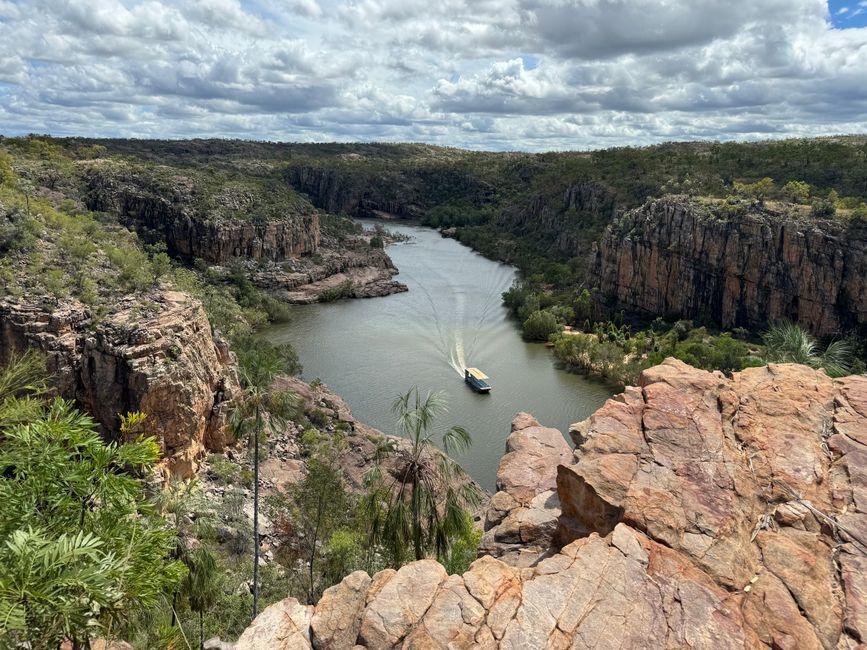
Kakadu National Park, about three hours’ drive east of Darwin in the Northern Territory’s Top End, is Australia’s largest national park on land: almost 20,000 square kilometers (7,600 square miles) of floodplains, monsoon forest, sandstone escarpment and tidal rivers, roughly the size of New Jersey. It is listed by UNESCO for both its natural and its cultural values, one of only a handful of places in the world with that double recognition. Its Aboriginal Traditional Owners, the Bininj in the north and Mungguy in the south, have lived here for tens of thousands of years, and the rock art galleries at Ubirr and Burrungkuy (Nourlangie) are among the oldest and finest anywhere. Kakadu is jointly managed by its Traditional Owners and Parks Australia. Visitors come for the art, for wetlands crowded with birds, for saltwater crocodiles on the Yellow Water cruise and for waterfalls and plunge pools in the stone country. This is tropical Australia, with a dry season from about April or May to October and a wet tropical summer from November to March, when floods close many roads and sites. Kakadu’s Traditional Owners describe six seasons rather than two.
Right now in Kakadu National Park (Jabiru)
- Wed22–38°C71–101°FMostly clear
- Thu22–37°C71–99°FPartly cloudy
- Fri23–36°C74–98°FPartly cloudy
Top tours in Kakadu National Park
See all tours for Kakadu National Park →
From local operators, with prices and reviews; you check availability and book on Viator, our partner. We may earn a commission at no extra cost to you. How we earn money
Kakadu at a glance
- Best months: June to August for cooler, dry weather and the widest access; May and September for fewer visitors. The tropical summer (November to March) brings storms, floods and closures, but also green landscapes and thundering waterfalls seen from the air.
- Time needed: two days for Ubirr, Burrungkuy and a Yellow Water cruise; three to four days to add the southern pools and longer walks.
- Getting there: drive about three hours from Darwin on the Stuart and Arnhem highways. There are no commercial flights into the park.
- Costs (as of October 2026): a park pass is required. Passes for visits until 31 October 2026 are sold at tropical summer rates: $25 per adult (usually $40), valid for 7 days.
- 2026 closure: the Jim Jim Falls and Twin Falls area is closed for all of 2026 for road and infrastructure upgrades.
- Before you go: entry rules (ETA, eVisitor or visa), biosecurity and money are covered in our Australia travel guide.
Park pass, seasons and closures
Kakadu park pass
Everyone aged 16 and over needs a Kakadu park pass, which is valid for 7 days and covers entry to Kakadu only. Prices depend on the season. In the dry season (15 May to 31 October) an adult pass is normally $40, a child pass (5 to 15) $20, a family pass $100 and a concession pass $30. In the tropical summer (1 November to 14 May) they drop to $25, $12.50, $65 and $19. Parks Australia says that passes bought for visits between 1 July and 31 October 2026 are charged at wet season rates, so the lower prices apply now. Northern Territory residents get in free. Buy online before you go (the quickest way), or at the Bowali Visitor Centre in Jabiru, Cooinda Lodge, Corroboree Park Tavern, the Humpty Doo Post Office or the Katherine Visitor Centre. Pass revenue goes back into the park and supports Traditional Owners’ homelands, training and businesses. If you are also visiting Uluṟu, you need a separate pass for Uluṟu-Kata Tjuṯa National Park; other Northern Territory parks, such as Litchfield, are managed by the Northern Territory Government, with entry and bookings through NT Park Bookings.
Seasons and wet-season road closures
Most visitor sites open during the dry season, after rangers inspect them, repair roads, clean up facilities and survey and trap crocodiles. Parks Australia’s daily Kakadu Access Report lists every road, walk and campground as open, open with risks or closed, with target opening dates; check it the day before you travel and again in the morning, along with the Northern Territory Government road report. From about November, monsoon rain floods the plains and closes unsealed roads and many sites, sometimes until May or June. A core of sites is usually open all year, weather permitting: Burrungkuy (Nourlangie), the Yellow Water cruise, the Mirray (Mirrai) and Nawurlandja lookouts, Nanguluwurr art site, Kubara pools, the Bowali track, Mardukal and Home billabongs, and the Yurmikmik walks.
Jim Jim and Twin Falls closed in 2026
The Jim Jim and Twin Falls area, including Jim Jim Falls, Twin Falls gorge and escarpment walk, the Barrk Marlam and Budjmi walks and Karnamarr campground, is closed for all of 2026. Cyclones badly damaged the roads, and Traditional Owners asked that the area stay closed until upgrades are finished. Works began in June 2026 and are expected to be complete by December 2026, ahead of reopening for the 2027 dry season. The rest of Kakadu remains open.
Status of key sites (early October 2026)
According to the Access Report of 29 September 2026, the Arnhem and Kakadu highways are open, as are Ubirr, the Burrungkuy rock art site (gates open 7 a.m. to 7 p.m.), Maguk and Yellow Water. Gunlom is open with risks: Gunlom Road is for high-clearance 4WD vehicles only, and there is no access to or swimming in the bottom plunge pool. Cahills Crossing still has water over the road. A few walks are closed, including the Barrk sandstone walk at the request of Traditional Owners. Conditions change daily.
Kakadu regions and who each one suits
East Alligator and Ubirr
In the northeast, on the border with Arnhem Land, Ubirr is the park’s most famous rock art site and sunset lookout. Nearby are Cahills Crossing, a tidal causeway where crocodiles gather, and the Bardedjilidji sandstone walk. Merl campground is the base here. Arnhem Land beyond the river needs a separate permit.
Jabiru
The park’s only town, near the center, has the Bowali Visitor Centre (open 9 a.m. to 5 p.m.), a supermarket, fuel, a hotel shaped like a crocodile and campgrounds. It suits travelers who want shops and a pool between day trips.
Burrungkuy (Nourlangie) and South Alligator
South of Jabiru, Burrungkuy’s rock shelters and the Anbangbang Billabong walk are open most of the year. The South Alligator River area has the Mamukala wetlands bird hide and 4WD billabongs.
Yellow Water (Ngurrungurrudjba) and Cooinda
The wetland heart of the park, with the boat cruise, the Warradjan Cultural Centre and Cooinda Lodge with its campground. It’s the best base for wildlife.
Mary River and the south
The quieter south has Gunlom’s plunge pools and the Maguk gorge, Yurmikmik walks and campgrounds, reached from the Kakadu Highway toward Katherine.
Top things to see in Kakadu
Ubirr rock art and sunset
Ubirr’s galleries show fish, turtles, wallabies and spirit figures painted in X-ray style, showing bones and organs, alongside contact-era images of Europeans. A short climb leads to a lookout over the Nadab floodplain, one of the classic sunset views in northern Australia. Ubirr is open and reached on a sealed road.
Burrungkuy (Nourlangie)
A sandstone outcrop with shelters used for thousands of years and paintings including Namarrkon, the lightning man. The rock art site and Anbangbang Billabong walk are open daily, with gates from 7 a.m. to 7 p.m. Nawurlandja lookout, nearby, is good at sunset.
Yellow Water cruise
Boat cruises on the Yellow Water billabong and South Alligator River run year-round from Cooinda, weather permitting. Expect saltwater crocodiles, jabirus, magpie geese, whistling ducks, sea eagles and water lilies; sunrise and sunset departures are the most atmospheric. Book through the operator, Cooinda Lodge.
Maguk and Gunlom
Maguk is a gorge with a plunge pool reached by a walk through monsoon forest; rangers carry out crocodile management, but you enter the water at your own risk. Gunlom’s upper pools look over the southern plains; the access road is currently for high-clearance 4WD vehicles only, and the bottom plunge pool is off-limits.
Mamukala wetlands and scenic flights
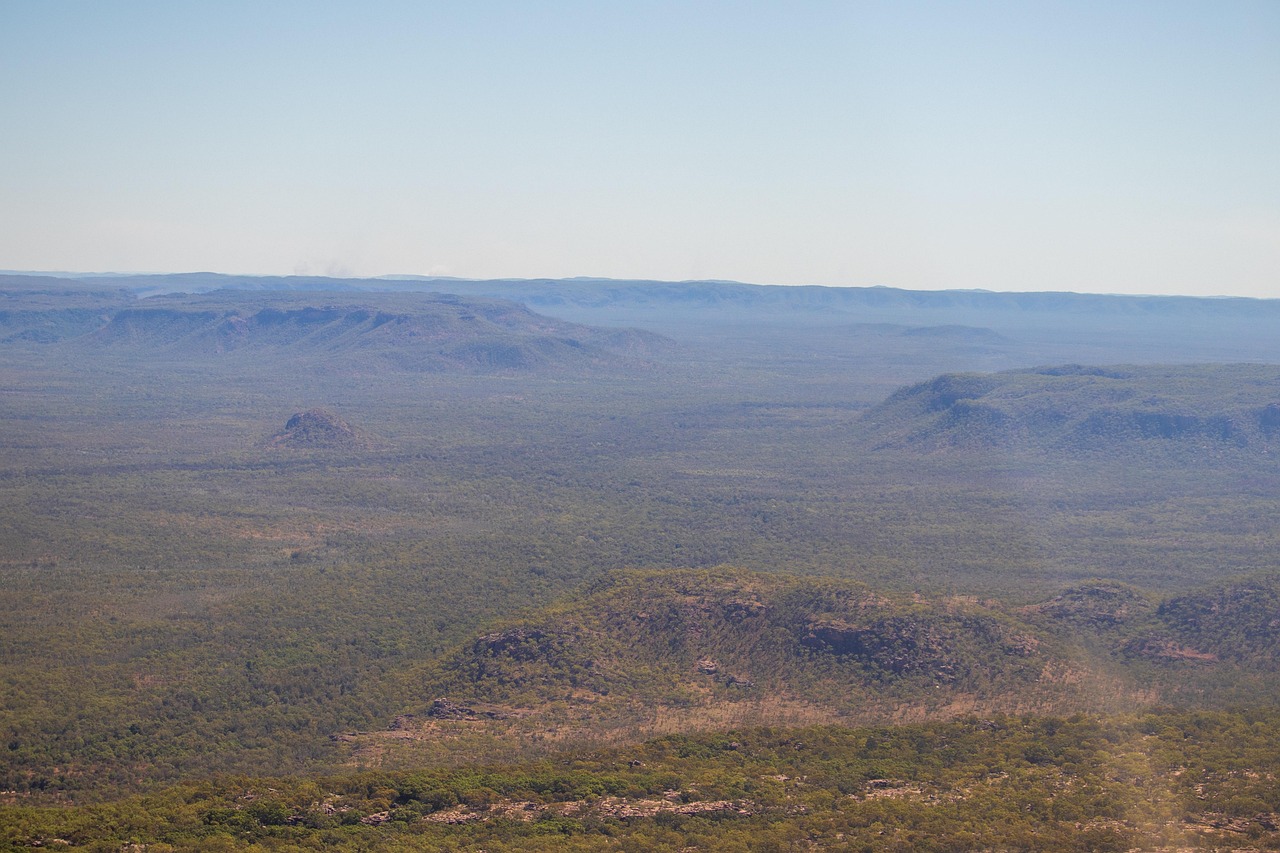
Mamukala, on the Arnhem Highway, has a bird hide over a wetland that fills with magpie geese late in the dry season. Scenic flights from Jabiru are the best way to see the escarpment and, in the wet season, waterfalls in full flow when roads are closed.
Warradjan Cultural Centre and Bowali
The Warradjan Cultural Centre near Cooinda explains Bininj/Mungguy culture and the six seasons. The Bowali Visitor Centre in Jabiru has displays, ranger information and the Marrawuddi gallery.
Other things to do in Kakadu
- Ranger talks: free ranger-guided art site talks and walks run in the dry season; check the program at Bowali.
- Fishing: barramundi fishing is popular on the rivers and billabongs; follow park fishing rules and keep well away from the water’s edge.
- Birdwatching: about a third of Australia’s bird species have been recorded in Kakadu.
- Camping: from powered sites at Jabiru and Cooinda to remote bush camps; some sites need bookings or permits.
Food and drink
Eating options are limited: hotel restaurants and bistros at Jabiru and Cooinda, a supermarket and a bakery in Jabiru, and roadhouses along the highways. Bring supplies from Darwin if you are camping, and carry plenty of water. Some tours include bush tucker tastings.
Day trips and nearby
Darwin
Kakadu is a long day trip from Darwin, but most people stay at least one or two nights. Tours run from Darwin all year.
Litchfield National Park
About 1.5 hours south of Darwin, Litchfield has waterfalls, swimming holes and magnetic termite mounds; it pairs well with Kakadu on a Top End loop.
Katherine and Nitmiluk
About three hours south of Cooinda via the Kakadu Highway, Katherine is the gateway to the cruises and canoe trips of Nitmiluk (Katherine) Gorge.
Arnhem Land
Guided tours cross the East Alligator River into Arnhem Land to visit Injalak Hill’s rock art and the community of Gunbalanya. You need a permit; tours arrange it.
Nearby destinations
- Darwin193 km
Getting there and getting around
Driving from Darwin, Katherine or Alice Springs
From Darwin, drive about three hours via the Stuart Highway and the Arnhem Highway. From Katherine, take the Stuart Highway and the Kakadu Highway, also about three hours. Rental 2WD cars, 4WDs and motorhomes are available in Darwin and Katherine. The long Red Centre Way road trip links Alice Springs and Uluṟu with Kakadu. There are no commercial flights to the park.
Tours
Bus and 4WD tours from Darwin range from long day trips to multi-day camping safaris. A tour is a good choice if you don’t want to drive, especially in the wet season.
2WD or 4WD?
The main highways and the roads to Ubirr, Burrungkuy, Yellow Water and Jabiru are sealed. Gunlom, the Old Jim Jim Road, several billabongs and remote camps are currently 4WD only, and some tracks are steep, narrow and slippery when wet. Distances are long; fill up with fuel at Jabiru, Cooinda or the roadhouses.
When to go and how long to stay
Kakadu is hot all year. In the dry season, the cool months of June to August bring clear skies, low humidity, highs around 32 °C (90 °F) and nights around 19 °C (66 °F); this is the most popular time, and the best for access. From September to November, the build-up is the hottest time, with highs of 37–38 °C (99–100 °F) and rising humidity. The tropical summer (November to March) brings heavy rain, thunderstorms and flooding; January and February average about 370 mm (14.6 in) of rain each. Kakadu’s Traditional Owners recognize six seasons: Kudjewk (monsoon), Bangkerreng (knock-’em-down storms), Yekke (cool, misty mornings), Wurrkeng (cold time), Kurrung (hot and dry) and Kunumeleng (pre-monsoon).
| Month | Average high | Average low | Rain | Rain days (≥1 mm) |
|---|---|---|---|---|
| Jan | 34 °C (93 °F) | 25 °C (77 °F) | 370 mm (14.6 in) | 19 |
| Feb | 34 °C (92 °F) | 25 °C (76 °F) | 369 mm (14.5 in) | 18 |
| Mar | 34 °C (94 °F) | 25 °C (76 °F) | 297 mm (11.7 in) | 16 |
| Apr | 35 °C (94 °F) | 24 °C (75 °F) | 109 mm (4.3 in) | 6 |
| May | 34 °C (93 °F) | 22 °C (72 °F) | 21 mm (0.8 in) | 2 |
| Jun | 32 °C (90 °F) | 20 °C (68 °F) | 1 mm (0.1 in) | 0 |
| Jul | 32 °C (90 °F) | 19 °C (66 °F) | 3 mm (0.1 in) | 0 |
| Aug | 34 °C (93 °F) | 19 °C (67 °F) | 1 mm (0.1 in) | 0 |
| Sep | 37 °C (98 °F) | 22 °C (71 °F) | 14 mm (0.5 in) | 0 |
| Oct | 38 °C (100 °F) | 24 °C (75 °F) | 49 mm (1.9 in) | 3 |
| Nov | 37 °C (99 °F) | 25 °C (77 °F) | 123 mm (4.9 in) | 9 |
| Dec | 35 °C (96 °F) | 25 °C (77 °F) | 231 mm (9.1 in) | 15 |
| Year | 35 °C (94 °F) | 23 °C (73 °F) | 1,603 mm (63 in) | 89 |
Figures are the Bureau of Meteorology’s 1991–2020 statistics for Jabiru Airport, in the middle of the park (about 26 years of records).
How long to stay: 2, 3 and 4 days
- Two days: Ubirr at sunset, Burrungkuy, the Bowali Visitor Centre and a morning Yellow Water cruise.
- Three days: add Mamukala, the Warradjan Cultural Centre and Maguk.
- Four days: add a scenic flight, Gunlom (with a suitable 4WD) and the southern walks, or continue to Katherine.
Where to stay in Kakadu
- Jabiru: a hotel, a lodge with cabins and caravan parks, close to Ubirr and Burrungkuy.
- Cooinda: a lodge with rooms and a campground beside Yellow Water, ideal for cruises.
- South Alligator and Mary River: a resort and a roadhouse with rooms and camping.
- Park campgrounds: from serviced campgrounds with showers to bush camps; book where required.
Book early for June to August, when the hotels are busiest.
Typical costs
| Item (as of October 2026) | Australian dollars | About US dollars |
|---|---|---|
| — | — | — |
| Park pass, adult (to 31 Oct 2026, 7 days) | $25 | $17 |
| Park pass, adult, dry season rate | $40 | $28 |
| Park pass, child 5–15 (now / dry season) | $12.50 / $20 | $9 / $14 |
| Park pass, family (now / dry season) | $65 / $100 | $45 / $69 |
| Yellow Water cruise, adult | about $100–130 | about $70–90 |
| Day tour from Darwin | about $250–350 | about $170–240 |
| Lodge or hotel room, per night | about $250–450 | about $170–310 |
Park pass prices are official Parks Australia prices; cruises, tours and rooms are typical ranges, not official prices. Conversions use about US$0.69 to A$1.
Safety in Kakadu
Kakadu is wild country, and Parks Australia asks every visitor to follow rangers’ directions and signs.
- Crocodiles: saltwater crocodiles live in Kakadu’s rivers, billabongs, floodplains and coast and can attack in knee-deep water, so even wading is dangerous. Swim only where signs allow, stay well back from the water’s edge, don’t clean fish or camp near the water, and remember that crocodiles can attack people in small boats. The safest place to swim is a hotel or public pool.
- Water hazards: flash floods, strong currents, slippery rocks, submerged logs and cold water in rock pools are also risks; never swim alone.
- Heat: temperatures regularly reach 30 °C (86 °F) and can exceed 40 °C (104 °F) in summer. Walk in the cooler parts of the day, avoid 2:30 p.m. to 6:30 p.m., and in summer don’t walk after 11 a.m. Carry and drink about one liter of water per person per hour, wear a hat and sunscreen, and learn the signs of heatstroke and low sodium (hyponatremia).
- Wet-season roads and closures: never drive into floodwater, check the Access Report and road report, and obey closure signs.
- Bushfires and burning: rangers carry out early dry season burning; respect fire closures and total fire bans.
- Remote travel: there is no mobile coverage in most of the park; tell someone your plans and carry extra water and food.
- Emergencies: call 000 (112 from mobile phones).
Practical tips for Kakadu
- Time zone: Australian Central Standard Time (UTC+9:30), with no daylight saving.
- Cultural respect: some sites are closed at the request of Traditional Owners; respect signs about photography and restricted areas, and don’t touch rock art.
- Supplies: Jabiru has the only supermarket; fuel is also sold at Cooinda and roadhouses.
- Bird flu: follow Parks Australia guidance and don’t touch sick or dead birds.
What to pack for Kakadu
Pack light, loose long-sleeved clothing, a broad-brimmed hat, high-factor sunscreen, sturdy walking shoes, insect repellent and a large refillable water bottle or hydration pack. Bring binoculars for birds and crocodiles, a headlamp for camping, and a rain jacket in the wet season.
Kakadu National Park travel FAQ
How much is the Kakadu park pass?
Until 31 October 2026, an adult pass costs $25, the tropical summer rate. The normal dry season price is $40 per adult. Passes are valid for 7 days and children under 5 are free.
Is Jim Jim Falls open in 2026?
No. The Jim Jim and Twin Falls area is closed for the whole of 2026 for road upgrades and is expected to reopen for the 2027 dry season.
When is the best time to visit Kakadu?
June to August, in the dry season, for cooler weather and the most open sites. The wet season is greener and quieter but many roads close.
How far is Kakadu from Darwin?
About three hours’ drive east via the Stuart and Arnhem highways.
Can you swim in Kakadu?
Only where signs permit, and always at your own risk, because saltwater crocodiles live in many waterways. The safest place to swim is a hotel or public pool.
Do I need a 4WD in Kakadu?
Not for the main sights: the roads to Ubirr, Burrungkuy, Yellow Water and Jabiru are sealed. Gunlom and some remote areas are currently 4WD only.
Is Kakadu open in the wet season?
Yes. Burrungkuy, Yellow Water and several other sites usually stay open, but flooding closes many roads and sites. Check the Access Report.
Where can I see rock art in Kakadu?
At Ubirr and Burrungkuy (Nourlangie), both open now, and at Nanguluwurr.
How many days do you need in Kakadu?
At least two full days; three or four days lets you include the southern pools and a scenic flight.
Do I need a separate pass for Uluru?
Yes. The Kakadu pass covers Kakadu only. Uluṟu-Kata Tjuṯa National Park sells its own pass.
Plan your trip
Partner links: TravelerCenter may earn a commission if you book, at no extra cost to you.
Sources · last reviewed 5 October 2026
Researched and last reviewed on 5 October 2026. Park pass prices, seasons, validity, sale points, the wet-season pricing for July to October 2026, how pass revenue is used, the Jim Jim and Twin Falls closure, site status from the Access Report of 29 September 2026, the six seasons, getting there and safety guidance come from Parks Australia (parksaustralia.gov.au/kakadu); climate from the Bureau of Meteorology’s 1991–2020 statistics for Jabiru Airport; area and coordinates from Wikidata. Cruise, tour and room prices, ranger program details, bird species figures, scenic flights, Arnhem Land permits and drive times beyond Parks Australia’s own figures are general references and flagged for checking. For entry rules, biosecurity and money, see our Australia travel guide.
Data: Weather: MET Norway (CC BY 4.0) · Rates: ECB · Costs: World Bank ICP and price levels · Wikidata (CC0)