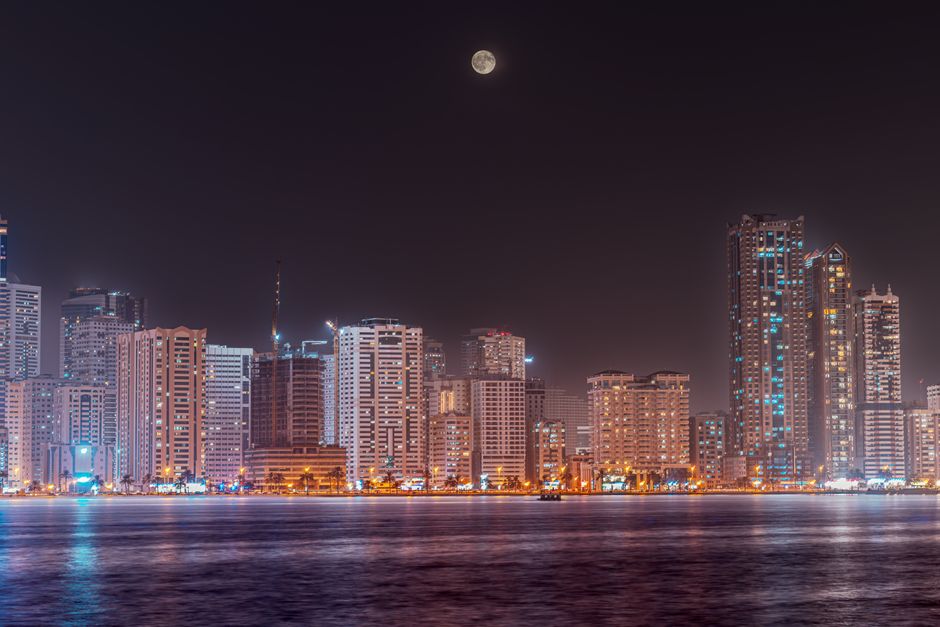
Sharjah, the third-largest city in the United Arab Emirates, sits right next to Dubai on the Arabian Gulf, but it feels like a different world: more traditional, family-oriented and proudly cultural. The emirate has some of the best museums in the Gulf, a restored old town of coral-stone houses and souks, lagoons lined with palm-shaded promenades, and an art scene built around the Sharjah Biennial. Inland, the desert around Mleiha holds traces of people who lived here more than 200,000 years ago, inscribed by UNESCO in 2025 as the Faya Palaeolandscape, and on the far side of the Hajar Mountains, Sharjah’s east-coast towns of Khor Fakkan and Kalba face the Gulf of Oman. About 1.2 million people live in the city. Sharjah is a dry emirate: drinking or having alcohol is illegal, and dress and decency rules are stricter than in Dubai. Many visitors stay here for lower hotel prices and commute to Dubai, or come on a day trip for the museums. The climate is hot desert: winters (November to March) are warm and sunny, and summers are extremely hot, with average highs above 40 °C (104 °F) from May to September.
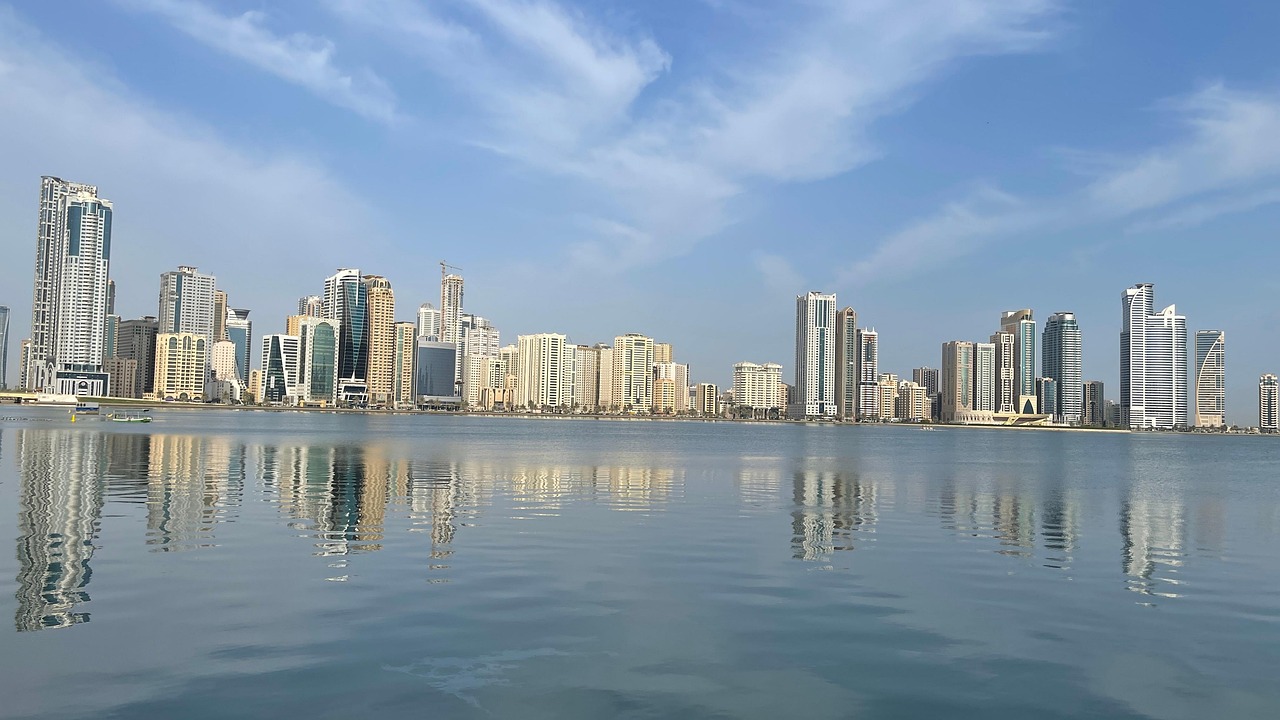
Right now in Sharjah
- Wed29–42°C84–107°FMostly clear
- Thu29–41°C84–106°FClear
- Fri28–36°C83–97°FClear
Top tours in Sharjah
See all tours for Sharjah →
From local operators, with prices and reviews; you check availability and book on Viator, our partner. We may earn a commission at no extra cost to you. How we earn money
Sharjah at a glance
- Best months: November to March, with days of about 25–30 °C (77–85 °F). April and October are hot; May to September is extreme heat, best spent in museums.
- Time needed: one or two days for the museums and the old town; three or four days with the desert at Mleiha and the east coast at Khor Fakkan.
- Getting there: Sharjah International Airport (SHJ), the hub of Air Arabia, is about 15 km (9 miles) east of the center; Dubai International Airport is about 20 to 40 minutes away by road, depending on traffic.
- Costs (as of October 2026): museum tickets are modest, often around AED 10 to AED 20 (US$3 to US$6), and hotels are usually cheaper than in Dubai.
- Before you go: visas, the weekend and medicine rules are covered in our United Arab Emirates travel guide.
Sharjah areas and who each one suits
Heart of Sharjah and the Corniche
The historic center, between Khalid Lagoon and the Gulf, has been restored as the Heart of Sharjah: lanes of coral-stone and gypsum houses, the covered Souq Al Arsah, heritage museums and the Sharjah Fort (Al Hisn). Along the waterfront, the Corniche leads to the Museum of Islamic Civilization and the dhow wharves. Stay nearby for culture and character.
Al Majaz and Al Qasba
Around Khalid Lagoon, Al Majaz Waterfront has a musical fountain, parks, cafes and family restaurants, and Al Qasba is a canal lined with restaurants, a theater and the Eye of the Emirates wheel. These districts have many mid-range hotels and apartments and are lively on cool evenings.
Al Khan and Al Mamzar
On the coast near the Dubai border, Al Khan has beach hotels, the Sharjah Aquarium and the Maritime Museum. It is the most convenient part of Sharjah for Dubai, though traffic between the two can be heavy.
Muwaileh and University City
Inland, near the airport, these suburbs have universities, shopping malls and value hotels, convenient for early flights.
Khor Fakkan and Kalba (east coast)
Sharjah also governs enclaves on the Gulf of Oman coast, about 1.5 hours away through the Hajar Mountains: Khor Fakkan, with a beach, a mountain amphitheater and a waterfront promenade, and Kalba, with mangroves and a bird of prey center. Stay here for quiet beaches and diving.
Top things to see in Sharjah
Sharjah Museum of Islamic Civilization
In a domed former souk on the Corniche, this is one of the best introductions to Islamic faith, science, art and history in the region, with galleries on the Hajj, astronomy, manuscripts, ceramics, metalwork and textiles. Look up at the zodiac mosaic in the central dome. Allow two hours.
Heart of Sharjah and Sharjah Fort
Walk the restored lanes of the old town, browsing the covered Souq Al Arsah, one of the oldest markets in the UAE, for spices, perfume, coffee pots and antiques. Sharjah Fort (Al Hisn), the ruling family’s 19th-century residence, was rebuilt from photographs and plans and now tells the story of the emirate. Nearby, the Bait Al Naboodah house shows how a pearl merchant’s family lived.
Sharjah Art Foundation
The foundation organizes the Sharjah Biennial, one of the most respected contemporary art events in the Arab world, and runs galleries in restored houses around Al Mureijah Square and the Calligraphy Square, as well as the Flying Saucer, a 1970s building now used for exhibitions, and the Rain Room, an installation where rain stops wherever you walk. Many shows are free.
Al Noor Island
A small island in Khalid Lagoon with landscaped gardens, sculptures, a butterfly house and a reading room; it is beautiful at dusk, when the art installations light up.
Mleiha and the Faya Palaeolandscape
About 50 minutes inland, the Mleiha Archaeological Centre introduces sites from the Stone Age to the pre-Islamic period, including Bronze Age tombs, an Iron Age fort and the rock shelters of Jebel Faya, where tools show that people lived here more than 200,000 years ago. The Faya Palaeolandscape became the UAE’s second UNESCO World Heritage Site in 2025. The center runs guided hikes, fossil-rock walks, dune drives, camping and stargazing in the cooler months.
Sharjah Aquarium and Maritime Museum
At Al Khan, the aquarium shows the marine life of the Gulf and the Gulf of Oman, and the maritime museum next door covers pearling, dhow building and fishing. Good for families.
Other things to do in Sharjah
- Blue Souk (Central Souq): the striking tiled buildings beside Khalid Lagoon house jewelry, carpet and souvenir shops.
- Sharjah Desert Park: home to the Arabia’s Wildlife Centre, with Arabian leopards, oryx and other native animals, plus a natural history museum and botanical garden, about 30 minutes inland.
- Khor Fakkan: swim from the long beach, climb to the Al Rabi Tower viewpoint above the bay or see the waterfall and amphitheater on the corniche.
- Kalba: kayak through mangroves and visit the Kalba Bird of Prey Centre near the Oman border.
- Mosques: Sharjah has more than 600 mosques; the King Faisal Mosque and the Al Noor Mosque on Khalid Lagoon are among the best known, but check whether visitor tours are offered before you go.
Food and drink
Sharjah’s restaurants are casual and family-friendly: try Emirati machboos and luqaimat, Lebanese grills along Al Qasba, Indian and Pakistani food in Rolla and Al Nahda, and fresh fish at the Corniche’s fish market restaurants. The Al Majaz Waterfront has many cafes with views of the fountain. There is no alcohol anywhere in Sharjah, including hotels; for a drink, visitors go to licensed venues in Dubai or Ajman.
Day trips from Sharjah
Dubai
Sharjah’s southern edge runs into Dubai’s Deira and Al Mamzar districts. Buses run from Sharjah’s Al Jubail bus station to Dubai, and taxis cross the border easily, but rush-hour traffic in both directions can double journey times. See our Dubai guide.
Ajman
Next door to the north, about 20 minutes away, the smallest emirate has a quiet beach, a corniche and a fort museum. See our Ajman guide.
Ras Al Khaimah
About 1 hour north by road, with Jebel Jais, beaches and the heritage town of Al Jazirah Al Hamra. See our Ras Al Khaimah guide.
Fujairah and the east coast
Drive through the mountains to Khor Fakkan (Sharjah) and Fujairah, about 1.5 to 2 hours. See our Fujairah guide.
Getting there and getting around
Sharjah International Airport (SHJ)
Sharjah’s airport is the base of the low-cost airline Air Arabia, with flights across the Middle East, South Asia, Central Asia, Africa and parts of Europe. It is about 15 km (9 miles), or 20 to 30 minutes by taxi, from the center. Many visitors also fly into Dubai International (DXB), about 20 to 40 minutes from Sharjah depending on traffic. Since early 2026, regional tensions have led to periodic airspace closures across the Gulf, so flights can be delayed, rerouted or canceled at short notice; check your flight with the airline and the airport’s status before you travel.
Buses and taxis
Sharjah’s city buses are limited, so most visitors use taxis, which are metered, or ride-hailing apps. Intercity buses run from the Al Jubail bus station to Dubai (several routes, including to Union and Al Ghubaiba), Ajman, Ras Al Khaimah, Fujairah and Abu Dhabi. Fares to Dubai are low, but check routes and payment methods locally, as Sharjah and Dubai use different card systems.
Driving
Roads between Sharjah and Dubai, such as Al Ittihad Road, are among the most congested in the country at rush hour (about 7 to 9:30 a.m. southbound and 5 to 8 p.m. northbound). Outside rush hour, driving is easy, and the roads to Mleiha and the east coast are fast and scenic.
Etihad Rail
The UAE’s national railway now links Abu Dhabi, Dubai and Fujairah, and Etihad Rail has scheduled Sharjah station to open on 30 March 2027. Al Dhaid station, in central Sharjah emirate, opened on 30 September 2026.
| Getting around Sharjah (as of October 2026) | Typical time | Notes |
|---|---|---|
| Taxi from Sharjah Airport to the center | 20–30 min | Metered |
| Taxi or bus from Sharjah to Downtown Dubai | 30–60 min | Much longer at rush hour |
| Drive to Mleiha | about 50 min | Book tours at Mleiha Archaeological Centre |
| Drive to Khor Fakkan | about 1.5 hours | Mountain highway |
When to go and how long to stay
November to March is the best season, with warm days around 25–30 °C (77–85 °F), cool evenings and the main festivals. April and October are hot, about 35–37 °C (95–98 °F). May to September is extremely hot, with average highs of 40–43 °C (104–109 °F) and extremes of 49 °C (121 °F); museums, malls and the aquarium make Sharjah one of the better summer choices.
| Month | Average high | Average low | Rain | Highest recorded |
|---|---|---|---|---|
| Jan | 25 °C (77 °F) | 13 °C (55 °F) | 22 mm (0.9 in) | 32 °C (90 °F) |
| Feb | 26 °C (80 °F) | 14 °C (57 °F) | 12 mm (0.5 in) | 39 °C (102 °F) |
| Mar | 30 °C (85 °F) | 16 °C (61 °F) | 23 mm (0.9 in) | 42 °C (108 °F) |
| Apr | 35 °C (95 °F) | 20 °C (67 °F) | 5 mm (0.2 in) | 45 °C (112 °F) |
| May | 40 °C (103 °F) | 24 °C (75 °F) | 0 mm (0 in) | 47 °C (116 °F) |
| Jun | 42 °C (107 °F) | 26 °C (80 °F) | 0 mm (0 in) | 48 °C (119 °F) |
| Jul | 43 °C (109 °F) | 29 °C (85 °F) | 3 mm (0.1 in) | 49 °C (121 °F) |
| Aug | 43 °C (109 °F) | 29 °C (84 °F) | 0 mm (0 in) | 48 °C (119 °F) |
| Sep | 41 °C (105 °F) | 26 °C (79 °F) | 0 mm (0 in) | 48 °C (118 °F) |
| Oct | 37 °C (98 °F) | 22 °C (72 °F) | 2 mm (0.1 in) | 43 °C (109 °F) |
| Nov | 31 °C (89 °F) | 18 °C (65 °F) | 7 mm (0.3 in) | 38 °C (100 °F) |
| Dec | 27 °C (80 °F) | 14 °C (58 °F) | 18 mm (0.7 in) | 34 °C (93 °F) |
| Year | 35 °C (95 °F) | 21 °C (70 °F) | 94 mm (3.7 in) | 49 °C (121 °F) |
Figures are the 1991–2020 climate normals for Sharjah International Airport that the UAE submitted to the World Meteorological Organization; “highest recorded” is the hottest day in each month over those 30 years. Nights inland are a few degrees cooler than on the coast.
Events worth planning around
- Sharjah International Book Fair (November): one of the world’s largest book fairs, at Expo Centre Sharjah.
- Sharjah Light Festival (February): light shows projected onto landmark buildings.
- Sharjah Biennial: the art biennial’s next edition is expected in 2027.
- Ramadan: in 2027 expected from about 8 February to 9 March; museum hours change and evenings are busy.
Dates change each year; check with the organizers.
How long to stay: 1, 2 and 4 days
- One day: the Museum of Islamic Civilization, the Heart of Sharjah and Souq Al Arsah, then Al Noor Island and Al Majaz at sunset.
- Two days: add the Sharjah Art Foundation, the aquarium and the Blue Souk.
- Four days: add a day at Mleiha and a night or two in Khor Fakkan or Kalba.
Where to stay in Sharjah
- Al Majaz and Al Qasba: mid-range hotels and apartments by the lagoon and its promenades.
- Heart of Sharjah: a heritage hotel in restored houses and simple hotels near the souks.
- Al Khan and the Corniche: beach hotels close to Dubai.
- Mleiha and the desert: eco-lodges and camps (seasonal).
- Khor Fakkan and Kalba: resorts on the Gulf of Oman coast.
Sharjah hotels serve no alcohol. Rates are generally lower than in comparable Dubai hotels, and bills add VAT, service and municipality charges.
Typical costs in Sharjah
| Item (as of October 2026) | UAE dirhams | About US dollars |
|---|---|---|
| Museum entry (typical adult ticket) | about AED 10–20 | about $3–6 |
| Taxi from Sharjah Airport to the center | about AED 40–60 | about $11–16 |
| Taxi from central Sharjah to Downtown Dubai | about AED 70–100 | about $19–27 |
| Shawarma or casual meal | about AED 15–50 | about $4–14 |
| Mid-range hotel room, per night in winter | about AED 250–500 | about $70–135 |
All are typical ranges, not official prices. The dirham is pegged at about AED 3.67 to US$1.
Safety in Sharjah
Sharjah is very safe, with low crime and a strong police presence. Visitors mostly need to watch the heat, the traffic and Sharjah’s stricter laws.
- Alcohol: drinking or carrying alcohol is illegal in Sharjah, including in hotels. Arriving drunk from Dubai can also lead to arrest.
- Dress code and decency: Sharjah expects modest dress in public: cover shoulders and knees, avoid tight or see-through clothes, and keep swimwear for beaches and pools. Public displays of affection, swearing and rude gestures are offenses.
- Heat: summer temperatures exceed 40 °C (104 °F) daily; carry water, wear a hat and avoid outdoor walking in the middle of the day.
- Ramadan: don’t eat, drink or smoke in public during daylight hours.
- Drugs and medicines: UAE drug laws are severe, and some prescription medicines need approval from the UAE Ministry of Health before travel.
- Photography: ask before photographing people, especially women and families, and avoid government and military sites.
- Desert: go into the dunes at Mleiha with a licensed guide; temperatures and soft sand catch drivers out.
- Flight disruptions: since early 2026, regional tensions have led to periodic airspace closures across the Gulf, and flights can be delayed, rerouted or canceled at short notice. Check your flight with the airline and the airport’s status before you travel, and follow instructions from the local authorities, including emergency alerts sent to phones.
- Emergencies: police 999, ambulance 998, fire 997.
Practical tips for Sharjah
- Time zone: Gulf Standard Time (UTC+4) all year.
- Weekend: Sharjah’s government sector works a four-day week with Friday, Saturday and Sunday off, while many businesses follow the national Saturday–Sunday weekend; museum hours vary on Fridays.
- Money and plugs: cards are widely accepted; carry cash for souks. Sockets are type G at 230 V.
What to pack for Sharjah
Bring modest, loose, breathable clothes that cover shoulders and knees (and a scarf for mosques), comfortable walking shoes for the old town, sunglasses, a hat, sunscreen and a refillable water bottle. A light layer helps in cold museums and on winter desert nights at Mleiha.
Sharjah travel FAQ
Can you drink alcohol in Sharjah?
No. Sharjah is a dry emirate: drinking or having alcohol is illegal, including in hotels. Visitors who want a drink go to licensed venues in Dubai or Ajman.
Is Sharjah worth visiting?
Yes, especially for culture: the Museum of Islamic Civilization, the restored Heart of Sharjah, the Sharjah Art Foundation and the UNESCO-listed Faya Palaeolandscape at Mleiha are among the best in the Gulf.
How far is Sharjah from Dubai?
The two cities touch; central Sharjah is about 15 km (9 miles) from Deira and 25 km (16 miles) from Downtown Dubai. The drive takes 30 minutes to an hour, depending on traffic.
Is it cheaper to stay in Sharjah than in Dubai?
Usually yes, but heavy commuter traffic between the cities can cancel out the savings if you plan to sightsee in Dubai every day.
What is the dress code in Sharjah?
Modest: cover shoulders and knees in public, avoid tight or see-through clothing and keep swimwear for beaches and pools.
What is the Faya Palaeolandscape?
A group of Stone Age sites around Jebel Faya near Mleiha, with evidence of human life over more than 200,000 years. UNESCO inscribed it as a World Heritage Site in 2025.
Which airport is closest to Sharjah?
Sharjah International (SHJ), the hub of Air Arabia, about 15 km (9 miles) from the center. Dubai International (DXB) is 20 to 40 minutes away by road.
Is there a train to Sharjah?
Not yet. Etihad Rail has scheduled Sharjah station to open on 30 March 2027; trains already link Dubai, Abu Dhabi and Fujairah.
What is the best time to visit Sharjah?
November to March, when days are warm rather than hot and the book fair and light festival take place.
Does Sharjah have beaches?
Yes, at Al Khan and Al Mamzar on the Gulf, and on the east coast at Khor Fakkan and Kalba. Swim only at lifeguarded beaches.
Plan your trip
Partner links: TravelerCenter may earn a commission if you book, at no extra cost to you.
🇪🇬 Useful Arabic phrases for Sharjah
All 38 Arabic phrases: restaurant, hotel, emergencies, romance (printable) →
Sources · last reviewed 5 October 2026
Researched and last reviewed on 5 October 2026. The alcohol ban, dress, decency, drug and medicine rules, emergency numbers and the regional situation come from GOV.UK’s UAE travel information (updated 24 July 2026); the Faya Palaeolandscape’s 2025 inscription from UNESCO; Etihad Rail’s station openings from Etihad Rail; climate from the 1991–2020 normals the UAE submitted to the World Meteorological Organization; population from Wikidata. Museum descriptions and prices, bus routes, the Sharjah government’s working week, festival dates, the next Biennial, Ramadan 2027 dates, drive times and typical prices are general references and flagged for checking. For entry rules and money, see our United Arab Emirates travel guide.
Data: Weather: MET Norway (CC BY 4.0) · Sea temperature: NOAA CoastWatch · Rates: ECB · Costs: World Bank ICP and price levels · Wikidata (CC0)