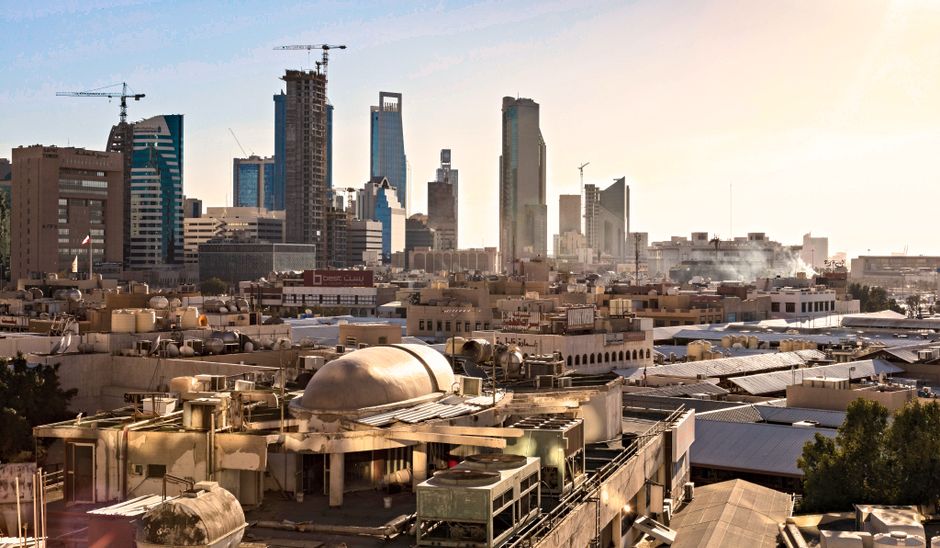
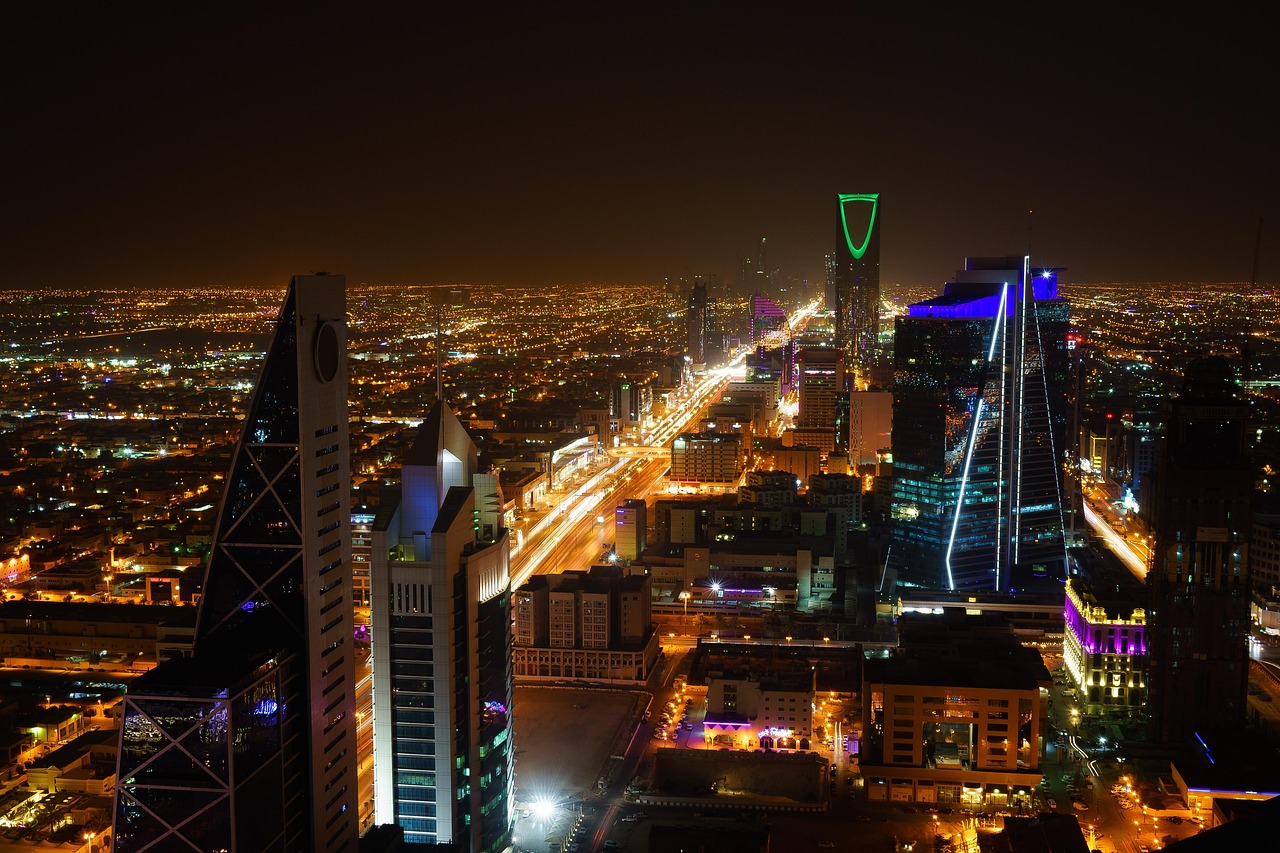
Riyadh, the capital of Saudi Arabia, is a fast-growing desert metropolis on the Najd plateau, where glass towers and new museums stand a short drive from the mud-brick lanes where the Saudi state began. On the city’s northwestern edge, the UNESCO-listed At-Turaif District in Diriyah was the seat of the first Saudi state in the 18th century and is now restored, with the Bujairi Terrace of cafes and restaurants facing it across Wadi Hanifah. In the center, the National Museum, Masmak Fortress and the Murabba Palace tell the story of the kingdom’s founding, while the Kingdom Centre and the business district of KAFD show its modern face. About 7 million people live in Riyadh, which has a six-line metro, a winter calendar of concerts and sports in the Riyadh Season, and a dramatic escarpment, the Edge of the World, within a day trip. Riyadh has a hot desert climate: winters (November to March) are sunny and pleasant by day and cool at night, while summers are extremely hot, with average highs of 40–44 °C (104–111 °F) from May to September.
Right now in Riyadh
- Wed 27–39°C 80–102°F Clear
- Thu 27–39°C 81–102°F Clear
- Fri 29–38°C 84–101°F Clear
Weather: MET Norway (CC BY 4.0)
Top tours in Riyadh
See all tours for Riyadh →
From local operators, with prices and reviews; you check availability and book on Viator, our partner. We may earn a commission at no extra cost to you. How we earn money
Riyadh at a glance
- Best months: November to March, with days of about 21–28 °C (69–82 °F) and cool nights. April and October are hot; May to September is extreme heat.
- Time needed: two days for Diriyah, the National Museum, Masmak and the Kingdom Centre; four days with the Riyadh Season and the Edge of the World; a week with a trip to the Al-Ahsa oasis or a flight to AlUla.
- Getting there: King Khalid International Airport (RUH) is about 35 km (22 miles) north of the center and is served by the Riyadh Metro’s Yellow Line.
- Costs (as of October 2026): a 2-hour metro and bus ticket costs SAR 4 (about US$1.05); a Saudi tourist e-visa costs SAR 535 including health insurance.
- Before you go: visas, the dress code, alcohol prohibition and medicine rules are covered in our Saudi Arabia travel guide.
Riyadh areas and who each one suits
Al Olaya
The commercial heart along King Fahd Road and Olaya Street, with the Kingdom Centre and Al Faisaliah towers, malls, restaurants and many international hotels. The metro’s Blue Line runs right through it. Good for first visits and business travelers.
Al Murabba and Al Batha
The historic center to the south has the National Museum, the Murabba Palace, Masmak Fortress, the Qasr Al-Hokm area and the traditional souqs. Hotels are cheaper here, and the streets are busy with shoppers in the evening.
KAFD and the north
The King Abdullah Financial District has striking modern towers, a metro hub and upscale hotels, while the northern districts near the airport hold new malls, the Boulevard entertainment zones and large hotels.
Diriyah
On the northwestern edge of the city, about 20 km (12 miles) from Olaya, Diriyah combines the At-Turaif heritage district with Bujairi Terrace’s restaurants, new luxury hotels and palm groves along Wadi Hanifah. Good for couples and culture lovers who want evenings among heritage buildings.
The Diplomatic Quarter
A green, leafy district in the west with embassies, parks, walking trails and quiet hotels, reached by Riyadh Bus.
Top things to see in Riyadh
At-Turaif District in Diriyah
The mud-brick town of At-Turaif was the capital of the first Saudi state, founded in the 18th century, and was inscribed as a UNESCO World Heritage Site in 2010. Restored palaces, including the Salwa Palace, mosques, towers and lanes of Najdi architecture house museums and galleries on the history of the Saudi state, Arabian horses and daily life. Visits are by ticket (the Diriyah access pass) booked on the official Diriyah website; it opens in the afternoon and evening, and hours vary by season, so check before you go. Across the wadi, Bujairi Terrace has restaurants and cafes with views of the illuminated ruins. Sunset is the best time to arrive.
National Museum of Saudi Arabia
In the King Abdulaziz Historical Center in Al Murabba, the National Museum traces the Arabian Peninsula from the creation of the universe and prehistoric Arabia through the ancient kingdoms, the rise of Islam, the Hajj and the unification of the kingdom. Allow two to three hours. Next to it, the Murabba Palace, built for King Abdulaziz, shows the transition from traditional to modern palace life. The National Museum station on the metro is an interchange of the Blue and Red lines.
Masmak Fortress
This clay and mud-brick fort, with four corner towers and a palm-trunk gate, was captured by the young Abdulaziz Al Saud in 1902, the first step toward creating modern Saudi Arabia. It is now a museum, near the old souqs and the Qasr Al-Hokm district, a short walk from Qasr Al-Hokm metro station.
Kingdom Centre and the Sky Bridge
The Kingdom Centre’s 300 m (984-foot) tower, with its distinctive opening at the top, has a sky bridge with views over the whole city; go at sunset and stay for the lights. Nearby, the Al Faisaliah tower has a glass globe near its summit.
Riyadh Season and the Boulevards
From 21 October 2026, for about ten weeks, the Riyadh Season brings concerts, boxing and wrestling events, the Six Kings Slam tennis tournament, theater, comedy and family activities to the city. Boulevard World, with pavilions themed on world cultures, and Boulevard City are the main zones, along with the Wonder Garden rides. Tickets are sold on the official Riyadh Season website and app.
Souqs and markets
The Souq Al Zal, near Masmak, is the place for carpets, antiques, incense and traditional clothing, with an auction of second-hand goods in the late afternoon. The nearby souqs of Al Batha and Deira sell gold, perfume, spices and dates.
Other things to do in Riyadh
- Wadi Hanifah: walking and cycling paths, lakes and parks along the wadi that runs past Diriyah.
- King Abdullah Financial District: modern architecture and evening walks around the towers and the metro station designed by Zaha Hadid Architects.
- Desert camps and red dunes: evening trips to the red sand dunes east of the city, with dinner in a desert camp.
- Camel and horse culture: visit a camel market on the city’s edge, or watch horse racing at the King Abdulaziz racetrack in winter.
- Cafes and coffee: Riyadh has a booming specialty coffee scene, alongside traditional Saudi coffee with dates.
Food and drink
Riyadh is the best place to try Najdi cooking: kabsa (spiced rice with lamb or chicken), jareesh (crushed wheat with meat and yogurt), qursan (bread in vegetable stew) and margoog, a meat and vegetable stew with thin dough. Mandi restaurants, Yemeni and Hadrami kitchens, Lebanese grills and Indian and Pakistani canteens are everywhere, and new dining districts, from Bujairi Terrace to Via Riyadh and KAFD, host international and Saudi chefs. Many restaurants have family sections. Alcohol is prohibited in Saudi Arabia, so menus feature mocktails, fresh juices and coffee. Late dinners are normal, and restaurants stay open past midnight, especially in winter and during Ramadan nights.
Day trips from Riyadh
The Edge of the World
About 90 km (56 miles) northwest of the city, the Tuwaiq escarpment drops away in sheer cliffs above an ancient plain. The last part of the route is a rough track that needs a 4×4, so most visitors join a guided tour. Go in the cooler months, leave the cliff edges well alone and return before dark.
Ushaiqer Heritage Village
About 200 km (124 miles) northwest, Ushaiqer is a restored Najdi village of mud-brick houses, mosques and palm groves, a good half-day stop on a road trip.
Al-Ahsa Oasis
Saudi Arabia Railways trains run from Riyadh east to Hofuf, at the heart of the Al-Ahsa Oasis, one of the world’s largest palm oases and a UNESCO World Heritage Site, with springs, a historic souq and the caves of Jabal Al-Qarah. It works best as an overnight trip.
The red dunes
East of the city, the dunes of the Nafud Al Thuwayrat turn deep red at sunset; go only with an experienced guide or a properly equipped 4×4 convoy.
Flying further
Riyadh is the hub for flights to AlUla, Abha and the Red Sea coast. See our AlUla, Jeddah and Abha guides, or take the causeway route via Khobar to Bahrain.
Getting there and getting around
King Khalid International Airport (RUH)
The airport is about 35 km (22 miles) north of the center, 30 to 45 minutes by taxi depending on traffic. The Yellow Line of the Riyadh Metro links the airport terminals with the city, with interchanges to the other lines. Since early 2026, regional tensions have led to periodic airspace closures across the Gulf, so flights can be delayed, rerouted or canceled at short notice; check your flight with the airline and the airport’s status before you travel.
Riyadh Metro and Riyadh Bus
The Riyadh Metro opened in stages between 1 December 2024 and 5 January 2025 and now runs six lines over 176 km (109 miles) with 85 stations: the Blue Line (Al Olaya–Al Batha), Red Line (King Abdullah Road), Orange Line (Al Madinah Al Munawwarah Road), Yellow Line (airport), Green Line (King Abdulaziz Road) and Purple Line. Trains run from about 6 a.m. to midnight. Buy tickets in the Darb app, at station machines or at ticket offices; the same tickets work on Riyadh Bus. The busiest stations include Qasr Al-Hokm, KAFD and the National Museum interchange.
| Riyadh public transport ticket (as of October 2026) | Standard | First class |
|---|---|---|
| 2 hours | SAR 4 | SAR 10 |
| 3 days | SAR 20 | — |
| 7 days | SAR 40 | — |
| 30 days | SAR 140 | — |
First-class tickets give access to the first-class cabins of metro trains and to regular buses; a seat in first class is not guaranteed at peak times. The call center is 19933.
Taxis and driving
Taxis and ride-hailing apps such as Uber and Careem are the easiest way to reach Diriyah and places off the metro network. Riyadh’s highways are wide and fast but congested at rush hour, and driving standards are poor, so drive defensively and wear seatbelts. Traffic fines are sent by text message and recorded against your passport, and must be paid before you leave the country.
Trains to other cities
Saudi Arabia Railways (SAR) trains leave Riyadh’s stations for Hofuf and Dammam in the east, and for Qassim, Hail and Al-Jouf in the north. For Jeddah, Mecca and Medina, fly; the Haramain high-speed line runs only in the west.
When to go and how long to stay
November to March is the best time, with sunny days of about 21–28 °C (69–82 °F) and cool nights, sometimes below 10 °C (50 °F) in January; this is also the Riyadh Season. April and October are hot, about 34–36 °C (92–96 °F). May to September brings average highs of 40–44 °C (104–111 °F), very dry air and occasional dust storms; plan outdoor visits for early morning and evening, and spend the middle of the day in museums and malls. Rain is rare and falls mostly from November to April, sometimes in heavy storms that flood underpasses.
| Month | Average high | Average low | Rain | Highest recorded |
|---|---|---|---|---|
| Jan | 21 °C (69 °F) | 8 °C (46 °F) | 15 mm (0.6 in) | 33 °C (91 °F) |
| Feb | 24 °C (75 °F) | 10 °C (50 °F) | 8 mm (0.3 in) | 35 °C (94 °F) |
| Mar | 28 °C (82 °F) | 14 °C (57 °F) | 20 mm (0.8 in) | 38 °C (100 °F) |
| Apr | 34 °C (92 °F) | 19 °C (66 °F) | 24 mm (0.9 in) | 42 °C (108 °F) |
| May | 40 °C (103 °F) | 24 °C (75 °F) | 6 mm (0.2 in) | 46 °C (115 °F) |
| Jun | 43 °C (109 °F) | 26 °C (79 °F) | 0 mm (0 in) | 48 °C (118 °F) |
| Jul | 44 °C (111 °F) | 27 °C (81 °F) | 0 mm (0 in) | 48 °C (119 °F) |
| Aug | 44 °C (111 °F) | 27 °C (81 °F) | 0 mm (0 in) | 48 °C (119 °F) |
| Sep | 41 °C (106 °F) | 24 °C (75 °F) | 0 mm (0 in) | 47 °C (116 °F) |
| Oct | 36 °C (96 °F) | 19 °C (66 °F) | 2 mm (0.1 in) | 43 °C (109 °F) |
| Nov | 27 °C (81 °F) | 14 °C (56 °F) | 20 mm (0.8 in) | 37 °C (99 °F) |
| Dec | 22 °C (72 °F) | 9 °C (48 °F) | 14 mm (0.5 in) | 31 °C (88 °F) |
| Year | 34 °C (92 °F) | 18 °C (65 °F) | 108 mm (4.2 in) | 48 °C (119 °F) |
Figures are the 1991–2020 climate normals for King Khalid International Airport that Saudi Arabia’s National Center for Meteorology submitted to the World Meteorological Organization; “highest recorded” is the hottest day in each month over those 30 years.
Events worth planning around
- Riyadh Season (from 21 October 2026, about ten weeks): the city’s biggest entertainment calendar; hotels fill on big fight and concert nights.
- Founding Day (22 February): celebrations in Diriyah, where the first Saudi state began.
- National Day (23 September): fireworks and green-lit buildings across the city.
- Ramadan: in 2027 expected from about 8 February to 9 March; days are quiet, and the city comes alive after iftar.
Dates change each year; check with the organizers.
How long to stay: 2, 4 and 7 days
- Two days: Diriyah and Bujairi Terrace at sunset; the National Museum, Masmak and the Kingdom Centre Sky Bridge.
- Four days: add the Edge of the World, Souq Al Zal and a Riyadh Season evening or the Boulevard zones.
- Seven days: add an overnight trip to Al-Ahsa by train, or fly to AlUla for three nights.
Where to stay in Riyadh
- Al Olaya: international hotels near the metro’s Blue Line, malls and restaurants.
- KAFD and the north: modern business hotels near the metro and the airport road.
- Diriyah: heritage-style luxury hotels near At-Turaif and Bujairi Terrace.
- Al Murabba and Al Batha: budget and mid-range hotels close to the museums and souqs.
- Diplomatic Quarter: quiet hotels among parks and trails.
Hotel prices rise sharply on big Riyadh Season event nights; book early, and compare totals, as VAT of 15% and municipality fees are added.
Typical costs in Riyadh
| Item (as of October 2026) | Saudi riyals | About US dollars |
|---|---|---|
| Metro and bus, 2 hours (standard / first class) | SAR 4 / 10 | $1.05 / $2.65 |
| Metro and bus, 3-day / 7-day pass | SAR 20 / 40 | $5.35 / $10.65 |
| Tourist e-visa, including health insurance | SAR 535 | $143 |
| Taxi from the airport to Olaya | about SAR 80–120 | about $21–32 |
| Casual restaurant meal | about SAR 30–70 | about $8–19 |
| Specialty coffee | about SAR 15–25 | about $4–7 |
| Mid-range hotel room, per night in winter | about SAR 400–900 | about $105–240 |
Metro fares and the visa price are official; taxis, meals and hotels are typical ranges. The riyal is pegged at about SAR 3.75 to US$1.
Safety in Riyadh
Riyadh has low crime, and visitors rarely have problems. The main risks are heat, traffic and strict laws.
- Heat: from May to September, highs above 40 °C (104 °F) are normal and have reached 48 °C (119 °F). Drink water often, cover up from the sun and avoid outdoor exertion in the middle of the day.
- Dress codes: men and women should cover elbows and knees in public; women visitors don’t need an abaya or headscarf except in mosques.
- Alcohol prohibition: alcohol is illegal in Saudi Arabia; don’t bring any.
- Drugs and medicines: penalties for drugs are severe, even for small amounts; controlled medicines need an SFDA clearance permit before you travel.
- Photography: don’t photograph palaces, government buildings, embassies or military sites, and ask before photographing people.
- Floods and dust: winter storms can flood roads and underpasses quickly; dust storms in spring and summer reduce visibility.
- Driving: wear seatbelts, expect fast lane changes and avoid desert driving without a guide or convoy.
- Flight disruptions: since early 2026, regional tensions have led to periodic airspace closures across the Gulf, and flights can be delayed, rerouted or canceled at short notice. Check your flight with the airline before you travel, follow instructions from the local authorities and heed the Saudi Civil Defense early-warning alerts sent to phones.
- Emergencies: call 911 for police, ambulance and fire, or 112 from a phone without a Saudi SIM card.
Practical tips for Riyadh
- Time zone: Arabia Standard Time (UTC+3) all year.
- Weekend: Friday and Saturday; many attractions open later on Friday after midday prayers.
- Money and plugs: cards work almost everywhere; VAT is 15%. Sockets are mostly type G (British three-pin) at 230 V.
What to pack for Riyadh
Pack loose clothes that cover elbows and knees, a scarf for mosques, comfortable shoes for Diriyah’s unpaved lanes, sunglasses, a hat and high-SPF sunscreen. From November to March, add a warm jacket for cool evenings in Diriyah and the desert. Carry medicines in original packaging with a prescription, and an SFDA permit for any controlled medicine.
Riyadh travel FAQ
How do I get from Riyadh airport to the city center?
Take the Riyadh Metro’s Yellow Line from the airport and change to other lines, or take a taxi, about 30 to 45 minutes to Olaya.
How much does the Riyadh Metro cost?
A 2-hour ticket costs SAR 4, or SAR 10 in first class; 3-day and 7-day passes cost SAR 20 and SAR 40. Buy tickets in the Darb app or at stations.
What are the Riyadh Metro’s opening hours?
Trains run from about 6 a.m. to midnight on all six lines.
Is Diriyah worth visiting?
Yes. At-Turaif, the UNESCO-listed capital of the first Saudi state, is Riyadh’s most important sight, and Bujairi Terrace is one of the city’s best places for dinner. Book the Diriyah access pass online.
When is Riyadh Season 2026?
It opens on 21 October 2026 and runs for about ten weeks, with concerts, sports events and the Boulevard entertainment zones.
What is the best time to visit Riyadh?
November to March, when days are sunny and about 21–28 °C (69–82 °F). Summers are extremely hot.
How do I get to the Edge of the World?
It is about 90 km (56 miles) northwest of Riyadh, and the last stretch needs a 4×4, so most visitors join a guided tour in the cooler months.
Do women need to wear an abaya in Riyadh?
No. Women visitors should wear loose clothing covering elbows and knees, and a headscarf only in mosques.
Can I travel from Riyadh to Bahrain by land?
Yes, via the Eastern Province and the King Fahd Causeway near Khobar. Check that your Saudi visa allows exit and re-entry by land, and check the causeway’s status before you go.
How far is Riyadh from Jeddah?
About 950 km (590 miles); most travelers fly, which takes about 1 hour 45 minutes.
Sources and last review
Researched and last reviewed on 5 October 2026. Riyadh Metro lines, length, stations, opening dates, hours and ticketing come from the Saudi Press Agency (reporting the Royal Commission for Riyadh City); metro and bus fares from Riyadh Public Transportation (search excerpts of its official ticket page); the Riyadh Season date and program from the Saudi Press Agency; At-Turaif’s World Heritage listing from UNESCO and access passes from the official Diriyah website (search excerpts); trains to Hofuf, Dammam and the north from Saudi Arabia Railways (general); laws, driving, flooding, emergency numbers and the factual background on local rules from GOV.UK’s Saudi Arabia travel information (updated 20 September 2026); airspace disruption from the European Union Aviation Safety Agency; climate from the 1991–2020 normals Saudi Arabia submitted to the World Meteorological Organization; population from Wikidata. At-Turaif hours, museum details, the Kingdom Centre, souqs, the Edge of the World and Ushaiqer, distances and drive times, Ramadan 2027 dates and typical prices are general references and flagged for checking. For entry rules and money, see our Saudi Arabia travel guide.
Plan your trip
Partner links: TravelerCenter may earn a commission if you book, at no extra cost to you.
🇪🇬 Useful Arabic phrases for Riyadh
All 38 Arabic phrases: restaurant, hotel, emergencies, romance (printable) →