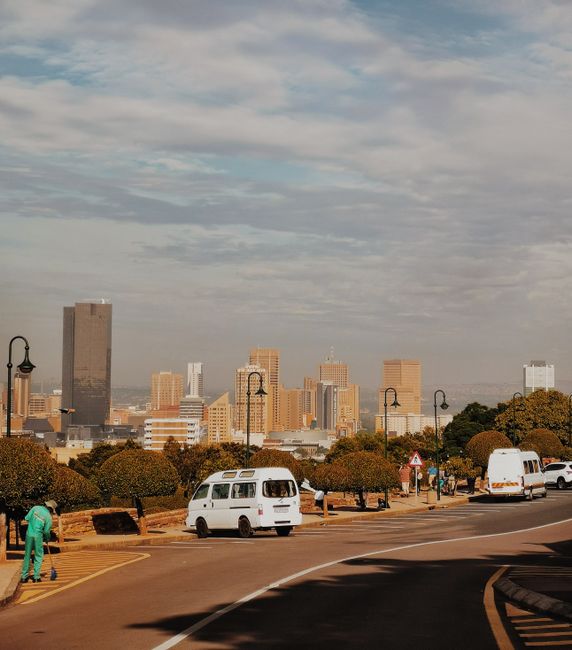
Pretoria is South Africa’s executive capital, the seat of the President and the government ministries, and a calmer, greener counterpart to Johannesburg, about 55 km (34 miles) to the south. It lies in a warm valley among the ridges of the Magaliesberg and is the heart of the City of Tshwane metro. Pretoria is best known for its jacaranda trees, tens of thousands of which turn the streets purple in October, and for some of the country’s most important monuments: the Union Buildings, where Nelson Mandela was inaugurated as president in 1994 and where a giant statue of him now stands; the Voortrekker Monument, which commemorates the Afrikaner pioneers of the 1830s; and, facing it across the valley, Freedom Park, which honors those who fought for the country’s freedom. Add the historic Church Square, excellent museums, the national zoo and botanical garden, and easy access to the Cullinan diamond mine, the Dinokeng malaria-free game reserve and Pilanesberg, and Pretoria makes a rewarding stay of a day or two. The Gautrain connects it with OR Tambo airport and Johannesburg. Seasons are reversed from the northern hemisphere: summer (November to March) is hot with afternoon storms; winter (May to August) is dry and sunny, with cold nights.
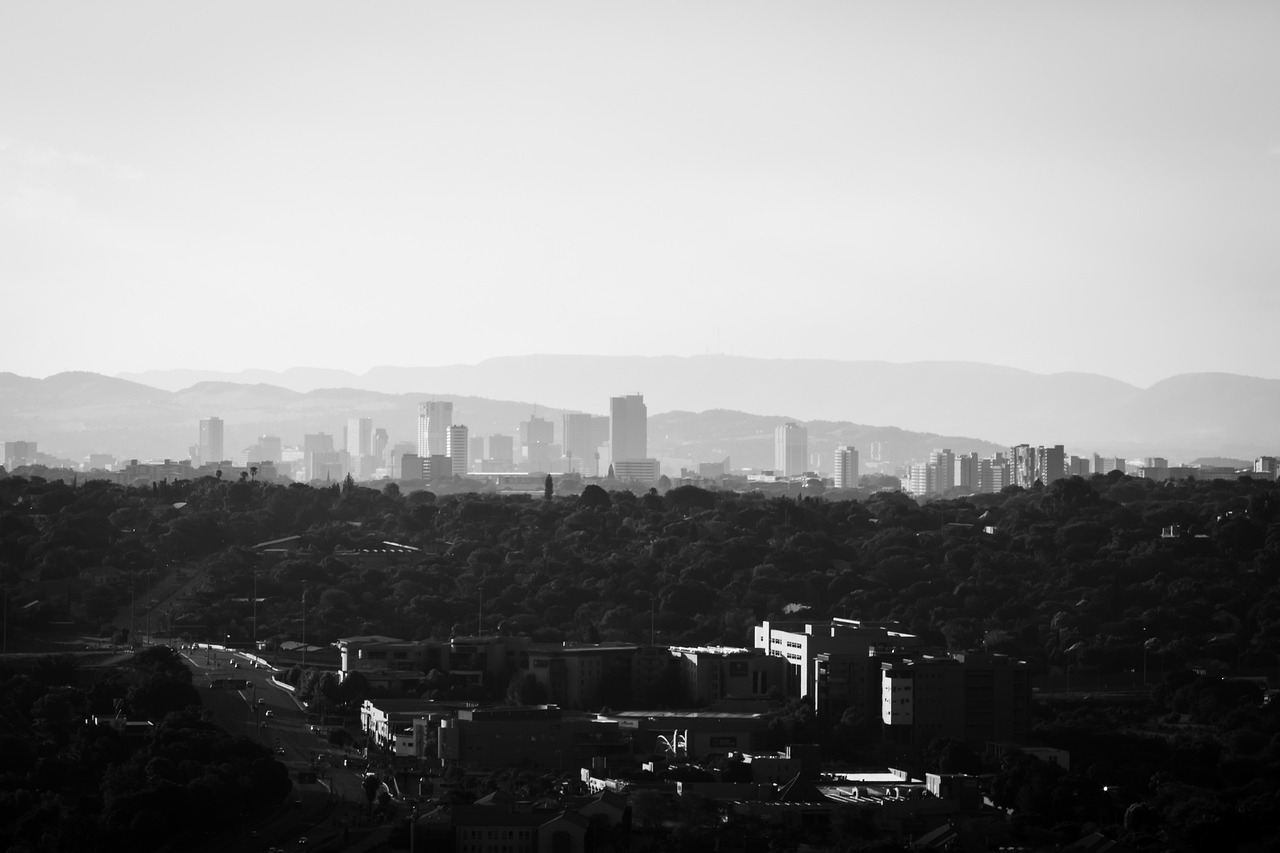
Right now in Pretoria
- Wed14–28°C57–83°FPartly cloudy
- Thu13–27°C55–81°FMostly clear
- Fri17–29°C62–84°FMostly clear
Top tours in Pretoria
See all tours for Pretoria →
From local operators, with prices and reviews; you check availability and book on Viator, our partner. We may earn a commission at no extra cost to you. How we earn money
Pretoria at a glance
- Best months: September to November (spring, with jacaranda blossom from about early October to early November) and March to May (warm, clear autumn). Summer is hot and stormy; winter is dry, sunny and cool.
- Time needed: one full day for the main monuments; two or three days with Cullinan, Dinokeng or the Magaliesberg.
- Getting there: the Gautrain links Pretoria and Hatfield with Sandton and OR Tambo International Airport (JNB), about 50 km (31 miles) away.
- Costs (as of October 2026): the Gautrain from OR Tambo to Pretoria costs R258 (about US$16) on the fare table in force since June 2025.
- Before you go: visas, the Electronic Travel Authorisation, money and safety basics are covered in our South Africa travel guide.
Pretoria areas and who each one suits
The city center and Church Square
The historic center is built around Church Square, with the statue of Paul Kruger, president of the South African Republic (ZAR), surrounded by the Old Raadsaal (the republic’s parliament) and the Palace of Justice. Nearby are the Ditsong museums and Kruger’s house. It’s interesting by day; take a guided tour or a ride-hail, and don’t linger after dark.
Arcadia and the Union Buildings
East of the center, Arcadia is the embassy district, home to the Union Buildings and their terraced gardens, with guesthouses and hotels on quiet streets.
Hatfield and Brooklyn
Around the University of Pretoria, Hatfield has a Gautrain station, student bars and restaurants, and Brooklyn has malls, restaurants and leafy residential streets with guesthouses. Popular and convenient bases.
Menlyn and the eastern suburbs
Menlyn has one of the largest shopping and entertainment complexes in Africa, hotels and restaurants. Good for travelers with a car.
Centurion
Between Pretoria and Johannesburg, Centurion has a Gautrain station, business hotels and SuperSport Park cricket ground; practical for trips in both directions.
Top things to see in Pretoria
The Union Buildings
Designed by Herbert Baker and completed in 1913, the sandstone Union Buildings on Meintjieskop house the offices of the President. The buildings themselves are not usually open to visitors, but the terraced gardens are, with views over the city and a 9 m (30 ft) bronze statue of Nelson Mandela, unveiled in 2013, arms outstretched. The site is the setting for presidential inaugurations and, in October, framed by jacarandas.
Freedom Park
On Salvokop hill, Freedom Park is a memorial and heritage site honoring those who died in the struggles that shaped South Africa, from precolonial wars to the fight against apartheid. The Wall of Names, the Sikhumbuto memorial, the eternal flame and the //hapo museum, which tells African history from the beginning of humanity, are reached on guided tours. The design draws on African spiritual traditions, and the views over the city are superb.
The Voortrekker Monument
Completed in 1949, the massive granite Voortrekker Monument commemorates the Afrikaner Great Trek of the 1830s and 1840s. Its marble frieze inside the Hall of Heroes is one of the longest in the world, and at noon on December 16 a ray of sunlight falls through the dome onto the cenotaph below. Climb to the roof for views of the city. The monument is in a nature reserve with walking trails, and it is part of a city whose history is contested: visiting both Freedom Park and the Voortrekker Monument gives two very different perspectives on South Africa’s past.
Church Square and the historic center
Join a guided walk around Church Square, the Palace of Justice, where the Rivonia Trial took place in 1963–1964 and Nelson Mandela delivered his “I am prepared to die” speech, the Old Raadsaal and the Ditsong Kruger House, Paul Kruger’s modest home, now a museum. The Ditsong National Museum of Natural History nearby has fossils, wildlife dioramas and the original “Mrs Ples” skull, found in the Cradle of Humankind in 1947.
Melrose House
The Victorian Melrose House is where the Treaty of Vereeniging ending the Anglo-Boer War was signed in 1902, with period furniture and stained glass.
National Zoological Garden and the botanical garden
The National Zoological Garden, one of the largest zoos in Africa, and the Pretoria National Botanical Garden in the east of the city, both run by the South African National Biodiversity Institute, make good family outings; the botanical garden has a ridge-top walk with city views.
A city of many names and histories
Long before the city existed, the valley of the Apies River was home to Tswana- and Ndebele-speaking communities. Pretoria was founded in 1855 by Marthinus Pretorius and named after his father, Andries Pretorius, the Voortrekker leader. It became the capital of the South African Republic (the Transvaal), and was occupied by British forces in the Anglo-Boer War of 1899–1902. When the Union of South Africa was formed in 1910, Pretoria became the administrative capital, and the Union Buildings were built to house the new government. During apartheid, the city was the seat of a government that enforced racial segregation, and the Rivonia Trial took place at the Palace of Justice. Since 1994, the city has been the stage for the inaugurations of every democratically elected president. The metro was renamed the City of Tshwane in 2000, after a local chief, and the townships of Mamelodi, Atteridgeville and Soshanguve are home to most of its people.
Pretoria with children
Families can spend a full day at the National Zoological Garden, picnic in the Pretoria National Botanical Garden, see rhinos and zebras on a self-drive at Rietvlei Nature Reserve, and explore the dinosaur skeletons and dioramas of the natural history museum. The Gautrain itself is a highlight for young train fans.
Other things to do in Pretoria
- Jacaranda season: walk or drive the purple avenues of Arcadia, Brooklyn and Muckleneuk in October.
- Groenkloof Nature Reserve: game walks, mountain biking and zebra and giraffe within the city.
- Rietvlei Nature Reserve: a city reserve with rhinos, buffalo and antelope on self-drive roads.
- University of Pretoria museums: the Mapungubwe Collection, including the famous golden rhinoceros from the medieval kingdom of Mapungubwe.
- Sport: rugby at Loftus Versfeld, one of South Africa’s great stadiums.
- Markets and food: weekend markets in Hazelwood and the Boeremark (farmers’ market) in Silverton.
Food and drink
Pretoria’s restaurant scene centers on Brooklyn, Hazelwood, Menlyn and Hatfield, with steakhouses, Portuguese and Italian restaurants, coffee roasters and craft breweries. Try traditional Afrikaans dishes such as bobotie, melktert (milk tart) and koeksisters, and a shisa nyama braai in the townships of Mamelodi or Atteridgeville with a local guide. Tip 10–15% in restaurants.
Day trips from Pretoria
Cullinan
About 40 km (25 miles) east, the mining village of Cullinan is where the world’s largest gem-quality diamond, the Cullinan diamond, was found in 1905; parts of it are in the British Crown Jewels. Tours of the working mine and the old village’s tea gardens and pubs make a pleasant half day.
Dinokeng Game Reserve
About 45 minutes north, Dinokeng is a malaria-free Big Five reserve in Gauteng, with self-drive and guided game drives, easily done in a day.
Johannesburg and the Cradle of Humankind
Johannesburg‘s museums and Soweto are about 40 minutes away on the Gautrain; the Cradle of Humankind is about an hour by car.
Pilanesberg and the Magaliesberg
Pilanesberg National Park is about two hours west; on the way, the Magaliesberg and Hartbeespoort Dam have a cableway, markets and hot-air balloon flights. Kruger is about four to five hours east by road.
Nearby destinations
- Johannesburg53 km
- Pilanesberg National Park122 km
Getting there and getting around
OR Tambo International Airport and the Gautrain
Most visitors arrive at OR Tambo International (JNB) and take the Gautrain: the airport line to Sandton, then the north-south line to Centurion, Pretoria station and Hatfield. Pay with a Gautrain card (R21) or tap a contactless bank card for pay-as-you-go trips. Gautrain buses link the stations with nearby suburbs.
| Gautrain single fare (fare table effective June 1, 2025) | Rand | About US dollars |
|---|---|---|
| — | — | — |
| OR Tambo to Pretoria or Hatfield | R258 | $16 |
| Pretoria to Sandton, peak / off-peak | R91 / R73 | $5.50 / $4.40 |
| Pretoria to Park (Johannesburg), peak / off-peak | R103 / R82 | $6.20 / $4.90 |
| Pretoria to Hatfield, peak | R38 | $2.30 |
| Gautrain card (once) | R21 | $1.30 |
Peak fares apply on weekdays from 06:00 to 08:30 and 15:00 to 18:30, and all day on weekends and public holidays.
Ride-hailing and taxis
Uber and Bolt are the easiest way to reach the Union Buildings, Freedom Park and the Voortrekker Monument, which are spread out across the city. Hop-on, hop-off sightseeing buses also link the main monuments.
Driving
A car is useful for Cullinan, Dinokeng and the Magaliesberg. The N1 links Pretoria with Johannesburg, and the N4 runs east to Mbombela and Kruger and west to Rustenburg and Pilanesberg. Avoid rush hour on the N1, keep doors locked in traffic, and avoid driving at night outside the city.
When to go and how long to stay
Pretoria is a few degrees warmer than Johannesburg, being lower, at about 1,340 m (4,400 ft). Summer (November to March) is hot, around 28–29 °C (82–84 °F), with afternoon thunderstorms. Autumn (April and May) is warm and clear. Winter (June to August) is dry and sunny, around 20 °C (68 °F) by day, with cold nights near 5 °C (41 °F). Spring (September to October) brings warm, dry days and the jacaranda blossom.
| Month | Average high | Average low | Rain | Rain days |
|---|---|---|---|---|
| Jan | 29 °C (84 °F) | 18 °C (65 °F) | 104 mm (4.1 in) | 13 |
| Feb | 29 °C (84 °F) | 18 °C (64 °F) | 99 mm (3.9 in) | 11 |
| Mar | 27 °C (81 °F) | 17 °C (62 °F) | 98 mm (3.9 in) | 10 |
| Apr | 25 °C (77 °F) | 13 °C (56 °F) | 35 mm (1.4 in) | 6 |
| May | 22 °C (72 °F) | 9 °C (48 °F) | 14 mm (0.6 in) | 2 |
| Jun | 20 °C (67 °F) | 5 °C (41 °F) | 9 mm (0.4 in) | 1 |
| Jul | 20 °C (68 °F) | 5 °C (42 °F) | 4 mm (0.2 in) | 1 |
| Aug | 22 °C (72 °F) | 8 °C (47 °F) | 5 mm (0.2 in) | 1 |
| Sep | 24 °C (76 °F) | 12 °C (53 °F) | 17 mm (0.7 in) | 2 |
| Oct | 25 °C (77 °F) | 14 °C (57 °F) | 79 mm (3.1 in) | 9 |
| Nov | 26 °C (79 °F) | 15 °C (60 °F) | 102 mm (4.0 in) | 11 |
| Dec | 28 °C (82 °F) | 17 °C (63 °F) | 119 mm (4.7 in) | 14 |
| Year | 25 °C (77 °F) | 13 °C (55 °F) | 685 mm (27 in) | 81 |
Figures are the South African Weather Service’s 1981–2010 normals for Pretoria, as published in the World Meteorological Organization’s World Weather Information Service.
Events worth planning around
- Jacaranda season (about October to early November).
- Day of Reconciliation (December 16): events at Freedom Park and the Voortrekker Monument.
- Rugby season at Loftus Versfeld.
Dates change each year; check with the organizers.
How long to stay: 1, 2 and 3 days
- One day: the Union Buildings, Freedom Park and the Voortrekker Monument, with lunch in Brooklyn or Hazelwood.
- Two days: add Church Square, Kruger House and the botanical garden or zoo.
- Three days: add Cullinan or a game drive at Dinokeng.
Where to stay in Pretoria
- Hatfield and Brooklyn: hotels and guesthouses near the Gautrain and restaurants.
- Arcadia and Waterkloof: quiet boutique guesthouses near the Union Buildings and embassies.
- Menlyn: hotels near shopping and entertainment.
- Centurion: business hotels between Pretoria and Johannesburg.
Typical costs in Pretoria
| Item (as of October 2026) | Rand | About US dollars |
|---|---|---|
| — | — | — |
| Gautrain, OR Tambo to Pretoria | R258 | $16 |
| Freedom Park guided tour, adult | about R100–150 | about $6–9 |
| Voortrekker Monument entry, adult | about R100–150 | about $6–9 |
| Cullinan diamond mine tour | about R250–450 | about $15–27 |
| Main course in a mid-range restaurant | about R130–250 | about $8–15 |
| Mid-range hotel or guesthouse, per night | about R1,200–2,400 | about $72–145 |
Gautrain fares are official (fare table effective June 2025); other prices are typical ranges. Conversions use about R16.60 to US$1.
Safety in Pretoria
Pretoria’s suburbs and main sights are generally calm, but take the same precautions as in other South African cities.
- Getting around: use the Gautrain, ride-hailing apps or tours, and avoid walking at night. Visit the city center and Church Square by day, ideally with a guide, and keep valuables out of sight.
- Cars: don’t leave anything visible in parked cars, and keep doors locked and windows up at traffic lights.
- ATMs: use machines inside banks and malls and decline help from strangers.
- Water and power: national load-shedding has been suspended, but local power and water interruptions can occur in parts of Tshwane; most hotels have backup supplies.
- Weather: summer thunderstorms bring lightning and sudden flooding of low roads; wait for storms to pass.
- Malaria: none; Pretoria and Gauteng are malaria-free.
- Emergencies: call 10111 for the police and 10177 for an ambulance, or 112 from a mobile.
Practical tips for Pretoria
- Names: the metro is officially the City of Tshwane; the city itself is still called Pretoria.
- Opening hours: some museums close on Mondays or public holidays; check before you go.
- Plugs and money: type M and N sockets at 230 V; cards accepted almost everywhere.
What to pack for Pretoria
Bring light clothes for warm days, a sweater and jacket for winter mornings and evenings, a compact umbrella or rain jacket for summer storms, comfortable walking shoes for the monuments and gardens, sunglasses and SPF 50 sunscreen. See our rain jackets guide.
Pretoria travel FAQ
Is Pretoria the capital of South Africa?
It is the executive capital, the seat of the President and government. Cape Town is the legislative capital and Bloemfontein the judicial capital.
When do the jacarandas bloom in Pretoria?
Usually from about early October to early November, depending on the weather.
How do I get from OR Tambo airport to Pretoria?
Take the Gautrain from the airport, changing at Sandton for Pretoria or Hatfield. The fare is R258 on the table in force since June 2025.
Can I visit the Union Buildings?
You can visit the terraced gardens and the Nelson Mandela statue; the buildings themselves are government offices and not usually open to visitors.
What is Freedom Park?
A national heritage site and memorial on Salvokop hill honoring those who died in South Africa’s struggles for freedom, with a museum of African history.
How far is Pretoria from Johannesburg?
About 55 km (34 miles), roughly 40 minutes by Gautrain from Sandton or Park station, longer by road in traffic.
Is Pretoria safe for tourists?
Most visits are trouble-free. Use the Gautrain or ride-hailing apps, avoid walking at night and visit the center by day.
Can I go on safari near Pretoria?
Yes. Dinokeng Game Reserve, about 45 minutes north, is malaria-free with the Big Five, and Pilanesberg is about two hours away.
What is the weather like in Pretoria?
Warm and sunny. Summer days reach about 28–29 °C (82–84 °F) with afternoon storms; winter days are about 20 °C (68 °F), dry, with cold nights.
How long should I spend in Pretoria?
One full day covers the Union Buildings, Freedom Park and the Voortrekker Monument; two or three days let you add Cullinan or a game drive.
Plan your trip
Partner links: TravelerCenter may earn a commission if you book, at no extra cost to you.
Sources · last reviewed 5 October 2026
Researched and last reviewed on 5 October 2026. Gautrain stations, fares, peak times, card cost and contactless payment: the Gautrain Management Agency’s fare guide (effective June 1, 2025); load-shedding status: Eskom; exchange rate: the European Central Bank; climate: the South African Weather Service’s 1981–2010 normals for Pretoria via the World Meteorological Organization’s World Weather Information Service. Monument and museum details, entry prices, Cullinan, Dinokeng, jacaranda timing, distances and typical prices are general references and flagged for checking. For entry rules and money, see our South Africa travel guide.
Data: Weather: MET Norway (CC BY 4.0) · Rates: ECB · Costs: World Bank ICP and price levels · Wikidata (CC0)