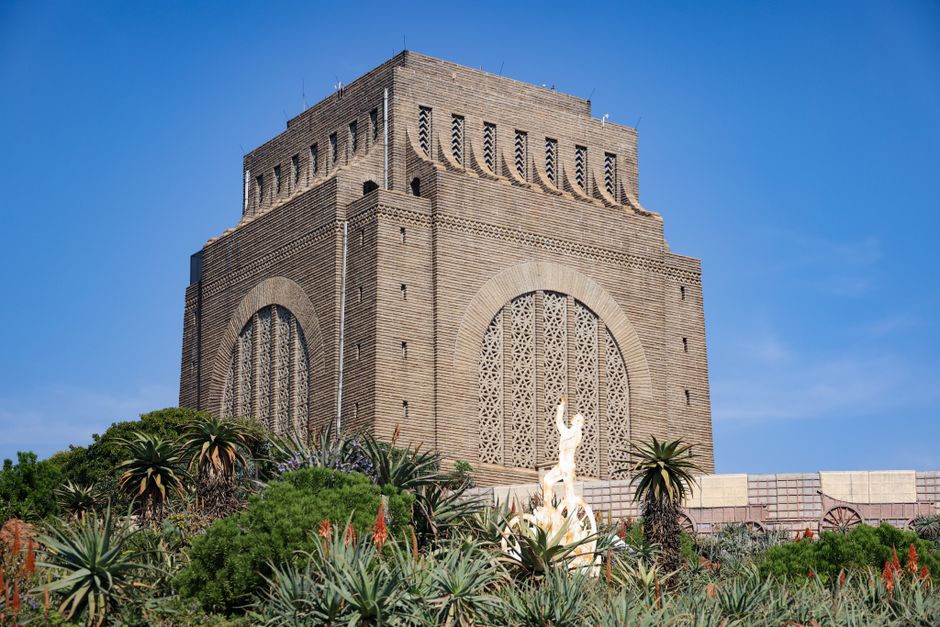
South Africa fits a remarkable range of trips into one country. At the southern tip of the continent, where the Atlantic and Indian oceans meet, it combines one of the world’s most beautiful cities, Cape Town, under the flat summit of Table Mountain; the vineyards and gabled Cape Dutch farmsteads of Stellenbosch and the Winelands; the cliff-top whale watching of Hermanus; the forests, lagoons and beaches of the Garden Route; and, a short flight away, the classic Big Five safari country of Kruger National Park, where you can drive yourself among elephants, lions and leopards and sleep in a fenced rest camp. Add the high basalt walls of the Drakensberg, the warm Indian Ocean surf of Durban, the energy, museums and history of Johannesburg and Pretoria, and malaria-free game parks such as Pilanesberg and Addo Elephant, and it is easy to see why South Africa welcomed a record number of international visitors in 2025. Most visitors from North America, Europe, Australia and New Zealand don’t need a visa, distances are large but the roads and domestic flights are good, and the rand makes the country excellent value for travelers paying in dollars, euros or pounds. Plan ahead: book park rest camps and Robben Island early, and remember that the seasons are reversed, so the Cape is rainy in June and July while Kruger is dry and at its best.
Right now in South Africa
- Wed 13–28°C 56–83°F Partly cloudy
- Thu 13–28°C 56–82°F Partly cloudy
- Fri 18–30°C 65–86°F Mostly clear
Weather: MET Norway (CC BY 4.0)
Multi-day tours of South Africa
Multi-day tours from local operators. You check dates and book on Viator, our partner; we may earn a commission at no extra cost to you. How we earn money
South Africa at a glance
South Africa covers about 1.22 million km² (471,000 square miles), roughly twice the size of Texas. Most of the interior is a high plateau, the Highveld, around 1,200 to 1,800 m (3,900 to 5,900 ft) above sea level, which is why Johannesburg and Pretoria have mild, sunny winters with cold nights. The plateau ends in the Great Escarpment, highest in the Drakensberg, where peaks reach well over 3,000 m (9,800 ft) on the border with Lesotho. Below it lie the subtropical Lowveld of Kruger, the humid KwaZulu-Natal coast, the semi-desert Karoo, and the Mediterranean-climate Western Cape. The country surrounds the kingdom of Lesotho and almost surrounds Eswatini, and borders Namibia, Botswana, Zimbabwe and Mozambique. Statistics South Africa estimated the population at about 63.1 million in mid-2025.
South Africa has three capitals: Pretoria (executive), Cape Town (legislative) and Bloemfontein (judicial); Johannesburg is the largest city and the main air hub. There are 12 official languages, including Zulu, Xhosa, Afrikaans, English, Sepedi, Setswana and South African Sign Language; English is the common language of business, tourism and road signs. The time zone is South African Standard Time (UTC+2) all year, with no daylight saving. Electricity is 230 V; most sockets are the large three-round-pin type M, with newer type N sockets and two-pin type C plugs also common, so bring an adapter that covers type M. Driving is on the left.
South Africa’s regions for travelers
- Western Cape: Cape Town and the Cape Peninsula, the Winelands (Stellenbosch, Franschhoek, Paarl), the Whale Coast around Hermanus, the Overberg, the West Coast and its spring flowers, and the western Garden Route.
- Garden Route and Eastern Cape: the coastal drive from Mossel Bay through Wilderness, Knysna and Plettenberg Bay to Tsitsikamma; Gqeberha (Port Elizabeth), Addo Elephant National Park and the malaria-free private reserves; the Wild Coast further east.
- Gauteng: Johannesburg, Soweto, Pretoria and the Cradle of Humankind, the country’s economic heart and its main international gateway.
- Mpumalanga and Limpopo: Kruger National Park and the private reserves on its western edge, the Panorama Route and Blyde River Canyon, and the forested escarpment towns.
- KwaZulu-Natal: Durban and the warm Indian Ocean beaches, the uKhahlamba-Drakensberg mountains, the Battlefields, and iSimangaliso Wetland Park and Hluhluwe-iMfolozi in the north.
- North West, Free State and Northern Cape: Pilanesberg and Sun City, Golden Gate Highlands, Kimberley, the Kalahari and the Namaqualand flowers.
Where to go: cities, safari, coast and mountains
A classic first trip combines Cape Town and the Winelands with a safari in or near Kruger, connected by a two-hour flight, often with the Garden Route as a road trip in between. Travelers with more time add Durban and the Drakensberg, or the Eastern Cape’s malaria-free parks. See our guides to each place:
- Cape Town: Table Mountain, the V&A Waterfront, Robben Island, Bo-Kaap, Kirstenbosch, Cape Point and the penguins at Boulders Beach.
- Kruger National Park: one of Africa’s great game parks, with self-drive safaris, rest camps and the Big Five.
- Johannesburg: the Apartheid Museum, Soweto and Vilakazi Street, Constitution Hill, Maboneng and the Cradle of Humankind.
- Pretoria: the Union Buildings, Freedom Park, the Voortrekker Monument and jacaranda-lined streets.
- Durban: the Golden Mile beachfront, curry and Indian heritage, uShaka Marine World and warm surf.
- Garden Route: Mossel Bay, Wilderness, Knysna, Plettenberg Bay and Tsitsikamma’s forests and suspension bridge.
- Stellenbosch: the oak-lined university town at the center of the Cape Winelands.
- Hermanus: land-based whale watching from the Cliff Path, from about June to November.
- Gqeberha: the friendly beach city formerly called Port Elizabeth, gateway to Addo and the Garden Route.
- Addo Elephant National Park: hundreds of elephants in a malaria-free park less than an hour from Gqeberha.
- Drakensberg: the Amphitheatre, Cathedral Peak, Giant’s Castle and thousands of San rock paintings.
- Pilanesberg National Park: a malaria-free Big Five park in an ancient volcanic crater, about 2.5 hours from Johannesburg.
Other favorites include Franschhoek, the Cederberg, Oudtshoorn’s Cango Caves, the Wild Coast, iSimangaliso Wetland Park and the Panorama Route.
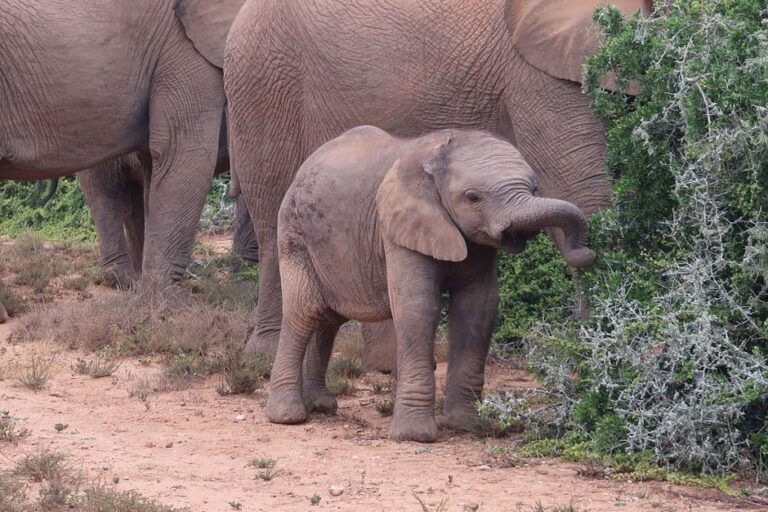
Addo Elephant National Park Travel Guide
Plan a visit to Addo Elephant National Park near Gqeberha: SANParks conservation fees and guided drive prices, gate times, the Wild Card, park rules…
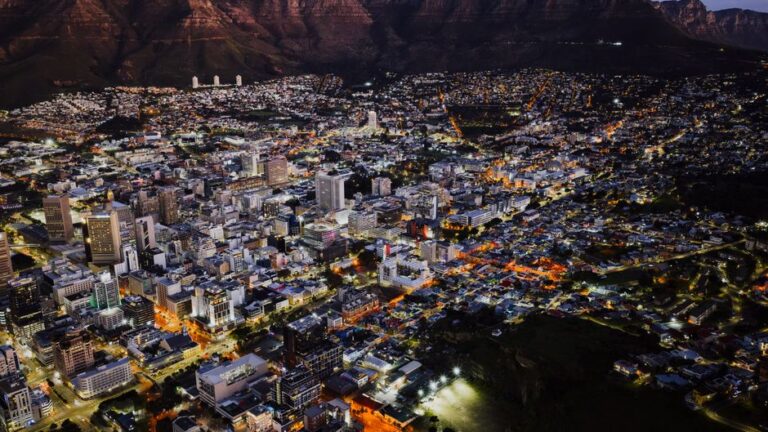
Cape Town Travel Guide
Plan a trip to Cape Town: Table Mountain and cableway prices, Robben Island tickets and ferry times, Boulders Beach penguins and Cape Point fees,…
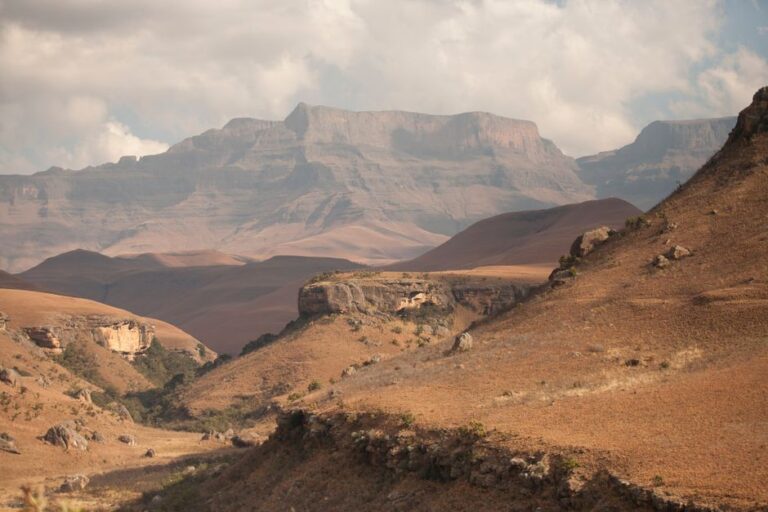
Drakensberg Travel Guide
Plan a trip to the Drakensberg (uKhahlamba): Ezemvelo conservation fees, hiking permits and the mountain rescue register, the Amphitheatre, Tugela Gorge and Sentinel chain…
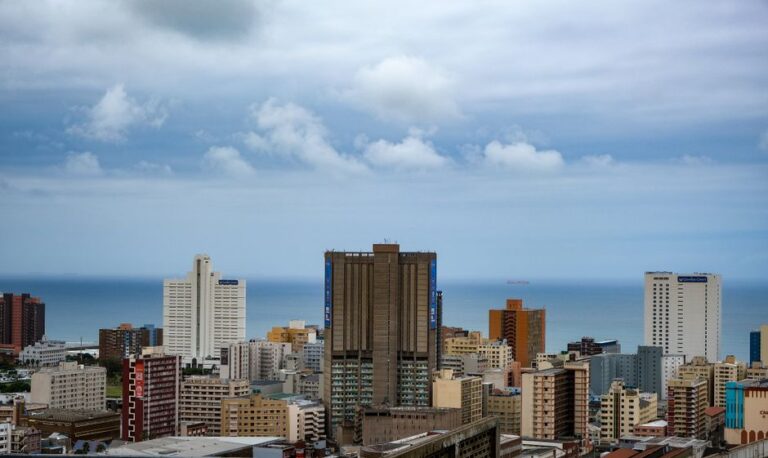
Durban Travel Guide
Plan a trip to Durban: the Golden Mile beachfront, uShaka Marine World, Moses Mabhida Stadium, Victoria Street Market and bunny chow, Umhlanga Rocks, surfing,…
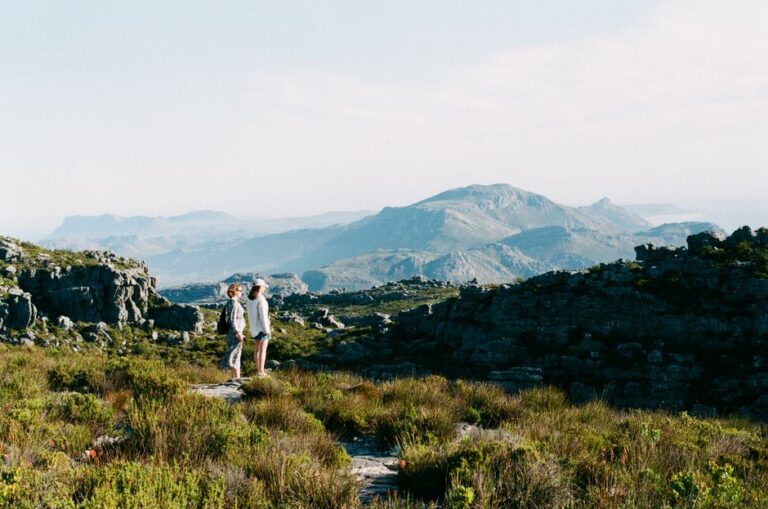
Garden Route Travel Guide
Plan a Garden Route road trip: Mossel Bay, George, Wilderness, Knysna, Plettenberg Bay, Nature's Valley and Tsitsikamma, Garden Route National Park fees to 31…
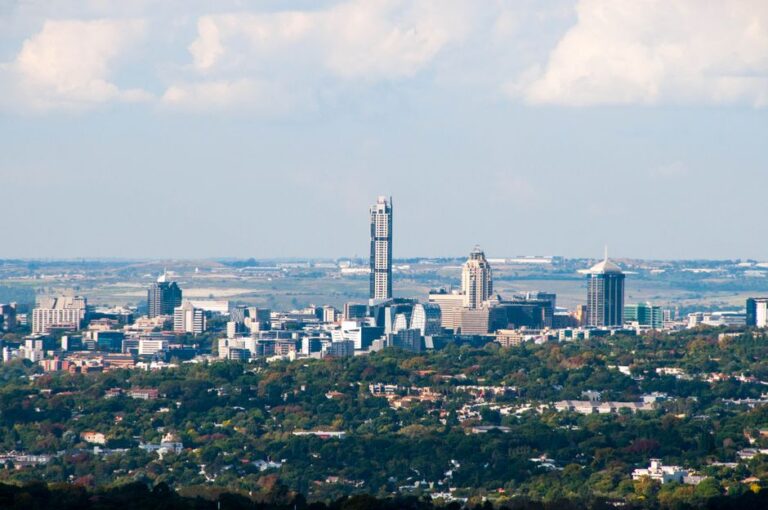
Gqeberha Travel Guide
Plan a trip to Gqeberha (Port Elizabeth): Summerstrand and Hobie beaches, Algoa Bay dolphin and penguin boat trips, the Red Location Museum, Route 67…
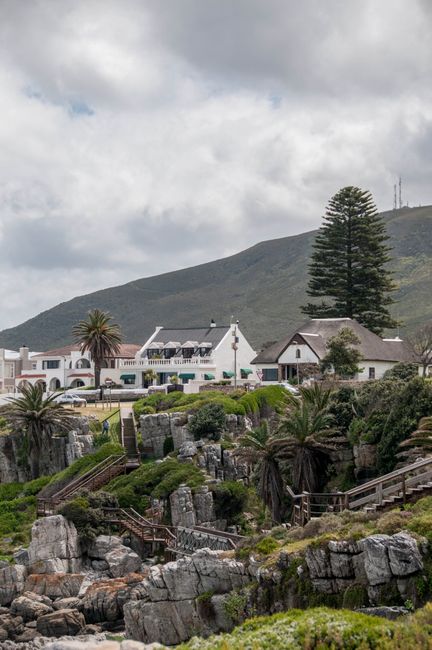
Hermanus Travel Guide
Plan a trip to Hermanus on Walker Bay: the southern right whale season from June to November and its September-October peak, the Cliff Path,…
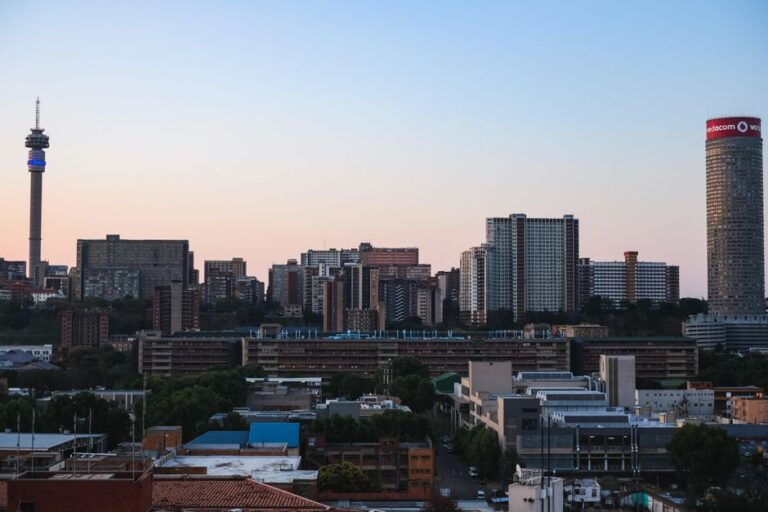
Johannesburg Travel Guide
Plan a trip to Johannesburg: the Apartheid Museum, Constitution Hill, Soweto's Vilakazi Street and Hector Pieterson Memorial, Maboneng, Braamfontein and Rosebank, the Cradle of…
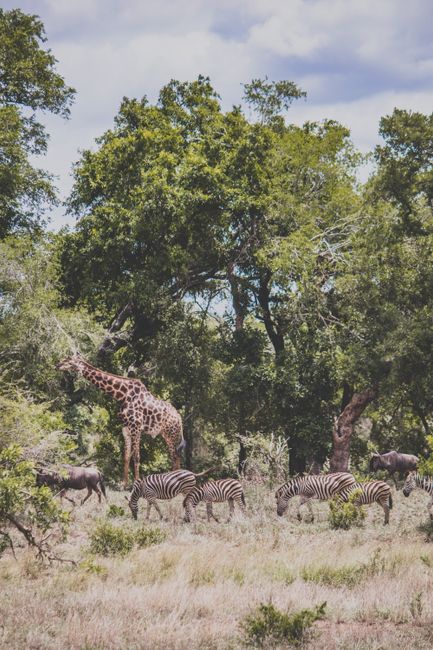
Kruger National Park Travel Guide
Plan a Kruger National Park safari: daily conservation fees to 31 October 2026, gate times by month and late-arrival rules, booking rest camps and…
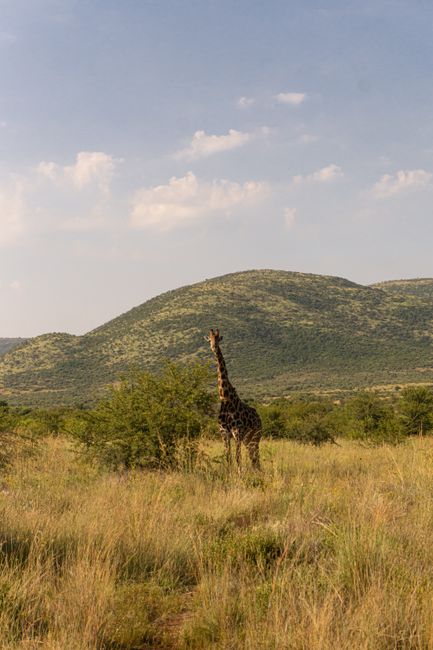
Pilanesberg National Park Travel Guide
Plan a Pilanesberg National Park safari: a malaria-free Big Five park in a volcanic crater 2.5 hours from Johannesburg, published entry fees from 1…
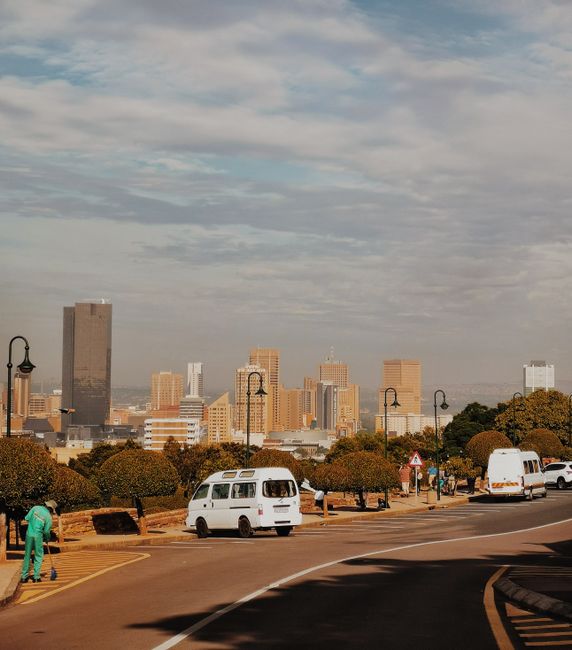
Pretoria Travel Guide
Plan a trip to Pretoria (Tshwane): the Union Buildings and Nelson Mandela statue, Freedom Park, the Voortrekker Monument, Church Square and Kruger House, jacaranda…
Stellenbosch Travel Guide
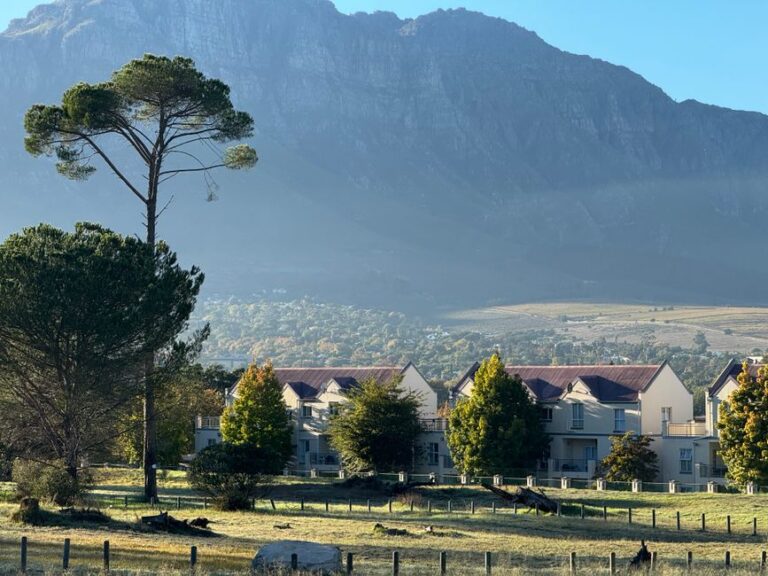
Plan a trip to Stellenbosch in the Cape Winelands: the Stellenbosch Wine Routes and how tastings work, historic Dorp Street and the Village Museum,…
Best time to visit South Africa
The seasons are the reverse of North America’s and Europe’s: summer is December to February and winter is June to August. The country has two very different rainfall patterns. The Western Cape has a Mediterranean climate, with warm, dry, windy summers and cool, wet winters. Most of the rest of the country, including Johannesburg, Kruger, Durban and the Drakensberg, gets its rain in summer, often as afternoon thunderstorms, while winter is dry and sunny, with cold nights on the Highveld and in the mountains. The table shows rounded averages from the South African Weather Service (SAWS), as published by the World Meteorological Organization (WMO).
| Region (SAWS station, period) | January high / low | July high / low | Rain a year |
|---|---|---|---|
| — | — | — | — |
| Cape Town and the Winelands (Cape Town airport, 1991–2020) | 27 °C (81 °F) / 17 °C (62 °F) | 18 °C (64 °F) / 7 °C (45 °F) | about 490 mm (19 in), mostly May to August |
| Garden Route (George, 1991–2020) | 25 °C (76 °F) / 16 °C (60 °F) | 19 °C (67 °F) / 8 °C (46 °F) | about 670 mm (26 in), spread through the year |
| Eastern Cape coast (Gqeberha, 1991–2020) | 26 °C (78 °F) / 17 °C (63 °F) | 20 °C (68 °F) / 8 °C (46 °F) | about 590 mm (23 in), spread through the year |
| KwaZulu-Natal coast (Durban, 1961–1990) | 28 °C (82 °F) / 21 °C (70 °F) | 23 °C (73 °F) / 10 °C (51 °F) | about 1,010 mm (40 in), mostly October to March |
| Highveld (Johannesburg, 1961–1990) | 26 °C (78 °F) / 15 °C (58 °F) | 17 °C (62 °F) / 4 °C (39 °F) | about 710 mm (28 in), mostly October to March |
| Lowveld near Kruger (Mbombela/Nelspruit, 1981–2010) | 28 °C (82 °F) / 18 °C (65 °F) | 22 °C (72 °F) / 7 °C (45 °F) | about 740 mm (29 in), mostly October to March |
| Drakensberg foothills (Ladysmith, 1981–2010) | 30 °C (85 °F) / 17 °C (62 °F) | 21 °C (69 °F) / 2 °C (36 °F) | about 750 mm (29 in), mostly October to March |
Safari season: the dry winter months from May to September are the best for game viewing in Kruger and Pilanesberg, because the bush thins out and animals gather at water. Summer brings green landscapes, newborn animals and migrant birds, but also heat, thicker bush and the higher malaria season in Kruger. The Cape is at its best from October to April; the “Cape Doctor,” a strong southeasterly wind, blows often in summer. Whales gather off the southern coast from about June to November. Spring flowers cover Namaqualand and the West Coast around August and September.
South Africa month by month
| Month | Weather | Highlights | Crowds and prices |
|---|---|---|---|
| — | — | — | — |
| January | Hot and dry in the Cape; hot with storms inland | Beaches; Cape Town’s summer festivals | Very busy early in the month (school holidays) |
| February | Hot; Cape’s driest, sunniest month | Wine harvest begins in the Winelands | Moderate |
| March | Warm; inland storms ease | Harvest festivals; good all round | Moderate; busy over Easter in some years |
| April | Mild; autumn colors inland | Good for the Garden Route and Drakensberg | Busy around Easter and school holidays |
| May | Cooler; dry inland | Safari season starts; quieter Cape | Low season, good deals |
| June | Cold nights inland; rain in the Cape | Whales arrive; excellent game viewing | Busy in Kruger during school holidays |
| July | Coolest month; snow possible in the Drakensberg | Prime safari month; whale season | High in parks; low on the coast |
| August | Dry, warming; windy | Spring flowers on the West Coast | Moderate |
| September | Spring; warm days | Hermanus Whale Festival; Heritage Day (September 24) | Rising |
| October | Warm; first storms inland | Peak whale watching; end of the dry safari season | Moderate to high |
| November | Hot inland; Cape warming | Baby antelope in the parks; summer starts in the Cape | Moderate |
| December | Hot; long days | Beaches, festive season | Very high from mid-December |
Public holidays and school holidays
South Africa’s public holidays include New Year’s Day, Human Rights Day (March 21), Good Friday and Family Day (the Monday after Easter), Freedom Day (April 27), Workers’ Day (May 1), Youth Day (June 16), National Women’s Day (August 9), Heritage Day (September 24), the Day of Reconciliation (December 16), Christmas Day and the Day of Goodwill (December 26); a holiday that falls on a Sunday moves to the Monday. The busiest travel period is the long summer school holiday from mid-December to mid-January, when coastal towns, Kruger and Cape Town fill up and prices peak. Shorter school holidays around Easter, in late June and July, and in late September or early October also bring local crowds to the parks. Book national park accommodation months ahead for these periods.
How long to stay: sample itineraries
- 7 days: Cape Town (4 nights) with the Cape Peninsula and a day in Stellenbosch, then fly to Kruger or the surrounding private reserves for 3 nights; or a week in the Western Cape with Hermanus and the Winelands.
- 10 days: Cape Town (4 nights), the Winelands (2 nights), then fly to Kruger (4 nights), arriving at Skukuza, Kruger Mpumalanga International or Hoedspruit, or driving from Johannesburg.
- 14 days: Cape Town (4 nights), Hermanus (1 night), the Garden Route from Mossel Bay to Tsitsikamma (4 nights), Addo Elephant National Park and Gqeberha (2 nights), then fly to Johannesburg for Kruger or Pilanesberg (3 nights).
- Three weeks: add Durban and the Drakensberg (4 to 5 nights) or Johannesburg, Soweto and Pretoria (2 to 3 nights).
- Short safari from Johannesburg: Pilanesberg is about 2.5 hours away by road and malaria-free, good for one or two nights.
Entry, money and costs
Entry and visas (last reviewed October 2026)
The Department of Home Affairs publishes the list of countries whose passport holders are exempt from visas (the version we read was issued on December 9, 2025, and is “subject to change without notice”). For ordinary passports it includes the United States, Canada, the United Kingdom, Ireland, Australia, New Zealand, Japan, Brazil, Argentina, Chile, Israel, Singapore, Malaysia, the United Arab Emirates, Saudi Arabia, Qatar, Switzerland, Norway, Iceland and most European Union countries for stays of up to 90 days; a few EU countries, including Poland and Cyprus, are listed for 30 days, and South Korea, Hong Kong and Thailand for 30 days. Check the list for your own passport, because the length of stay varies. Visitors normally need a passport with at least two blank pages and valid for 30 days after the end of the trip, a return or onward ticket and proof of funds.
Electronic Travel Authorisation (ETA): on August 12, 2026, the President and the Minister of Home Affairs officially launched South Africa’s ETA at OR Tambo International Airport. It replaces visitor-visa applications at embassies with an online application at eta.dha.gov.za, starting with travelers from the countries that took part in the pilot (China, India, Indonesia and Mexico), with more visa-requiring countries to be added. According to the Minister, the ETA will progressively become compulsory for short visits by nationals of countries that need a visa, and visa-exempt travelers can use it voluntarily for a faster arrival queue. At first it covers arrivals at OR Tambo (Johannesburg), Cape Town, King Shaka (Durban) and Lanseria airports. If your passport needs a visa, check the ETA portal or your nearest South African mission before you book.
Traveling with children: the birth certificate rule
The strict rule that every child must carry an unabridged birth certificate was relaxed in the amended Immigration Regulations that came into force on December 1, 2018. According to Home Affairs, foreign children from visa-exempt countries traveling with their parents no longer have to show birth certificates at the border. The documents (a birth certificate or passport showing the parents’ details, a consent affidavit from an absent parent, copies of the parents’ passports and, where relevant, court orders) must still be produced on request by South African children and by unaccompanied minors of any nationality, and visa-requiring children submit them with their visa application. A child’s passport that lists the parents’ names is accepted instead of a birth certificate. Many families still carry a copy of the full birth certificate and, if one parent is not traveling, a signed consent letter, which costs little and avoids questions.
Customs and what not to bring
You can bring personal belongings, plus duty-free allowances of alcohol, tobacco and goods, and declare large amounts of cash. Don’t bring fresh fruit, meat, plants or seeds without a permit. Rhino horn, ivory and products from protected species are strictly controlled, and buying them is illegal. Drones need permission from the South African Civil Aviation Authority, and flying them in national parks is prohibited.
Money, cards and cash
The currency is the South African rand (ZAR, R), divided into 100 cents. On October 5, 2026, the European Central Bank’s reference rates put it at about R16.60 to the US dollar (and about R18.63 to the euro), the rate used for conversions on this page. Cards are accepted almost everywhere, including restaurants, supermarkets, fuel stations, national park reception desks and many market stalls, and contactless payment and phone wallets are common. SANParks parks are largely cash-free. ATMs are widely available; use machines inside banks or shopping malls during the day, cover your PIN, and never accept help from strangers at an ATM. Carry some cash for tips, car guards and small rural shops.
National parks: conservation fees and the Wild Card
South African National Parks (SANParks) runs Kruger, Table Mountain, Addo, the Garden Route and 15 other national parks; KwaZulu-Natal’s parks, including the Drakensberg, are run by Ezemvelo KZN Wildlife, and Pilanesberg by North West Parks. Each SANParks park charges a daily conservation fee per person, with different rates for South Africans, nationals of other Southern African Development Community (SADC) countries, and international visitors. Fees are in rand, include VAT, and change each year on November 1. These are the international rates for 1 November 2025 to 31 October 2026:
| SANParks site (international visitors) | Adult (12+), per day | Child (2–11), per day |
|---|---|---|
| — | — | — |
| Kruger National Park | R602 (about US$36) | R300 (about US$18) |
| Table Mountain NP: Cape Point | R515 (about US$31) | R250 (about US$15) |
| Table Mountain NP: Boulders (penguins) | R245 (about US$15) | R120 (about US$7) |
| Garden Route NP: Tsitsikamma, Storms River Mouth | R367 (about US$22) | R183 (about US$11) |
| Garden Route NP: Knysna / Wilderness | R231 / R235 (about US$14) | R115 / R118 (about US$7) |
From 1 November 2026 to 31 October 2027, SANParks’ international rates rise to R692 per adult (R345 per child) at Kruger; check sanparks.org for the other parks. If you will spend more than about a week in national parks, compare the Wild Card, an annual pass. Visitors from outside SADC can buy the International All Parks Cluster card, which covers more than 80 parks and reserves run by SANParks, CapeNature, Msinsi and Eswatini’s parks: R4,680 for one person (about US$282), R7,310 for a couple (about US$440) and R8,745 for a family of up to seven (about US$527), as listed by SANParks in 2026. It covers conservation fees, not accommodation or activities.
Taxes and tipping
Prices include 15% VAT. Foreign visitors can claim VAT back on goods taken out of the country through the VAT refund offices at the main international airports; keep tax invoices and have the goods with you. Some municipalities and tourism bodies add small tourism levies to hotel bills. Tipping is customary: 10–15% in restaurants (check whether a service charge is already added), R10–R20 for porters, a few rand for fuel-station attendants who fill your tank and clean your windows, R5–R10 for informal car guards, and, on safari, a tip for your ranger and tracker at the end of a stay.
What a trip costs
Prices are typical ranges for October 2026, converted at about R16.60 to the US dollar; official fares are noted.
| Item | Typical cost |
|---|---|
| — | — |
| Coffee in a café | R30–45 (about US$2–3) |
| Main course in a mid-range restaurant | R150–280 (about US$9–17) |
| Bottle of Cape wine in a restaurant | R180–400 (about US$11–24) |
| Table Mountain Cableway return, adult, booked online (official) | R475 (about US$29) |
| Robben Island tour, international adult (official) | R600 (about US$36) |
| Gautrain, OR Tambo airport to Sandton (official, 2025 fare table) | R228 (about US$14) |
| Kruger conservation fee, international adult, per day (official) | R602 (about US$36); R692 (about US$42) from Nov 1, 2026 |
| Rental car, small, per day | R400–800 (about US$24–48) |
| Mid-range hotel or guesthouse double, per night | R1,500–3,500 (about US$90–210) |
| Kruger rest camp bungalow, per night | R1,500–3,000 (about US$90–180) |
A comfortable mid-range trip costs roughly US$120–200 per person per day, with car rental, guesthouses, meals and park fees; private safari lodges, from about US$400 to well over US$1,000 per person per night with meals and game drives, are the big extra. Budget travelers using backpacker lodges, the Baz Bus and self-catering can spend much less.
Getting there and getting around
Airports
Most long-haul flights land at OR Tambo International (JNB) in Johannesburg, the busiest airport in Africa, or Cape Town International (CPT), which has direct flights from Europe, North America, the Middle East and Africa. King Shaka International (DUR) serves Durban. The national airports company, ACSA, also runs Chief Dawid Stuurman International (PLZ) in Gqeberha, George (GRJ) on the Garden Route, Bram Fischer (BFN) in Bloemfontein and others. For safaris, Kruger Mpumalanga International (MQP) near Mbombela, Skukuza (SZK) inside Kruger, and Hoedspruit (HDS) for the private reserves are reached on short flights from Johannesburg and Cape Town. Lanseria (HLA), northwest of Johannesburg, handles some domestic flights.
Domestic flights
Distances are long, so flying saves time: Cape Town to Johannesburg is about two hours, and several airlines, including low-cost carriers, connect the main cities many times a day. Book early for school holidays.
The Gautrain and city transport
In Gauteng, the Gautrain rapid rail links OR Tambo airport with Sandton, and its north-south line runs from Park station in central Johannesburg through Rosebank, Sandton and Midrand to Pretoria and Hatfield. You pay with a Gautrain card (R21) or, for pay-as-you-go trips, a contactless bank card. Under the fare table in force since June 1, 2025, a trip from OR Tambo to Sandton costs R228 (about US$14) and to Pretoria R258 (about US$16). In Cape Town, the city’s MyCiTi buses link the airport with the city center and run to the Waterfront, Sea Point, Camps Bay, Hout Bay and Table View; you need a myconnect card (R40), and 1-, 3- and 7-day passes cost R130, R290 and R420. Elsewhere, ride-hailing apps such as Uber and Bolt work in all major cities and are the easiest way to get around, especially after dark.
Driving
A rental car is the best way to see the Garden Route, the Winelands, the Drakensberg and Kruger. Drive on the left; speed limits are generally 120 km/h (75 mph) on freeways, 100 km/h (62 mph) on rural roads and 60 km/h (37 mph) in towns, and lower inside national parks. A driver’s license in English with a photo is generally accepted; otherwise carry an International Driving Permit. Main roads are good, but watch for potholes on rural roads, pedestrians and animals on the roads, minibus taxis that stop suddenly, and long distances between fuel stations in the Karoo. Fuel stations are attended. Avoid driving long distances at night.
Long-distance buses and trains
Intercity coaches link the main cities, and the hop-on, hop-off Baz Bus serves backpackers along the coast. Passenger trains are limited; luxury trains such as the Blue Train and Rovos Rail are an experience in themselves.
Culture, food and everyday etiquette
Food and wine
South African food reflects its many cultures. The national pastime is the braai, a barbecue of boerewors sausage, lamb chops and steak, often with pap, a maize porridge, and chakalaka relish. Try bobotie, a Cape Malay spiced mince bake with a savory custard topping; Cape Malay curries and koesisters in the Bo-Kaap; bunny chow, a hollowed-out loaf filled with curry, in Durban; biltong and droëwors, dried meat snacks; potjiekos stews; snoek, kingklip and line fish with chips on the coast; and malva pudding and milk tart for dessert. The Cape Winelands produce world-class Chenin Blanc, Cabernet Sauvignon, Syrah and Pinotage, South Africa’s own red grape, and Cape Town and Johannesburg have excellent restaurants at prices far below European or North American equivalents. Rooibos tea, grown only in the Cederberg region, is everywhere.
Where to stay
Options range from city hotels and wine farm stays to Garden Route B&Bs, SANParks rest camps with self-catering bungalows, safari tents and campsites, and private game lodges where game drives and meals are included. Backpacker hostels are common on the coast.
Etiquette
- Greetings: greet people before asking a question; “howzit” means hello, “now now” soon and “just now” later.
- Car guards: informal attendants in reflective vests watch parked cars in cities and expect a small tip when you leave.
- Photos: ask before photographing people, especially in townships and rural villages; township visits are best with a local guide who lives in or works with the community.
- In the parks: keep your voice down at sightings, give other vehicles a turn, and never feed animals.
Safety, health and connectivity
Millions of visitors travel around South Africa each year without problems, and the main tourist areas, Winelands, coastal towns and parks are well set up for visitors. Crime rates in the big cities are high, though, so it pays to know the practical precautions locals take.
- Urban crime precautions: take care in central business districts and quiet areas after dark, especially in parts of central Johannesburg, Durban and Cape Town, and don’t walk at night away from busy, well-lit streets. Use registered taxis or ride-hailing apps (Uber, Bolt) rather than walking, and meet your driver inside, not on the street. Keep phones and cameras out of sight, carry only what you need, and don’t leave bags visible in a car; keep doors locked and windows up in traffic. Use ATMs inside banks or malls. On hikes on Table Mountain and the Cape Peninsula, walk in groups on popular routes and during the day. Visit townships with a reputable local guide.
- Load-shedding (power cuts): the scheduled national power cuts that affected South Africa for years have been suspended; on October 5, 2026, Eskom’s load-shedding status showed no load-shedding, and Eskom reported more than 500 days without it. Some areas with high electricity losses still have local “load reduction” outages of a few hours. Most hotels, lodges and malls have backup power; a power bank and a small flashlight are still useful.
- Water restrictions: Johannesburg applies Level 1 water restrictions every summer, in force from September 1, 2026, to March 31, 2027, which limit garden watering and pool filling by residents; they don’t affect visitors in hotels, but local water outages can happen in parts of Gauteng. Cape Town’s dams were about 75% full on October 5, 2026, according to the City of Cape Town.
- Malaria: Kruger and the low-lying northeast of Limpopo, Mpumalanga and northern KwaZulu-Natal are malaria areas. SANParks describes the risk in Kruger as usually low, even in summer, with the highest risk from November to April; the national guidelines describe transmission as seasonal from September to May. Cape Town, the Garden Route, Johannesburg, Pretoria, Durban, the Drakensberg, Pilanesberg and Addo are malaria-free. Talk to a travel-health professional about tablets for Kruger, and avoid mosquito bites from dusk to dawn.
- Wildlife rules: in national parks, stay inside your vehicle except at fenced camps, picnic sites and marked spots; don’t feed animals, including monkeys and baboons, which can become aggressive; keep a safe distance from elephants; and be inside your camp before the gates close. On the Cape Peninsula, keep car windows shut and food out of sight near baboons.
- Sea conditions and sharks: the Atlantic around Cape Town is cold, and both coasts have strong rip currents, so swim only at beaches with lifeguards and between the flags. Cape Town’s Shark Spotters program posts spotters at popular beaches such as Muizenberg and Fish Hoek, with colored flags showing visibility and sightings; many beaches in KwaZulu-Natal, including Durban’s, are protected by shark safety gear managed by the KwaZulu-Natal Sharks Board.
- Driving: road accidents are a bigger risk for visitors than crime. Avoid driving at night, especially on rural roads with pedestrians and animals, keep to speed limits, and don’t stop for strangers on the roadside.
- Health: tap water in the main cities is generally safe to drink. Private hospitals in the cities are of a high standard but expensive, so buy travel insurance that includes evacuation. Use high-factor sunscreen; UV is strong all year.
- Emergencies: call 10111 for the police and 10177 for an ambulance; from a mobile phone, 112 connects to emergency services.
Connectivity: prepaid SIM cards from Vodacom, MTN, Cell C and Telkom are sold at airports and malls; you need your passport for registration (RICA). eSIMs are widely supported. Coverage is good in cities and along main roads but patchy in parts of Kruger and the mountains. Most accommodation has free Wi-Fi.
Things to do: safari, wine, coast and mountains
- Safari: self-drive game viewing in Kruger, Addo and Pilanesberg, guided game drives in private reserves, and walking safaris with armed rangers.
- Wine tasting: hundreds of estates in Stellenbosch, Franschhoek, Paarl, Constantia and the Hemel-en-Aarde Valley near Hermanus. See our wine tasting guide.
- Hiking: Table Mountain, the Otter Trail and coastal paths of Tsitsikamma, the Drakensberg’s Amphitheatre and Cathedral Peak, and the Cederberg. See our hiking guide.
- Whale watching and boat trips: southern right whales from the cliffs at Hermanus and De Kelders, boat-based whale watching in Walker Bay and Plettenberg Bay, and seal cruises from Hout Bay. See our boat trips guide.
- Surfing: Muizenberg for beginners, Jeffreys Bay’s famous right-hand point break, and the warm waves of Durban. See our surfing guide.
- Beaches: Clifton and Camps Bay in Cape Town, Plettenberg Bay, Durban’s Golden Mile and the KwaZulu-Natal coast. See our beaches guide.
- Diving and snorkeling: the sardine run off KwaZulu-Natal in June and July, Aliwal Shoal, Sodwana Bay’s coral reefs, and kelp forests near Cape Town. See our diving guide.
- History and culture: Robben Island, the Apartheid Museum, Constitution Hill, the Battlefields, and San rock art in the Drakensberg. See our city sightseeing guide.
What to pack for South Africa
Pack layers: even in summer, Cape Town’s evenings can be cool and windy, and winter nights on the Highveld, in Kruger’s open vehicles at dawn, and in the Drakensberg can drop close to freezing. Bring neutral-colored clothes for safari (khaki, olive or tan), a warm fleece and a windproof jacket, a sun hat, sunglasses and SPF 50 sunscreen, good walking or hiking shoes, swimwear, binoculars for game viewing, insect repellent for Kruger, a rain jacket for the Cape in winter and for summer storms inland, a power bank and flashlight, and an adapter for type M sockets. See our travel adapters, hiking shoes, rain jackets and wetsuits guides.
South Africa travel FAQ
Do I need a visa to visit South Africa?
Not if you hold an ordinary passport from a visa-exempt country, including the United States, Canada, the United Kingdom, Ireland, Australia, New Zealand, Japan and most EU countries; most of these can stay up to 90 days. Check the Department of Home Affairs list for your passport.
What is South Africa’s Electronic Travel Authorisation (ETA)?
An online travel authorization launched on August 12, 2026, at eta.dha.gov.za. It began with travelers from China, India, Indonesia and Mexico and is being extended to other countries whose citizens need a visa; visa-exempt visitors don’t need it, though they can use it voluntarily.
Do children need an unabridged birth certificate to enter South Africa?
Not usually, if they are foreign children from visa-exempt countries traveling with their parents; that requirement was relaxed in December 2018. South African children and unaccompanied minors must still carry the documents, and many families bring a copy of the birth certificate anyway.
When is the best time to go on safari in South Africa?
From May to September, the dry winter season, when the bush is thinner and animals gather around water. Summer (November to March) is green and good for birds and newborn animals, but hotter, with thicker bush.
Is there load-shedding in South Africa in 2026?
National load-shedding has been suspended; Eskom’s status showed no load-shedding in early October 2026 after more than 500 days without it. Local outages can still happen in some areas, and most hotels have backup power.
Is Kruger National Park in a malaria area?
Yes. SANParks describes the risk as usually low, with the highest risk from November to April. Talk to a travel-health professional about prevention. Cape Town, the Garden Route, Addo and Pilanesberg are malaria-free.
How much is the Kruger conservation fee?
For international visitors, R602 per adult and R300 per child per day from November 1, 2025, to October 31, 2026, then R692 per adult and R345 per child from November 1, 2026.
Is the Wild Card worth it?
If you’ll spend roughly eight or more days in SANParks parks, usually yes. The International All Parks Cluster costs R4,680 for one person, R7,310 for a couple and R8,745 for a family, and covers conservation fees for a year.
Can I pay by card in South Africa?
Yes, almost everywhere, including restaurants, fuel stations and park gates, and contactless payment is common. Keep some cash for tips and car guards.
How do I get from OR Tambo airport to Johannesburg or Pretoria?
Take the Gautrain from the airport station: R228 to Sandton and R258 to Pretoria on the fare table in force since June 2025. Ride-hailing apps and registered taxis are alternatives.
Is South Africa safe for travelers?
Most visits are trouble-free. Use the same care as in any big city with high crime: avoid walking at night in quiet areas, use ride-hailing apps or registered taxis, keep valuables out of sight, and avoid driving at night in rural areas.
Can I swim in the sea in South Africa?
Yes, at beaches with lifeguards. The Atlantic in Cape Town is cold; the Indian Ocean around Durban is warm. Swim between the flags, watch for rip currents, and follow the Shark Spotters flags in Cape Town.
How many days do I need in South Africa?
At least 10 days for Cape Town, the Winelands and a safari; two weeks or more to add the Garden Route and Addo, or Durban and the Drakensberg.
Sources and last review
Researched and last reviewed on 6 October 2026. Visa exemptions and the rules for children: the Department of Home Affairs; the Electronic Travel Authorisation: the Presidency, SAnews and the Minister of Home Affairs’ launch address; national park conservation fees, gate times, day-visitor quotas, park rules, malaria in Kruger and Wild Card prices: South African National Parks (SANParks); the Table Mountain Cableway and Robben Island prices: the operators’ official sites; Gautrain fares: the Gautrain Management Agency’s fare guide (effective June 1, 2025); MyCiTi cards and passes: the City of Cape Town; load-shedding status: Eskom; water restrictions and dam levels: Johannesburg Water and the City of Cape Town; malaria seasons: the National Department of Health guidelines via the NICD; whale season: South African Tourism; population: Statistics South Africa; the exchange rate: the European Central Bank; climate: the South African Weather Service’s station normals as published by the World Meteorological Organization (1991–2020 for Cape Town, George and Gqeberha; 1981–2010 for Mbombela and Ladysmith; 1961–1990 for Johannesburg and Durban). Pilanesberg and Ezemvelo fees, customs rules, driving rules, public holidays, airline and airport details, tipping and typical prices are general references or estimates, flagged for checking. Rules and prices change, so check official sites before you go.
Plan your trip
Partner links: TravelerCenter may earn a commission if you book, at no extra cost to you.