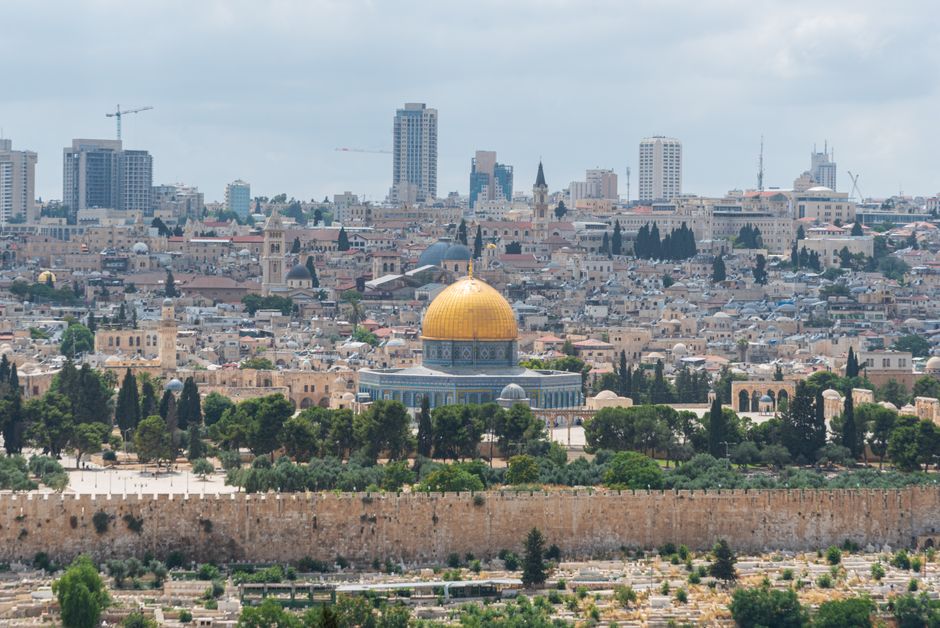
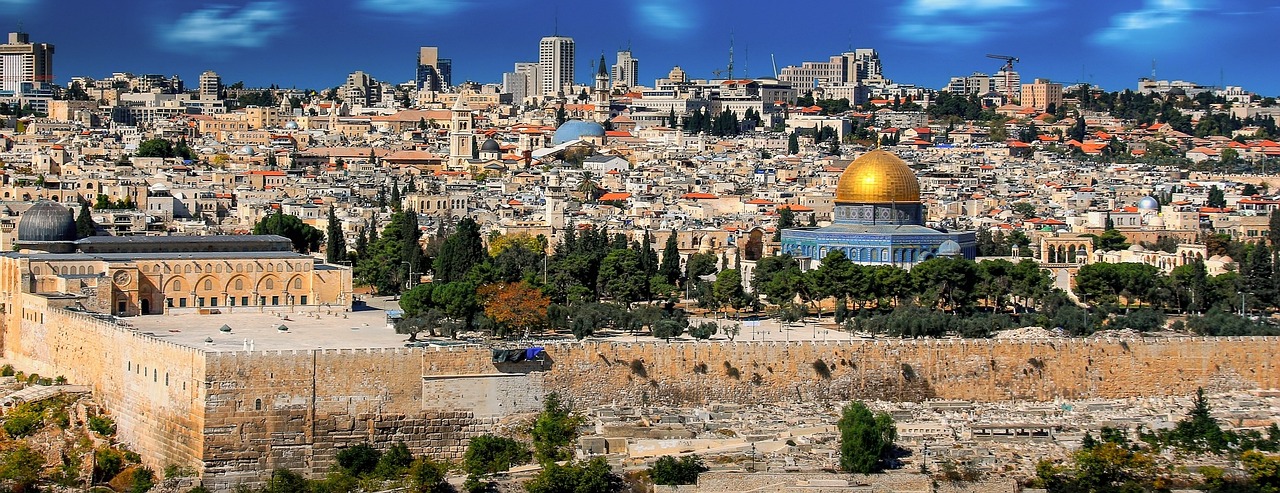
Jerusalem, set on limestone hills about 800 m (2,600 feet) above sea level, is one of the oldest and most visited cities in the world and holy to Jews, Christians and Muslims. Its heart is the walled Old City, less than a square kilometer of stone lanes divided into the Jewish, Christian, Muslim and Armenian quarters, where the Western Wall, the Church of the Holy Sepulchre and the Temple Mount / Haram al-Sharif with the golden Dome of the Rock stand within a few minutes’ walk of each other. Pilgrims follow the Via Dolorosa, worshippers gather at the Wall on Friday evenings, and the call to prayer, church bells and the bustle of the souqs fill the air. Around the walls lie the Mount of Olives, with its churches and views over the city, and Mount Zion; to the west, the modern city has the Mahane Yehuda market, the Israel Museum with the Dead Sea Scrolls, the Yad Vashem memorial, leafy neighborhoods, cafes and restaurants. About a million people live in Jerusalem. Visitors should plan around religious life: dress codes at holy sites, Shabbat closures from Friday afternoon to Saturday evening, and Friday prayers. Jerusalem has a Mediterranean hill climate: summers are warm and dry, with average highs of about 30 °C (86 °F) and cool nights, and winters are cool and wet, with average lows of about 7 °C (44 °F) and occasional snow.
Right now in Jerusalem
- Wed15–26°C58–78°FPartly cloudy
- Thu17–29°C62–84°FClear
- Fri17–29°C62–83°FClear
Top tours in Jerusalem
See all tours for Jerusalem →
From local operators, with prices and reviews; you check availability and book on Viator, our partner. We may earn a commission at no extra cost to you. How we earn money
Jerusalem at a glance
- Best months: March to May and September to November, with warm days and cool evenings. Summer is dry and warm; winter is cool and rainy.
- Time needed: two days for the Old City’s holy sites and the Mount of Olives; three to four days with the Israel Museum, Yad Vashem and Mahane Yehuda; add a day for Masada and the Dead Sea.
- Getting there: fast trains link Jerusalem’s Yitzhak Navon station with Ben Gurion Airport and Tel Aviv. Visitors from visa-exempt countries need an ETA-IL before traveling.
- Costs (as of October 2026): the Western Wall and the Church of the Holy Sepulchre are free; Yad Vashem is free with a reservation; the train from Tel Aviv costs ILS 27 (about US$9).
- Before you go: the ETA-IL, money and transport are covered in our Israel travel guide.
Jerusalem areas and who each one suits
The Old City
Inside the 16th-century Ottoman walls, with eight gates, the four quarters each have their own character: the Christian Quarter around the Holy Sepulchre, the Muslim Quarter’s busy souqs, the restored stone lanes of the Jewish Quarter above the Western Wall plaza, and the quiet, walled compound of the Armenian Quarter. Christian hospices and small guesthouses make it possible to stay inside the walls, best for pilgrims and those who want to explore early and late.
Mamilla and the Jaffa Gate area
Just outside Jaffa Gate, the open-air Mamilla shopping street leads toward the modern city, with luxury and boutique hotels a few minutes’ walk from the Old City. Ideal for first-time visitors.
The city center: Jaffa Road and Ben Yehuda
The modern downtown, along the light rail line, has the Ben Yehuda pedestrian streets, cafes, bars and mid-range hotels, and is a short walk from both the Old City and Mahane Yehuda market. Good value and convenient.
German Colony and Emek Refaim
A leafy neighborhood of 19th-century stone houses south of the center, with restaurants and cafes on Emek Refaim Street and guesthouses. Suits couples and families who prefer a quieter base.
Top things to see in Jerusalem
The Western Wall (Kotel)
The Western Wall is one of the supporting walls of the Temple Mount, built in the Second Temple period about 2,000 years ago, and the most sacred place where Jews pray. The open plaza in front of it is divided into men’s and women’s prayer sections. Visitors of all faiths are welcome. The Western Wall Heritage Foundation asks visitors to dress appropriately, not to eat, smoke or light candles, and on Shabbat and Jewish holidays not to use phones or other electronic devices, take photographs or write. Men are asked to cover their heads, and paper kippot are available. Security checks are carried out at the entrances.
The Western Wall Tunnels
Guided tours, booked in advance with the Western Wall Heritage Foundation, follow the hidden continuation of the wall underground. The foundation says the wall stretches almost half a kilometer, while only about 70 m (230 feet) is exposed at the plaza; the tunnels pass huge ancient stones, vaults, arches and cisterns.
The Church of the Holy Sepulchre
Christians venerate the church as the place of Jesus’ crucifixion, burial and resurrection. Inside, steps lead up to Calvary (Golgotha), and the Edicule in the rotunda encloses the tomb. The church is shared by several Christian communities, with the Greek Orthodox, Catholic (Franciscan) and Armenian communities responsible for the main areas. Entry is free. The Custody of the Holy Land, the Franciscan order that cares for the Catholic sites, says floor restoration work that began in March 2022 continues without stopping visits or services. The church usually opens early in the morning and closes in the evening, with hours varying by season; arrive early to avoid long lines at the Edicule. Dress modestly, covering shoulders and knees, and keep quiet during services.
The Temple Mount / Haram al-Sharif
The raised platform above the Western Wall is revered by Jews as the site of the ancient Temples and by Muslims as the Noble Sanctuary, with the Dome of the Rock and Al-Aqsa Mosque. Non-Muslim visitors may enter the compound only through the Mughrabi Gate, reached by a covered wooden walkway from the Western Wall plaza, during limited visiting hours, usually on Sunday to Thursday mornings with a short early-afternoon slot at some times of year. It is closed to non-Muslim visitors on Fridays, Saturdays and Muslim holidays, and access can be changed or suspended at short notice. The Dome of the Rock and Al-Aqsa Mosque are open only to Muslims. Dress modestly, with shoulders, arms and legs covered, expect security checks and follow the instructions of the staff on site. Lines form early, so arrive well before opening.
The Via Dolorosa
The “Way of Sorrows” winds through the Muslim and Christian quarters from near the Lions’ Gate to the Holy Sepulchre, marked by the 14 Stations of the Cross. The Franciscans lead a procession along it on Friday afternoons.
The Tower of David
Next to Jaffa Gate, the citadel’s towers and courtyards house a museum of the city’s history, with views from the ramparts and a night show on the walls in some seasons.
The Mount of Olives
East of the Old City, the Mount of Olives has the Garden of Gethsemane and the Church of All Nations at its foot, the Dominus Flevit church and the Church of the Pater Noster on its slopes, an ancient Jewish cemetery and a famous viewpoint over the Dome of the Rock and the Old City at the top. Walk down from the summit in the morning light.
Mount Zion
Just outside Zion Gate, Mount Zion has the Dormition Abbey, the Room of the Last Supper (the Cenacle) and the site venerated as King David’s Tomb.
The Israel Museum
The country’s largest museum has archaeology, Judaica, fine art and a sculpture garden, plus the Shrine of the Book, home to the Dead Sea Scrolls, and a large model of Jerusalem in the Second Temple period.
Yad Vashem
Israel’s memorial to the victims of the Holocaust, on Mount Herzl’s western slope, includes the Holocaust History Museum, the Hall of Names and memorial gardens. Entry is free, but all visits must be reserved in advance; the Holocaust History Museum is open to visitors aged 10 and over. Yad Vashem lists its hours as Sunday and Wednesday 9 a.m. to 4 p.m., Monday and Thursday 9 a.m. to 7 p.m., Tuesday 9 a.m. to 2 p.m., and Friday and holiday eves 9 a.m. to 1 p.m.; it’s closed on Saturday and Jewish holidays.
Other things to do in Jerusalem
- Mahane Yehuda market: a busy produce market by day that turns into a lively bar and restaurant area at night; Friday mornings before Shabbat are the busiest.
- The Old City souqs: spices, ceramics, olive-wood carvings and sweets in the lanes of the Muslim and Christian quarters.
- Church of St. Anne and the Pools of Bethesda: a Crusader church near the Lions’ Gate famous for its acoustics.
- Ein Karem: churches, galleries and cafes in a hillside village on the city’s western edge, traditionally linked to John the Baptist.
Food and drink
Jerusalem’s food reflects all its communities: hummus and falafel in the Old City, ka’ak (bagel-shaped sesame bread), knafeh and baklava from the souqs, Jerusalem mixed grill, and creative restaurants around Mahane Yehuda. Many restaurants in the west of the city are kosher and close for Shabbat from Friday afternoon to Saturday evening, while Old City and Arab restaurants and some non-kosher places stay open. Alcohol is available in bars and many restaurants, though less so in the Old City’s Muslim Quarter.
Day trips from Jerusalem
Masada and the Dead Sea
About 1.5 hours southeast, Masada is Herod the Great’s clifftop palace-fortress above the Dead Sea, a UNESCO World Heritage Site; adult entry is ILS 37 without the cable car. Combine it with a swim at the Dead Sea beaches of Ein Bokek and the springs of Ein Gedi.
Ein Gedi
An oasis on the Dead Sea shore with short trails to waterfalls and pools, ibex and rock hyraxes, and an ancient synagogue nearby.
Tel Aviv and Jaffa
About half an hour by fast train, Tel Aviv offers beaches, Bauhaus architecture and the old port of Jaffa. See our Tel Aviv guide.
Beit Guvrin–Maresha
About an hour southwest, this national park in the Judean lowlands has hundreds of caves, including bell-shaped quarries and a columbarium, inscribed by UNESCO in 2014.
Nearby destinations
Getting there and getting around
By train
The high-speed line links Jerusalem’s Yitzhak Navon station, at the city’s western entrance near the central bus station, with Ben Gurion Airport and Tel Aviv. The journey from Tel Aviv takes about half an hour, and a single fare is ILS 27 on a Rav-Kav card. Trains don’t run on Shabbat or Jewish holidays.
From Ben Gurion Airport
Take the train from the airport station to Yitzhak Navon, then the light rail or a taxi to your hotel; shared shuttle vans (sheruts) and taxis also run directly. On Shabbat, only taxis and some shuttles operate. Since early 2026, regional tensions have led to periodic airspace closures, so flights can be delayed or canceled at short notice; check your flight before you travel.
Light rail and buses
The Red Line light rail runs along Jaffa Road through the city center, past the central bus station, Mahane Yehuda and the City Hall stop, a short walk from Jaffa Gate. Buses cover the rest of the city. Pay with a Rav-Kav card: a ride costs ILS 8, and a daily city pass ILS 17.50. Light rail and most buses stop on Shabbat.
Walking and taxis
The Old City is car-free inside the walls and best on foot, with steep stairs and slippery stone; wear good shoes. The Western Wall Heritage Foundation says the walk from Jaffa or Zion Gate to the Wall takes 15–20 minutes. Taxis should use the meter. Driving in Jerusalem is slow, and parking is difficult; avoid driving into ultra-Orthodox neighborhoods on Shabbat.
When to go and how long to stay
Spring (March to May) and autumn (September to November) are the best seasons, with mild to warm days, though Easter, Passover and the autumn Jewish holidays are very busy. Summer (June to August) is dry and warm, with average highs of about 29–30 °C (84–87 °F); the hill-top city is cooler and less humid than the coast, and evenings are pleasant. Winter (December to February) is cool and wet, with average lows of about 7 °C (44 °F), rain on 8 or 9 days a month and occasional snow; bring warm clothes, as old buildings can be cold.
| Month | Average high / low | Rain (days with 1 mm or more) | What to expect |
|---|---|---|---|
| January | 13 °C (55 °F) / 7 °C (44 °F) | 137 mm (5.4 in), 9 days | Cold, wet; rare snow |
| February | 14 °C (57 °F) / 7 °C (45 °F) | 118 mm (4.6 in), 8 days | Cool, wet spells |
| March | 17 °C (63 °F) / 10 °C (49 °F) | 67 mm (2.6 in), 6 days | Cool; spring flowers |
| April | 22 °C (72 °F) / 12 °C (54 °F) | 22 mm (0.9 in), 2 days | Mild; Easter and Passover crowds |
| May | 26 °C (79 °F) / 16 °C (61 °F) | 7 mm (0.3 in), 1 day | Warm; excellent |
| June | 29 °C (83 °F) / 18 °C (65 °F) | under 1 mm, 0 days | Warm, dry |
| July | 30 °C (86 °F) / 20 °C (68 °F) | under 1 mm, 0 days | Hot days, cool nights |
| August | 30 °C (87 °F) / 20 °C (68 °F) | under 1 mm, 0 days | Hot days, cool nights |
| September | 29 °C (84 °F) / 19 °C (66 °F) | 1 mm (under 0.1 in), 0 days | Warm; Jewish holidays |
| October | 26 °C (79 °F) / 17 °C (63 °F) | 10 mm (0.4 in), 2 days | Pleasant; excellent |
| November | 20 °C (68 °F) / 13 °C (55 °F) | 51 mm (2.0 in), 5 days | Cool; first rains |
| December | 15 °C (59 °F) / 9 °C (48 °F) | 112 mm (4.4 in), 8 days | Cold, wet; Christmas |
The figures are the 1991–2020 climate normals the Israel Meteorological Service submitted to the World Meteorological Organization for its Jerusalem station: average daily highs and lows, average monthly rainfall and days with at least 1 mm of rain.
Events worth planning around
- Holy Week and Easter: processions and services at the Holy Sepulchre and on the Via Dolorosa; Western and Orthodox Easter often fall on different dates.
- Passover and the autumn Jewish holidays: crowds at the Western Wall, especially for the priestly blessing during Passover and Sukkot.
- Ramadan: in 2027 expected from about 8 February to 9 March; evenings are lively around the Damascus Gate, and the Old City is especially busy on Fridays.
- Christmas: services at churches across the city.
Religious dates change each year; check them before you book.
How long to stay: 2, 3 and 4 days
- Two days: the Western Wall, the Temple Mount / Haram al-Sharif in the morning visiting hours, the Holy Sepulchre and the Via Dolorosa on day one; the Mount of Olives, Mount Zion and the Tower of David on day two.
- Three days: add the Israel Museum, Yad Vashem and Mahane Yehuda.
- Four days: add a day trip to Masada, Ein Gedi and the Dead Sea.
Where to stay in Jerusalem
- Old City: Christian hospices and guesthouses inside the walls, simple but atmospheric.
- Mamilla and Jaffa Gate: luxury and boutique hotels steps from the Old City.
- City center: mid-range hotels and apartments near the light rail and Ben Yehuda.
- German Colony: boutique hotels and guesthouses in quiet neighborhoods.
- Ein Karem: B&Bs in a green village on the edge of the city.
Many hotels follow Shabbat rules, with special elevators, set meals and late check-out only after Shabbat ends; check before you book. Prices are highest on Jewish holidays and at Easter.
Typical costs in Jerusalem
| Item (as of October 2026) | Israeli shekels | About US dollars |
|---|---|---|
| Western Wall plaza | free | free |
| Church of the Holy Sepulchre | free | free |
| Yad Vashem (reservation required) | free | free |
| Light rail or bus ride | ILS 8 | $2.60 |
| Daily city transport pass | ILS 17.50 | $5.70 |
| Train to Tel Aviv, single | ILS 27 | $8.80 |
| Masada National Park, adult (without cable car) | ILS 37 | $12 |
| Hummus or falafel lunch | about ILS 30–60 | about $10–20 |
| Mid-range hotel room, per night | about ILS 700–1,200 | about $230–390 |
Transport fares are from Rav-Kav Online, Masada’s fee from the Israel Nature and Parks Authority and Yad Vashem’s admission from the museum; meals and hotels are typical ranges. The shekel is worth about US$0.33.
Safety in Jerusalem
Jerusalem is generally safe for visitors, and street crime is low. Respecting religious customs and following the authorities’ instructions makes a visit smoother.
- Dress codes: cover shoulders, upper arms and knees in the Old City and at all holy sites, and carry a scarf; in ultra-Orthodox neighborhoods such as Mea She’arim, dress conservatively and don’t photograph residents.
- Holy site rules: follow the rules at the Western Wall (no photos or phones on Shabbat), the Holy Sepulchre (quiet during services) and the Temple Mount / Haram al-Sharif (visiting hours, modest dress and staff instructions).
- Old City gates and crowds: entrances may have security checks or close at short notice, especially on Fridays and religious holidays. Avoid large gatherings and follow police instructions; if shops suddenly close, leave the area.
- Shabbat closures: most public transport, many restaurants and shops close from Friday afternoon to Saturday evening; plan ahead, including for airport transfers.
- Public transport: stay alert on buses, light rail and at stations, as anywhere crowded.
- Official alerts and closed areas: follow instructions from the local authorities, including official alerts sent to phones. Some areas around the city are closed to visitors or require checking access before you go.
- Flight disruptions: airspace can close at short notice; check your flight with the airline before you travel.
- Winter weather: rain makes the Old City’s stone streets slippery, and snow occasionally disrupts the city.
- Emergencies: police 100, ambulance 101, fire 102.
Practical tips for Jerusalem
- Time zone: UTC+2, with daylight saving time (UTC+3) from late March to late October.
- Weekend: Friday and Saturday; Muslim sites are busiest on Friday, Jewish sites close for Shabbat on Saturday, and many Christian sites have reduced hours on Sunday morning.
- Timing: visit the Temple Mount / Haram al-Sharif first thing, and the Holy Sepulchre at opening time.
- Money and plugs: cards are widely accepted; carry cash for the souqs. Power is 230 V, with type H sockets that also take two-pin European plugs.
What to pack for Jerusalem
Pack comfortable shoes with grip for slippery stone streets, clothes that cover shoulders, upper arms and knees, and a scarf or shawl. Add a hat and sunscreen in summer, a warm jacket, umbrella and layers from November to March, a refillable water bottle, a Rav-Kav card and a plug adapter.
Jerusalem travel FAQ
What are the visiting hours for the Temple Mount / Haram al-Sharif?
Non-Muslim visitors may enter only through the Mughrabi Gate during limited hours, usually on Sunday to Thursday mornings, with a short early-afternoon slot at some times of year. It’s closed to non-Muslim visitors on Fridays, Saturdays and Muslim holidays, and hours can change at short notice.
Is the Western Wall open to everyone?
Yes, visitors of all faiths are welcome, with separate prayer sections for men and women. Dress modestly, and on Shabbat and Jewish holidays don’t take photos or use your phone.
Is there an entrance fee for the Church of the Holy Sepulchre?
No, entry is free. Dress modestly and arrive early to avoid lines at the tomb.
What should I wear in Jerusalem’s Old City?
Clothes that cover shoulders, upper arms and knees; a scarf is useful for women at holy sites, and men cover their heads at the Western Wall.
How do I get from Tel Aviv to Jerusalem?
By high-speed train to Yitzhak Navon station in about half an hour, for ILS 27. Trains don’t run on Shabbat.
Do I need to book Yad Vashem?
Yes. Entry is free, but all visits must be reserved in advance online. It’s closed on Saturdays and Jewish holidays.
Can I visit Masada from Jerusalem?
Yes, it’s about 1.5 hours away. Adult entry costs ILS 37 without the cable car; climb the Snake Path at dawn in hot weather.
What closes on Shabbat in Jerusalem?
Most public transport, many shops and kosher restaurants close from Friday afternoon to Saturday evening. Old City sites, Arab restaurants and some cafes stay open.
What is the best time to visit Jerusalem?
March to May and September to November; check the dates of Easter and Jewish holidays, when the city is busiest.
How many days do I need in Jerusalem?
Three days covers the Old City, the Mount of Olives, the Israel Museum and Yad Vashem; add a fourth for Masada and the Dead Sea.
Plan your trip
Partner links: TravelerCenter may earn a commission if you book, at no extra cost to you.
🇮🇱 Useful Hebrew phrases for Jerusalem
All 38 Hebrew phrases: restaurant, hotel, emergencies, romance (printable) →
Sources · last reviewed 5 October 2026
Researched and last reviewed on 5 October 2026. The Western Wall’s significance, conduct rules, Shabbat rules, the tunnel tours and walking times come from the Western Wall Heritage Foundation; the Church of the Holy Sepulchre’s restoration and its shared care by the Orthodox, Catholic and Armenian communities from the Custody of the Holy Land; Yad Vashem’s free entry, reservations, age limit and hours from Yad Vashem; Masada’s fee, hours and Snake Path rules from the Israel Nature and Parks Authority; Beit Guvrin–Maresha’s listing from UNESCO; Rav-Kav fares and the train fare to Tel Aviv from Rav-Kav Online; dress codes, Old City security checks, Shabbat driving and emergency numbers from GOV.UK’s Israel travel information (updated 22 July 2026), used for practical facts only; airspace disruption from the European Union Aviation Safety Agency; climate normals from the Israel Meteorological Service via the World Meteorological Organization; population from Wikidata. The Temple Mount / Haram al-Sharif visiting hours, the Holy Sepulchre’s opening hours (the Custody’s published timetable dates from 2023), the Tower of David museum, Israel Museum exhibits, train journey times, light rail details, neighborhoods, events, Ramadan 2027 dates and typical meal and hotel prices are general references and flagged for checking. For entry rules and money, see our Israel travel guide.
Data: Weather: MET Norway (CC BY 4.0) · Rates: ECB · Costs: World Bank ICP and price levels · Wikidata (CC0)