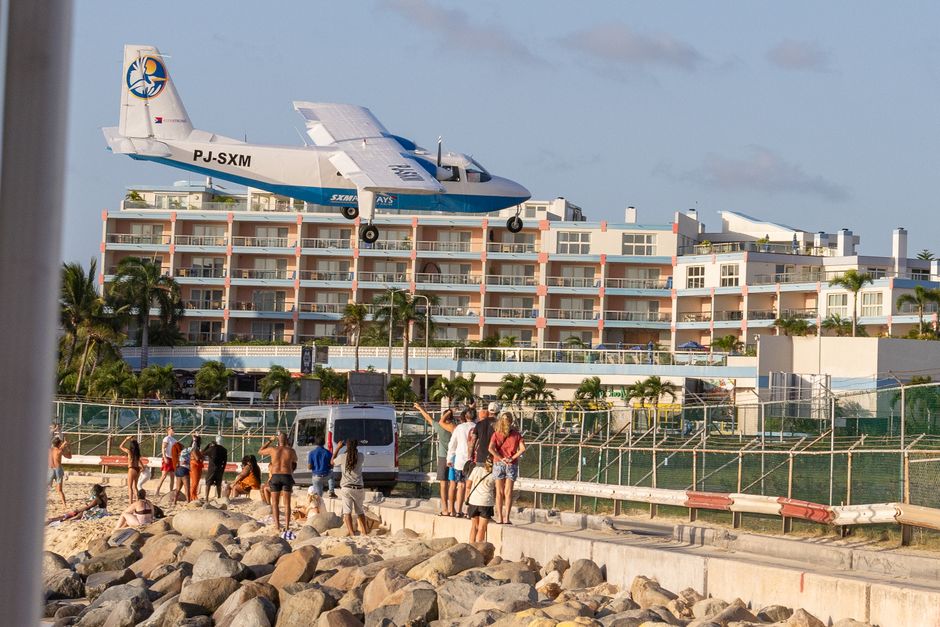
Sint Maarten is the Dutch half of Saint Martin, a small, hilly island in the northeastern Caribbean that it shares with the French Collectivity of Saint-Martin. It covers only about 34 km² (13 square miles) of the island’s south, yet it is one of the busiest destinations in the Caribbean: in 2025, according to its Department of Statistics, nearly 1.6 million cruise passengers came ashore and about 856,000 air passengers landed at Princess Juliana International Airport. Visitors come for Maho Beach, where jets thunder in over the sand just before touching down; for the white curves of Mullet Bay and Cupecoy; for duty-free shopping on Front Street and the beach boardwalk of Philipsburg, the capital; for the restaurants, casinos and marinas of Simpson Bay; and for sailing, diving and day trips to neighboring islands. There is no border check between the two sides, so the French towns of Marigot and Grand Case are a short drive away. English is spoken everywhere, US dollars are accepted alongside the Caribbean guilder, and air travelers fill in a free online ED card before arrival. December to April is the high season, and hurricane season runs from June to November.
Right now in Sint Maarten
- Wed26–29°C79–83°F6 mm rain
- Thu27–29°C81–84°F2 mm rain
- Fri28–29°C83–84°F3 mm rain
- Sat 10 Oct Constitution Day
Multi-day tours of Sint Maarten
Multi-day tours from local operators. You check dates and book on Viator, our partner; we may earn a commission at no extra cost to you. How we earn money
Sint Maarten at a glance
Sint Maarten has been a country within the Kingdom of the Netherlands since October 10, 2010, when the Netherlands Antilles were dissolved; it is not part of the European Union. It occupies the southern part of Saint Martin, an island of about 87 km² (34 square miles) in the Leeward Islands, about 240 km (150 miles) east of Puerto Rico. Philipsburg, the capital, lies on Great Bay on the south coast. The Dutch side has a little under 44,000 residents, from dozens of nationalities, and is densely built along its bays, with green hills rising behind them. The French side, Saint-Martin, covers the north of the island; Dutch and French have shared it since the 17th century, and the line between them is marked only by a monument and a welcome sign.
The official languages are Dutch and English, and St. Maarten Tourism notes that English is widely spoken everywhere; you will also hear Spanish, Papiamento and Creole. The currency is the Caribbean guilder (XCG), but US dollars are accepted almost everywhere. Sint Maarten keeps Atlantic Standard Time, UTC−4, all year, with no daylight saving time. Cars drive on the right. According to St. Maarten Tourism, sockets are the American type at 110 V (some buildings also have 220 V outlets), 60 Hz, so most North American plugs work without an adapter; the French side uses European sockets at 220 V. The international dialing code is +1 721.
Sint Maarten’s areas
- Philipsburg and Great Bay: the capital, on a sandbar between the sea and the Great Salt Pond, with Front Street, the Boardwalk, the Courthouse and the cruise pier at Pointe Blanche.
- Simpson Bay and the airport: the busiest resort district, with Simpson Bay Beach, marinas on the lagoon, the restaurant strip on Airport Road and Princess Juliana International Airport.
- The Lowlands (Maho, Mullet Bay and Cupecoy): the western tip of the Dutch side, with Maho Beach, the casinos and nightlife of Maho Village, the golf course at Mullet Bay and the cliff-backed coves of Cupecoy.
- Cole Bay, Cay Bay and Little Bay: hillside neighborhoods and coves between Simpson Bay and Philipsburg, with Fort Willem, Little Bay’s resorts and the island’s main shopping and supply stores.
- The east (Dawn Beach and Oyster Pond): quieter, with sunrise views toward Saint-Barthélemy, Dawn Beach and the Oyster Pond marina on the French border.
Where to go: beaches, bays and the capital
Most visitors base themselves in Simpson Bay or the Lowlands for beaches and nightlife, or near Philipsburg for shopping and the cruise port; distances are short, and you can see all of the Dutch side in a couple of days. See our guides:
- Philipsburg: the capital on Great Bay, with the beach boardwalk, Front Street’s duty-free shops, the 1793 Courthouse, Fort Amsterdam, the Sint Maarten Museum and the cruise pier.
- Simpson Bay and Maho Beach: the resort and marina district beside the airport, with plane spotting at Maho Beach, Mullet Bay and Cupecoy, the lagoon, restaurants, casinos and boat trips.
Other highlights include Dawn Beach, on the east coast, for sunrise and snorkeling; Guana Bay, a windswept beach popular with bodysurfers; Little Bay, just west of Philipsburg, with Fort Amsterdam on its point; the hillside zip lines and hiking trails of Rockland Estate, on Sentry Hill; the Emilio Wilson Estate, a former plantation turned heritage park; and the hiking trails of the island’s green interior. Across the open border, the French side adds Orient Bay, the restaurants of Grand Case, the market town of Marigot and the islet of Pinel; see our Saint Martin travel guide.
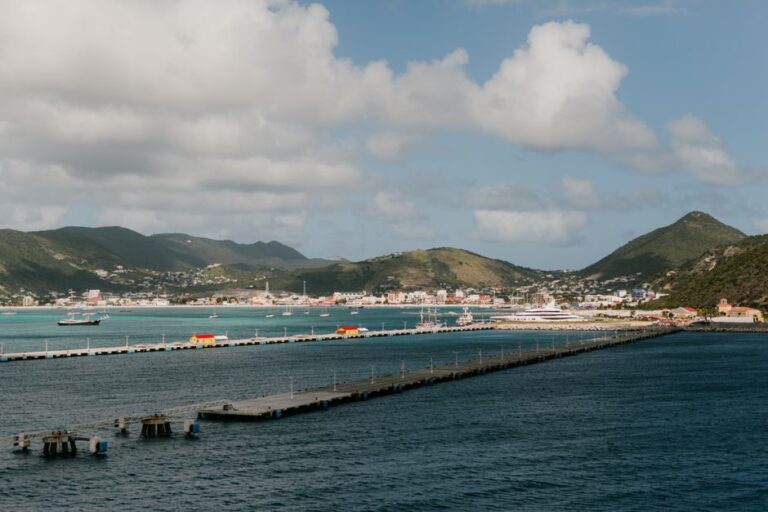
Philipsburg Travel Guide
Plan a visit to Philipsburg, Sint Maarten's capital: Great Bay Beach and the Boardwalk, Front Street duty-free shopping, the 1793 Courthouse, Fort Amsterdam and…
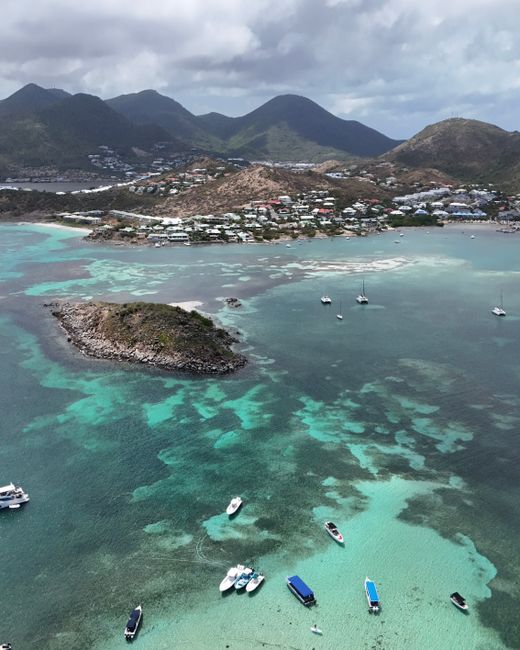
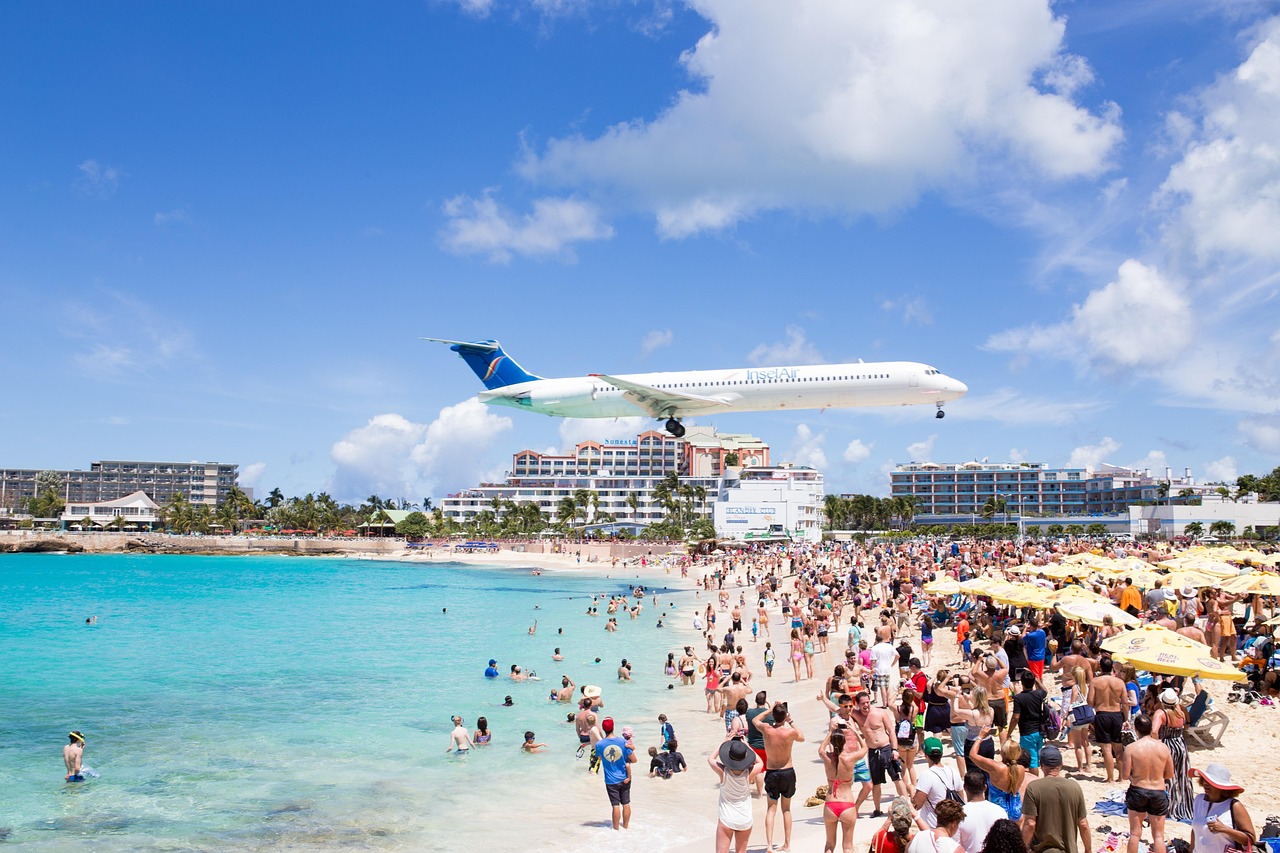
Simpson Bay and Maho Beach Travel Guide
Plan a stay in Simpson Bay, Sint Maarten's resort and marina district beside Princess Juliana Airport: plane spotting at Maho Beach and jet-blast safety,…
Beyond Philipsburg and Simpson Bay
Dawn Beach and Oyster Pond
On the east coast, facing Saint-Barthélemy across the channel, Dawn Beach is named for its sunrises. It is a long strip of sand with a reef close to shore for snorkeling on calm days, beach bars and a resort at its north end. Just beyond, the sheltered lagoon of Oyster Pond is shared with the French side, with a marina, sailing charters and waterside restaurants.
Guana Bay and Pointe Blanche
A winding road over the hills east of Philipsburg leads to Guana Bay, an undeveloped Atlantic-facing beach with waves that draw bodysurfers and boogie boarders; currents can be strong, so swim only when it is calm. The headland of Pointe Blanche, above the cruise pier, has views over Great Bay and the ships in port.
Rockland Estate and the hills
The green hills that divide the Dutch side’s bays are crossed by hiking trails, and the former plantation of Rockland Estate, on the slopes of Sentry Hill north of Philipsburg, now has a chairlift, zip lines (including the long, steep “Flying Dutchman”) and nature walks with views across the island. The Emilio Wilson Estate, in the Cul de Sac valley, preserves the ruins of a former sugar plantation as a heritage and nature park.
The French side
Because there are no border controls inside the island, crossing to the French Collectivity of Saint-Martin is as easy as driving to the next village. Marigot, its capital, about 20 minutes from Simpson Bay, has a waterfront market and a hilltop fort; Grand Case is known for its restaurants and beach-side grills (lolos); and Orient Bay is the island’s longest lively beach. Prices there are in euros, and phone networks change at the line, so check your roaming plan. See our Saint Martin travel guide for the French side.
Best time to visit Sint Maarten
Sint Maarten is warm all year, with highs of about 29 °C (83–84 °F) in winter and 32 °C (89 °F) in late summer, cooled by the trade winds. The dry season, from December to April, is the high season, with the most sunshine, the lowest humidity and the most cruise ships; February, March and April are the driest months. From May to November, it is hotter and more humid, with short, heavy showers, and the wettest months are October and November. The Atlantic hurricane season runs from June 1 to November 30, according to the US National Hurricane Center, with the greatest risk from August to October; Hurricane Irma, a Category 5 storm, struck the island on September 6, 2017, and both sides have since rebuilt. Hotels are cheapest from May to mid-December, apart from holidays.
The table shows averages for Princess Juliana International Airport, from the World Meteorological Organization’s (WMO) climate normals for 1991–2020, rounded.
| Month | Average high / low | Rain (days with 1 mm or more) | What to expect |
|---|---|---|---|
| January | 29 °C (83 °F) / 23 °C (74 °F) | 68 mm (2.7 in), 13 days | Dry season, breezy; brief showers; high season |
| February | 29 °C (84 °F) / 23 °C (74 °F) | 49 mm (1.9 in), 11 days | Sunny and dry; peak cruise season |
| March | 29 °C (84 °F) / 24 °C (74 °F) | 47 mm (1.8 in), 8 days | Driest stretch; Heineken Regatta |
| April | 30 °C (85 °F) / 24 °C (76 °F) | 60 mm (2.4 in), 8 days | Dry and sunny; Carnival in some years; Easter crowds |
| May | 30 °C (87 °F) / 25 °C (78 °F) | 98 mm (3.9 in), 10 days | Warmer; prices drop; Carnival in some years |
| June | 31 °C (88 °F) / 26 °C (79 °F) | 55 mm (2.2 in), 9 days | Hot; hurricane season begins |
| July | 32 °C (89 °F) / 26 °C (79 °F) | 97 mm (3.8 in), 13 days | Hot and humid; Emancipation Day (July 1) |
| August | 32 °C (89 °F) / 27 °C (80 °F) | 106 mm (4.2 in), 14 days | Hottest; warm sea; storm risk rising |
| September | 32 °C (89 °F) / 26 °C (80 °F) | 116 mm (4.6 in), 13 days | Peak hurricane risk; quietest month; some places close |
| October | 31 °C (88 °F) / 26 °C (79 °F) | 157 mm (6.2 in), 14 days | Wet; showers and storms possible |
| November | 30 °C (87 °F) / 25 °C (77 °F) | 162 mm (6.4 in), 14 days | Wettest month; St. Martin’s Day (November 11); cruise season resumes |
| December | 29 °C (85 °F) / 24 °C (75 °F) | 101 mm (4.0 in), 14 days | High season begins mid-month; holiday prices |
The rainfall totals about 1,116 mm (44 in) a year. Rain usually falls in short bursts, followed by sunshine. Sea temperatures stay warm enough for swimming all year, from about 26 °C (79 °F) in winter to 29 °C (84 °F) in late summer. Like much of the Caribbean, the island’s east- and south-facing beaches can receive drifts of sargassum seaweed, mostly between spring and autumn; west-facing beaches such as Mullet Bay and Cupecoy are usually less affected.
Festivals and events
- St. Maarten Heineken Regatta: in early March, one of the Caribbean’s biggest sailing regattas, with races around the island by day and concerts in Simpson Bay at night.
- Carnival: in April and May, with weeks of calypso and soca shows, pageants and street parades (jump-ups) at the Festival Village in Philipsburg; the dates change every year.
- King’s Day: April 27, the Dutch king’s birthday, with markets and celebrations in Philipsburg.
- Emancipation Day: July 1, marking the abolition of slavery in the Dutch colonies in 1863.
- Constitution Day: October 10, the anniversary of Sint Maarten’s country status in 2010.
- St. Martin’s Day: November 11, celebrated on both sides of the island, with ceremonies at the border monument.
How long to stay: sample itineraries
- A cruise day: Philipsburg’s Boardwalk and Front Street in the morning, then a taxi to Maho Beach for the afternoon arrivals, or a beach day at Mullet Bay; allow time to get back to the ship.
- 4 days: base yourself in Simpson Bay; a day at Maho and Mullet Bay, a day in Philipsburg with Fort Amsterdam, a boat or snorkeling trip, and a drive around the island to Marigot, Grand Case and Orient Bay.
- 7 days: add Dawn Beach and Guana Bay, the zip lines at Rockland Estate, a sailing trip and a day on Pinel Island on the French side.
- 10 days or more: add a day trip or a night or two on Saint-Barthélemy, Anguilla or Saba, by ferry or a short flight from Princess Juliana Airport. See our Saint-Barthélemy travel guide.
Entry, money and costs
The ED card (as of October 2026)
According to St. Maarten Tourism, everyone arriving by air at Princess Juliana International Airport, including passengers changing planes, and everyone arriving by yacht must complete an online Embarkation and Disembarkation (ED) card at entry.sx, the government’s portal. It is free; beware of look-alike websites that charge a fee. The portal opens 7 days before your trip, and St. Maarten Tourism recommends completing it at least 24 hours before departure; you need your passport details, your flight or vessel information and your address on the island. Residents, day-visit cruise passengers, people born in the former Netherlands Antilles with a valid declaration, and travelers arriving at the French side’s Grand Case–Espérance Airport are exempt.
Passports and visas
According to St. Maarten Tourism, you need a passport valid for the duration of your stay (at least six months’ validity is recommended) and a return or onward ticket. US citizens do not need a visa, and citizens and residents of the European Union, the UK, Canada, Iceland, Norway, Switzerland and many Caribbean, Latin American and Asian countries can stay up to 90 days without one; cruise passengers may stay up to 48 hours, and transit passengers 24 hours with an onward ticket. Sint Maarten is outside the Schengen area, so the EU’s Entry/Exit System and ETIAS do not apply, and a Schengen visa alone is not valid. Rules change, so check St. Maarten Tourism’s entry page and your own government’s information before you travel. For the French side’s rules, see our Saint Martin travel guide.
Money and cards
Since March 31, 2025, Sint Maarten’s currency has been the Caribbean guilder (XCG), which replaced the Netherlands Antillean guilder; it is pegged to the US dollar at XCG 1.79 to US$1, according to the Central Bank of Curaçao and Sint Maarten, which issues it. In practice, US dollars are accepted almost everywhere, and many prices are quoted in dollars. Credit cards are widely accepted in hotels, restaurants and shops, and ATMs, many open 24 hours, dispense dollars or guilders; banks open Monday to Friday from 8:30 a.m. to 3 or 3:30 p.m., according to St. Maarten Tourism. On the French side, prices are in euros.
Taxes, service charges and tipping
Sint Maarten is a duty-free port, so there is no sales tax added at the till in the way Americans are used to; businesses pay a 5% turnover tax that is usually included in prices. Hotels and vacation rentals charge non-resident guests a 5% room tax, and many hotels and some restaurants add a service charge of 10–15%, so read your bill. St. Maarten Tourism notes that tips are generally not included in restaurants and range from 10 to 20%. The government has proposed a visitor levy, of US$15 per adult in an earlier draft, but as of October 2026 it was still a draft law, targeted for January 2027.
What a trip costs
Prices are approximate, for October 2026, in US dollars, which are accepted almost everywhere (XCG 1.79 to US$1).
| Item | Typical cost |
|---|---|
| ED card | Free |
| Taxi, airport to Philipsburg (one or two people) | US$25–30 |
| Minibus (public bus) ride | US$2–3 |
| Two beach chairs and an umbrella | US$20–30 a day, often with a drink |
| Lunch at a local grill or beach bar | US$15–25 |
| Dinner for two in Simpson Bay, without wine | US$80–150 |
| Rental car, per day | US$45–80 |
| Half-day snorkeling or sailing trip | US$70–120 |
| Mid-range hotel double, high season, per night | US$220–400 |
| Luxury resort double, high season, per night | US$500 and up |
A comfortable trip with a mid-range hotel, a rental car, beach days and dinners out costs roughly US$250–400 per person per day for two people sharing in high season, and noticeably less from May to mid-December.
Getting there and getting around
Flights
Princess Juliana International Airport (SXM), in Simpson Bay, is the island’s main gateway and a hub for the northeastern Caribbean. According to the airport, about 30 airlines fly direct to 34 destinations in the United States, Canada, Europe, Latin America and the Caribbean, among them American, Delta, United, JetBlue, Spirit, Frontier, Sun Country, Air Canada, WestJet, Air Transat, Air France, KLM, Caribbean Airlines and Arajet. Small regional airlines, including Winair, link it with Saint-Barthélemy, Saba, Sint Eustatius, Anguilla, Nevis, Dominica and Tortola. The terminal has been completely rebuilt after Hurricane Irma. The runway ends just behind Maho Beach, so arriving planes pass low over the sand, at under 100 feet according to the airport.
Cruise ships
Cruise ships dock at the Dr. A.C. Wathey Cruise and Cargo Facility at Pointe Blanche, at the eastern end of Great Bay, one of the busiest cruise ports in the Caribbean, which welcomed 1,597,940 cruise passengers on 592 ship calls in 2025, according to the Department of Statistics. From the pier, it is a walk of about 15 to 20 minutes along the waterfront to Front Street, or a short ride by water taxi across the bay. Taxis wait at the pier for trips to Maho Beach, Orient Bay and Marigot.
Ferries
Fast ferries run from Philipsburg and Simpson Bay to Gustavia on Saint-Barthélemy, in about 45 minutes to an hour and a quarter, and a ferry links Sint Maarten with Saba; ferries to Anguilla leave from Marigot on the French side, and some charter boats leave from Simpson Bay. Schedules change with the season and the weather, so book ahead and bring your passport, as these are international crossings.
Getting around
A rental car is the easiest way to explore, and rental desks are at the airport and in Simpson Bay; drive on the right, and keep to 50 km/h (30 mph) in built-up areas, according to St. Maarten Tourism. Roads are narrow and hilly, and traffic is heavy at rush hours around Philipsburg, Cole Bay and the Simpson Bay bridges, which open several times a day to let yachts in and out of the lagoon; the causeway bridge across the lagoon helps you bypass the Simpson Bay strip. Taxis charge set fares between zones, so agree on the price, and whether it is per person, before setting off. Privately run minibuses, with a “BUS” license plate, run between Philipsburg, Simpson Bay, Maho and Marigot by day and are cheap but irregular; wave them down at the roadside.
Beaches, the sea and nature
According to St. Maarten Tourism, all beaches on the island are public; private beach clubs rent chairs and umbrellas. The Dutch side’s best-known beaches are Maho Beach, for plane spotting; Mullet Bay, a long arc of soft sand and calm water, popular with locals on weekends; Cupecoy, small coves below sandstone cliffs, best at low tide; Simpson Bay Beach, a quiet 2 km (1.2-mile) crescent; Great Bay, in Philipsburg; Little Bay, for snorkeling under Fort Amsterdam; Dawn Beach, for sunrise and reef snorkeling; and Guana Bay, for waves. Waters on the south and west coasts are generally calm, while the Atlantic-facing east coast can have strong currents and surf. There are few lifeguards, so swim within your depth and watch out for jet skis and boats near the shore.
Under the water, the Man of War Shoal Marine Park, off the south coast, protects coral reefs, sea turtles and a resting area for migrating humpback whales in winter; it is managed by the Nature Foundation St. Maarten, and dive operators include its fees in their prices. Popular dive sites include reefs and wrecks such as the 18th-century British frigate HMS Proselyte, sunk off Great Bay in 1801. Snorkeling is easiest at Little Bay, Dawn Beach and Mullet Bay on calm days. On land, trails cross the hills between the bays, and the Great Salt Pond behind Philipsburg and the Simpson Bay Lagoon attract herons, pelicans and frigatebirds. See our beaches, snorkeling, diving and boat trips guides.
Culture, food and everyday etiquette
A short history
The island was home to Arawak and later Kalinago (Carib) people before Europeans arrived, and Columbus is said to have named it for Saint Martin of Tours in 1493. The Dutch came for the salt pans, the basis of the economy for centuries; the French settled the north, and in 1648 the two nations agreed to share the island under the Treaty of Concordia. Sugar plantations worked by enslaved Africans followed, until emancipation in 1848 on the French side and 1863 on the Dutch side. Tourism took off from the 1950s and 1960s, after the airport opened, and has been the economy’s mainstay ever since.
Food and drink
The island has a reputation as a Caribbean food capital, with French, Dutch, Creole, Indian, Latin and American influences. Try johnnycakes (fried dough), saltfish, conch and dumplings, goat water (a spiced goat stew), pate (pastries filled with saltfish or meat), barbecued ribs and chicken from roadside lolos, and fresh mahi-mahi and red snapper. Dutch touches include Gouda cheese, bitterballen and Heineken beer. The island’s own drink is guavaberry liqueur, made from a wild berry that grows in the hills and traditionally drunk at Christmas, also mixed into a guavaberry colada. Simpson Bay’s restaurant strip and the French-side town of Grand Case are the dining hot spots.
Etiquette
Greet people with a “good morning” or “good afternoon” before asking a question; it is the local custom. Beachwear is for the beach: cover up in shops, restaurants and in Philipsburg’s streets. Topless sunbathing is not the custom on the Dutch side, though it is common on some French-side beaches. Ask before photographing people.
Safety, health and connectivity
Most visits are trouble-free. A few practical points:
- Jet blast at Maho Beach: the blast from departing jets can knock people over and throw sand and stones; signs at the beach warn of severe injury. Never hold on to the airport fence, and stand well clear of the runway end when planes are taking off.
- Valuables: do not leave bags unattended on beaches or anything visible in parked cars, and use hotel safes.
- Driving: roads are narrow and winding, with steep hills, potholes in places and heavy traffic at rush hours; take care at night.
- Sun and heat: the sun is strong all year; use reef-safe sunscreen, drink water and seek shade at midday.
- Mosquitoes: dengue occurs in the Caribbean, so use insect repellent, especially in the rainy season.
- Hurricanes: from June to November, follow forecasts from the US National Hurricane Center and the instructions of your hotel and local authorities, and have travel insurance that covers disruption.
- Health care: the St. Maarten Medical Center, in Cay Hill, is the main hospital; serious cases may be flown off the island, so have travel insurance that covers evacuation. According to St. Maarten Tourism, tap water is safe to drink, but bottled water is recommended.
- Emergencies: call 911 for police, 912 for an ambulance, 919 for the fire department and 913 for the Coast Guard; on the French side, the European emergency number is 112.
Mobile networks are good across the Dutch side, but your phone may switch between Dutch-side and French-side networks near the border, which can trigger different roaming rates, so check your plan or buy a local SIM or eSIM. Most hotels, restaurants and beach bars have free Wi-Fi. North American plugs fit the 110 V sockets; others will need a travel adapter.
Things to do: planes, beaches, boats and duty-free shopping
Watch the big jets land over Maho Beach; swim at Mullet Bay and explore the coves of Cupecoy; stroll the Boardwalk and shop on Front Street in Philipsburg; climb to the ruins of Fort Amsterdam; sail on a catamaran or race a former America’s Cup yacht; snorkel at Little Bay or dive on the reefs and wrecks of the marine park; fly down the zip lines at Rockland Estate; taste guavaberry liqueur; eat at a lolo; and cross the open border for lunch in Grand Case and a swim at Orient Bay. See our beaches, boat trips, snorkeling, diving and hiking guides.
What to pack
Light summer clothes, swimwear and a cover-up for town, a sun hat, sunglasses and reef-safe sunscreen, sandals and water shoes for the rocky coves of Cupecoy and Little Bay, a light rain jacket from May to November, insect repellent, a dry bag for boat trips and something smarter for dinner in Simpson Bay or Grand Case. Bring your passport even for a day trip to Saint-Barthélemy or Anguilla.
Sint Maarten travel FAQ
What is the difference between Sint Maarten and Saint-Martin?
They are the two halves of the same island. Sint Maarten, in the south, is a country within the Kingdom of the Netherlands, with the capital Philipsburg and the main airport; Saint-Martin, in the north, is a French overseas collectivity, with the capital Marigot. You can cross between them freely.
Do I need a passport to visit Sint Maarten?
Yes. You need a passport valid for your stay, with six months’ validity recommended, and a return or onward ticket. US citizens do not need a visa, and many nationalities, including EU, UK and Canadian citizens, can stay up to 90 days without one.
What is the St. Maarten ED card, and does it cost anything?
It is a free online entry form at entry.sx that everyone arriving by air at Princess Juliana Airport or by yacht must complete, starting 7 days before travel. Day-visit cruise passengers and arrivals at the French side’s airport are exempt. Avoid websites that charge for it.
Is there a border between the Dutch and French sides?
Not in practice. There are no passport checks between the two sides; a monument and welcome signs mark the line.
What currency is used in Sint Maarten?
The Caribbean guilder (XCG), pegged at 1.79 to the US dollar, but US dollars are accepted almost everywhere, and cards are widely used. The French side uses euros.
What is the best time to visit Sint Maarten?
December to April, the dry season, for the most sunshine; May, June and early December for lower prices and fewer crowds. Hurricane season runs from June to November, with the greatest risk from August to October.
Is it safe to watch the planes at Maho Beach?
Watching landings from the beach is a classic experience, but jet blast from departing planes can cause serious injuries. Follow the warning signs, never hold on to the fence, and stay well back during takeoffs. See our Simpson Bay and Maho Beach guide.
How far is Philipsburg from the cruise port?
The cruise pier at Pointe Blanche is about a 15- to 20-minute walk along Great Bay from Front Street, or a few minutes by water taxi. See our Philipsburg guide.
Do I need a car in Sint Maarten?
Not if you stay in Simpson Bay or Maho and use taxis, but a car makes it easy to explore both sides of the island and its many beaches. Drive on the right.
What language is spoken in Sint Maarten?
English is spoken everywhere and is the everyday language; Dutch is also official, and Spanish, Papiamento and Creole are widely heard.
Can I take a day trip to Saint-Barthélemy or Anguilla?
Yes. Fast ferries run from Philipsburg and Simpson Bay to Gustavia on Saint-Barthélemy, ferries to Anguilla leave from Marigot, and short flights connect Princess Juliana Airport with both. Bring your passport.
What plugs are used in Sint Maarten?
American-style sockets at 110 V, 60 Hz, on the Dutch side, with some 220 V outlets; the French side uses European sockets at 220 V.
Plugs and power in Sint Maarten
Sint Maarten uses 110 V, 60 Hz and these plugs (left) and wall sockets (right):
Some buildings also have 220 V outlets; the French side (Saint-Martin) uses 220 V, 60 Hz, European sockets.
All plug types and voltages by country → · Check what you need to pack →
Plan your trip
Partner links: TravelerCenter may earn a commission if you book, at no extra cost to you.
Sources · last reviewed 5 October 2026
Researched and last reviewed on 5 October 2026. The ED card, passport, visa and length-of-stay rules, currencies, banking hours, electricity, languages, dialing codes, driving rules, public beaches, tap water, restaurant tipping and emergency numbers: St. Maarten Tourism (visitstmaarten.com); fire department number: the Government of Sint Maarten; visitor numbers for 2025: the Government of Sint Maarten’s Department of Statistics; the Caribbean guilder and its peg: the Central Bank of Curaçao and Sint Maarten; airlines and destinations: Princess Juliana International Airport; the cruise facility: Port St. Maarten; climate averages: the WMO 1991–2020 normals for Princess Juliana International Airport (NOAA archive); hurricane season and Hurricane Irma: the US National Hurricane Center. The room tax, the turnover tax, the proposed visitor levy, ferry routes and times, history, festival dates, the marine park, sea temperatures, sargassum, walking times, taxi and bus fares, hotel and food prices and daily budgets are general references or estimates, flagged for checking. Rules and prices change, so check the official sites before you go.
Data: Weather: MET Norway (CC BY 4.0) · Air quality: OpenAQ · Rates: ECB · Holidays: Nager.Date · Wikidata (CC0)