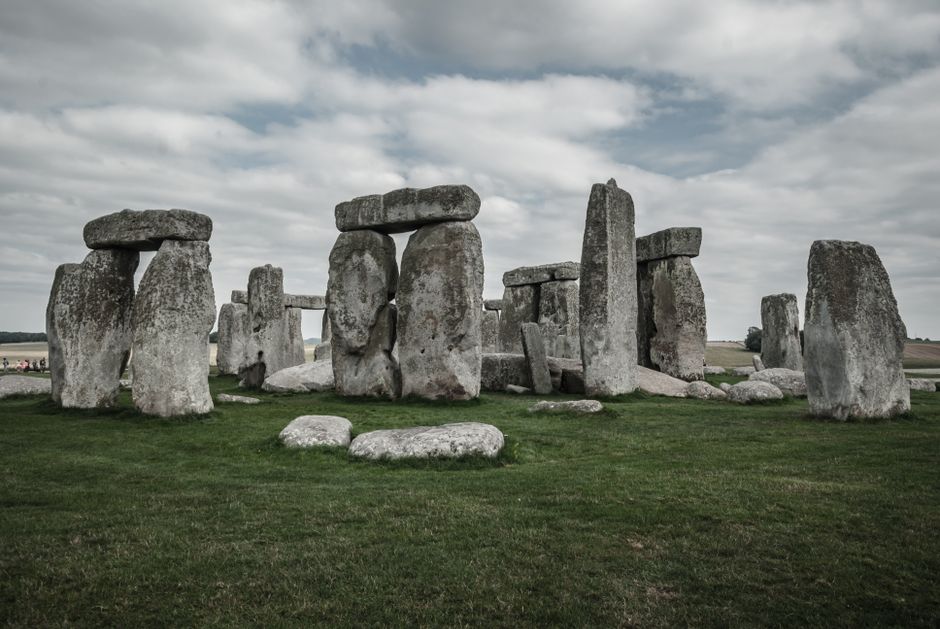
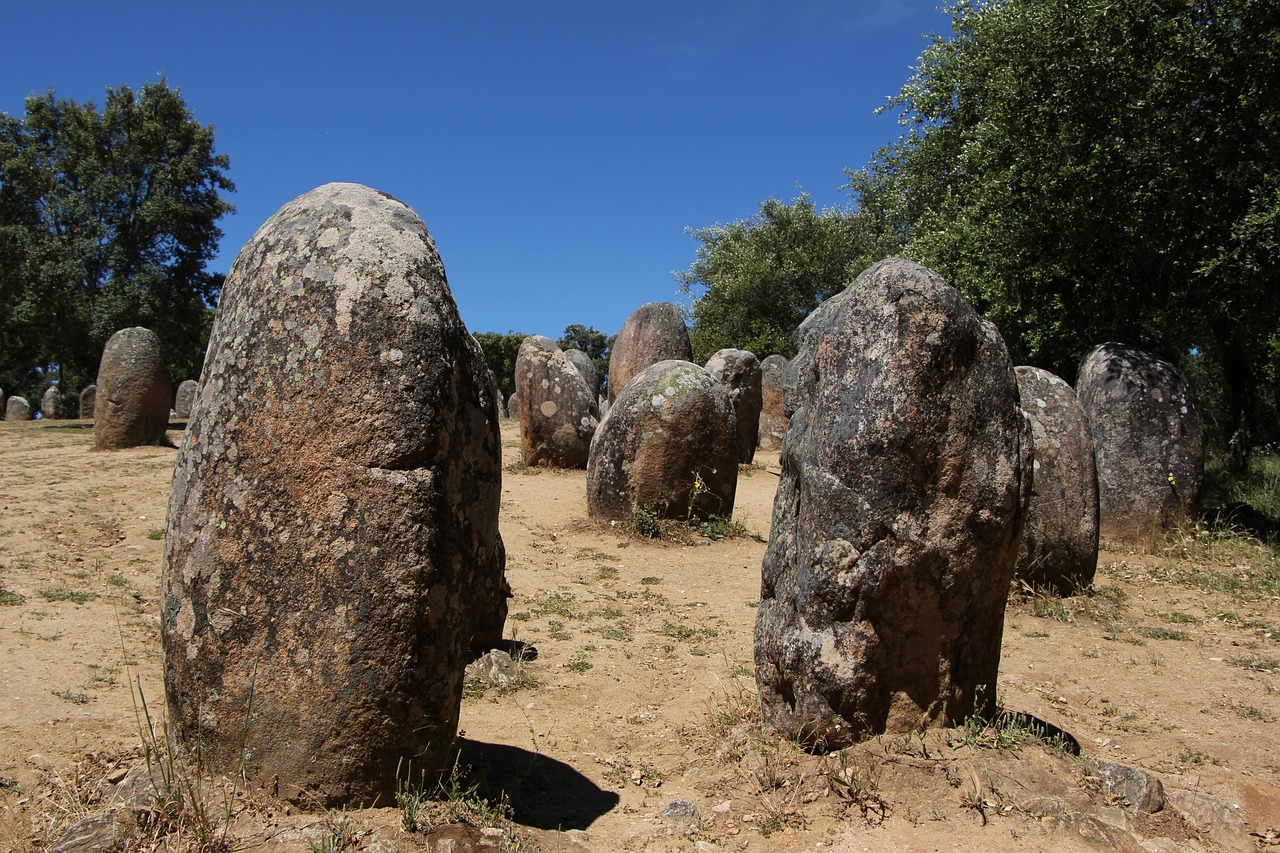
The Almendres Cromlech is a field of 95 granite standing stones on a gentle slope among cork oaks, about 15 km west of Évora in Portugal’s Alentejo. It is the largest megalithic enclosure in the Iberian Peninsula, and its oldest stones were raised in the Neolithic, thousands of years before Stonehenge. It is free and unfenced. After conservation work it reopened in September 2024 with a visitor circuit around the stones; the last stretch of road is unpaved.
Right now in Almendres Cromlech
- Wed15–22°C59–72°F1 mm rain
- Thu15–26°C58–79°FClear
- Fri15–24°C59–75°FClear
Tickets and tours for Almendres Cromlech
See all tours for Almendres Cromlech →
From local operators, with prices and reviews; you check availability and book on Viator, our partner. We may earn a commission at no extra cost to you. How we earn money
What it is and why it matters
A cromlech is a group of standing stones arranged in rings or ovals. At Almendres the stones were set up in phases over a very long time: archaeologists date the first circles to the Early Neolithic, around the sixth millennium BC, with later ellipses and big menhirs added and rearranged over the following millennia. Why they were built is not known for sure: a meeting and ritual place, or a way of marking the sun and moon through the year, are the usual explanations. Some stones are carved with circles, lines and small cup-shaped hollows.
The site was found in 1964 by Henrique Leonor Pina, who was mapping the area’s geology, and many fallen stones were later set upright again on their original bases. During the 2023–24 conservation work, Évora council’s archaeologists identified one more fallen menhir, about 1.3 m long, bringing the known total to 95. Almendres is a national monument and the best-known site of the dense “megalithic Évora” landscape of dolmens and menhirs. For the city and the region, see our Évora travel guide.
What you’ll see
The stone circle
The stones stand on a gentle slope, in an area of roughly 70 by 40 metres. Smaller stones form the older rings at the western end, with taller ones in the larger ovals, some over two metres high. Walk slowly round and look closely in low light for the carvings. Since the 2024 reopening, a visitor circuit leads around the enclosure to stop the ground between the stones being worn away: follow it, and don’t climb on or lean against the stones.
The Almendres Menhir
A single tall standing stone stands on its own about 1.4 km from the circle, near the access track. It is signposted and worth the short detour.
Visiting (as of October 2026)
There is no ticket office, staff or fence: the site is free and open at all times. There are no toilets, café or water on site, so bring what you need. Sunrise and late afternoon are the best times, both for the light on the granite and to avoid the heat: Alentejo summers are very hot and there is little shade. Évora council has marked the equinox with events at the megaliths, and sunrise at the equinoxes draws small crowds.
Getting there
From Évora, take the road west towards Montemor-o-Novo and turn off for the village of Nossa Senhora de Guadalupe, then follow the signs; the drive takes about 20–25 minutes. The last few kilometres are an unpaved track through the estate. Visitors in 2025 and 2026 reported that its condition varies a lot, with potholes after rain; ordinary cars usually manage with care, but if the track looks bad, park and walk. Évora council announced work to improve the access route when the site reopened; we could not confirm it had been done. There is no public transport: use a car, a bike, a taxi, or one of the half-day megalith tours from Évora.
Combine it with
Make a morning of the megaliths: the Almendres Menhir on the way, and the Anta Grande do Zambujeiro near Valverde, one of the largest dolmens (stone burial chambers) in the Iberian Peninsula, reached on foot along a dirt track. Then return to Évora for the Roman Temple, the cathedral and the Chapel of Bones.
Almendres Cromlech FAQ
Is the Almendres Cromlech free?
Yes. There is no ticket and no fence; you can visit at any time. Follow the visitor circuit around the stones.
How old is the Almendres Cromlech?
The first stones were raised in the Early Neolithic, around the sixth millennium BC, and the site was changed over several thousand years. Its oldest phase is far older than Stonehenge.
How many stones are there at Almendres?
95 known monoliths, after Évora council’s archaeologists identified one more fallen menhir during conservation work in 2024.
Can you drive to the Almendres Cromlech?
Yes, but the last stretch is an unpaved track whose condition varies, especially after rain. Drive slowly, or park and walk if it looks rough.
How far is the Almendres Cromlech from Évora?
About 15 km west of the city, a 20–25 minute drive.
Sources
Researched and last reviewed by TravelerCenter on 4 October 2026. The 2024 reopening, the visitor circuit, the 95th menhir and the discovery date come from Évora council; the site’s dating, layout and carvings from standard references; the menhir and access track from visitor guides and recent visitor reports, which we could not confirm with an official source. Check road conditions after heavy rain.
Data: Weather: MET Norway (CC BY 4.0) · Rates: ECB · Costs: World Bank ICP and price levels · © OpenStreetMap contributors (ODBL) · Wikidata (CC0)