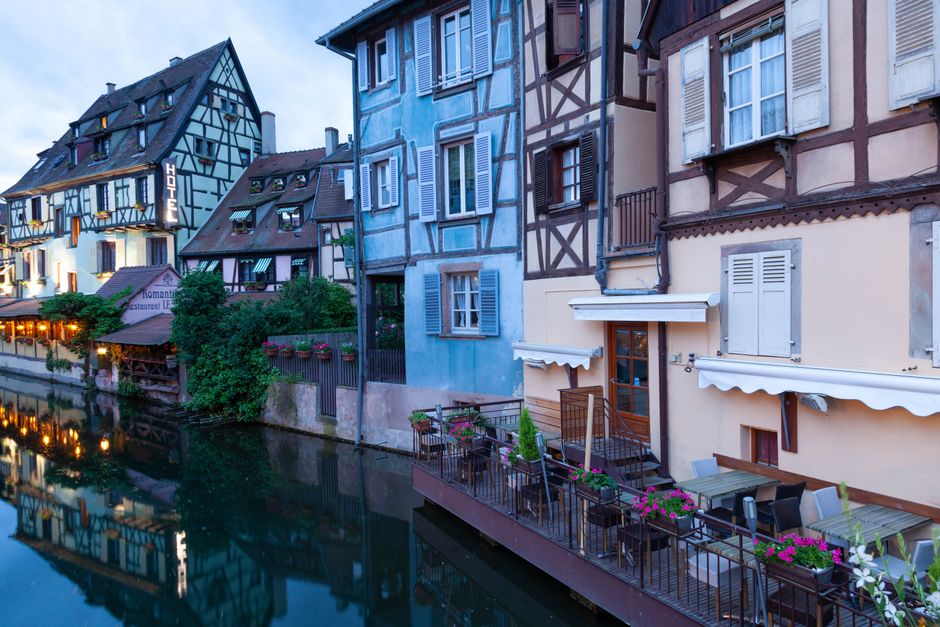
Colmar is the most colourful town in Alsace: painted half-timbered houses, flower boxes on every window, and canals lined with old market-gardeners’ homes in the quarter called Little Venice. Behind the postcard there is real substance, from the Isenheim Altarpiece in the Unterlinden Museum to the house where the sculptor of the Statue of Liberty was born. Colmar calls itself the capital of Alsace wines, and the wine villages of Eguisheim, Kaysersberg and Riquewihr are a short bus or bike ride away. Give it one full day for the town, two or three with the wine route, and come early or late in the day: it is very busy in summer and during the Christmas markets.
Right now in Colmar
- Wed12–24°C53–75°F1 mm rain
- Thu12–17°C53–63°F3 mm rain
- Fri7–14°C45–58°FPartly cloudy
Top tours in Colmar
See all tours for Colmar →
From local operators, with prices and reviews; you check availability and book on Viator, our partner. We may earn a commission at no extra cost to you. How we earn money
Colmar at a glance
- Best for: a fairy-tale old town, Christmas markets, Renaissance houses, one of France’s great altarpieces, and Alsace wine villages.
- How long: 1 day for the town, 2–3 days with the wine route and the Haut-Kœnigsbourg castle.
- Best time: May, June, September and October; late November to Christmas for the markets (23 November to 29 December 2026).
- Getting in: about 30 minutes by regional TER train from Strasbourg; direct TGVs from Paris take about 2 hours 20 minutes on the fastest services.
- Getting around: the old town is small and mostly pedestrian; Trace buses cost €1.50 a trip (as of October 2026), and regional buses reach the wine villages.
- Before you go: entry rules, money, trains and general safety are on our France travel guide.
Colmar’s old quarters and who each one suits
Colmar grew rich in the Middle Ages on wine and trade, and was spared heavy damage in the wars of the 20th century, so its centre is remarkably intact. Everything worth seeing lies within a 15-minute walk of the station, inside the ring of boulevards that replaced the old walls.
Little Venice (Petite Venise) and the Krutenau
The prettiest corner of town, where the little river Lauch runs between pastel houses, weeping willows and flower-hung balconies. The Krutenau was the district of the market gardeners, who brought their vegetables by flat-bottomed boat to the covered market. Today you can take a 25-minute trip in one of those boats from the bridge on Boulevard Saint-Pierre. Best for photographers and anyone staying the night: the canals are lovely at dusk once the day visitors have gone.
Quai de la Poissonnerie and the old merchants’ quarter
The old fishmongers’ quay, with its row of tall timbered houses, leads into the streets around the Koïfhus and the Rue des Marchands. This is where the grand Renaissance houses stand, along with many of the winstubs and wine shops. Best for: a central base with everything on foot.
Around the cathedral and Unterlinden
The northern half of the old town, around the Collégiale Saint-Martin and the Unterlinden Museum, is a little calmer, with squares, shops and the Dominican church. It is handy for the bus station near the theatre and for parking at the Place Rapp. Best for: museum lovers and families.
Top things to see in Colmar
Walking the old town is free and is the main pleasure here. Prices below are as of October 2026; check the official sites before you go, as hours change with the seasons.
Unterlinden Museum and the Isenheim Altarpiece
Colmar’s great museum fills a 13th-century convent and a modern extension linked by an underground gallery. Its star is the Isenheim Altarpiece, painted by Matthias Grünewald and carved by Nicolas of Haguenau in the early 16th century for a hospital that cared for people with a terrible skin disease. The crucifixion panel is one of the most powerful images in European art, and the folding wings open onto a glowing Resurrection. The museum also has medieval sculpture, Alsatian history and modern art. As of October 2026, it is open Wednesday to Monday from 9:00 to 18:00 (last entry 17:30) and closed on Tuesdays, 1 January, 1 May, 1 November and 25 December. Tickets cost €14 for adults, €9 for 12–17-year-olds and students under 30, and are free for under-12s; an audio guide adds €3.
Maison Pfister and Maison des Têtes
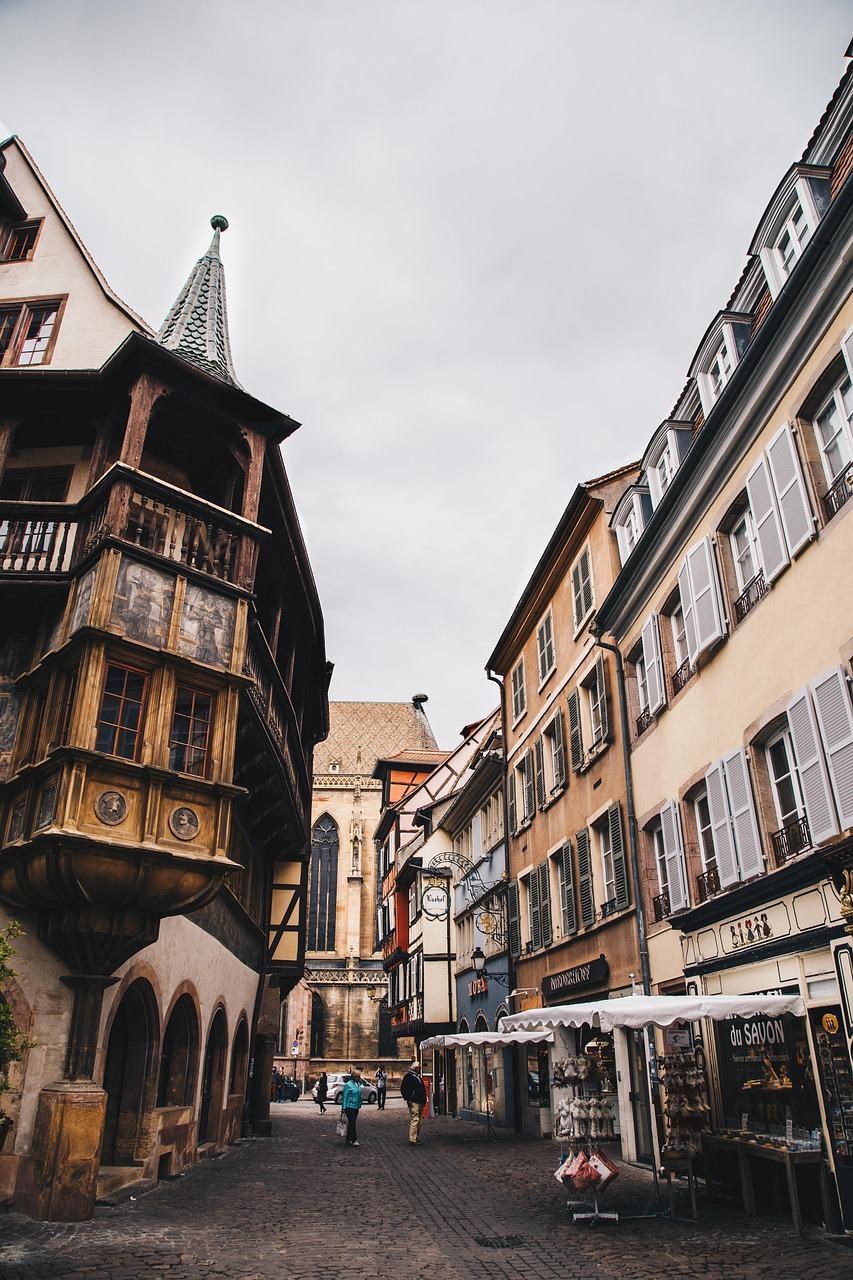
Two of the finest houses in Alsace. The Maison Pfister, built in 1537 for a hatter, has a corner turret, a wooden gallery and painted biblical scenes on its walls. The Maison des Têtes (“House of Heads”), from 1609, is covered with more than a hundred carved faces and masks, and is now a hotel and restaurant. Both are viewed from the street.
The Koïfhus, the covered market and the churches
The Koïfhus, the old customs house with its glazed-tile roof, was the town’s economic heart in the Middle Ages; at Christmas its hall holds a crafts market. A short walk south, the brick covered market of 1865 stands on the Lauch, with stalls of cheese, charcuterie, bread and wine and a few places to eat. The Collégiale Saint-Martin, Colmar’s main church, has a fine Gothic doorway, and the Dominican church nearby displays Martin Schongauer’s tender Virgin of the Rose Bush (1473).
Bartholdi Museum
Frédéric Auguste Bartholdi, who designed the Statue of Liberty, was born in this house on Rue des Marchands. The museum shows his models, drawings and the story of “Liberty Enlightening the World”. It is closed on Mondays and in January, and opens Tuesday to Sunday with a lunch break; entry is a few euros and free for under-18s. A 12-metre copy of the Statue of Liberty greets drivers on a roundabout at the northern entrance to town.
Eating and drinking in Colmar
Colmar sits in the middle of the Alsace vineyards, and food and wine are part of every visit. Eat in a winstub, a cosy wood-panelled wine tavern: choucroute garnie (sauerkraut with sausages and pork), baeckeoffe (meat and potatoes baked in white wine), tarte flambée (thin, crisp bread with cream, onions and bacon), kougelhopf cake and strong Munster cheese from the valley just west of town. Alsace wines are mostly white and named after the grape: Riesling, Gewurztraminer, Pinot Gris, Sylvaner and Muscat, plus sparkling Crémant d’Alsace. Many winemakers in and around Colmar offer tastings in their cellars; see our wine tasting guide for tips.
Lunch set menus are the best value. Restaurants in Little Venice fill up early in summer and in December, so book a table for dinner, and expect many places to close one or two days a week.
Colmar’s Christmas markets 2026
From late November Colmar turns into a Christmas town, with lights on the houses and six markets spread through the old centre: on the Place des Dominicains, the Place de l’Ancienne Douane, inside the Koïfhus, a children’s market in Little Venice, a regional food market on the Place Jeanne d’Arc and a gourmet market by the cathedral. According to the official Christmas site, the 2026 markets run from Monday 23 November to Tuesday 29 December, Monday to Thursday from 11:00 to 19:00 and Friday to Sunday from 10:00 to 20:00. On Thursday 24 December they close at 17:00; on 25 and 26 December they open from 10:00 to 20:00. A gourmet market, a big wheel and a Christmas display on the Place Rapp stay open until 3 January 2027, daily from 11:00 to 22:00 (17:00 on 31 December).
During the markets the old centre is closed to cars, so park in the paid car parks around the ring road or take the train. Weekends are crowded; come on a weekday morning if you can. The villages nearby hold their own, smaller markets in 2026: Eguisheim from 27 November to 30 December, Riquewihr from 27 November to 20 December, Kaysersberg on Fridays to Sundays from 27 November to 20 December, and a medieval market in Ribeauvillé on 5–6 and 12–13 December. Strasbourg’s famous market is half an hour away; see our Strasbourg guide.
Day trips from Colmar: the wine route, castles and three countries
The Alsace Wine Route runs for about 170 km along the foot of the Vosges mountains, and Colmar sits right in the middle of it. Times are approximate.
Eguisheim
About 7 km south, Eguisheim is built in rings around its castle and chapel, with flower-covered lanes that follow the old walls in circles. It is one of the easiest villages to reach: by Fluo regional bus line 830 (Colmar–Eguisheim–Rouffach), by bike on quiet vineyard lanes, or by car in 15 minutes.
Kaysersberg
A fortified bridge, a ruined castle on the hill and the birthplace of Albert Schweitzer, about 12 km north-west at the mouth of a valley. The Fluo bus towards Le Bonhomme (line 813) serves it; check times before you set off.
Riquewihr and Ribeauvillé
Riquewihr, still enclosed by its walls, is the most perfect and the busiest of the wine villages, with a main street of painted houses climbing to the Dolder gate tower. Ribeauvillé, a few kilometres north, is a lively small town below three ruined castles. Fluo line 816 links Colmar, Riquewihr and Ribeauvillé.
Haut-Kœnigsbourg castle
A red-sandstone mountain castle 26 km north of Colmar, at about 750 m above the Alsace plain, restored in the early 1900s for the German emperor Wilhelm II. As of October 2026, entry is €12 for adults, €8 for 6–17-year-olds and free for under-6s; an audio guide costs €4 more. It opens every day except 1 January and 25–26 December; in early October 2026 it opens from 9:30 to 18:00 (10:30 on Mondays), with shorter hours in winter and last entry one hour before closing. Parking is free. Without a car, take the train to Sélestat and the castle shuttle bus (line 500, €3 single or €6 return, cash only); with a shuttle ticket, adult entry drops to €6.
Strasbourg, Freiburg and Basel
Strasbourg, with its cathedral and La Petite France, is about 30 minutes by TER train. Germany’s Freiburg is reached by a regional bus to Breisach and a short train ride, and Switzerland’s Basel, with its art museums and Rhine swimming, is about an hour south by train via Mulhouse.
Without a car: the Kut’zig and bikes
The Kut’zig, an open-top hop-on hop-off bus, loops from Colmar through Ribeauvillé, Riquewihr, Kaysersberg, Turckheim and Eguisheim; in 2026 it runs from 3 April to 11 October, and a day ticket costs €32 for adults and €22 for children up to 12 (booking required). Cyclists can follow the signposted Alsace Vineyard Cycle Route through the villages, and bike hire shops in Colmar rent e-bikes for the hills; see our cycling guide.
Nearby destinations
- Basel61 km
- Strasbourg62 km
- Black Forest64 km
- Zurich119 km
- Bern126 km
- Lucerne135 km
- Lake Constance154 km
- Stuttgart155 km
Getting there and getting around
By train
Colmar station is a 15-minute walk from the old town. Regional TER trains link Strasbourg and Colmar in about 30 minutes, several times an hour, and continue to Mulhouse and Basel. Direct TGVs from Paris-Est take about 2 hours 20 minutes on the fastest services; other trains change at Strasbourg. Book on SNCF Connect.
By air
The nearest big airport is EuroAirport Basel-Mulhouse-Freiburg, about 60 km south, on the French–Swiss border. By car it takes under an hour; by public transport, take the airport shuttle bus to Saint-Louis station and the train to Colmar, changing at Mulhouse if needed. Strasbourg airport has a direct train link to Strasbourg station, from where Colmar is 30 minutes on.
Buses in town and to the villages
The Trace network serves Colmar and 21 nearby towns, including Turckheim. As of October 2026 a single ticket costs €1.50 and is valid for one hour; you can pay by bank card on the validator on board. A book of 10 trips is €11 and a 72-hour pass €7. For the wine villages, use the Fluo Grand Est regional buses from the station and the theatre: line 816 for Riquewihr and Ribeauvillé, line 830 for Eguisheim, and line 813 towards Kaysersberg. Services are thinner on Sundays and outside the school year, so plan your return.
Driving and parking
As of October 2026 Colmar has no low-emission zone (ZFE) in force, so you don’t need a Crit’Air sticker to drive in the town itself; you do need one for Strasbourg’s zone. The old town is largely pedestrian, so leave the car in one of the paid multi-storey car parks, such as Rapp, Mairie or the station, and walk. A car is the most flexible way to explore the wine route, but the village car parks fill up by late morning in summer.
When to go and how long to stay
Sheltered by the Vosges from the westerly rain, Colmar is one of the driest places in France, with only about 595 mm of rain a year. Summers are warm, with around 21 days a year above 30 °C, and winters are cold and often frosty. The table uses Météo-France’s official 1991–2020 normals for the Colmar-Meyenheim station: average daily highs and lows, and days with at least 1 mm of rain.
| Season | Average high / low | Rainy days per month | What it’s like | Good for |
|---|---|---|---|---|
| Winter (Dec–Feb) | 6–8 °C / −1–0 °C | 7–8 | Cold, frosty nights, occasional snow | Christmas markets, museums, winstubs |
| Spring (Mar–May) | 13–21 °C / 2–9 °C | 7–11 | Fresh, flowering, thunderstorms by May | Walking, cycling, quieter villages |
| Summer (Jun–Aug) | 25–27 °C / 13–14 °C | 9 | Warm and sunny, some hot spells and storms | Wine route, cycling, evening canal walks |
| Autumn (Sep–Nov) | 22 °C falling to 10 °C / 10 °C falling to 3 °C | 8–9 | Golden vineyards, cool evenings | Grape harvest, tastings, hiking |
July is the warmest month, with an average high of about 27 °C; January is the coldest, with average lows just below freezing. September and October are the sweet spot: harvest time on the wine route, warm days and fewer crowds.
How long to stay: 1-, 2- and 3-day plans
1 day: the Unterlinden Museum in the morning, the Maison Pfister and Maison des Têtes, lunch at the covered market, a boat trip in Little Venice and a winstub dinner. 2 days: add Eguisheim by bus or bike, and the Bartholdi Museum and the Dominican church. 3 days: add Riquewihr, Kaysersberg and the Haut-Kœnigsbourg castle by car or on the Kut’zig, or a day in Strasbourg.
Where to stay in Colmar
- Little Venice and the Krutenau: the prettiest setting, with canal views; book early and expect higher prices.
- Old town centre: half-timbered guesthouses and small hotels within a few minutes of everything.
- Near the station: practical and cheaper, a 15-minute walk from the centre.
- Wine villages: Eguisheim, Turckheim or Kaysersberg for quiet nights among the vineyards; best with a car.
Colmar adds a nightly tourist tax (taxe de séjour) per adult to your bill; under-18s don’t pay. Under the rates published in the French tax administration’s data, including the 10% departmental surcharge, it is €1.85 per adult per night in a 3-star hotel and €2.85 in a 4-star, with unclassified rentals charged 5.5% of the nightly price up to a cap. Prices rise sharply during the Christmas markets: book months ahead or stay in a nearby village or in Strasbourg.
Practical tips for Colmar
- Beat the crowds: walk Little Venice before 10:00 or after 18:00, when day-trippers and tour groups have left.
- Mind Tuesday: the Unterlinden Museum is closed on Tuesdays, the Bartholdi Museum on Mondays.
- Plan the buses: regional buses to the wine villages run less often on Sundays; check the last bus back.
- Drink responsibly on the wine route: spit or share at tastings if you drive; French drink-drive limits are strict.
- At Christmas: keep bags small, as there are security checks, and come by train.
What to pack for Colmar
Comfortable shoes for cobbles and vineyard lanes. In summer, light clothes, a sun hat and a refillable bottle, plus a compact umbrella for thunderstorms. In spring and autumn, layers and a light rain jacket. For the Christmas markets, dress for long hours outside near freezing: warm coat, hat, gloves, scarf and waterproof boots. If you plan to cycle, padded shorts and a small backpack are handy, and leave space in your bag for a bottle or two of Alsace wine.
Colmar travel FAQ
How many days do you need in Colmar?
One full day covers the old town, Little Venice and the Unterlinden Museum. Two or three days lets you add Eguisheim, Riquewihr, Kaysersberg and the Haut-Kœnigsbourg castle on the Alsace Wine Route.
When are the Colmar Christmas markets in 2026?
From Monday 23 November to Tuesday 29 December 2026, Monday to Thursday 11:00–19:00 and Friday to Sunday 10:00–20:00, closing at 17:00 on 24 December. The gourmet market and big wheel stay open until 3 January 2027.
How much does the Unterlinden Museum cost?
As of October 2026, €14 for adults, €9 for 12–17-year-olds and students under 30, and free for children under 12. It is open 9:00–18:00 and closed on Tuesdays.
How do I get from Strasbourg to Colmar?
By regional TER train, about 30 minutes and several times an hour. Colmar’s old town is a 15-minute walk from the station.
How long is the train from Paris to Colmar?
About 2 hours 20 minutes on the fastest direct TGVs from Paris-Est; other services change at Strasbourg and take a little longer. Check times and fares on SNCF Connect.
Can I visit the Alsace wine villages without a car?
Yes. Fluo regional buses run from Colmar to Eguisheim (line 830), Riquewihr and Ribeauvillé (line 816) and towards Kaysersberg (line 813). From 3 April to 11 October 2026, the Kut’zig hop-on hop-off bus also links the main villages for €32 per adult per day.
How much is the Haut-Kœnigsbourg castle?
As of October 2026, €12 for adults, €8 for 6–17-year-olds and free for under-6s. If you come on the line 500 shuttle bus from Sélestat station, adult entry is €6 with your bus ticket.
Does Colmar have a low-emission zone?
Not as of October 2026: no ZFE is in force in Colmar, so no Crit’Air sticker is needed for the town. Strasbourg does have one, and the old town of Colmar is largely closed to cars anyway.
What is the nearest airport to Colmar?
EuroAirport Basel-Mulhouse-Freiburg, about 60 km south and under an hour by car; by public transport, take the shuttle bus to Saint-Louis station and the train north. Strasbourg airport is the other option, via Strasbourg station.
How much is the tourist tax in Colmar?
It depends on the type of accommodation: as of October 2026, €1.85 per adult per night in a 3-star hotel and €2.85 in a 4-star, including the departmental surcharge. Under-18s are exempt.
Is Colmar or Strasbourg better for the Christmas markets?
Strasbourg’s market is bigger and older; Colmar’s six markets feel more intimate, in a smaller, fairy-tale setting. They are 30 minutes apart by train, so many visitors see both, ideally on weekdays.
Plan your trip
Partner links: TravelerCenter may earn a commission if you book, at no extra cost to you.
🇫🇷 Useful French phrases for Colmar
All 38 French phrases: restaurant, hotel, emergencies, romance (printable) →
Sources · last reviewed 4 October 2026
Researched and last reviewed on 4 October 2026. Climate: Météo-France 1991–2020 normals for Colmar-Meyenheim; Christmas market dates and hours: the official Noël à Colmar site of the Colmar tourist office; museum hours and prices: the Unterlinden Museum; castle prices, hours and shuttle: the Château du Haut-Kœnigsbourg; bus fares: Trace; wine-route buses and the Kut’zig: the Colmar tourist office; tourist tax: French tax administration (DGFiP) data. The Paris train time and the absence of a low-emission zone come from secondary sources and are flagged for checking. Prices, hours and timetables change, so check the official links before you go. For entry rules, money and general safety, see our France travel guide.
Data: Weather: MET Norway (CC BY 4.0) · Rates: ECB · Costs: World Bank ICP and price levels · Wikidata (CC0)