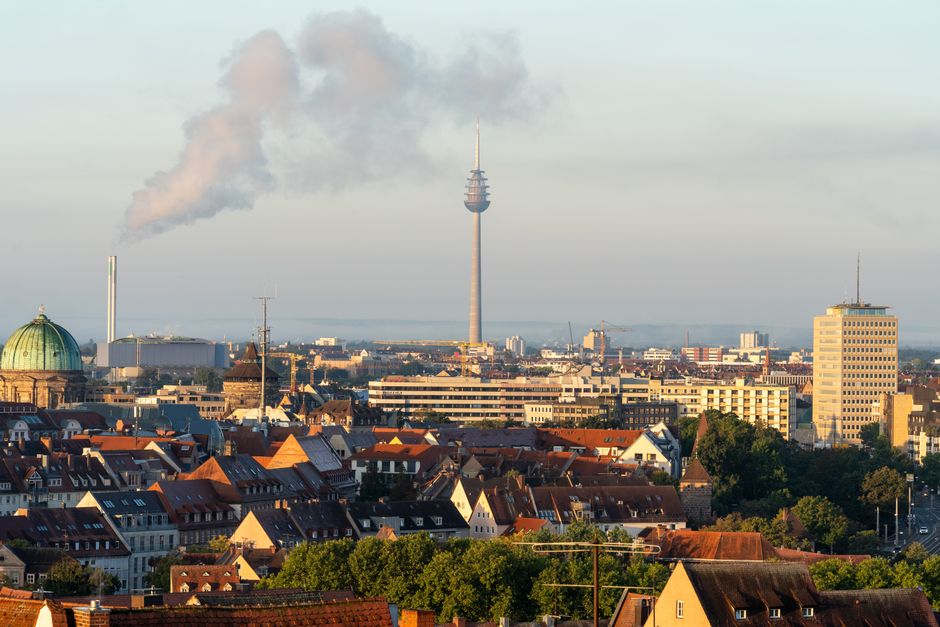
Stuttgart, the capital of Baden-Württemberg, sits in a green bowl of hills where vineyards come right down to the city streets. It is the home of Mercedes-Benz and Porsche, and their two museums draw car lovers from around the world, but there is plenty more: palaces and gardens around the Schlossplatz, a first-rate art gallery, one of Europe’s finest zoological and botanical gardens, the world’s first concrete TV tower and the white modernist houses of the Weissenhof Estate, part of a UNESCO World Heritage Site. In autumn, people head to the Cannstatter Wasen beer festival or to the little wine taverns that open in vintners’ homes. Give it two days, three or four to add the Black Forest, Heidelberg or Lake Constance.
Right now in Stuttgart
- Wed 11–24°C 52–74°F Partly cloudy
- Thu 12–17°C 53–62°F 9 mm Heavy rain
- Fri 6–14°C 42–57°F Cloudy
Weather: MET Norway (CC BY 4.0) · Rates: ECB
Top tours in Stuttgart
See all tours for Stuttgart →
From local operators, with prices and reviews; you check availability and book on Viator, our partner. We may earn a commission at no extra cost to you. How we earn money
Stuttgart at a glance
- Best for: car museums, modern architecture, art, wine taverns, festivals, Christmas markets and a base for south-west Germany.
- How long: 2 days for the centre, one car museum, the Wilhelma and the Weissenhof; 3–4 days to add vineyards, Ludwigsburg or a day trip.
- Best time: May to October for the vineyards and beer gardens; the Cannstatter Volksfest runs until 11 October 2026; the Christmas market is from 25 November to 23 December 2026.
- Getting in: Stuttgart Airport is linked to the main station by S-Bahn; fast trains reach Frankfurt, Munich and Paris.
- Getting around: by U-Bahn (Stadtbahn) and S-Bahn. As of October 2026, the Mercedes-Benz Museum cost €16 and the Porsche Museum €15.
- Before you go: entry rules, money and general safety are in our Germany travel guide.
Stuttgart, area by area
Central Stuttgart lies in a basin, the “Kessel”, open only towards the Neckar river to the north-east. The flat centre is small and walkable; the residential districts climb the hillsides on steep streets and stairways, and the car museums are out by the river.
Mitte: the Schlossplatz and the Königstraße
The heart of the city: the Königstraße, a long pedestrian shopping street running from the main station, the Schlossplatz with the New Palace and the colonnaded Königsbau, the Old Castle, the Schillerplatz and the Art Nouveau market hall. The Staatsgalerie and the opera house are a short walk east, beside the Schlossgarten park. Best for: first visits, shopping and museums.
The Bohnenviertel and Leonhardsviertel
The “bean quarter”, one of the few old corners to survive the war, has small houses, wine bars, galleries and Swabian restaurants. Best for: evenings out and local food.
Bad Cannstatt and the Neckar
Across the river, the old spa town of Bad Cannstatt has mineral springs, the Wilhelma and the Cannstatter Wasen festival grounds; the Mercedes-Benz Museum stands nearby. Best for: the zoo, festivals and the Mercedes museum.
The Killesberg and the hills
On the northern heights, the Killesberg park, the Weissenhof Estate and smart villa districts; on the southern hills, Degerloch and the TV Tower, with forest trails. Best for: views, architecture and walks.
The wine villages
Uhlbach, Rotenberg, Obertürkheim and other districts along the Neckar are wine villages that happen to be inside the city limits, surrounded by terraced vineyards. Best for: vineyard walks and wine taverns.
Top things to see in Stuttgart
Prices and hours below were checked on the official sites in October 2026. They change, so check before you go.
The Mercedes-Benz Museum
In a striking double-helix building by the Neckar, the Mercedes-Benz Museum tells the story of the car from Carl Benz’s and Gottlieb Daimler’s first motor vehicles of 1886 to racing cars and the future. You take a lift to the top and spiral down through the decades, with around 160 vehicles on show. Allow at least three hours.
Visiting. The museum opens Tuesday to Sunday 09:00–18:00, with the ticket desk closing at 17:00, and is closed on Mondays. As of October 2026, a day ticket cost €16 for adults and €8 reduced, and children up to 12 went free; an evening ticket from 16:30 is cheaper. The museum is closed to visitors from 16:00 on Friday 16 October and all day on Saturday 17 October 2026 for a private event. Get there by S-Bahn to Bad Cannstatt or Neckarpark and a short walk.
The Porsche Museum
On the Porscheplatz in Zuffenhausen, beside the Porsche factory, a white building that seems to float on three pillars holds around 80 cars, from early Porsche designs and the 356 to the 911 and Le Mans racers. It is smaller and quicker to see than the Mercedes museum, about two hours. The S6 and S60 S-Bahn stop right outside at Neuwirtshaus/Porscheplatz.
Visiting. As of October 2026, a day ticket cost €15, family tickets started at €25, and Early Bird tickets until 10:00 and evening tickets from 16:00 cost €12; children up to 10 go free with an adult. Show a Deutschlandticket for the reduced price, or a VVS day ticket for €6 off a full ticket. It opens Tuesday to Sunday 09:00–18:00 (last tickets 17:30) and is closed on Mondays. Note that the museum is closed for refurbishment from 18 January to 1 February 2027.
The Schlossplatz and the palaces
Stuttgart’s grand square is lined by the baroque New Palace (Neues Schloss), now government offices, and the long colonnade of the Königsbau, with the Jubilee Column, fountains and lawns where everyone sits in summer. Next door, the Old Castle, a Renaissance fortress with an arcaded courtyard, houses the Landesmuseum Württemberg, the state history museum, and the glass cube of the Kunstmuseum shows modern art. From here, walk through the Schlossgarten, a chain of parks that runs to the Neckar.
The Staatsgalerie
The State Gallery covers 700 years of art, from medieval altarpieces to Rembrandt, Monet and Cézanne and a strong collection of 20th-century work, with Picasso, Kandinsky, Beckmann, Matisse and the Stuttgart artist Oskar Schlemmer. The colourful postmodern new building by James Stirling, opened in 1984, is a landmark in itself. As of October 2026, entry to the collection cost €10 (€8 reduced) and was free on Wednesdays; the gallery opens Tuesday to Sunday 10:00–17:00, to 20:00 on Thursdays, and is closed on Mondays.
The Wilhelma
King Wilhelm I’s 19th-century Moorish-style gardens in Bad Cannstatt are now a zoo and botanical garden in one, with historic glasshouses, a magnolia grove, a huge collection of plants and around 1,200 animal species, including great apes. As of October 2026, the summer rate (March to October) was €23 for adults and €9 for children aged 6 to 17, and the winter rate (November to February) €17 and €6.50; buying online at the summer rate is cheaper. The park opens at 08:15 and closes at 18:30 until 25 October, then at 16:30 through the winter. Use the main entrance: the Rosensteinpark entrance is closed for building work. Show a VVS day ticket for a small discount from March to October.
The TV Tower
Opened in 1956, Stuttgart’s Fernsehturm was the world’s first TV tower made of reinforced concrete and became the model for towers everywhere. A lift takes you to the viewing platforms 150 m above the ground, with views over the city, the vineyards and, on clear days, the Swabian Jura. As of October 2026, tickets cost €12.50 for adults and €8 reduced, €35 for a family, and children up to 5 were free. It is open daily 10:00–22:00 (last lift 30 minutes before closing). Take the U7 or U15 to Ruhbank (Fernsehturm).
The Weissenhof Estate
For the 1927 Werkbund exhibition, leading modern architects, led by Ludwig Mies van der Rohe, built a model housing estate on the Weissenhof hill: flat roofs, white walls, big windows and open plans that shocked many at the time. Le Corbusier’s two houses here are part of the UNESCO World Heritage Site of his architectural work, and 2027 will mark the estate’s 100th anniversary. The streets are open to everyone at any time; most houses are private homes, so please respect the residents.
The Weissenhofmuseum in the Le Corbusier double house shows the estate’s story and a restored interior. As of October 2026, entry cost €6.50 (€3 reduced), with children under 11 free; it opens Tuesday to Friday 11:00–18:00 and weekends and holidays 10:00–18:00, and is closed on Mondays. Public guided tours, in German only, start at 15:00 from Tuesday to Sunday and also at 11:00 on Sundays and holidays.
Wine trails and Besenwirtschaften
Stuttgart is one of the few big cities in Europe with its own vineyards, and wine is part of daily life. The local reds are light Trollinger and deeper Lemberger, alongside Riesling. Marked wine trails run through the vineyards above the Neckar: a favourite walk climbs from Uhlbach to the Grabkapelle on the Württemberg hill, a neoclassical mausoleum with views over the valley, and back down through the vines to a wine tavern. See our hiking guide and our wine tasting guide.
The most Swabian way to drink it is in a Besenwirtschaft (or “Besen”): a seasonal tavern that winemakers open in a barn, cellar or living room for a few weeks a year, mostly in autumn and late winter, marked by a broom (Besen) hung over the door. Expect simple wine by the quarter-litre, shared tables and home cooking such as Maultaschen (Swabian ravioli), Käsespätzle and onion cake. Opening dates change every year, so check the local listings, and take cash.
Festivals: the Cannstatter Wasen and Christmas
Cannstatter Volksfest. Stuttgart’s answer to Oktoberfest, held on the Cannstatter Wasen since 1818, is a huge fair with beer tents, rides and a towering fruit column. The 179th Volksfest runs from 25 September to 11 October 2026, so it is still on in early October. It opens Monday to Thursday 12:00–23:00, Friday 12:00–24:00, Saturday 11:00–24:00 and Sunday 11:00–23:00. Take the U11 or U19 to Cannstatter Wasen, or the S-Bahn to Bad Cannstatt and walk under 10 minutes. A smaller spring festival is held on the same ground in spring.
Christmas market. The Stuttgarter Weihnachtsmarkt, one of the biggest and oldest in Germany, fills the Marktplatz, Schillerplatz and Schlossplatz with hundreds of stalls, many with elaborately decorated roofs. In 2026 it runs from 25 November to 23 December.
Day trips from Stuttgart
Ludwigsburg. A short S-Bahn ride north, Ludwigsburg has one of Germany’s largest baroque palaces and its gardens.
Heidelberg. The castle ruin and old town on the Neckar are about an hour away by train. See our Heidelberg guide.
The Black Forest. The northern Black Forest and Baden-Baden are within easy reach by train or car, for forest hikes, spas and cuckoo-clock villages. See our Black Forest guide.
Lake Constance. Germany’s largest lake, with the flower island of Mainau and ferries to Austria and Switzerland, is two to three hours south. It is better as an overnight trip. See our Lake Constance guide.
Getting to Stuttgart
By air. Stuttgart Airport (STR) has flights across Europe. The S2 and S3 S-Bahn run from the airport station to the Hauptbahnhof in under half an hour. As of October 2026, a VVS single ticket cost €4.90 for two fare zones and a day ticket for two zones €9.80 (€8.90 on the phone app); check the zone count for your journey.
By train. Stuttgart is on the ICE lines from Frankfurt and Mannheim to Munich, and direct TGV and ICE trains run to Paris. The new high-speed line to Ulm, part of the Stuttgart–Ulm rail project, has shortened journeys towards Munich. Book on bahn.de for advance fares.
Stuttgart 21: what it means for you. The city’s main station is being rebuilt as an underground through station, the project known as Stuttgart 21. In June 2026, Deutsche Bahn announced a new plan: the project will open in stages between December 2027 and 2033, with the new main station itself opening in 2031 and the old terminus station staying in use until mid-2032. Until then, trains keep using the old terminus, surrounded by building sites, and walks from the city to the platforms are long; DB says shorter routes through the historic Bonatz building should open from the end of 2027. Allow an extra 10 to 15 minutes to reach your train, and check for engineering works, which sometimes close lines into Stuttgart at weekends.
Getting around Stuttgart
The centre is compact, but the hills make public transport useful. The Stadtbahn (marked “U” though it runs largely above ground), S-Bahn and buses share VVS tickets. As of October 2026, a single ticket within the city’s zone cost €3.70 and a day ticket €7.40; since 1 September 2026, up to three children aged 6 to 14 travel free with an adult’s single day ticket. The Deutschlandticket covers everything (see our Germany guide), and the StuttCard adds free entry to many museums.
When to go and how long to stay
Stuttgart’s sheltered basin is one of the warmer places in Germany, with warm summers, sometimes sultry in the valley, and fairly cold winters. Most rain falls in early summer, often in thunderstorms. The table uses the Deutscher Wetterdienst (DWD) 1991–2020 averages for the Stuttgart (Schnarrenberg) weather station on the hills above Bad Cannstatt: average temperature over day and night, rainfall and hours of sunshine per month.
| Season | Average temperature | Rain per month | Sunshine per month | What it’s like |
|---|---|---|---|---|
| Winter (Dec–Feb) | 2.1–3.0 °C | 37–54 mm | 60–91 hours | Cold, with frost and some snow on the hills; Christmas market until 23 December, Besen taverns in late winter |
| Spring (Mar–May) | 6.6 °C rising to 14.6 °C | 38–78 mm | 143–210 hours | Blossom in the Wilhelma and the vineyards, the spring festival, the first terraces |
| Summer (Jun–Aug) | 18.0–20.0 °C | 74–84 mm | 225–242 hours | Warm to hot in the basin, with thunderstorms; beer gardens and the wine village festival |
| Autumn (Sep–Nov) | 15.2 °C falling to 5.8 °C | 52–56 mm | 169 falling to 72 hours | Grape harvest, the Cannstatter Volksfest, Besen season and golden vineyards |
Stuttgart averages about 690 mm of rain a year and 1,810 hours of sunshine, one of the sunnier totals among Germany’s big cities. July is the warmest and wettest month; in heatwaves the valley floor traps the heat, so head for the hills or the parks.
Stuttgart in 2 days
Day 1: the Schlossplatz, the Old Castle and the market hall, the Staatsgalerie, and dinner in the Bohnenviertel. Day 2: the Mercedes-Benz or Porsche Museum in the morning, the Wilhelma in the afternoon and the TV Tower at sunset.
Stuttgart in 4 days
Add the Weissenhof Estate and a vineyard walk to the Grabkapelle with a Besen evening, the second car museum or Ludwigsburg, and a day in Heidelberg or the Black Forest.
Where to stay in Stuttgart
- Mitte, near the Königstraße: the most central base, close to the sights and the station.
- Bohnenviertel: small hotels near the restaurants and wine bars.
- Around the Hauptbahnhof: chain hotels, handy for day trips; expect building works nearby.
- Bad Cannstatt: for the Wasen, the Wilhelma and the Mercedes museum; book far ahead during the Volksfest.
- The airport and trade fair: business hotels for early flights and the Messe.
Hotel prices rise during the Volksfest, big trade fairs and Advent weekends.
Practical tips for Stuttgart
- Know the closing days: both car museums and the Staatsgalerie close on Mondays, and the Weissenhofmuseum too.
- Use your transport ticket: VVS day tickets and the Deutschlandticket bring discounts at the Porsche Museum and the Wilhelma.
- Go on Wednesday: the Staatsgalerie’s collection is free.
- Allow time at the station: Stuttgart 21 works mean long walks to the platforms.
- Check dates: the Mercedes-Benz Museum closes on 16–17 October 2026 for an event, the Porsche Museum from 18 January to 1 February 2027.
- Bring cash for the Besen: seasonal wine taverns rarely take cards.
What to pack for Stuttgart
Comfortable shoes with some grip: Stuttgart is built on hills, with hundreds of public stairways (the “Stäffele”) and steep vineyard paths. Bring a light waterproof for summer thunderstorms, sun protection for vineyard walks, and a warm coat, hat and gloves for the Christmas market. For the Volksfest, a Dirndl or Lederhosen is optional but common.
Stuttgart travel FAQ
Is Stuttgart worth visiting?
Yes, especially if you like cars, architecture or wine. Two world-class car museums, the Staatsgalerie, the Wilhelma, the Weissenhof Estate and vineyards inside the city make a varied two or three days, and it is a good base for south-west Germany.
Mercedes-Benz Museum or Porsche Museum: which is better?
The Mercedes-Benz Museum is bigger and covers the whole history of the car in about three hours; the Porsche Museum is smaller and focused on sports and racing cars, about two hours. With a full day, do both: they are on different S-Bahn lines, about half an hour apart.
How much is the Mercedes-Benz Museum?
As of October 2026, €16 for adults and €8 reduced, with children up to 12 free and a cheaper evening ticket from 16:30. It is open Tuesday to Sunday 09:00–18:00 and closed on Mondays.
How much is the Porsche Museum?
As of October 2026, €15 for a day ticket, or €12 before 10:00 and after 16:00; children up to 10 are free with an adult. It opens Tuesday to Sunday 09:00–18:00 and is closed from 18 January to 1 February 2027.
When is the Cannstatter Volksfest in 2026?
From 25 September to 11 October 2026 on the Cannstatter Wasen, open from midday (11:00 at weekends) until 23:00 or midnight. Take the U11 or U19 to Cannstatter Wasen or the S-Bahn to Bad Cannstatt.
When is the Stuttgart Christmas market in 2026?
From 25 November to 23 December 2026, around the Marktplatz, Schillerplatz and Schlossplatz.
What is a Besenwirtschaft?
A seasonal wine tavern run by a winemaker for a few weeks a year, signalled by a broom over the door. You get the vintner’s own wine and simple Swabian food at shared tables; bring cash.
Is Stuttgart 21 finished?
No. Under Deutsche Bahn’s June 2026 plan, the project opens in stages from December 2027 to 2033, and the new underground main station is due in 2031. Until then trains use the old terminus, and the walk to the platforms is long, so allow extra time.
Can you visit the Weissenhof Estate?
Yes. The streets are open at all times, and the Weissenhofmuseum in Le Corbusier’s double house opens Tuesday to Sunday; entry cost €6.50 as of October 2026. Most other houses are private homes.
How many days do you need in Stuttgart?
Two days cover the centre, one car museum, the Wilhelma and the TV Tower. With three or four you can add the second museum, the Weissenhof, the vineyards and a day trip.
Nearby destinations
- Heidelberg79 km
- Black Forest93 km
- Rothenburg ob der Tauber99 km
- Strasbourg107 km
- Lake Constance126 km
- Frankfurt153 km
- Colmar155 km
- Nuremberg157 km
Sources and last review
Researched and last reviewed on 4 October 2026. Mercedes-Benz Museum hours and closures: Mercedes-Benz Classic, with prices partly from the City of Stuttgart; Porsche Museum: Porsche; Staatsgalerie: the City of Stuttgart and Stuttgart’s tourist board; Wilhelma: the Wilhelma; TV Tower: SWR Fernsehturm; Weissenhofmuseum: the museum; Cannstatter Volksfest and Christmas market dates: in.Stuttgart, the city’s event company; fares: VVS, valid from 1 September 2026; Stuttgart 21 plan: Deutsche Bahn’s Stuttgart–Ulm rail project; climate: Deutscher Wetterdienst 1991–2020 averages for Stuttgart (Schnarrenberg). Some prices and train times are flagged for checking. Prices, timetables and rules change, so check the official links before you go. For entry rules, money and general safety, see our Germany travel guide; for nearby trips, our Black Forest guide, Heidelberg guide and Lake Constance guide.
Plan your trip
Partner links: TravelerCenter may earn a commission if you book, at no extra cost to you.
🇩🇪 Useful German phrases for Stuttgart
All 38 German phrases: restaurant, hotel, emergencies, romance (printable) →