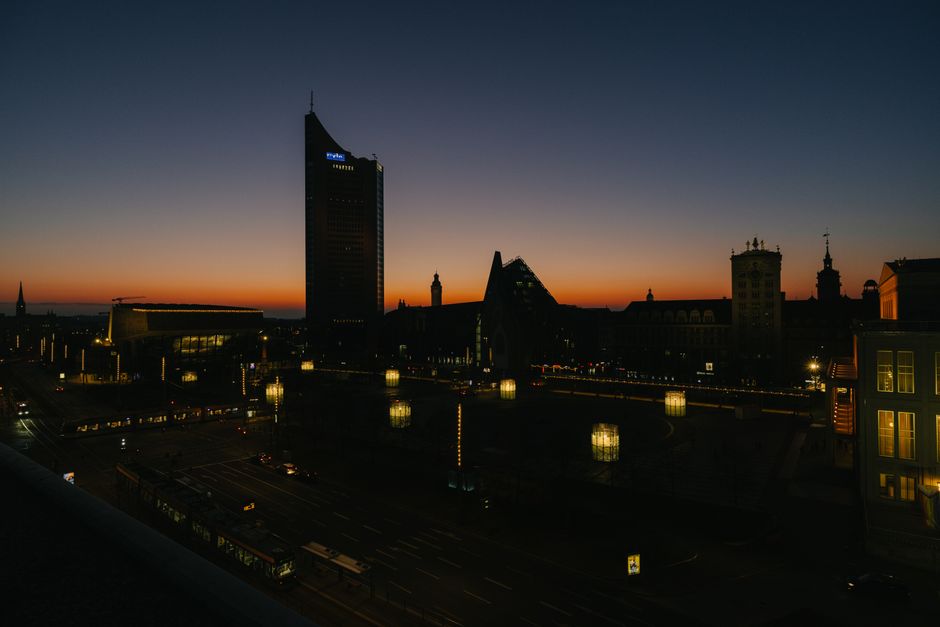
Leipzig is Saxony’s biggest city, a former trade-fair town of arcades, churches and grand 19th-century buildings that has become one of Germany’s liveliest places to live. You come for music first: Johann Sebastian Bach worked here for 27 years and is buried in the Thomaskirche, where the boys of the Thomanerchor still sing every week. You also come for history: the Monday prayers in the Nikolaikirche and the march of 9 October 1989 helped bring down the Berlin Wall. Add good museums, Goethe’s favourite wine cellar, an old cotton mill turned art quarter, canals, lakes and a fine zoo. It is about 1 hour 15 minutes from Berlin and a little over an hour from Dresden by train. Give it two days for the centre, three or four to add the Battle of the Nations monument, the zoo, the west side and the lakes.
Right now in Leipzig
- Wed10–21°C50–69°FClear
- Thu12–17°C54–63°F3 mm rain
- Fri8–14°C46–58°F2 mm rain
Top tours in Leipzig
See all tours for Leipzig →
From local operators, with prices and reviews; you check availability and book on Viator, our partner. We may earn a commission at no extra cost to you. How we earn money
Leipzig at a glance
- Best for: Bach and classical music, 20th-century history, art galleries, food and nightlife, the zoo and summer days at the lakes.
- How long: 2 days for the old town, the churches, the Bach Museum and the museums; 3–4 days to add the Battle of the Nations monument, the zoo, Plagwitz and the Spinnerei, and a lake.
- Best time: May to September for canals, beer gardens and the lakes; late November to 23 December for the Christmas market.
- Getting in: ICE trains from Berlin take about 1 hour 15 minutes; trains from Dresden about 1 hour 10 minutes. Leipzig/Halle Airport is on the rail line to the main station.
- Getting around: the old town is small enough to walk; LVB trams cover the rest. As of October 2026, entry to the Thomaskirche, the Nikolaikirche and the Zeitgeschichtliches Forum was free, and a Bach Museum ticket cost €14.
- Before you go: entry rules, money and general safety are in our Germany travel guide.
Leipzig, area by area
The old town sits inside a ring road on the line of the medieval walls, so almost everything famous is within a 15-minute walk of the main station. Beyond it lie 19th-century districts, parks, old industrial quarters and canals, with lakes to the south.
The Innenstadt (old town)
The Markt with the Renaissance Old Town Hall, the Thomaskirche and the Nikolaikirche, the arcades and covered passages of the old trade-fair houses, the Museum der bildenden Künste and the Augustusplatz with the Gewandhaus concert hall and the opera house. Best for: first visits, sightseeing on foot, shopping and concerts.
The Waldstraßenviertel and the Zoo
North-west of the ring, one of the largest preserved quarters of late-19th-century apartment houses in Europe runs up to the Rosental park and the zoo. Best for: quiet stays close to the centre and families.
Südvorstadt and Connewitz
South of the centre, the Karl-Liebknecht-Straße (known locally as “Karli”) is lined with bars, cafés and small restaurants, and leads on to the alternative scene of Connewitz. Best for: evenings out and a younger crowd.
Plagwitz and Lindenau
Leipzig’s old industrial west, crossed by the Karl Heine Canal, has turned its factories into lofts, studios, cafés and the Spinnerei art quarter. Best for: galleries, canal walks and a creative, relaxed feel.
Top things to see in Leipzig
Prices and hours below were checked on the official sites in October 2026. They change, so check before you go.
The Thomaskirche and Bach
Johann Sebastian Bach was Thomaskantor, in charge of music at the Thomaskirche and the city’s main churches, from 1723 until his death in 1750, and wrote many of his cantatas and the St Matthew Passion here. His grave lies in front of the altar, and his statue stands outside the south door. The Gothic church is also home to the Thomanerchor, a boys’ choir founded more than 800 years ago, and has two organs, one of them built in Bach’s style.
Visiting. As of October 2026, entry for individual visitors is free. The church opens Monday to Thursday 10:00–18:00, Friday 10:00–16:00, Saturday 10:00–13:30 and 16:30–18:00, and Sunday 11:30–17:30, with short-notice changes for rehearsals. Free tower tours of about 45 minutes run on Saturdays at 13:00 and 14:00 for up to 15 people (a donation is welcome), and longer tower tours booked through Leipzig Erleben run daily at 16:30 for €15.
Hear the Thomanerchor. During the school year, the choir sings a motet service on Fridays at 18:00 and Saturdays at 15:00, often with a Bach cantata. The printed programme, sold at the doors from 45 minutes before the start for €3 (free for children), is your ticket. Arrive early for a seat.
The Bach Museum
Opposite the church, in the Bose House where Bach’s friends the Bose family lived, the Bach Museum tells the story of his life, work and family with original manuscripts, instruments and listening stations where you can pick any of his works. As of October 2026, it opens Tuesday to Sunday and on public holidays from 10:00 to 18:00 and is closed on Mondays. Since 1 March 2026, a ticket costs €14 for adults and €9 reduced; under-18s go free, audio guides are free, and entry is free for everyone on the first Tuesday of the month. The Bachfest, a city-wide festival of Bach’s music, fills the churches every June.
The Nikolaikirche and the Peaceful Revolution
From the outside, the Nikolaikirche looks plain; inside, it is a surprise, with pale pink and green neoclassical columns that open into palm-like fronds. In the 1980s, its Monday peace prayers became a meeting point for East Germans who wanted change. On 9 October 1989, after the prayers, about 70,000 people marched peacefully around the ring road chanting “Wir sind das Volk” (“We are the people”), and the security forces did not shoot. A month later the Berlin Wall fell. A copy of one of the church’s columns stands in the square outside as a memorial.
As of October 2026, the church is open Monday to Friday 11:00–18:00, Saturday 11:00–16:00 and Sunday 11:30–14:30, after the 10:00 service, and entry is free. Every year on 9 October at 17:00, the parish holds a special peace prayer to remember the events of 1989, and the city marks the anniversary in the evening.
The Monument to the Battle of the Nations
In October 1813, the armies of Prussia, Austria, Russia and Sweden defeated Napoleon south-east of Leipzig in the largest battle in Europe before the First World War. A century later, in 1913, the Völkerschlachtdenkmal was unveiled on the battlefield: a 91 m stone monument with a crypt guarded by giant warriors, a domed hall of mourning figures almost 10 m tall and, at the top, a viewing platform over the whole city. It is a long climb up narrow stairs to the top, and the long pool in front reflects the monument on calm days.
As of October 2026, it opens daily 10:00–18:00 from April to October and 10:00–16:00 from November to March (closed on 24 and 31 December). Tickets cost €12 for adults and €10 reduced, and children under 6 go free; the ticket includes the FORUM 1813 museum next door. Public tours in English run at 14:00 on the first and third Wednesday of the month. Take tram 2 or 15, or the S-Bahn to the Völkerschlachtdenkmal stop.
The Museum der bildenden Künste
The Museum of Fine Arts sits in a striking glass cube in the middle of the old town. Its collection runs from the late Middle Ages through Cranach and the Dutch masters to Caspar David Friedrich, Max Klinger’s huge Beethoven sculpture and the painters of the “New Leipzig School”, such as Neo Rauch. As of October 2026, the permanent collection of art from the 15th to the 19th century is free; a combined ticket for the special exhibitions costs €12 (€6 reduced), under-18s go free, and the exhibitions cost €3 on the first Wednesday of the month. It opens Tuesday and Thursday to Sunday 10:00–18:00 and Wednesday 12:00–20:00, and is closed on Mondays.
The Zeitgeschichtliches Forum
This free museum on Grimmaische Straße tells the story of dictatorship and democracy in Germany after 1945, with a strong focus on daily life in East Germany, the opposition movement and the Peaceful Revolution. As of October 2026, entry to the museum and all its exhibitions is free, and it opens Tuesday to Sunday 10:00–18:00. A temporary exhibition on life in the big prefabricated housing estates runs until 17 January 2027.
Auerbachs Keller and the Mädler Passage
Leipzig’s old trade-fair houses are linked by covered passages and courtyards, and the grandest is the Mädler Passage, an arcade of shops in the style of Milan’s Galleria. Below it, Auerbachs Keller has served wine since the 16th century. Goethe drank here as a student and set a scene of his Faust in the cellar, where Mephisto rides out of the door on a barrel; bronze figures of Faust, Mephisto and the bewitched students stand at the top of the stairs. It is touristy but fun, with hearty Saxon food; book a table for the evening.
The Markt and the Old Town Hall
The long Renaissance town hall on the Markt, built in the 1550s, houses part of the city history museum. Close by are the baroque Old Stock Exchange and the Coffe Baum, one of Europe’s oldest coffee houses. The Hauptbahnhof (main station), opened in 1915, is one of the largest stations in Europe by floor area, with a shopping centre inside its great hall.
Things to do in Leipzig
Hear a concert at the Gewandhaus
The Gewandhaus Orchestra is one of the oldest civic orchestras in the world; Felix Mendelssohn was its conductor in the 1830s and 1840s. It plays in the modern Gewandhaus on Augustusplatz, facing the opera house, and also accompanies the Thomanerchor in the Thomaskirche. Book early; the Mendelssohn House, where the composer lived and died, is a short walk away.
Leipzig Zoo
Leipzig Zoo, just north of the centre, is one of the best in Europe, with themed areas for Asia, Africa and South America and Gondwanaland, a giant tropical hall with a jungle walk and a boat ride, open all year. As of October 2026, it opens 09:00–18:00 in October and 09:00–17:00 from November to March. The summer price, valid until 31 October, is €27 for adults and €18 for children aged 6 to 16; from 1 November the winter price is €23 and €15. Under-6s go free, and evening tickets are cheaper. Book online to skip the queue.
The Spinnerei and Plagwitz
In the early 20th century, the Leipziger Baumwollspinnerei was the largest cotton mill in continental Europe. Today its red-brick halls hold more than a hundred artists’ studios, around 14 galleries, workshops, a cinema and the HALLE 14 art centre; Neo Rauch and other painters of the New Leipzig School worked here. As of October 2026, the galleries generally open Tuesday to Saturday 11:00–18:00, and the big “Rundgang” open weekends draw crowds several times a year. Walk back along the Karl Heine Canal.
Canals and the Leipzig lake district
Leipzig is a city of rivers and canals, and in summer you can rent a canoe or take a motorboat tour through the floodplain forest and the west. South of the city, flooded opencast lignite mines have become a new lake district. The closest is the Cospudener See, about 10 km from the centre, with sandy beaches, a marina, cycle paths all the way round and a viewing tower; the Markkleeberger See next door has a white-water canoe course. See our boat trips guide and our cycling guide.
Eat and drink like a local
Try Leipziger Allerlei (a mix of spring vegetables, traditionally with crayfish), Leipziger Lerche (a small marzipan pastry), Gose (a slightly salty, sour local beer) and a coffee in one of the old coffee houses. The Karli and the bars of Plagwitz have the widest choice for dinner.
Christmas in Leipzig: the Weihnachtsmarkt
Leipzig’s Christmas market goes back to the 15th century and, with around 300 stalls across the Markt, the Augustusplatz and the old town streets, is one of the largest in Germany. According to the City of Leipzig, the 2026 market runs from 24 November to 23 December. It opens Sunday to Thursday 11:00–21:00 and Friday and Saturday 11:00–22:00. On the opening day, the stalls open from 11:00 and the tree on the Markt is lit at a ceremony at about 17:00. On 22 and 23 December the market closes at 20:00, and on 23 December only the stalls on the Markt stay open. Look for the Finnish village on the Augustusplatz, the fairy-tale forest for children and the souvenir mugs with each year’s design.
Getting to Leipzig
By train. Leipzig Hauptbahnhof is a major hub. ICE trains from Berlin take about 1 hour 15 minutes, from Munich about 3 hours 15 minutes and from Frankfurt about 3 hours; trains to Dresden take about 1 hour 10 minutes. Book on bahn.de for advance fares.
By air. Leipzig/Halle Airport has a limited range of passenger flights; trains reach the main station in about 15 minutes. Berlin Brandenburg Airport is about 2 hours away by train.
By car. The city lies near the A9 Berlin–Munich and A14 motorways. Cars need a green low-emission sticker; park outside the ring road.
Getting around Leipzig
Walk in the old town. Trams and buses run by the LVB, and S-Bahn trains through the City Tunnel under the centre, cover the rest of the city as part of the MDV fare network, with single, short-trip and 24-hour tickets; the Deutschlandticket is valid on all of them. The city is flat and good for cycling.
When to go and how long to stay
Leipzig is one of the drier parts of Germany, with warm summers, cold winters and most of its rain in summer thunderstorms. The table uses the Deutscher Wetterdienst (DWD) 1991–2020 averages for the Leipzig/Halle weather station at the airport: average temperature over day and night, rainfall and hours of sunshine per month.
| Season | Average temperature | Rain per month | Sunshine per month | What it’s like |
|---|---|---|---|---|
| Winter (Dec–Feb) | 1.0–2.0 °C | 25–34 mm | 53–81 hours | Cold, grey and often frosty; the Christmas market and concerts |
| Spring (Mar–May) | 4.9 °C rising to 14.0 °C | 32–51 mm | 129–231 hours | Fresh and often dry; parks in blossom and outdoor cafés from May |
| Summer (Jun–Aug) | 17.3–19.6 °C | 54–76 mm | 220–234 hours | Warm, with heatwaves and thunderstorms; canals, beer gardens and the lakes |
| Autumn (Sep–Nov) | 14.8 °C falling to 5.1 °C | 35–51 mm | 164 falling to 65 hours | Golden parks in September and October; the 9 October anniversary; damp November |
Leipzig averages only about 530 mm of rain a year and 1,750 hours of sunshine. July is the warmest and wettest month, and hot afternoons can pass 30 °C, so save the museums for the middle of the day. Winter nights are often below freezing.
Leipzig in 2 days
Day 1: the Markt and the Old Town Hall, the Thomaskirche and the Bach Museum, lunch in the passages, the Nikolaikirche and the Zeitgeschichtliches Forum, then a motet on Friday or Saturday or a concert at the Gewandhaus; see our city sightseeing guide for more ideas. Day 2: the Museum der bildenden Künste in the morning, the Battle of the Nations monument in the afternoon and dinner on the Karli or at Auerbachs Keller.
Leipzig in 4 days
Add a day at the zoo, and a day in the west for the Spinnerei galleries and the Karl Heine Canal, or for the Cospudener See by bike in summer. With more time, combine Leipzig with Dresden, 70 minutes away, and the sandstone hills of Saxon Switzerland.
Where to stay in Leipzig
- Innenstadt: the most central base, close to the churches and museums; prices peak during the Christmas market and big trade fairs.
- Around the Hauptbahnhof: large chain hotels, good value and handy for day trips by train.
- Waldstraßenviertel: quiet, leafy streets near the zoo and the Rosental, a 10-minute walk from the Markt.
- Südvorstadt: apartments and guesthouses close to the Karli’s bars and restaurants.
- Plagwitz: loft apartments and small hotels by the canals, a short tram ride from the centre.
Leipzig charges a tax on overnight stays, added to the hotel bill. Book early for trade-fair dates and Advent weekends, when hotels fill up and prices rise.
Practical tips for Leipzig
- Plan for Mondays: the Bach Museum, the Museum der bildenden Künste and the Zeitgeschichtliches Forum are closed on Mondays.
- Time your visit for the choir: the Thomanerchor sings on Fridays at 18:00 and Saturdays at 15:00 during the school year; bring €3 for the programme.
- Watch the fair calendar: big trade fairs at the Leipziger Messe push up hotel prices.
What to pack for Leipzig
Comfortable shoes for the cobbles and the long climb up the Battle of the Nations monument, a light waterproof for summer storms, and layers for cool evenings. In summer, pack swimwear for the lakes and sun cream for long bike rides. In winter, bring a warm coat, hat and gloves for the Christmas market,.
Leipzig travel FAQ
Is the Thomaskirche free to visit?
Yes. As of October 2026, entry for individual visitors is free; groups pay €1 a person. The church is open daily, with shorter hours on Fridays and weekends, and Bach’s grave is in front of the altar.
When can I hear the Thomanerchor sing?
At the motets in the Thomaskirche on Fridays at 18:00 and Saturdays at 15:00 during the school year, and at the Sunday service. The printed programme costs €3 and is your ticket; children go free. Check the calendar, as the choir also tours.
How much is the Bach Museum in Leipzig?
Since 1 March 2026, €14 for adults and €9 reduced; under-18s go free, and entry is free for everyone on the first Tuesday of the month. It opens Tuesday to Sunday 10:00–18:00.
Can you go up the Monument to the Battle of the Nations?
Yes. The viewing platform at the top is included in the ticket (€12 for adults, €10 reduced as of October 2026). It opens daily 10:00–18:00 from April to October and 10:00–16:00 from November to March. Expect a lot of stairs.
What happened in Leipzig in 1989?
Peace prayers at the Nikolaikirche grew into weekly Monday demonstrations. On 9 October 1989, about 70,000 people marched around the ring road without violence, a turning point that led to the fall of the Berlin Wall a month later. The Zeitgeschichtliches Forum tells the story, free of charge.
When is the Leipzig Christmas market in 2026?
From 24 November to 23 December 2026, open Sunday to Thursday 11:00–21:00 and Friday and Saturday 11:00–22:00, closing at 20:00 on 22 and 23 December.
Is Leipzig worth visiting?
Yes, especially for music, recent history and a relaxed, creative city. It is less crowded than Berlin or Dresden and combines easily with both.
Can you swim in the lakes near Leipzig?
Yes. The Cospudener See, about 10 km south of the centre, has sandy beaches and clean water in summer, and the Markkleeberger See next door has a canoe course. Both are easy to reach by bike.
How far is Leipzig from Berlin and Dresden?
ICE trains reach Berlin in about 1 hour 15 minutes, and trains to Dresden take about 1 hour 10 minutes.
How many days do you need in Leipzig?
Two days cover the old town, the churches, the Bach Museum and the main museums. Three or four let you add the Battle of the Nations monument, the zoo, Plagwitz and the Spinnerei, or a day at the lakes.
Nearby destinations
- Dresden100 km
- Karlovy Vary128 km
- Saxon Switzerland141 km
- Bohemian Switzerland143 km
- Berlin148 km
- Prague200 km
- Nuremberg229 km
- Rothenburg ob der Tauber268 km
Plan your trip
Partner links: TravelerCenter may earn a commission if you book, at no extra cost to you.
🇩🇪 Useful German phrases for Leipzig
All 38 German phrases: restaurant, hotel, emergencies, romance (printable) →
Sources · last reviewed 4 October 2026
Researched and last reviewed on 4 October 2026. Thomaskirche hours, tours and group fee: the St Thomas parish (thomaskirche.org); motets: the Thomanerchor; Bach Museum prices and hours: the Bach-Archiv Leipzig; Nikolaikirche hours and the 9 October prayer: the St Nicholas parish; Battle of the Nations monument: the Stadtgeschichtliches Museum Leipzig; Museum der bildenden Künste: the museum; Zeitgeschichtliches Forum: the Stiftung Haus der Geschichte; zoo prices and hours: Zoo Leipzig; Spinnerei: the Leipziger Baumwollspinnerei; Christmas market dates and hours: the City of Leipzig; climate: Deutscher Wetterdienst 1991–2020 averages for Leipzig/Halle. Train times, the 1989 crowd figure and some history come from general sources and are flagged for checking. Prices, timetables and rules change, so check the official links before you go. For entry rules, money and general safety, see our Germany travel guide; for Saxony’s capital, our Dresden guide; and for the national capital, our Berlin guide.
Data: Weather: MET Norway (CC BY 4.0) · Rates: ECB · Costs: World Bank ICP and price levels · Wikidata (CC0)