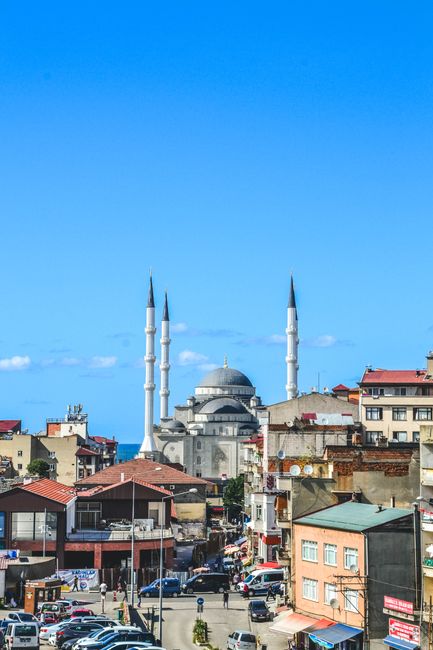
Trabzon, the old Trebizond, is the great port and city of Türkiye’s eastern Black Sea coast, and it feels very different from the rest of the country: green mountains drop straight into a grey-blue sea, tea gardens cover the hillsides, it rains in every season, and the food is built on anchovies, corn bread and butter. For two and a half centuries it was the capital of the Empire of Trebizond, the last Byzantine state to fall to the Ottomans, and that past survives in the frescoed church of Hagia Sophia and, above all, in Sümela Monastery, clinging to a cliff in a forested valley an hour south of town. Add the alpine lake of Uzungöl, the Atatürk Pavilion, the Boztepe viewpoint and a lively centre around Meydan Park, and Trabzon makes a rewarding two- to four-day trip, an easy short flight from Istanbul or Ankara.
Right now in Trabzon
- Wed 16–18°C 60–64°F 3 mm Light rain
- Thu 14–21°C 57–70°F Partly cloudy
- Fri 16–22°C 60–71°F 1 mm Mostly clear
Weather: MET Norway (CC BY 4.0) · Sea temperature: NOAA CoastWatch · Rates: ECB
Top tours in Trabzon
See all tours for Trabzon →
From local operators, with prices and reviews; you check availability and book on Viator, our partner. We may earn a commission at no extra cost to you. How we earn money
Trabzon at a glance
- Best months: May to September, when the mountain roads and plateaus are open and the days are warmest. Trabzon is mild all year, but rain is likely in any month and heaviest from September to November.
- Days needed: 1 day for Hagia Sophia, Boztepe and the old town; 2 days to add Sümela Monastery; 3–4 days to include Uzungöl and the tea country of Rize.
- Getting there: flights to Trabzon Airport (TZX), about 1 hour 50 minutes from Istanbul and 1 hour 30 minutes from Ankara; long-distance buses from all over Türkiye. There is no railway.
- Getting around: walk the centre; city buses and dolmuş minibuses for Hagia Sophia and Boztepe; a tour, minibus or hire car for Sümela and Uzungöl.
- Budget level: low to moderate. Hotels and food cost much less than in Istanbul or the resorts; Sümela (€20 for foreign visitors) is the one big ticket.
- Before you go: visas, money and transport around the country are in our Türkiye travel guide.
Trabzon’s areas and who each one suits
Most visitors stay in the centre, around Meydan Park (the main square) and the pedestrian Uzun Sokak and Kunduracılar streets, which are full of shops, bakeries and tea houses. It is flat, walkable and close to the dolmuş stops for everywhere else. The old walled city (Ortahisar), a little to the west between two ravines, holds the remains of the Byzantine citadel and the Fatih and Gülbahar Hatun mosques; it is quieter and good for an evening walk. Along the shore, the seafront park and the newer districts towards the airport have big hotels and shopping malls, handy if you are driving. Families heading for the mountains often prefer a night or two in Uzungöl itself, and in summer many travellers base themselves for a while on the Rize plateaus further east. Best for: Trabzon centre for first-timers without a car; Uzungöl for nature, cool air and early-morning lake views.
Top things to see in Trabzon
Ticket prices below are those for foreign visitors as of October 2026, from the Ministry of Culture and Tourism’s official site (muze.gov.tr), which prices state sites in euros, payable by card. Turkish citizens pay different rates. The ministry usually switches to shorter winter hours in late October or November, so check close to your visit.
Sümela Monastery
The Monastery of the Virgin at Sümela (Panagia Soumela) is one of the most spectacular sights in Türkiye: a cluster of chapels, cells and a huge guest wing built into a cave on a sheer cliff about 1,200 m up in the Altındere Valley, near Maçka, some 45 km south of Trabzon. Tradition says it was founded in the 4th century around an icon of the Virgin attributed to St Luke; the monastery took its present shape under the emperors of Trebizond, notably Alexios III in the 14th century, flourished again in the 18th and 19th centuries, and was abandoned in 1923 after the population exchange between Greece and Türkiye. The rock church and an adjoining chapel are covered inside and out with frescoes of the life of Christ and the Virgin; many faces were scratched off by vandals in the 20th century, but the colours are still vivid.
The monastery was closed for a long restoration that began in September 2015, which stabilised the cliff (about 4,000 tonnes of loose rock were cleared), restored the aqueduct and stairs and created a 300-metre walkway; it reopened fully in 2021, and the works uncovered a hidden chapel and a tunnel. It is on UNESCO’s Tentative List of World Heritage sites. A Greek Orthodox liturgy is held here on 15 August in most years with special permission, drawing pilgrims from Greece; expect big crowds and security that day.
How to visit: as of October 2026 the ticket is €20 for foreign visitors, and the monastery is open every day, 08:00–17:00 (ticket office until 16:30), according to the Ministry. The ticket is sold on muze.gov.tr and at the gate. Sümela lies inside the Altındere Valley National Park, which charges its own small entry fee per person and per car at the park gate. Cars, tour coaches and minibuses stop at the car park on the valley floor near the river and the cafés; from there, minibus shuttles run up the forest road towards the monastery, and you finish on foot along the restored walkway and a steep flight of stairs. Fit walkers can take the old forest path from the valley floor instead, about 30–45 minutes uphill. Allow 2½–3 hours including the visit. The paths are wet and slippery after rain and can be icy in winter, so wear proper shoes, and come early: tour groups from Trabzon arrive from about 10:00. Tours and dolmuş minibuses leave from central Trabzon; the drive takes about an hour each way.
Hagia Sophia of Trabzon (Ayasofya Mosque)
On a terrace above the sea, about 3 km west of the centre, this 13th-century church was built by Emperor Manuel I of Trebizond in the 1250s–60s. It became a mosque after the Ottoman conquest, a museum in the 1960s, and a working mosque again in 2013. Its frescoes, among the finest late-Byzantine paintings anywhere, cover the porches and the interior: the Last Judgement, the Gospel scenes and the Pantokrator in the dome. Since the 2018–2020 restoration, a suspended ceiling and lighting system covers some paintings during prayers, and a glass floor protects the coloured marble pavement; the porch frescoes, the bell tower and the garden with its view are always open to see.
How to visit: entry is free. As a working mosque it closes to sightseeing during the five daily prayers, and for longer around the Friday noon prayer. Dress as for any mosque: shoulders and knees covered, women cover their hair, shoes off inside. City buses and dolmuş minibuses marked Ayasofya run from Meydan; a taxi costs little.
Boztepe viewpoint
The hill of Boztepe, just south of the centre, is where locals go for the view over the whole city, the harbour and the Black Sea, best at sunset. The terrace tea gardens serve semaver tea (a samovar to share) and breakfast; it is busy and cheerful on summer evenings and weekend mornings. Take a dolmuş from Meydan or a taxi up the winding road, and walk down if you like.
The Atatürk Pavilion (Atatürk Köşkü)
A white, Crimean-style summer house built around 1890 for a local banker, set in a garden on the slopes of Soğuksu about 7 km south-west of the centre. The city gave it to Atatürk, who stayed here in 1937, and it is now a small museum with his furniture, photographs and personal items, plus pretty gardens with hydrangeas and roses. It is run by the city, not the ministry, so museum passes don’t apply; the entrance fee is small and is paid in lira. Allow 45 minutes. Dolmuş minibuses to Köşk run from the centre.
The old city walls and Ortahisar
Trebizond’s Byzantine citadel, a long fortified strip between two deep ravines, still has stretches of walls, towers and gates running uphill from the sea. The upper citadel (Kale) held the palace of the Komnenian emperors, though little of it survives; walk the outside of the walls along the Zağnos Valley park, which has paths, ponds and cafés below the bridges. Inside the walls, the Ortahisar Fatih Mosque was the Byzantine church of the Panagia Chrysokephalos (the “golden-headed” Virgin), and the 16th-century Gülbahar Hatun Mosque, built for the mother of Selim I, stands just west of the walls.
Trabzon Museum and the old churches
The Trabzon Museum occupies the Kostaki Mansion, an Italian-designed banker’s house from the early 1900s with painted ceilings and period rooms, and a collection of archaeology, Byzantine finds and ethnography. As of October 2026 it costs €3, open 08:00–17:00 (ticket office until 16:30) and closed on Mondays. The small Küçük Ayvasıl (St Anne) church, one of the oldest buildings in the city, rebuilt in the 9th century, is free to see from the outside and listed by the ministry as open daily.
Uzungöl and the mountains
Uzungöl
Uzungöl (“long lake”) lies about 95–100 km south-east of Trabzon in the Çaykara district, at about 1,100 m, a lake in a narrow valley of spruce forest with a slim-minareted mosque on its shore. It is a protected nature park and one of the most photographed places in Türkiye, especially with Gulf visitors in summer, so the village around the lake has filled with hotels, wooden bungalows and restaurants. Come early in the morning or in spring or autumn for the calmest views, walk the path around the lake (about an hour), eat fresh trout, and if you have time, drive or hike up to the viewpoints and high pastures above the valley. Tours from Trabzon take a long day; with a car the drive takes about 1½–2 hours along the coast and up the Of valley.
Tea country and the Ayder plateau (Rize)
East of Trabzon, the neighbouring province of Rize is Türkiye’s tea garden: steep slopes covered in neat bushes, picked by hand from May to October. Rize town, about 75 km from Trabzon, has a tea-tasting garden on the hill above the centre. Further east, in the Kaçkar Mountains, the Ayder plateau is a famous summer village of wooden houses, waterfalls, thermal springs and hiking trails, about 3½ hours from Trabzon; it deserves its own overnight stay in summer. See our hiking guide for mountain walking tips.
Other things to do in Trabzon
- Eat the Black Sea way: hamsi (Black Sea anchovies), fried in corn flour, grilled or baked with rice in hamsili pilav, are the great autumn and winter dish, freshest from about November to February. Kuymak (or muhlama), a fondue of corn flour, butter and stretchy local cheese, is the classic mountain breakfast. Try Akçaabat köfte (meatballs) in the town of Akçaabat, west of Trabzon, Laz böreği (custard pastry), corn bread, and Trabzon’s dark bread from Vakfıkebir.
- Tea and hazelnuts: buy local tea, hazelnuts and hazelnut paste in the shops around Meydan and the bazaar.
- Shopping: the old bazaar (Çarşı) between Meydan and the walls sells silverwork, including the fine hasır bracelets of Trabzon, copper and local textiles.
- Football: Trabzonspor is one of Türkiye’s big clubs; a home game is a loud, passionate night out.
- Sea views: walk the seafront park or take a boat trip around the harbour in summer; the Black Sea is cool for swimming, about 23–25 °C at its warmest in August.
Day trips from Trabzon
- Sümela Monastery: about an hour south; half a day on its own, or combine it with the Hamsiköy village (famous for rice pudding) and the Zigana pass.
- Uzungöl: a full day by tour or car.
- Rize and the tea gardens: a half day by bus or car along the coast; add Ayder only if you stay overnight.
- Akçaabat: 15 km west, for its meatballs and the restored old Ortamahalle quarter.
- Further afield: Istanbul and Ankara are a short flight away; see our Istanbul guide and Ankara guide.
Getting there and getting around
By air
Trabzon Airport (TZX) sits on the coast about 6 km east of the centre, with frequent flights from Istanbul (both airports), Ankara, İzmir and Antalya, and seasonal international flights, many from the Gulf. Havaş airport coaches meet all scheduled domestic arrivals and run to the city centre via the bus station and Tanjant road in about 15 minutes; the fare is ₺130 as of October 2026. Havaş also runs from Trabzon Airport east along the coast to Rize (₺350, about 1 hour 15 minutes). A taxi to Meydan takes 15–20 minutes.
By bus
Trabzon’s bus station (otogar) is about 3 km east of the centre, linked by Havaş, city buses and dolmuş. Long-distance coaches run to Istanbul (about 17–18 hours), Ankara (about 11–12 hours) and along the coast to Samsun, Rize, Hopa and the Georgian border at Sarp. For Istanbul or Ankara, flying is far quicker and often not much more expensive.
Getting around
The centre is walkable. Dolmuş minibuses leave from stops around Meydan for Ayasofya, Boztepe, the Atatürk Pavilion, Akçaabat and the coast; they are cheap and frequent, and pay in cash. City buses take a rechargeable transport card. For Sümela and Uzungöl, take a day tour, an organised minibus from the centre, or hire a car: roads are good but busy and winding, and fog is common in the mountains. Driving in central Trabzon is slow, and parking is tight.
When to go and how long to stay
Trabzon has a mild, humid climate: the Black Sea keeps winters gentle and summers warm rather than hot, and rain falls in every month, about 860 mm a year on about 90 days, with the wettest months in October and November. The best months for sightseeing are May to September, when the mountain roads to Sümela, Uzungöl and the plateaus are easiest and the long summer evenings fill the tea gardens. Spring brings fresh green and rhododendrons; autumn has golden forests and the start of the hamsi season. In winter, Sümela stays open but the paths can be icy, and the high plateaus are snowbound. Local and Gulf tourism peaks in July and August, so book hotels in Uzungöl early then.
| Season | Average high / low | Rain | What it’s like |
|---|---|---|---|
| Spring (Mar–May) | 13–20 °C / 6–13 °C | 54–66 mm a month | Green and mild, with showers; good for Sümela and walking. |
| Summer (Jun–Aug) | 24–28 °C / 18–21 °C | 36–50 mm a month | Warm and humid, the driest season; peak time for Uzungöl and the plateaus. |
| Autumn (Sep–Nov) | 17–25 °C / 10–18 °C | 85–131 mm a month | Warm in September, then the wettest weeks of the year; autumn colours and fresh hamsi. |
| Winter (Dec–Feb) | 10–13 °C / 5–7 °C | 59–86 mm a month | Mild and grey on the coast; snow in the mountains, icy paths at Sümela. |
Temperatures and rainfall are the WMO 1991–2020 climate normals for Trabzon’s regional weather station by the airport, supplied by Türkiye’s State Meteorological Service (MGM). The mountains are much cooler: Uzungöl and Sümela are 10 °C or more colder than the coast.
Trabzon in 1 day
Morning at Hagia Sophia and its frescoes; lunch in the centre with kuymak or hamsi; afternoon at the Trabzon Museum (closed Mondays), the old city walls and the Zağnos Valley; sunset tea at Boztepe.
Trabzon in 2 days
Day one as above. Day two: Sümela Monastery at opening time, lunch by the river in the Altındere Valley, and the Atatürk Pavilion on the way back.
Trabzon in 3–4 days
Add a full day at Uzungöl, ideally with a night there to see the lake at dawn, and a day east along the coast to Rize’s tea gardens, or an overnight in Ayder in summer. With a fourth day, slow down: Akçaabat for lunch, a football match or a lazy afternoon at Boztepe.
Where to stay in Trabzon
The centre around Meydan has the widest choice, from simple business hotels to good mid-range ones, all within walking distance of restaurants and the dolmuş stops; ask for a room away from the main road for quiet. The seafront and the Yomra side towards the airport have large modern hotels, handy for drivers and early flights. In Uzungöl, wooden bungalows and lakeside hotels range from basic to upmarket; book ahead for July and August and around the Eid holidays. Hotels are generally good value compared with Istanbul. Bills include Türkiye’s accommodation tax (cut to 1% until the end of 2026).
Practical tips for Trabzon
- Pack for rain: carry an umbrella or rain jacket in any season.
- Go to Sümela early: arrive at opening time to beat the tour groups, and check the ministry hours before you go, as winter hours may be shorter.
- Check prayer times: Hagia Sophia closes to sightseeing during prayers, and for longer on Fridays around noon.
- Dress modestly: Trabzon is more conservative than Istanbul or the resorts; cover up in mosques and villages.
- Drive carefully: mountain roads are narrow and foggy, and coast-road traffic is heavy at weekends.
- Pay in lira: cards are widely accepted, but carry cash for dolmuş, tea gardens and village stalls; there is no service charge on restaurant bills, and tipping is voluntary.
- Emergencies: call 112.
What to pack for Trabzon
A waterproof jacket or umbrella, shoes with good grip for Sümela’s steps and wet paths, a warm layer for the mountains even in summer, a scarf and clothes covering shoulders and knees for mosques, and a warm coat from November to March.
Trabzon travel FAQ
How much is Sümela Monastery in 2026?
As of October 2026 foreign visitors pay €20, according to the Ministry of Culture and Tourism. The monastery is open every day from 08:00 to 17:00, with the ticket office closing at 16:30. The Altındere Valley National Park charges a separate small entry fee at the gate.
How do I get to Sümela Monastery from Trabzon?
By day tour or minibus from the centre, or by car, in about an hour (45 km). From the valley car park, minibus shuttles take you most of the way up, and you finish on foot along a walkway and stairs; fit walkers can take the forest path from the valley floor in about 30–45 minutes.
Is Sümela Monastery open in winter?
Yes, the Ministry lists it as open every day of the year, but snow and ice can make the road and paths difficult, and hours may be shorter in winter. Check muze.gov.tr before you go.
Can you visit Hagia Sophia in Trabzon?
Yes. It is a working mosque with free entry outside prayer times. Cover shoulders and knees, women cover their hair, and take off your shoes. Some frescoes are covered during prayers; the porch frescoes can always be seen.
How far is Uzungöl from Trabzon?
About 95–100 km, 1½–2 hours by car or tour bus. It is a long but beautiful day trip; a night at the lake lets you see it without the crowds.
How do I get from Trabzon Airport to the city centre?
Havaş coaches meet all scheduled domestic flights and reach the centre in about 15 minutes for ₺130 (October 2026). A taxi takes 15–20 minutes.
What food is Trabzon famous for?
Hamsi (Black Sea anchovies), kuymak (a corn flour and cheese fondue), Akçaabat meatballs, Laz böreği pastry, corn bread and local tea and hazelnuts.
When is the best time to visit Trabzon?
May to September for the mountains, Sümela and Uzungöl. Autumn is the wettest season but brings fresh hamsi and autumn colours; winter is mild on the coast but snowy in the mountains.
How many days do you need in Trabzon?
One day for the city, two to add Sümela, and three or four to include Uzungöl and the tea country of Rize.
Is Trabzon worth visiting?
Yes, if you want to see a different Türkiye: green mountains, a Byzantine past, the cliff monastery of Sümela and the Black Sea’s food and tea culture, all an easy flight from Istanbul.
Does MuseumPass cover Sümela?
Sümela is a Ministry of Culture and Tourism site, and MuseumPass Türkiye (€165, 15 days) is valid at state museums and sites; none of the regional passes covers the Black Sea. For a short trip, a single ticket is cheaper. The Atatürk Pavilion is run by the city and does not accept passes.
Sources and last review
Researched and last reviewed on 4 October 2026. Sümela Monastery, Trabzon Museum and Küçük Ayvasıl prices, hours and the restoration details: the Ministry of Culture and Tourism’s official site (muze.gov.tr). Airport coaches: Havaş. Climate: WMO 1991–2020 normals for Trabzon (MGM data). The Sümela shuttle and walking arrangements, the Atatürk Pavilion fee, Hagia Sophia’s visiting arrangements, Uzungöl distances and journey times come from general and secondary sources and are flagged for checking. Prices in lira change often, so check before you travel. For visas, money and safety, see our Türkiye travel guide.
Plan your trip
Partner links: TravelerCenter may earn a commission if you book, at no extra cost to you.
🇹🇷 Useful Turkish phrases for Trabzon
All 38 Turkish phrases: restaurant, hotel, emergencies, romance (printable) →