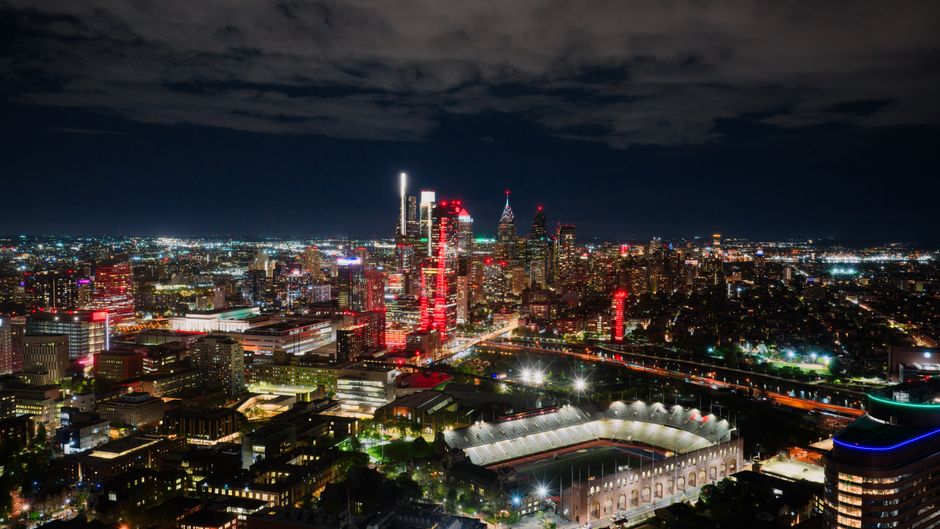
Philadelphia is where the United States began. The Declaration of Independence and the Constitution were both debated and signed in Independence Hall, a few steps from the Liberty Bell, and the cobbled lanes of Old City still look much as Benjamin Franklin knew them. But Philly is more than a history lesson: it has a great art museum with the famous Rocky Steps, the Barnes Foundation, a ruined prison, thousands of murals and cheesesteaks. The center is compact and flat, and the city sits on the main rail line between New York and Washington, D.C.
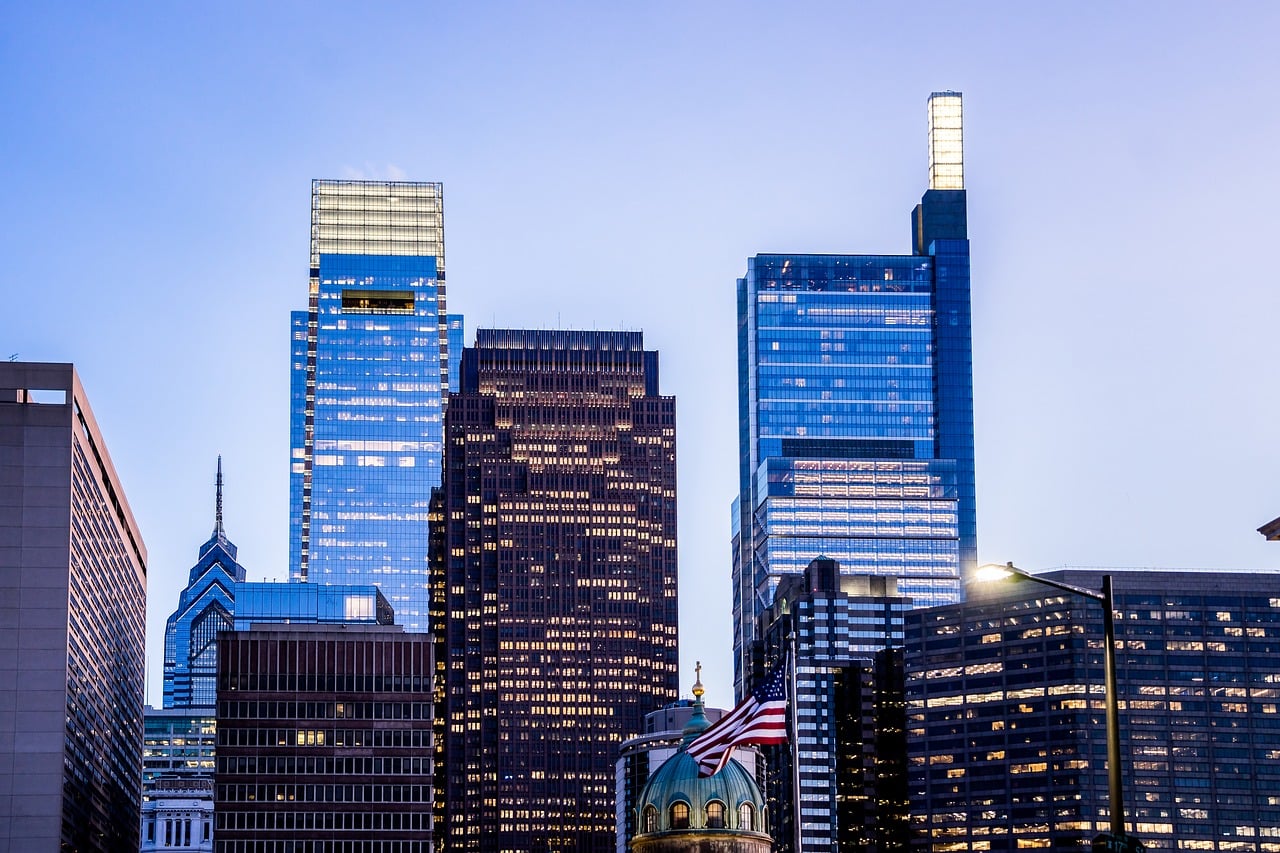
Right now in Philadelphia
- Wed8–19°C47–67°FClear
- Thu13–24°C55–75°FClear
- Fri13–21°C55–70°FClear
- Mon 12 Oct Columbus Day · regional holiday in Pennsylvania
Top tours in Philadelphia
See all tours for Philadelphia →
From local operators, with prices and reviews; you check availability and book on Viator, our partner. We may earn a commission at no extra cost to you. How we earn money
Philadelphia at a glance
- Best for: American history, art museums, food markets, murals and relaxed city walks.
- How long: 2 days for the historic sights and the art museum; 3–4 days to add the Barnes, Eastern State and a day trip.
- Best time: April to June and September to October. July averages a high of 88 °F (31 °C); January about 41 °F (5 °C).
- Independence Hall: free, but most of the day needs a timed ticket from Recreation.gov with a $1 booking fee; early-morning “open house” entry needs no ticket.
- Getting there: Philadelphia International Airport (PHL), linked by SEPTA’s Airport Line train, and Amtrak at William H. Gray III 30th Street Station.
- Getting around: walk; buses, subway and trolleys cost $2.90 a ride with a contactless card, phone or SEPTA Key card, as of October 2026.
- Before you go: entry rules and ESTA, money, tipping and driving are in our United States travel guide.
Philadelphia’s neighborhoods
Center City, the downtown, stretches between the Delaware River on the east and the Schuylkill River on the west on William Penn’s 1682 grid, with City Hall at its heart and numbered streets counting up from the Delaware.
Old City and Society Hill
The historic district around Independence National Historical Park: Independence Hall, the Liberty Bell, Elfreth’s Alley, Christ Church and the Museum of the American Revolution. Society Hill, just south, has brick row houses, gas lamps and quiet streets, and Penn’s Landing sits on the river.
Center City and Rittenhouse Square
The business and shopping core around City Hall, with Reading Terminal Market, the Convention Center and the theaters of the Avenue of the Arts (Broad Street). West of Broad Street, Rittenhouse Square is the city’s most elegant neighborhood, with a leafy park and many of the best restaurants.
Fairmount and the Parkway
The Benjamin Franklin Parkway, a broad boulevard modeled on the Champs-Élysées, runs from City Hall to the Philadelphia Museum of Art, passing the Barnes Foundation, the Rodin Museum and the Franklin Institute. Behind it, the Fairmount neighborhood has Eastern State Penitentiary and neighborhood bars.
South Philly, Fishtown and University City
South Philadelphia is the home of the Italian Market, the cheesesteak rivalry of Pat’s and Geno’s and the sports stadiums. Fishtown and Northern Liberties, north of Old City, are the lively, younger neighborhoods for craft beer, music venues and new restaurants. University City, across the Schuylkill, has the University of Pennsylvania and 30th Street Station.
Top things to see in Philadelphia
Prices and hours below were checked on the official sites in October 2026, unless we say otherwise; check again before you go. Many of the historic sites are free; the paid museums sell timed tickets online.
Independence Hall
The red-brick Pennsylvania State House, on Chestnut Street between 5th and 6th Streets, is where the Declaration of Independence was adopted in 1776 and the Constitution drafted in 1787. It is part of Independence National Historical Park, run by the National Park Service (NPS), and entry is free. According to the park’s hours page (updated September 2026), the building is open as a self-guided open house from 9 to 10:30 a.m. with no ticket needed; from 10:40 a.m. to 4 p.m. ranger-led tours leave every 20 minutes and need a timed ticket, and a 4:20 p.m. expanded tour visits the second floor (ticket needed; not wheelchair accessible).
Tickets are reserved on Recreation.gov or by phone (1-877-444-6777), up to 30 days ahead and up to 10 per account. The tickets themselves are free, but there is a $1 booking fee per ticket, not covered by America the Beautiful passes and not refundable. Extra next-day tickets are released at 5 p.m. the day before, and unbooked tickets stay available until tour time. Arrive 30 minutes early for airport-style security on 5th Street, between Chestnut and Walnut. The same security area leads to Congress Hall, where the first US Congress met.
The Liberty Bell
The cracked bell, later a symbol for abolitionists and civil rights campaigners, hangs in the glass-walled Liberty Bell Center at 526 Market Street, facing Independence Hall. It is free, with no tickets: entry is first come, first served through security, daily 9 a.m.–5 p.m. Lines are longest at midday in summer. There are no restrooms inside: use the Independence Visitor Center at 6th and Market Streets. A free NPS walking tour leaves daily at 10 a.m. from the Liberty Bell Center viewing window.
More of Independence Park and Franklin Court
The park’s other buildings are free and worth an hour or two. Franklin Court, off Market Street, marks the site of Benjamin Franklin’s home with a steel “ghost” frame and holds the Benjamin Franklin Museum (as of October 2026, $7.50 for adults, $5 for seniors 65+ and children 6–17, free under 6, open daily 9 a.m.–5 p.m.) and a working 18th-century printing office. The National Constitution Center, at the north end of the mall, is a separate paid museum.
The Museum of the American Revolution
Two blocks from Independence Hall at 3rd and Chestnut Streets, this museum tells the story of the Revolution through weapons, letters and immersive galleries; its star is George Washington’s own campaign tent, shown in a dramatic theater. According to the museum’s hours and admission page, it is open daily 10 a.m.–5 p.m. (closed Thanksgiving, December 25, January 1 and the Tuesday after Labor Day). Adult tickets cost $25 online or $27 at the door; seniors 65+, students, teachers and military pay $21, youth 6–17 $14, and children 5 and under are free.
The Philadelphia Museum of Art and the Rocky Steps
The Greek-temple museum at the top of the Parkway is one of the largest art museums in the country, with Van Gogh’s Sunflowers, Cézanne’s Large Bathers, armor, period rooms and a major Duchamp collection. In 2025 it briefly rebranded as the “Philadelphia Art Museum”, but in February 2026 it went back to its historic name, the Philadelphia Museum of Art. As of October 2026 its site lists general admission at $30 for adults, $28 for seniors 65+ and $14 for students, and free for visitors 18 and under; the ticket covers two consecutive days at the main building and the nearby Rodin Museum. It opens Monday and Thursday to Sunday, 10 a.m.–5 p.m., and Friday until 8:45 p.m.; it is closed Tuesday and Wednesday. Friday evenings after 5 p.m. and the first Sunday of each month are pay-what-you-wish; the museum has extended Friday nights to June 2027.
Outside, the 72 granite steps of the east entrance are the “Rocky Steps”, made famous by the boxing films: run up, raise your arms at the top and enjoy one of the best views down the Parkway to City Hall. The bronze Rocky statue stands at their foot. Both are free at all hours.
The Barnes Foundation
Albert C. Barnes’s private collection, on the Parkway, holds one of the world’s largest groups of paintings by Renoir and Cézanne, plus Matisse, Picasso, Van Gogh and Modigliani, hung floor to ceiling with old ironwork and furniture exactly as Barnes arranged them. According to the Barnes, it is open Thursday to Monday, 11 a.m.–5 p.m. (closed Tuesday and Wednesday). As of October 2026 tickets cost $30 for adults and $28 for seniors; youth 13–18 and college students pay $5, and children 12 and under are free. Book timed tickets online; backpacks and large bags go in the free coat check.
Reading Terminal Market
Under an old railroad train shed at 12th and Arch Streets, this indoor market, open since 1893, packs dozens of stalls into one buzzing hall: roast pork sandwiches with provolone and broccoli rabe, Pennsylvania Dutch pretzels and pies from Lancaster County bakers, cheesesteaks, oysters, ice cream and coffee. The market says it is open daily 8 a.m.–6 p.m., with some holiday closures; come before noon on weekdays to beat the lunch crowd.
Eastern State Penitentiary
Opened in 1829, this fortress-like prison in Fairmount was the world’s first true penitentiary, built on the idea of solitary confinement; Al Capone was one of its inmates. Today it is an atmospheric ruin with an audio tour. It is open daily 10 a.m.–5 p.m. from March to November, and Wednesday to Monday in January, February and most of December. As of October 2026 daytime tickets cost $21 for adults, $19 for seniors and $17 for students and youth 7–17 online, or $2 more at the door; the site does not recommend it for children under 7. In fall, Halloween Nights evening events need separate tickets.
Elfreth’s Alley
Off 2nd Street in Old City, this narrow lane of 18th-century brick houses with flower boxes is often called the oldest continuously lived-in residential street in the country. It is a public street, free at any time, but people still live here, so keep your voice down. The small Elfreth’s Alley Museum is open for the 2026 season on Fridays to Sundays, 12–4 p.m. ($3 for adults, $2 for children 7–12), with a 40-minute guided tour at 2:30 p.m. on Saturdays and Sundays ($10 adults, $5 children).
Mural Arts and the Italian Market
Philadelphia calls itself the “City of Murals”: the Mural Arts program has painted thousands of walls since the 1980s, and you will pass them in every neighborhood. Mural Arts runs guided tours and self-guided routes. Then head to South 9th Street for the Italian Market, one of the oldest open-air markets in the country, with fruit stands under awnings, cheese shops, butchers and Mexican taquerías; many shops close on Monday.
More to see
- City Hall: the huge Second Empire building topped by a statue of William Penn, with tours and an observation deck in the tower.
- Christ Church and its burial ground: where Benjamin Franklin is buried; visitors toss pennies on his grave.
- Magic Gardens: Isaiah Zagar’s mosaic-covered maze of mirrors and tiles on South Street.
Museums
- Barnes Foundation
- Eastern State Penitentiary
- Independence Hall
- Museum of the American Revolution
- Philadelphia Museum of Art
Other sights
- Elfreth's Alley
- Liberty Bell
- Rocky Steps
Activities and best months
- City sightseeingMost of Independence National Historical Park is free; Independence Hall guided tours need a timed ticket from Recreation.gov ($1 handling fee).
Other things to do in Philadelphia
Eat a cheesesteak, and much more
The cheesesteak, thin-sliced beef on a long roll with fried onions and melted cheese (provolone, American or Cheez Whiz), is the city’s signature. The neon-lit rivals Pat’s and Geno’s face each other at 9th Street and Passyunk Avenue, but locals argue endlessly about better ones across the city; to order, say the cheese and then “wit” or “witout” onions. Also try a roast pork sandwich, a soft pretzel, a hoagie and, in summer, water ice. Many small restaurants are BYOB: bring your own wine.
Walking, cycling and the rivers
The Schuylkill River Trail runs from Center City past the art museum and Boathouse Row, the Victorian rowing clubs lit up at night, into Fairmount Park, one of the largest urban park systems in the country; it is great on foot or by bike, and Indego bike share has stations all over the center. In the evenings, catch the Philadelphia Orchestra or a game in South Philadelphia, where the Eagles and Phillies have famously passionate fans. See our city sightseeing and cycling guides.
Day trips from Philadelphia
Valley Forge National Historical Park: about 20 miles (32 km) northwest, where Washington’s army spent the hard winter of 1777–78. Entry is free; the grounds are open daily from 7 a.m. to dusk, and you can drive or cycle the loop past reconstructed huts and Washington’s Headquarters.
The Brandywine Valley: about 30 miles (48 km) southwest, rolling countryside with the du Pont family’s legacy: the spectacular Longwood Gardens, with its fountains and conservatory, and Winterthur’s house and gardens, plus the Brandywine River Museum of Art and its Wyeth paintings. It is best by car.
Lancaster County and Amish Country: about 65 miles (105 km) west, a landscape of farms, covered bridges and horse-drawn buggies. Amtrak’s Keystone trains reach Lancaster in about an hour, but a car is easiest. Many Amish prefer not to be photographed.
Atlantic City and the Jersey Shore: Atlantic City, about 60 miles (97 km) southeast in New Jersey, has its boardwalk, casinos and beach; further south are Ocean City and Victorian Cape May. NJ Transit runs buses and trains from Philadelphia; check its site for the current service. See our beaches guide. Further afield: New York City and Washington, D.C. are both easy by train; see our New York City and Washington, D.C. travel guides.
Nearby destinations
- New York City130 km
- Washington, D.C.199 km
Getting there and getting around
From Philadelphia International Airport (PHL)
PHL is about 7 miles (11 km) southwest of Center City. The easiest link is SEPTA’s Airport Line regional rail, with stations at the terminals, which runs about every 30 minutes from around 5 a.m. to midnight and reaches Penn Medicine (University City), 30th Street, Suburban and Jefferson stations in about 25–30 minutes. As of October 2026 a trip to Center City costs $8.75 on weekdays and $8 at weekends with a contactless card, phone or SEPTA Key card, or $11 if you buy on board. Tap in before boarding and tap out at your destination, or you are charged the maximum fare. Taxis and ride-hail cars take 20–30 minutes in normal traffic.
By train and bus
Amtrak trains on the Northeast Corridor stop at William H. Gray III 30th Street Station, a grand 1930s hall just west of the Schuylkill. Trains take roughly 1 hour 10 minutes to 1 hour 30 minutes to New York Penn Station (Acela is quicker than the Northeast Regional) and about 1 hour 45 minutes to 2 hours to Washington Union Station; book ahead for lower fares. Cheaper intercity buses also run to both cities.
SEPTA buses, subway and trolleys
SEPTA runs the city’s buses, the Market-Frankford and Broad Street subway lines (now branded SEPTA Metro) and the trolleys. As of October 2026 a bus or Metro ride costs $2.90. Pay by tapping a contactless bank card or phone (Apple Pay, Google Pay, Samsung Pay) or a reloadable SEPTA Key card ($4.95 for the card, refunded when you register it); both include two free transfers within two hours, but you must use the same card each time. Cash rides give no transfers. Children under 12 ride free with a paying adult. For a busy day, a One Day Convenience Pass costs $7.50 and a Three Day Pass $19 on the Key card.
Center City is easiest on foot: Independence Hall to City Hall is about 15 minutes, and City Hall to the art museum about 30. You do not need a car in the city; rent one only for Lancaster County or the Brandywine Valley.
When to go and how long to stay
Philadelphia has four clear seasons. The table uses NOAA’s 1991–2020 climate normals for the Philadelphia International Airport weather station: average daily highs and lows, and days with at least 0.1 inch (2.5 mm) of rain or melted snow.
| Season | Average high / low | Wet days per month | What it’s like | Good for |
|---|---|---|---|---|
| Winter (Dec–Feb) | 41–46 °F (5–8 °C) / 26–31 °F (−3 to −1 °C) | 6–7 | Cold and gray, with some snow | Museums, holiday markets, few crowds |
| Spring (Mar–May) | 53–74 °F (12–24 °C) / 34–54 °F (1–12 °C) | 6.5 | Chilly March, blossoms in April, warm May | Walking tours, gardens |
| Summer (Jun–Aug) | 83–88 °F (28–31 °C) / 64–70 °F (18–21 °C) | 6–6.5 | Hot and humid, with thunderstorms | July 4 celebrations, the Jersey Shore |
| Fall (Sep–Nov) | 79 °F falling to 56 °F (26–13 °C) / 61 °F falling to 39 °F (16–4 °C) | 5.5 | Warm September, crisp and sunny October | Sightseeing, fall color, Halloween Nights |
The airport gets about 44 inches (1,120 mm) of precipitation a year, spread fairly evenly, and an average of about 23 inches (59 cm) of snow, mostly from December to February. October is the driest month by rain days and one of the most pleasant.
Events worth planning around
- July 4: Independence Day brings a parade, concert and fireworks; book hotels early. In 2026 the city marked the 250th anniversary of the Declaration of Independence.
- Fall: Halloween Nights at Eastern State Penitentiary, on select evenings around October; check dates and book ahead.
- January 1: the Mummers Parade, with feathered costumes and string bands on Broad Street.
How long to stay: 2, 3 and 4 days
2 days: day one, Independence Hall (book the time slot), the Liberty Bell, Franklin Court, Elfreth’s Alley and the Museum of the American Revolution, with lunch at Reading Terminal Market; day two, the art museum and the Rocky Steps, the Schuylkill River Trail and Eastern State Penitentiary. 3 days: add the Barnes Foundation (not on Tuesday or Wednesday), the Italian Market, a cheesesteak and a mural tour. 4 days: add a day trip to Valley Forge, Longwood Gardens or Lancaster County.
Weather month by month
Where to stay in Philadelphia and the hotel taxes
- Old City and Society Hill: walk to Independence Hall and the Liberty Bell; boutique hotels and historic inns.
- Center City near City Hall: the most choice and the best transport, close to Reading Terminal Market and the Airport Line stations.
- Rittenhouse Square: upscale and leafy.
- University City: often cheaper, next to 30th Street Station for train travelers.
Hotel rates are usually quoted before tax. According to the City of Philadelphia, a hotel bill adds the city’s 8.5% Hotel Tax plus a 7% Hotel Occupancy Tax (6% for the Commonwealth of Pennsylvania and 1% for the city): 15.5% in total, as of October 2026. A few hotels add a nightly “amenity” or “destination” fee, and parking often costs extra, so check the full price before booking. Short-term rentals must be licensed by the city.
Practical tips for Philadelphia
- Book Independence Hall early: timed tickets for summer and holiday weekends go fast; if you miss out, come for the free 9 a.m. open house or try for next-day tickets released at 5 p.m.
- Closing days: the art museum closes on Tuesday and Wednesday and the Barnes on Tuesday and Wednesday too; plan them for other days.
- Sales tax: prices in shops and on menus exclude the 8% sales tax (6% state plus 2% city) added at the register; unprepared food and most clothing are exempt in Pennsylvania.
- Tipping: 18–22% is usual at sit-down restaurants; more in our United States travel guide.
- Safety: the center is lively and generally safe; as in any big city, stay alert late at night, especially around transit stations, and keep your phone out of sight on trains.
- Emergencies: call 911; for city information, 311.
What to pack for Philadelphia
Comfortable walking shoes come first: the historic district has brick sidewalks and cobbles, and you will walk a lot. In summer, pack light clothes, sunscreen, a water bottle and a layer for air-conditioned museums. From November to March bring a warm coat, hat and gloves. A compact umbrella helps in any season. Keep your bag small: Independence Hall and the Liberty Bell screen every bag, and the Barnes makes you check backpacks and larger bags.
What to pack
- City walking shoesLisbon and Porto are steep, with polished limestone cobbles that get slippery, so grippy soles matter.
- Day packs and anti-theft bagsA small zipped or anti-theft bag makes crowded trams and viewpoints less stressful.
- Rain jacketsFrom October to April Porto and Lisbon see rain on roughly a third of days.
- Travel adapters and convertersPortugal uses Type C and F sockets at 230 V, so most visitors from outside Europe need an adapter.
Philadelphia travel FAQ
Do I need tickets for Independence Hall?
For most of the day, yes. Tours from 10:40 a.m. to 4 p.m. and the 4:20 p.m. expanded tour need a timed ticket from Recreation.gov, free but with a $1 booking fee per ticket. From 9 to 10:30 a.m. the building is open house, with no ticket needed.
Is the Liberty Bell free?
Yes. The Liberty Bell Center is free and needs no ticket; it is open daily 9 a.m.–5 p.m., first come, first served after security screening.
How much is the Philadelphia Museum of Art?
As of October 2026, $30 for adults, $28 for seniors and $14 for students; visitors 18 and under are free. Friday evenings after 5 p.m. and the first Sunday of each month are pay-what-you-wish. It is closed on Tuesday and Wednesday.
Can I run up the Rocky Steps for free?
Yes. The steps and the Rocky statue are outdoors and free at any time; you only need a ticket for the museum itself.
How do I get from Philadelphia airport to Center City?
Take SEPTA’s Airport Line train, about every 30 minutes and 25–30 minutes to Center City. As of October 2026 it costs $8.75 on weekdays and $8 at weekends when you tap a contactless card or SEPTA Key; remember to tap out.
Can I pay for SEPTA with a contactless card?
Yes, on buses, the Metro and regional rail. Tap a contactless bank card or phone wallet: a bus or Metro ride is $2.90 with two free transfers within two hours on the same card.
What taxes are added to Philadelphia hotel bills?
15.5% in total: the city’s 8.5% Hotel Tax and a 7% Hotel Occupancy Tax (6% state and 1% city), as of October 2026.
How long is the train from Philadelphia to New York or Washington?
Amtrak from 30th Street Station takes roughly 1 hour 10 minutes to 1 hour 30 minutes to New York and about 1 hour 45 minutes to 2 hours to Washington, D.C., depending on the train.
How many days do I need in Philadelphia?
Two full days covers the historic district, Reading Terminal Market and the art museum. Three to four days adds the Barnes, Eastern State and a day trip.
Plan your trip
Partner links: TravelerCenter may earn a commission if you book, at no extra cost to you.
Sources · last reviewed 4 October 2026
Researched and last reviewed on 4 October 2026. Independence Hall tickets and hours, the Liberty Bell, the Benjamin Franklin Museum and Valley Forge: the National Park Service; the Museum of the American Revolution, the Philadelphia Museum of Art, the Barnes Foundation, Eastern State Penitentiary, Reading Terminal Market and Elfreth’s Alley: their official sites; transit fares and the Airport Line: SEPTA; hotel and sales taxes: the City of Philadelphia Department of Revenue; climate: NOAA’s 1991–2020 normals for Philadelphia International Airport. Amtrak journey times, distances for day trips and event dates are general references, flagged for checking. Prices and hours change, so check the official sites before you go. For entry rules, ESTA, tipping and driving, see our United States travel guide.
Also: nps.gov · NOAA NCEI normals 1991–2020, Philadelphia International Airport (climate)
Data: Weather: MET Norway (CC BY 4.0) · Air quality: OpenAQ · Rates: ECB · Holidays: Nager.Date · Costs: World Bank ICP and price levels · © OpenStreetMap contributors (ODBL) · Wikidata (CC0)