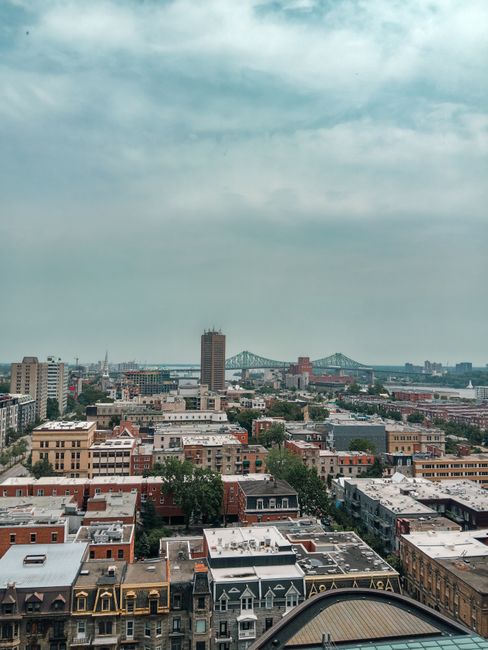
Quebec City (Québec) is the capital of the province of Quebec and one of the oldest European-founded cities in North America, established by Samuel de Champlain in 1608 on a cliff above a narrowing of the St. Lawrence River. Its old town, still circled by stone walls, is a UNESCO World Heritage Site: steep lanes, steeply roofed stone houses, the turreted Château Frontenac and a riverside lower town reached by stairs or a funicular. About 575,000 people live in the city, almost all of them French-speaking. It is wonderfully walkable, magical under snow during the Winter Carnival, and a base for waterfalls, island farms and whale-watching trips down the river.
Right now in Quebec City
- Wed3–11°C37–51°F12 mm rain
- Thu9–15°C48–58°F13 mm rain
- Fri6–11°C43–52°FCloudy
- Mon 12 Oct Thanksgiving
Top tours in Quebec City
See all tours for Quebec City →
From local operators, with prices and reviews; you check availability and book on Viator, our partner. We may earn a commission at no extra cost to you. How we earn money
Quebec City at a glance
- Best months: June to early October for warm days, terraces and day trips; late September and early October for autumn colour; February for the Winter Carnival and snowy streets.
- Time needed: two days for Old Québec, the Citadelle and the Plains of Abraham; three or four with Montmorency Falls, Île d’Orléans or a whale-watching trip.
- Getting there: about three hours from Montreal by car or VIA Rail train; Québec City Jean Lesage International Airport (YQB) is west of the city, with RTC bus route 76 to Sainte-Foy. Prices on this page are in Canadian dollars.
- Costs (as of October 2026): an RTC bus ticket is $3.85 (about US$2.80) and a day pass $10.50; the funicular is $7 a ride; the Lévis ferry $4.25; most purchases add 14.975% sales tax, and hotels add a 3.5% lodging tax.
- Before you go: entry rules (eTA or visa), money, taxes and driving in Canada are in our Canada travel guide.
Quebec City neighbourhoods and who each one suits
Old Québec: Upper Town
Inside the walls on top of Cap Diamant, Haute-Ville is the historic heart: the Château Frontenac and the Dufferin Terrace boardwalk, Place d’Armes, the Notre-Dame de Québec Basilica-Cathedral, the Ursuline convent, Rue Saint-Jean and Rue Saint-Louis lined with restaurants, and the artists’ alley of Rue du Trésor. Most hotels here are small inns in historic houses. Best for first-time visitors who want to step out of the door into the old town.
Old Québec: Lower Town, Petit-Champlain and the Old Port
Below the cliff, Basse-Ville is where Champlain built his first settlement. The Quartier Petit-Champlain is a car-free lane of boutiques and bistros, Place Royale has the little stone church of Notre-Dame-des-Victoires, and the Old Port has the Musée de la civilisation, the market and the ferry to Lévis. Connect the two towns by the funicular, the Breakneck Stairs (Escalier Casse-Cou) or the Côte de la Montagne.
Saint-Jean-Baptiste, Montcalm and Saint-Roch
Just outside the walls, the Saint-Jean-Baptiste neighbourhood climbs a hillside of colourful row houses and local cafés. Montcalm, along the Grande Allée and Avenue Cartier, sits next to the Plains of Abraham and the Musée national des beaux-arts du Québec, with terraces and the Parliament Building nearby. Down the slope, Saint-Roch is the trendy lower-town district of restaurants, microbreweries and shops along Rue Saint-Joseph. These areas are quieter, often cheaper, and a short walk from the walls.
Top things to see in Quebec City
Château Frontenac and the Dufferin Terrace
The green-roofed Château Frontenac, a railway hotel opened in 1893, is said to be the most photographed hotel in the world, and it dominates every view of the city. You do not need to stay there to enjoy it: walk through the lobby, have a drink in the bar overlooking the river, or join a guided tour. In front, the wide wooden Dufferin Terrace runs along the clifftop with views over the St. Lawrence to Lévis and Île d’Orléans, and in winter has a traditional toboggan slide. Beneath the boardwalk, Parks Canada’s Saint-Louis Forts and Châteaux National Historic Site shows the remains of the governors’ residence used by French and British governors from 1620 to 1834. From the terrace, the Governors’ Promenade climbs along the cliff to the Citadelle and the Plains of Abraham.
The fortifications and the Citadelle
Quebec City is the only fortified city north of Mexico whose walls still largely stand. You can walk along much of the walls and through the city gates, such as Porte Saint-Louis and Porte Saint-Jean, for free. Parks Canada’s Fortifications of Québec National Historic Site runs a welcome kiosk on the Dufferin Terrace (daily from 16 May to 12 October 2026, then Wednesday to Sunday until 25 October, 9:30 a.m. to 5 p.m.) and guided walking tours of the walls ($22.75 for adults, $21.25 for seniors, $12.75 for youths). The Artillery Park buildings, with admission of $10 for adults and $8.50 for seniors and free entry for under-18s, open in summer (19 June to 7 September in 2026).
The star-shaped Citadelle of Québec, on top of Cap Diamant, is still an active military base and home of the Royal 22e Régiment, so visits are guided only. It is open daily, from 10 a.m. to 5:30 p.m. between 1 September 2026 and 21 May 2027 (9 a.m. to 5:30 p.m. in summer). General admission is $22 for adults, $20 for seniors (65+) and students (18+), $8 for ages 11 to 17, free for children 10 and under, and $50 for a family (two adults and up to three children). It includes a 60-minute outdoor guided tour and the regimental museum. Do not miss the noon cannon.
Plains of Abraham (Battlefields Park)
The Plains of Abraham, where British and French armies fought the battles of 1759 and 1760 that decided the fate of New France, are now Battlefields Park, a 103-hectare (255-acre) green space on the clifftop that is to Quebec City what Central Park is to New York. Walk, run or cycle its paths, look down on the river from the lookouts, and visit the Plains of Abraham Museum for its exhibition on the battles. In summer the park hosts big outdoor concerts, and in winter it has cross-country ski and snowshoe trails.
Petit-Champlain and the funicular
The Funiculaire du Vieux-Québec has linked the Dufferin Terrace with the Quartier Petit-Champlain since 1879, and is entered through the 1683 Maison Louis-Jolliet at 16 Rue du Petit-Champlain. A one-way ride costs $7 per person, paid in cash on site only (there are ATMs at both stations); children under 117 cm (46 in) ride free. It runs year-round, from 9 a.m. to 9 p.m., and until 10 p.m. from Saint-Jean-Baptiste Day (24 June) to Labour Day. The ride takes about a minute; the Breakneck Stairs next door are free. Below, the Petit-Champlain lanes are prettiest early in the morning or lit up on a winter evening, with a huge mural, the Fresque des Québécois, nearby in Place Royale.
The Lévis ferry
The cheapest river cruise in town is the Société des traversiers du Québec ferry from the Old Port to Lévis on the south shore, with one of the best views of the Château Frontenac and the cliffs. The crossing takes only a few minutes, and no reservations are taken. Foot passengers pay $4.25 (ages 16 to 64), $3.60 (65 and over), $2.95 (ages 6 to 15); children 5 and under ride free; a car and driver costs $10.20. Holders of an RTC (Quebec City) or Lévis transit monthly pass ride free. Fares are tax-free; buy tickets at the terminal in cash or by Visa, Mastercard or debit card, as online sales were suspended in autumn 2026.
Museums and the Parliament
The Musée de la civilisation in the Old Port explores Quebec society and Indigenous cultures; the Musée national des beaux-arts du Québec on the Plains of Abraham holds Quebec art from the colonial era to today. The Parliament Building on Grande Allée, seat of Quebec’s National Assembly, is usually open for free guided tours, and the nearby Observatoire de la Capitale offers a high view over the city.
Monuments
- Parliament Building of Quebec
Historic centres
- Old Quebec
Other sights
- Château Frontenac
- Old Quebec Funicular
Castles and forts
- Citadelle of Quebec
Viewpoints
- Dufferin Terrace
Parks and gardens
- Plains of Abraham
Activities and best months
- City sightseeingThe Fortifications of Québec National Historic Site is part of the UNESCO-listed Historic District of Old Québec (adult $10.00); the Saint-Louis Forts and Châteaux, the governors' seat from 1620 to 1834, lie under Dufferin Terrace.
Winter Carnival and other things to do in Quebec City
The Quebec Winter Carnival (Carnaval de Québec), which calls itself the world’s largest winter carnival, runs from 5 to 14 February 2027. For ten days the city fills with ice and snow sculptures, Bonhomme’s ice palace, two night parades, outdoor music evenings and the ice canoe race across the half-frozen St. Lawrence. Buy the Carnival effigy pass for access to the sites, wrap up very warmly and book a room early.
- Hôtel de Glace: Quebec’s ice hotel, rebuilt every winter entirely from snow and ice at Village Vacances Valcartier north of the city, is open from about January to March for day tours, drinks in the ice bar and nights in a sleeping bag; check the season’s dates before you go.
- Food: try tourtière (meat pie), pea soup, poutine and maple taffy on snow; in the Old Port and Saint-Roch, microbreweries and bistros serve Quebec produce.
- Christmas season: Old Québec is beautifully decorated in December, with a German-style Christmas market in the old town.
- Cycling and walking: the Samuel-De Champlain Promenade along the river and the paths of the Plains of Abraham are lovely by bike or on foot (see our cycling and city sightseeing guides).
- Summer festivals: the Festival d’été de Québec brings big outdoor concerts to the Plains of Abraham each July, and the Fêtes de la Nouvelle-France celebrate the colonial past in August.
Day trips from Quebec City
Montmorency Falls
About 15 minutes from Old Québec, the Montmorency River drops 83 m (272 ft) into the St. Lawrence, about 30 m (100 ft) higher than Niagara Falls. Run by Sépaq, the Parc de la Chute-Montmorency has a suspension bridge across the top of the falls, a panoramic staircase down the cliff, a cable car, a zipline and the historic Manoir Montmorency. Daily access for non-residents of Quebec is $13.90 for adults and $12.52 for seniors in the high season, and $10.42 and $9.38 in the low season (2 November 2026 to 31 March 2027); under-18s are free, and Quebec residents pay half. The cable car is extra: $14.95 for an adult return, with unlimited rides the same day. Prices are before tax; buy access online in advance. Services such as the cable car are reduced in the low season, though the site stays accessible. In winter, spray from the falls builds a huge ice cone at the bottom.
Île d’Orléans and Sainte-Anne-de-Beaupré
Just across a bridge from the falls, Île d’Orléans is a rural island of farms, old stone houses and churches, orchards, vineyards, strawberry fields and sugar shacks; a 67 km (42 mile) road loops around it, ideal for a slow drive or a bike ride with stops for cider, chocolate and cassis. Further along the north shore, the Shrine of Sainte-Anne-de-Beaupré, a place of pilgrimage dedicated to Saint Anne since 1658, has a huge basilica full of mosaics and stained glass. Combine the falls, the island and the shrine in one day by car, or join a tour.
Whale watching at Tadoussac
Where the Saguenay Fjord meets the St. Lawrence, about three hours northeast by car through Charlevoix, the Saguenay–St. Lawrence Marine Park is one of the best places in the world to see whales: 13 species visit, including belugas, minke, fin and humpback whales, and sometimes blue whales. Parks Canada’s shore-based observation centres at Pointe-Noire (Baie-Sainte-Catherine), Cap-de-Bon-Désir (Les Bergeronnes) and Les Escoumins open from the end of June to mid-October, and boat and zodiac cruises run from Tadoussac and Baie-Sainte-Catherine through the warmer months. It is a very long day from Quebec City; one or two nights in Tadoussac or Charlevoix is better. See also our boat trips guide.
Charlevoix and Montreal
Charlevoix, an hour or so northeast, is a region of hills dropping to the river, with the artists’ village of Baie-Saint-Paul and the ski hill of Le Massif. Montreal, about three hours southwest by car or train, is the big-city counterpart to Quebec City; see our Montreal travel guide. For a different kind of trip, New York City is a day’s drive south (see our New York City travel guide).
Nearby destinations
- Montreal233 km
- Mont-Tremblant270 km
Getting there and getting around
By air and from the airport
Québec City Jean Lesage International Airport (YQB), about 15 km (9 miles) west of the old town, has flights across Canada and to some US, European and sun destinations; many international travellers connect through Montreal or Toronto. RTC bus route 76 runs seven days a week between the airport and the bus and train stations in Sainte-Foy, where you can change to Métrobus lines towards Old Québec; there is a fare machine at the airport. Taxis are the quicker option into the old town, about 25 minutes without traffic.
By train, bus and car
VIA Rail trains from Montreal arrive at the beautiful château-style Gare du Palais in the lower town, in about three to three and a half hours, with some trains continuing from Ottawa and Toronto via Montreal. Intercity buses use the bus terminal next door. By car, Montreal is about 250 km (155 miles) away by Highway 40 on the north shore or Highway 20 on the south shore. Parking in Old Québec is limited and expensive; leave the car at your hotel or in a public car park and walk.
RTC buses
The Réseau de transport de la Capitale (RTC) runs the city’s buses. High-frequency Métrobus lines (800 series) and route 11 link Sainte-Foy with the Plains of Abraham, the Château Frontenac and the Old Port, and route 1 serves the lower town and Place Royale. Fares, in effect since 1 July 2026:
| RTC fare | General price | Notes |
|---|---|---|
| 1 fare (ticket) | $3.85 | On an OPUS card or in the Nomade Paiement app |
| 1 fare (cash) | $4.00 | Paid on board |
| 1-day pass | $10.50 | Unlimited rides for the day |
| Unlimited weekend | $19.00 | From Friday 5:30 p.m. |
| 5 consecutive days | $34.75 | Day of activation plus the next four days |
| Children 12 and under | Free | Up to three children per adult with a valid RTC fare |
In practice, Old Québec is compact and best on foot, but it is hilly: the climb from the lower town to the Upper Town is steep, and sidewalks can be icy in winter. Wear good shoes, and use the funicular or a bus when your legs give out.
When to go and how long to stay
Quebec City has warm summers and long, cold, very snowy winters, a little colder and snowier than Montreal. Summer brings outdoor festivals and the busiest streets; early autumn is crisp, sunny and colourful, and the whale-watching season continues into October. From December to March the city is deep in snow, which is part of the charm: Christmas lights, the Winter Carnival in February and the ice hotel. Spring (April and May) is the quietest season, with melting snow and then fresh green.
| Season | Average high | Average low | What it’s like |
|---|---|---|---|
| Spring (Mar–May) | 0–17 °C (32–63 °F) | −9 to 5 °C (15–42 °F) | Snow lingers into April; mild by late May. |
| Summer (Jun–Aug) | 22–25 °C (72–77 °F) | 10–14 °C (51–56 °F) | Warm days, cool nights; showers; festival season. |
| Autumn (Sep–Nov) | 18 to 3 °C (64–37 °F) | 7 to −4 °C (45–24 °F) | Crisp and colourful; first snow often in November. |
| Winter (Dec–Feb) | −4 to −8 °C (24–18 °F) | −13 to −18 °C (9–0 °F) | Cold, snowy and often windy; Winter Carnival. |
Figures are Environment and Climate Change Canada’s 1981–2010 climate normals for Québec/Jean Lesage International Airport. The airport gets about 1,190 mm (47 in) of precipitation a year, including about 300 cm (10 ft) of snow, most of it from December to March. The old town, closer to the river, is similar.
How long to stay: 2, 3 and 4 days
- Two days: Upper Town, the Château Frontenac and Dufferin Terrace, the walls and the Citadelle; then Petit-Champlain, Place Royale, the Lévis ferry and an evening on the Plains of Abraham or Grande Allée.
- Three days: add Montmorency Falls and Île d’Orléans, or the Musée de la civilisation and Saint-Roch.
- Four days or more: add Sainte-Anne-de-Beaupré and Charlevoix, or an overnight whale-watching trip to Tadoussac between late June and mid-October.
Where to stay in Quebec City and the hotel taxes
- Old Québec, Upper Town: historic inns and the Château Frontenac; the most atmospheric choice, with steep streets and limited parking.
- Old Québec, Lower Town and Old Port: boutique hotels in old warehouses, close to Petit-Champlain, the ferry and the train station.
- Grande Allée and Montcalm: larger hotels and B&Bs next to the Plains of Abraham, a short walk from the walls.
- Saint-Roch: modern hotels and good restaurants at lower prices, below the Upper Town.
- Sainte-Foy: chain hotels near the bridges and the airport; good for drivers, but you will need the bus or car to reach the old town.
Taxes: most prices in Quebec are shown before tax, and 5% GST plus 9.975% QST (14.975% in total) is added at the till. Hotels and other tourist accommodation in the Québec tourism region also charge Quebec’s tax on lodging of 3.5% of the nightly price. Book well ahead for the Winter Carnival in February, the summer festival in July and autumn weekends.
Practical tips for Quebec City
- Language: Quebec City is overwhelmingly French-speaking. Staff in hotels, restaurants and attractions in the old town usually speak English, but less so in outer neighbourhoods; a “bonjour”, “s’il vous plaît” and “merci” go a long way, and signs are in French only.
- Time zone: Eastern Time, with daylight saving time from March to November.
- Hills and ice: the old town is steep; in winter, wear boots with grip or slip-on ice cleats, and watch for snow sliding off roofs.
- Cold: in January and February temperatures well below −20 °C (−4 °F) with wind chill are common; cover your skin and take warm breaks indoors.
- Tipping: about 15–20% in restaurants, calculated before tax.
- Safety and emergencies: Quebec City is one of the safest cities in Canada; call 911 in an emergency.
What to pack for Quebec City
Comfortable shoes with good soles are essential for the hills and cobbles. In summer, bring light layers, a sweater for cool evenings, a rain jacket and sunscreen. For whale watching, pack a warm jacket, hat and gloves even in July, as it is cold on the water. In winter you need serious cold-weather clothing: an insulated parka, thermal layers, a warm hat, scarf or neck warmer, mittens and insulated waterproof boots, plus ice cleats for the steep streets.
What to pack
- City walking shoesLisbon and Porto are steep, with polished limestone cobbles that get slippery, so grippy soles matter.
- Day packs and anti-theft bagsA small zipped or anti-theft bag makes crowded trams and viewpoints less stressful.
- Rain jacketsFrom October to April Porto and Lisbon see rain on roughly a third of days.
- Travel adapters and convertersPortugal uses Type C and F sockets at 230 V, so most visitors from outside Europe need an adapter.
Quebec City travel FAQ
When is the Quebec Winter Carnival in 2027?
From 5 to 14 February 2027, with ice sculptures, Bonhomme’s ice palace, night parades and the ice canoe race on the St. Lawrence.
How much is the funicular in Quebec City?
$7 per person for one trip, paid in cash on site (there are ATMs at both stations). Children under 117 cm ride free, and it runs year-round from 9 a.m. to 9 p.m., until 10 p.m. in summer.
How much does it cost to visit the Citadelle?
General admission is $22 for adults, $20 for seniors and students, $8 for ages 11 to 17 and free for children 10 and under, with a $50 family ticket. Visits are guided only, as it is an active military base.
How much is the ferry to Lévis?
A foot passenger aged 16 to 64 pays $4.25 one way, seniors $3.60 and ages 6 to 15 $2.95; children 5 and under are free. Fares are tax-free and no reservations are needed.
How do I get to Montmorency Falls?
Drive about 15 minutes east of Old Québec, take a tour, or use public transit to the park. Non-residents pay $13.90 per adult for daily access in high season ($10.42 from November to March), plus $14.95 for a return cable car ride; under-18s get in free.
How do I get from Quebec City airport to Old Québec?
Take a taxi, about 25 minutes, or RTC bus route 76 to Sainte-Foy and change to a Métrobus towards the old town. A single bus fare is $3.85 ($4 in cash) and a day pass $10.50.
When can you see whales near Quebec City?
The Saguenay–St. Lawrence Marine Park around Tadoussac, about three hours away, is best from late June to mid-October, when Parks Canada’s shore observation centres are open and boat cruises run often.
Do I need French in Quebec City?
Not for the main sights, where English is widely spoken, but Quebec City is more French-speaking than Montreal. Learn a few polite words and expect signs and menus in French.
When is the best time to visit Quebec City?
June to early October for warm weather, festivals, day trips and whales, with autumn colour in late September and early October. February is best for winter lovers, thanks to the Carnival.
Plan your trip
Partner links: TravelerCenter may earn a commission if you book, at no extra cost to you.
Sources · last reviewed 4 October 2026
Researched and last reviewed on 4 October 2026. Fortifications hours, guided tour and admission fees, and the Saint-Louis Forts and Châteaux site come from Parks Canada; Citadelle hours and prices from La Citadelle de Québec; Plains of Abraham details from the National Battlefields Commission; funicular fares and hours from the Funiculaire du Vieux-Québec; Lévis ferry fares from the Société des traversiers du Québec; Montmorency Falls access, cable car prices and seasons from Sépaq; bus fares, route 76 and the family rule from the Réseau de transport de la Capitale (RTC); Winter Carnival dates from the Carnaval de Québec; whale-watching seasons and observation centres from Parks Canada’s Saguenay–St. Lawrence Marine Park; the shrine’s history from the Shrine of Sainte-Anne-de-Beaupré; the tax on lodging from Revenu Québec; sales tax rates from the Canada Revenue Agency; climate from Environment and Climate Change Canada’s 1981–2010 climate normals for Québec/Jean Lesage International Airport; population from Wikidata. Hôtel de Glace dates, travel times, festival timing, Île d’Orléans and Château Frontenac details are general references and flagged for checking. Prices and timetables change, so check the official sites before you go. For entry rules, money and general safety, see our Canada travel guide.
Also: parks.canada.ca
Data: Weather: MET Norway (CC BY 4.0) · Air quality: OpenAQ · Rates: ECB · Holidays: Nager.Date · Costs: World Bank ICP and price levels · © OpenStreetMap contributors (ODBL) · Wikidata (CC0)