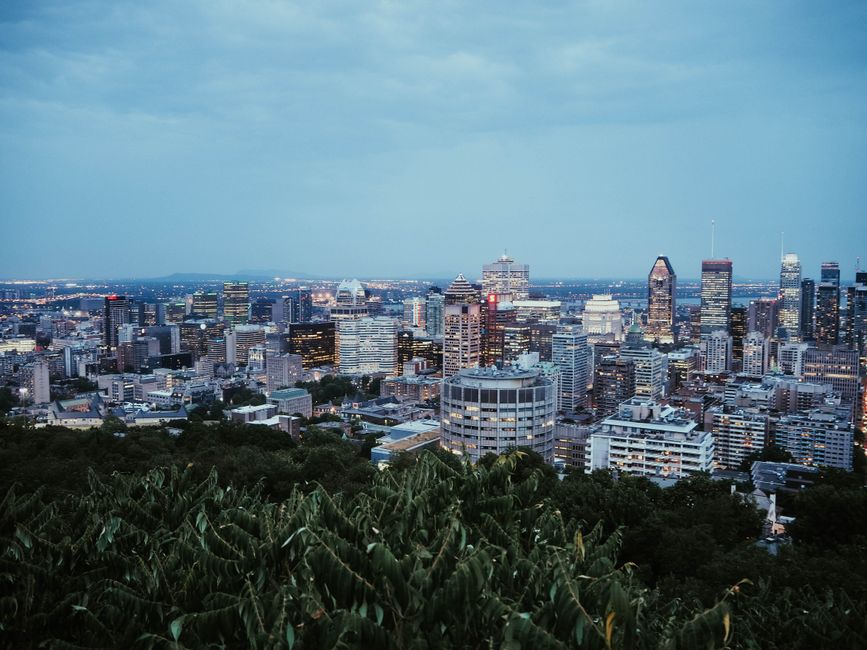
Montreal (Montréal) is Canada’s second-largest city and the biggest French-speaking city in North America, an island in the St. Lawrence River with a small wooded mountain at its centre. About 1.9 million people live in the city itself. Founded as Ville-Marie in 1642, it mixes cobbled seventeenth- and eighteenth-century streets in Old Montreal with a modern downtown, neighbourhoods of colourful outdoor staircases, bagel bakeries and bistros, and one of the busiest festival calendars on the continent, from the summer jazz festival to dance parties in the snow. It is easy to explore on foot, by metro and by bike, and it is a natural first stop before Quebec City, the Laurentians or Ottawa.
Right now in Montreal
- Wed7–16°C45–61°F6 mm rain
- Thu11–15°C52–60°F1 mm rain
- Fri9–13°C47–55°FMostly clear
- Mon 12 Oct Thanksgiving
Top tours in Montreal
See all tours for Montreal →
From local operators, with prices and reviews; you check availability and book on Viator, our partner. We may earn a commission at no extra cost to you. How we earn money
Montreal at a glance
- Best months: June to September for terraces, parks and festivals; late September and early October for autumn colour on Mount Royal; January and February if you want winter festivals and do not mind real cold.
- Time needed: three days for Old Montreal, Mount Royal, the Plateau and a market; four or five with the Botanical Garden, a festival or a day trip.
- Getting there: Montréal-Trudeau International Airport (YUL) is linked to downtown by the 747 express bus, $11.25 for a pass valid 24 hours on the whole bus and metro network. Prices on this page are in Canadian dollars.
- Costs (as of October 2026): one metro or bus trip in Montreal is $3.75 (about US$2.70); the Notre-Dame Basilica daytime visit is $16; most purchases add 14.975% sales tax, and hotels add a 3.5% lodging tax.
- Before you go: entry rules (eTA or visa), money, taxes and driving in Canada are in our Canada travel guide.
Montreal neighbourhoods and who each one suits
Old Montreal and the Old Port
Vieux-Montréal is where the city began: narrow stone streets, Place d’Armes and the Notre-Dame Basilica, Place Jacques-Cartier sloping down to the river, the domed Bonsecours Market and old warehouses turned into boutique hotels, galleries and restaurants. Along the water, the Old Port (Vieux-Port) has a promenade, a big wheel, summer boat tours and, in winter, an outdoor skating rink and the Igloofest site. It is the most atmospheric place to stay and the busiest with visitors in summer. Best for first-timers and couples.
Downtown and the Quartier des spectacles
Centre-ville is the business and shopping district around Sainte-Catherine Street, McGill University and the big department stores, linked in winter by an underground network of passages, malls and metro stations. To the east, the Quartier des spectacles around Place des Arts is the cultural heart of the city: concert halls, the Musée d’art contemporain and open squares where the main free outdoor festival stages go up each summer. Good for shoppers, concert-goers and anyone who wants the metro on the doorstep.
The Plateau and Mile End
The Plateau-Mont-Royal is the Montreal of postcards: rows of brick and greystone houses with twisting outdoor staircases, leafy streets, cafés, bookshops and the lively Saint-Denis Street and Saint-Laurent Boulevard (“the Main”). Next to it, Mile End is home to Montreal’s two famous bagel bakeries, small designer shops, music venues and a strong creative scene. Both sit just east of Mount Royal and suit food lovers, walkers and anyone who wants to feel like a local.
Little Italy, the Village and beyond
Little Italy (Petite-Italie), north of the Plateau, surrounds the Jean-Talon Market, with espresso bars and old-school grocers. The Village, east of downtown, is one of the largest LGBTQ+ neighbourhoods in North America. Further out, Hochelaga-Maisonneuve has the Olympic Park and the Botanical Garden, and Saint-Henri and Griffintown, southwest of downtown, line the Lachine Canal with restaurants and bike paths.
Top things to see in Montreal
Notre-Dame Basilica
Montreal’s great neo-Gothic church on Place d’Armes has a deep blue, gold-starred vault, carved wood everywhere and a huge Casavant organ. The daytime sightseeing visit runs Monday to Saturday from 9 a.m. to 4 p.m. and Sunday from 12:30 to 4 p.m. Daytime tickets (as of October 2026): adult $16, senior (65+) $15, student (17 to 22) $14, child (6 to 16) $10, children 5 and under free, with family tickets at $40 for two adults and two children; prices are plus tax. In the evening, AURA, a light-and-sound show by the Montreal studio Moment Factory, turns the whole interior into a canvas (adult tickets from $37). A combined day visit and AURA ticket starts at $43.50. Tickets are sold online and, during visiting hours, on site; purchases after 4 p.m. must be made online or by phone. Masses are held in French.
The basilica has been under restoration since 2020, a project expected to take well over a decade. After years behind scaffolding, its façade is being unveiled with a free public celebration on 25 October 2026, and during October 2026 holders of an STM transit pass get 15% off AURA tickets bought at the box office to mark the metro’s 60th anniversary.
Mount Royal (Mont Royal)
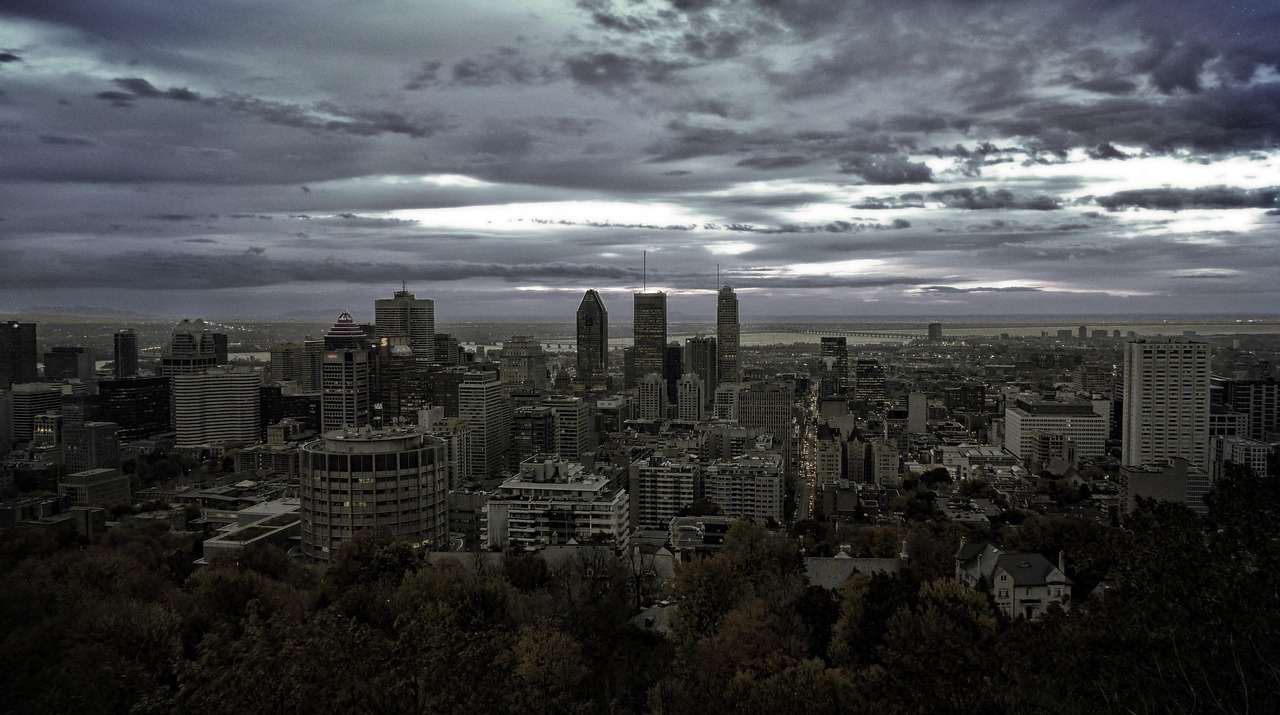
The low mountain that gives the city its name rises to about 233 m (764 ft) above sea level, and Mount Royal Park, designed by Frederick Law Olmsted, the landscape architect of New York’s Central Park, covers most of it. Walk up from downtown by the stairs off Peel Street, or follow the wide gravel Olmsted Road, to the Kondiaronk Belvedere in front of the Mount Royal Chalet for the classic view over the skyscrapers to the river. The illuminated cross on the summit, Beaver Lake (Lac aux Castors) and the old cemeteries on the northern slope are all within the park. On summer Sundays, drummers and dancers gather at the Tam-Tams by the George-Étienne Cartier monument on Park Avenue. In winter, the park has sledding, snowshoeing and cross-country ski trails, and in autumn its maples turn red and gold.
Jean-Talon Market
One of the largest public markets in North America opened in Little Italy in May 1933 and is still the place to taste Quebec produce: berries and corn in summer, apples, squash and maple products in autumn, plus butchers, bakers, cheese shops and food stalls. It is open year-round, Monday to Saturday from 8 a.m. to 6 p.m. and Sunday from 8 a.m. to 5 p.m. From late April the stalls spread outdoors; in October, as winter approaches, walls go up and the market moves indoors. From June to October, the aisles are closed to cars from 11 a.m. to 5 p.m., Thursday to Sunday. Take the metro to Jean-Talon or De Castelnau station.
Space for Life: Botanical Garden, Biodôme and Insectarium
Espace pour la vie (Space for Life) groups five city-run natural science museums, Canada’s largest complex of its kind. The Jardin botanique (Botanical Garden) has themed gardens, including the Chinese and Japanese gardens and the Indigenous Peoples Garden, and large greenhouses; the Biodôme, in the former Olympic velodrome, recreates five ecosystems of the Americas, from a tropical forest to the sub-Antarctic islands; the Insectarium and the Planétarium sit alongside, near the Olympic Park and the Pie-IX and Viau metro stations. The fifth museum, the Biosphère, is an environment museum in the Expo 67 geodesic dome on Île Sainte-Hélène.
| Space for Life, one museum (2026) | Regular price | Montreal-area resident |
|---|---|---|
| Adult | $25.50 | $18.50 |
| 65 and over | $23.00 | $17.50 |
| Student 18+ (with card) | $19.00 | $14.75 |
| Ages 5 to 17 | $13.50 | $9.25 |
| Family (up to 2 adults and 3 children) | $68.00 | $51.50 |
Prices include taxes, and young children go free. Hours change week by week: in early October 2026 the Botanical Garden stayed open until 9 p.m. every day, while the Biodôme, Insectarium and Biosphère were open 9 a.m. to 5 p.m. and closed on Mondays. Check the weekly schedule and buy timed tickets online, as popular slots sell out. The Montréal Museums Card, which covers some 50 museums including these, is worth a look if you plan several museum visits in three days.
Old Montreal’s squares, museums and the river
Beyond the basilica, Old Montreal rewards slow wandering: Place Jacques-Cartier with its street performers, the city hall where Charles de Gaulle made his famous 1967 speech, the Château Ramezay, and Pointe-à-Callière, the archaeology and history museum built over the city’s founding site. The Bonsecours Market’s silver dome is a landmark from the river. From the Old Port’s piers, boat cruises and jet-boat rides run in summer, and the Clock Tower at the end of the promenade looks out to the islands of Parc Jean-Drapeau, home of the Biosphère, a beach and the Formula 1 circuit.
Saint Joseph’s Oratory and the Olympic Park
On the northwest slope of Mount Royal, Saint Joseph’s Oratory is a vast domed basilica and pilgrimage site, reached by long flights of steps, with wide views over the west of the island. In the east end, the Olympic Stadium built for the 1976 Games has a leaning tower and sits beside the Biodôme, so the two are easy to combine with the Botanical Garden in one day.
Peaks and mountains
- Mount Royal
Historic centres
- Old Montreal
Churches and cathedrals
- Notre-Dame Basilica
- Saint Joseph's Oratory
Other sights
- Jean-Talon Market
Parks and gardens
- Montreal Botanical Garden
Zoos and aquariums
- Montreal Biodome
Activities and best months
- City sightseeingSpace for Life is Canada's largest natural-science museum complex, five museums including the Biodôme and the Botanical Garden (adult $25.50 per museum, taxes included); the Montréal Museums Card covers about 50 museums over 3 days.
Festivals and other things to do in Montreal
Montreal is famous for its festivals, many of them with free outdoor stages in the Quartier des spectacles. Dates published by the organizers so far:
- Igloofest: an outdoor electronic music festival in the snow at the Old Port, on weekends from mid-January to early February 2027.
- Montréal en Lumière: a winter festival of food, shows and an outdoor site, 18 to 28 February 2027, with its all-night Nuit blanche.
- Festival International de Jazz de Montréal: 25 June to 4 July 2027, with indoor concerts and many free outdoor shows.
- Just for Laughs (Juste pour rire): the big comedy festival is usually held in July; 2027 dates had not been published when we checked.
- Food: try Montreal-style bagels (boiled in honey water, baked in wood-fired ovens), smoked meat sandwiches, poutine, and maple treats; in spring, a sugar shack (cabane à sucre) meal outside the city is a Quebec tradition.
- Cycling: Montreal has a large network of bike lanes and paths, including the Lachine Canal path and routes along the river; BIXI bike-share makes short rides easy (see below and our cycling guide).
- Walking and street art: Saint-Laurent Boulevard and the Plateau have huge murals, many painted during the summer Mural festival; our city sightseeing guide has tips for city breaks.
- Ice hockey: watching the Canadiens play at the Bell Centre downtown is a Montreal rite between October and April; book well ahead.
- Winter fun: skate at the Old Port or Beaver Lake, go sledding on Mount Royal, and use the underground city when it is very cold.
Day trips from Montreal
Quebec City
The walled capital of Quebec is about 250 km (155 miles) northeast, about three hours by car or by VIA Rail train. It is possible as a long day trip, but Old Québec, the Château Frontenac and Montmorency Falls are far better with a night or two; see our Quebec City travel guide.
The Laurentians and Mont-Tremblant
North of the city, the Laurentian mountains (Laurentides) are Montreal’s playground of lakes, ski hills and villages. Mont-Tremblant, about 130 km (80 miles) away, has a pedestrian resort village, a gondola and Quebec’s oldest national park, and is lovely in late September and early October for the autumn colours; see our Mont-Tremblant travel guide. Closer in, the P’tit Train du Nord trail starts at Saint-Jérôme, reachable by commuter train.
Eastern Townships and Ottawa
The Eastern Townships (Cantons-de-l’Est), about an hour and a half southeast, have rolling farmland, vineyards, lakes such as Memphrémagog and the ski hill at Mont Orford. Ottawa, Canada’s capital, is about two hours west by car or train, with Parliament Hill, the national museums and, in winter, skating on the Rideau Canal.
Into the United States
The US border is only about an hour south. Amtrak’s Adirondack train runs daily between Montreal’s Central Station and New York City along Lake Champlain and the Hudson River, a full day’s scenic ride (see our New York City travel guide), and Boston is about five hours by car (see our Boston travel guide). Carry your passport and check the entry rules for both countries.
Nearby destinations
- Mont-Tremblant104 km
- Ottawa165 km
- Quebec City233 km
Getting there and getting around
From Montréal-Trudeau Airport (YUL)
Montréal-Trudeau, in Dorval about 20 km (12 miles) west of downtown, has flights across Canada and to the US, Europe, Africa and Latin America. The cheapest way into town is the STM’s 747 express bus (747 YUL Aéroport Montréal-Trudeau/Centre-ville), which runs around the clock to downtown stops along René-Lévesque Boulevard and the Berri-UQAM metro station. The airport fare is $11.25, paid in coins on board or bought in the Chrono app, and it works as a transfer for 24 hours on all STM buses and the metro. A 24-hour ($11.25), 3-day ($21.75) or weekly zone A pass is also valid on the 747, so if you are staying a few days, a 3-day pass is usually the best deal. The bus takes roughly 45 minutes to an hour, longer at rush hour. Taxis and ride-shares are also available outside arrivals.
REM to the airport: the new REM automated light metro will eventually serve the airport, but the airport branch was still in testing in autumn 2026, and the operator says the YUL-Aéroport-Montréal-Trudeau station is planned to open by the end of 2027. Until then, use the 747.
Metro, buses and the REM
The STM metro has four colour-coded lines, with rubber-tired trains that are quick and frequent, and buses fill the gaps. The REM light metro links Gare Centrale (Central Station) downtown with Brossard on the South Shore, Deux-Montagnes and the West Island, and costs the same as the metro. Fares, set by the regional transit authority (ARTM) since 1 July 2026, depend on fare zones; almost everything a visitor needs, including the airport, is in zone A (the island of Montreal):
| All Modes A fare | Regular price | Notes |
|---|---|---|
| 1 trip | $3.75 | Metro, bus, REM and train in zone A |
| 2 trips | $7.00 | On an OPUS or occasional card |
| 24 hours | $11.25 | Also valid on the 747 airport bus |
| 3 days | $21.75 | Consecutive days, until 11:59 p.m. on day 3; valid on the 747 |
| Weekly (Monday–Sunday) | $33.25 | Valid on the 747 |
| Unlimited Evening | $6.75 | 6 p.m. to 5 a.m., all zones |
| Unlimited Weekend | $17.00 | Friday 4 p.m. to Monday 5 a.m., all zones; valid on the 747 |
| Children 11 and under | Free | With a fare-paying person aged 14+ (up to five children aged 6–11) |
Buy fares from machines and ticket booths in metro stations, load them onto a rechargeable OPUS card or a disposable occasional card, or buy them on your phone in the Chrono app. Trips to Laval or Longueuil need zone AB fares ($5 a trip). The metro usually runs from about 5:30 a.m. to after midnight, later on Saturday nights.
BIXI bikes, walking and driving
BIXI, Montreal’s bike-share, has hundreds of stations in the central districts. Without a membership, a one-way pass costs a $1.60 unlocking fee plus 21¢ a minute on a regular bike or 36¢ a minute on an electric one, with a $100 deposit per bike; a 30-day membership is $24 with unlimited 45-minute rides on regular bikes. Prices are before tax; use the BIXI app. BIXI runs mainly in the warmer months, so do not count on it in winter. Central Montreal is very walkable, and the underground city links many downtown buildings. You do not need a car in the city; parking is expensive and the streets are full of orange construction cones in summer. In Quebec, turning right on a red light is not allowed anywhere on the island of Montreal.
Trains and buses to other cities
VIA Rail trains leave from Montréal Central Station (Gare Centrale, 895 de la Gauchetière Street West), under the Queen Elizabeth hotel and connected to the metro and REM. The Quebec City–Windsor corridor trains reach Quebec City in about three to three and a half hours, Ottawa in about two hours and Toronto in about five hours; book early for the lowest fares. Amtrak tickets to New York are sold at the station from 7 a.m. to 5 p.m. daily, by credit card and with a valid passport. Intercity buses to Quebec City, the Laurentians and Ottawa leave from the Gare d’autocars de Montréal by Berri-UQAM metro.
When to go and how long to stay
Montreal has four sharp seasons. Summers are warm and often humid, with long evenings and thunderstorms; this is festival season and the city lives outdoors. Autumn is crisp and colourful, with the best foliage from late September to mid-October. Winters are long, cold and snowy, but the city is built for them, with the underground city, skating rinks and winter festivals. Spring arrives late: snow can linger into April, and the city then bursts into life in May.
| Season | Average high | Average low | What it’s like |
|---|---|---|---|
| Spring (Mar–May) | 3–19 °C (37–66 °F) | −7 to 8 °C (20–46 °F) | Snowmelt in March and April; mild and fresh by May. |
| Summer (Jun–Aug) | 24–26 °C (75–79 °F) | 13–16 °C (56–61 °F) | Warm, often humid; thunderstorms; festival season. |
| Autumn (Sep–Nov) | 21 to 6 °C (69–43 °F) | 10 to −2 °C (50–29 °F) | Sunny, crisp days; autumn colour; first snow in November. |
| Winter (Dec–Feb) | −1 to −5 °C (29–22 °F) | −9 to −14 °C (15–7 °F) | Cold and snowy; cold snaps well below −20 °C (−4 °F) with wind chill. |
Figures are Environment and Climate Change Canada’s 1981–2010 climate normals for Montréal/Pierre Elliott Trudeau International Airport. The airport gets about 1,000 mm (39 in) of precipitation a year, spread fairly evenly through the months, including about 210 cm (83 in) of snow, most of it from December to March.
How long to stay: 2, 3 and 4 days
- Two days: Old Montreal, the Notre-Dame Basilica and the Old Port; then Mount Royal’s lookout, the Plateau and a bagel in Mile End.
- Three days: add the Jean-Talon Market and Little Italy, plus the Botanical Garden and Biodôme, or AURA in the evening.
- Four days: add Saint Joseph’s Oratory, a bike ride along the Lachine Canal, a festival or a hockey game, or a day in the Laurentians or Eastern Townships.
Where to stay in Montreal and the hotel taxes
- Old Montreal: characterful boutique hotels in stone buildings; romantic, but busy in summer and a little quiet in winter evenings.
- Downtown and the Quartier des spectacles: large hotels on the metro and close to festival stages, shops and the underground city.
- The Plateau and Mile End: small hotels, B&Bs and rentals in residential streets full of cafés and restaurants.
- Near the airport: handy for early flights, but far from the sights.
Taxes: in Quebec, prices in shops, restaurants and hotels are usually shown before tax. At the till, 5% GST and 9.975% QST are added to most purchases, a total of 14.975%. Hotels and other tourist accommodation in the Montreal tourism region also charge Quebec’s tax on lodging of 3.5% of the nightly price, collected by the hotel or the booking platform. Hotels often add parking fees downtown, so compare the full price before you book. Book early for Formula 1 weekend in June and for the jazz festival.
Practical tips for Montreal
- Language: French is the official language of Quebec and the language of the street, but most people in central Montreal switch easily to English. Start with “Bonjour” (or the local “Bonjour-hi”), and say “merci”; signs are in French, so “sortie” means exit and “arrêt” stop.
- Time zone: Eastern Time (the same as New York and Toronto), with daylight saving time from March to November.
- Tipping and taxes: tip about 15–20% in restaurants and bars, calculated before tax; card machines suggest amounts. Remember that 14.975% sales tax is added to most prices.
- Winter: sidewalks can be icy, and snow-clearing operations tow parked cars overnight when orange signs appear; take the cold seriously in January and February and cover your face and hands in the wind.
- Safety: Montreal is generally safe; use normal city sense with bags in crowded festival areas and on the metro, and keep valuables out of sight in cars.
- Emergencies: call 911.
What to pack for Montreal
In summer, bring light clothes, a light rain jacket or umbrella for thunderstorms, sunscreen and comfortable walking shoes for cobblestones and the climb up Mount Royal. In spring and autumn, pack layers, a warm sweater and a waterproof jacket. For winter, you need a properly warm coat, a hat that covers your ears, a scarf or neck warmer, insulated gloves, thermal layers and waterproof boots with good grip for icy sidewalks; a reusable water bottle and a small backpack are useful year-round.
What to pack
- City walking shoesLisbon and Porto are steep, with polished limestone cobbles that get slippery, so grippy soles matter.
- Day packs and anti-theft bagsA small zipped or anti-theft bag makes crowded trams and viewpoints less stressful.
- Rain jacketsFrom October to April Porto and Lisbon see rain on roughly a third of days.
- Travel adapters and convertersPortugal uses Type C and F sockets at 230 V, so most visitors from outside Europe need an adapter.
Montreal travel FAQ
How do I get from Montreal airport to downtown?
Take the STM 747 express bus, which runs around the clock to downtown and Berri-UQAM metro. It costs $11.25 in coins or in the Chrono app, valid as a transfer for 24 hours; a 3-day pass for $21.75 also covers it. A taxi or ride-share is the other option.
Does the REM go to Montreal airport yet?
Not yet. The airport branch was being tested in 2026, and the REM’s operator says the airport station is planned to open by the end of 2027. Use the 747 bus until then.
How much is a metro ticket in Montreal?
One trip in zone A is $3.75, two trips $7.00, a 24-hour pass $11.25 and a 3-day pass $21.75 (fares since 1 July 2026). Children 11 and under travel free with a fare-paying person aged 14 or over.
How much does it cost to visit the Notre-Dame Basilica?
The daytime visit is $16 for adults, $15 for seniors, $14 for students and $10 for children 6 to 16, plus tax; under-6s are free. The evening AURA show starts at $37 for adults.
Do I need to speak French in Montreal?
No. French is the main language, but most people working in central Montreal speak English too. A friendly “bonjour” and “merci” are appreciated, and signs and menus are in French first.
What taxes are added to prices in Montreal?
Most prices are shown before tax; 5% GST plus 9.975% QST (14.975% in total) is added at the till. Hotels also charge Quebec’s 3.5% tax on lodging.
When is the Montreal Jazz Festival in 2027?
The Festival International de Jazz de Montréal runs from 25 June to 4 July 2027, with ticketed indoor concerts and free outdoor shows in the Quartier des spectacles.
How long is the train from Montreal to Quebec City?
VIA Rail trains from Montreal’s Central Station take about three to three and a half hours to Quebec City; driving takes about three hours.
When is the best time to visit Montreal?
June to September for festivals and outdoor life, and late September to mid-October for autumn colour. Come in January or February for Igloofest and Montréal en Lumière if you are ready for the cold.
Plan your trip
Partner links: TravelerCenter may earn a commission if you book, at no extra cost to you.
Sources · last reviewed 4 October 2026
Researched and last reviewed on 4 October 2026. Transit fares, fare zones and the 747 airport fare come from the Autorité régionale de transport métropolitain (ARTM) fare schedule in effect since 1 July 2026 and the REM’s fare page; the REM airport branch status from the REM’s own news; basilica hours and prices from the Notre-Dame Basilica of Montréal; Space for Life prices and hours from Espace pour la vie (Ville de Montréal); market hours from the Marchés publics de Montréal; BIXI prices from BIXI Montréal; festival dates from Igloofest, Montréal en Lumière and the Festival International de Jazz de Montréal; station details from VIA Rail; the tax on lodging from Revenu Québec; sales tax rates from the Canada Revenue Agency; climate from Environment and Climate Change Canada’s 1981–2010 climate normals for Montréal/Pierre Elliott Trudeau International Airport; population from Wikidata. The 747’s journey time, train and driving times, Just for Laughs timing, metro hours and some neighbourhood details are general references and flagged for checking. Prices and timetables change, so check the official sites before you go. For entry rules, money and general safety, see our Canada travel guide.
Also: espacepourlavie.ca
Data: Weather: MET Norway (CC BY 4.0) · Air quality: OpenAQ · Rates: ECB · Holidays: Nager.Date · Costs: World Bank ICP and price levels · © OpenStreetMap contributors (ODBL) · Wikidata (CC0)