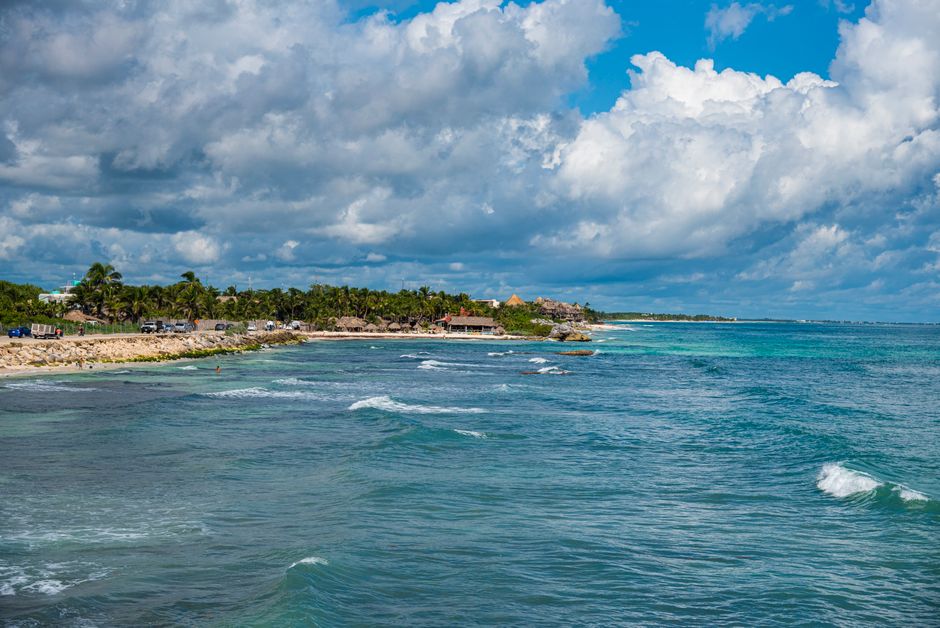
Tulum is the Riviera Maya’s most famous name: a walled Maya port on a limestone cliff above the Caribbean, surrounded by white beaches, jungle and some of the most beautiful cenotes in Mexico, about 130 km (80 miles) south of Cancún. Today it has three parts: the archaeological site, now inside the Jaguar National Park; the town (pueblo) along Highway 307; and the beach road of boutique hotels and beach clubs. It is the base for the ruins of Cobá and Muyil, the Sian Ka’an biosphere reserve and cave diving in the cenotes, and it has its own international airport and Tren Maya station. The best time is December to April, when it is sunny and drier; sargassum seaweed can affect the beaches from about spring to early fall, and June to November is hurricane season.
Right now in Tulum
- Tue 25–31°C 78–88°F 6 mm Rain
- Wed 25–31°C 77–88°F 5 mm Showers
- Thu 25–29°C 78–85°F 7 mm Rain
Weather: MET Norway (CC BY 4.0) · Sea temperature: NOAA CoastWatch · Rates: ECB
Top tours in Tulum
See all tours for Tulum →
From local operators, with prices and reviews; you check availability and book on Viator, our partner. We may earn a commission at no extra cost to you. How we earn money
Tulum at a glance
- Best for: Maya ruins by the sea, cenote swimming and diving, beach clubs and boutique hotels, cycling, yoga and wellness retreats, and nature in Sian Ka’an.
- How long: 3 days for the ruins, a cenote and the beach; 5–7 days to add Cobá, Sian Ka’an and Bacalar or Akumal.
- Best time: December to April, with highs of 29–31 °C (84–87 °F) and few rainy days. September and October are the wettest months and the peak of hurricane season.
- Getting there: Tulum International Airport (TQO), south of town; Cancún airport (CUN) about 2 hours 45 minutes to 3 hours by ADO bus; or the Tren Maya.
- Getting around: bicycles and taxis in town and on the beach road, colectivo vans along Highway 307, a rental car for cenotes and day trips.
- Before you go: pay the Quintana Roo VISITAX (MXN 293 per foreign visitor as of October 2026); entry rules, money and general safety are in our Mexico travel guide.
Tulum’s areas: where things are
Tulum is spread out. The ruins and the Jaguar National Park sit at the northern end of the coast; the town lies about 3 km (2 miles) inland along Highway 307; and the beach road (the hotel zone) runs south along the sea from the park toward the Sian Ka’an reserve. Taxis or bikes link them in 10–20 minutes.
Tulum town (Tulum Pueblo)
The town grew along the highway and its main avenue, Avenida Tulum, with the ADO bus station, banks, taquerías, markets and most of the budget and mid-range hotels and hostels. It is the most affordable and practical base, a short bike ride from the beach.
The beach road (hotel zone)
A single narrow road, lined with eco-chic cabañas, boutique hotels, restaurants and beach clubs under the palms, leads south along the shore toward Sian Ka’an. It is beautiful but pricey, the road can be congested in high season, and many places rely on generators and limited water, so check what you are booking.
Aldea Zamá, La Veleta and Region 15
These newer residential neighborhoods between the town and the beach are full of apartment rentals, condos and small hotels, popular for longer stays. They are quieter than the center, but you will need a bike or taxi to get anywhere.
North of Tulum: Akumal and Xpu-Há
Twenty to thirty minutes north on Highway 307, the bays of Akumal and Xpu-Há have calm water, sea turtles and family resorts; see our Riviera Maya guide for the coast as a whole.
Top things to see in Tulum
Prices and hours below were checked on the official sites in October 2026, unless we say otherwise; check again before you go. Buy tickets only at the official INAH, CONANP and park booths.
The Tulum archaeological zone
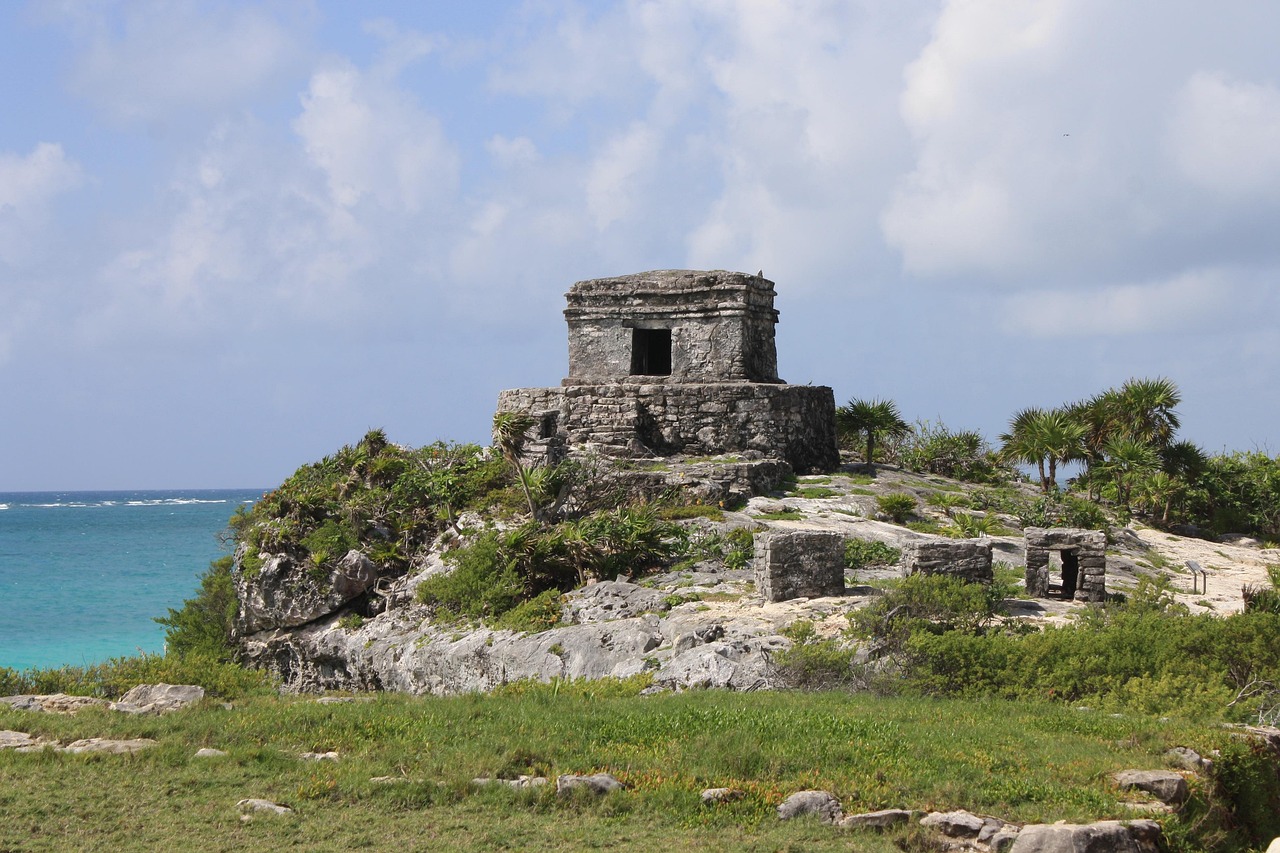
Tulum was a walled Maya trading port that was still occupied when the Spanish arrived in the early 16th century. Its best-known building, El Castillo, stands on the cliff edge above a small cove, and the Temple of the Frescoes keeps traces of its painted murals. According to INAH, it is the third most visited archaeological site in Mexico, after Chichén Itzá and Teotihuacan, so arrive at opening. The site opens from 8 a.m. to 5 p.m., with last entry at 3:30 p.m. Since July 20, 2026, under a federal decree, foreign visitors pay a single combined ticket of MXN 165 for the archaeological zone and the Tulum National Park, on top of the Jaguar National Park entry below: MXN 265 (about US$15) in all, according to INAH. Mexicans pay MXN 80 from Monday to Saturday, and residents of the municipality enter free. You cannot climb the structures, and the small beach below the ruins may be closed for turtle nesting or rough seas.
Jaguar National Park (Parque del Jaguar)
The ruins, the regional museum of the east coast (Museo Regional de la Costa Oriental) and a long stretch of coast are now inside the Jaguar National Park, run by a company of the defense ministry, with paths, cycle lanes, viewpoints and electric shuttles. As of October 2026, entry costs MXN 100 (about US$5.50) for foreign visitors and is free for Mexicans; the electric shuttle inside the park costs MXN 20, and the federal government says the park’s beaches are free for everyone. According to an INAH bulletin from 2025, the park opens from 8 a.m. to 7 p.m., with last entry at 5 p.m., and the museum from 9 a.m. to 5 p.m. Bring cash and a card, water and sun protection: there is little shade.
Cenotes around Tulum
The land around Tulum sits on top of some of the longest underwater cave systems in the world, and their openings, the cenotes, are among the region’s highlights. Gran Cenote, on the road to Cobá, has clear water, turtles and caverns for snorkeling; Dos Ojos and the cenotes of the Sac Actun system to the north are famous with cave divers; Calavera, Zacil-Ha and Carwash are smaller and closer to town. Most are run by ejidos (community landholders), families or private parks, which set their own fees and hours, so carry pesos in cash. Rules are similar everywhere: shower before you swim, no sunscreen or repellent in the water, a life jacket if you are not a strong swimmer, and only dive in caves with a certified cave-diving guide.
Tulum’s beaches
The beaches inside the Jaguar National Park, such as Playa Paraíso and Playa Pescadores, have white sand and turquoise water below the palms; further south, the beach road has long stretches in front of hotels and beach clubs, where access may be through a restaurant or club. All beaches in Mexico are federal property and legally public, but in practice you reach many through private land. Sargassum can pile up in some seasons; see below.
More to see
- Museo Regional de la Costa Oriental (Mureco): INAH’s museum of the Caribbean coast’s Maya history, inside the Jaguar National Park.
- Tulum’s town square and market: evening food stalls, crafts and local life away from the beach road.
- Punta Allen road: a rough, unpaved road south through Sian Ka’an to the fishing village of Punta Allen, best on a tour.
Archaeological sites
- Cobá
- Muyil
- Tulum Archaeological Zone
Caves
- Gran Cenote (Sac Actun System)
- Sistema Ox Bel Ha
Activities and best months
- Beaches and swimmingThe federal Plan Tulum Renace keeps the beaches in Parque del Jaguar free of charge, with electric transport inside the park for MXN 20. · source
- CultureUnder the decree of 17 July 2026 the Tulum archaeological zone and Parque Nacional Tulum cost MXN 165 combined for foreigners (Parque del Jaguar MXN 100); INAH lists Cobá, inland, as open daily 8:00-17:00 (MXN 210). · source
Other things to do in Tulum
Diving and snorkeling
Tulum is one of the world’s centers for cavern and cave diving: open-water divers can do guided cavern dives in daylight zones, while cave dives require special training. Snorkelers have the cenotes and the reefs off the coast, which are part of the Mesoamerican Reef. Choose operators that follow CONANP’s rules, wear a vest and never touch coral or stand on it.
Cycling, wellness and food
Tulum is flat and good for cycling, with bike lanes along the highway, into the Jaguar National Park and toward the beach; rent a bike in town and lock it up. Yoga studios, temazcal (traditional Maya sweat lodge) ceremonies and spas are part of the scene. In town, eat cochinita pibil tacos, fish tacos and Yucatecan dishes at local places; the beach road has more expensive international restaurants.
Day trips from Tulum
- Cobá: a large Maya city in the jungle, about 45 km (28 miles) north-west, with tall pyramids, long ancient causeways (sacbés) and bicycles or tricycle taxis to get between the groups of buildings. According to INAH, it opens daily from 8 a.m. to 5 p.m. and entry costs MXN 210 (about US$12) for foreign visitors (MXN 105 for Mexicans and residents). Nearby cenotes make it a full day.
- Sian Ka’an Biosphere Reserve: a UNESCO World Heritage Site of lagoons, mangroves, reef and jungle just south of Tulum, with boat trips to see dolphins, turtles and birds and to float down ancient Maya canals. CONANP charges MXN 225 per person per day, usually collected by tour operators.
- Muyil: a smaller Maya site at the edge of Sian Ka’an, about 25 km (16 miles) south, open daily 8 a.m. to 5 p.m., MXN 145 for foreign visitors, according to INAH.
- Akumal: a bay north of Tulum where green sea turtles feed on seagrass; snorkel only in the marked areas, with a life jacket and preferably with a local guide, and never touch or chase the turtles.
- Bacalar: the “lagoon of seven colors”, about 2.5 hours south by car or on the Tren Maya, for kayaking and stand-up paddleboarding on fresh water.
- Playa del Carmen and Valladolid: see our Playa del Carmen guide for the busier resort town an hour north, and our Mérida guide for Valladolid, Chichén Itzá and the Yucatán’s colonial cities.
Nearby destinations
- Cozumel Island61 km
- Playa del Carmen62 km
- Riviera Maya62 km
- Cancun125 km
- Isla Mujeres138 km
- Holbox146 km
- Bacalar196 km
- Mérida240 km
Getting there and getting around
By air
Tulum International Airport (TQO), officially the Felipe Carrillo Puerto airport, opened in December 2023 south-west of town and is run by a company of the defense ministry, with flights from Mexico City and several cities in the United States and Canada; check which airlines currently fly your route, as schedules have changed often. Many more flights use Cancún International (CUN), about 2 hours 45 minutes to 3 hours by road. From Cancún airport, ADO’s buses run to Tulum’s ADO station in town for about MXN 475 (about US$26) one way, according to ADO, and private shuttles go door to door.
The Tren Maya
Tulum has two Tren Maya stations: Tulum, north-west of town, and Tulum Aeropuerto, at the new airport. According to the official timetable checked in October 2026, trains between Cancún airport and Chetumal stop at Tulum (two each way daily, via Bacalar), and one train a day from Mérida continues past Cancún to the Tulum airport, with a return in the afternoon. Foreign visitors pay the international fare, which varies with the date; book on the official site (reservas.ventaboletostrenmaya.com.mx), the Tren Maya app or at stations, and carry your passport. Check how you will get from the station to your hotel, as the stations are outside the center.
Getting around Tulum
Bicycles are the local way to get around, between the town, the park and the beach road. Taxis are plentiful but expensive by Mexican standards; agree on the fare before you get in. White colectivo vans run up and down Highway 307 between Tulum, Akumal and Playa del Carmen and stop on request for a few dozen pesos. A rental car is the easiest way to see the cenotes, Cobá and Bacalar; park only in legal spots, as fines and tow trucks are common on the beach road.
When to go and how long to stay
Tulum is warm all year. The table uses the National Meteorological Service’s (SMN-Conagua) 1991–2020 climate normals for the Tulum weather station: average daily highs and lows, and days with rain.
| Season | Average high / low | Rainy days per month | What it’s like | Good for |
|---|---|---|---|---|
| Winter (Dec–Feb) | 29–30 °C (84–85 °F) / 18–19 °C (65–66 °F) | 4–7 | Warm and sunny, with breezy days when northerly fronts pass | Ruins, cenotes, beaches; peak prices around the holidays |
| Spring (Mar–May) | 30–31 °C (87–89 °F) / 21–22 °C (69–71 °F) | 4–6 | Dry and sunny, hotter by May | Beaches and diving; sargassum may start to arrive |
| Summer (Jun–Aug) | 31–32 °C (88–89 °F) / 22–23 °C (72–73 °F) | 8–9 | Hot and humid, with short storms; turtle nesting season | Cenotes, Sian Ka’an, whale sharks from Isla Mujeres |
| Fall (Sep–Nov) | 31 °C falling to 30 °C (88 to 86 °F) / 22 °C falling to 20 °C (72 to 67 °F) | 11 in September, 8 in November | Wettest months and peak hurricane season, then calmer | Low prices, quiet beaches; watch the forecast |
The Tulum station records about 1,120 mm (44 in) of rain a year; October is the wettest month, with about 204 mm (8 in).
Hurricane season: according to NOAA’s National Hurricane Center, the Atlantic hurricane season runs from June 1 to November 30, peaking from mid-August to mid-October. If a storm threatens, follow the instructions of Quintana Roo’s civil protection authorities and your hotel, and check Mexico’s National Meteorological Service (SMN) and the National Hurricane Center; travel insurance that covers weather is wise.
Sargassum: this floating seaweed can cover Tulum’s beaches in some weeks, usually from about April or May to September; 2026 has been a heavy year. The Mexican Navy (SEMAR) publishes a daily bulletin with a forecast for Tulum’s beaches and a traffic-light level, and Quintana Roo’s state monitoring network maps conditions. When the beaches are affected, the cenotes, Sian Ka’an and Bacalar are good alternatives.
3 days in Tulum
Day one, the ruins at 8 a.m., then the Jaguar National Park’s beaches and the museum. Day two, Gran Cenote and Cobá, back for sunset in town. Day three, a boat trip in Sian Ka’an or an easy day on the beach road.
5 to 7 days in Tulum
Add a cavern dive or snorkel in the Dos Ojos area, the turtles of Akumal, Muyil, and a night or two in Bacalar by car or Tren Maya. With a week, head inland to Valladolid and Chichén Itzá.
Where to stay in Tulum and the hotel taxes
- Tulum town: hostels, guesthouses and mid-range hotels; best value and close to buses and restaurants.
- The beach road: boutique hotels and cabañas on the sand; the most expensive, and bookings often exclude taxes.
- Aldea Zamá and La Veleta: apartments and small hotels between town and the beach, good for longer stays.
- Akumal and Xpu-Há: family resorts and villas on calmer bays to the north.
Rooms carry 16% federal IVA plus Quintana Roo’s lodging tax of 5% (6% when booked through a platform such as Airbnb), according to the state’s lodging tax law. Tulum’s municipality also charges an environmental sanitation fee per room per night, collected by the hotel, which depends on the number of guests aged 12 and over: as of 2026, MXN 35.19 for one guest, MXN 58.66 for two, MXN 76.25 for three and MXN 87.98 for four or more. Every foreign visitor must also pay the state’s VISITAX of MXN 293 before leaving Quintana Roo. Beach-road prices are often quoted in US dollars and before tax; compare totals.
Practical tips for Tulum
- Cash: cenotes, colectivos, taxis and small restaurants often take pesos only; ATMs are in town, so withdraw there in daylight.
- Go early: the ruins and the most famous cenotes are calm before 10 a.m. and crowded after.
- Protect the water: use biodegradable sunscreen on the beach only, and none in cenotes.
- Tipping: 10–15% in restaurants; check whether a service charge is already on the bill at beach clubs.
- Safety: the main tourist areas are busy and patrolled. Use official taxis or ones your hotel calls, don’t buy drugs (the drug trade is behind most crime here), keep valuables out of sight on the beach and bike, and swim only where it is calm, as some beaches have currents and no lifeguards.
- Emergencies: call 911.
What to pack for Tulum
Bring light beachwear, a hat, sunglasses and biodegradable, reef-friendly sunscreen, plus a rash guard for snorkeling, your own mask if you like a good fit, and water shoes for rocky entries into cenotes and the sea. Insect repellent is essential at dusk and in the jungle; a light long-sleeved layer helps too. Pack a small dry bag, a refillable water bottle, a headlamp for patchy lighting on the beach road, and a light rain jacket from June to November. Plugs are the US type.
What to pack
- Day packs and anti-theft bagsCarries water, towel and sunscreen down the long stairways to Algarve coves.
- Dry bags and phone pouchesProtects phones and cameras from sand and spray on beaches reached by ferry or steep paths.
- Quick-dry beach towelsA sand-shedding quick-dry towel packs small for beach days and lido visits.
- Reef-friendly sunscreenSummer UV is strong on Portuguese beaches and there is little shade below the cliffs.
- Water shoesRocky coves, lava pools and weever fish in shallow sand make water shoes useful.
- WetsuitsOn the west and north coasts the sea stays around 16–18 °C even in summer, so a thin suit helps for long swims.
Tulum travel FAQ
How much does it cost to visit the Tulum ruins?
As of October 2026, foreign visitors pay MXN 265 (about US$15) in all: MXN 100 for the Jaguar National Park plus MXN 165 for the archaeological zone and Tulum National Park. Mexicans pay MXN 80.
What time do the Tulum ruins open?
From 8 a.m. to 5 p.m., with last entry at 3:30 p.m., according to INAH. Arrive at opening to avoid the heat and the tour groups.
Are Tulum’s beaches free?
Yes. Mexican beaches are public, and the government says the beaches inside the Jaguar National Park are free; you pay only the park entry. On the beach road, access is often through hotels or clubs.
How do I get from Cancún airport to Tulum?
ADO buses run from Cancún airport to Tulum in about 2 hours 45 minutes to 3 hours, for about MXN 475. Private shuttles, rental cars and some Tren Maya connections are the alternatives.
Does Tulum have an airport?
Yes. Tulum International Airport (TQO) opened in December 2023 south-west of town, with flights from Mexico City and some US and Canadian cities, and its own Tren Maya station.
Can you take the Tren Maya to Tulum?
Yes. Trains between Cancún airport and Chetumal stop at Tulum, and one daily train from Mérida runs to the Tulum airport station. Foreigners pay the international fare; book on the official site or app.
How much is Cobá?
MXN 210 (about US$12) for foreign visitors, according to INAH, open daily from 8 a.m. to 5 p.m. It is about 45 km (28 miles) north-west of Tulum.
When is sargassum season in Tulum?
Usually from about April or May to September, but it varies a lot by year and week. Check the Navy’s (SEMAR) daily sargassum bulletin, which includes Tulum.
What taxes are added to Tulum hotel bills?
16% IVA, Quintana Roo’s 5% lodging tax (6% via platforms) and Tulum’s sanitation fee of MXN 35.19–87.98 per room per night, depending on the number of guests. VISITAX is paid separately online.
How much is the Sian Ka’an entrance fee?
CONANP charges MXN 225 per person per day as of October 2026; tour operators usually include it in the price.
Sources
- © OpenStreetMap contributors · ODbL · fetched 4 Oct 2026
- Wikidata · CC0 · fetched 4 Oct 2026
Sources and last review
Researched and last reviewed on 4 October 2026. Archaeological zone hours, the combined fee and Cobá and Muyil: the National Institute of Anthropology and History (INAH); Jaguar National Park fees: the federal decree published in the Diario Oficial de la Federación on July 17, 2026, the Presidency and the tourism ministry; park hours: an INAH bulletin from 2025; Sian Ka’an and Tulum National Park fees: CONANP; Tren Maya: the operator’s timetable and booking site; ADO fares: ADO; lodging tax, the sanitation fee and VISITAX: Quintana Roo’s state laws, Tulum’s municipal tax law and visitax.gob.mx; sargassum: the Mexican Navy (SEMAR); hurricane season: NOAA’s National Hurricane Center; climate: SMN-Conagua 1991–2020 normals for Tulum. Airline routes at the Tulum airport, cenote details, distances and the typical sargassum season come from secondary sources or general knowledge and are flagged for checking. Prices and timetables change, so check the official sites before you go. For entry rules, money and general safety, see our Mexico travel guide.
Plan your trip
Partner links: TravelerCenter may earn a commission if you book, at no extra cost to you.
🇪🇸 Useful Spanish phrases for Tulum
All 38 Spanish phrases: restaurant, hotel, emergencies, romance (printable) →