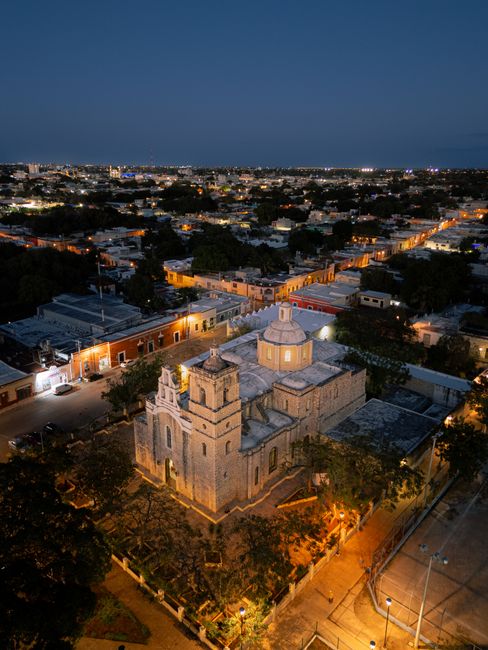
Mérida, the capital of Yucatán, is the cultural heart of Mexico’s Maya world: a colonial city of pastel mansions, shady plazas and 16th-century churches, about 35 km (22 miles) inland from the Gulf of Mexico. It is the best base for the great Maya sites of Chichén Itzá and Uxmal, for swimming in cenotes, for the pink flamingos of Celestún and for the beach at Progreso, and it is a destination in its own right, with free music and dancing in its squares most evenings, excellent museums and some of the best regional cooking in the country. The best time is November to March, when days are warm rather than fierce; April and May are the hottest months, and June to October brings afternoon storms and the Atlantic hurricane season.
Right now in Mérida
- Tue 25–32°C 76–89°F 5 mm Rain
- Wed 25–32°C 76–89°F 4 mm Rain
- Thu 24–28°C 75–82°F 33 mm Heavy rain
Weather: MET Norway (CC BY 4.0) · Air quality: OpenAQ · Rates: ECB
Top tours in Mérida
See all tours for Mérida →
From local operators, with prices and reviews; you check availability and book on Viator, our partner. We may earn a commission at no extra cost to you. How we earn money
Mérida at a glance
- Best for: colonial architecture, Maya ruins and culture, cenote swimming, Yucatecan food, free evening music and dance, and a slower, safer-feeling pace than the beach resorts.
- How long: 3 days for the city and one day trip; 5–7 days to add Chichén Itzá, Uxmal, the cenotes and Celestún or Progreso.
- Best time: November to March, with highs of 30–32 °C (86–90 °F). May averages 37 °C (99 °F); June to October is hot, humid and rainy, with hurricane season.
- Getting there: Mérida International Airport (MID), about 7 km (4 miles) south of the center, with an electric airport bus; the Tren Maya; or first-class buses from Cancún, about 300 km (186 miles) away.
- Getting around: walk the historic center; use the Va y Ven bus network, taxis or ride-hailing apps; rent a car or join tours for the ruins and cenotes.
- Before you go: entry rules, money and general safety are in our Mexico travel guide; for the beaches of the Caribbean coast, see our Cancún, Tulum and Riviera Maya guides.
Mérida neighborhoods: where things are
Mérida’s old streets follow a grid of numbered calles: even numbers run north–south and odd numbers east–west, so addresses read like “Calle 60 x 53 y 55” (Calle 60 between 53 and 55). The center is compact and flat; the newer city, malls and the Gran Museo del Mundo Maya spread north along Paseo de Montejo and Calle 60.
Centro Histórico and the Plaza Grande
The main square, the Plaza Grande, is ringed by the cathedral, the Government Palace, the City Hall and the Casa de Montejo, one of the oldest houses in the city. The streets around it hold markets, cafés, museums and most of the colonial mansions turned into boutique hotels. It is the easiest place to stay without a car.
Santa Lucía, Santa Ana and Santiago
Mérida grew around small neighborhood squares, each with its own church and market. Santa Lucía, a few blocks north of the Plaza Grande, is known for its serenades; Santa Ana sits at the start of Paseo de Montejo with a food market; and Santiago, to the west, has a busy local market and an evening dance night in its park. These barrios are full of restaurants and are good, quieter bases.
Paseo de Montejo
Built in the late 19th and early 20th centuries, when the henequen (sisal) boom made Yucatán rich, this broad, tree-lined boulevard is modeled on the Paris avenues, with French-style mansions, monuments, hotels and cafés. On Sunday mornings part of it closes to cars for cyclists and walkers.
North Mérida and the coast
The modern north has the Gran Museo del Mundo Maya, big malls and chain hotels near the ring road. About 35 km (22 miles) north, Progreso is Mérida’s beach town and cruise port, where many locals spend summer weekends.
Top things to see in Mérida
Prices and hours below were checked on the official sites in October 2026, unless we say otherwise; check again before you go. Many museums close on Mondays or Tuesdays.
The Plaza Grande, the cathedral and the Government Palace
The Cathedral of San Ildefonso, built in the second half of the 16th century partly with stones from the Maya city that stood here, is one of the oldest cathedrals in the Americas, plain and fortress-like outside. Across the square, the Government Palace (Palacio de Gobierno) is free to enter and has huge murals by the Yucatecan artist Fernando Castro Pacheco telling the story of the Maya and the Spanish conquest. The Casa de Montejo, the 16th-century house of the city’s Spanish founders, has a carved stone facade showing conquistadors standing on defeated heads. In the evenings the square fills with families, street food and, on weekends, events.
Gran Museo del Mundo Maya
The city’s showpiece museum, in a striking modern building in the north of Mérida, tells the story of the Maya from the ancient past to the living Maya of today, with more than a thousand objects across its permanent galleries, and a temporary hall that, in October 2026, holds an exhibition on the Chicxulub meteorite impact that wiped out the dinosaurs. As of October 2026, entry to the permanent galleries costs MXN 200 (about US$11) for foreign visitors, MXN 100 for Mexican adults and MXN 25 for children aged 4 to 12; temporary exhibitions are free. The museum opens Wednesday to Monday (closed Tuesday), with the ticket office open 9 a.m. to 4:30 p.m. Allow about two hours. The museum says the permanent galleries are closed for maintenance from 8 to 22 October 2026, during the Original Yucatán event; the temporary hall stays open. Parking is free, and there is an evening light-and-sound show on the facade.
Paseo de Montejo and the Palacio Cantón
Walk, cycle or take a city tour bus up Paseo de Montejo to see the mansions of the henequen barons. The grandest, the Palacio Cantón, built in the early 20th century for a Yucatecan general, is now the Regional Museum of Anthropology of Yucatán, run by the National Institute of Anthropology and History (INAH), with Maya pieces and temporary exhibitions. As of October 2026 it opens Tuesday to Sunday, 8 a.m. to 5 p.m., and entry costs MXN 210 (about US$12), or MXN 105 for Mexicans and foreign residents of Mexico. At the top of the avenue stands the Monumento a la Patria, a large stone monument carved in a neo-Maya style.
Dzibilchaltún
The closest Maya site to the city, about 8 km (5 miles) north of Mérida on the road to Progreso, Dzibilchaltún is famous for the Temple of the Seven Dolls, whose doorway lines up with the rising sun at the spring and fall equinoxes. According to INAH, it opens daily from 8 a.m. to 4 p.m. and entry costs MXN 105 for INAH plus a Yucatán state fee of MXN 223 for foreign visitors (MXN 90 for Mexicans), paid separately at the ticket office: about MXN 328 (US$18) in all for international visitors. INAH’s page, last updated in January 2026, says the site’s Xlacah cenote and its Museum of the Maya People are closed, so do not count on a swim there.
More to see
- Mercado Lucas de Gálvez: the city’s main market, a few blocks south of the Plaza Grande, for fruit, hammocks, guayaberas and cheap regional food stalls; go in the morning.
- Gran Parque de La Plancha: a new city park on old railroad land, next to the Ie-Tram bus terminal and the Museum of Railways.
- MACAY Museum (Museo Fernando García Ponce): contemporary Yucatecan art beside the cathedral.
- Teatro José Peón Contreras: an ornate early-20th-century theater on Calle 60, with concerts and the Yucatán Symphony Orchestra.
- Museo de la Canción Yucateca: the story of trova, Yucatán’s romantic guitar music, in the La Mejorada neighborhood.
Churches and cathedrals
- Mérida Cathedral
Museums
- Gran Museo del Mundo Maya
- Palacio Cantón (Regional Museum of Anthropology)
Other sights
- Paseo de Montejo
Activities and best months
- Boat tripsJanFebNovDecCONANP's Ría Celestún reserve, about 90 km from Mérida, charges MXN 125 per person per day; most flamingos are there from November to February, and boats must keep at least 50 m from the colonies. · source
- City sightseeingThe Gran Museo del Mundo Maya in Mérida is open Wednesday to Monday (ticket office 9:00-16:30); INAH's Dzibilchaltún archaeological zone, 8 km north of the city on Highway 261, is open daily 8:00-16:00. · source
Other things to do in Mérida
Free music and dance in the squares
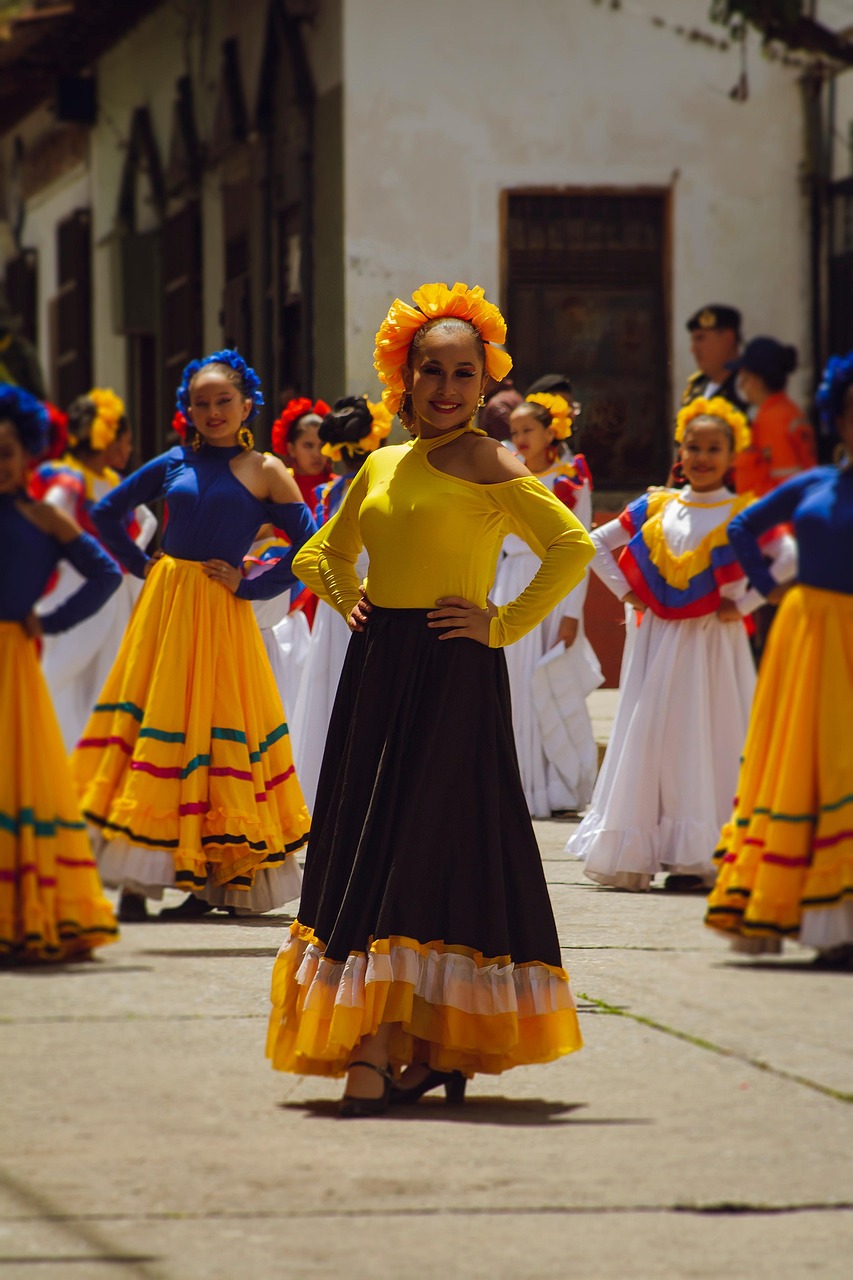
The city puts on free cultural evenings through the week: trova serenades in the Parque de Santa Lucía, the jarana (Yucatecan folk dance) at the Monday vaquería in front of City Hall, dancing to live bands in the Parque de Santiago, and “Mérida en Domingo” on Sundays, when streets around the Plaza Grande close to traffic for food stalls, crafts and music. Schedules change with the seasons; ask your hotel or the tourist office on the Plaza Grande for the current program.
Swimming in cenotes
Yucatán’s limestone is riddled with cenotes, natural sinkholes filled with clear, cool groundwater. The villages of Homún and Cuzamá, about an hour south-east of Mérida, have dozens of them, many run by local families and cooperatives that charge small entry fees and rent life jackets; in Cuzamá you can ride to some of them on horse-drawn rail carts. Rinse off before you swim, skip sunscreen and insect repellent in the water, and wear a life jacket if you are not a strong swimmer: the water is often deep.
Food and drink
Yucatecan cooking is unlike the rest of Mexico’s, built on achiote (annatto), sour orange and the fiery habanero chili. Try cochinita pibil (slow-roasted pork, a breakfast favorite on Sundays), panuchos and salbutes (small fried tortillas with toppings), sopa de lima (lime soup), poc chuc (grilled pork), relleno negro (turkey in a black chili sauce) and papadzules, and finish with a marquesita, a crisp rolled crepe with Edam cheese sold from street carts in the evening. Many markets and loncherías serve breakfast and lunch only.
Day trips from Mérida
Mérida sits in the middle of the Yucatán’s best sights. At federal archaeological sites you pay twice: an INAH ticket and, separately, a Yucatán state fee charged by the state’s tax agency (AAFY), which is much higher for foreign visitors. These prices come from INAH’s pages, updated in 2026; most ticket offices take cards, but carry cash in case.
- Chichén Itzá: the most famous Maya city, with the El Castillo pyramid, the Great Ball Court and the Sacred Cenote, about 115 km (71 miles) east of Mérida on Highway 180. It opens daily from 8 a.m. to 4 p.m. As of October 2026, foreign visitors pay MXN 105 for INAH plus MXN 592 for the state, MXN 697 (about US$38) in all; Mexicans pay MXN 205 for the state fee. Arrive at opening to beat the heat and the tour buses from Cancún. You cannot climb the pyramids.
- Uxmal and the Ruta Puuc: the elegant Puuc-style city of the Pyramid of the Magician and the Nunnery Quadrangle, about 80 km (50 miles) south. Open daily 8 a.m. to 4 p.m.; foreigners pay MXN 105 plus MXN 461, MXN 566 (about US$31). Combine it with the smaller Puuc sites of Kabah, Sayil and Labná, or with the walled city of Mayapán (MXN 145).
- Celestún: a fishing village on a mangrove estuary, about 90 km (56 miles) west, inside the Ría Celestún Biosphere Reserve. Local cooperatives run boat trips to see flamingos, which are most numerous from November to February. The national protected areas agency, CONANP, charges a conservation wristband of MXN 125 per person per day; boats must stay at least 50 m from flamingo colonies.
- Progreso: Mérida’s beach, about 35 km (22 miles) north, with a long malecón (seafront promenade), seafood restaurants and the very long pier used by cruise ships. Calm, shallow and warm, the Gulf water here is not the turquoise of the Caribbean.
- Izamal: the “Yellow City”, about 70 km (43 miles) east, with every building painted ocher, a huge Franciscan convent and the pyramid of Kinich Kak Moo, which INAH lists as free to visit, open daily 8 a.m. to 5 p.m.
- Valladolid and Ek Balam: a colonial town with cenotes in and around it, and nearby Ek Balam, whose acropolis has remarkable stucco sculpture (INAH MXN 210 plus a state fee of MXN 461 for foreigners). Valladolid is a good overnight stop on the way to the Caribbean coast; see our Cancún and Tulum guides.
Nearby destinations
- Tulum240 km
- Holbox240 km
- Playa del Carmen267 km
- Riviera Maya267 km
- Bacalar286 km
- Cozumel Island288 km
- Cancun291 km
- Isla Mujeres300 km
Getting there and getting around
From Mérida International Airport (MID)
Mérida’s Manuel Crescencio Rejón International Airport, run by the ASUR group, has domestic flights from Mexico City, Monterrey, Guadalajara and other cities and a few direct international routes, mainly from the United States. The state transport agency’s Ie-Tram Ruta Aeropuerto (R907), an electric bus, links the airport with the historic center, Paseo 60 and the Gran Parque de La Plancha, from 4 a.m. to 10:50 p.m.; according to local press reports, the fare is MXN 45 (about US$2.50) for visitors, paid with a Va y Ven card or a single-use QR ticket from the machine at the airport. Authorized airport taxis and ride-hailing apps are the alternatives, about 20 minutes to the center.
The Tren Maya
The Tren Maya, the federal train that runs around the Yucatán Peninsula through 34 stations, stops at Mérida Teya, on the eastern edge of the city. According to the official timetable checked in October 2026, five or six trains a day run each way between Mérida and the Cancún Aeropuerto station, taking about 3 hours 10 minutes to 3 hours 40 minutes, with stations on the line including Izamal, Chichén Itzá and Valladolid; one train a day continues to the Tulum airport. Westbound trains go to Campeche and Palenque. Foreign visitors pay the international fare, which varies with the date and demand, so book ahead on the official site (reservas.ventaboletostrenmaya.com.mx), the Tren Maya app, at stations or at the ticket office opened in September 2026 at the CETRAM La Plancha transport hub (7 a.m. to 8 p.m.), and carry your passport. To reach Teya, take the Ie-Tram route 901 from Paseo 60 and La Plancha: MXN 45 for visitors, about 35 minutes, with the first bus at 5:30 a.m. On Sundays, the Janal restaurant train runs a day trip from Mérida Teya to Chichén Itzá, leaving at 8:20 a.m. and returning at 4 p.m.
Buses and driving
ADO’s first-class buses run from Mérida’s CAME terminal, a few blocks south-west of the Plaza Grande, to Cancún, Playa del Carmen, Tulum, Valladolid, Chichén Itzá, Campeche and Palenque; buy tickets on ado.com.mx or at the station. Buses to Celestún, Progreso and the villages leave from smaller terminals. Driving is easy on Yucatán’s flat, straight roads: the toll highway 180D runs to Cancún, about 300 km (186 miles) away, via Chichén Itzá and Valladolid. Watch for topes (speed bumps) in every village, avoid driving at night on rural roads, and use the toll roads (cuotas) where you can.
In the city
The historic center is best on foot. The Va y Ven network of city buses, including the electric Ie-Tram lines, covers most of Mérida and links La Plancha with the Tren Maya’s Teya station; pay with a rechargeable Va y Ven card or QR ticket, and follow buses on the Va y Ven app. Taxis and ride-hailing apps are cheap for longer hops, for example up to the Gran Museo del Mundo Maya.
When to go and how long to stay
Mérida is hot all year. The table uses the National Meteorological Service’s (SMN-Conagua) 1981–2010 climate normals for the Mérida observatory station: average daily highs and lows, and days with rain.
| Season | Average high / low | Rainy days per month | What it’s like | Good for |
|---|---|---|---|---|
| Winter (Dec–Feb) | 30–32 °C (86–90 °F) / 17–18 °C (63–65 °F) | 4–5 | Warm, sunny and dry; cooler evenings | Ruins, city walks, flamingos in Celestún; peak season |
| Spring (Mar–May) | 34–37 °C (93–99 °F) / 19–23 °C (67–73 °F) | 3–6 | Very hot and dry, hottest in April and May | Equinox at Chichén Itzá and Dzibilchaltún, cenotes |
| Summer (Jun–Aug) | 35–36 °C (95–96 °F) / 23 °C (73–74 °F) | 13–16 | Hot and humid with afternoon storms | Cenotes, Progreso beach, lower hotel prices |
| Fall (Sep–Nov) | 34 °C falling to 31 °C (93 to 88 °F) / 23 °C falling to 20 °C (73 to 67 °F) | 16 in September, 6 in November | Wettest in September, peak hurricane season, then drier and pleasant | Hanal Pixán (Day of the Dead), quieter sights |
Mérida gets about 980 mm (39 in) of rain a year, most of it from June to October; September is the wettest month, with about 163 mm (6.4 in).
Hurricane season: according to NOAA’s National Hurricane Center, the Atlantic hurricane season runs from June 1 to November 30, peaking from mid-August to mid-October. Mérida is inland, but tropical storms crossing the Yucatán Peninsula or passing through the Gulf can bring days of heavy rain, flooding and flight cancellations. In season, follow Mexico’s National Meteorological Service (SMN) and the National Hurricane Center, and consider travel insurance.
Events worth planning around
- January: the Mérida Fest, the city’s birthday festival (Mérida was founded on January 6, 1542), with weeks of concerts, theater and exhibitions.
- February or March: Carnival, with parades and street parties.
- March and September equinoxes: the “serpent of light” on El Castillo at Chichén Itzá and the sunrise through the Temple of the Seven Dolls at Dzibilchaltún draw big crowds; INAH sets special access rules.
- October 31 to November 2: Hanal Pixán, the Maya Day of the Dead, with altars, mucbipollo (a large tamale baked underground) and a procession of souls in the center.
3 days in Mérida
Day one, the Plaza Grande, the cathedral, the Government Palace murals and the market, then an evening of music in Santa Lucía or Santiago. Day two, Chichén Itzá at opening, with a swim in a cenote on the way back. Day three, Paseo de Montejo and the Palacio Cantón in the morning and the Gran Museo del Mundo Maya in the afternoon (not on a Tuesday).
5 to 7 days in Mérida and Yucatán
Add Uxmal and the Ruta Puuc, the cenotes of Homún or Cuzamá, a morning with the flamingos of Celestún, and an afternoon at Dzibilchaltún and the beach at Progreso. With a week, finish in Izamal and Valladolid, visiting Ek Balam, and carry on to the Caribbean coast by road or on the Tren Maya.
Where to stay in Mérida and the hotel taxes
- Centro Histórico: boutique hotels with pools and courtyards in restored colonial houses, hostels and guesthouses, all within walking distance of the sights.
- Santa Lucía, Santa Ana and Santiago: quieter streets, the same colonial charm and many restaurants.
- Paseo de Montejo: larger, upscale hotels on the boulevard, a short walk or ride from the Plaza Grande.
- North Mérida: business and chain hotels near the malls and the Gran Museo; handy with a car.
- Progreso: beach hotels and holiday rentals for a few days by the sea.
Hotel stays in Mexico carry 16% federal value-added tax (IVA) plus a state lodging tax. In Yucatán, the state’s tax law sets the lodging tax (impuesto sobre hospedaje) at 4.5% of the room price, after a reform published in December 2025, so a bill can carry about 20.5% in taxes. Check whether a quoted rate includes them; online booking sites usually show the total. Many colonial guesthouses ask for payment in cash or by bank transfer, so confirm how you can pay.
Practical tips for Mérida
- Beat the heat: sightsee early, rest at midday and go out again after 5 p.m., when the squares come alive.
- Two tickets at the ruins: budget for the INAH ticket and the separate, higher Yucatán state fee for foreigners at Chichén Itzá, Uxmal, Ek Balam and Dzibilchaltún.
- Money: cards are widely accepted in hotels and restaurants, but carry pesos for markets, cenotes, village restaurants and colectivo vans; use ATMs inside banks or shops in daylight.
- Tipping: about 10–15% in restaurants is customary, and a few pesos for baggers at supermarkets and for parking attendants.
- Water: drink bottled or filtered water, which hotels and restaurants provide.
- Safety: Mérida is one of the calmest big cities in Mexico, and the cartel-related violence seen in some other states is not a feature of life here. Use normal city sense with valuables, take authorized taxis or app rides at night, and watch for uneven sidewalks and high curbs.
- Emergencies: call 911.
What to pack for Mérida
Pack light, loose, breathable clothes (linen and cotton), a wide-brimmed hat, sunglasses and high-factor sunscreen, with comfortable walking shoes for uneven colonial sidewalks and the ruins. Bring swimwear, a quick-dry towel and water shoes for cenotes, biodegradable sunscreen for after you swim, and insect repellent for the evenings and Celestún’s mangroves. A light rain jacket or umbrella helps from June to October, and a light sweater for over-air-conditioned buses and restaurants. Mexico uses 127 V and the same flat-pin plugs as the United States.
What to pack
- City walking shoesLisbon and Porto are steep, with polished limestone cobbles that get slippery, so grippy soles matter.
- Day packs and anti-theft bagsA small zipped or anti-theft bag makes crowded trams and viewpoints less stressful.
- Dry bags and phone pouchesSpray soaks phones and cameras on open boats to the Algarve caves and on whale-watching trips.
- Fleeces and warm layersIt is cooler at sea than on land, especially on morning whale-watching trips.
- Rain jacketsA windproof, waterproof shell keeps you warm on open boats, where wind and spray cool you quickly.
- Reef-friendly sunscreenSun reflects off the water on cruises and cave tours.
- Travel adapters and convertersPortugal uses Type C and F sockets at 230 V, so most visitors from outside Europe need an adapter.
- Water shoesKayak and small-boat trips to the Algarve grottoes land on rock and wet sand.
Mérida travel FAQ
How much is Chichén Itzá in 2026?
As of October 2026, foreign visitors pay MXN 697 (about US$38): MXN 105 for INAH plus a Yucatán state fee of MXN 592, paid separately at the site. It opens daily from 8 a.m. to 4 p.m.
How far is Chichén Itzá from Mérida?
About 115 km (71 miles) east on Highway 180, roughly two hours by car or bus. Many tours combine it with a cenote swim and lunch in Valladolid or Izamal.
Is Uxmal worth visiting from Mérida?
Yes. Uxmal, about 80 km (50 miles) south, is quieter than Chichén Itzá and has some of the finest Maya architecture. Foreigners pay MXN 566 as of October 2026, INAH and state fees together.
When is the best time to visit Mérida?
November to March, when highs are around 30–32 °C (86–90 °F) and rain is rare. April and May are the hottest months; June to October is hot, humid and rainy.
When is the Gran Museo del Mundo Maya open?
Wednesday to Monday; it closes on Tuesdays. Entry to the permanent galleries costs MXN 200 for foreign visitors as of October 2026, and the galleries close for maintenance from 8 to 22 October 2026.
How do I get from Mérida airport to the center?
Take the electric Ie-Tram Ruta Aeropuerto (R907) bus to the historic center and Paseo 60, which runs from 4 a.m. to 10:50 p.m., or an authorized airport taxi or app ride, about 20 minutes.
Can I take the Tren Maya from Mérida?
Yes. Trains leave from Mérida Teya station, on the eastern edge of the city, for Cancún (about 3 to 3.5 hours, via Chichén Itzá and Valladolid), Campeche and Palenque. Foreigners pay the international fare; book on the official site or app.
Where can I see flamingos near Mérida?
In the Ría Celestún Biosphere Reserve, about 90 km (56 miles) west, on boat trips run by local cooperatives. Flamingos are most numerous from November to February; CONANP charges MXN 125 per person per day.
Does Mérida have a beach?
Not in the city itself. Progreso, about 35 km (22 miles) north on the Gulf of Mexico, is the nearest beach town, with a long seafront promenade and calm, shallow water.
What taxes are added to Mérida hotel bills?
16% IVA plus Yucatán’s 4.5% lodging tax, about 20.5% in all. Check whether quoted rates include them.
Sources
- © OpenStreetMap contributors · ODbL · fetched 4 Oct 2026
- Wikidata · CC0 · fetched 4 Oct 2026
Sources and last review
Researched and last reviewed on 4 October 2026. Archaeological site hours and fees, including the Yucatán state fees, and the Palacio Cantón museum: the National Institute of Anthropology and History (INAH); Gran Museo del Mundo Maya hours, prices and October 2026 closure: the museum; Celestún wristband, flamingo season and rules: the National Commission of Natural Protected Areas (CONANP); airport and Ie-Tram routes and timetables: Yucatán’s transport agency (ATY); Tren Maya stations, timetables, fare categories and ticket offices: Tren Maya (trenmaya.gob.mx and its official booking site); lodging tax: the Ley General de Hacienda del Estado de Yucatán, as published by the Yucatán state congress; climate: SMN-Conagua 1981–2010 normals for the Mérida observatory; hurricane season: NOAA’s National Hurricane Center. The airport bus fare comes from local press reports, and distances, the free evening events and the cenote villages are general references, flagged for checking. Prices, hours and timetables change, so check the official sites before you go. For entry rules, money and general safety, see our Mexico travel guide.
Plan your trip
Partner links: TravelerCenter may earn a commission if you book, at no extra cost to you.
🇪🇸 Useful Spanish phrases for Mérida
All 38 Spanish phrases: restaurant, hotel, emergencies, romance (printable) →