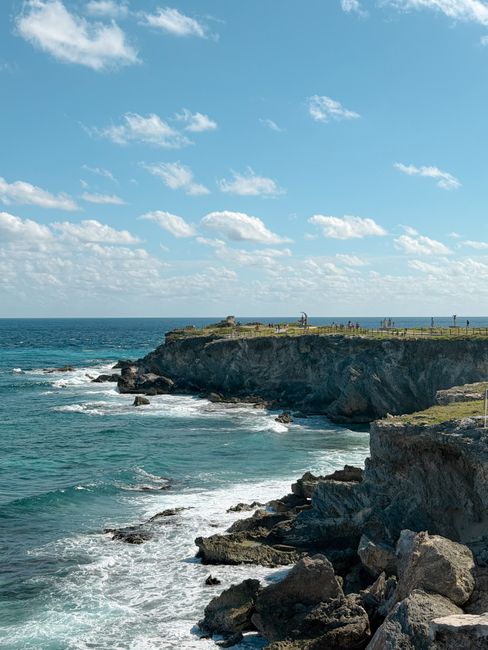
Isla Mujeres is a small, laid-back island just off Cancún, about 7 km (4 miles) long and rarely more than a few hundred meters wide, reached by a 20- to 30-minute ferry ride across the turquoise Bahía de Mujeres. Its sleepy town at the northern tip, with brightly painted houses, sandy streets and seafood restaurants, sits beside Playa Norte, one of the calmest, shallowest beaches in the Mexican Caribbean. Most visitors explore by golf cart: south past lagoons and a turtle sanctuary to the cliffs of Punta Sur, the easternmost point of Mexico, where a small Maya shrine to the goddess Ixchel once stood. The island is also the base for snorkeling on reefs and underwater sculptures, boat trips to the bird sanctuary of Isla Contoy and, in summer, swimming with whale sharks. The best weather is from December to April; the Atlantic hurricane season runs from June to November.
Right now in Isla Mujeres
- Wed25–31°C76–89°F4 mm rain
- Thu24–31°C76–88°F3 mm rain
- Fri25–31°C78–88°F1 mm rain
Top tours in Isla Mujeres
See all tours for Isla Mujeres →
From local operators, with prices and reviews; you check availability and book on Viator, our partner. We may earn a commission at no extra cost to you. How we earn money
Isla Mujeres at a glance
- Best for: calm beaches, snorkeling, golf-cart tours, sunsets, small hotels, whale sharks in summer, and a slower pace than Cancún.
- How long: a day trip from Cancún for a taste; 2–4 nights to enjoy Playa Norte, Isla Contoy and the reefs.
- Best time: December to April, with highs of about 29–33 °C (84–92 °F) and fewer rainy days; whale sharks roughly from late May to mid-September.
- Getting there: Ultramar ferries from Cancún’s Puerto Juárez about every 30 minutes, or from the Hotel Zone; adults pay MXN 290 (about US$16) one way as of October 2026.
- Getting around: on foot in town; golf carts, scooters, bikes and taxis for the rest of the island.
- Before you go: foreign visitors pay the Quintana Roo VISITAX, MXN 293 (about US$16) as of October 2026; entry rules, money and general safety are in our Mexico travel guide.
Isla Mujeres’ areas: where things are
The island stretches from north-west to south-east. The ferries dock in town, at the northern end, and a single main road, with a parallel lagoon-side road for part of the way, runs the length of the island to Punta Sur. You can drive the whole island in under an hour.
The town (El Centro) and Playa Norte
The northern tip holds almost all the restaurants, shops, bars and small hotels, on a grid of pedestrian and narrow streets around the main square and Avenida Hidalgo. Playa Norte, on the north shore, is a few minutes’ walk from anywhere in town. Staying here, you won’t need transport at all.
The middle of the island
South of town, past the small airstrip and the Salina Grande lagoon, the island is quieter, with local neighborhoods, the turtle sanctuary, Hacienda Mundaca and a scattering of resorts and villas on the calm western shore facing Cancún.
Punta Sur and the south
The southern end narrows to rocky cliffs on the open Caribbean, with the Garrafón reef, the Punta Sur viewpoint and a few boutique hotels and beach clubs. The east coast, facing the open sea, is rocky and windswept, with strong waves.
Top things to see on Isla Mujeres
Prices and hours below were checked on the official sites in October 2026, unless we say otherwise; check again before you go. Many small sights on the island set their own fees and take cash only.
Playa Norte
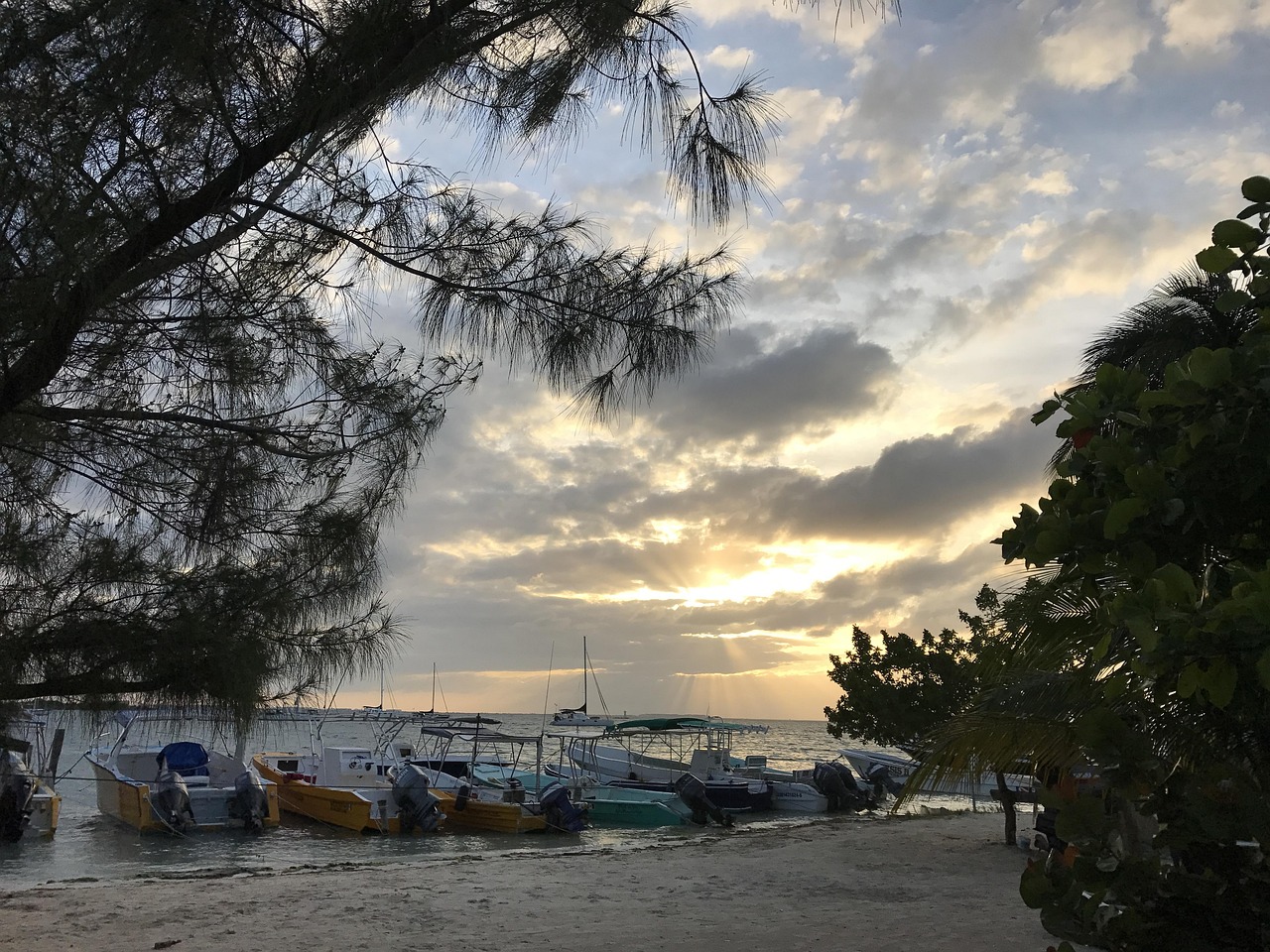
Isla Mujeres’ most famous beach is a long curve of fine white sand at the north tip, with water so shallow and clear you can wade out a long way, palm-thatched bars and loungers to rent, and sunsets over the bay. It is often calm when Cancún’s open-sea beaches have waves, and it is usually less affected by sargassum, as it faces north. Swim inside the marked area, away from boat lanes.
Punta Sur and the cliffs
The southern tip of the island ends in limestone cliffs above the Caribbean, with a path along the edge, a sculpture garden, a lighthouse and the remains of a small Maya shrine traditionally linked to Ixchel, the goddess of the moon and fertility. It is said to be one of the first places in Mexico to see the sunrise. A small fee is charged at the entrance; wear shoes with good grip and stay behind the barriers, as the rocks are slippery and the waves strong.
Snorkeling at Garrafón, Manchones and MUSA
The reefs off the island’s south-west coast lie in the Costa Occidental de Isla Mujeres, Punta Cancún and Punta Nizuc National Park, where CONANP charges MXN 125 (about US$7) per person per day, usually collected by tour operators. Snorkel trips visit the shallow Garrafón and Manchones reefs, and divers can visit the deeper Manchones gallery of MUSA, the underwater sculpture museum: as of October 2026, MUSA’s own dive for certified divers from Isla Mujeres starts at US$157. Garrafón also has a private park with snorkeling, zip lines and kayaks. Wear a life jacket when snorkeling from boats, and never touch the coral or the sculptures.
The turtle sanctuary and Hacienda Mundaca
Mid-island, a small turtle farm and sanctuary (the Tortugranja) protects eggs from beach nests and raises hatchlings before releasing them, with tanks of young and adult turtles to see. Nearby, the overgrown ruins of Hacienda Mundaca, built by a 19th-century slave trader and pirate turned planter, have gardens and a legend of unrequited love. Both charge small fees in cash.
More to see
- The main square and church: the evening heart of town, with locals, food stands and music at weekends.
- Playa Lancheros and Playa Centro: quieter beaches south of town; Playa Centro, on the east side, can have strong waves.
- Sunset at Playa Norte or the western shore: one of the few places in the Mexican Caribbean where you watch the sun set over the water.
Protected areas
- Costa Occidental de Isla Mujeres, Punta Cancún y Punta Nizuc National Park
Nature reserves
- Isla Contoy
Activities and best months
- Boat tripsCONANP's Isla Contoy National Park, the bird island north of Isla Mujeres, charges MXN 225 and opens 9:00-18:00, weather permitting.
- Scuba divingMUSA dives for certified divers leave from Isla Mujeres (about US$157), including the Manchones gallery.
- SnorkelingMayJunJulAugSepWhale-shark observation and swimming in the Mexican Caribbean runs from 15 May to 17 September (2025-2027 plan), only on authorised boats showing a DGVS-Semarnat permit; the refuge area covers Isla Mujeres, Puerto Juárez, Chiquilá and Holbox.
Other things to do on Isla Mujeres
Isla Contoy
About 30 km (19 miles) north, Isla Contoy is a national park and seabird sanctuary with a small visitor center, a lookout tower, mangroves and beaches. Only a limited number of visitors are allowed each day, on tours with authorized operators, which usually combine it with snorkeling on the way. CONANP’s fee is MXN 225 (about US$12) per person per day, and the park opens from 9 a.m. to 6 p.m., weather permitting. Sunscreen and repellent that harm the environment are not allowed; check with your operator.
Swimming with whale sharks
In summer, the world’s largest fish gather to feed in the open sea between Isla Mujeres, Isla Contoy and Holbox, inside the Caribe Mexicano Biosphere Reserve. In 2026 the season ran from May 15 to September 17, with most sightings in July and August, according to press reports of CONANP’s rules. Only boats with a permit may take visitors, with limits on passengers, swimmers in the water at once and distance; you swim with a guide and a life jacket, and must not touch the animals or use flash. Trips leave very early and last most of the day, and the sea can be rough. See our guides to snorkeling and boat trips.
Golf carts and cycling
Renting a golf cart for a day is the classic way to tour the island: go south along the western road, stop at the turtle sanctuary and Punta Sur, and come back along the east coast’s sea views. Carts are slow and the roads narrow and busy, so drive carefully, don’t drink and drive, and carry your driver’s license. Bikes are a cheaper option for the flat north end.
Diving, fishing and sailing
Dive shops on the island run reef dives, MUSA dives and trips to wrecks off Cancún; fishing boats offer half-day and full-day trips; and catamarans come from Cancún every day for snorkeling and lunch.
Day trips from Isla Mujeres
- Cancún: just across the bay, for the Maya Museum, El Rey ruins and the Hotel Zone beaches. See our Cancún guide.
- Playa del Carmen and Cozumel: about 1.5 hours south of Cancún, with the ferry to Cozumel’s reefs. See our Playa del Carmen and Cozumel guides.
- Tulum: the clifftop Maya port, a long day trip; as of October 2026, foreign visitors pay MXN 265 (about US$15) in all. See our Tulum guide.
- Chichén Itzá and Valladolid: a long day by tour or car from Cancún; as of October 2026, foreigners pay MXN 697 (about US$38). See our Mérida guide.
- The Riviera Maya: cenotes, theme parks and the turtles of Akumal. See our Riviera Maya guide.
Nearby destinations
- Cancun13 km
- Holbox72 km
- Riviera Maya77 km
- Playa del Carmen78 km
- Cozumel Island95 km
- Tulum138 km
- Mérida300 km
Getting there and getting around
Ferries from Cancún
Ultramar runs the main passenger ferries. As of October 2026, adults pay MXN 290 (about US$16) one way or MXN 580 (about US$32) round trip, children MXN 220 and Quintana Roo residents MXN 100; infants under one travel free with a boarding pass. Tickets are valid for six months and are non-refundable.
- From Puerto Juárez, just north of downtown Cancún: the busiest route, with sailings from 5:30 a.m. to 11 p.m., about every 30 minutes in the daytime, and returns from the island from 6 a.m. to midnight. A taxi from the Hotel Zone takes about 20 to 30 minutes.
- From the Hotel Zone: Playa Tortugas (km 6.5) and Playa Caracol (km 9.5) have fewer sailings; from Playa Tortugas, nine a day between 9 a.m. and 6 p.m., with returns from 9:45 a.m. to 6:30 p.m.
Isla Mujeres also charges visitors who don’t stay overnight an environmental sanitation fee of MXN 35.19, collected by the ferry company, so check whether it is in your ticket price. A separate car ferry runs from Punta Sam, north of Cancún, for vehicles and freight; visitors rarely need it.
Getting around the island
The town is walkable, and taxis wait at the ferry pier with fixed fares. Golf carts, scooters and bikes are rented all over town by the hour or day; compare prices, check the cart before you leave and take photos of any damage. There is no airport for commercial flights; fly to Cancún International (CUN), about 30 to 40 minutes from Puerto Juárez by road.
When to go and how long to stay
Isla Mujeres is warm all year. The island has no official climate normals of its own, so the table uses the National Meteorological Service’s (SMN-Conagua) 1991–2020 climate normals for the Cancún weather station, about 12 km (7 miles) away: average daily highs and lows, and days with rain. Sea breezes make the island feel a little cooler than these figures.
| Season | Average high / low | Rainy days per month | What it’s like | Good for |
|---|---|---|---|---|
| Winter (Dec–Feb) | 29–30 °C (84–86 °F) / 20–21 °C (68–70 °F) | 7–12 | Warm and sunny, with windy “nortes” (cold fronts) that can stop boat trips | Beaches, town life; peak prices around the holidays |
| Spring (Mar–May) | 32–34 °C (89–94 °F) / 21–24 °C (71–76 °F) | 4–8 | The driest, sunniest months, with calm seas | Snorkeling, Isla Contoy; whale shark season starts in late May |
| Summer (Jun–Aug) | 34–35 °C (93–95 °F) / 25 °C (77 °F) | 9–12 | Hot and humid, with storms; turtle nesting | Whale sharks, peak in July and August |
| Fall (Sep–Nov) | 34 °C falling to 30 °C (94 to 87 °F) / 25 °C falling to 22 °C (76 to 72 °F) | 15 in September, 18 in October, 13 in November | The wettest months and peak hurricane season, then clearing | Low prices and quiet beaches; watch the forecast |
The Cancún station records about 1,370 mm (54 in) of rain a year; October is the wettest month, with about 277 mm (10.9 in), and February to April are the driest.
Hurricane season: according to NOAA’s National Hurricane Center, the Atlantic hurricane season runs from June 1 to November 30, peaking from mid-August to mid-October. Most days in season are fine, but a storm can stop the ferries, close Cancún’s airport and cut power on the island. If one threatens, follow Quintana Roo’s civil protection authorities and your hotel, and check Mexico’s National Meteorological Service (SMN) and the National Hurricane Center; travel insurance that covers weather is wise.
Sargassum: the floating seaweed that affects much of the Mexican Caribbean, usually from about April or May to September, mostly reaches the island’s exposed east coast; Playa Norte and the western beaches are usually much less affected. 2026 has been a heavy year. The Mexican Navy (SEMAR) publishes a daily bulletin for the region’s beaches.
Crowds and prices: the island is busiest from mid-December to Easter and in July and August, and day-trippers fill Playa Norte and the golf-cart rentals from late morning; stay overnight to enjoy the island early and late. Quintana Roo uses UTC−5 all year, an hour ahead of Mexico City.
A day trip to Isla Mujeres
Catch an early ferry from Puerto Juárez, rent a golf cart, drive to Punta Sur by mid-morning, stop at the turtle sanctuary on the way back, have lunch in town and spend the afternoon on Playa Norte before an evening ferry.
3 nights on Isla Mujeres
Add a snorkel trip to the reefs or MUSA, a full day at Isla Contoy, or, from late May to mid-September, an early start to swim with whale sharks, and give yourself a lazy sunset evening on Playa Norte.
Where to stay on Isla Mujeres and the hotel taxes
- The town and Playa Norte: guesthouses, hostels, boutique hotels and a few resorts, all within walking distance of the ferry, restaurants and beach.
- The western shore: resorts and villas on calm water facing Cancún, with sunsets; you will need a cart or taxi.
- Punta Sur and the south: boutique hotels with sea views, quiet and secluded.
- Costa Mujeres, on the mainland: part of the same municipality, with large all-inclusive resorts facing the island; see our Cancún guide.
Rooms carry Mexico’s 16% value-added tax (IVA) plus Quintana Roo’s lodging tax of 5%, or 6% when booked through a platform such as Airbnb, under the state’s lodging tax law. Isla Mujeres’ municipality also charges an environmental sanitation fee of MXN 35.19 (about US$2) per visitor per night, collected by the hotel, under its revenue law as of 2026. VISITAX, MXN 293 per foreign visitor, is paid separately online before you leave Quintana Roo.
Practical tips for Isla Mujeres
- VISITAX: pay only on the official site, visitax.gob.mx, for every foreign traveler including babies, and keep the QR receipt.
- Cash: carry pesos for carts, taxis, small sights and restaurants; the island has ATMs in town, but they can run out on busy weekends.
- Book ahead: Isla Contoy and whale shark trips have limited places, so book a few days ahead in season.
- Tipping: about 10–15% in restaurants; tip boat crews and guides too.
- Safety: Isla Mujeres is small, friendly and relaxed. The main risks are carts and scooters on narrow roads, sun and heat, and the sea: swim at Playa Norte or other calm beaches, not on the rough east coast, and wear a life jacket on boat trips. Keep valuables out of sight on the beach and don’t buy drugs.
- Emergencies: call 911.
What to pack for Isla Mujeres
Pack swimwear, a rash guard, a hat, sunglasses and biodegradable, reef-friendly sunscreen, plus water shoes for rocky entries at the reefs and Punta Sur. Bring insect repellent for dusk, seasickness tablets for whale shark and Contoy trips, a small dry bag for the ferry and boats, and a light rain jacket from June to November. Light, casual clothes are fine everywhere; a light layer helps on breezy winter evenings. Mexico uses 127 V and the same flat-pin plugs as the United States.
What to pack
- Dry bags and phone pouchesSpray soaks phones and cameras on open boats to the Algarve caves and on whale-watching trips.
- Fleeces and warm layersIt is cooler at sea than on land, especially on morning whale-watching trips.
- Rain jacketsA windproof, waterproof shell keeps you warm on open boats, where wind and spray cool you quickly.
- Reef-friendly sunscreenSun reflects off the water on cruises and cave tours.
- Snorkel masks and finsYour own mask fits better than a rental and makes clear-water coves and lava pools more fun.
- Water shoesKayak and small-boat trips to the Algarve grottoes land on rock and wet sand.
- WetsuitsEven in summer, 30+ minutes in 19–23 °C water gets cold; a 2–3 mm suit extends sessions.
Isla Mujeres travel FAQ
How do I get from Cancún to Isla Mujeres?
By Ultramar ferry from Puerto Juárez, about every 30 minutes in the daytime, or from Playa Tortugas and Playa Caracol in the Hotel Zone. As of October 2026, adults pay MXN 290 one way or MXN 580 round trip.
How long is the ferry to Isla Mujeres?
About 20 to 30 minutes from Puerto Juárez, a little longer from the Hotel Zone piers.
Is Isla Mujeres worth a day trip?
Yes. In a day you can tour the island by golf cart, see Punta Sur and spend the afternoon on Playa Norte. Stay a night or two to enjoy it without the day-trip crowds.
Is there a fee to visit Isla Mujeres?
Foreign visitors pay VISITAX, MXN 293, once per trip to Quintana Roo. Day visitors also pay the island’s MXN 35.19 sanitation fee through the ferry company, and overnight guests pay it at the hotel.
When can you swim with whale sharks from Isla Mujeres?
Roughly from mid-May to mid-September; in 2026 the season ran from May 15 to September 17, with the most sightings in July and August. Go only with permitted operators.
How much does it cost to visit Isla Contoy?
CONANP’s fee is MXN 225 per person per day, usually included in the price of an authorized tour. Visitor numbers are limited, so book ahead.
Do I need a golf cart on Isla Mujeres?
Not if you stay in town; everything there is walkable. A cart, scooter or taxi is the easiest way to reach Punta Sur and the south.
Is Playa Norte affected by sargassum?
Less than most beaches in the region, because it faces north into the bay. The exposed east coast gets much more.
What taxes are added to hotel bills on Isla Mujeres?
16% IVA, Quintana Roo’s 5% lodging tax (6% through platforms) and the island’s sanitation fee of MXN 35.19 per visitor per night. VISITAX is paid separately.
Plan your trip
Partner links: TravelerCenter may earn a commission if you book, at no extra cost to you.
🇪🇸 Useful Spanish phrases for Isla Mujeres
All 38 Spanish phrases: restaurant, hotel, emergencies, romance (printable) →
Sources · last reviewed 4 October 2026
Researched and last reviewed on 4 October 2026. Ferry fares, timetables and terminals: Ultramar; reef and Isla Contoy fees and hours: the National Commission of Natural Protected Areas (CONANP); MUSA dives: MUSA; Tulum and Chichén Itzá fees: the National Institute of Anthropology and History (INAH) and the federal decree of July 17, 2026; VISITAX, the lodging tax and the island’s sanitation fee: Quintana Roo’s state and municipal laws as published by the state congress, and visitax.gob.mx; sargassum: the Mexican Navy (SEMAR); hurricane season: NOAA’s National Hurricane Center; climate: SMN-Conagua 1991–2020 normals for the Cancún station; exchange rate: the Bank of Mexico. The 2026 whale shark season dates come from press reports; the island’s size, Punta Sur, the turtle sanctuary, Hacienda Mundaca, Garrafón, golf carts, crossing times and local history come from secondary sources or general knowledge and are flagged for checking. Prices and timetables change, so check the official sites before you go. For entry rules, money and general safety, see our Mexico travel guide.
Also: descubreanp.conanp.gob.mx · musamexico.org · gob.mx
Data: Weather: MET Norway (CC BY 4.0) · Sea temperature: NOAA CoastWatch · Rates: ECB · Costs: World Bank ICP and price levels · © OpenStreetMap contributors (ODBL) · Wikidata (CC0)