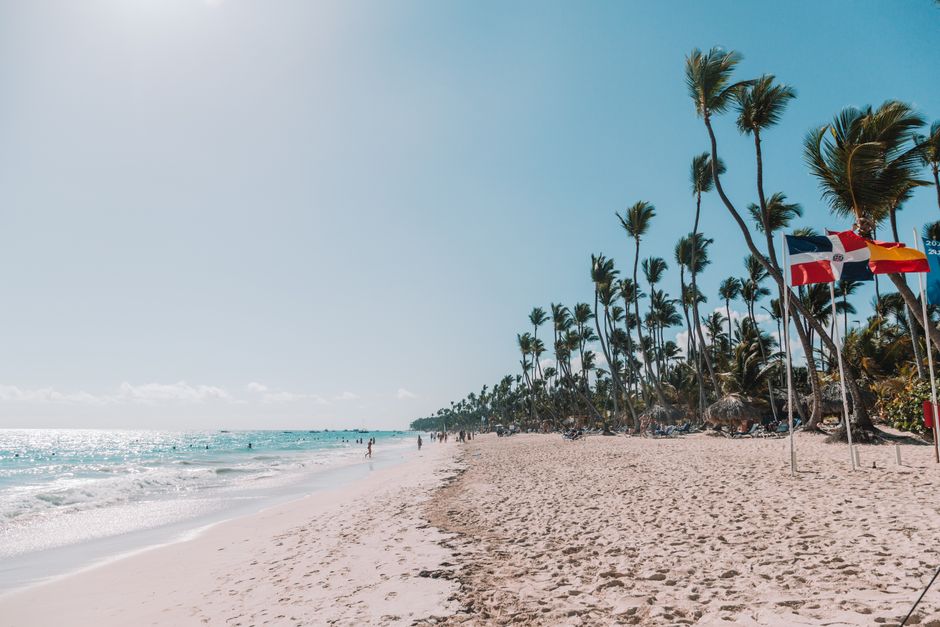
Punta Cana is the name most people use for the whole eastern tip of the Dominican Republic: some 30 miles (50 km) of palm-fringed Atlantic beaches running from Cap Cana in the south through Punta Cana and Bávaro to Macao and Uvero Alto. The sand is white and soft, the water inside the reef is calm and turquoise, and the coast is lined with many of the Caribbean’s biggest all-inclusive resorts, golf courses and marinas. It is the easiest beach escape in the region, with nonstop flights from across North America and Europe landing a few minutes from the hotels. Beyond the sun loungers you can snorkel the reef from a catamaran, swim in the Hoyo Azul sinkhole, surf at Macao, walk the freshwater lagoons of a private nature reserve and take a boat to Saona Island. The best weather is from December to April; summer and fall are hotter, cheaper, sometimes stormy, and the main season for sargassum seaweed.
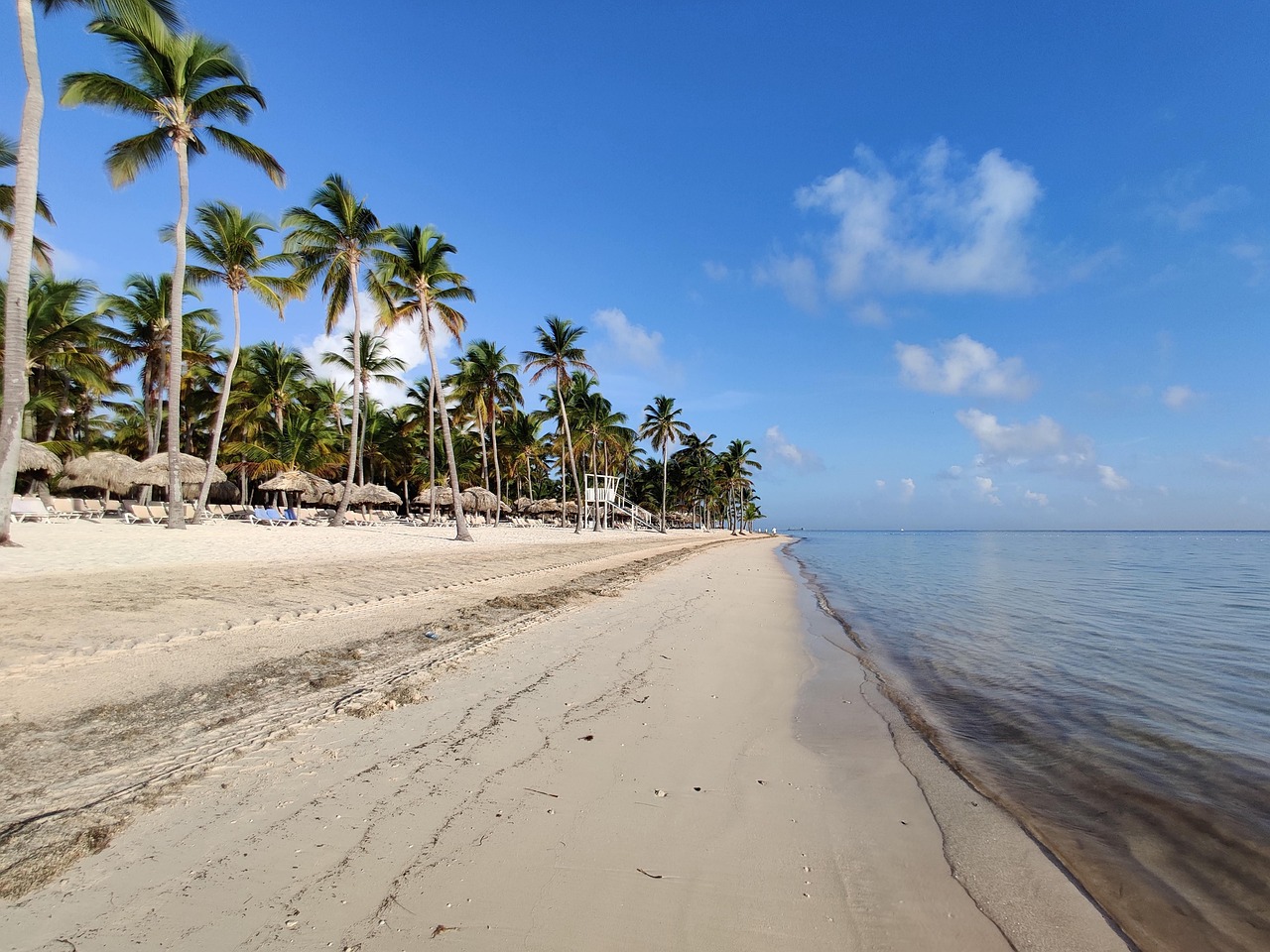
Right now in Punta Cana
- Wed25–29°C77–85°F6 mm rain
- Thu24–30°C76–86°F7 mm rain
- Fri27–30°C81–87°F2 mm rain
Top tours in Punta Cana
See all tours for Punta Cana →
From local operators, with prices and reviews; you check availability and book on Viator, our partner. We may earn a commission at no extra cost to you. How we earn money
Punta Cana at a glance
- Best for: beach holidays, all-inclusive resorts, families and couples, catamaran and snorkeling trips, golf, and an easy first trip to the Caribbean.
- How long: 5 to 7 nights; add 2 nights in Santo Domingo for culture.
- Best time: December to April, with highs of 83–87 °F (28–30 °C) and the driest weather. June to November is hurricane season.
- Getting there: fly to Punta Cana International Airport (PUJ), 15 to 45 minutes from most resorts; or drive about 2.5 to 3 hours from Santo Domingo.
- Getting around: resort shuttles, authorized taxis, Uber and organized excursions; a rental car is optional.
- Before you go: fill in the free e-ticket for arrival and departure, and read our Dominican Republic travel guide for entry rules, money and safety.
Punta Cana’s beach areas and who each one suits
The resort coast is long and spread out, so where you stay shapes your trip. There is no real town center; life revolves around the resorts, a few beachside villages and the shopping plazas of Bávaro and Friusa.
Bávaro and Playa Los Corales
The heart of the resort coast, with the longest continuous beach and the widest choice of hotels at every price. Playa Bávaro and the El Cortecito and Los Corales area have beach bars, restaurants, dive shops and boat operators, so it is the best base if you want to step outside your resort. Best for first-timers and anyone who wants options.
Punta Cana and Cap Cana
The area around the airport and to the south. Punta Cana proper has the Puntacana Resort, its marina, golf courses and the Indigenous Eyes Ecological Reserve; Cap Cana, further south, is a gated luxury development with a marina, Juanillo Beach, villas, golf and Scape Park with the Hoyo Azul sinkhole. Quieter and more upscale, and the closest to the airport.
Cabeza de Toro and Cortecito
Between Bávaro and Punta Cana, these smaller stretches have mid-size hotels, calmer water protected by the reef and a more local feel, with fishing boats pulled up on the sand. Good value for couples and families.
Uvero Alto and Macao
North of Bávaro, Uvero Alto is the most remote beach zone, with newer adults-only and family resorts, a wilder coast and stronger waves; allow 45 minutes or more from the airport. Macao Beach is an undeveloped, public beach with golden sand and surf schools, popular on buggy and horseback tours.
Top things to see in Punta Cana
Prices below are a guide as of October 2026 unless we say otherwise; check with the operator before you go.
The beaches
Punta Cana’s beaches are the main event: wide, white and backed by coconut palms, with an offshore reef that keeps much of the water calm. Bávaro and Los Corales are the liveliest; Juanillo at Cap Cana is the most polished; Cabeza de Toro is calmer; Macao and Uvero Alto are wilder, with bigger waves. All beaches in the Dominican Republic are public up to the high-water line, so you can walk along the shore past the resorts, although the sun loungers belong to the hotels.
Hoyo Azul and Scape Park, Cap Cana
Hoyo Azul is a natural sinkhole of clear blue freshwater at the foot of a limestone cliff, inside Scape Park at Cap Cana. You reach it on a short jungle trail and can swim in the cool, still water. The park also has ziplines, cenote-style caves, a Dominican village recreation and buggy tours, sold as half-day or full-day packages; book directly with the park or through your hotel.
Indigenous Eyes Ecological Reserve
Run by the nonprofit Puntacana Foundation next to the Puntacana Resort, this private reserve protects a patch of native coastal forest with a dozen freshwater lagoons fed by underground springs, connected by walking trails. You can swim in some of the clear lagoons, see native plants and birds, and visit the foundation’s conservation projects, including coral restoration. It is a peaceful change from the beach; check opening times and fees with the foundation.
Higüey and the Basilica of Our Lady of Altagracia
About 45 minutes inland, the provincial capital of Higüey is home to the Basilica of Our Lady of Altagracia, a modernist concrete church with a soaring arch, completed in the 1970s to house the image of the country’s patron saint. Every 21 January, tens of thousands of pilgrims arrive for her feast day. Dress modestly to go inside.
More to see
- Macao Beach: a natural public beach for surfing lessons and a local fish lunch.
- Cap Cana and Puntacana marinas: waterfront restaurants and departure points for fishing and sailing charters.
- Bávaro’s shopping plazas: local crafts, larimar jewelry, cigars and rum.
- Manatí Park and dolphin programs: popular with families; check how animals are kept before you book.
Other things to do in Punta Cana
Snorkeling, diving and catamaran trips
A coral reef runs parallel to much of the coast. The classic outing is a half-day catamaran trip with a snorkeling stop on the reef and a swim at a shallow sandbank “natural pool”, often with music and an open bar. Dive centers in Bávaro and Cabeza de Toro take certified divers to local reefs and wrecks and run beginner courses in resort pools. Visibility is usually best from spring to fall on calm days. Don’t stand on or touch coral, don’t feed fish, and choose operators that brief you on reef rules.
Saona Island
Saona Island, inside Cotubanamá National Park, is the country’s most popular day trip: long beaches of white sand and palms, a stop at a shallow sandbar with starfish, and lunch on the beach. Most trips from Punta Cana drive you about 1 to 1.5 hours to Bayahibe for the boat. Do not pick up the starfish, and choose operators who keep to the park rules. See our La Romana travel guide for more on Saona and Catalina.
Golf, surfing and adventure
Punta Cana has some of the Caribbean’s most celebrated golf courses, several of them along the sea at Puntacana Resort and Cap Cana. Surf schools teach on the beach breaks at Macao, and kitesurfers ride the trade winds off Cabeza de Toro. Buggy tours, horseback rides, ziplines and deep-sea fishing charters are easy to book through any hotel.
Beach safety and sargassum
Most beaches inside the reef are calm, but currents can be strong at reef gaps, river mouths and the exposed beaches of Macao and Uvero Alto, especially when winter swells arrive. Swim where hotels post lifeguards, respect red flags and stay well clear of boat lanes marked with buoys.
Sargassum, a floating brown seaweed, washes up on Caribbean beaches in large amounts in some years, and Punta Cana’s east-facing coast is among the most affected in the country. It usually arrives between about April and September. According to the University of South Florida’s Sargassum Watch, 2026 has been one of the largest sargassum years on record, with record-high amounts in the Caribbean for June; its September 2026 outlook reported amounts declining in every region but still high for the time of year, and expected to keep falling until about November. The Ministry of Environment ran special beach-cleaning operations on the east coast in summer 2026, and the National Maritime Affairs Authority (ANAMAR) publishes satellite monitoring of Dominican waters. Resorts rake their beaches every morning and some use floating barriers; if seaweed is a worry, travel from November to March, or ask your hotel about recent conditions before you book.
Day trips and onward travel
Bayahibe and Catalina Island
The fishing village of Bayahibe, about 1 to 1.5 hours away, is the gateway to Saona and Catalina islands and the best diving on the south coast. Catalina has a shallow coral garden and a dramatic reef wall for snorkelers and divers.
Santo Domingo
The capital’s Zona Colonial, with the first cathedral in the Americas and the Alcázar de Colón, is about 2.5 to 3 hours away by road. Tour companies run long day trips, but it is better to spend a night or two; see our Santo Domingo travel guide.
Altos de Chavón and La Romana
The stone village of Altos de Chavón above the Chavón River, part of Casa de Campo, is about 1.5 hours west and often combined with a Saona or Catalina trip.
Samaná
From January to March, long-day tours, and some small flights, go to Samaná Bay for whale-watching. It is a very long day by road; our Samaná travel guide explains how to stay on the peninsula instead.
Nearby destinations
- La Romana65 km
- Rincón120 km
- Samaná137 km
- Santo Domingo166 km
- San Juan237 km
- El Yunque National Forest274 km
- Puerto Plata281 km
Getting there and getting around
By air
Punta Cana International Airport (PUJ) is the busiest airport in the Dominican Republic and one of the few privately owned international airports in the world, run by Grupo Puntacana. Its two terminals, A and B, have direct flights from dozens of cities, including about 2 hours from Miami and Fort Lauderdale and around 4 hours from New York. Authorized taxis and Uber pick-up areas are at both terminals, and most package holidays include a resort transfer. Allow about 15 minutes to Cap Cana or Punta Cana, 25 to 35 minutes to Bávaro and 45 minutes or more to Uvero Alto.
Before you fly, complete the free e-ticket at eticket.migracion.gob.do for arrival, and another for departure; the airport says it is required by immigration, customs and health authorities. The US$10 tourist card and the US$20 departure tax are included in airline tickets issued abroad. If you are returning to the US, see our United States travel guide for entry rules.
By road from Santo Domingo
The Autovía del Este and the Coral Highway (Autovía del Coral) link Santo Domingo with La Romana, Higüey and Punta Cana, a drive of about 2.5 to 3 hours, roughly 125 miles (200 km), with tolls paid in pesos. Expreso Bávaro buses run between the capital and Bávaro several times a day, and private transfers are easy to book.
Getting around
Distances between beach areas are long and there is little public transport for visitors, apart from local guaguas along the main road. Use your hotel’s shuttle, authorized taxis or Uber; agree taxi fares in advance, as many are fixed by zone and quoted in US dollars. Car rental is available at the airport, but most visitors don’t need one unless they want to explore independently. Avoid driving at night on rural roads.
When to go and how long to stay
Punta Cana is warm all year, with steady trade winds and less rain than Santo Domingo or Samaná. The table uses the 1991–2020 climate normals that the Dominican weather service submitted to the World Meteorological Organization for its Punta Cana station: average daily highs and lows and average rain per month.
| Season | Average high / low | Rain per month | What it’s like | Good for |
|---|---|---|---|---|
| Winter (Dec–Feb) | 83–85 °F (28–29 °C) / 70–71 °F (21–22 °C) | 2.5–3.6 in (63–91 mm) | Sunny and breezy, the least humid time; cooler evenings | Beach weeks, golf; peak prices around Christmas and February |
| Spring (Mar–May) | 84–87 °F (29–30 °C) / 71–74 °F (22–24 °C) | 2.0 in in March rising to 5.1 in in May (50–129 mm) | March and April are the driest months; showers return in May | Easter, snorkeling, calm seas; sargassum may begin |
| Summer (Jun–Aug) | 88–90 °F (31–32 °C) / 76 °F (24 °C) | 3.3–4.2 in (85–107 mm) | Hot and humid, short showers, warm sea | Diving, family holidays, good deals outside July and August |
| Fall (Sep–Nov) | 89 °F falling to 87 °F (32 to 30 °C) / 75 °F falling to 73 °F (24 to 23 °C) | 4.9–5.3 in (124–135 mm) | The wettest months and the peak of hurricane season | The lowest prices; quieter beaches |
The station averages about 46 in (1,160 mm) of rain a year, less than most of the country.
Hurricane season: according to NOAA’s National Hurricane Center (NHC), the Atlantic hurricane season runs from 1 June to 30 November, with most activity from mid-August to mid-October. The eastern tip of Hispaniola lies on the path of many storms, and resorts have hurricane plans and generators. As of 4 October 2026, the 2026 season had brought eight tropical storms and no hurricanes; in late August, the remnants of Tropical Storm Dolly brought heavy rain to the east, and the Emergency Operations Center (COE) placed La Altagracia province on a green alert. Follow the NHC and the Dominican weather service (INDOMET), do what your hotel and the COE advise, and buy travel insurance that covers hurricane disruption.
How long to stay: 4, 7 and 10 days
4 days: two beach days, a half-day catamaran and snorkeling trip, and an afternoon at Hoyo Azul or the Indigenous Eyes reserve.
7 days: add a full-day trip to Saona Island, a morning surf lesson or dive at Macao or Cabeza de Toro, a round of golf or a buggy tour, and a visit to the basilica in Higüey.
10 days: spend a week on the beach, then transfer to Santo Domingo for two or three nights in the Zona Colonial, flying home from Las Américas airport.
Where to stay in Punta Cana and the hotel tax
- Bávaro and Los Corales: the biggest choice of all-inclusive resorts, plus apartments and small hotels near beach bars and restaurants.
- Punta Cana and Cap Cana: luxury resorts, villas and marina hotels close to the airport.
- Cabeza de Toro and Cortecito: mid-size resorts and good-value hotels on calmer beaches.
- Uvero Alto: newer, secluded resorts, many adults-only, 45 minutes or more from the airport.
Most visitors stay all-inclusive, and package prices sold abroad usually include taxes. When rates are quoted before tax, Dominican hotels add the 18% ITBIS (the national value-added tax) and a 10% legal service charge, 28% in all, as of October 2026, so compare total prices. Prices peak from Christmas to Easter and fall sharply from late August to early November. If you rent a private villa or apartment, check that the total includes tax and cleaning fees.
Practical tips for Punta Cana
- Tips: the 10% service charge is included, but small cash tips (about US$1–2 or RD$50–100) for bartenders, servers and housekeeping are common and appreciated.
- Money: the currency is the Dominican peso; US$1 was about RD$60 in October 2026. Dollars are widely accepted in Punta Cana, but you often get a better deal in pesos.
- Water: don’t drink the tap water; resorts provide bottled water.
- Excursions: book through your hotel or licensed operators with insurance and life jackets; avoid touts on the beach.
- Sun: the sun is fierce even on cloudy days; use reef-safe sunscreen and a rash vest.
- Emergencies: call 911; the CESTUR tourist police has officers in the resort areas.
What to pack for Punta Cana
Pack for the beach and the boat: several sets of swimwear, a rash vest, reef-safe sunscreen, a hat, sunglasses, flip-flops and water shoes for reefs and the sinkhole. Bring a dry bag and seasickness tablets for catamaran and speedboat trips to Saona, insect repellent for dusk, and a light rain jacket from May to November. Many resort à la carte restaurants have a dress code in the evening, often long pants and closed shoes for men, so bring one smarter outfit. Visitors from Europe and the UK need a type A/B plug adapter.
Punta Cana travel FAQ
How far is Punta Cana airport from the hotels?
About 15 minutes to Punta Cana and Cap Cana, 25 to 35 minutes to Bávaro and 45 minutes or more to Uvero Alto. Taxis and Uber pick up at both terminals.
Do I need to fill in a form to fly to Punta Cana?
Yes. Every passenger on a commercial flight must complete the free e-ticket at eticket.migracion.gob.do, one for arrival and one for departure, and show its QR code. The tourist card and departure tax are already in your airfare.
When is sargassum season in Punta Cana?
Seaweed usually arrives between about April and September, and 2026 has been one of the heaviest years on record. Resorts clean beaches daily; November to March usually has the least.
What is the hotel tax in Punta Cana?
As of October 2026, 18% ITBIS plus a 10% service charge, 28% in total, when prices are quoted before tax. Most packages bought abroad already include them.
Is it worth taking the Saona Island trip from Punta Cana?
For most visitors, yes: it is the classic Dominican boat trip, with long white beaches and a starfish sandbar. It is a long day, as you first drive about 1 to 1.5 hours to Bayahibe.
Can I use US dollars in Punta Cana?
Yes, dollars are widely accepted at resorts, by taxis and on excursions, but paying in pesos is usually cheaper in local shops and restaurants.
Are the beaches in Punta Cana public?
Yes. Dominican beaches are public up to the high-water line, so you can walk the shore past the resorts, though loungers and facilities belong to the hotels.
When is the best time to visit Punta Cana?
December to April for the driest, least humid weather. May, June and November are good-value shoulder months; September and October are the wettest and the peak of hurricane season.
How do I get from Punta Cana to Santo Domingo?
By road, about 2.5 to 3 hours on the Autovía del Este and the Coral Highway, by private transfer, rental car or Expreso Bávaro bus.
Is Punta Cana safe for tourists?
Most stays are trouble-free. Use the hotel safe, take authorized taxis or Uber at night, swim where lifeguards are posted, and call 911 or the CESTUR tourist police if you need help.
Plan your trip
Partner links: TravelerCenter may earn a commission if you book, at no extra cost to you.
🇪🇸 Useful Spanish phrases for Punta Cana
All 38 Spanish phrases: restaurant, hotel, emergencies, romance (printable) →
Sources · last reviewed 4 October 2026
Researched and last reviewed on 4 October 2026. Airport operator, terminals, taxis, Uber pick-up and e-ticket requirement: Punta Cana International Airport; e-ticket rules: the Dominican Presidency and the Ministry of Tourism; tourist card: the tax authority (DGII); departure tax, tipping and tap water: the Ministry of Tourism; ITBIS: the DGII; exchange rate: the Central Bank; climate: the WMO 1991–2020 normals for the Punta Cana station; hurricane season: NOAA’s National Hurricane Center; Tropical Storm Dolly alerts: the Pan American Health Organization’s hazard monitoring; sargassum: the University of South Florida’s Sargassum Watch outlook bulletins and the ANAMAR monitoring page. Beach lengths, transfer times, Hoyo Azul, the Indigenous Eyes reserve, the basilica, Saona trip times and the environment ministry’s cleanup operations come from general references or press reports and are flagged for checking. Prices and timetables change, so check the official sites before you go.
Data: Weather: MET Norway (CC BY 4.0) · Sea temperature: NOAA CoastWatch · Rates: ECB · Costs: World Bank ICP and price levels · Wikidata (CC0)