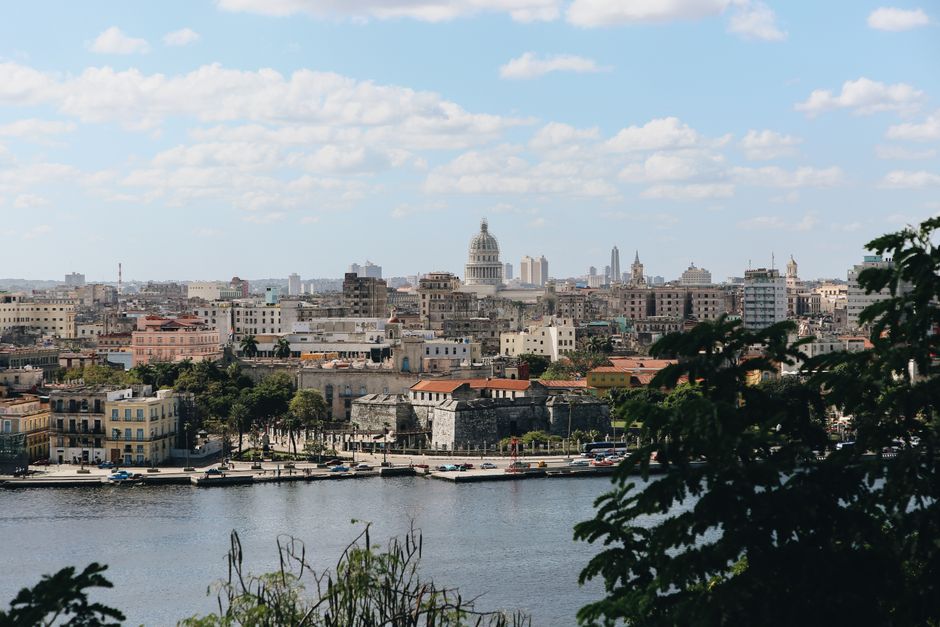
Havana, Cuba’s capital, spreads along the north coast around a deep harbor, from the colonial lanes of Old Havana to the Art Deco and modernist blocks of Vedado and the leafy avenues of Miramar. It is a city of faded grandeur and constant music, where restored palaces stand next to buildings held up by scaffolding, 1950s American cars serve as taxis, and the whole city seems to gather on the Malecón seawall at sunset. Old Havana and its fortifications have been a UNESCO World Heritage Site since 1982. Visiting in 2026 takes patience: power cuts are long and frequent, fuel is scarce, many shelves are empty and some flights have been cut. But the city is safe to walk, its people are warm, and its private restaurants, bars and music venues are lively. December to April is the most comfortable time to visit.
Right now in Havana
- Wed25–31°C76–87°F8 mm rain
- Thu23–31°C74–88°F4 mm rain
- Fri25–32°C76–90°F3 mm rain
- Sat 10 Oct Independence Day (Día de la Independencia)
Top tours in Havana
See all tours for Havana →
From local operators, with prices and reviews; you check availability and book on Viator, our partner. We may earn a commission at no extra cost to you. How we earn money
Havana at a glance
- Best for: colonial architecture, classic cars, live music, museums, rum and cigars, and a first taste of Cuba.
- How long: 3 days for the highlights; 4–5 days to add the beaches, Hemingway’s house or a day trip.
- Best time: November to April, with highs of about 26–29 °C (78–83 °F) and the least rain; May to October is hot, humid and rainy, and hurricane season.
- Getting there: José Martí International Airport (HAV) is about 15 km (9 miles) south of the center; in 2026 several airlines have cut or suspended flights because of the jet fuel shortage.
- Getting around: walk Old Havana; use official taxis, classic-car taxis, bici-taxis or apps between districts.
- Before you go: get the e-visa and complete D’Viajeros; bring all your money in cash if you have US-issued cards. Entry rules, US travel categories and money are in our Cuba travel guide; for US rules on the way home, see our United States travel guide.
Havana’s areas and who each one suits
Old Havana (La Habana Vieja)
The historic heart, with the four main squares, museums, churches, restored hotels, paladares and bars, plus the busy shopping streets of Obispo and O’Reilly. Best for first-time visitors who want to walk everywhere. Expect crowds of street vendors and hustlers, and some streets of decaying buildings just off the restored routes.
Centro Habana
The dense, lively district between Old Havana and Vedado, with the Malecón on one side, the Chinese quarter, the Callejón de Hamel’s Afro-Cuban murals and many casas particulares. It is the most authentic and the most run-down part of the center; streets are dark during blackouts.
Vedado
Havana’s 20th-century center, with tree-lined streets, mansions, the Hotel Nacional, the university, La Rampa, the Plaza de la Revolución, jazz clubs and many of the best paladares. Best for a slightly calmer, more residential stay with easy access to nightlife.
Miramar and Playa
The western districts of embassies, big villas, modern hotels and some of the city’s most stylish restaurants, plus Fusterlandia in Jaimanitas. Best if you have a car or don’t mind taxis.
Top things to see in Havana
Opening hours and prices change often, and power cuts can close museums without notice; check locally before you go.
The four squares of Old Havana
Start at the Plaza de Armas, the oldest square, with its second-hand book market and the Palacio de los Capitanes Generales, now the city museum. Walk to the Plaza de la Catedral with its baroque cathedral, the Plaza de San Francisco by the harbor, and the Plaza Vieja, surrounded by restored mansions, cafés and a microbrewery. The route takes a morning at a slow pace, longer with museum stops.
The Malecón
Havana’s 8 km (5-mile) seafront boulevard runs from Old Havana to Vedado and is the city’s living room, where people fish, flirt, play music and watch the waves. Walk or take a classic-car ride along it at sunset. During winter cold fronts, waves break over the wall and parts of the road close.
El Morro and La Cabaña
The 16th-century Castillo de los Tres Reyes del Morro guards the harbor mouth, with its lighthouse and views back over the city. The huge 18th-century fortress of San Carlos de la Cabaña next to it holds museums, and every night at 9 pm soldiers in period uniform fire a cannon in the cañonazo ceremony, a tradition from colonial times when it signaled the closing of the city gates.
The Capitolio and Paseo del Prado
The domed Capitolio, modeled on the US Capitol and finished in 1929, now houses Cuba’s National Assembly and can be visited on guided tours. Nearby are the ornate Gran Teatro de La Habana, home of the national ballet, the Parque Central and the Paseo del Prado, a tree-lined promenade running down to the sea.
Museums
The Museo Nacional de Bellas Artes has two buildings, one for Cuban art from colonial times to today and one for international art. The Museo de la Revolución is housed in the former presidential palace, with the Granma yacht that brought Fidel Castro’s rebels from Mexico in 1956 displayed outside. The Museo del Ron and the small Museo del Chocolate are popular stops in Old Havana.
Plaza de la Revolución and Vedado
The vast square where Fidel Castro gave his speeches is overlooked by the José Martí Memorial and the steel outlines of Che Guevara and Camilo Cienfuegos on government buildings. Nearby, the Colón Cemetery is one of the grandest in the Americas, and the Hotel Nacional’s garden terrace looks out over the Malecón.
More to see
- Fusterlandia: artist José Fuster’s neighborhood in Jaimanitas, covered in colorful mosaics.
- Callejón de Hamel: an alley of Afro-Cuban murals in Centro, with rumba sessions on Sunday afternoons.
- Finca Vigía: Ernest Hemingway’s hilltop house in San Francisco de Paula, about 15 km (9 miles) southeast of the center, kept as he left it.
- Fábrica de Arte Cubano: a former cooking-oil factory in Vedado turned into a gallery, concert venue and nightclub, open in the evenings from Thursday to Sunday.
- Cristo de La Habana: a large marble statue of Christ on the hill above Casablanca, across the harbor, with sweeping views.
Other things to do in Havana
Music, dance and nightlife
Live music is everywhere, from son bands in Old Havana bars to jazz at La Zorra y el Cuervo and the Jazz Café in Vedado, Buena Vista Social Club-style shows, salsa clubs and the Fábrica de Arte Cubano. Take a salsa class, catch the national ballet at the Gran Teatro, or see a cabaret show at the Tropicana, the open-air club in Marianao that has run since 1939.
Classic cars and city tours
Hire a 1950s convertible by the hour from the Parque Central or the Capitolio for a ride along the Malecón, through Vedado and to the Plaza de la Revolución. Walking tours, cycling tours and architecture tours are offered by private guides. See our city sightseeing guide.
Beaches
The Playas del Este, about 20–25 km (12–15 miles) east of the center, are Havana’s beaches: Santa María del Mar and Guanabo are long stretches of white sand where Cubans spend summer weekends. Go by taxi; there are few services and little shade. See our beaches guide.
Food and drink
Eat at private paladares, from rooftop restaurants with harbor views to family-run dining rooms, and try the classic cocktails: the daiquiri at El Floridita and the mojito at La Bodeguita del Medio, both linked to Hemingway. Many paladares price in dollars or euros, and ingredients can be limited, so menus change daily.
Day trips and onward travel
Viñales
About 180 km (110 miles) west, 2.5–3 hours by road: tobacco farms, the mogotes and caves of a UNESCO-listed valley. Better with an overnight stay. See our Viñales travel guide.
Varadero
About 140 km (87 miles) east, around 2–2.5 hours: Cuba’s biggest beach resort. Stop at the Bacunayagua Bridge viewpoint and the city of Matanzas on the way. See our Varadero travel guide.
Las Terrazas
About 75 km (47 miles) west in the Sierra del Rosario, an eco-village with river pools, ruins of coffee plantations, hiking and ziplines.
Trinidad and Cienfuegos
Trinidad is about 330 km (205 miles) and five hours away, via Cienfuegos; too far for a day trip but a good next stop. See our Trinidad travel guide.
Nearby destinations
- Varadero110 km
- Viñales151 km
- Key West169 km
- Florida Keys188 km
- Trinidad287 km
- Everglades National Park295 km
Getting there and getting around
By air
José Martí International Airport (HAV) is Cuba’s main airport, about 15 km (9 miles) south of the center; international flights use Terminal 3. A taxi to Old Havana or Vedado takes 25–40 minutes; agree the fare before you get in, or book a transfer through your hotel or casa. In 2026, jet fuel has been unavailable at Cuban airports for long periods, so airlines either carry fuel for the return trip, refuel elsewhere or have suspended flights; flights from Miami and other Florida airports have continued, along with some from Cancún, Panama and Madrid. Check your flight close to departure. Have your e-visa code and D’Viajeros QR code ready, and change only a little money at the airport.
By sea
Cruise ships from the United States stopped calling in 2019, and very few international cruises visit Havana now. Private yachts clear in at Marina Hemingway in the western suburbs.
Getting around
Walk in Old Havana. Between districts, use official yellow or black-and-yellow taxis, classic-car taxis (almendrones), shared taxis on fixed routes, bici-taxis and coco-taxis, or ride-hailing apps such as La Nave where they work. Agree fares first and carry small notes. City buses are crowded and irregular in 2026. Viazul coaches leave from their terminal near the zoo in Nuevo Vedado for Viñales, Varadero, Trinidad and other cities; book ahead, as fuel shortages have cut departures.
When to go and how long to stay
Havana is warm all year, with a drier season from November to April and a hot, rainy season from May to October. The table uses long-term averages published by the World Meteorological Organization’s World Weather Information Service, with data from Cuba’s Institute of Meteorology (INSMET).
| Season | Average high / low | Rain per month | What it’s like | Good for |
|---|---|---|---|---|
| Winter (Dec–Feb) | 26 °C (79 °F) / 19–20 °C (65–67 °F) | 58–69 mm (2.3–2.7 in) | Sunny and pleasant; cold fronts bring cooler, windy days and big waves on the Malecón | Walking, sightseeing, the Jazz Festival |
| Spring (Mar–May) | 28–30 °C (82–86 °F) / 20–22 °C (67–72 °F) | 46–54 mm (1.8–2.1 in), then 98 mm (3.9 in) in May | Driest and sunniest until May | City touring, beaches, cigar festival |
| Summer (Jun–Aug) | 31–32 °C (87–89 °F) / 23–24 °C (73–75 °F) | 100–182 mm (3.9–7.2 in) | Hot, humid, afternoon storms; June is the wettest month | Beaches, Cuban summer life |
| Autumn (Sep–Nov) | 28–31 °C (82–88 °F) / 21–24 °C (70–75 °F) | 88–181 mm (3.5–7.1 in) | Rainy and humid until late October; peak hurricane risk | Lower prices, with flexible bookings |
Hurricane season: according to NOAA’s National Hurricane Center (NHC), the Atlantic hurricane season runs from 1 June to 30 November, with most activity between mid-August and mid-October. Hurricane Rafael made landfall in Artemisa province, just west of Havana, as a Category 3 on 6 November 2024, bringing down trees and power lines across the capital. As of 4 October 2026, the 2026 season had produced eight tropical storms and no hurricanes, and none had affected Cuba, according to the NHC. During storms and winter cold fronts, the sea floods parts of the Malecón and low-lying Centro Habana.
How long to stay: 3, 4 and 5 days
3 days: day one, the four squares of Old Havana and the Museo de Bellas Artes; day two, the Capitolio, Prado, Malecón and a classic-car tour of Vedado and the Plaza de la Revolución, with the cañonazo at La Cabaña at night; day three, Fusterlandia, Miramar and an evening of live music.
4 days: add Hemingway’s Finca Vigía and a beach afternoon at Santa María del Mar. 5 days: add a day trip to Las Terrazas, or go on to Viñales or Varadero.
Where to stay in Havana and hotel taxes
- Old Havana: restored colonial hotels and casas particulares in the middle of everything.
- Centro Habana: the most casas, good value, close to the Malecón; noisy and dark during blackouts.
- Vedado: large hotels, casas in old mansions, and the best nightlife; a short taxi ride from Old Havana.
- Miramar: modern hotels and quieter villas, best with transport.
Room rates are normally quoted with taxes included, without a separate nightly tourist tax at checkout. Casas particulares quote one nightly price and often offer breakfast for a few dollars more. US travelers should check that their hotel is not on the US State Department’s Cuba Prohibited Accommodations List; many stay in private casas. Ask before booking whether the property has a generator or backup power and water tanks.
Practical tips for Havana
- Cash: US-issued cards don’t work; bring US dollars or euros in good condition, including small notes.
- Blackouts: carry a flashlight and power bank, and expect Wi-Fi, air conditioning and card machines to stop.
- Prices: check whether a price is in pesos, dollars or euros, and agree taxi fares before you set off.
- Hustlers: polite but firm refusals work; don’t buy cigars on the street.
- Water: drink bottled or treated water.
- Photography: ask before photographing people, and don’t photograph police or military sites.
- Emergencies: call 106 for police and 104 for an ambulance.
What to pack for Havana
Pack light, breathable clothes, a sun hat, sunglasses and high-factor sunscreen, comfortable walking shoes for broken pavements, a light rain jacket from May to October, a light layer for winter evenings, insect repellent, a headlamp, a power bank, a travel adapter for US and European sockets, a basic medical kit with all your medicines, and enough cash for the whole stay.
Havana travel FAQ
How far is Havana airport from the city center?
About 15 km (9 miles), or 25–40 minutes by taxi to Old Havana or Vedado. Agree the fare before you get in.
Is Havana safe for tourists?
Violent crime against visitors is uncommon. Watch for pickpockets, bag snatching and scams, and take a taxi at night, when blackouts leave many streets dark.
Are there blackouts in Havana?
Yes. Havana has daily power cuts in 2026, usually shorter than in the provinces, and the whole grid failed on 18 September 2026. Large hotels have generators; many casas don’t.
Can I use my credit card in Havana?
Not if it was issued by a US bank. Cards issued elsewhere work in some hotels, state shops and restaurants, but bring cash as a backup.
What is the best time to visit Havana?
November to April, when it is drier and less humid. Avoid the peak of hurricane season in September and October if you can.
How many days do you need in Havana?
Three days covers Old Havana, the Malecón, Vedado and the fortresses; four or five days adds Hemingway’s house, the beaches or a day trip.
Where should I stay in Havana?
Old Havana for sightseeing on foot, Vedado for restaurants and nightlife, and Centro Habana for value. Ask whether your place has backup power and water.
Can Americans stay in Havana hotels?
Only at hotels not on the State Department’s Cuba Prohibited Accommodations List, under one of the 12 authorized travel categories. Many US travelers stay in private casas particulares.
Where are the beaches near Havana?
The Playas del Este, 20–25 km (12–15 miles) east of the center, including Santa María del Mar and Guanabo. Varadero is about two hours away.
What is the cañonazo?
A nightly ceremony at 9 pm at the La Cabaña fortress, where soldiers in colonial uniforms fire a cannon, as was done to signal the closing of the city gates.
Plan your trip
Partner links: TravelerCenter may earn a commission if you book, at no extra cost to you.
🇪🇸 Useful Spanish phrases for Havana
All 38 Spanish phrases: restaurant, hotel, emergencies, romance (printable) →
Sources · last reviewed 4 October 2026
Researched and last reviewed on 4 October 2026. Entry rules come from Cuba’s Ministry of Foreign Affairs (e-visa and D’Viajeros); the US travel categories and the Cuba Prohibited Accommodations List from the US Treasury’s Office of Foreign Assets Control; Hurricane Rafael and the 2026 season from NOAA’s National Hurricane Center; the climate averages from the WMO World Weather Information Service (INSMET data). Blackouts, flight disruptions, transport, opening hours, sights and distances come from press reports and general references and are flagged for checking. Prices and schedules change quickly, so check locally. For entry rules and money, see our Cuba travel guide; for US rules on the way home, see our United States travel guide.
Data: Weather: MET Norway (CC BY 4.0) · Sea temperature: NOAA CoastWatch · Rates: ECB · Holidays: Nager.Date · Wikidata (CC0)