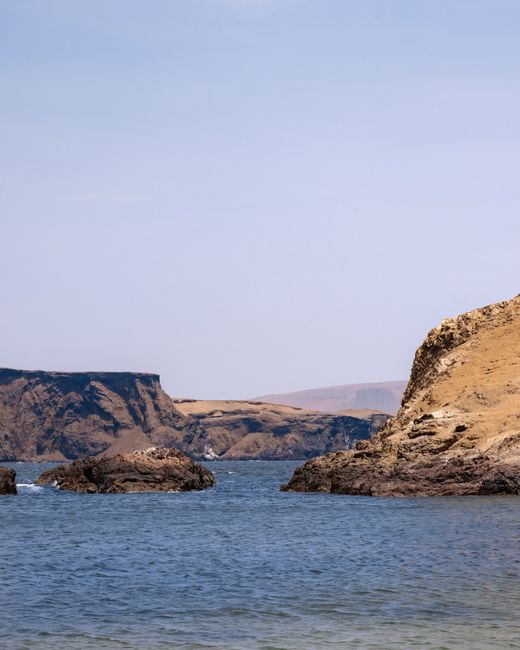
Paracas is a small resort town on a sheltered bay on Peru’s desert south coast, about 250 km (155 miles) south of Lima, and the base for one of the country’s best wildlife trips: a morning boat ride to the Ballestas Islands, rocky arches covered with tens of thousands of seabirds, sea lions and Humboldt penguins. On land, the Paracas National Reserve protects a wild desert peninsula of ocher cliffs, red and golden beaches and flamingo-filled shallows, the home of the ancient Paracas culture famous for its textiles. Paracas is also a convenient stop for the sand dunes of the Huacachina oasis, the pisco wineries of Ica and flights over the Nazca Lines. It is sunny most of the year, with a strong wind in the afternoons; in 2026–27 an unusually strong coastal El Niño is expected to bring extra heat to the coast.
Right now in Paracas
- Wed17–27°C63–81°FMostly clear
- Thu19–27°C65–81°FClear
- Fri19–28°C67–82°FClear
- Thu 8 Oct Battle of Angamos (Combate de Angamos)
Top tours in Paracas
See all tours for Paracas →
From local operators, with prices and reviews; you check availability and book on Viator, our partner. We may earn a commission at no extra cost to you. How we earn money
Paracas at a glance
- Best for: wildlife boat trips, desert and coastal scenery, kitesurfing, pisco and sand dunes, and the Nazca Lines.
- How long: 1–2 nights for the Ballestas Islands and the reserve; 3 days with Huacachina, Ica and Nazca.
- Best time: December to April for sunny, warm beach weather; the rest of the year is cooler and often hazy in the mornings. Boat trips run all year, weather permitting.
- Getting there: about 3.5–4 hours from Lima by long-distance bus or car along the Pan-American Highway.
- Before you go: entry rules, money and general safety are in our Peru travel guide.
Paracas: where things are
The small town is strung along the bay, with the El Chaco pier, where Ballestas boats leave, a waterfront promenade of restaurants and agencies, and resort hotels along the beach to the south. The entrance to the Paracas National Reserve is just south of town. The bigger town of Pisco is about 20 km (12 miles) north, and Ica, the regional capital, about 70 km (43 miles) south-east.
Areas at a glance
- El Chaco: the village center around the pier, with the boat ticket offices, a small square, seafood restaurants, budget hotels and hostels; lively in the morning and around sunset.
- The bay resorts: a strip of upmarket hotels with private beaches and pools south of the pier, toward the reserve entrance; quiet and self-contained.
- Santo Domingo and the north shore: newer condominiums and kitesurf schools along the bay toward the airport road.
- Pisco: the larger town about 20 km (12 miles) north, rebuilt after the 2007 earthquake, with banks, markets and cheaper lodging, but little to see.
- Ica and Huacachina: the regional capital and the oasis about an hour south-east, a separate base for dunes and wineries.
The Paracas culture and the guano islands
The peninsula gave its name to the Paracas culture, which flourished on this coast from about 800 BC to 100 AD. Archaeologists working in the 1920s found large cemeteries here with mummy bundles wrapped in some of the finest textiles of the ancient Americas, embroidered with flying figures and animals in brilliant colors, and skulls deliberately elongated in childhood. Many of these pieces are now in museums in Lima and Ica, with a selection at the reserve’s site museum. Much later, in the 19th century, the seabird droppings (guano) piled on the Ballestas and other islands became one of Peru’s most valuable exports as fertilizer; guano is still harvested on the islands every few years under state control, and the old loading piers can be seen from the boats.
Top things to see in Paracas
The Ballestas Islands
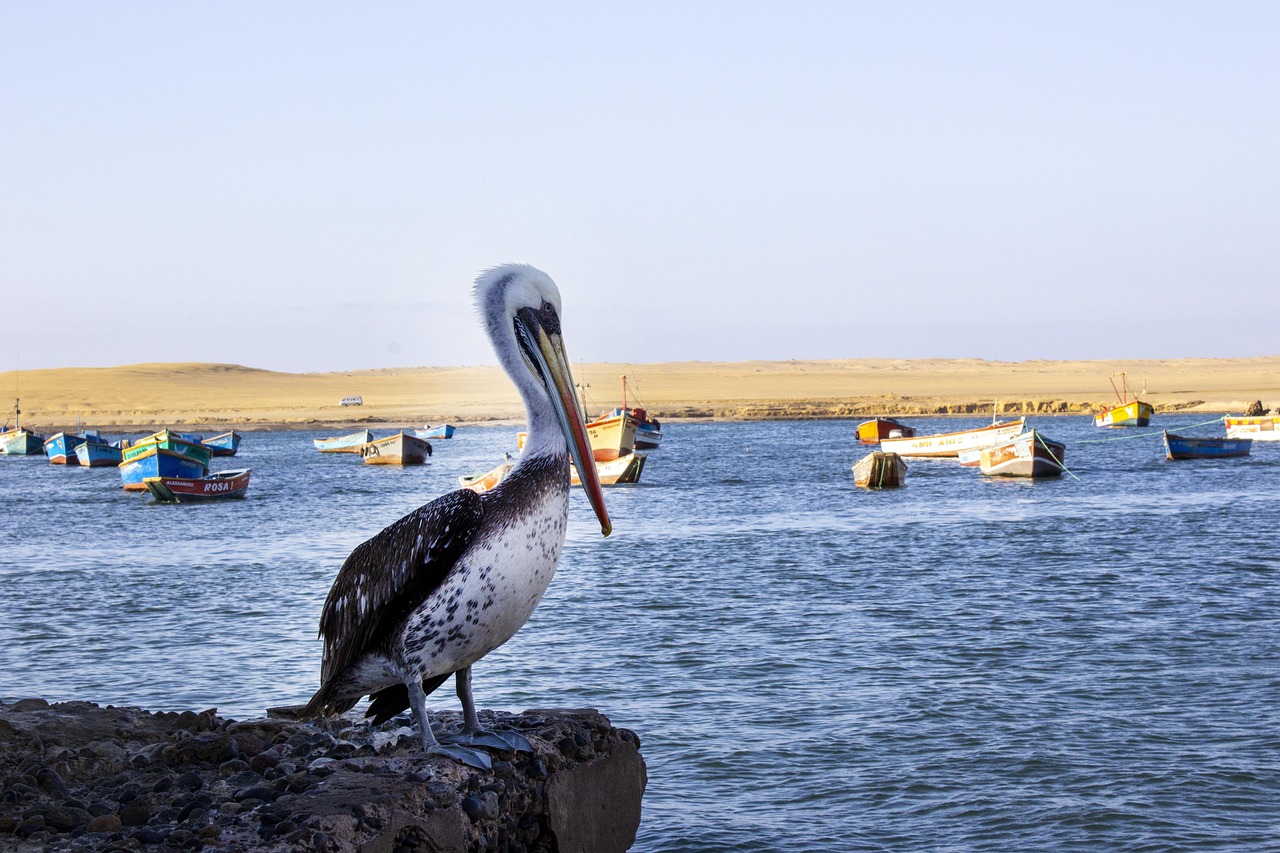
Speedboats leave El Chaco pier every morning for a trip of about two hours to the Ballestas Islands, part of Peru’s national reserve system for guano islands and points, managed by the protected areas service, SERNANP. Landing is not allowed: boats circle the islands, close to arches and caves crowded with Peruvian boobies, Guanay cormorants, Inca terns and pelicans, colonies of South American sea lions and small groups of Humboldt penguins. On the way, you pass the Candelabro, a huge candelabra-shaped figure etched into a sand hillside, of uncertain age and meaning. Trips go in the morning because the wind picks up in the afternoon; a reserve fee is added to the boat ticket. Bring a hat (birds above) and a jacket for the spray. See our guide to boat trips.
The Paracas National Reserve
A protected desert peninsula and bay, created in 1975 to protect marine life and archaeological sites, managed by SERNANP, which charges an entry fee at the gate. Highlights:
- The Julio C. Tello site museum: near the entrance, on the Paracas culture, with its elongated skulls and textiles.
- The flamingo viewpoint: Chilean flamingos feed in the shallow bay from about July to November.
- Playa Roja: a beach of red sand below cliffs, seen from a viewpoint.
- The Catedral viewpoint: sea cliffs where a famous rock arch collapsed in the earthquake of 2007.
- Lagunillas and La Mina: a small fishing cove with seafood restaurants and a sheltered beach.
Visit by tour, bike, buggy or car; roads are partly unpaved, there is no shade or water, and strong currents make some beaches unsafe for swimming.
Huacachina and Ica in more depth
Huacachina is a tiny green lagoon surrounded by palm trees and colonial-style buildings in a bowl of sand dunes more than 100 m (330 ft) high, about 5 km (3 miles) from Ica. Dune-buggy tours of about two hours race up and down the dunes and stop for sandboarding, usually lying down on the board; the late-afternoon tours end with sunset over the desert. Choose operators with seatbelts and roll bars, and hold on. Ica, the regional capital, is the heart of Peru’s pisco country: family bodegas show traditional clay jars (botijas) and copper stills, and larger wineries offer tours and tastings. The Regional Museum of Ica has Paracas and Nazca textiles and ceramics.
The Nazca Lines in more depth
The Nazca Lines are hundreds of giant figures, straight lines and geometric shapes made on the desert floor by the Nazca culture about 2,000 years ago, including a hummingbird, a monkey, a spider and a whale; they are best seen from the air. Flights of about 30–35 minutes leave from the small Nazca airfield in the morning, when the air is calmer, and some longer flights leave from Pisco or Ica. Small planes bank steeply so both sides can see, which can cause airsickness: eat lightly beforehand. A roadside viewing tower on the Pan-American Highway shows a couple of figures from the ground. Nazca also has the Cantalloc aqueducts and the Chauchilla cemetery.
Other things to do in Paracas
- Kitesurfing and windsurfing: the bay’s steady afternoon wind makes Paracas one of Peru’s main kitesurfing spots, with schools on the beach.
- Beaches: the bay beaches by the hotels are calm; the reserve’s beaches are wilder. See our guide to beaches.
- Food: fresh ceviche, tiradito and fried fish at the waterfront and in Lagunillas.
Food and drink in Paracas
Seafood straight from the bay dominates: ceviche and tiradito, scallops (conchas) from the Paracas bay farms served with parmesan, fried fish platters, chilcano soup and seafood rice. El Chaco’s waterfront has rows of restaurants; Lagunillas, inside the reserve, has simple fish restaurants at the water’s edge. The region produces Peru’s most famous pisco, so try a pisco sour or a chilcano made with local brandy, and visit a bodega around Ica or Pisco. Desserts include tejas, pecans or dried fruit filled with manjar and coated in sugar, a specialty of Ica.
Day trips from Paracas
- The Huacachina oasis: a lagoon ringed by palm trees and giant sand dunes, about 5 km (3 miles) from Ica, for dune-buggy rides and sandboarding, best at sunset.
- Ica’s pisco and wine bodegas: family distilleries and large wineries around Ica make pisco, Peru’s grape brandy, and wine; harvest festivals take place in March.
- The Nazca Lines: giant ancient figures drawn on the desert floor, a UNESCO World Heritage Site, best seen from small planes; flights leave from Nazca, about 3.5 hours south of Paracas by road, and sometimes from Pisco or Ica airports. Choose established operators and check their safety record.
- Tambo Colorado: a well-preserved Inca adobe administrative center inland from Pisco.
Nearby destinations
- Lima215 km
Getting there and getting around
- By bus: long-distance companies run several daily buses from Lima to Paracas, about 3.5–4 hours along the Pan-American Highway, and on to Ica, Nazca and Arequipa; some stop only in Pisco, from where taxis run to Paracas.
- By car: the Pan-American Highway is a busy toll road; avoid driving at night.
- Tourist buses: hop-on, hop-off backpacker buses link Lima, Paracas, Huacachina, Nazca and Arequipa.
- By air: Pisco airport has occasional flights; most visitors fly into Lima.
- Getting around: the town is walkable; tours, taxis, bikes and buggies go to the reserve.
Getting around: practical details
El Chaco is small enough to walk; the bay resorts are a short taxi ride away. In the reserve, organized tours by minibus are the easiest option; you can also rent bikes or join a buggy tour, but distances are long, roads partly unpaved and there is no shade or water, so start early. Taxis link Paracas with Pisco and the highway junction, where some buses stop. For Huacachina and Ica, taxis, colectivos and tours make the one-hour trip; for Nazca, take a long-distance bus (about 3.5 hours) or a tour that combines flights and transport. Boats to the Ballestas leave from El Chaco pier between about 8 and 10 a.m.
When to go and how long to stay
Paracas has a dry desert climate cooled by the Humboldt Current: almost no rain, warm sunny summers from about December to April (highs around 28–30 °C, or 82–86 °F) and cooler, often overcast mornings from about June to October (highs around 21–23 °C, or 70–73 °F). A strong wind, known locally as the “paracas,” blows most afternoons and can carry sand. There is no Paracas station in the WMO normals we use, so these figures are general reference.
El Niño in 2026–27: on September 28, 2026, Peru’s El Niño study commission, ENFEN, said an extraordinary coastal El Niño would last until about January 2027, with very high air temperatures along the whole coast and above-normal rain on the central coast, easing in the fall of 2027. Warm seas also push the anchovy, the main food of the seabirds and sea lions, deeper and closer to shore, which can change wildlife numbers around the islands. Expect a hotter summer, and follow SENAMHI’s warnings in the rainy months.
Paracas month by month
A general guide: there is no Paracas station in the official normals we use; the 2026–27 coastal El Niño is expected to make the summer hotter than usual.
| Month | Weather | What to expect |
|---|---|---|
| January | Hot, sunny, windy afternoons | Peruvian summer holidays; busy beaches |
| February | Hottest month, sunny | Busy; book boats and hotels early |
| March | Sunny and warm | Grape harvest festival (Vendimia) in Ica |
| April | Warm, getting hazier | Easter crowds, then quieter |
| May | Mild, hazy mornings | Low season, good value |
| June | Cool, overcast mornings | Calm boat trips in the mornings |
| July | Cool, gray | Fiestas Patrias long weekend; flamingos start arriving |
| August | Coolest, windy | Kitesurfing season in full swing |
| September | Cool, brighter afternoons | Flamingos in the bay |
| October | Mild, sunnier | Good balance of weather and crowds |
| November | Warm, sunny | Quiet before summer |
| December | Warm, sunny | Summer begins; Christmas and New Year crowds |
Crowds: busiest in January and February, at Easter and on Peruvian long weekends, when Lima families come to the beach.
2 days in Paracas
Day one, arrive from Lima and spend the afternoon in the Paracas National Reserve. Day two, an early Ballestas Islands boat trip, then Huacachina’s dunes at sunset.
3 days
Add a day of pisco bodegas around Ica, or continue to Nazca for a flight over the lines.
Where to stay in Paracas
- The bay resorts: large hotels with pools on the beach south of the pier.
- The town: guesthouses, hostels and mid-range hotels near the pier and the promenade.
- Huacachina: hostels and small hotels by the oasis, for dune trips.
Hotels can sell rooms to foreign tourists without Peru’s 18% IGV sales tax if you show your passport and immigration record; check whether quoted rates include tax.
Choosing where to stay
Stay in El Chaco if you want to walk to the pier for the morning boat and to the restaurants, and if you are on a budget. Couples and families looking for a beach-resort break choose the bay hotels, where the pool and the calm sea are the attraction. Kitesurfers stay near the schools on the bay. Travelers continuing south often spend one night in Paracas and one in Huacachina, then go on to Nazca and Arequipa. Weekends in summer and long holiday weekends are busy with visitors from Lima, while prices usually drop noticeably from May to November outside the long weekends.
What a trip to Paracas costs
These are our estimates for October 2026 at about S/ 3.44 per US dollar; reserve fees are set by SERNANP and change.
| Item | Typical price |
|---|---|
| Ballestas Islands boat trip | S/ 50–100 (US$15–29) plus reserve and pier fees |
| Paracas National Reserve tour | S/ 50–100 (US$15–29) plus the reserve fee |
| Hostel bed in El Chaco | S/ 35–70 (US$10–20) |
| Mid-range double room | S/ 200–400 (US$58–116) |
| Bay resort double room | S/ 700–1,500 (US$205–435) |
| Seafood lunch | S/ 35–70 (US$10–20) |
| Huacachina buggy and sandboarding | S/ 50–90 (US$15–26) plus a town fee |
| Nazca Lines flight | about US$80–150 plus airport tax |
| Bus Lima–Paracas, one way | S/ 50–120 (US$15–35) |
Practical tips for Paracas
- Book boats early: the first departures are the calmest; confirm what fees are included.
- Money: carry soles for the reserve, boats and small restaurants. On October 4, 2026, SUNAT’s published rate was about S/ 3.44 per US dollar.
- Sun and wind: the sun is strong and there is no shade in the reserve; bring water, a hat and sunscreen.
- Water: drink bottled or filtered water.
Safety in Paracas
Paracas is relaxed. The main risks are natural: strong currents at many reserve beaches, sun and dehydration in the desert, and windblown sand. Wear the life jacket on boats, and follow the reserve’s rules and signs. Choose licensed operators for dune buggies and Nazca flights. The coast is in an active earthquake zone (Pisco was badly damaged in 2007); know your hotel’s evacuation route and tsunami signs. For emergencies, call 105 (police) or 106 (ambulance).
What to pack for Paracas
Sunscreen, a hat, sunglasses and a buff or scarf against wind and sand, a light jacket for the morning boat, swimwear, sandals and closed shoes for the reserve, and binoculars for birds. Peru uses 220 V, with sockets for US and European plugs.
Paracas travel FAQ
How do I get to the Ballestas Islands?
By boat tour from El Chaco pier in Paracas, about two hours, departing in the morning; a reserve fee is added to the ticket.
Can you land on the Ballestas Islands?
No. Boats circle the islands to protect the wildlife; landing is not allowed.
What animals can I see at the Ballestas Islands?
Sea lions, Humboldt penguins, Peruvian boobies, cormorants, pelicans and Inca terns, among many other seabirds.
How far is Paracas from Lima?
About 250 km (155 miles), 3.5–4 hours by bus or car along the Pan-American Highway.
Can I visit Huacachina and the Nazca Lines from Paracas?
Yes. Huacachina is about an hour away near Ica; Nazca is about 3.5 hours south, where flights over the lines leave.
Will El Niño affect Paracas in 2026–27?
ENFEN expects very high temperatures and above-normal rain on the central coast until early 2027; warm seas can also change wildlife numbers at the islands.
When is the best time to visit Paracas?
December to April for sunny weather; boat trips run all year, in the mornings.
Where should I stay in Paracas?
In El Chaco near the pier for convenience and budget, or at a bay resort for a beach break.
How much does the Ballestas Islands tour cost?
By our October 2026 estimates, about S/ 50–100 (US$15–29) for the boat, with reserve and pier fees added.
What should I eat in Paracas?
Ceviche, local scallops and fried fish, with pisco from the Ica valleys and tejas for dessert.
Plan your trip
Partner links: TravelerCenter may earn a commission if you book, at no extra cost to you.
🇪🇸 Useful Spanish phrases for Paracas
All 38 Spanish phrases: restaurant, hotel, emergencies, romance (printable) →
Sources · last reviewed 4 October 2026
Researched and last reviewed on 4 October 2026. El Niño outlook, including the effect on anchovy: ENFEN’s official statement of September 28, 2026; exchange rate: SUNAT. The reserves’ management by SERNANP, reserve history and fees, wildlife lists and seasons, boat trip details, the 2007 earthquake, distances and travel times, Nazca flights, climate figures (no official Paracas station in the WMO normals we use), hotel tax practice and safety tips come from general references and are flagged for checking. Prices change, so check locally before you go. For entry rules and money, see our Peru travel guide; for Lima, see our Lima travel guide.
Data: Weather: MET Norway (CC BY 4.0) · Sea temperature: NOAA CoastWatch · Rates: ECB · Holidays: Nager.Date · Costs: World Bank ICP and price levels · Wikidata (CC0)