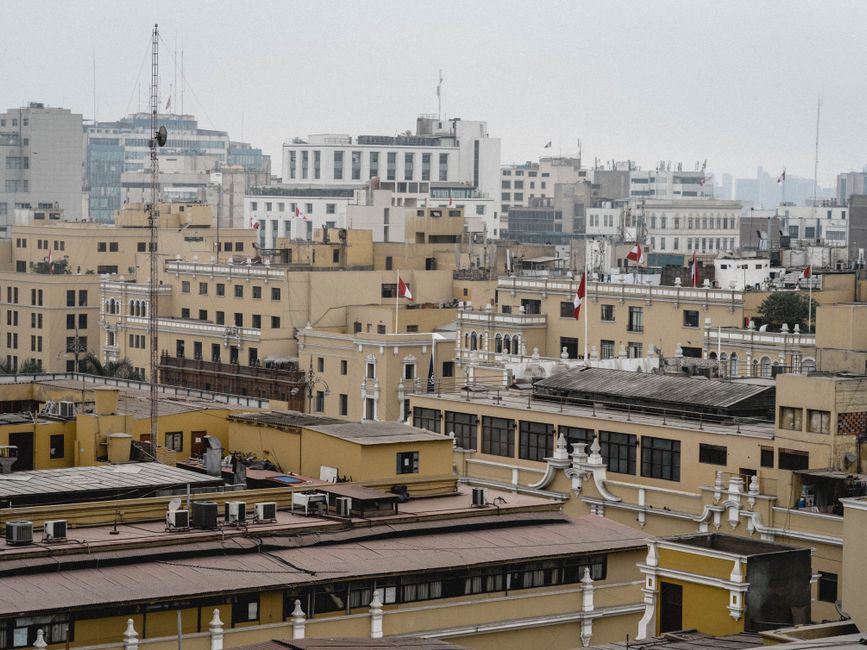
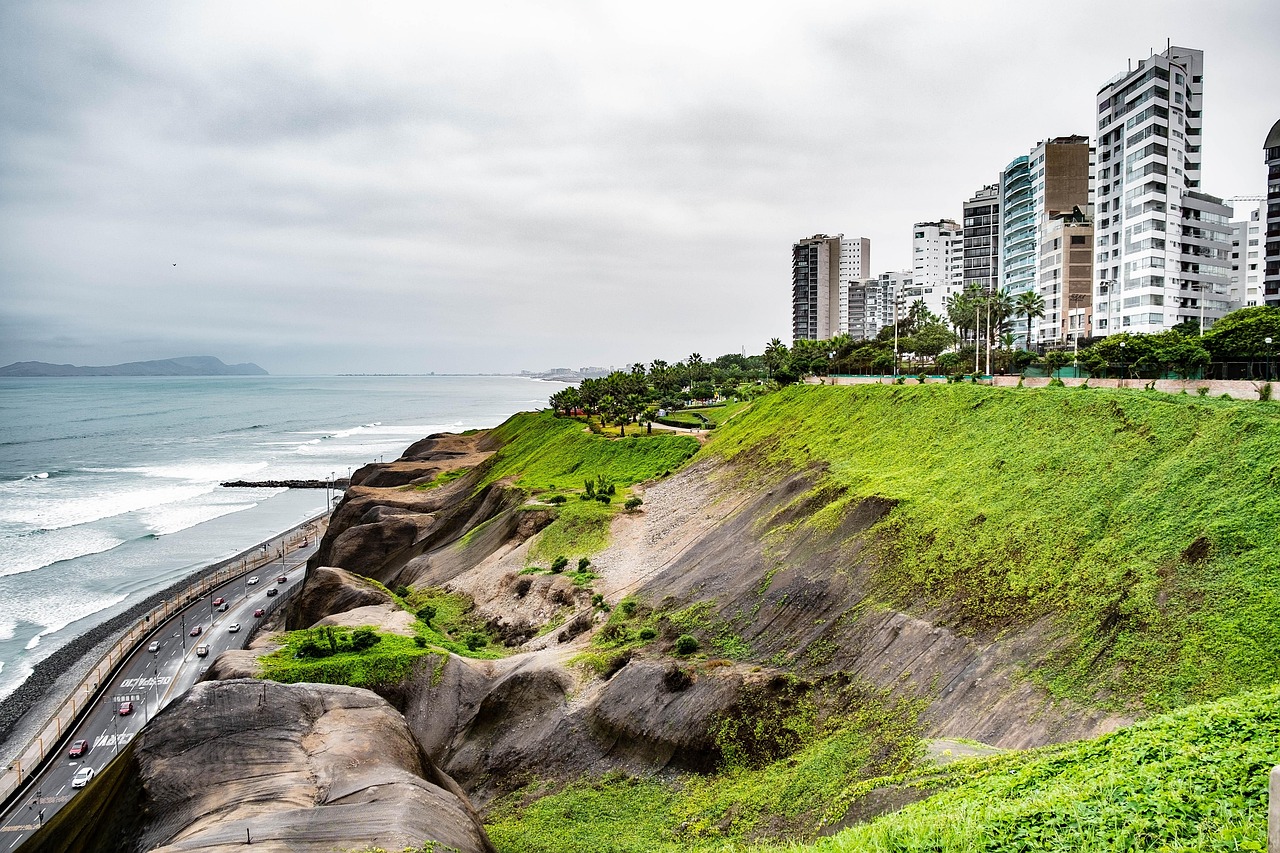
Lima, Peru’s capital and home to more than 10 million people, spreads along desert cliffs above the Pacific Ocean. It is where almost every international trip to Peru begins, and it deserves more than an overnight stop: the historic center, founded by Francisco Pizarro in 1535 as the “City of Kings” and a UNESCO World Heritage Site, is full of colonial churches, carved wooden balconies and grand squares; Miraflores and Barranco, by the sea, have clifftop parks, surf beaches, galleries and nightlife; adobe pyramids rise between apartment blocks; and the city’s museums tell the story of Peru’s civilizations long before the Incas. Above all, Lima is one of the world’s great food cities, from ceviche at a neighborhood cevichería to tasting menus at internationally famous restaurants. It is sunny from about December to April and wrapped in gray mist from about June to October, with almost no rain all year.
Right now in Lima
- Tue 19–25°C 67–77°F Mostly clear
- Wed 20–25°C 67–76°F 1 mm Partly cloudy
- Thu 20–25°C 67–77°F Partly cloudy
- Thu 8 Oct Battle of Angamos (Combate de Angamos)
Weather: MET Norway (CC BY 4.0) · Sea temperature: NOAA CoastWatch · Air quality: OpenAQ · Holidays: Nager.Date
Top tours in Lima
See all tours for Lima →
From local operators, with prices and reviews; you check availability and book on Viator, our partner. We may earn a commission at no extra cost to you. How we earn money
Lima at a glance
- Best for: food, museums, colonial architecture, pre-Inca sites, coastal walks, surfing and nightlife.
- How long: 2 days for the highlights; 3–4 days with day trips and more restaurants.
- Best time: December to April for sunshine and beach weather; June to October is cool and overcast but dry.
- Getting there: Jorge Chávez International Airport (LIM), in Callao, about 15 km (9 miles) from Miraflores, Peru’s main international gateway.
- Before you go: entry rules, money and general safety are in our Peru travel guide.
Lima’s districts: where things are
Lima is a huge metropolis of more than 40 districts. Visitors mostly stay on the coast and visit the center by day.
The historic center (Cercado de Lima)
Around the Plaza Mayor (Plaza de Armas) and Plaza San Martín, with the Cathedral, the Government Palace, the Archbishop’s Palace with its wooden balconies, the San Francisco monastery and Jirón de la Unión, a pedestrian shopping street. Visit by day.
Miraflores
The main visitor district, on cliffs above the Pacific, with hotels, restaurants, shops, the Malecón clifftop walkway and its parks, including the Parque del Amor, the Larcomar mall built into the cliff, and paragliding launches. Huaca Pucllana sits in the middle of it.
Barranco
South of Miraflores, a bohemian district of colorful old mansions, street art, galleries, cafés and bars, with the wooden Bridge of Sighs (Puente de los Suspiros) and stairs down to the beach.
San Isidro and Pueblo Libre
San Isidro is the financial district, with an olive grove park and Huaca Huallamarca; Pueblo Libre, inland, has the Larco Museum and old taverns.
Callao
The port city next to the airport, with the Real Felipe fortress and the colorful, revived art district of Callao Monumental; boats leave from here for the Palomino Islands.
Top things to see in Lima
Hours and prices change; check before you go.
The Plaza Mayor and the historic center
The main square holds the Cathedral, with Pizarro’s tomb, the Government Palace, where the changing of the guard takes place around midday, and the Archbishop’s Palace. A few blocks away, the Basilica and Convent of San Francisco has a library of old books and catacombs where thousands of colonial-era burials were found. The center was listed by UNESCO in 1988, with an extension in 1991.
Huaca Pucllana
A great adobe pyramid built by the Lima culture between about 200 and 700 AD, rising in the middle of Miraflores; guided tours explain the site, and a restaurant overlooks it at night.
The Larco Museum
A private museum in an 18th-century mansion in Pueblo Libre, with a superb collection of pre-Columbian ceramics, gold and textiles, open storerooms you can walk through, and a famous gallery of erotic pottery; its garden restaurant is a fine lunch stop.
More museums
- MALI (Lima Art Museum): 3,000 years of Peruvian art in a 19th-century palace in the Parque de la Exposición.
- The National Museum of Archaeology, Anthropology and History: in Pueblo Libre, with Peru’s history from the earliest cultures.
- The Museo Nacional del Perú (MUNA): a large new national museum near the Pachacamac site south of the city.
The coast
Walk the Malecón from Miraflores to Barranco at sunset, watch surfers on the Costa Verde, or go paragliding from the cliffs. The beaches below are pebbly and the water cold most of the year.
Shopping
The Indian Market (Mercado Indio) and the craft markets on Avenida Petit Thouars in Miraflores sell textiles, ceramics, silver and alpaca goods from all over Peru, a convenient place to shop if you won’t visit the Andes; prices are a little higher than in Cusco, and bargaining is expected. Barranco’s design shops and galleries sell contemporary Peruvian art, fashion and homewares. For high-quality alpaca and vicuña clothing, look for established stores in Miraflores and San Isidro, and ask for certificates for vicuña. Larcomar, the clifftop mall, and the big shopping centers have international brands and are useful for last-minute gear before the mountains.
Food and nightlife
Lima’s cooking mixes Indigenous, Spanish, African, Chinese and Japanese influences: ceviche (raw fish cured in lime with chili and onion, eaten at lunch), tiradito, causa, lomo saltado, ají de gallina, anticuchos, chifa (Chinese-Peruvian food) and Nikkei (Japanese-Peruvian). Several Lima restaurants regularly appear among the world’s best, and need booking weeks or months ahead; neighborhood cevicherías and markets such as Surquillo are great for cheaper eating. Drink a pisco sour or chilcano, and try purple-corn chicha morada. Barranco and Miraflores have the liveliest bars and clubs, and peñas with Afro-Peruvian and creole music.
Where and what to eat
- Cevicherías: lunchtime places serving ceviche, tiradito, leche de tigre (the citrus marinade, drunk as a shot) and jalea (fried seafood); Miraflores, Surquillo and Barranco have many.
- Markets: the Surquillo market, next to Miraflores, has juice stands, fruit and cheap seafood stalls; central Lima’s Mercado Central and Chinatown (Barrio Chino) are best visited by day with care for your bag.
- Chifa and Nikkei: Lima’s Chinese-Peruvian chifa restaurants serve arroz chaufa (fried rice) and tallarín saltado (stir-fried noodles), and Nikkei places mix Japanese technique with Peruvian fish and chilies.
- Street food: anticuchos (grilled beef heart skewers) and picarones (sweet potato doughnuts with syrup) sold from evening carts, and butifarra sandwiches.
- Fine dining: several of the restaurants on international “best” lists are in Miraflores, Barranco and San Isidro; tasting menus can take three hours.
- Drinks: pisco sours and chilcanos, local craft beer, and Inca Kola, the bright yellow soft drink.
Day trips from Lima
- Pachacamac: a vast pre-Inca and Inca religious sanctuary of adobe temples in the desert about 30 km (19 miles) south, with the national museum nearby.
- The Palomino Islands: boat trips from Callao to sea lion colonies, where you can swim with them in a wetsuit when conditions allow; see our guide to boat trips.
- Caral: one of the oldest cities in the Americas, about 5,000 years old, with pyramids in the Supe Valley, a UNESCO World Heritage Site about 3.5 hours north; a very long day.
- Paracas and the Ballestas Islands: about 3.5–4 hours south; better as an overnight. See our Paracas travel guide.
- Surf beaches: Punta Hermosa and San Bartolo, south of the city, for surfing; see our guide to surfing.
More day trips
- Lomas de Lachay: a reserve north of the city where the winter fog turns desert hills green from about July to October.
- The Santa Eulalia and Lunahuaná valleys: inland valleys east and south of Lima, the second known for river rafting and pisco vineyards.
- Huaral and Chancay: north of the city, with a new deep-water port and colonial haciendas; less touristy.
Nearby destinations
- Paracas215 km
Getting there and getting around
The airport
Jorge Chávez International Airport (LIM), run by the concession Lima Airport Partners, is Peru’s hub, with a new passenger terminal opened in 2025. It is in Callao, about 15 km (9 miles) from Miraflores; allow 45 minutes to 1.5 hours by road depending on traffic, more at rush hour. Use the official taxi desks inside the terminal, an airport shuttle bus to Miraflores, or a pre-booked transfer; avoid unlicensed drivers outside.
Getting around Lima
- Taxis and apps: ride-hailing apps are the easiest and safest way around; don’t hail taxis in the street, especially at night.
- Metropolitano: a bus rapid transit line in its own lanes, linking the center with Miraflores and Barranco, paid with a rechargeable card.
- Metro: Line 1 runs north–south through the inland districts, less useful for visitors.
- Walking and bikes: the Malecón from Miraflores to Barranco is pleasant on foot or by bike.
Traffic is heavy at rush hours; plan airport runs with plenty of time.
Getting around: practical details
Ride-hailing apps work across the city and are usually cheaper than taxis from the street; set your destination in the app and check the plate before getting in. The Metropolitano runs in dedicated lanes on the Vía Expresa between Barranco, Miraflores and the center; buy a rechargeable card at stations and avoid rush hours (about 7–9:30 a.m. and 5–8 p.m.), when it is packed. Many visitors walk or cycle the clifftop Malecón, which connects the parks of Miraflores with Barranco. The center is about 30–45 minutes from Miraflores by taxi, more in traffic. For Pachacamac or Caral, join a tour or hire a driver.
When to go and how long to stay
Lima lies in a coastal desert cooled by the cold Humboldt Current, so it is never very hot or very cold, and it almost never rains. From about December to April, it is sunny, warm and humid, with highs around 26–28 °C (79–82 °F); from about June to October, a low gray cloud and fine drizzle (the garúa) settle over the city for weeks, with highs around 18–19 °C (64–66 °F) and high humidity, which makes it feel chilly. There is no Lima station in the WMO normals we use, so these figures are general reference.
El Niño in 2026–27: ENFEN, Peru’s El Niño study commission, said on September 28, 2026 that an extraordinary coastal El Niño is expected to last until about January 2027 and ease in the fall of 2027, with very high air temperatures along the whole coast, a high chance of new records, and above-normal rain on the central coast from October to December and in the summer of 2027. Expect an unusually hot, humid summer in Lima, and follow SENAMHI’s warnings for heavy rain and mudslides (huaicos) in the valleys around the city.
Lima month by month
A general guide: Lima’s weather is mild and almost rainless; the official El Niño outlook for 2026–27 points to a hotter than usual summer.
| Month | Weather | What to expect |
|---|---|---|
| January | Sunny, warm and humid | Beach season; many locals at the southern beaches |
| February | Hottest month, sunny | Beach season, Carnival water fights in some districts |
| March | Sunny, warm | Still summer; Easter week sometimes in late March |
| April | Warm, getting hazier | A pleasant shoulder month |
| May | Clouds arrive | Mild, gray mornings |
| June | Gray, cool, fine drizzle | The garúa season starts |
| July | Gray, cool | Fiestas Patrias on July 28–29 |
| August | Gray, coolest and dampest | Santa Rosa de Lima holiday on August 30 |
| September | Gray, cool | Lomas (fog oases) green north of the city |
| October | Gray, then brighter | Señor de los Milagros processions |
| November | Brighter, warming | Day of the Dead visits; sunny spells return |
| December | Sunny, warm | Summer starts; Christmas and New Year on the beach |
Events: in October, the Señor de los Milagros processions fill the center with purple-robed crowds, especially on October 18, 19 and 28. Lima’s big food festival and the Fiestas Patrias (July 28–29) are also busy.
2 days in Lima
Day one, the historic center (Plaza Mayor, the Cathedral, San Francisco and its catacombs), then MALI or the Larco Museum in the afternoon and dinner in Miraflores. Day two, Huaca Pucllana, the Malecón walk from Miraflores to Barranco, lunch at a cevichería and sunset in Barranco.
4 days
Add Pachacamac and the national museum, a boat trip to the Palomino Islands, a surf lesson, and a long tasting-menu dinner.
Where to stay in Lima
- Miraflores: the most convenient base, with hotels of all levels near the Malecón and restaurants.
- Barranco: boutique hotels and hostels in old mansions, near the nightlife.
- San Isidro: business hotels, quieter at night.
- Near the airport: a hotel by the terminal is handy for very early or late flights.
Hotels can sell rooms to foreign tourists without Peru’s 18% IGV sales tax if you show your passport and immigration record; check whether quoted rates include tax.
Choosing your district
Miraflores is the easiest base for first-timers: walkable, with the Malecón, hundreds of restaurants, hotels at every price and the Metropolitano. Barranco is smaller and more atmospheric, ideal for travelers who want bars, galleries and boutique hotels, and it is a 20-minute walk from Miraflores along the cliffs. San Isidro is calm and green, with business hotels and good restaurants, but less to do at night. Staying in the historic center puts you close to the monuments but is quiet and less comfortable after dark. If you only have a night between flights, the airport hotel avoids the traffic.
What a trip to Lima costs
These are our estimates for October 2026 at about S/ 3.44 per US dollar.
| Item | Typical price |
|---|---|
| Hostel dorm bed in Miraflores | S/ 40–80 (US$12–23) |
| Mid-range double room | S/ 280–500 (US$81–145) |
| Ceviche at a neighborhood cevichería | S/ 30–60 (US$9–17) |
| Set lunch (menú) | S/ 12–25 (US$3–7) |
| Tasting menu at a top restaurant | S/ 600–1,300 (US$175–380) |
| App ride Miraflores–historic center | S/ 15–30 (US$4–9) |
| Metropolitano ride | under S/ 4 (about US$1) |
| Palomino Islands boat trip | S/ 150–250 (US$44–73) |
Practical tips for Lima
- Money: cards are widely accepted in Miraflores and Barranco; carry soles for markets and small places. On October 4, 2026, SUNAT’s published rate was about S/ 3.44 per US dollar.
- Book restaurants: the famous tasting-menu restaurants need booking well ahead.
- Water: drink bottled or filtered water.
- Ceviche at lunch: locals eat raw fish at midday, when it is freshest; many cevicherías close in the late afternoon.
Safety in Lima
Most visitors stay in Miraflores, Barranco and San Isidro, which are busy and well policed, and visit the historic center by day without problems. Precautions: use ride-hailing apps or official taxis, never unmarked cars from the street, because of the risk of robbery by fake drivers; keep phones out of sight on the street and in traffic, as thieves on motorbikes snatch them; watch bags in the center, at bus terminals and in crowded markets; avoid outlying districts unless you go with someone who knows them; and stay away from demonstrations, which happen often around the center. Lima is in a major earthquake zone: learn your hotel’s evacuation route and follow the “zona segura” signs. For police, call 105; for fire and rescue, 116; for an ambulance, 106.
What to pack for Lima
Light clothes and sunscreen from December to April; layers and a light jacket for the damp, gray June to October season; comfortable walking shoes; smart-casual clothes for good restaurants; and a swimsuit for summer beaches. Peru uses 220 V, with sockets for US and European plugs.
Lima travel FAQ
How many days do I need in Lima?
Two days for the historic center, Miraflores, Barranco and a museum or two; three or four with day trips and more restaurants.
Where should I stay in Lima?
Miraflores is the most convenient base; Barranco is more bohemian, and San Isidro quieter.
How do I get from Lima airport to Miraflores?
By official taxi from the desks inside the terminal, an airport shuttle bus or a pre-booked transfer; allow 45 minutes to 1.5 hours.
Is Lima gray all year?
No. It is sunny from about December to April and usually overcast, with fine drizzle, from about June to October; it almost never really rains.
Will El Niño affect Lima in 2026–27?
ENFEN expects very high temperatures along the coast and above-normal rain on the central coast until early 2027; expect a hot, humid summer and follow SENAMHI’s warnings.
What should I eat in Lima?
Ceviche at lunchtime, lomo saltado, causa, anticuchos, chifa and Nikkei dishes, with a pisco sour.
Is it safe to use taxis in Lima?
Use ride-hailing apps or official taxis, not cars hailed in the street, especially at night.
How much does a day in Lima cost?
By our October 2026 estimates, about S/ 140–240 (US$40–70) on a budget and S/ 400–700 (US$115–200) mid-range, more with fine dining.
What is the best neighborhood to stay in Lima?
Miraflores for convenience, Barranco for character and nightlife, San Isidro for calm.
Where can I eat cheap and well in Lima?
At lunchtime cevicherías, set-menu restaurants and the Surquillo market.
Sources and last review
Researched and last reviewed on 4 October 2026. El Niño outlook: ENFEN’s official statement of September 28, 2026; exchange rate: SUNAT; the new airport terminal: the transport ministry (MTC) and Lima Airport Partners. Population, district descriptions, sights, museums and their history, day trips and travel times, transport, climate figures (no official Lima station in the WMO normals we use), festival dates, hotel tax practice and safety tips come from general references and are flagged for checking. Prices and hours change, so check the official sites before you go. For entry rules and money, see our Peru travel guide.
Plan your trip
Partner links: TravelerCenter may earn a commission if you book, at no extra cost to you.
🇪🇸 Useful Spanish phrases for Lima
All 38 Spanish phrases: restaurant, hotel, emergencies, romance (printable) →