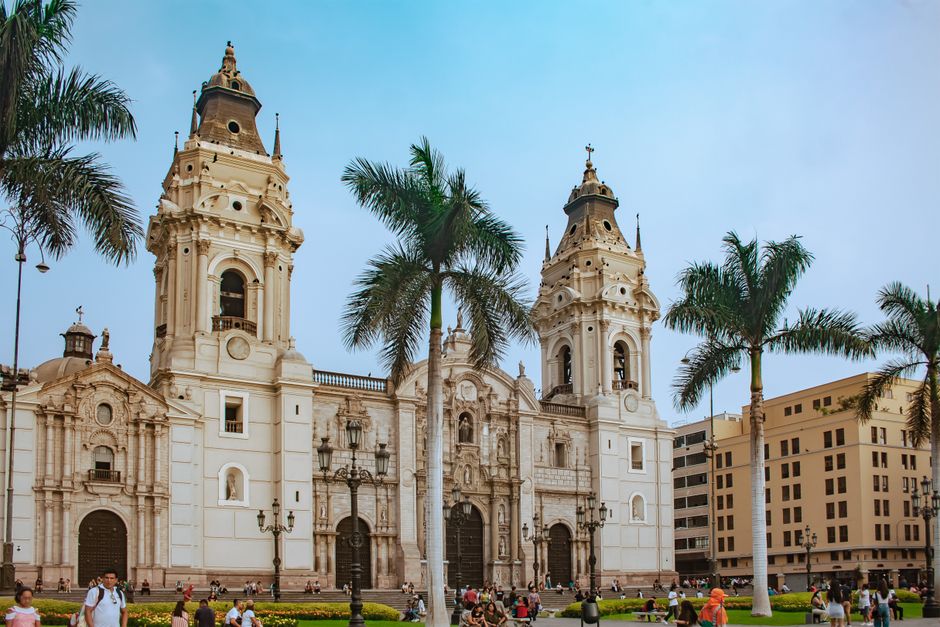
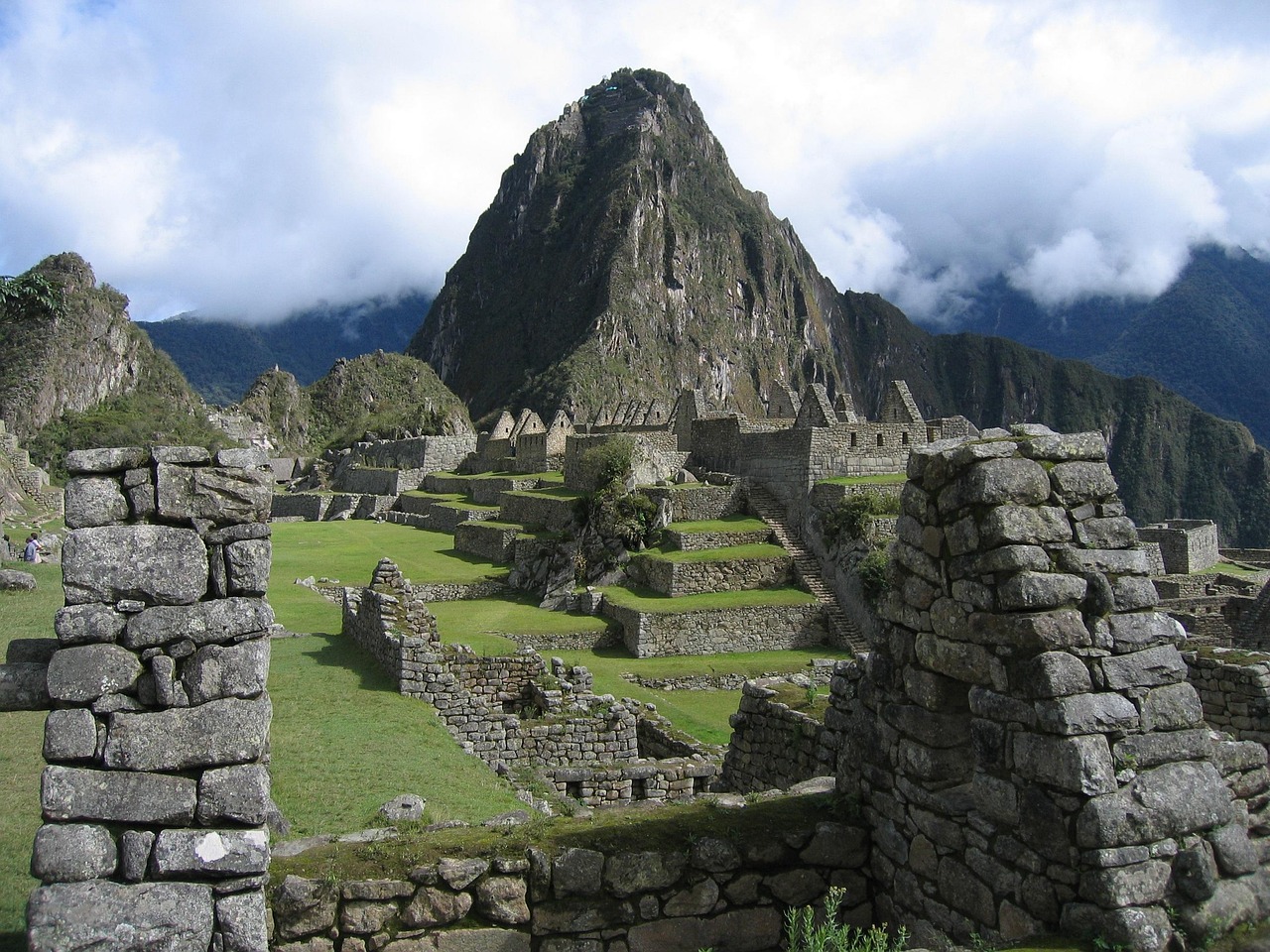
Peru is one of the most rewarding countries in the Americas: the Inca citadel of Machu Picchu above its cloud-forest gorge, the Inca and colonial capital of Cusco, the terraced villages of the Sacred Valley, the white volcanic-stone city of Arequipa and the condors of the Colca Canyon, Lake Titicaca and its reed islands, the desert coast and sea lion islands of Paracas, and Lima, a sprawling capital with some of the best food in the world. Most visitors from the Americas and Europe need no visa. Plan around three things: Machu Picchu’s limited, timed tickets, which sell out months ahead in the busy season; the altitude of Cusco and Puno, high enough to make many visitors feel unwell for a day or two; and the seasons, with a dry season from May to September in the Andes and rain from December to March. Give a first trip two weeks.
Right now in Peru
- Tue 20–25°C 67–76°F Mostly clear
- Wed 20–25°C 67–76°F 1 mm Cloudy
- Thu 19–25°C 67–76°F Partly cloudy
- Thu 8 Oct Battle of Angamos (Combate de Angamos)
Weather: MET Norway (CC BY 4.0) · Air quality: OpenAQ · Holidays: Nager.Date
Multi-day tours of Peru
Multi-day tours from local operators. You check dates and book on Viator, our partner; we may earn a commission at no extra cost to you. How we earn money
Peru at a glance: coast, mountains and jungle
Peru is a republic of 24 departments plus the constitutional province of Callao, with about 34 million people, stretching about 2,400 km (1,500 miles) along the Pacific between Ecuador and Colombia in the north and Chile and Bolivia in the south. Spanish is the main language, with Quechua and Aymara also official where they predominate; English is common in tourist businesses in Lima, Cusco and the Sacred Valley, less so elsewhere.
The country has three very different zones. The coast is a narrow desert, almost rainless, where Lima and most Peruvians live. The Andes run down the middle, with cities such as Cusco, Puno and Arequipa at 2,300 to 3,800 m (7,500 to 12,500 ft). East of the mountains, the Amazon rainforest covers more than half of Peru but holds few people. Distances are big and mountain roads slow, so most visitors fly between Lima, Cusco, Arequipa and Juliaca (for Puno).
Time: Peru uses UTC−5 all year, with no daylight saving time, the same as New York in winter and Chicago in summer.
Peru’s regions
- Lima and the central coast: the capital, its colonial center and seaside districts, and the pre-Inca sites of Pachacamac and Caral nearby.
- Cusco, the Sacred Valley and Machu Picchu: the heart of the Inca world and the reason most visitors come.
- The south: Arequipa and the Colca Canyon; Puno and Lake Titicaca on the Bolivian border.
- The south coast: Paracas and the Ballestas Islands, the Huacachina oasis and the Nazca Lines.
- The north: the adobe cities of Chan Chan near Trujillo, the Lord of Sipán’s tomb, the fortress of Kuélap near Chachapoyas, and surf beaches such as Máncora.
- The Amazon: river lodges near Puerto Maldonado and Iquitos, reached by air.
Regions
Where to go: Inca sites, colonial cities and the coast
The classic first trip links Lima, Cusco, the Sacred Valley and Machu Picchu, then adds Lake Titicaca, Arequipa or the Amazon. See our separate guides to each place below.
Lima
The capital, on desert cliffs above the Pacific, mixes a colonial historic center, a UNESCO World Heritage Site, with the clifftop parks of Miraflores, the bohemian streets of Barranco, adobe pyramids in the middle of the city, and a restaurant scene led by ceviche and Nikkei (Japanese-Peruvian) cooking. Most international flights land here. See our Lima travel guide.
Cusco
The former Inca capital, at 3,399 m (11,152 ft), has Spanish churches and mansions built on Inca walls, the Qorikancha sun temple, the fortress of Sacsayhuamán above town and a lively main square. Spend at least two or three days here, partly to adjust to the altitude. See our Cusco travel guide.
The Sacred Valley
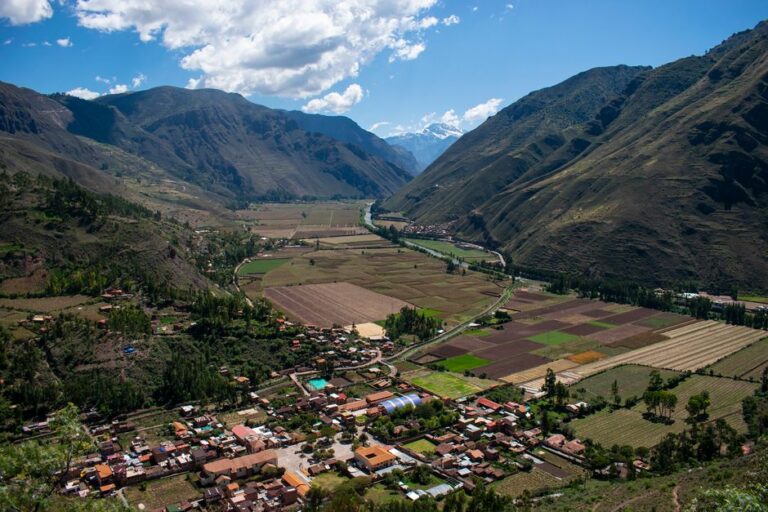
The Urubamba River valley between Cusco and Machu Picchu, lower and warmer than Cusco, with the Inca terraces and markets of Pisac, the fortress town of Ollantaytambo, the circular terraces of Moray and the salt pans of Maras. Many visitors sleep here first to ease into the altitude. See our Sacred Valley travel guide.
Machu Picchu
The 15th-century Inca citadel on a ridge above the Urubamba gorge, a UNESCO World Heritage Site since 1983, reached by train to the town of Machu Picchu Pueblo (Aguas Calientes) or on foot along the Inca Trail. Tickets are timed and limited by circuit. See our Machu Picchu travel guide.
Arequipa and the Colca Canyon
Arequipa, the “white city” built of volcanic sillar stone beneath the El Misti volcano, has the vast Santa Catalina Monastery and excellent food; the Colca Canyon, a few hours away, is one of the deepest canyons in the world, with Andean condors. See our Arequipa travel guide.
Puno and Lake Titicaca
Puno, at about 3,830 m (12,570 ft), is the port for the floating reed islands of the Uros, Taquile and Amantaní on Lake Titicaca, and the capital of Peruvian folk dance, especially at the Candelaria festival in February. See our Puno travel guide.
Paracas
A small resort on a desert bay south of Lima, the base for boat trips to the Ballestas Islands, with sea lions, Humboldt penguins and huge seabird colonies, and for the Paracas National Reserve; the Huacachina oasis and flights over the Nazca Lines are nearby. See our Paracas travel guide.
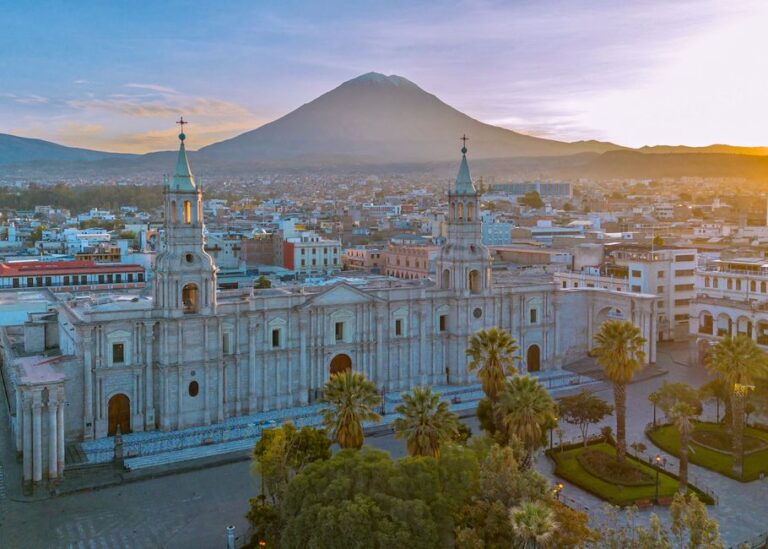
Arequipa Travel Guide
Plan a trip to Arequipa, Peru's white city: the Plaza de Armas and Cathedral, the Santa Catalina Monastery, the Juanita mummy at the Museo…
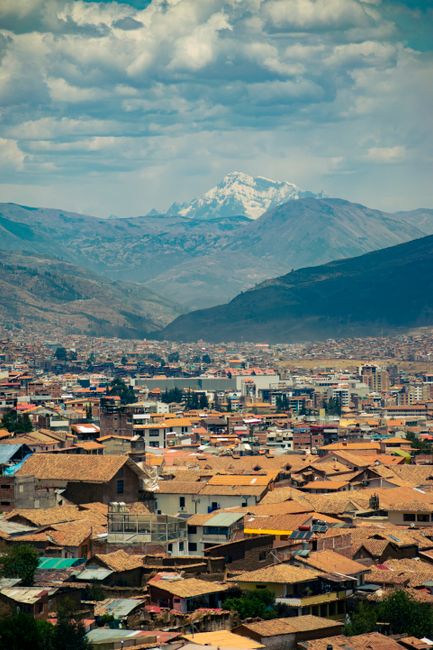
Cusco Travel Guide
Plan a trip to Cusco: the Plaza de Armas, the Qorikancha and Inca walls, San Blas and San Pedro market, Sacsayhuamán and the Boleto…
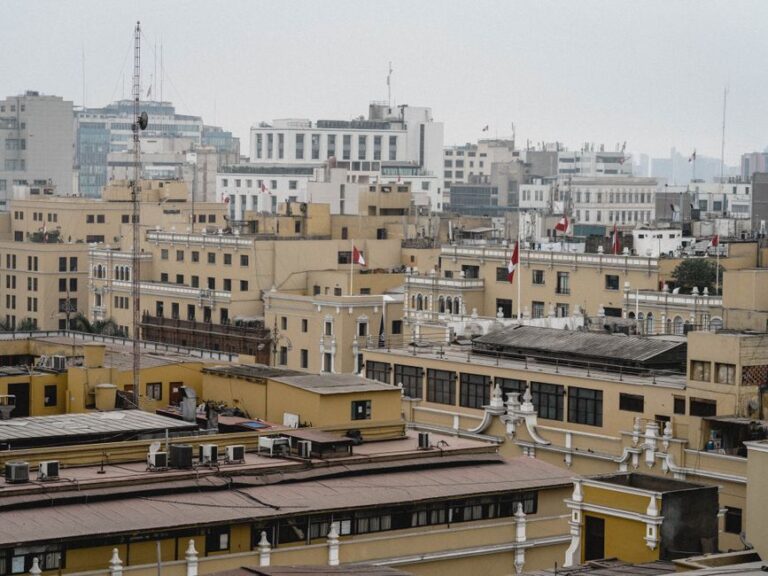
Lima Travel Guide
Plan a trip to Lima: the historic center and its colonial churches, Miraflores and its clifftop parks, bohemian Barranco, Huaca Pucllana and the Larco…
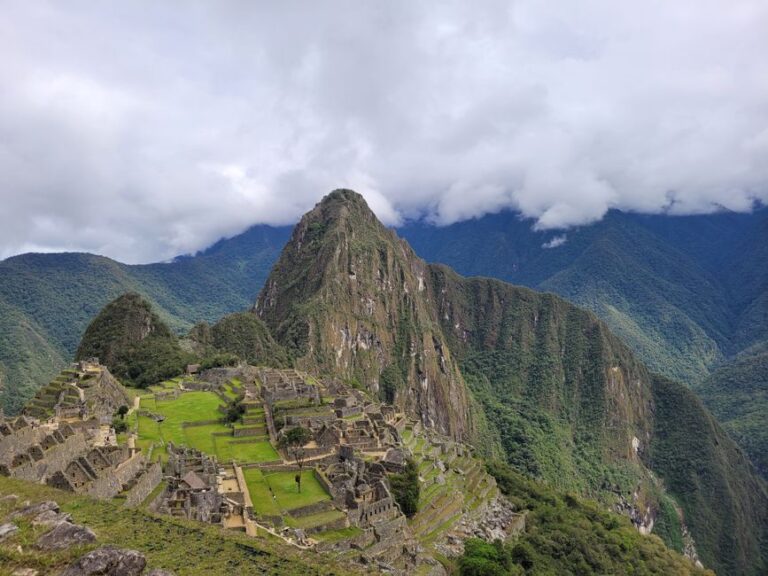
Machu Picchu Travel Guide
Plan a visit to Machu Picchu: the three circuits and ten routes, timed entry hours and the 2026 daily caps of 4,500 and 5,600…
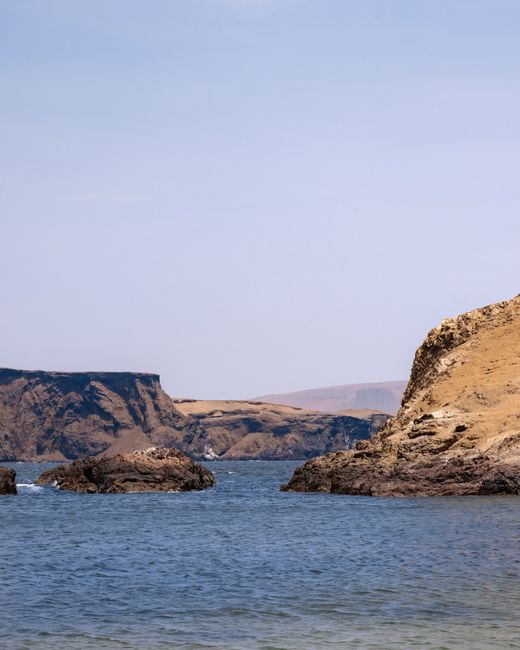
Paracas Travel Guide
Plan a trip to Paracas on Peru's south coast: boat trips to the Ballestas Islands and their sea lions, Humboldt penguins and seabirds, the…
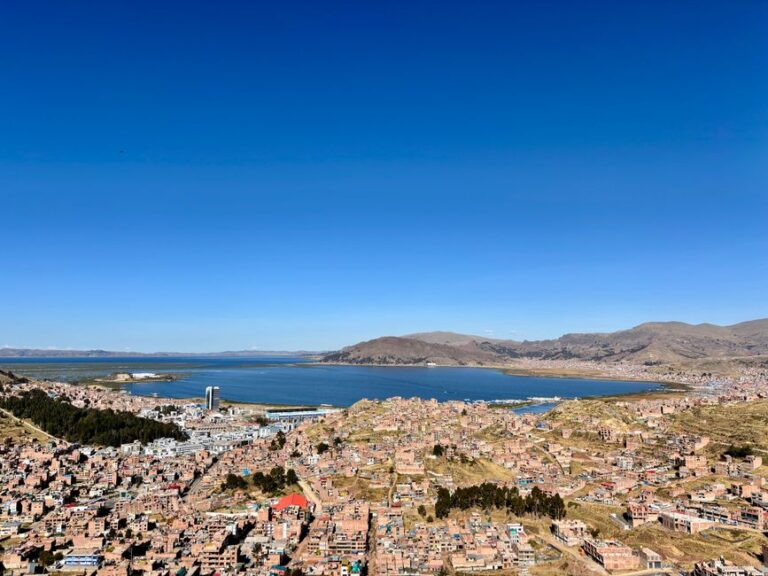
Puno Travel Guide
Plan a trip to Puno and Lake Titicaca: the Uros floating reed islands, Taquile's weavers and Amantaní homestays, the Sillustani burial towers, the Candelaria…
Sacred Valley Travel Guide
Plan a trip to the Sacred Valley of the Incas: Pisac's ruins and market, Ollantaytambo's fortress and Inca town, the circular terraces of Moray…
Best time to visit Peru, region by region
The Andes and the coast have almost opposite seasons. In the mountains (Cusco, Machu Picchu, Puno, Arequipa), the dry season from about May to September brings sunny days and cold nights, and is peak season; the rainy season from about December to March brings afternoon storms, landslides on some roads and fewer visitors, and the Inca Trail closes in February. On the coast, Lima and Paracas are sunny and warm from about December to April and gray, cool and misty (the “garúa”) from about June to October, with almost no rain all year. The table shows average daily highs and lows and yearly rainfall at official weather stations in the Andes, from the 1991–2020 climate normals that Peru’s National Meteorology and Hydrology Service (SENAMHI) submitted to the World Meteorological Organization.
| Region (weather station) | Dry season, May–Sep (high / low) | Rainy season, Dec–Mar (high / low) | Rain a year |
|---|---|---|---|
| Cusco (Granja Kcayra, 3,214 m, near the city) | 21–22 °C (70–71 °F) / −1 to 3 °C (30–38 °F) | 20–21 °C (68–70 °F) / 7 °C (44–46 °F) | about 670 mm (26 in), mostly December to March |
| Colca Canyon (Chivay, 3,644 m) | 19–21 °C (66–70 °F) / −2 to 1 °C (29–34 °F) | 19–21 °C (65–69 °F) / 4–5 °C (39–40 °F) | about 450 mm (18 in) |
| Lake Titicaca (Huaraya Moho, 3,836 m, on the lake shore) | 14–16 °C (57–60 °F) / −2 to 1 °C (29–34 °F) | 15–16 °C (58–60 °F) / 4–5 °C (40–41 °F) | about 810 mm (32 in) |
At these heights the sun is strong by day, but nights are cold all year and freezing in June and July. Machu Picchu, lower at about 2,430 m (7,970 ft) and on the edge of the cloud forest, is warmer and more humid than Cusco, and wetter in the rainy season. Lima’s highs run from about 26–28 °C (79–82 °F) in summer (January to March) to about 18–19 °C (64–66 °F) in winter (July to September), under a near-constant gray sky. The Amazon is hot and humid all year, wettest from December to April.
El Niño in 2026–27
Peru’s multi-sector El Niño study commission, ENFEN, has had a “Coastal El Niño alert” in place through 2026. In its statement of September 28, 2026, it said the coastal El Niño would stay at an extraordinary magnitude in terms of sea warming until January 2027, easing toward the fall (March to May) of 2027. For October to December 2026, it forecast above-normal rain on the north and central coast and in the western Andean valleys of the north, with possible moderate-to-heavy local downpours mainly on the north coast; very high air temperatures along the whole coast, with a high chance of new records; and normal-to-below-normal rain in the southern highlands, including around Lake Titicaca. For the summer of 2027, it expects more rain than normal on the north and central coast and drier-than-normal conditions in the southern highlands and the Amazon. In past strong El Niño years, heavy coastal rain has caused floods and mudslides (huaicos) that cut roads and the Pan-American Highway. If you travel to the coast or the north between December and April, follow SENAMHI’s warnings and keep plans flexible; Cusco, Machu Picchu and Puno are in the region forecast to be drier than normal.
Crowds and prices through the year
- June to August: peak season at Machu Picchu and in Cusco, with dry weather, the Inti Raymi festival on June 24 and Peru’s national holidays on July 28–29. Book Machu Picchu tickets, trains and Inca Trail permits months ahead.
- April, May, September and October: the shoulder months, often the best balance of weather and crowds in the Andes.
- November to March: the rainy season in the mountains, with fewer visitors and greener landscapes; summer and beach season on the coast; the Inca Trail closes in February.
- Holy Week: Semana Santa (March 21–28 in 2027) is a busy national holiday week.
Festivals and events
- February: the Fiesta de la Virgen de la Candelaria in Puno, with thousands of costumed dancers, listed by UNESCO as intangible cultural heritage; Carnival across the Andes.
- March or April: Semana Santa processions, especially in Ayacucho and Cusco.
- June: Corpus Christi in Cusco and Inti Raymi, the Inca festival of the sun, on June 24 at Sacsayhuamán.
- July: Fiestas Patrias, Independence Day, on July 28–29.
- October: the Señor de los Milagros processions in Lima, the city’s biggest religious festival, with purple-robed crowds.
- November: Day of the Dead visits to cemeteries on November 1–2, and Puno Week in early November.
Public holidays
Banks and offices close on national holidays; sights mostly stay open, but buses, flights and hotels fill up around long weekends. The next ones, from October 2026:
| Holiday | Date | Good to know |
|---|---|---|
| Battle of Angamos | Thursday, October 8, 2026 | Naval holiday |
| All Saints’ Day | Sunday, November 1, 2026 | Families visit cemeteries |
| Immaculate Conception | Tuesday, December 8, 2026 | |
| Battle of Ayacucho | Wednesday, December 9, 2026 | |
| Christmas Day | Friday, December 25, 2026 | |
| New Year’s Day | Friday, January 1, 2027 | |
| Holy Thursday and Good Friday | March 25–26, 2027 | Busy travel week |
| Labor Day | Saturday, May 1, 2027 | |
| Saints Peter and Paul | Tuesday, June 29, 2027 | |
| Independence (Fiestas Patrias) | Wednesday and Thursday, July 28–29, 2027 | Peak travel at Machu Picchu |
How long to stay: sample itineraries
Fly rather than bus between regions, and climb gradually: start low (Lima, the Sacred Valley) and go higher (Cusco, Puno) later.
7 days: Lima, the Sacred Valley, Machu Picchu and Cusco
One day in Lima, then fly to Cusco and go straight down to the Sacred Valley for two nights (Pisac, Moray, Maras, Ollantaytambo), take the train to Machu Picchu Pueblo for the citadel, and finish with two or three days in Cusco.
10–12 days: add Lake Titicaca
After Cusco, take the scenic train or a tourist bus to Puno for two nights on Lake Titicaca, then fly home from Juliaca via Lima.
2 weeks: the southern circuit
Lima, Paracas and the Ballestas Islands, Arequipa and the Colca Canyon, Puno and Lake Titicaca, Cusco, the Sacred Valley and Machu Picchu: the classic overland loop, with flights to save time.
2–3 weeks: Andes and Amazon
Add three or four nights at a river lodge near Puerto Maldonado (a short flight from Cusco) or Iquitos.
Machu Picchu, the Inca Trail and Cusco’s tourist ticket
Machu Picchu: circuits, timed tickets and daily caps
Since June 1, 2024, visits to the citadel follow three circuits with ten routes set by the Ministry of Culture, and every ticket is for one route and one entry hour. As of October 2026:
- Circuit 1, Panoramic: routes to the Machupicchu Mountain, the Upper Terrace (the classic postcard view), the Sun Gate (Intipunku) and the Inca Bridge; the last two open only in high season.
- Circuit 2, Classic: the “designed” classic route and the Lower Terrace route through the urban sector, the most complete visit of the city itself.
- Circuit 3, Royalty: routes to Huayna Picchu (Waynapicchu) mountain, the “designed” royalty route, the Great Cavern and Huchuy Picchu (the last two in high season only).
- Daily caps: the Ministry set the capacity at 4,500 visitors a day, rising to 5,600 a day in high season; for 2026 the 5,600 limit applies on January 1, April 2–5, June 19 to November 2 and December 30–31, under Ministerial Resolution 285-2025-MC. Entry hours run hourly from 6 a.m. to 3 p.m., with fixed quotas per route and hour.
- Buying tickets: the only official online sales platform is tuboleto.cultura.pe, run by the Ministry of Culture: register with your passport, choose circuit, route, date and hour, and pay by Visa or Mastercard. Up to 1,000 tickets a day are also sold in person at the Ministry’s office in Machu Picchu Pueblo, for entry the next day. Ticket sales for 2026 opened on November 17, 2025; the Huayna Picchu and Machupicchu Mountain routes and the high-season dates sell out first.
- Price: the platform shows the price for each route before you pay; the Ministry’s fee schedule from 2024 set the general adult ticket at S/ 172 (about US$50), with lower rates for students and children and higher prices for some routes. Peruvians, foreign residents and citizens of the Andean Community get promotional rates.
See our Machu Picchu guide for the rules inside the site, buses and trains.
The Inca Trail: permits and the February closure
The classic four-day Inca Trail and the shorter routes of the Inca Trail network (Red de Caminos Inka) are part of the Historic Sanctuary of Machu Picchu, managed jointly by the Ministry of Culture and the national protected areas service, SERNANP. Permits are limited, sold through the official system and, in practice, booked through licensed tour operators who provide guides and porters; you can’t hike it independently.
- Season: the network closes every February for maintenance and conservation. In 2026, SERNANP closed routes 1, 2, 3, 5 and 6 until February 28, and they reopened on March 1, 2026.
- 2026 sales: reservations for 2026 Inca Trail entries opened on November 17, 2025, earlier than in past years, and Inca Trail tickets are linked to Circuit 3B inside Machu Picchu.
- Short Inca Trail: Route 5, from Chachabamba to Wiñay Wayna and Machu Picchu, reopened on August 1, 2026 after conservation work, according to SERNANP.
- When to book: permits for May to August often sell out months ahead; book as soon as your dates are fixed.
The Boleto Turístico del Cusco
Many sights around Cusco are covered not by individual tickets but by the Boleto Turístico del Cusco, sold by the regional tourism committee COSITUC. The full ticket covers 16 sites over 10 days, including Sacsayhuamán, Q’enqo, Tambomachay and Pukapukara above Cusco, Pisac, Ollantaytambo, Chinchero and Moray in the Sacred Valley, Tipón and Pikillacta to the south, and several museums. Partial tickets cover smaller groups of sites over one or two days. According to tour operators, the full ticket costs about S/ 130 (about US$38) for foreign adults in 2026, but we could not confirm the price on an official page. Machu Picchu, the Qorikancha, the Cathedral and the Maras salt pans are not included.
Entry, money and costs
Entry: visas and documents (last reviewed October 2026)
Citizens of the United States, Canada, the UK, the European Union, Australia and many other countries can visit Peru as tourists without a visa. According to Peru’s immigration agency, Migraciones:
- Your passport must be valid for at least six months; citizens of Andean Community and Mercosur countries can enter with their national ID card.
- Tourists are granted a stay of up to 183 days; overstaying means a daily fine paid before you leave.
- There is no paper tourist card at Lima airport: your entry is recorded digitally as a virtual Andean Migration Card (TAM Virtual), which you can download free from Migraciones’ website to prove your status, for example to hotels or police.
Money and cards
The currency is the Peruvian sol (PEN, S/). On October 4, 2026, the exchange rate published by the tax agency, SUNAT, was about S/ 3.44 to the US dollar. Cards are accepted in hotels, restaurants, shops and for tours in tourist areas, often with a surcharge for card payment in small businesses; markets, taxis, buses, small shops and village sites take cash only. Use ATMs inside banks or shopping centers, choose to be charged in soles, and carry small notes: change for a S/ 200 or S/ 100 note can be hard to get. US dollars in good condition are accepted by many hotels and tour agencies, and can be changed at banks and casas de cambio.
Taxes and tipping
Peru’s sales tax (IGV) is 18% and is normally included in prices. Hotels can charge foreign tourists without the IGV on lodging if they show their passport and immigration record, for stays of up to 60 days; check whether a quoted rate is with or without tax. Upscale restaurants often add a 10% service charge. Tipping is modest: about 10% in restaurants without a service charge, S/ 5–10 a day for porters and bellhops, and more for guides, drivers and Inca Trail porters and cooks, who rely on tips.
Typical travel costs
Peru is good value outside the most touristic spots; Cusco, the Sacred Valley’s lodges and the Machu Picchu trip (train, bus and ticket) are the big costs. These per-person daily estimates are a planning guide as of October 2026:
| Style | Estimated cost per day | What that looks like |
|---|---|---|
| Budget | about S/ 140–240 (US$40–70) | Hostel bed or simple guesthouse, set-menu lunches (menú del día), local buses, colectivos |
| Mid-range | about S/ 400–700 (US$115–200) | Comfortable hotel room shared by two, restaurant meals, a tour or site entry most days, domestic flights booked early |
| High-end | about S/ 1,400+ (US$400+) | Boutique hotels and valley lodges, fine dining in Lima, private guides and drivers, luxury trains |
The figures are our estimates, not official statistics. Add the Machu Picchu day (ticket, train and bus), which can cost more than US$200 per person on its own.
Getting there and getting around
Arrival airports
- Lima: Jorge Chávez International Airport (LIM), in Callao about 15 km (9 miles) from Miraflores, is the hub for almost all international flights. Its new passenger terminal, built by the concession Lima Airport Partners, opened in 2025. From the United States, there are nonstop flights from Miami, Houston, New York, Atlanta, Dallas and Los Angeles; see our Miami travel guide.
- Cusco: Alejandro Velasco Astete airport (CUZ) has frequent flights from Lima (about 1 hour 20 minutes) and a few international routes; a new international airport is being built at Chinchero in the Sacred Valley.
- Others: Arequipa (AQP), Juliaca (JUL) for Puno, Puerto Maldonado (PEM) and Iquitos (IQT), all mainly via Lima.
Domestic flights
LATAM, Sky and JetSMART link Lima with Cusco, Arequipa, Juliaca, the Amazon and the north. Morning flights into Cusco are the most reliable, as afternoon weather sometimes delays them. Low-cost fares exclude bags, so compare totals, and carry your passport.
Trains
- To Machu Picchu: two operators, PeruRail and Inca Rail, run trains on the Cusco–Machu Picchu line, operated under concession by Ferrocarril Transandino (FTSA). Most trips start at Ollantaytambo in the Sacred Valley (about 1.5 hours to Machu Picchu Pueblo); “bimodal” services combine a bus from Cusco with the train. In 2026 the line has had several stoppages: trains on the Ollantaytambo–Machu Picchu section were suspended in early August 2026 after a forest fire near kilometer 107, and again on October 2, 2026, after an incident between an Inca Rail and a PeruRail train near Pampacahua, with operations resuming progressively that evening, according to the operators and the tourism ministry. Check your train the day before.
- Cusco–Puno: PeruRail’s Titicaca train, a scenic daytime journey of about 10.5 hours across the high plain, resumed regular service on August 25, 2026, after a landslide closure, running three days a week in each direction.
- Luxury: the Belmond Andean Explorer sleeper train runs between Cusco, Puno and Arequipa.
Buses
Comfortable long-distance buses (Cruz del Sur, Oltursa and others) run along the coast and to Arequipa, Puno and Cusco, with reclining seats; choose reputable companies and daytime departures on mountain roads. Tourist buses between Cusco and Puno stop at sights along the way.
Taxis and city transport
In Lima, use ride-hailing apps or taxis booked by phone or from official airport desks rather than hailing cars in the street. Lima has the Metropolitano bus rapid transit and Metro Line 1. In Cusco, taxis are cheap; agree the fare first. Colectivos (shared vans) link Cusco with the Sacred Valley.
Driving
Driving yourself is not recommended for a first trip: mountain roads are narrow and winding, local driving is aggressive, and signage is poor. Hire a driver or join tours instead.
Culture, food and everyday etiquette
Peruvian food is a national pride: ceviche (raw fish cured in lime), lomo saltado (stir-fried beef), ají de gallina, causa, anticuchos (grilled heart skewers), Andean potatoes in hundreds of varieties, quinoa, alpaca and guinea pig (cuy) in the highlands, and the pisco sour, made with Peru’s grape brandy. Lima is one of the world’s great restaurant cities. The set lunch, menú del día, is the cheapest good meal.
Water: don’t drink tap water; use bottled or filtered water. Coca tea (mate de coca) is legal and widely served in the Andes, and many people drink it for altitude, but coca products are illegal to bring into most other countries.
Everyday etiquette
Peruvians are polite and fairly formal: greet with “buenos días” or “buenas tardes,” and shake hands (or a cheek kiss among women and friends). In the Andes, many people speak Quechua or Aymara; ask before photographing people, especially women and children in traditional dress, and expect that some ask for a small tip for a photo. Bargaining is normal at craft markets. Dress modestly in churches. Machu Picchu and other sites have strict rules on behavior and what you can bring.
Safety, health, accessibility and connectivity
Safety
Most visits to Peru are trouble-free, and the main tourist routes are busy and well policed by the tourist police. Practical precautions:
- Petty theft and bag snatching are the most common problems, especially in central Lima, bus terminals, markets and crowded streets in Cusco; keep phones out of sight and bags in front of you.
- In Lima, use ride-hailing apps, radio taxis or official airport taxis, not cars hailed in the street, especially at night; “express kidnappings” by fake taxi drivers have occurred.
- Strikes, protests and road blockades (paros) happen often in the Andes, sometimes for days, and can close roads and the railway to Machu Picchu; follow local news, keep a buffer day, and stay away from demonstrations.
- Peru lies in an active earthquake zone; learn your hotel’s evacuation route.
- Altitude sickness: Cusco (about 3,400 m), Puno (about 3,830 m), the Colca Canyon and Lake Titicaca are high enough to cause altitude sickness (soroche) in many visitors: headache, nausea, breathlessness, poor sleep and fatigue, usually for the first one or two days. Ascend gradually if you can (the Sacred Valley is lower than Cusco), rest on arrival, drink water, avoid alcohol at first and eat light. Severe symptoms, such as confusion, a persistent cough or difficulty walking, need urgent descent and medical care. People with heart or lung conditions, and pregnant women, should talk to a doctor before going.
- El Niño: in 2026–27, very warm seas off Peru are expected to bring heat and heavier rain to the north and central coast; follow SENAMHI and local authorities if floods or mudslides close roads.
For police, call 105; for fire and rescue, 116; for a medical emergency, 106 (SAMU) in the main cities.
Health and insurance
No vaccines are required to enter Peru from most countries, but yellow fever vaccination is recommended for travel to parts of the Amazon, and dengue is common in the north and the Amazon, especially in the rainy season; use repellent. Private clinics in Lima and Cusco are good but expensive; buy travel insurance that covers medical care, high-altitude trekking and evacuation. Bring sunscreen and lip balm: the Andean sun is fierce.
Accessibility
Lima’s newer areas, big hotels and museums are reasonably accessible, but Cusco’s steep cobbled streets, Inca stairways and many archaeological sites, including much of Machu Picchu, are very hard for wheelchair users. Some Machu Picchu routes are easier than others; ask the Ministry of Culture or a specialist operator.
Connectivity and power
Wi-Fi is common in hotels and cafés. Claro, Movistar, Entel and Bitel sell prepaid SIMs and eSIMs with your passport; coverage is good in cities but patchy in the mountains and the Amazon. Peru uses 220 V, with sockets that take both US-style flat pins (type A) and European round pins (type C); US devices must handle 220 V.
Things to do: hiking, city sightseeing, boat trips, surfing and more
- Hiking: the Inca Trail, the Salkantay trek, Rainbow Mountain and the Colca Canyon.
- City sightseeing: Lima’s historic center and Barranco, Cusco’s Inca and colonial streets, and white Arequipa.
- Boat trips: the Ballestas Islands from Paracas, the reed islands of Lake Titicaca, and Amazon river trips.
- Surfing: Lima’s Costa Verde, Punta Hermosa and the north coast’s long left-hand waves.
- Cycling: downhill mountain biking in the Sacred Valley.
What to pack
Layers for warm days and freezing nights in the Andes, a warm fleece or down jacket, a rain jacket for the wet season and for Machu Picchu, broken-in walking shoes, a sun hat, sunglasses, high-factor sunscreen, lip balm, insect repellent for Machu Picchu and the Amazon, a small daypack within Machu Picchu’s size limit, and your passport (needed for Machu Picchu, trains and hotels).
Peru travel FAQ
When is the best time to visit Peru?
May to September for Cusco, Machu Picchu and the Andes (dry season); April, May, September and October for fewer crowds; December to April for sunny weather on the coast.
Do I need a visa to visit Peru?
Citizens of the US, Canada, the UK, the EU, Australia and many other countries don’t. Your passport must be valid for six months, and tourists can stay up to 183 days.
How do I buy Machu Picchu tickets?
On the Ministry of Culture’s official platform, tuboleto.cultura.pe, choosing a circuit, route, date and entry hour. Up to 1,000 tickets a day are also sold in person in Machu Picchu Pueblo for the next day.
How many people can visit Machu Picchu per day?
4,500 a day, and up to 5,600 a day on high-season dates, which in 2026 include June 19 to November 2.
Is the Inca Trail open in February?
No. The Inca Trail network closes every February for maintenance; in 2026 it reopened on March 1.
How far ahead should I book the Inca Trail?
As early as possible: 2026 sales opened in November 2025, and permits for May to August often sell out months ahead. Book through a licensed operator.
What is the Boleto Turístico del Cusco?
A combined ticket for 16 sites and museums around Cusco and the Sacred Valley, valid for 10 days, with cheaper partial versions. Machu Picchu is not included.
How do I avoid altitude sickness in Cusco?
Go up gradually if you can (the Sacred Valley is lower), rest on the first day, drink water, avoid alcohol and heavy meals at first, and seek help if symptoms get worse.
Will El Niño affect my trip to Peru?
ENFEN expects an extraordinary coastal El Niño to last into early 2027, with heat and heavier rain on the north and central coast. The southern Andes, including Cusco and Puno, are forecast to be drier than normal.
Can I drink the tap water in Peru?
No. Drink bottled or filtered water.
Should I bring US dollars to Peru?
Some are useful for hotels and tours, but soles are needed for everyday spending; ATMs are widespread in cities.
How much should I tip in Peru?
About 10% in restaurants without a service charge, and more generously for guides, drivers and trek porters.
What plug adapter do I need for Peru?
Peruvian sockets take US flat pins and European round pins, but the voltage is 220 V, so check that your devices handle it.
Sources and last review
Researched and last reviewed on 4 October 2026. Machu Picchu circuits, routes and capacity: the Ministry of Culture’s resolutions 528-2023-MC and 285-2025-MC and its annex, the official Machu Picchu site of the Cusco culture directorate and the tuboleto.cultura.pe platform; ticket sales for 2026 and in-person sales: the Ministry of Culture; the 2024 fee schedule: the Ministry of Culture; promotional rates: Resolution 284-2025-MC; Inca Trail closure, reopening and Route 5: SERNANP; trains: PeruRail’s notices and the tourism ministry (Mincetur); entry rules: Migraciones; exchange rate: SUNAT; El Niño: ENFEN’s official statement of September 28, 2026; climate: SENAMHI’s 1991–2020 normals as published by the World Meteorological Organization. The Boleto Turístico price, the hotel IGV exemption, tipping, airlines and flight times, the new Lima terminal’s opening, festival dates, holidays, safety tips, health advice, emergency numbers and typical costs come from secondary sources or general knowledge and are flagged for checking; daily costs are our estimates. Rules and prices change, so check the official sites before you go. For trips that combine Peru with North America, see our United States and Mexico travel guides.
Plan your trip
Partner links: TravelerCenter may earn a commission if you book, at no extra cost to you.
🇪🇸 Useful Spanish phrases for Peru
All 38 Spanish phrases: restaurant, hotel, emergencies, romance (printable) →