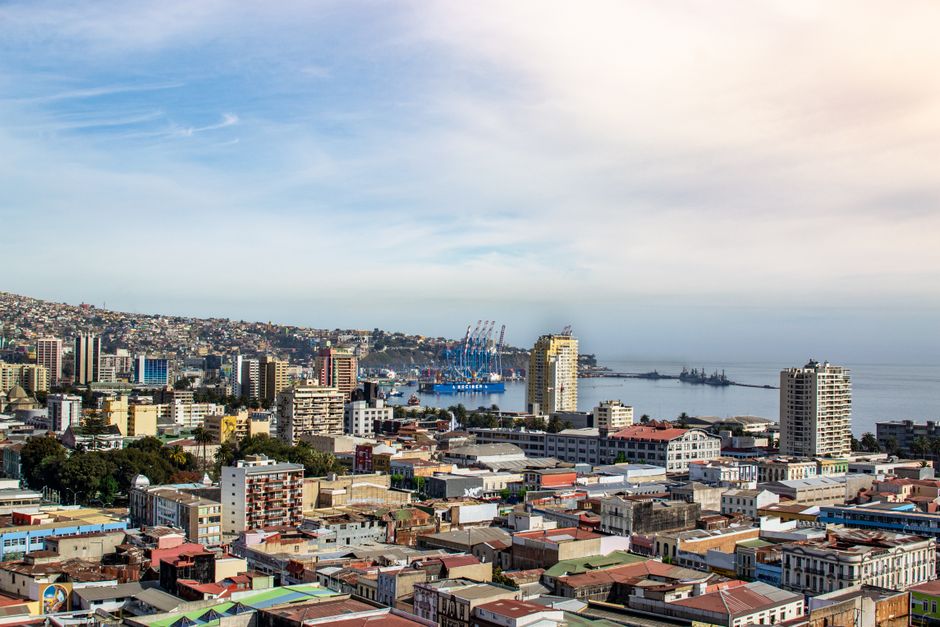
Valparaíso, Chile’s main port and the seat of its National Congress, is a city like no other in South America: a jumble of brightly painted houses, staircases and alleys spilling down more than 40 hills to a busy harbor on the Pacific. In the 19th century it was the first great port for ships rounding Cape Horn, and the wealth of that era left mansions, churches, banks and the famous ascensores, funicular elevators that still haul people up the slopes. Its historic quarter has been on the UNESCO World Heritage List since 2003, and today its hills are covered in street art, small hotels, cafés and restaurants with views across the bay. Pablo Neruda’s house La Sebastiana is here, the beaches of Viña del Mar are next door, and Santiago is about an hour and a half away. The climate is mild all year, with dry summers and most rain from May to August.
Right now in Valparaíso
- Wed11–17°C51–63°F2 mm rain
- Thu11–17°C51–62°FCloudy
- Fri9–18°C48–64°FClear
- Mon 12 Oct Columbus Day (Día del Descubrimiento de Dos Mundos)
Top tours in Valparaíso
See all tours for Valparaíso →
From local operators, with prices and reviews; you check availability and book on Viator, our partner. We may earn a commission at no extra cost to you. How we earn money
Valparaíso at a glance
- Best for: wandering hills and staircases, street art and photography, funiculars, seafood with harbor views, Neruda’s house, and the beaches of Viña del Mar.
- How long: a long day trip from Santiago covers the highlights; 2–3 nights let you enjoy the evenings, Viña del Mar and the coast.
- Best time: October to April, with highs of 19–23 °C (66–74 °F) and almost no rain; New Year’s Eve brings a huge fireworks show over the bay.
- Getting there: buses from Santiago every few minutes, about 1.5–2 hours; the nearest international airport is Santiago (SCL).
- Getting around: on foot, by funicular, by local bus or the old trolleybuses, and by the Metro Valparaíso train along the bay to Viña del Mar.
- Before you go: entry rules, money and general safety are in our Chile travel guide.
Valparaíso’s hills and neighborhoods: where things are
The city has two levels: El Plan, the narrow strip of flat land along the bay with the port, banks, government buildings and main avenues, and the cerros (hills) rising steeply behind it, where most people live. Each hill has its own character, and they are linked by winding streets, stairways and funiculars rather than by any simple grid.
Cerro Alegre and Cerro Concepción
The best-known pair of hills, settled by British and German merchants in the 19th century, and the heart of the UNESCO area. Expect pastel houses with corrugated-iron façades, viewpoints (paseos) such as Paseo Gervasoni and Paseo Yugoslavo, boutique hotels, restaurants, galleries and the Palacio Baburizza, home to the city’s fine arts museum. It’s the most comfortable area to stay.
El Plan: the port and Barrio Puerto
Down below, Plaza Sotomayor faces the harbor with the Monument to the Heroes of Iquique and the Navy headquarters. Nearby, the older Barrio Puerto around Plaza Echaurren and the Mercado Puerto has some of the city’s oldest buildings and churches, and Muelle Prat is the departure point for boat trips around the bay. The financial district along Prat and Esmeralda streets has grand old banks and the Turri clock tower.
Cerro Bellavista and Cerro Florida
Above the center to the east, Cerro Bellavista holds the Museo a Cielo Abierto, an open-air gallery of murals, and Cerro Florida holds Neruda’s house La Sebastiana. These hills are more residential and less touristy.
Cerro Artillería and the west
West of the port, Cerro Artillería has a sweeping viewpoint over the bay and the Naval and Maritime Museum, reached by its own funicular.
Top things to see in Valparaíso
Opening hours and prices change, and many museums close on Mondays; check the official sites before you go.
The ascensores (funiculars)
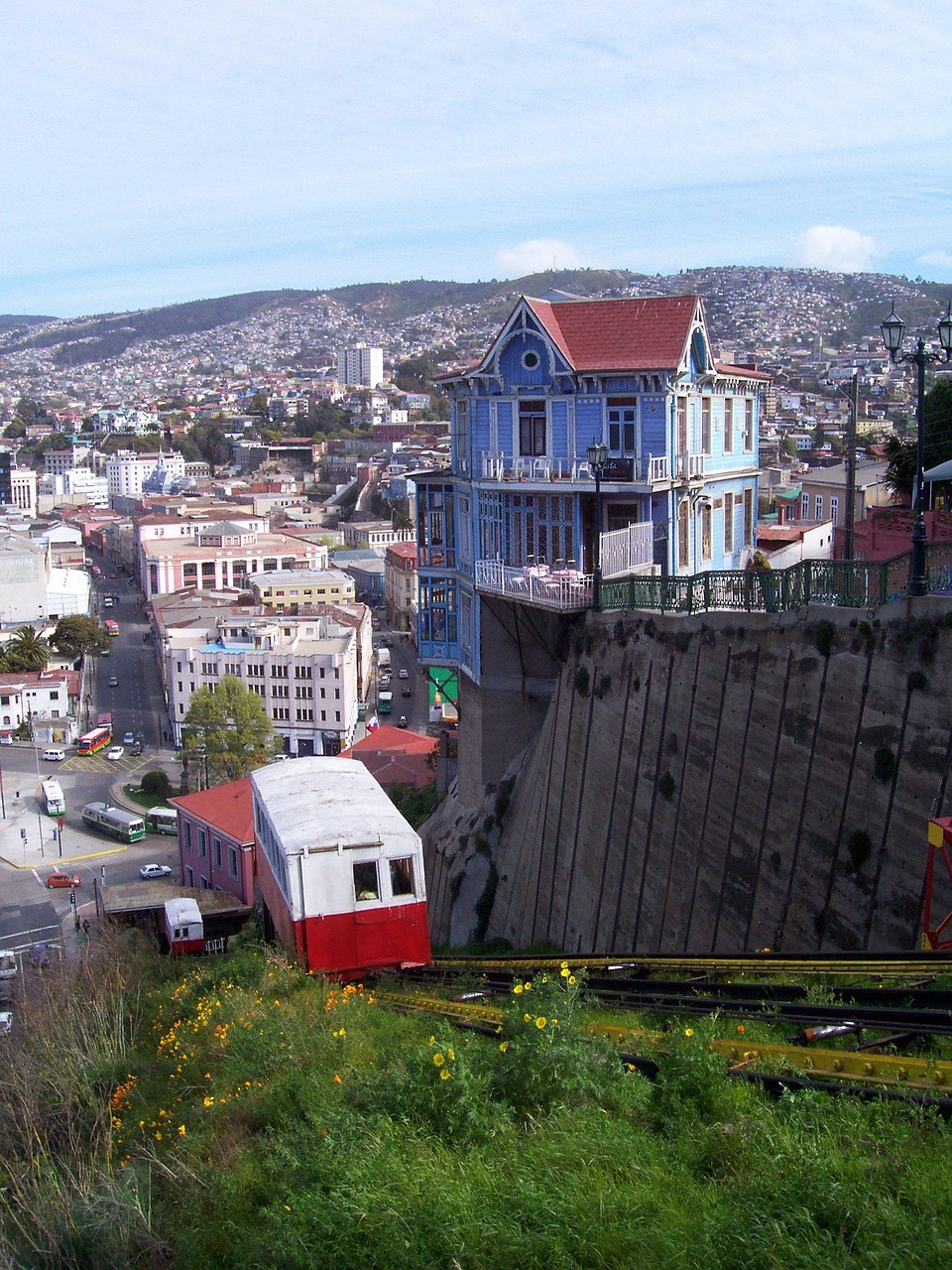
Valparaíso’s funicular elevators, built from the 1880s onward, are one of the symbols of the city: wooden cars pulled up steep tracks on cables, in a few minutes, for a small fare. Several have been restored and reopened in recent years, while others are closed for repairs, so check which are running. The Ascensor Reina Victoria and Ascensor Concepción climb to Cerros Alegre and Concepción, the Ascensor Artillería to the naval museum viewpoint, the Ascensor El Peral from Plaza Sotomayor, and the Ascensor Polanco is a true vertical elevator reached through a tunnel.
La Sebastiana
Neruda bought this tall, narrow house on Cerro Florida in the late 1950s and filled it with nautical objects, colored glass and a writing room at the top with a view over the whole bay; he liked to watch the New Year’s fireworks from here. It’s run by the Fundación Pablo Neruda, which also runs La Chascona in Santiago and Isla Negra on the coast. According to the foundation, every Tuesday in October 2026 a special general ticket costs CLP 4,500 (about US$5); check its website for regular prices and opening hours.
Street art and the Museo a Cielo Abierto
Valparaíso is one of the world’s great street-art cities, with large murals covering walls, stairways and houses across the hills, especially on Cerros Alegre, Concepción, Bellavista and Polanco. The Museo a Cielo Abierto on Cerro Bellavista is a route of about 20 murals painted by Chilean artists from the 1990s onward. Local guides run free walking tours (tip-based) and paid street-art tours.
Palacio Baburizza
This Art Nouveau mansion on Cerro Alegre, built in the early 20th century for a nitrate magnate, houses the Municipal Fine Arts Museum, with Chilean and European paintings and fine views from its terrace.
Plaza Sotomayor and the harbor
The city’s ceremonial square faces the port, with the monument to the naval heroes of the 1879 Battle of Iquique and the grand Navy building. From Muelle Prat next door, small boats take visitors on half-hour trips around the bay, past container ships, naval vessels and sea lions.
More to see
- Naval and Maritime Museum: on Cerro Artillería, with ship models, navigation instruments and the history of the Chilean navy.
- National Congress: the huge modern building where Chile’s legislature has met since 1990, on the edge of El Plan.
- Cementerio de Disidentes and Cementerio N° 1: historic cemeteries on Cerro Panteón, with the graves of British, German and American merchants and sailors.
- The trolleybuses: Valparaíso’s mid-20th-century trolleybuses, some of the oldest still in service anywhere, run along El Plan.
Food, drink and nightlife
Seafood is the star: fried or baked empanadas filled with shellfish and cheese, paila marina (seafood stew), ceviche, machas (razor clams), reineta and congrio fish, and the “chorrillana,” a huge plate of fries topped with beef, onions and eggs, which Valparaíso claims as its own. Simple fish restaurants around the Caleta Portales fishing cove and the Mercado Cardonal serve fresh catches at local prices, while the restaurants of Cerros Alegre and Concepción offer modern Chilean cooking with views. Valparaíso’s nightlife is famously bohemian: traditional bars such as the old “cantinas” of El Plan, live music, cueca and bolero, and clubs in the Subida Ecuador area. Wines from the nearby Casablanca Valley, known for Sauvignon Blanc and Pinot Noir, are on every list.
Viña del Mar and day trips
- Viña del Mar: Valparaíso’s neighbor across the bay is a planned garden city with wide beaches, high-rise apartments, a casino, the famous Reloj de Flores (flower clock), Castillo Wulff on the rocks, the Quinta Vergara park and the Fonck Museum, which has a real moai from Easter Island. It’s 15–20 minutes away by Metro Valparaíso train or bus. See our guide to beaches.
- Concón and the dunes: farther north along the coast, Concón has seafood restaurants and huge sand dunes overlooking the ocean.
- Casablanca Valley: cool-climate wineries about 45 minutes inland on the road to Santiago. See our guide to wine tasting.
- Isla Negra: Neruda’s favorite house, on the rocky shore about 85 km (53 miles) south, open Tuesday to Sunday from 10 a.m. to 6 p.m. according to the foundation; the poet and his wife are buried there.
- Zapallar and Maitencillo: upscale and laid-back beach towns about 1.5–2 hours north, popular in summer.
- Santiago: the capital is about 120 km (75 miles) east; see our Santiago travel guide.
Getting there and getting around
From Santiago and the airport
Buses leave Santiago’s Pajaritos and Alameda terminals every few minutes for Valparaíso and Viña del Mar, a ride of about 1.5 to 2 hours, arriving at Valparaíso’s Rodoviario bus terminal on Avenida Pedro Montt. The nearest international airport is Santiago’s Arturo Merino Benítez (SCL), about 110 km (68 miles) away; some buses connect directly from the airport, or you can change at Pajaritos. Cruise ships dock at the port in El Plan, a short walk from the center.
Getting around
- On foot: the best way to explore the hills, but wear good shoes; the streets are steep, cobbled and sometimes uneven.
- Ascensores: the funiculars save a lot of climbing; pay a small fare in cash or by card at each one.
- Colectivos and micros: shared taxis (colectivos) on fixed routes and local buses (micros) climb the hills; ask your hotel which number goes where.
- Metro Valparaíso (Merval): according to Chile’s tourism board, the Limache–Puerto commuter train links Valparaíso with Viña del Mar and inland towns, running along the shore of the bay; pay with a rechargeable card.
- Taxis and apps: use them at night, especially to get back up to the hills.
When to go and how long to stay
Valparaíso has a mild, Mediterranean-style climate cooled by the Pacific: summers are warm and dry, winters cool and showery, and morning sea fog (camanchaca) is common, especially in late spring and summer. The tables use the Meteorological Directorate’s 1991–2020 normals as published by the World Meteorological Organization: temperatures from the Rodelillo airfield station above Viña del Mar, at 330 m (1,080 ft), and rainfall from the Punta Ángeles lighthouse station on the coast at Valparaíso.
| Season | Average high / low | What it’s like |
|---|---|---|
| Summer (Dec–Feb) | 22–23 °C (72–74 °F) / 11–12 °C (52–54 °F) | Sunny and dry, often with morning fog; busiest season, with Chilean holidaymakers in Viña |
| Fall (Mar–May) | 22 °C falling to 17 °C (72 to 63 °F) / 12 °C falling to 9 °C (53 to 48 °F) | Mild and clear, quieter; rain returns in May |
| Winter (Jun–Aug) | 15–16 °C (59–60 °F) / 7–8 °C (45–46 °F) | Cool, damp and wettest, with storms off the Pacific; low prices |
| Spring (Sep–Nov) | 17 °C rising to 21 °C (62 to 70 °F) / 8 °C rising to 10 °C (46 to 50 °F) | Fresh and sunny; Fiestas Patrias in September |
The coast at Valparaíso gets about 363 mm (14 in) of rain a year, almost all from May to August. The sea is cold all year, around 13–16 °C (55–61 °F), because of the Humboldt Current.
Valparaíso month by month
| Month | High / low | Rain | What to expect |
|---|---|---|---|
| January | 23 °C (74 °F) / 12 °C (54 °F) | almost none | Warm and dry; peak beach season in Viña del Mar |
| February | 23 °C (73 °F) / 12 °C (54 °F) | 1 mm (0.0 in) | Warm; the Viña del Mar International Song Festival usually takes place this month |
| March | 22 °C (72 °F) / 12 °C (53 °F) | 3 mm (0.1 in) | Pleasant and quieter after the summer holidays |
| April | 20 °C (68 °F) / 10 °C (51 °F) | 15 mm (0.6 in) | Mild and clear; good walking weather |
| May | 17 °C (63 °F) / 9 °C (48 °F) | 66 mm (2.6 in) | Cooler; the first winter storms |
| June | 16 °C (60 °F) / 8 °C (46 °F) | 106 mm (4.2 in) | Wettest month; low season and low prices |
| July | 15 °C (59 °F) / 7 °C (45 °F) | 67 mm (2.6 in) | Cool and showery; Chilean winter school holidays |
| August | 16 °C (60 °F) / 7 °C (45 °F) | 61 mm (2.4 in) | Damp, with some clear days between fronts |
| September | 17 °C (62 °F) / 8 °C (46 °F) | 25 mm (1.0 in) | Spring arrives; Fiestas Patrias on the 18th and 19th |
| October | 19 °C (65 °F) / 9 °C (47 °F) | 13 mm (0.5 in) | Mild and sunny; morning fog is common |
| November | 21 °C (70 °F) / 10 °C (50 °F) | 4 mm (0.1 in) | Warm, dry and bright |
| December | 22 °C (72 °F) / 11 °C (52 °F) | 2 mm (0.1 in) | Busy at the end of the month for the New Year fireworks over the bay |
Crowds and prices: January, February and the New Year are the busiest times, and hotels on the hills book up months ahead for New Year’s Eve, when the city hosts one of the largest fireworks shows in South America. Weekends are busier than weekdays all year, as many Santiago residents visit. The city uses mainland Chile time, UTC−4 in winter and UTC−3 in summer.
One day in Valparaíso
Start at Plaza Sotomayor and Muelle Prat for a short boat ride around the bay, then take a funicular up to Cerro Concepción and walk the paseos and murals of Cerros Concepción and Alegre, stopping at the Palacio Baburizza. After a seafood lunch with a view, take a taxi or bus to La Sebastiana on Cerro Florida, and finish at sunset on Paseo 21 de Mayo on Cerro Artillería.
Two or three days
Add the Museo a Cielo Abierto, the cemeteries and the naval museum, an evening in Valparaíso’s bars, a day in Viña del Mar and Concón, and Isla Negra or a Casablanca winery on the way back to Santiago.
Where to stay in Valparaíso
- Cerro Alegre and Cerro Concepción: the most popular area, with restored boutique hotels, B&Bs and apartments, many with bay views; close to restaurants and the main sights.
- Cerro Bellavista and Cerro Florida: quieter guesthouses and hostels near La Sebastiana and the open-air museum.
- Viña del Mar: modern hotels and apartments near the beach, better for a beach holiday, with a short train ride to Valparaíso.
- El Plan: cheaper hotels near the bus terminal, but quieter and less pleasant after dark.
Foreign tourists who pay for a hotel registered with Chile’s tax service in US dollars or with a card issued abroad don’t pay the 19% VAT (IVA) on the room; show your passport and entry record. Many hill hotels are in old houses with steep stairs and no elevator.
What a trip to Valparaíso costs
These are our estimates for October 2026 at about CLP 985 per US dollar, except where marked official.
| Item | Typical price |
|---|---|
| Bus Santiago–Valparaíso, one way | CLP 5,000–9,000 (US$5–9) |
| Funicular ride | CLP 100–1,000 (US$0.10–1), depending on the ascensor |
| Boat trip around the bay from Muelle Prat | CLP 5,000–10,000 (US$5–10) |
| Neruda house museum, special Tuesday ticket in October 2026 | CLP 4,500 (US$5), official |
| Seafood lunch in a fish restaurant | CLP 12,000–25,000 (US$12–25) |
| Dinner with wine on Cerro Alegre | CLP 25,000–45,000 (US$25–45) |
| Hostel bed | CLP 15,000–28,000 (US$15–28) |
| Boutique double room on the hills | CLP 70,000–140,000 (US$70–140) |
Practical tips for Valparaíso
- Theft: pickpocketing and bag and phone snatching are the main problems for visitors, especially in El Plan, around the bus terminal, Plaza Echaurren and the Barrio Puerto, and on quiet stairways. Keep cameras and phones close, carry little, and don’t walk alone on deserted streets or stairs after dark; take a taxi instead.
- Hills by day: stick to the busy tourist hills and main stairways, and ask your hotel about any streets to avoid.
- Wildfires: the hills around Valparaíso and Viña del Mar are prone to wildfires in the hot, dry, windy summer months; follow official alerts from SENAPRED and evacuation instructions.
- Earthquakes and tsunamis: El Plan is in the tsunami zone; learn the evacuation routes marked on the streets and head uphill after any strong quake.
- Ocean: the Pacific here is cold and can have strong currents; swim only at lifeguarded beaches in Viña del Mar in summer.
- Emergencies: 133 for the police, 131 for an ambulance, 137 for maritime emergencies.
What to pack for Valparaíso
Bring comfortable, grippy walking shoes for steep, cobbled streets and stairways, layers for cool mornings and evenings even in summer, a light rain jacket from May to September (see our guide to rain jackets), sunscreen and sunglasses, swimwear for Viña del Mar, a small daypack that zips closed, and a type C/L plug adapter for Chile’s 220 V sockets.
Valparaíso travel FAQ
Is Valparaíso worth visiting?
Yes. Its hills, funiculars, street art and harbor views make it one of the most distinctive cities in South America, and it’s easy to combine with Santiago and Viña del Mar.
How do I get from Santiago to Valparaíso?
By bus from Santiago’s Pajaritos or Alameda terminals, leaving every few minutes and taking about 1.5 to 2 hours. A rental car takes about the same time on Route 68.
Can I visit Valparaíso as a day trip?
Yes, a long day covers the main hills, a funicular, La Sebastiana and a harbor boat trip, but staying a night or two lets you enjoy the evenings and Viña del Mar.
Where should I stay in Valparaíso?
Cerro Alegre and Cerro Concepción are the most popular and convenient areas, with boutique hotels and restaurants close to the main sights.
How much does La Sebastiana cost?
According to the Fundación Pablo Neruda, a special general ticket costs CLP 4,500 every Tuesday in October 2026; check the foundation’s website for regular prices and hours.
Is Valparaíso safe?
Most visits are fine, but petty theft is common. Stay on busy tourist hills, watch your bag and phone in El Plan and the port area, and take a taxi at night.
What is the best time to visit Valparaíso?
October to April for warm, dry weather; New Year’s Eve for the famous fireworks, if you book well ahead. Winter is cooler and wetter but quiet.
Are the funiculars running?
Several, including Reina Victoria, Concepción, Artillería, El Peral and Polanco, have operated after restoration, but some are closed for repairs at any time; check locally.
How far is Viña del Mar from Valparaíso?
About 15–20 minutes by the Metro Valparaíso train or by bus along the bay.
Can I swim in Valparaíso?
The water is cold, around 13–16 °C (55–61 °F). Swim at lifeguarded beaches in Viña del Mar in summer rather than in Valparaíso’s harbor.
Plan your trip
Partner links: TravelerCenter may earn a commission if you book, at no extra cost to you.
🇪🇸 Useful Spanish phrases for Valparaíso
All 38 Spanish phrases: restaurant, hotel, emergencies, romance (printable) →
Sources · last reviewed 4 October 2026
Researched and last reviewed on 4 October 2026. La Sebastiana and Isla Negra details and the October 2026 Tuesday ticket: the Fundación Pablo Neruda; the Limache–Puerto train and Chile’s emergency numbers: chile.travel; exchange rate: the Central Bank of Chile; hotel VAT exemption: Decree-Law 825; climate: the Meteorological Directorate’s 1991–2020 normals for Rodelillo and Punta Ángeles, as published by the World Meteorological Organization. The UNESCO listing year, history, the funiculars and which are running, street art, museums, the Congress, trolleybuses, bus times and frequencies, distances, sea temperatures, the song festival, safety notes and typical costs come from general references and are flagged for checking; costs are our estimates. Prices and hours change, so check the official sites before you go. For entry rules, money and general safety, see our Chile travel guide.
Data: Weather: MET Norway (CC BY 4.0) · Sea temperature: NOAA CoastWatch · Air quality: OpenAQ · Rates: ECB · Holidays: Nager.Date · Costs: World Bank ICP and price levels · Wikidata (CC0)