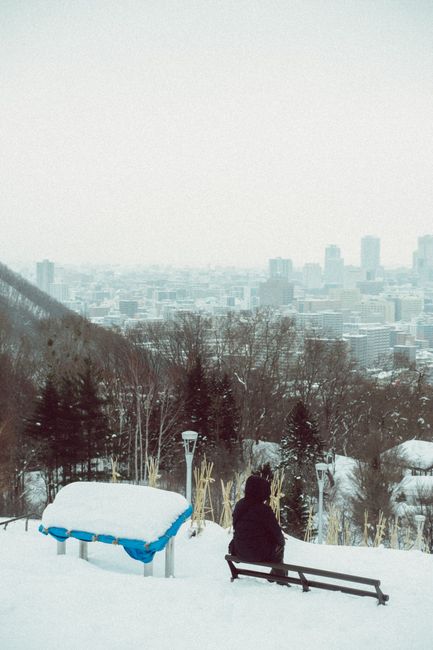
Niseko is Japan’s best-known ski destination, a group of resorts on the slopes of Mount Niseko Annupuri in south-western Hokkaido, about 100 km (62 miles) from Sapporo. It owes its fame to its snow: cold winds from Siberia pick up moisture over the Sea of Japan and drop it as light, dry powder, many meters of it every winter, facing the perfect cone of Mount Yotei across the valley. Strictly, “Niseko” is a town, but the name also covers the ski area shared with the neighboring town of Kutchan, where the largest resort village, Hirafu, has grown into an international town of chalets, bars and restaurants. In summer, the same hills offer rafting, hiking, cycling, golf and hot springs. The ski season runs from late November to early May, with the best powder from late December to February; summer and early fall, from June to October, are green, mild and much quieter.
Right now in Niseko (Kutchan)
- Wed 8–17°C 47–62°F Mostly clear
- Thu 9–17°C 47–62°F Partly cloudy
- Fri 7–18°C 45–65°F 1 mm Light showers
- Mon 12 Oct Sports Day (スポーツの日)
Weather: MET Norway (CC BY 4.0) · Rates: ECB · Holidays: Nager.Date
Top tours in Niseko
See all tours for Niseko →
From local operators, with prices and reviews; you check availability and book on Viator, our partner. We may earn a commission at no extra cost to you. How we earn money
Niseko at a glance
- Best for: powder skiing and snowboarding, backcountry and tree runs, night skiing, hot springs, and in summer rafting, hiking and cycling.
- How long: 5–7 days for a ski trip; 2–3 days in summer.
- Best time: January and February for the deepest powder; December and March for fewer crowds; June to September for summer sports, with highs of about 21–25 °C (70–77 °F).
- Getting there: about 2.5 to 3 hours by bus or car from New Chitose Airport (CTS); about 2 hours from Sapporo by train with a change at Otaru, or by bus.
- Getting around: resort shuttle buses, taxis, rental cars and the lifts of the Niseko United resorts.
- Fees to know: as of October 2026, a 1-day Niseko United All Mountain Pass costs ¥13,500 in the peak season; accommodation tax is 3% of the room rate in Kutchan (Hirafu), and Niseko town moves to 3% from November 1, 2026.
- Before you go: entry rules, rail passes, money and general safety are in our Japan travel guide; see also our Sapporo guide.
Niseko’s areas and where to stay
The ski area, known as Niseko United, has four linked resorts around the summit of Niseko Annupuri, 1,308 m (4,291 ft). Two lie in Kutchan town and two in Niseko town, which matters for local taxes.
Grand Hirafu (Kutchan)
The biggest resort and village, on the east face of the mountain: hundreds of hotels, apartments and chalets, international restaurants, bars, ski schools and rental shops, with a free loop shuttle bus. Lively and the most convenient base, but the busiest and most expensive.
Hanazono (Kutchan)
North of Hirafu, a quieter resort with modern lifts, famous tree runs and a few luxury hotels, popular with families and powder hunters.
Niseko Village (Niseko town)
A resort at the southern foot of the mountain, with large hotels, a gondola and a small village of shops and restaurants. Calmer, with ski-in, ski-out stays.
Annupuri (Niseko town)
On the west side of the mountain, a more relaxed, Japanese-style resort with wide, gentle slopes, hot spring hotels and lovely views of Mount Yotei and the Sea of Japan.
Kutchan and Niseko town centers
Kutchan, about 15 minutes from Hirafu, is a working town with the JR station, supermarkets, Japanese restaurants and cheaper hotels. Niseko town, south of the ski area, is a farming town with a station, hot springs, a roadside market and views of Yotei. Moiwa, a small separate ski area west of Annupuri, is also in Niseko town.
Skiing and snowboarding in Niseko
The snow and the terrain
The JMA’s normals for Kutchan, at the foot of the ski area, add up to about 9 m (30 ft) of snowfall over a winter, and the snow on the ground is deepest in February, at about 1.8 m (6 ft); much more falls on the upper slopes. The four Niseko United resorts share about 70 runs and some 30 lifts, from gentle beginner slopes to steep bowls and gladed trees, and they connect near the summit, so you can ski from one to another on the right lift pass. Night skiing on floodlit runs is one of Niseko’s specialties.
The 2026–27 season
According to Niseko United, the 2026–27 lift season runs as follows (dates may change with the snow):
- Annupuri and Grand Hirafu: November 28, 2026 to May 5, 2027.
- Hanazono: November 28, 2026 to April 11, 2027.
- Niseko Village: November 28, 2026 to April 4, 2027.
- Night skiing: December 12, 2026 to March 22, 2027.
Lift pass prices
The Niseko United All Mountain Pass covers all four resorts. According to Niseko United, 2026–27 prices for a 1-day pass are:
| Season | Adult | Age 4–12 | Age 13–15 and 65+ |
|---|---|---|---|
| Peak: Dec 24, 2026 – Feb 28, 2027 | ¥13,500 (about US$85) | ¥8,100 | ¥11,500 |
| Regular: Dec 12–23, 2026 and Mar 1–22, 2027 | ¥12,600 (about US$80) | ¥7,600 | ¥10,700 |
| Early and spring: Nov 28 – Dec 11, 2026 and Mar 23 – Apr 4, 2027 | ¥8,800 (about US$56) | ¥5,300 | ¥7,500 |
| Final: Apr 5 – May 5, 2027 | ¥6,300 (about US$40) | ¥3,800 | ¥5,400 |
Multi-day passes are valid on consecutive days only: in the peak season, 3 days cost ¥39,500 (about US$250) and 7 days ¥91,500 (about US$580) for adults. Day passes are valid until the end of night skiing in the night-skiing season, a 12-point pass for a few rides costs ¥7,500, and season passes are not transferable. Most passes can be bought online in advance, except early-season passes. Each resort also sells its own cheaper passes for its lifts only.
The Niseko Rules: gates and backcountry
Niseko once had the highest number of fatal avalanche accidents in Japan, and its resorts manage off-piste skiing under the Niseko Rules, enforced by the ski patrol. According to Niseko United:
- Use the gates: always enter backcountry areas through the official gates; never duck under boundary ropes.
- Closed means closed: backcountry skiing and riding are prohibited when the gates are closed, which the patrol decides each day based on avalanche danger and weather.
- Off-limits areas: never enter areas marked off-limits at any time.
- Equipment: everyone in the backcountry should wear a helmet and carry an avalanche beacon; a probe and a shovel are very highly recommended.
- Children: elementary school children may enter the backcountry only with an older companion.
- Penalties and costs: search and rescue in backcountry areas costs a minimum of ¥100,000 (about US$630), and rule-breakers can have their lift pass confiscated.
Check the daily Niseko Avalanche Information, the area’s official avalanche report, before going through a gate, and go with a qualified local guide unless you are experienced in avalanche terrain.
Peaks and mountains
- Mount Yōtei
- Nisekoan Nupuri
Nature
- Shinsen-numa
Other things to do in Niseko
Hot springs
The area has many onsen, from hotel baths with Yotei views to rustic mountain springs at Goshiki Onsen on the north side of Annupuri. A soak after skiing is part of the Niseko experience. Wash before getting in, don’t wear swimsuits, and keep your towel out of the water; many baths refuse guests with tattoos, so ask ahead or book a private bath.
Summer and fall
From June to October, Niseko becomes an outdoor playground: rafting on the Shiribetsu River, which is at its liveliest with snowmelt in May and June; hiking up Mount Yotei, 1,898 m (6,227 ft), a long, steep climb of about 8–10 hours round trip, or the easier trails of Niseko Annupuri; mountain biking and road cycling; golf; and canoeing on the lakes. The Annupuri gondola runs in summer for views. Fall colors on the mountains peak from early to mid-October. See our guides to hiking and cycling.
Food and drink
Hokkaido is famous for its produce, and Niseko’s farms supply potatoes, asparagus, corn and dairy; try soft-serve ice cream and cheese at the Milk Kobo farm shop. Hirafu has everything from sushi and ramen to fine dining and izakaya, but in peak season the best restaurants must be booked weeks ahead. Try Hokkaido specialties such as jingisukan (grilled mutton), soup curry, crab and sea urchin, and Hokkaido ramen. Whisky lovers can visit the Nikka distillery at Yoichi, about an hour away.
Après-ski and nightlife
Hirafu’s bars and cafés stay open late in winter; Kutchan town has cheaper Japanese restaurants and izakaya popular with locals.
Day trips from Niseko
- Otaru: a harbor town of canals, glassworks and sushi, about 1.5–2 hours by train or car.
- Yoichi: the Nikka Whisky distillery and fruit farms, about an hour.
- Rusutsu: another large ski resort with tree runs, about 40 minutes by car.
- Lake Toya: a caldera lake with hot springs and an active volcano, about 1.5 hours.
- Sapporo: the capital of Hokkaido, with the Snow Festival in February, about 2–2.5 hours. See our Sapporo guide.
Getting there and getting around
From the airport and Sapporo
Most visitors fly into New Chitose Airport (CTS), which has domestic flights from all over Japan and international flights from Asia and beyond. In winter, airport buses and private shuttles run to Hirafu, Niseko Village and Annupuri in about 2.5 to 3 hours; book ahead. By car it takes about 2–2.5 hours in good conditions, but roads are snowy and icy all winter.
By train, take the JR Rapid Airport to Sapporo and continue on the JR Hakodate Line via Otaru to Kutchan (for Hirafu) or Niseko station, about 2–2.5 hours from Sapporo with a change at Otaru; trains are infrequent, so check the timetable. The nationwide Japan Rail Pass (¥50,000 (about US$315) for 7 days on the official site, as of October 2026) covers these JR Hokkaido trains. A Hokkaido Shinkansen extension to Sapporo, with a stop at Kutchan, is under construction.
Around the resorts
In Hirafu, a free loop shuttle bus funded by Kutchan’s accommodation tax circles the village. The Niseko United shuttle buses link the four resorts, and local buses run to Kutchan town. Taxis are scarce at night in peak season, so book them ahead. A rental car is useful in summer; in winter, drive only with experience on snow.
When to go and how long to stay
Niseko has a snowy, cold-winter climate with warm, fairly dry summers. The table uses the Japan Meteorological Agency’s (JMA) 1991–2020 normals for its Kutchan station, at 176 m (577 ft) at the foot of the ski area: average daily highs and lows, total precipitation (rain and melted snow) and days with at least 1 mm. The upper slopes are several degrees colder.
| Month | Average high / low | Precipitation (days with 1 mm or more) | What to expect |
|---|---|---|---|
| January | −2 °C (28 °F) / −10 °C (15 °F) | 185 mm (7.3 in), 25 days | Deep winter; snow on most days; peak powder |
| February | −1 °C (30 °F) / −9 °C (15 °F) | 129 mm (5.1 in), 21 days | Very cold; the deepest snow, about 1.8 m (6 ft) in town |
| March | 3 °C (37 °F) / −6 °C (22 °F) | 98 mm (3.9 in), 17 days | Still snowy; longer, sunnier days; spring skiing begins late in the month |
| April | 10 °C (50 °F) / 0 °C (32 °F) | 67 mm (2.6 in), 11 days | Spring skiing with corn snow; snow lingers in town |
| May | 17 °C (62 °F) / 6 °C (43 °F) | 76 mm (3.0 in), 10 days | Snow melts; cherry blossoms in early to mid-May; rafting season starts |
| June | 21 °C (70 °F) / 11 °C (52 °F) | 60 mm (2.4 in), 8 days | Fresh green; dry and pleasant; rafting on snowmelt |
| July | 24 °C (76 °F) / 16 °C (61 °F) | 102 mm (4.0 in), 9 days | Warm days, cool nights; hiking season; Yotei climbs |
| August | 25 °C (78 °F) / 17 °C (62 °F) | 153 mm (6.0 in), 10 days | The warmest month; summer festivals |
| September | 22 °C (71 °F) / 11 °C (52 °F) | 133 mm (5.2 in), 12 days | Cool and clear; fall begins on the peaks |
| October | 15 °C (59 °F) / 5 °C (40 °F) | 128 mm (5.0 in), 14 days | Fall colors peak; first snow on the summits |
| November | 7 °C (44 °F) / −1 °C (30 °F) | 183 mm (7.2 in), 20 days | Cold and wet; first snow in town; lifts open at the end of the month |
| December | 0 °C (32 °F) / −7 °C (20 °F) | 218 mm (8.6 in), 25 days | Heavy snowfall; the season gets going; Christmas crowds |
Kutchan gets about 1,530 mm (60 in) of precipitation a year, more than half of it from November to March, mostly as snow; from December to February, snow or rain falls on more than 20 days a month. Summers are warm but rarely hot, with average highs of about 24–25 °C (75–77 °F). Hokkaido has no regular rainy season in the JMA’s records, and typhoons that reach it are usually weaker than in the south.
Weather month by month
Averages from JMA normals 1991–2020, Kutchan · Last reviewed 5 Oct 2026
Seasons: January and February bring the most reliable powder and the biggest crowds, especially around New Year and Lunar New Year. December has good snow in most years, and March offers sunnier spring skiing with lower prices. Cherry blossoms usually open in early to mid-May, a little after Sapporo, where the JMA’s normal date is May 1. Fall colors peak in early to mid-October.
Crowds and booking: peak season accommodation, ski schools, rental equipment and restaurants book out months ahead, particularly from Christmas to mid-February; reserve early.
A week of skiing
Spend the first days exploring all four resorts on the All Mountain Pass, with an onsen each evening; ski Hanazono’s trees and Hirafu’s night slopes; join a guided backcountry tour when the gates are open; and take a rest day for Otaru or Yoichi.
Three summer days
Raft the Shiribetsu River, cycle the farm roads around Yotei, climb Yotei or Annupuri, and finish with a hot spring and dinner in Hirafu.
Where to stay in Niseko and taxes
- Grand Hirafu: apartments, chalets and hotels of every size, closest to the nightlife.
- Hanazono: luxury hotels and quiet residences.
- Niseko Village and Annupuri: resort hotels and hot spring inns, calmer and good for families.
- Kutchan town: cheaper business hotels near the station and supermarkets.
Niseko is one of Japan’s most expensive places to stay in peak winter; prices fall sharply in summer. Accommodation taxes depend on which town you stay in, and both now include Hokkaido’s prefectural tax, introduced on April 1, 2026, which the towns collect. Rates are based on the room-only rate per person per night (meals and consumption tax excluded):
- Kutchan (Grand Hirafu and Hanazono): since April 1, 2026, 3% of the room rate in total, up from 2%, according to Kutchan town.
- Niseko town (Niseko Village, Annupuri and Moiwa), until October 31, 2026: a fixed amount including the Hokkaido tax: ¥200 for rooms up to ¥5,000, ¥300 up to ¥19,999, ¥700 up to ¥49,999, ¥1,500 up to ¥99,999 and ¥2,500 from ¥100,000.
- Niseko town from November 1, 2026: 3% of the room rate in total, according to Niseko town, in time for the 2026–27 ski season.
Students on school trips are exempt. Hot spring hotels also add a small bathing tax.
What a trip to Niseko costs
Prices are approximate, for October 2026, converted at about ¥158 to the US dollar.
| Item | Typical cost |
|---|---|
| All Mountain Pass, 1 day, peak season | ¥13,500 (about US$85) |
| All Mountain Pass, 7 days, peak season | ¥91,500 (about US$580) |
| Ski or snowboard rental, per day | ¥6,000–12,000 (about US$38–76) |
| Group ski lesson, half day | ¥12,000–20,000 (about US$76–125) |
| Airport bus or shuttle, one way | ¥4,000–6,000 (about US$25–38) |
| Ramen or curry lunch on the mountain | ¥1,500–2,500 (about US$9.5–16) |
| Dinner in Hirafu, per person | ¥5,000–15,000 (about US$32–95) |
| Hotel or apartment, per night in peak season | ¥40,000–150,000 (about US$250–950) |
| Hotel double, per night in summer | ¥12,000–30,000 (about US$76–190) |
Practical tips for Niseko
- Book early: rooms, lessons, rentals and peak-season dinners sell out months ahead.
- Buy passes online: most lift passes can be bought in advance from Niseko United.
- Check the gates and avalanche report: every day before heading off-piste.
- Tree wells and cold: ski with a partner in the trees, and cover your face and hands on the lifts.
- Departure tax: since July 2026, Japan’s International Tourist Tax is ¥3,000 per departure, usually included in your air fare (tickets issued by June 30, 2026 keep the old ¥1,000).
- Visitor hotline: the JNTO’s Japan Visitor Hotline, 050-3816-2787, answers in English 24 hours a day.
Safety
Niseko is safe as a town, but its mountains need respect. In winter, the main risks are avalanches outside the resort boundaries, tree wells and deep snow, where a fallen skier can suffocate, whiteouts and frostbite on the windy upper slopes, and collisions on crowded runs; follow the Niseko Rules, carry avalanche gear off-piste and obey the ski patrol. Roads are icy from November to April, so drive slowly with winter tires or take shuttles, and watch out for snowplows and falling snow from roofs in the villages. In summer, brown bears live in the forests: make noise on trails, carry a bear bell or spray and never leave food out. Mount Yotei’s weather changes fast, so start early and carry warm layers. Japan is earthquake country: take cover in strong shaking, follow staff instructions, and keep the JNTO’s Safety Tips app on your phone. In an emergency, call 110 for the police or 119 for an ambulance or fire.
What to pack for Niseko
For winter: a waterproof ski jacket and pants, thermal base layers, a helmet, goggles, a face mask or neck gaiter, warm gloves, and boots with grip for icy streets; avalanche gear if you plan to ride the backcountry, or rent it from a guide. For summer: layers, a rain jacket, hiking boots and bug spray. Japan uses 100 V and two-pin type A plugs like the US.
Niseko travel FAQ
When is the ski season in Niseko?
For 2026–27, Niseko United’s lifts open on November 28, 2026; Hirafu and Annupuri run until May 5, 2027, Hanazono until April 11 and Niseko Village until April 4.
How much is a lift pass in Niseko?
A 1-day All Mountain Pass costs ¥13,500 for adults in the peak season (December 24 to February 28), ¥12,600 in the regular season and ¥8,800 early and late in the season.
Can I ski the backcountry in Niseko?
Yes, but only through the official gates when they are open, with a helmet and an avalanche beacon; ducking ropes is banned and rescue costs at least ¥100,000.
When is the best powder in Niseko?
Usually from late December to mid-February, when snowfall is heaviest and temperatures lowest.
How do I get from New Chitose Airport to Niseko?
By airport bus or shuttle in about 2.5 to 3 hours, by car, or by JR train via Sapporo and Otaru to Kutchan.
How much is the accommodation tax in Niseko?
In Kutchan (Hirafu and Hanazono), 3% of the room rate since April 2026; in Niseko town, fixed amounts from ¥200 until October 31, 2026, then 3% from November 1, 2026.
Is Niseko good for beginners?
Yes. Every resort has gentle runs and English-speaking ski schools; Annupuri and Niseko Village are calmer for learning.
Is there night skiing in Niseko?
Yes, from December 12, 2026 to March 22, 2027 for the coming season, and day passes stay valid into the evening.
Is Niseko worth visiting in summer?
Yes, for rafting, hiking Mount Yotei, cycling, golf and hot springs, with mild weather and much lower prices.
Which part of Niseko should I stay in?
Grand Hirafu for restaurants and nightlife, Hanazono for luxury and trees, Niseko Village or Annupuri for a quieter, family-friendly stay.
Sources
- © OpenStreetMap contributors · ODbL · fetched 5 Oct 2026
- Wikidata · CC0 · fetched 5 Oct 2026
Sources and last review
Researched and last reviewed on 4 October 2026. Season dates, lift pass prices and the Niseko Rules: Niseko United; accommodation taxes: Kutchan town and Niseko town; JR Pass: the official Japan Rail Pass website; climate normals and snow, and cherry blossom dates: the Japan Meteorological Agency (JMA); visitor hotline: JNTO; exchange rate: the US Federal Reserve. Terrain figures, journey times, the shinkansen extension, seasonal timing, summer activities, rental, lesson and transfer prices and other typical prices are general references or estimates, flagged for checking. Prices and hours change, so check the official sites before you go. For entry rules, money and general safety, see our Japan travel guide.
Plan your trip
Partner links: TravelerCenter may earn a commission if you book, at no extra cost to you.
🇯🇵 Useful Japanese phrases for Niseko
All 38 Japanese phrases: restaurant, hotel, emergencies, romance (printable) →