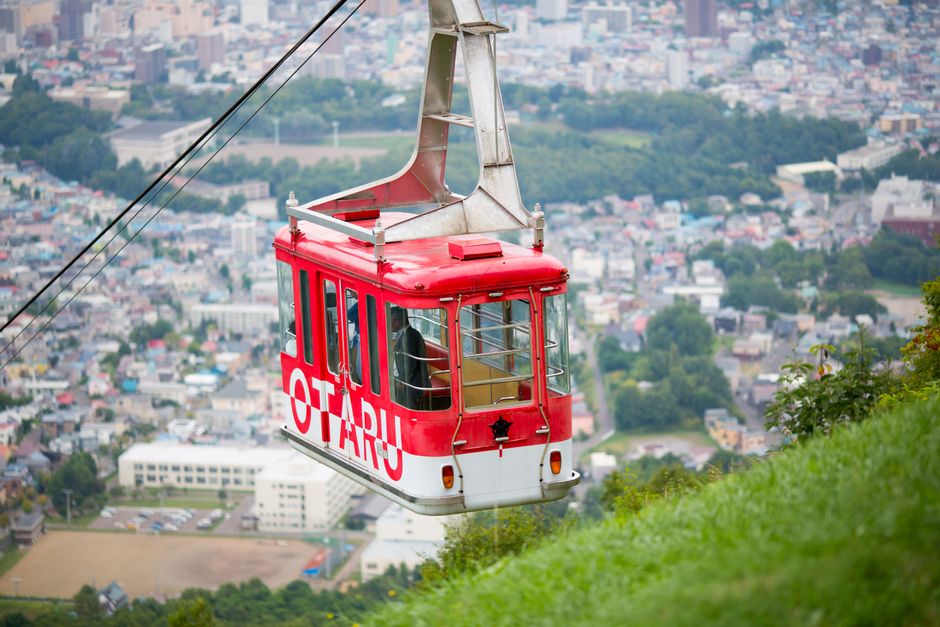
Otaru is a small harbor city on Ishikari Bay, about 40 km (25 miles) west of Sapporo, that grew rich at the turn of the 20th century as Hokkaido’s gateway for coal, herring and trade. Banks, shipping companies and merchants built stone warehouses and grand offices along the waterfront, and the city’s canal, lined with gas lamps and old warehouses, has become one of the most photographed scenes in Hokkaido. Today Otaru, a city of about 105,000 people, is known for its glassworks and music boxes, its sushi, its sake and whisky country nearby, and a winter festival of snow lanterns. It is an easy day trip from Sapporo, but staying overnight lets you see the canal lit up after the crowds leave. Come any time: summer is mild and green, and winter is deep, snowy and atmospheric.
Right now in Otaru
- Wed 13–17°C 55–62°F Mostly clear
- Thu 14–18°C 56–65°F Mostly clear
- Fri 14–19°C 58–66°F 1 mm Light showers
- Mon 12 Oct Sports Day (スポーツの日)
Weather: MET Norway (CC BY 4.0) · Sea temperature: NOAA CoastWatch · Air quality: OpenAQ · Rates: ECB · Holidays: Nager.Date
Top tours in Otaru
See all tours for Otaru →
From local operators, with prices and reviews; you check availability and book on Viator, our partner. We may earn a commission at no extra cost to you. How we earn money
Otaru at a glance
- Best for: the canal and old warehouses, glass and music boxes, sushi and seafood, Meiji-era architecture, winter snow scenes.
- How long: a day from Sapporo; 1–2 nights to see the canal at night and add Yoichi or the Shakotan coast.
- Best time: June to September, with highs of about 20–26 °C (69–78 °F); February for the Snow Light Path festival.
- Getting there: about 35–45 minutes by JR rapid train from Sapporo, or about 75 minutes direct from New Chitose Airport.
- Getting around: on foot from Otaru Station to the canal and Sakaimachi; local buses for Tenguyama and Shukutsu.
- Fees to know: the canal is free to walk; a 40-minute canal cruise costs ¥1,800 by day as of October 2026; Otaru and Hokkaido charge accommodation taxes of ¥300 to ¥700 per person per night.
- Before you go: entry rules, rail passes, money and general safety are in our Japan travel guide; combine Otaru with our Sapporo and Niseko guides.
Otaru’s areas and where to stay
Otaru is a compact city on a slope above the harbor. From the station, Chuo-dori runs straight downhill to the canal in about 10 minutes; most sights are along the waterfront and the streets parallel to it.
Around Otaru Station
The station area has business hotels, the bus terminal, the Sankaku Market for seafood breakfasts, and a short walk down to the canal. The most practical base for trains to Sapporo and the airport.
The canal
The heart of tourist Otaru, with the gas-lit walkway, the stone warehouses now used as restaurants, and hotels in converted historic buildings. A romantic base, and the best place to be in the evening.
Sakaimachi-dori
A long street of preserved merchant houses and warehouses, now full of glass shops, music box stores, sweet shops and cafés, ending at the Marchen intersection with its steam clock. Busy by day and quiet after 6 p.m.
Temiya and the North Canal
The quieter northern end of the canal, where the waterway keeps its original 40 m (130 ft) width, near the Otaru Museum and the old railway yards of the Temiya line.
Asarigawa Onsen
A small hot spring village in a valley about 20 minutes inland by bus, with ryokan and a ski area in winter.
Top things to see in Otaru
Otaru Canal
The canal was completed in 1923 by reclaiming land from the sea rather than digging inland, which is why it curves gently along the shore. Barges once carried cargo from ships anchored in the bay to the warehouses lining it. When the port was modernized after World War II, the canal lost its purpose; after a long debate, half of it was filled in for a road in 1986, and the rest became today’s walkway. According to the Otaru Tourism Association, the canal is about 1,140 m (0.7 miles) long and 20 m (66 ft) wide along the main stretch, and 63 gas lamps line the walkway. The lamps are lit from sunset to midnight (from 6 p.m. in June to August), and the warehouses are lit up from sunset to 10:30 p.m. The most famous view is from Asakusa Bridge, near the station end; the North Canal is quieter and more atmospheric.
Canal cruises
The best way to see the canal from water level is the Otaru Canal Cruise, which leaves from Chuo Bridge every 30 minutes and loops through the canal and harbor in about 40 minutes, with live commentary in Japanese. According to the operator, as of October 2026 day cruises cost ¥1,800 (about US$11) for adults and night cruises ¥2,000 (about US$13); children of elementary school age pay ¥500. Book ahead in summer and for the night cruises, which run from about 5:30 p.m.
Sakaimachi-dori: glass and music boxes
Otaru’s glassmaking began with oil lamps and fishing floats for the herring fleet. Today Kitaichi Glass and dozens of workshops sell tableware, lamps and ornaments in old stone warehouses, and several let you blow or decorate your own glass. At the end of the street, the Otaru Music Box Museum fills a 1912 brick building with thousands of music boxes, and the steam clock outside plays a tune every 15 minutes.
The Wall Street of the North
In the early 1900s, Otaru had so many banks that its main street was called the “Wall Street of the North.” The Former Bank of Japan Otaru Branch, designed by Tatsuno Kingo (architect of Tokyo Station), is now a free museum on banking and money, and the Otaru Art Base has turned several former banks into art galleries with stained glass by Louis Comfort Tiffany.
Otaru Museum and the herring mansions
The Otaru Museum, at the old Temiya railway yard where Hokkaido’s first railway began in 1880, displays steam locomotives and the history of the line to Sapporo. At Shukutsu, a coastal district north of the city, the Nishin Goten and the Aoyama Villa are mansions built by herring fishing bosses at the height of the boom, one with lavish gardens and painted screens.
More classic sights
- Tenguyama: a ropeway up the 532 m (1,745 ft) mountain behind the city for views over the harbor, with a ski slope in winter.
- Sankaku Market: a small market next to the station with seafood bowls for breakfast.
- Sushi-ya-dori: a street of sushi restaurants near the canal.
- Otaru Aquarium: sea lions and seals in an outdoor pool by the sea at Shukutsu.
- Suitengu Shrine: a hilltop shrine with views of the canal and the harbor.
- Former Otaru Warehouse: a stone warehouse from 1890 near the canal, now a brewery restaurant.
Museums
- Bank of Japan Otaru Museum
- Otaru Museum
- Otaru Music Box Museum
Other sights
- Otaru Canal
Zoos and aquariums
- Otaru Aquarium
Other things to do in Otaru
Food and drink
Otaru has more sushi restaurants per person than almost any city in Japan, serving sea urchin, salmon roe, scallops, crab and squid from nearby waters; eat at the counter on Sushi-ya-dori, or try a cheaper seafood bowl at the Sankaku Market. Other local favorites are ankake yakisoba, crispy noodles topped with a thick seafood sauce, deep-fried zangi chicken, and the cream puffs and cheesecakes of Otaru’s famous confectioners on Sakaimachi-dori, such as LeTAO’s double fromage. The city brews its own beer in a canal-side warehouse, and the Tanaka Sake Brewery offers tastings. Wine lovers will find Otaru Wine, made from Hokkaido grapes.
Glass and crafts workshops
Many glass studios offer short workshops where you can blow a glass, make a bead or decorate a cup, usually finished the same day or shipped home. Workshops making music boxes, with a movement of your choice, are just as popular. Shops offer tax-free shopping on purchases of ¥5,000 or more; from November 1, 2026 you pay the full price and get the tax back after a customs check at the airport (see our Japan travel guide).
The Otaru Snow Light Path
For about ten days in February, the Otaru Yuki Akari no Michi fills the canal and the old railway line with thousands of snow lanterns and candles, made and lit by volunteers. During the festival, the canal’s gas lamps are lit from 3 p.m. It usually overlaps with the Sapporo Snow Festival, so plan both together.
Skiing and hot springs
Otaru has small ski areas at Tenguyama and Asarigawa Onsen, popular with families, and Kiroro, a large resort with deep powder snow about an hour away. Asarigawa’s ryokan offer day bathing after a day on the slopes.
Activities and best months
- Boat tripsThe Otaru Canal Cruise takes about 40 minutes, leaving every 30 minutes from 10:00 at Chuo Bridge, with night cruises from about 17:30; adults ¥1,800 by day, ¥2,000 at night. · source
Day trips from Otaru
- Yoichi: home of the Nikka whisky distillery, with tours and tastings, and orchards and wineries; about 25 minutes by train.
- Shakotan Peninsula: cliffs and capes above strikingly blue water, with sea urchin bowls in summer (June to August); about 1.5 hours by car or bus.
- Sapporo: Hokkaido’s capital, with the Snow Festival, beer and ramen, about 35–45 minutes away. See our Sapporo guide.
- Niseko: the famous ski resort and summer outdoor center at the foot of Mount Yotei, about 1.5–2 hours by train or bus. See our Niseko guide.
- Kiroro: a mountain resort for skiing in winter and hiking in summer, about an hour away.
Getting there and getting around
By train
JR rapid and local trains link Sapporo with Otaru in about 35–45 minutes along a beautiful stretch of coast (sit on the right side heading to Otaru). Some Rapid Airport trains run straight through from New Chitose Airport in about 75 minutes. JR Hokkaido’s Sapporo–Noboribetsu Area Pass, ¥10,000 (about US$63) for 4 days as of October 2026, covers Otaru, Sapporo, New Chitose Airport and Noboribetsu, and the Sapporo–Furano Area Pass, ¥11,000 (about US$70), also includes Otaru. The Hokkaido Rail Pass, from ¥22,000 (about US$139) for 5 days, covers all JR Hokkaido lines. The nationwide Japan Rail Pass also covers the trip. Trains continue west to Yoichi and south to Niseko and Hakodate on slower local lines.
By bus and ferry
Highway buses run frequently between Sapporo and Otaru and are a good backup when trains are busy. Shin Nihonkai ferries sail overnight from Otaru to Maizuru near Kyoto and to Niigata, a relaxing way to bring a car or bike from Honshu.
Around the city
From Otaru Station, the canal, Sakaimachi and the museums are all within a 10–20 minute walk; the streets slope gently down to the water. Local buses run to Tenguyama, Shukutsu and the aquarium, and a one-day bus pass is sold at the station terminal. Pay with an IC card. Taxis wait at the station.
When to go and how long to stay
Otaru has a cold, snowy climate: long winters with heavy snow blown in from the Sea of Japan, and short, mild summers without the rainy season of the rest of Japan. The table uses the Japan Meteorological Agency’s (JMA) 1991–2020 normals for its Otaru station: average daily highs and lows, total precipitation (rain and melted snow) and days with at least 0.5 mm.
| Month | Average high / low | Precipitation (days with 0.5 mm or more) | What to expect |
|---|---|---|---|
| January | 0 °C (31 °F) / −6 °C (22 °F) | 138 mm (5.4 in), 26 days | Freezing; snow on most days; deep snow in the streets |
| February | 0 °C (32 °F) / −6 °C (22 °F) | 107 mm (4.2 in), 22 days | The snowiest scenes; Snow Light Path festival |
| March | 4 °C (39 °F) / −2 °C (28 °F) | 87 mm (3.4 in), 20 days | Still wintry; snow melting late in the month |
| April | 11 °C (52 °F) / 3 °C (37 °F) | 56 mm (2.2 in), 13 days | Cool; snow gone in town; cherries usually open around late April or early May |
| May | 17 °C (62 °F) / 8 °C (46 °F) | 54 mm (2.1 in), 11 days | Cherry blossoms early in the month; fresh green |
| June | 20 °C (69 °F) / 12 °C (54 °F) | 56 mm (2.2 in), 9 days | Mild and fairly dry; no real rainy season |
| July | 24 °C (76 °F) / 17 °C (63 °F) | 94 mm (3.7 in), 10 days | Warm and pleasant; Ushio Festival in late July; sea urchin season |
| August | 26 °C (78 °F) / 18 °C (65 °F) | 131 mm (5.2 in), 11 days | The warmest month; busy with summer visitors |
| September | 22 °C (72 °F) / 14 °C (58 °F) | 132 mm (5.2 in), 13 days | Warm early in the month; good for the coast |
| October | 16 °C (61 °F) / 8 °C (46 °F) | 123 mm (4.8 in), 16 days | Cool; autumn leaves on Tenguyama late in the month |
| November | 8 °C (47 °F) / 2 °C (35 °F) | 152 mm (6.0 in), 21 days | Cold and wet; first snow; quiet |
| December | 2 °C (35 °F) / −4 °C (25 °F) | 152 mm (6.0 in), 24 days | Snow returns; illuminations along the canal |
Otaru gets about 1,280 mm (50 in) of precipitation a year, with precipitation on more than 20 days a month from November to February, mostly as snow. According to the JMA’s normals, about 5.5 m (18 ft) of snow falls over a season, and the deepest snow on the ground is usually about 1.2 m (4 ft), reached in February. Hokkaido has no official rainy season in the JMA’s records, so June and early July are often fine here. According to the JMA’s 1991–2020 normals, about two typhoons a year come close to the Hokkaido region, mostly in August and September.
Weather month by month
Averages from JMA normals 1991–2020, Otaru · Last reviewed 5 Oct 2026
Cherry blossoms and fall colors: the JMA does not observe cherry trees in Otaru, but at its Sapporo station, the nearest, the normal date for the first blossoms is May 1, with full bloom around May 6; in 2026 they opened on April 18 and peaked on April 24. Temiya Park and Suitengu Shrine are good spots in Otaru. The maples at the JMA’s Sapporo station normally turn in late October.
Crowds: day-trippers fill the canal and Sakaimachi from late morning to late afternoon, especially in summer, in Golden Week and during the Sapporo Snow Festival. Arrive early, or stay overnight and walk the canal after 6 p.m., when most shops on Sakaimachi have closed and the gas lamps glow.
One day in Otaru
Morning at the Sankaku Market for a seafood bowl, then the canal from Asakusa Bridge, a canal cruise and Sakaimachi-dori for glass and music boxes. Lunch on Sushi-ya-dori, the Former Bank of Japan museum in the afternoon, and the canal again at dusk before the train back to Sapporo.
Two days with Yoichi or Shakotan
Stay a night in a canal-side hotel, then take the train to Yoichi for the whisky distillery, or in summer head to the Shakotan Peninsula for its cliffs and sea urchin bowls. In winter, swap in a day of skiing at Kiroro or Tenguyama.
Where to stay in Otaru and the accommodation tax
- Around Otaru Station: business hotels, best for trains and an early start.
- Along the canal: hotels in historic stone buildings and modern hotels with canal views.
- Sakaimachi area: small hotels and guesthouses near the shops.
- Asarigawa Onsen: ryokan with hot spring baths in a quiet valley.
Since April 1, 2026, guests in Otaru pay two accommodation taxes, a flat city tax of ¥200 per person per night and the new Hokkaido prefectural tax, which the City of Otaru collects together through the hotel. According to the City of Otaru, the totals are:
| Room rate per person per night | City tax | Hokkaido tax | Total |
|---|---|---|---|
| under ¥20,000 | ¥200 | ¥100 | ¥300 (about US$1.9) |
| ¥20,000 to ¥49,999 | ¥200 | ¥200 | ¥400 (about US$2.5) |
| ¥50,000 or more | ¥200 | ¥500 | ¥700 (about US$4.4) |
Students on school trips are exempt. Hot spring inns also collect a small bathing tax.
What a trip to Otaru costs
Prices are approximate, for October 2026, converted at about ¥158 to the US dollar.
| Item | Typical cost |
|---|---|
| Otaru Canal Cruise, day / night | ¥1,800 / ¥2,000 (about US$11 / US$13) |
| JR train from Sapporo, one way | about ¥750–1,000 (about US$4.7–6.3) |
| Former Bank of Japan museum | free |
| Glassblowing workshop | ¥2,500–4,500 (about US$16–28) |
| Seafood bowl at the Sankaku Market | ¥2,000–4,500 (about US$13–28) |
| Sushi lunch set on Sushi-ya-dori | ¥3,000–7,000 (about US$19–44) |
| Business hotel double, per night | ¥9,000–18,000 (about US$57–114) |
| Canal-view hotel double, per night | ¥18,000–40,000 (about US$114–253) |
Practical tips for Otaru
- Stay for the evening: the canal is at its best at dusk, when the gas lamps come on and the day-trippers have gone.
- Ship your glass: many shops pack and ship fragile purchases to your hotel or home.
- Snow shoes: from December to March, the sidewalks are packed snow and ice; wear boots with grip or buy slip-on spikes in town.
- Rail pass value: if you also visit Noboribetsu or Furano, the 4-day area passes cover Otaru at no extra cost.
- Departure tax: since July 2026, Japan’s International Tourist Tax is ¥3,000 per departure, usually included in your air fare (tickets issued by June 30, 2026 keep the old ¥1,000).
- Visitor hotline: the JNTO’s Japan Visitor Hotline, 050-3816-2787, answers in English 24 hours a day.
Safety
Otaru is safe and friendly. The main hazards are winter weather: heavy snow, icy sidewalks and snow sliding off roofs (don’t walk right under the eaves after a big snowfall), and occasional train delays or cancellations in blizzards between Sapporo and Otaru. On the Shakotan coast, waves and wind can be strong; stay behind the barriers on the capes. Brown bears live in the forests around the city, so stick to marked trails and follow local warnings when hiking. Japan is earthquake and tsunami country: if you feel strong shaking near the waterfront, move to high ground and follow the alerts. In an emergency, call 110 for the police or 119 for an ambulance or fire, and keep the JNTO’s Safety Tips app on your phone.
What to pack for Otaru
A down coat, hat, gloves and waterproof boots with good grip from November to March; layers and a light jacket for cool summer evenings by the sea; a small towel for the hot springs; and space in your bag for glass. Japan uses 100 V and two-pin type A plugs like the US.
What to pack
- Dry bags and phone pouchesSpray soaks phones and cameras on open boats to the Algarve caves and on whale-watching trips.
- Fleeces and warm layersIt is cooler at sea than on land, especially on morning whale-watching trips.
- Rain jacketsA windproof, waterproof shell keeps you warm on open boats, where wind and spray cool you quickly.
- Reef-friendly sunscreenSun reflects off the water on cruises and cave tours.
- Water shoesKayak and small-boat trips to the Algarve grottoes land on rock and wet sand.
Otaru travel FAQ
Is Otaru worth a day trip from Sapporo?
Yes. It is only 35–45 minutes away by train, and a day is enough for the canal, Sakaimachi and a sushi lunch; stay overnight to see the canal at night.
How do I get from Sapporo to Otaru?
By JR rapid train in about 35–45 minutes, or by highway bus. The JR Hokkaido area passes and the Japan Rail Pass cover the train.
When are the Otaru Canal lamps lit?
The 63 gas lamps along the walkway are lit from sunset to midnight (from 6 p.m. from June to August), and the warehouses are lit up until 10:30 p.m.
How much is the Otaru Canal cruise?
¥1,800 for adults by day and ¥2,000 at night as of October 2026; the trip takes about 40 minutes.
When is the Otaru Snow Light Path?
For about ten days in February, usually overlapping with the Sapporo Snow Festival; check the festival’s website for the year’s dates.
Is there an accommodation tax in Otaru?
Yes. Since April 1, 2026, the city and Hokkaido taxes together cost ¥300 to ¥700 per person per night, depending on the room rate.
What is Otaru famous for?
Its canal and stone warehouses, glassware, music boxes, sushi and seafood, and its early-20th-century banks.
Can I visit the Nikka whisky distillery from Otaru?
Yes. Yoichi is about 25 minutes by train; the distillery offers guided tours with tastings, usually booked in advance.
How much snow does Otaru get?
A lot: the JMA’s normals give about 5.5 m (18 ft) of snowfall a season, with about 1.2 m (4 ft) on the ground at the deepest.
Is the Japan Rail Pass valid to Otaru?
Yes, the Japan Rail Pass and JR Hokkaido’s passes cover JR trains to Otaru; city buses and the Tenguyama ropeway are extra.
Sources
- © OpenStreetMap contributors · ODbL · fetched 5 Oct 2026
- Wikidata · CC0 · fetched 5 Oct 2026
Sources and last review
Researched and last reviewed on 4 October 2026. Canal history, length, gas lamps and lighting hours: the Otaru Tourism Association; canal cruise fares and times: Otaru Canal Cruise; accommodation taxes: the City of Otaru; Hokkaido rail passes: JR Hokkaido; climate normals, cherry blossom and maple dates and typhoon statistics: the Japan Meteorological Agency (JMA); tax-free shopping: the Japan Tourism Agency; visitor hotline: JNTO; exchange rate: the US Federal Reserve. Population, history, sight descriptions, journey times, festival dates, train fares, other admission prices and typical prices are general references or estimates, flagged for checking. Prices and hours change, so check the official sites before you go. For entry rules, money and general safety, see our Japan travel guide.
Plan your trip
Partner links: TravelerCenter may earn a commission if you book, at no extra cost to you.
🇯🇵 Useful Japanese phrases for Otaru
All 38 Japanese phrases: restaurant, hotel, emergencies, romance (printable) →