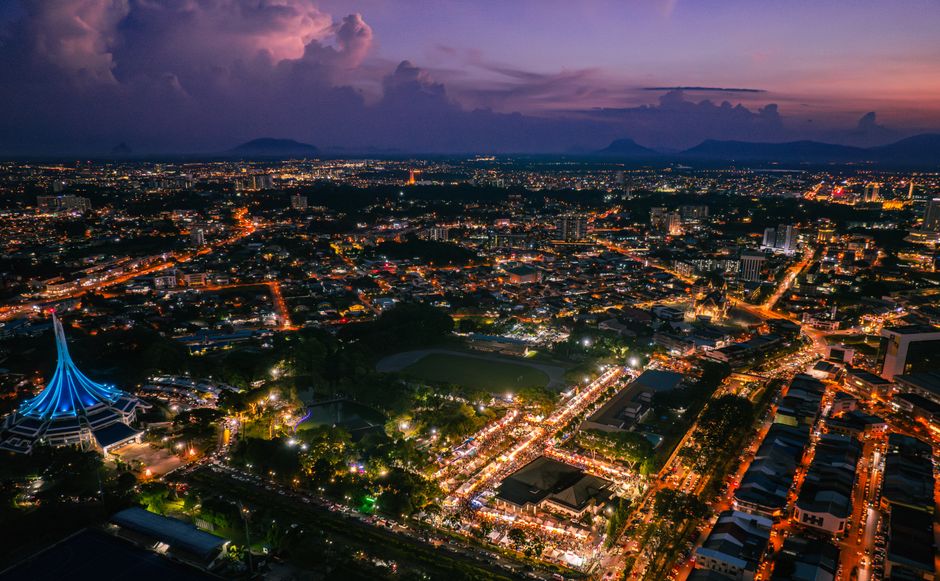
Kuching, the capital of Sarawak on the island of Borneo, is one of Malaysia’s most likable cities: a low-rise, easygoing riverside town of colonial buildings, Chinese temples, old bazaars and cafés, with rainforest, wild orangutans and beaches less than an hour away. From 1841 to 1946 Sarawak was ruled by the Brooke family, the “White Rajahs,” and their white palace and fort still face the old town across the Sarawak River. Visitors come to walk the waterfront and Main Bazaar, eat Sarawak laksa, see semi-wild orangutans at Semenggoh, hike among proboscis monkeys and bearded pigs in Bako National Park, visit a Bidayuh longhouse and learn about Borneo’s many peoples. Sarawak runs its own immigration control, so you will show your passport on arrival even from elsewhere in Malaysia. Kuching is one of the wettest cities in the country, especially from December to February; June to August are the driest months.
Right now in Kuching
- Wed 24–30°C 75–85°F 3 mm Rain
- Thu 24–29°C 74–85°F 10 mm Heavy rain
- Fri 24–31°C 75–87°F 2 mm Partly cloudy
Weather: MET Norway (CC BY 4.0)
Top tours in Kuching
See all tours for Kuching →
From local operators, with prices and reviews; you check availability and book on Viator, our partner. We may earn a commission at no extra cost to you. How we earn money
Kuching at a glance
- Best for: a laid-back riverside city, orangutans, national parks and rainforest walks, Borneo’s indigenous cultures, Sarawak food and festivals.
- How long: 3 to 4 days for the city, Semenggoh and Bako; a week with Santubong, a longhouse stay or a flight to Mulu.
- Best time: June to August, the driest months; the northeast monsoon from December to February brings very heavy rain. Highs are about 30–33 °C (86–91 °F) all year.
- Getting there: Kuching International Airport, about 11 km (7 miles) south of the center, has flights from Kuala Lumpur (about 1 hour 45 minutes), Singapore, Kota Kinabalu and other Malaysian cities.
- Getting around: on foot in the center, river ferries across the Sarawak River, Grab, buses and boats to the national parks.
- Good to know: orangutans at Semenggoh come to feed at 9 a.m. and 3 p.m., but during the fruiting season they may not appear.
- Before you go: the Malaysia Digital Arrival Card (MDAC), visa-free stays, money and general safety are in our Malaysia travel guide.
Kuching’s areas and where to stay
Kuching’s center is compact and walkable, spread along the south bank of the Sarawak River, with Malay villages and the old Brooke buildings on the north bank.
The waterfront and Main Bazaar
The landscaped riverside promenade runs past the Old Courthouse, the Chinese History Museum and the shophouses of Main Bazaar, Kuching’s oldest street. Hotels here have river views and the city’s sights on their doorstep.
Carpenter Street, India Street and Padungan
Behind the waterfront, Carpenter Street and India Street are lined with Chinese temples, kopitiams, Indian shops and textile sellers. To the east, Padungan, with the cat statues and Chinese shophouses, has bars, cafés and many mid-range hotels.
The north bank
Across the river, reached by small passenger boats or the Darul Hana Bridge, are the Astana palace, Fort Margherita, the golden-roofed State Legislative Assembly building and the Malay villages (kampungs) along the riverbank, with homestays and Malay food.
Damai and Santubong
About 35 km (22 miles) north, the Damai peninsula has beach resorts, the Sarawak Cultural Village and Santubong National Park; it suits a beach and nature stay but is 40 minutes from the city.
Top things to see in Kuching
The waterfront and the Brooke legacy
Walk the riverside in the late afternoon, when the light turns gold and food stalls open. Across the river, the Astana, the palace built in 1870 by Charles Brooke, the second White Rajah, is now the official residence of the Governor of Sarawak (the grounds are not open to the public), and Fort Margherita, from 1879, guarded the river against pirates and now holds a small exhibition. On the south bank, the colonial Old Courthouse complex has been restored as a heritage center with cafés. Little boats called tambang carry passengers across the river for a small fee.
Semenggoh Wildlife Centre
About 24 km (15 miles) south of Kuching, Semenggoh is a sanctuary for orangutans rescued or orphaned and released back into the forest; their descendants now live wild in the nature reserve. According to the Sarawak Forestry Corporation, some of them return for supplementary feeding at 9 a.m. and 3 p.m. daily; during fruiting seasons, when there is plenty of food in the forest, they may not appear at all. Arrive before feeding time, stay behind the ropes, keep at least a few meters from the animals and follow the rangers’ instructions; orangutans are wild and strong. Buses and tours run from the city.
Bako National Park
Sarawak’s oldest national park, on a peninsula at the mouth of the Bako River, is reached by a 20- to 30-minute boat ride from Kampung Bako, about 40 minutes from Kuching. According to the Sarawak Forestry Corporation, Bako is one of Sarawak’s most popular parks and its trails range from short walks to full-day hikes, with a chance of seeing bearded pigs, silvered langurs, monitor lizards, flying lemurs (colugos), proboscis monkeys and Bornean keeled green pit vipers. The sandstone sea stack at Tanjung Sapi is a five-minute walk from park headquarters. Beaches, cliffs, mangroves and heath forest with pitcher plants make it one of Borneo’s best day trips; the park lodge allows an overnight stay with night walks. Boats depend on the tide, so confirm the return time.
Sarawak Cultural Village
At the foot of Mount Santubong, this living museum has traditional houses of Sarawak’s main peoples, including Iban and Bidayuh longhouses, a Melanau tall house and a Malay house, with craft demonstrations and a daily dance show. It also hosts the Rainforest World Music Festival, usually held in June or July.
Museums
The Borneo Cultures Museum, a striking modern building in the center, presents the history, crafts and peoples of Sarawak and Borneo. Smaller museums include the Chinese History Museum on the waterfront, the Textile Museum and the quirky Cat Museum, a nod to the city’s name, which many link to the Malay word for cat, kucing.
More classic sights
- Tua Pek Kong Temple: the oldest Chinese temple in Kuching, at the end of Main Bazaar.
- Darul Hana Bridge: the S-shaped pedestrian bridge across the river, lit up at night.
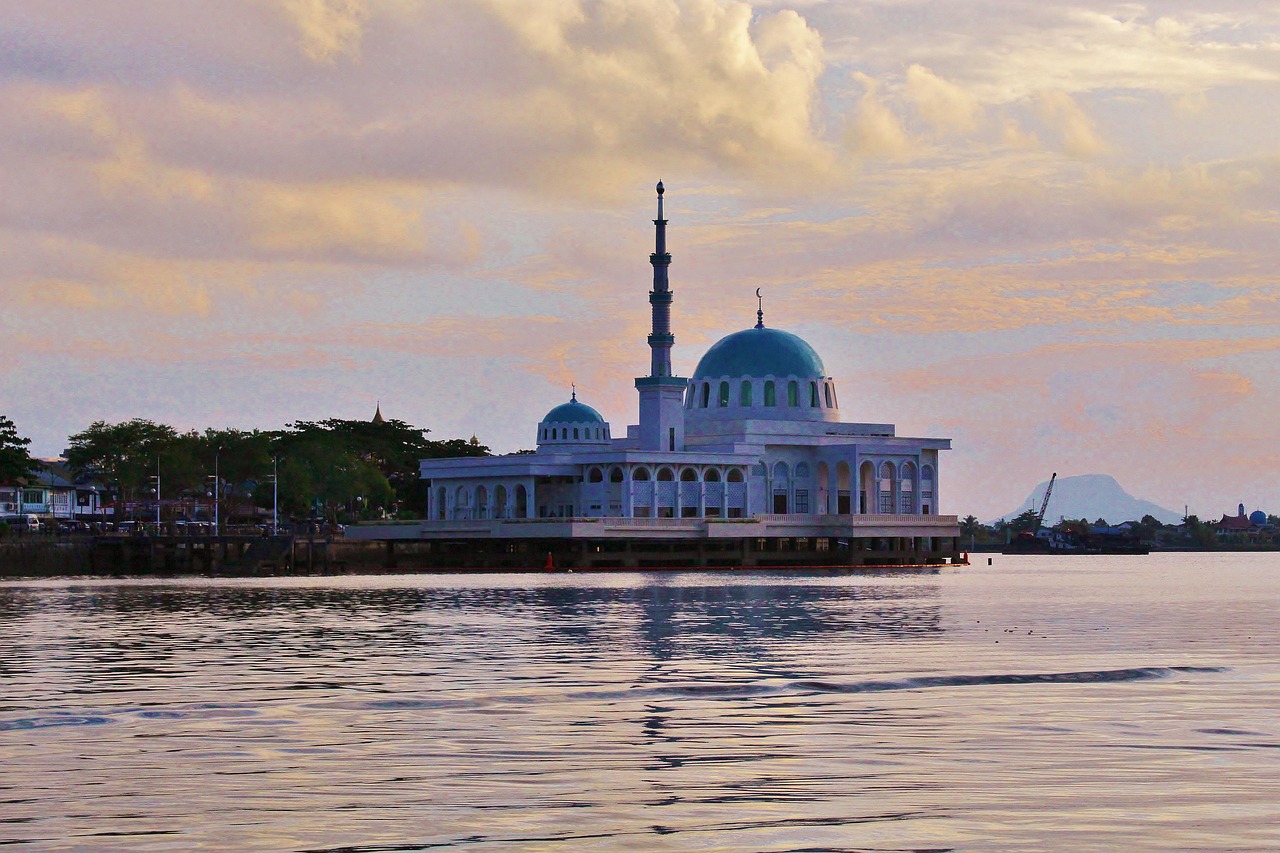
- Kuching Floating Mosque (Masjid Terapung): a mosque on the riverbank at Kampung Pulo, near the Petra Jaya bridge.
- Santubong National Park: according to the Sarawak Forestry Corporation, a forested peak rising to 810 m (2,657 ft), 35 km (22 miles) north of Kuching, with a steep hike to the summit and a waterfall.
- Wind Cave and Fairy Cave: limestone caves near Bau, about 40 minutes away; Wind Cave is famous for its bats and Fairy Cave for its limestone plants.
Other things to do in Kuching
Food and drink
Kuching’s signature dish is Sarawak laksa, a bowl of rice vermicelli in a spicy sambal and coconut broth with prawns, chicken and omelet strips, eaten for breakfast. Try kolo mee, springy egg noodles tossed with shallot oil and pork; kek lapis Sarawak, intricately patterned layer cakes; manok pansoh, chicken cooked in bamboo, an Iban dish; and stir-fried midin, a jungle fern. The Top Spot food court has open-air seafood stalls on a car park rooftop. Sarawak pepper makes a good souvenir.
Shopping and crafts
Main Bazaar’s old shophouses sell Sarawak’s best-known crafts: Iban pua kumbu, ikat textiles woven with ceremonial patterns; Orang Ulu beadwork and carvings; rattan baskets and mats; and Bidayuh bamboo work. Buy from established shops that can explain where pieces come from, as genuine antiques are rare and some items, such as products from protected wildlife, cannot be exported. Sarawak pepper, kek lapis and local coffee are easier souvenirs, and the Sunday market at Satok sells jungle produce, orchids and snacks brought in from the villages.
Longhouse visits
Several Bidayuh and Iban longhouse communities near Kuching welcome visitors. Annah Rais, a Bidayuh longhouse about 60 km (37 miles) south, can be visited on a day trip or for a homestay. Further afield, Iban longhouses on the rivers around Batang Ai offer overnight stays. Visit with a guide or arrange it through the community, and bring a small gift.
Festivals
The Rainforest World Music Festival, in June or July, brings musicians from around the world to the Sarawak Cultural Village. Gawai Dayak, the Dayak harvest festival on June 1 and 2, is celebrated in longhouses with rice wine (tuak) and open houses.
Wildlife and river cruises
Evening river cruises on the Sarawak River and wildlife cruises from Santubong look for Irrawaddy dolphins, proboscis monkeys and fireflies. See our boat trips and hiking guides.
Day trips from Kuching
- Bako National Park: a full day of trails and beaches, or stay overnight at the park lodge.
- Semenggoh and Annah Rais: the orangutan feeding in the morning, then the longhouse and hot springs.
- Santubong and Damai: the Cultural Village, the national park hike and a beach afternoon.
- Bau caves: Wind Cave and Fairy Cave, about 40 minutes southwest.
- Gunung Mulu and Niah: Sarawak’s UNESCO-listed cave parks are in the north of the state, near Miri, and need a flight and at least two nights.
Getting there and getting around
By air
Kuching International Airport (KCH), about 11 km (7 miles) south of the center, has frequent flights from Kuala Lumpur, as well as from Singapore, Johor Bahru, Penang, Kota Kinabalu and Miri, and a few international routes. Grab and taxis take about 20 minutes to the waterfront.
Sarawak’s immigration control
Sarawak, like Sabah, keeps its own immigration control under the arrangements made when Malaysia was formed in 1963. Foreign visitors arriving from Peninsular Malaysia or Sabah go through immigration again at Kuching airport and receive a Sarawak entry stamp; carry your passport on all flights to and within Borneo. The length of stay granted in Sarawak can differ from the one you received on entering Malaysia, so check your stamp. Buses also run to and from Pontianak in Indonesian Kalimantan via the Tebedu border crossing, and to Brunei via Miri.
In and around the city
The center is best explored on foot. Tambang boats cross the river between the waterfront and the north bank. Grab is cheap and widely available; buses run to Semenggoh, Bako (Kampung Bako jetty), Bau and Damai, but schedules are limited, so many visitors use Grab, tours or a rental car for day trips.
When to go and how long to stay
Kuching is one of the wettest cities in Malaysia. According to the Malaysian Meteorological Department (MetMalaysia), coastal Sarawak gets its heaviest rain in January and its least in June or July, and the northeast monsoon months of December to March bring more than half of the annual rainfall in western Sarawak, often with floods. The table uses MetMalaysia’s 1991–2020 normals for its Kuching airport station, as submitted to the World Meteorological Organization (WMO).
| Month | Average high / low | Rain (days with 1 mm or more) | What to expect |
|---|---|---|---|
| January | 30 °C (86 °F) / 23 °C (74 °F) | 672 mm (26.5 in), 21 days | The wettest month; floods possible |
| February | 30 °C (86 °F) / 23 °C (74 °F) | 501 mm (19.7 in), 17 days | Very wet; Chinese New Year |
| March | 31 °C (89 °F) / 24 °C (74 °F) | 340 mm (13.4 in), 18 days | Monsoon easing |
| April | 32 °C (90 °F) / 24 °C (75 °F) | 303 mm (11.9 in), 17 days | Showers, warmer |
| May | 33 °C (91 °F) / 24 °C (75 °F) | 268 mm (10.5 in), 16 days | Good park weather in the mornings |
| June | 33 °C (91 °F) / 24 °C (75 °F) | 255 mm (10.1 in), 14 days | Gawai Dayak on June 1–2; music festival season |
| July | 32 °C (90 °F) / 23 °C (74 °F) | 201 mm (7.9 in), 13 days | The driest month; busy with festivals |
| August | 33 °C (91 °F) / 23 °C (74 °F) | 264 mm (10.4 in), 15 days | Hot; haze possible |
| September | 32 °C (90 °F) / 23 °C (74 °F) | 245 mm (9.7 in), 16 days | Showery; haze possible |
| October | 32 °C (90 °F) / 23 °C (74 °F) | 343 mm (13.5 in), 19 days | Rain increasing |
| November | 32 °C (89 °F) / 23 °C (74 °F) | 342 mm (13.4 in), 21 days | Wet; quieter |
| December | 31 °C (88 °F) / 23 °C (74 °F) | 498 mm (19.6 in), 23 days | Northeast monsoon; very wet |
Kuching gets about 4,230 mm (167 in) of rain a year, with rain on about 210 days, usually in heavy afternoon and evening storms. Bako’s sea crossing can be rough or canceled in the northeast monsoon, and trails become muddy and slippery. Haze from regional forest fires is most likely between about June and September.
3 days in Kuching
Day one, the waterfront, Main Bazaar, Carpenter Street and the Borneo Cultures Museum, then a tambang crossing to Fort Margherita and a sunset by the river. Day two, Semenggoh’s 9 a.m. feeding, then Annah Rais longhouse; Top Spot for seafood at night. Day three, a full day in Bako National Park.
5 days
Add the Sarawak Cultural Village and a hike or beach day at Santubong, and a night at Bako to see wildlife on the night walk.
Where to stay in Kuching
- Waterfront: hotels with river views, steps from the sights.
- Padungan and Carpenter Street: boutique hotels, guesthouses and cafés.
- North bank kampungs: homestays with Malay families.
- Damai Beach: resorts near Santubong and the Cultural Village.
- Bako park lodge: basic rooms in the park; book through the Sarawak Forestry booking system.
Foreign guests pay Malaysia’s tourism tax of RM10 per room per night.
What a trip to Kuching costs
Prices are approximate, for October 2026, converted at about RM4.08 to the US dollar.
| Item | Typical cost |
|---|---|
| Grab from the airport to the waterfront | RM15–25 (about US$3.70–6) |
| Tambang river crossing | RM1–2 (about US$0.25–0.50) |
| Semenggoh entry, foreign adult | about RM10 (about US$2.50) |
| Bako boat, return per boat, plus park entry | about RM100–200 per boat (about US$25–49), plus about RM20 entry |
| Bowl of Sarawak laksa or kolo mee | RM7–12 (about US$1.70–3) |
| Seafood dinner at Top Spot for two | RM60–150 (about US$15–37) |
| Mid-range hotel double, per night | RM150–300 (about US$37–74) |
| Tourism tax, per room per night | RM10 (about US$2.45) |
Practical tips for Kuching
- Time Semenggoh with the feeding: 9 a.m. or 3 p.m.; the morning is usually best.
- Check the tide for Bako: boats run when there is enough water; agree on a pickup time with the boatman.
- Keep food away from monkeys: macaques at Bako snatch bags and food.
- Carry your passport: Sarawak’s immigration checks apply to domestic flights too.
- Bring cash for small vendors and boats, though cards and e-wallets are common in the city.
Safety
Kuching is safe, friendly and relaxed. The main risks are natural. Saltwater crocodiles live in Sarawak’s rivers, estuaries and mangroves, including around Bako and Santubong; never swim in rivers or estuaries, keep away from the water’s edge where signs warn of crocodiles, and swim at beaches only where it is permitted. On trails, wear proper shoes, carry water and leave word of your route; trails become slippery in rain, and leeches are common. Keep a respectful distance from orangutans at Semenggoh. The northeast monsoon from December to March can bring floods to Kuching and western Sarawak; follow MetMalaysia warnings. When the Department of Environment’s Air Pollutant Index shows haze, limit strenuous activity. In an emergency, call 999.
What to pack for Kuching
A good rain jacket or umbrella, quick-drying clothes, sturdy shoes or sandals with grip for the national parks, insect repellent, a hat and sunscreen, and modest clothing for mosques, temples and longhouse visits. Malaysia uses 240 V and British-style three-pin plugs (type G). See our rain jackets and hiking shoes guides.
Kuching travel FAQ
When is feeding time at Semenggoh?
According to the Sarawak Forestry Corporation, orangutans may come for supplementary feeding at 9 a.m. and 3 p.m. daily; in the fruiting season they often stay in the forest.
Will I definitely see orangutans at Semenggoh?
No. The orangutans are semi-wild and free to roam; sightings are likely outside the fruiting season but never guaranteed.
Do I need my passport to fly to Kuching from Kuala Lumpur?
Yes. Sarawak has its own immigration control, and foreign visitors go through immigration on arrival, even on domestic flights.
How do I get to Bako National Park?
Take a Grab, bus or tour to the jetty at Kampung Bako, about 40 minutes from Kuching, then a 20- to 30-minute boat to the park headquarters.
What wildlife can I see in Bako National Park?
Proboscis monkeys, bearded pigs, silvered langurs, macaques, monitor lizards, flying lemurs and pit vipers, plus pitcher plants and mangroves.
What is the best time to visit Kuching?
June to August are the driest months; December to February are the wettest, with the northeast monsoon.
What should I eat in Kuching?
Sarawak laksa, kolo mee, manok pansoh (chicken cooked in bamboo), midin fern and kek lapis layer cake.
How many days do I need in Kuching?
Three to four days for the city, Semenggoh, Bako and a longhouse; longer to add Santubong or a flight to Mulu.
Can I visit a longhouse from Kuching?
Yes. Annah Rais, a Bidayuh longhouse about 60 km (37 miles) south, can be visited on a day trip or for a homestay.
Is Kuching safe?
Yes, it is one of Malaysia’s most relaxed cities. Take care with crocodiles near rivers and estuaries, slippery trails and floods in the rainy season.
Sources and last review
Researched and last reviewed on 4 October 2026. Semenggoh feeding times, Bako, Santubong and the Bau caves: the Sarawak Forestry Corporation; climate normals, rainfall patterns and monsoon floods: the Malaysian Meteorological Department (MetMalaysia), via the World Meteorological Organization; Sarawak’s immigration control between Peninsular and East Malaysia: the UK government’s entry-requirements page for Malaysia; exchange rate: the US Federal Reserve. Brooke-era dates, museum details, festival dates, transport times, park fees, the tourism tax rate and typical prices are general references or estimates, flagged for checking. Prices and hours change, so check the official sites before you go. For entry rules, money and general safety, see our Malaysia travel guide.
Plan your trip
Partner links: TravelerCenter may earn a commission if you book, at no extra cost to you.
🇲🇾 Useful Malay phrases for Kuching
All 38 Malay phrases: restaurant, hotel, emergencies, romance (printable) →