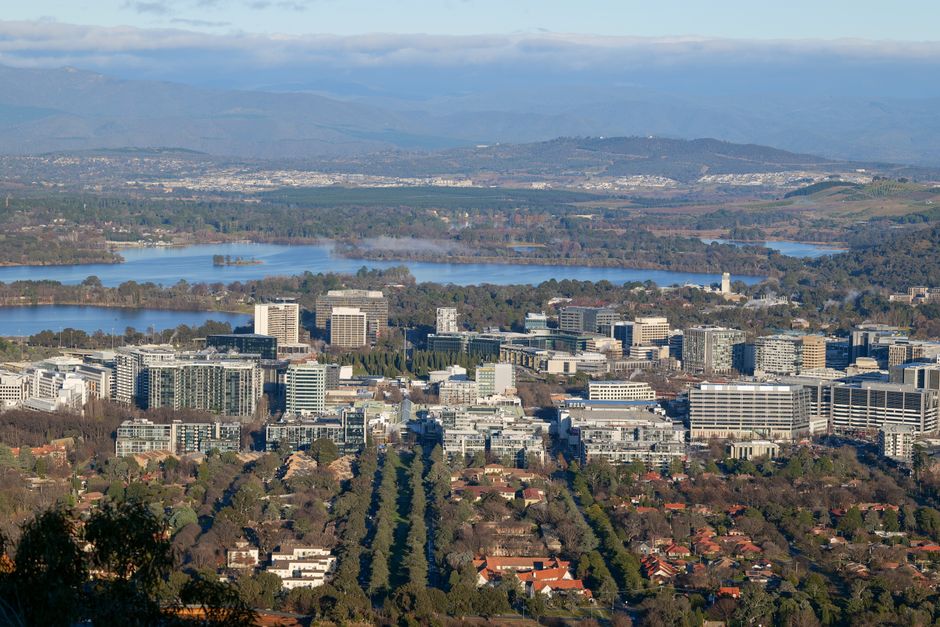
Canberra, Australia’s capital, is a planned city built from scratch in the bush between Sydney and Melbourne after the colonies federated in 1901. Named on 12 March 1913 on Ngunnawal country, it was designed by the American architects Walter Burley Griffin and Marion Mahony Griffin around an artificial lake, Lake Burley Griffin, with avenues lining up on Parliament House and the Australian War Memorial. Today about 470,000 people live in the Australian Capital Territory’s leafy suburbs, and the city is often underrated by visitors. That’s a mistake: Canberra holds the country’s great national institutions, and most of them are free to enter, from Parliament House and the Australian War Memorial to the National Gallery, the National Museum and the National Portrait Gallery. Add a wine district on the city’s edge, nature reserves with kangaroos, cycling paths around the lake and big seasonal festivals, and Canberra makes a rewarding two- or three-day stop. It sits inland at about 580 meters (1,900 feet), so it has four distinct seasons: hot, dry summers, crisp autumn colors, cold frosty winters and a flowery spring.
Right now in Canberra
- Wed 5–17°C 40–62°F Clear
- Thu 3–18°C 37–64°F Clear
- Fri 7–20°C 44–69°F 4 mm Clear
Weather: MET Norway (CC BY 4.0)
Top tours in Canberra
See all tours for Canberra →
From local operators, with prices and reviews; you check availability and book on Viator, our partner. We may earn a commission at no extra cost to you. How we earn money
Canberra at a glance
- Best months: March to May for autumn leaves and mild days; September to November for spring blossoms and the Floriade festival. Summer is hot but dry; winter (June to August) brings sunny days and frosty nights.
- Time needed: two days for Parliament House, the War Memorial and two or three galleries or museums; three or four days with the wineries, Tidbinbilla and Namadgi.
- Getting there: Canberra Airport (CBR) is about 8 km (5 miles) east of the city center. Sydney is about three hours’ drive away.
- Costs (as of October 2026): entry to Parliament House, the Australian War Memorial, the National Portrait Gallery and the Royal Australian Mint is free.
- Before you go: entry rules (ETA, eVisitor or visa), biosecurity and money are covered in our Australia travel guide.
Canberra areas and who each one suits
Civic (the city center)
North of the lake, Civic is the commercial center, with the Canberra Centre shopping mall, hotels, bars, the light rail terminus and the cultural precinct around Childers Street. It is the most practical base for public transport.
The Parliamentary Triangle
South of the lake, the “triangle” formed by Commonwealth Avenue, Kings Avenue and the lake holds Parliament House, Old Parliament House, the High Court, the National Gallery, the National Portrait Gallery, the National Library and Questacon. Hotels nearby suit sightseers.
Kingston, Barton and Manuka
South of the triangle, these older inner suburbs have restaurants, cafes, boutique hotels and the Old Bus Depot Markets on Sunday in Kingston.
Braddon and New Acton
Braddon, just north of Civic, is Canberra’s dining and bar strip. New Acton, on the lakeside, has design hotels, small bars and access to the National Museum across the water.
Top things to see in Canberra
Parliament House
Opened in 1988 and built into Capital Hill, Parliament House is one of the world’s most open parliaments. Entry is free, and it is open every day except Christmas Day: from 9 a.m. to 5 p.m. on non-sitting days and from 8:30 a.m. to 6 p.m. on sitting days. Walk over the grassed roof for views down the land axis to the War Memorial, see the art collection and the Great Hall, join a guided tour, and watch Question Time from the public galleries on sitting days. Visitors pass a security screening.
Australian War Memorial
At the far end of Anzac Parade, the Memorial combines a shrine, a museum and an archive. Entry is free and tickets are not required. It is open daily except Christmas Day, with galleries open 10 a.m. to 5 p.m. (closing progressively from 4 p.m.). The moving Last Post Ceremony is held every day at 4:30 p.m. The Memorial is undergoing redevelopment, so some galleries may be temporarily closed. Free underground parking is available off Fairbairn Avenue.
National Gallery of Australia
The national art collection, by the lake, ranges from Aboriginal and Torres Strait Islander art (including the Aboriginal Memorial of 200 hollow log coffins) to Australian landscapes, Asian art and international modern works. General admission is free; major exhibitions are ticketed. The sculpture garden is free to wander.
National Museum of Australia
On the Acton Peninsula, with its colorful, loop-shaped architecture, the museum tells the stories of the continent, its First Peoples and its settlers. General admission is free; some exhibitions charge.
National Portrait Gallery
Next to the National Gallery, the Portrait Gallery shows famous and lesser-known Australians in paint, photography and sculpture. Entry is free, and it is open every day except Christmas from 10 a.m. to 5 p.m.; parking and some exhibitions are paid, and the gallery doesn’t accept cash.
Lake Burley Griffin and the National Library
Walk or cycle the lakeside loops, past the Captain Cook Memorial Jet and the National Carillon. The National Library of Australia, on the southern shore, has a free Treasures Gallery with items such as Captain Cook’s Endeavour journal.
Old Parliament House and the Aboriginal Tent Embassy
The white 1927 “provisional” Parliament House, used until 1988, now holds the Museum of Australian Democracy, where you can sit in the old chambers and the prime minister’s office and learn how Australians won the vote. On the lawn in front, the Aboriginal Tent Embassy, first set up in 1972 to press for land rights, is a continuing site of protest and a place of significance for many First Nations people; visit respectfully.
The High Court and the Parliamentary Triangle walk
The High Court of Australia’s concrete-and-glass building, beside the National Gallery, has a soaring public hall and courtrooms you can visit when the court is open. A good half-day walk links the High Court, the Portrait Gallery, the National Gallery, Reconciliation Place, the National Library and Old Parliament House, all within a few hundred meters of the lakeshore.
How Canberra is laid out
The Griffins’ plan is easiest to understand from above. The “land axis” runs from Mount Ainslie down Anzac Parade, across the lake and up to Parliament House; the “water axis” runs along the lake. Commonwealth Avenue and Kings Avenue bridges cross the lake to form the Parliamentary Triangle. The city’s suburbs are grouped into town centers, such as Belconnen, Woden and Tuggeranong, separated by bushland hills, which is why Canberra calls itself the “bush capital.” Kangaroos graze on the nature reserves between neighborhoods.
Cycling around Lake Burley Griffin
The Central Basin loop, linking the Kings Avenue and Commonwealth Avenue bridges, is about 5 km (3 miles) and passes the National Carillon, the Captain Cook Memorial Jet and the major institutions; the full lake circuit is much longer and runs past the National Museum, the National Arboretum and wetlands. Shared paths are flat and well signposted, and hire bikes and e-scooters are available near Civic.
Other things to do in Canberra
- Royal Australian Mint: watch Australia’s coins being made; open every day except Christmas and Good Friday, with free entry and free parking.
- Questacon: the National Science and Technology Centre, with hands-on exhibits for families (paid entry).
- Mount Ainslie lookout: drive or hike up for the classic view of the land axis from the War Memorial to Parliament House.
- National Arboretum: forests and gardens on a hill west of the city, with views and a playground.
- Australian National Botanic Gardens: native plants on the slopes of Black Mountain.
- Hot air balloons: early-morning flights drift over the lake and Parliament House, especially in autumn.
Food and drink
Canberra has a strong cafe and restaurant scene for its size, from Braddon’s bars and Asian eateries to fine dining in New Acton and Kingston. The surrounding Canberra District has more than 30 cool-climate wineries, known for shiraz-viognier and riesling. Tipping is optional.
Day trips from Canberra
Canberra wine district
Around Murrumbateman and Lake George, 30 to 40 minutes north, family wineries open cellar doors for tastings on weekends; a designated driver or tour is the best way to go.
Tidbinbilla Nature Reserve
About 40 minutes southwest, Tidbinbilla has walking tracks, wetlands, kangaroos, emus and a sanctuary where you may see platypus and koalas.
Namadgi National Park
Covering nearly half of the ACT, Namadgi has granite peaks, Aboriginal rock art and alpine walks, with snow on the high country in winter. The visitor center is near Tharwa, about 45 minutes south.
Snowy Mountains and the coast
Thredbo and Perisher ski resorts in the Snowy Mountains are about 2.5 to 3 hours’ drive south; the beaches of the New South Wales south coast, around Batemans Bay, are about two hours east.
Nearby destinations
- Blue Mountains206 km
- Sydney248 km
Getting there and getting around
Canberra Airport (CBR)
Canberra Airport, about 15 minutes from the center, has frequent flights from Sydney (about 50 minutes), Melbourne (about an hour), Brisbane and other cities. Buses, taxis and rideshares connect to the city.
From Sydney by road, coach or train
Canberra is about 280 km (175 miles) from Sydney, about three hours by car via the Hume and Federal highways. Coaches run several times a day in about 3.5 hours, and NSW TrainLink trains take about four hours. From Melbourne it’s about seven to eight hours by car.
Buses, light rail and cycling
Transport Canberra runs buses across the city and a light rail line from Gungahlin in the north to Civic. Pay with a MyWay+ card or a contactless bank card. Attractions are spread out, so a car is useful; many hotels and institutions have parking. Canberra is one of Australia’s best cycling cities, with paths around the lake and between suburbs, and bikes and e-scooters can be hired.
When to go and how long to stay
Canberra has the most continental climate of Australia’s capitals. Summer (December to February) is warm to hot, with highs around 26–29 °C (79–84 °F) and occasional days above 35 °C (95 °F), but low humidity and cool nights. Autumn (March to May) is many locals’ favorite, with golden and red leaves. Winter (June to August) brings sunny days around 12–14 °C (54–57 °F) and frequent frosts, with nights near freezing. Spring (September to November) is when Floriade fills Commonwealth Park with flowers.
| Month | Average high | Average low | Rain | Rain days (≥1 mm) |
|---|---|---|---|---|
| Jan | 29 °C (84 °F) | 14 °C (57 °F) | 61 mm (2.4 in) | 5 |
| Feb | 28 °C (82 °F) | 14 °C (57 °F) | 55 mm (2.2 in) | 5 |
| Mar | 25 °C (77 °F) | 11 °C (52 °F) | 38 mm (1.5 in) | 4 |
| Apr | 21 °C (69 °F) | 7 °C (44 °F) | 27 mm (1.1 in) | 4 |
| May | 17 °C (62 °F) | 3 °C (38 °F) | 32 mm (1.2 in) | 4 |
| Jun | 13 °C (55 °F) | 2 °C (35 °F) | 50 mm (2.0 in) | 6 |
| Jul | 12 °C (54 °F) | 0 °C (33 °F) | 44 mm (1.7 in) | 6 |
| Aug | 14 °C (57 °F) | 1 °C (34 °F) | 43 mm (1.7 in) | 6 |
| Sep | 17 °C (62 °F) | 4 °C (39 °F) | 56 mm (2.2 in) | 7 |
| Oct | 20 °C (68 °F) | 7 °C (44 °F) | 51 mm (2.0 in) | 7 |
| Nov | 23 °C (74 °F) | 10 °C (49 °F) | 68 mm (2.7 in) | 8 |
| Dec | 26 °C (80 °F) | 12 °C (54 °F) | 54 mm (2.1 in) | 5 |
| Year | 20 °C (69 °F) | 7 °C (45 °F) | 580 mm (23 in) | 67 |
Figures are the Bureau of Meteorology’s 1991–2020 statistics for Canberra Airport Comparison, near the airport (20 years of records, 1991–2010).
Events worth planning around
- Floriade (12 September to 11 October 2026): Australia’s biggest flower festival in Commonwealth Park, with NightFest evenings from 1 to 4 October 2026.
- Enlighten Festival (March): national institutions lit up with projections, plus night markets.
- Australia Day (26 January) and Anzac Day (25 April), with the dawn service at the War Memorial.
- Canberra Balloon Spectacular (March): dozens of hot air balloons over the lake.
Dates vary; check the organizers’ websites.
How long to stay: 2, 3 and 4 days
- Two days: Parliament House, the National Gallery and Portrait Gallery on day one; the War Memorial and Last Post Ceremony, Mount Ainslie and the National Museum on day two.
- Three days: add the lake by bike, the Mint and Questacon, or a wine-district afternoon.
- Four days: add Tidbinbilla or Namadgi National Park.
Where to stay in Canberra
- Civic and Braddon: chain hotels, apartments and design hotels near restaurants and the light rail.
- New Acton: boutique and design hotels by the lake.
- Barton and Kingston: hotels close to the Parliamentary Triangle.
- Outer suburbs: motels and caravan parks, cheaper but car-dependent.
Hotel prices rise during parliamentary sitting weeks, when politicians, staff and media fill rooms, and on big event weekends. Book ahead for Floriade and Enlighten.
Typical costs in Canberra
| Item (as of October 2026) | Australian dollars | About US dollars |
|---|---|---|
| — | — | — |
| Parliament House, War Memorial, Portrait Gallery, Mint | Free | Free |
| National Gallery and National Museum (general entry) | Free | Free |
| Questacon, adult | about $25–30 | about $17–21 |
| Bus or light rail fare, adult | about $3–5 | about $2–3.50 |
| Wine tasting, per cellar door | about $10–20 | about $7–14 |
| Hot air balloon flight | about $350–450 | about $240–310 |
| Mid-range hotel room, per night | about $180–300 | about $125–205 |
Free entry at Parliament House, the War Memorial, the Portrait Gallery and the Mint is official; other prices are typical ranges, not official prices. Conversions use about US$0.69 to A$1.
Safety in Canberra
Canberra is one of Australia’s safest cities. Most precautions relate to weather, wildlife and driving.
- Bushfire season: roughly October to March. The 2003 Canberra bushfires destroyed hundreds of homes; check fire danger ratings and ACT Emergency Services Agency warnings before heading into reserves, and obey total fire bans.
- Kangaroos on roads: Canberra has many kangaroos in its nature reserves, and collisions are common at dawn and dusk. Slow down, especially on the city’s edges.
- Magpie swooping: in spring (about August to November), nesting magpies swoop at walkers and cyclists in some parks; cyclists often attach cable ties to their helmets, and signs mark known spots.
- Cold and sun: winter nights are frosty and roads can be icy in the high country, while summer UV is strong; dress for both.
- Emergencies: call 000 (112 also works from mobile phones).
Practical tips for Canberra
- Time zone: Australian Eastern Time, the same as Sydney; daylight saving runs from 4 October 2026 to 4 April 2027.
- Security: expect bag checks at Parliament House and some institutions; leave large bags at your hotel.
- Opening days: most national institutions are open daily but close on Christmas Day; check exhibition bookings for ticketed shows.
- Plugs and money: type I plugs at 230 V; many institutions are card-only.
What to pack for Canberra
Pack layers: even summer nights can be cool, and winter needs a warm coat, hat and gloves. Bring comfortable walking shoes for the big institutions, sunscreen and a hat for outdoors, and smart-casual clothes for restaurants.
Canberra travel FAQ
Is Parliament House free to visit?
Yes. Entry is free. It’s open every day except Christmas Day, from 9 a.m. to 5 p.m. on non-sitting days and 8:30 a.m. to 6 p.m. on sitting days.
Do you need tickets for the Australian War Memorial?
No. Entry is free and tickets are not required. Galleries are open 10 a.m. to 5 p.m., and the Last Post Ceremony is at 4:30 p.m. daily.
Which Canberra museums are free?
Parliament House, the Australian War Memorial, the National Gallery of Australia and the National Museum of Australia (general admission), the National Portrait Gallery, the National Library and the Royal Australian Mint. Some special exhibitions charge.
When is Floriade 2026?
From 12 September to 11 October 2026 in Commonwealth Park, with NightFest from 1 to 4 October.
How far is Canberra from Sydney?
About 280 km, roughly three hours by car, 3.5 hours by coach or four hours by train, or a 50-minute flight.
How many days do you need in Canberra?
Two full days covers the main institutions; three or four days adds wineries and nature reserves.
What is the best time to visit Canberra?
Autumn (March to May) and spring (September to November) for mild weather and festivals.
Do I need a car in Canberra?
It helps, because sights are spread out, but buses, the light rail, cycling paths and taxis work for the central institutions.
Where can I see kangaroos near Canberra?
At Tidbinbilla Nature Reserve, in Namadgi National Park and in the city’s nature reserves around dawn and dusk.
Does it snow in Canberra?
Rarely in the city, but frosts are common in winter, and snow falls on Namadgi’s ranges and in the Snowy Mountains.
Sources and last review
Researched and last reviewed on 5 October 2026. Parliament House entry and opening hours come from the Parliament of Australia; the War Memorial’s free entry, hours, Last Post Ceremony, redevelopment notice and parking from the Australian War Memorial; the National Portrait Gallery’s hours, free entry and card-only payment from the gallery; the Mint’s opening days, free entry and parking from the Royal Australian Mint; Floriade 2026 dates from Floriade Australia; daylight saving dates from the NSW Government; climate from the Bureau of Meteorology’s 1991–2020 statistics for Canberra Airport Comparison; population, naming date and coordinates from Wikidata. The National Gallery, National Museum, Questacon and Transport Canberra websites could not be read from this environment, so their admission policies, fares, MyWay+ details, travel times, festival details other than Floriade, winery numbers, bushfire history and typical prices are general references and flagged for checking. For entry rules, biosecurity and money, see our Australia travel guide.
Plan your trip
Partner links: TravelerCenter may earn a commission if you book, at no extra cost to you.