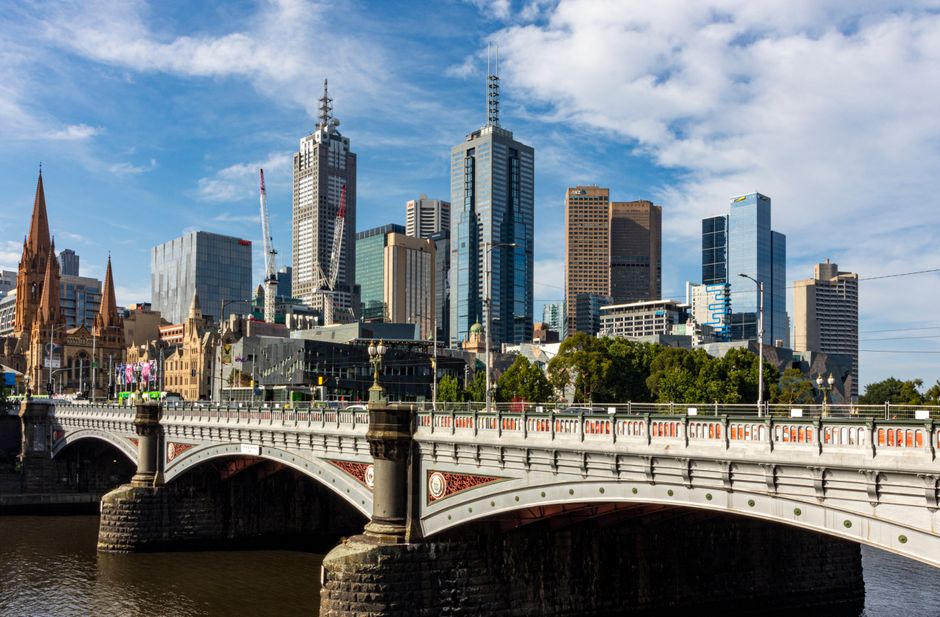
Melbourne, the capital of Victoria, is Australia’s second city and, many Australians would say, its cultural capital. It doesn’t have Sydney’s harbor, so it wins visitors over in other ways: laneways full of espresso bars and street art, free art galleries, trams rattling down tree-lined boulevards, rooftop bars, and an obsession with sport that peaks with the Australian Open, the Melbourne Cup and Australian rules football. About 5.4 million people live in Greater Melbourne, on the lands of the Wurundjeri Woi-wurrung and Bunurong peoples of the Kulin Nation, and its large Greek, Italian, Vietnamese, Chinese and Indian communities make it one of the best places to eat in the country. Melbourne is also the gateway to the Great Ocean Road, Phillip Island’s little penguins and the Yarra Valley’s wineries. The weather is famously changeable: as everywhere in Australia, the seasons are reversed, so summer runs from December to February and winter from June to August, but here you can get four seasons in one day.
Right now in Melbourne
- Wed 10–15°C 49–59°F Clear
- Thu 6–21°C 42–70°F Clear
- Fri 11–24°C 52–76°F Cloudy
Weather: MET Norway (CC BY 4.0) · Sea temperature: NOAA CoastWatch
Top tours in Melbourne
See all tours for Melbourne →
From local operators, with prices and reviews; you check availability and book on Viator, our partner. We may earn a commission at no extra cost to you. How we earn money
Melbourne at a glance
- Best months: March to May (autumn) and October to November (spring) for mild days and festivals; December to February (summer) for beaches, the Australian Open and long evenings, with occasional very hot days.
- Time needed: three days for the laneways, galleries, gardens and St Kilda; five to seven days with the Great Ocean Road, Phillip Island and the Yarra Valley.
- Getting there: Melbourne Airport (MEL) at Tullamarine is about 20 km (12 miles) northwest of the center, linked by SkyBus coaches every 10 minutes to Southern Cross Station.
- Costs (as of October 2026): prices are in Australian dollars and include the 10% GST. Trams in the CBD and Docklands are free inside the Free Tram Zone; in mid-2026 Transport Victoria listed a full-fare two-hour myki fare of $2.85 (about US$2) for zones 1 and 2.
- Before you go: visitors need an ETA, eVisitor or visa, and must declare food on arrival; see our Australia travel guide.
Melbourne neighborhoods and who each one suits
The CBD and its laneways
The Central Business District is a grid of wide streets between Flinders Street and the Queen Victoria Market, cut through by narrow lanes and arcades such as Degraves Street, Centre Place and the Block Arcade, where cafes spill onto the cobbles. Hosier Lane and AC/DC Lane are covered in street art. The CBD sits entirely inside the Free Tram Zone, so it is the most convenient base for a first visit.
Southbank and Docklands
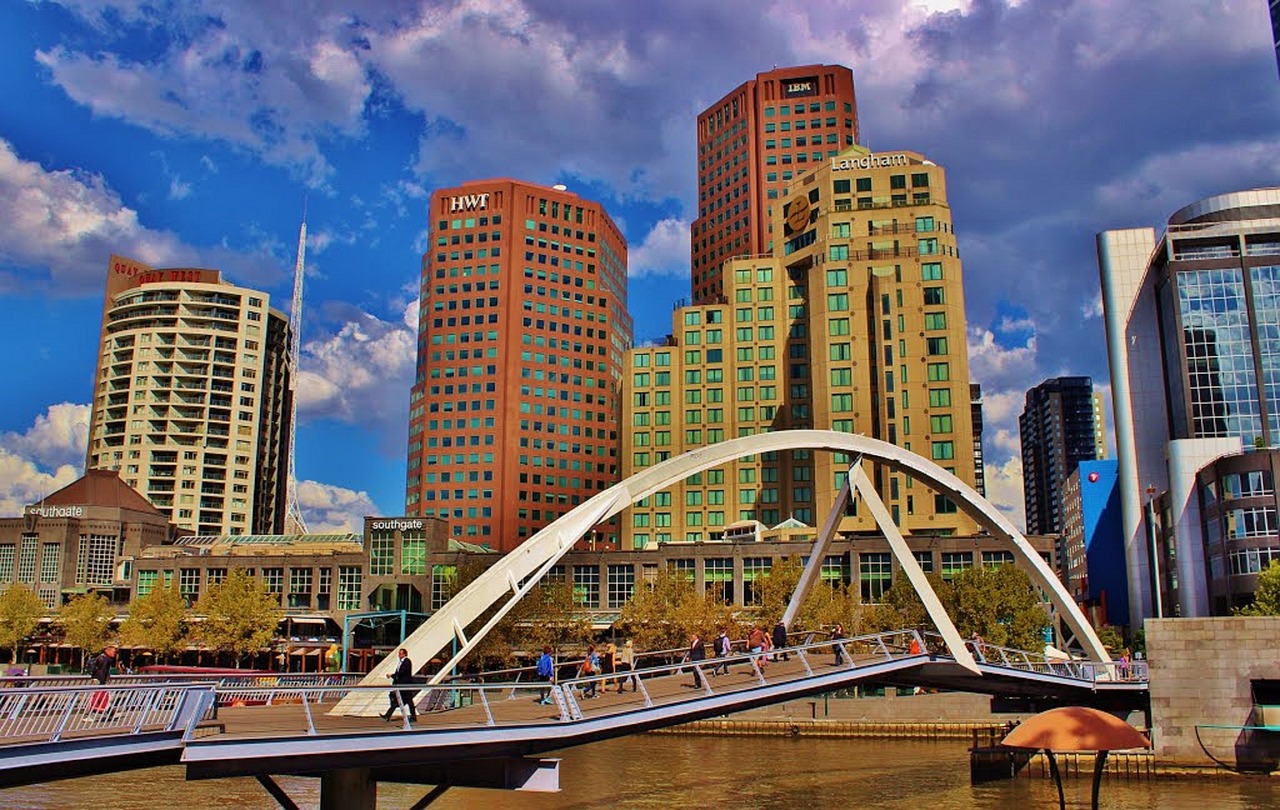
Across the Yarra River, Southbank has the Arts Centre Melbourne, the National Gallery of Victoria, Crown casino, riverside restaurants and many high-rise hotels and apartments. Docklands, on the western edge of the CBD, is a newer waterfront district around Marvel Stadium, also in the Free Tram Zone.
Fitzroy, Collingwood and Carlton
Just north of the center, Fitzroy’s Brunswick and Gertrude streets and Collingwood’s Smith Street are packed with vintage shops, live-music pubs, breweries and some of the city’s best restaurants. Carlton, next door, is Melbourne’s old Little Italy on Lygon Street, beside the Melbourne Museum and the Royal Exhibition Building. Stay here for neighborhood life, a short tram ride from the center.
South Yarra, Prahran and St Kilda
South of the river, South Yarra and Prahran have shopping on Chapel Street and the Prahran Market. St Kilda, on Port Phillip Bay about 6 km (4 miles) from the center, has a palm-lined beach, a pier, Luna Park’s old-fashioned rides and cake shops on Acland Street; it suits travelers who want the bay on the doorstep.
Top things to see in Melbourne
Federation Square, Flinders Street and the river
Start where everyone meets: under the clocks of Flinders Street Station, opposite St Paul’s Cathedral and the angular buildings of Federation Square, home to the Ian Potter Centre (NGV Australia, devoted to Australian art) and the Australian Centre for the Moving Image. Walk east along the Yarra past the rowing sheds, or cross to Southbank for the river promenade.
National Gallery of Victoria
Australia’s oldest and most visited public art museum is free and open daily from 10 a.m. to 5 p.m. (entry fees may apply to special exhibitions). The main building on St Kilda Road, with its famous stained-glass ceiling in the Great Hall, holds the international collection; NGV Australia at Federation Square shows Australian and First Nations art. Bags must be checked in at the free cloakroom.
Laneways, arcades and street art
Melbourne’s laneways are best explored on foot. A loop from Flinders Street can take in Degraves Street and Centre Place for coffee, the 19th-century Block Arcade and Royal Arcade, Hosier Lane’s constantly changing murals and the bars of Flinders Lane. Free and paid walking tours explain the history and the coffee culture.
Queen Victoria Market
Open since 1878, the Queen Victoria Market is the largest open-air market in the southern hemisphere, with fresh produce, deli halls, cheap clothes and souvenirs. It opens several days a week but not every day, and parts of the site are being redeveloped, so check opening days before you go; on summer Wednesday evenings it hosts a night market with street food.
Royal Botanic Gardens and the Shrine of Remembrance
South of the river, the Royal Botanic Gardens Victoria cover 38 hectares (94 acres) of lawns, lakes and native plants; entry is free. Next door, the Shrine of Remembrance, Victoria’s war memorial, has a balcony with views up St Kilda Road to the city. The nearby Kings Domain and the Tan, a 3.8 km (2.4-mile) running track around the gardens, are where Melburnians exercise.
Melbourne Museum and the Royal Exhibition Building
In Carlton Gardens, the Royal Exhibition Building, built for the 1880 International Exhibition, was the first building in Australia to be listed as a UNESCO World Heritage Site (2004). The modern Melbourne Museum beside it covers natural history, Melbourne’s story and Aboriginal culture at the Bunjilaka Aboriginal Cultural Centre.
The MCG and sporting Melbourne
The Melbourne Cricket Ground, holding about 100,000 spectators, is the spiritual home of Australian sport: cricket in summer and Australian rules football (AFL) from March to September, with the AFL Grand Final in late September. Tours run on non-event days and include the Australian Sports Museum. Melbourne Park next door hosts the Australian Open tennis each January.
Other things to do in Melbourne
- St Kilda’s penguins: a small colony of little penguins lives in the St Kilda pier breakwater; volunteers guide viewing at dusk. Keep your distance and never use a flash.
- Rooftop bars and live music: Melbourne has more live-music venues per person than almost any city; Fitzroy, Collingwood and St Kilda are the centers of the scene.
- Cycling: the Capital City Trail loops around the center along the Yarra; the bay trail runs from St Kilda to Brighton’s colorful bathing boxes.
- Views: the Melbourne Skydeck on the 88th floor of Eureka Tower is the highest public viewpoint in the southern hemisphere.
Food and drink
Coffee is a religion: order a flat white or a long black from an independent cafe and expect it to be good. Eat dumplings in Chinatown on Little Bourke Street, Greek food on Lonsdale Street, Vietnamese pho in Richmond and Footscray, Italian in Carlton, and modern Australian food almost anywhere. Victoria’s wine regions, especially the Yarra Valley and the Mornington Peninsula, are known for pinot noir and chardonnay. Tipping is optional, card surcharges of about 1–2% are common, and some restaurants add a surcharge on Sundays and public holidays.
Day trips from Melbourne
The Great Ocean Road and the Twelve Apostles
The Great Ocean Road, built by returned soldiers after the First World War, runs about 240 km (150 miles) along Victoria’s southwest coast from Torquay to Allansford, past surf beaches (Bells Beach hosts a famous Easter surf contest), the holiday towns of Lorne and Apollo Bay, the rainforest of Great Otway National Park, where koalas sit in the gum trees around Kennett River, and the limestone stacks of the Twelve Apostles near Port Campbell. The Apostles are about 3.5 to 4 hours’ drive from Melbourne, so a day trip is long; two or three days lets you stop properly. Drive on the left, keep to the speed limits, take breaks on the winding road and watch for wildlife at dusk.
Phillip Island and the Penguin Parade
About two hours southeast, Phillip Island’s Penguin Parade is one of Australia’s most popular wildlife experiences: every evening at sunset, little penguins (the smallest penguin species) come ashore and waddle up the beach to their burrows, watched from boardwalks and stands. Book ahead, dress warmly, and note that photography is not allowed at the parade. The island also has a koala conservation reserve and a motor-racing circuit.
Yarra Valley, the Dandenongs and the Mornington Peninsula
The Yarra Valley, about an hour northeast, has dozens of cellar doors, the Healesville Sanctuary for native animals and hot-air balloon flights at dawn. The forested Dandenong Ranges, east of the city, are home to the Puffing Billy steam railway. The Mornington Peninsula, to the south, combines wineries, beaches and natural hot springs.
Further afield: skiing and Tasmania
From about June to September, Victoria’s Alpine resorts, such as Mount Buller and Falls Creek, are within a three- to four-hour drive; check snow conditions and carry chains where required. The Spirit of Tasmania ferries sail between Geelong, southwest of Melbourne, and Devonport in northern Tasmania; see our Hobart guide.
Nearby destinations
- Great Ocean Road151 km
Getting there and getting around
From Melbourne Airport (MEL)
Melbourne Airport at Tullamarine handles international flights from Asia, the Middle East, North America and New Zealand and domestic flights to every state. There is no airport railway yet. SkyBus coaches run to Southern Cross Station in the CBD every 10 minutes for most of the day, taking about 30 minutes without traffic; return tickets work out at $21.70 each way. Public buses connect the airport with the train network more cheaply but more slowly. Taxis and rideshares take 25 to 45 minutes; the CityLink tollway is charged electronically. Avalon Airport, near Geelong, handles some low-cost domestic flights.
Trams, trains and buses: myki and contactless
Melbourne has the largest tram network in the world, plus suburban trains and buses, all on the myki ticket system run by Transport Victoria. In the center, the Free Tram Zone covers the CBD and Docklands; you don’t need a ticket for trips that start and end inside it, and the free City Circle tram loops around the CBD. Outside the zone, touch on with a myki card at the start of every trip and touch off on trains and buses (trams need only a touch on). Transport Victoria is progressively introducing contactless payments: full-fare passengers can tap on and off with a Mastercard or Visa card, phone or smartwatch where readers accept them; concession travelers must keep using myki. Travel after 6 p.m. counts as one fare until 3 a.m., and metropolitan trains are free if you touch off before 7 a.m. on weekdays (the “early bird” fare). Young people under 18 travel free with a Youth myki.
| myki Money fare, metropolitan Melbourne | Zones 1 + 2 | Zone 2 only |
|---|---|---|
| Full fare, two hours (listed June 2026) | $2.85 (about US$2) | $1.80 |
| Full fare, daily cap | $5.70 | $3.60 |
| Weekend and public holiday daily cap | $4.00 | $4.00 |
| Concession, two hours | $1.42 | $0.90 |
| 7-day myki Pass, full fare | $28.50 | $18.00 |
| Free Tram Zone (CBD and Docklands) | Free | — |
These fares, listed by Transport Victoria in mid-2026, are half those listed in early 2026 ($5.70 for two hours and $11.40 a day). Check the current fare before you travel, as temporary reductions can end.
Driving and regional trains
You don’t need a car in the city; parking is expensive, and drivers must follow the unusual “hook turn” rule at some CBD intersections, turning right from the left lane to keep out of the trams’ way. Rent a car for the Great Ocean Road or the Grampians. V/Line regional trains and coaches leave Southern Cross Station for Geelong, Ballarat, Bendigo and the coast; NSW TrainLink runs to Sydney.
When to go and how long to stay
Melbourne has a mild, changeable climate. Summer (December to February) averages 25–27 °C (77–81 °F), but hot, dry northerly winds can push temperatures above 40 °C (104 °F) for a day or two before a cool change sweeps in. Autumn (March to May) is often the most settled season, with calm, sunny days and colorful leaves in the gardens. Winter (June to August) is cool and gray, with highs of 13–15 °C (56–58 °F), frequent drizzle and cold mornings, but rarely frost in the city. Spring (September to November) is the windiest and most unpredictable season. Annual rainfall is modest, spread across the year.
| Month | Average high | Average low | Rain | Rain days (≥1 mm) |
|---|---|---|---|---|
| Jan | 27 °C (81 °F) | 14 °C (58 °F) | 39 mm (1.5 in) | 5 |
| Feb | 27 °C (80 °F) | 14 °C (58 °F) | 41 mm (1.6 in) | 4 |
| Mar | 24 °C (76 °F) | 13 °C (55 °F) | 38 mm (1.5 in) | 5 |
| Apr | 21 °C (69 °F) | 10 °C (50 °F) | 42 mm (1.7 in) | 6 |
| May | 17 °C (62 °F) | 8 °C (47 °F) | 34 mm (1.4 in) | 7 |
| Jun | 14 °C (57 °F) | 6 °C (44 °F) | 42 mm (1.6 in) | 8 |
| Jul | 13 °C (56 °F) | 6 °C (42 °F) | 33 mm (1.3 in) | 8 |
| Aug | 15 °C (58 °F) | 6 °C (43 °F) | 39 mm (1.5 in) | 9 |
| Sep | 17 °C (63 °F) | 7 °C (45 °F) | 46 mm (1.8 in) | 9 |
| Oct | 20 °C (68 °F) | 9 °C (48 °F) | 48 mm (1.9 in) | 8 |
| Nov | 23 °C (73 °F) | 11 °C (51 °F) | 60 mm (2.4 in) | 7 |
| Dec | 25 °C (77 °F) | 12 °C (54 °F) | 52 mm (2.1 in) | 6 |
| Year | 20 °C (68 °F) | 10 °C (49 °F) | 516 mm (20 in) | 84 |
Figures are the Bureau of Meteorology’s 1991–2020 averages for Melbourne Airport, 20 km northwest of the center. The inner city is a little warmer at night and slightly wetter.
Events worth planning around
- Australian Open (January): the Grand Slam tennis tournament at Melbourne Park.
- Australian Formula 1 Grand Prix (March): at the Albert Park street circuit.
- Melbourne International Comedy Festival (late March to April) and the Food and Wine Festival.
- AFL Grand Final (late September): the city’s biggest sporting day, at the MCG.
- Melbourne Cup (first Tuesday in November): the horse race “that stops a nation”; it is a public holiday in metropolitan Melbourne, 3 November in 2026.
- Boxing Day Test (26 December): cricket at the MCG.
Dates change every year; hotels fill up and prices rise during the big events.
How long to stay: 3, 5 and 7 days
- Three days: Federation Square, the laneways and the NGV; the Royal Botanic Gardens, the Shrine and Southbank; Fitzroy and St Kilda.
- Five days: add a long day on the Great Ocean Road and an evening at Phillip Island.
- Seven days: stay two nights on the Great Ocean Road and add the Yarra Valley or the Mornington Peninsula.
Where to stay in Melbourne
- CBD: the best location for a short stay, inside the Free Tram Zone.
- Southbank: river views, big hotels and the arts precinct.
- Fitzroy, Collingwood and Carlton: boutique hotels and character, a short tram ride north.
- St Kilda and South Yarra: bayside or leafy streets, good restaurants, 15 to 25 minutes from the center by tram.
Victoria has no hotel tax, and the 10% GST is included in prices. Short-term rentals booked through online platforms carry a state short-stay levy that is usually included in the total. Hotels are expensive during the Australian Open, the Grand Prix and Melbourne Cup week.
Typical costs in Melbourne
| Item (as of October 2026) | Australian dollars | About US dollars |
|---|---|---|
| Tram in the Free Tram Zone | Free | Free |
| myki two-hour fare, zones 1 + 2 (listed June 2026) | $2.85 | $2.00 |
| SkyBus to the city (on a return ticket, each way) | $21.70 | $15.00 |
| National Gallery of Victoria, general entry | Free | Free |
| Flat white coffee | about $5–6 | about $3.50–4 |
| Casual restaurant main | about $25–40 | about $17–28 |
| Mid-range hotel room, per night | about $200–350 | about $140–240 |
Fares and gallery entry are official prices; coffee, meals and hotels are typical ranges. Conversions use about US$0.69 to A$1.
Safety in Melbourne
Melbourne is a safe city, with the usual need to watch bags in crowds and on late-night public transport. Most risks are environmental.
- Sun and UV: UV levels are high from September to April even on cool, cloudy days; use SPF 50+ sunscreen, a hat and sunglasses.
- Beaches and rips: the beaches of Port Phillip Bay, such as St Kilda, are usually calm, but the ocean beaches on the Great Ocean Road, Phillip Island and the Mornington Peninsula’s back beaches have strong rip currents. Swim only between the red and yellow flags at patrolled beaches.
- Heat and bushfire season: on hot, windy summer days, fire danger can be extreme in the Dandenongs, the Yarra Valley and the Otways; parks may close. Check fire danger ratings and the VicEmergency app before driving into the countryside, and follow instructions from emergency services.
- Driving: on the Great Ocean Road, keep left, take breaks and avoid driving at dusk and at night, when kangaroos are most active.
- Trams: look both ways for trams and cyclists, and when getting off a tram in the middle of the road, watch for cars.
- Emergencies: call 000 (112 also works from mobile phones).
Practical tips for Melbourne
- Time zone: Australian Eastern Time; daylight saving runs from 4 October 2026 to 4 April 2027.
- Money: cards and phone payments are accepted almost everywhere; carry a little cash for markets.
- Power and water: type I plugs, 230 V; tap water is excellent.
- Shopping: visitors can claim back GST on purchases of $300 or more from one business through the Tourist Refund Scheme when they leave the country.
What to pack for Melbourne
Pack in layers, because a hot morning can turn into a cool, windy afternoon. Bring a light waterproof jacket and an umbrella all year, a warm coat, scarf and closed shoes from May to September, and sunscreen, a hat and sunglasses from spring to autumn. Comfortable walking shoes matter in the laneways, and smart-casual clothes suit Melbourne’s bars and restaurants.
Melbourne travel FAQ
How do I get from Melbourne Airport to the city?
Take SkyBus to Southern Cross Station: coaches run every 10 minutes for most of the day and take about 30 minutes; return tickets work out at $21.70 each way. There is no airport train yet.
Are trams free in Melbourne?
Yes, inside the Free Tram Zone, which covers the CBD and Docklands. You don’t need a ticket for trips that start and end inside the zone, including the City Circle tram.
Can I use my credit card on Melbourne public transport?
Contactless payment is being introduced progressively for full-fare passengers, with Mastercard and Visa cards, phones and smartwatches. Where it isn’t available yet, or for concession fares, you need a myki card.
How much is a myki fare in Melbourne?
In mid-2026 Transport Victoria listed $2.85 for two hours in zones 1 and 2 and a $5.70 daily cap, half the early-2026 fares. Check the current fare before you travel.
How long does the Great Ocean Road take from Melbourne?
The Twelve Apostles are about 3.5 to 4 hours’ drive from Melbourne along the coast. A day trip is possible but long; two or three days is better.
When is the best time to see the penguins on Phillip Island?
The Penguin Parade happens every evening of the year at sunset. Summer is warmer and busier; winter has fewer visitors but is cold and windy, so dress warmly.
What is the best time to visit Melbourne?
March to May for settled, mild weather, or October and November for spring festivals. Summer is great for the beach and the Australian Open but can bring very hot days.
Why is Melbourne’s weather so changeable?
Cold fronts from the Southern Ocean regularly replace hot inland air, so temperatures can drop by 10 °C (18 °F) or more within an hour. Always carry a layer.
What is a hook turn?
At some CBD intersections marked with signs, drivers turning right wait in the far left lane and turn when the lights change, so that trams can use the middle of the road.
Is Melbourne or Sydney better for a first visit?
Sydney has the harbor, the Opera House and surf beaches; Melbourne has the food, coffee, galleries and sport. With a week, fly between them and see both; see our Sydney guide.
Sources and last review
Researched and last reviewed on 5 October 2026. Myki fares (a June 2026 capture of Transport Victoria’s fare page, compared with its January and April 2026 versions), the Free Tram Zone, early bird and after-6 p.m. rules, free travel for under-18s and contactless rollout come from Transport Victoria (read through the Internet Archive, because the site blocked direct access); NGV hours and entry from the National Gallery of Victoria; SkyBus frequency and return fares from SkyBus; Spirit of Tasmania routes from Spirit of Tasmania; daylight saving dates from the NSW Government (they are the same in Victoria); climate from the Bureau of Meteorology’s 1991–2020 statistics for Melbourne Airport; population from Wikidata. The reason for the mid-2026 fare cut, the short-stay levy, event dates, distances and drive times, gardens and market details, typical prices and the hook-turn rule are general references and flagged for checking. Prices and timetables change, so check the official sites before you go. For entry rules, biosecurity and money, see our Australia travel guide.
Plan your trip
Partner links: TravelerCenter may earn a commission if you book, at no extra cost to you.