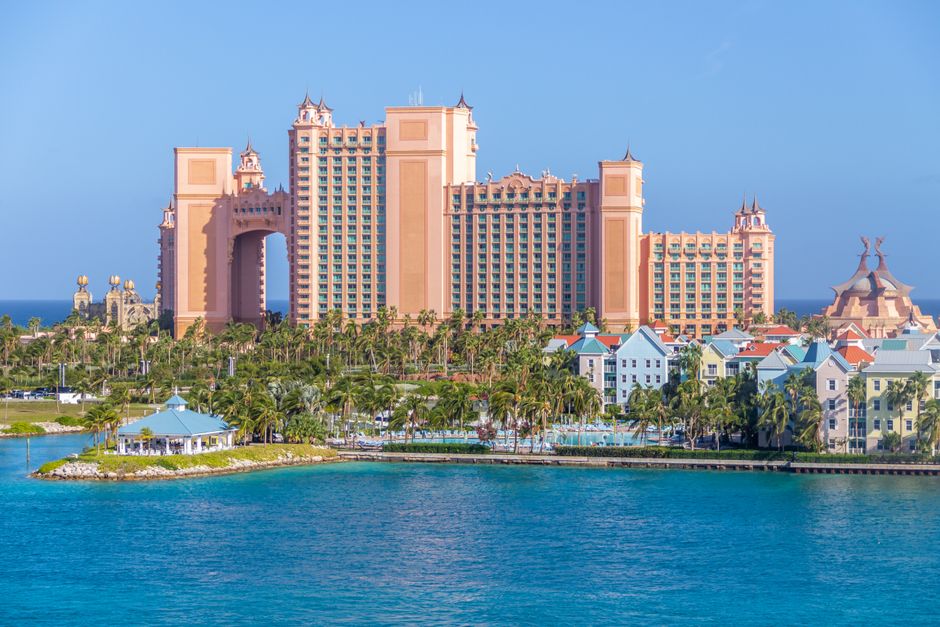
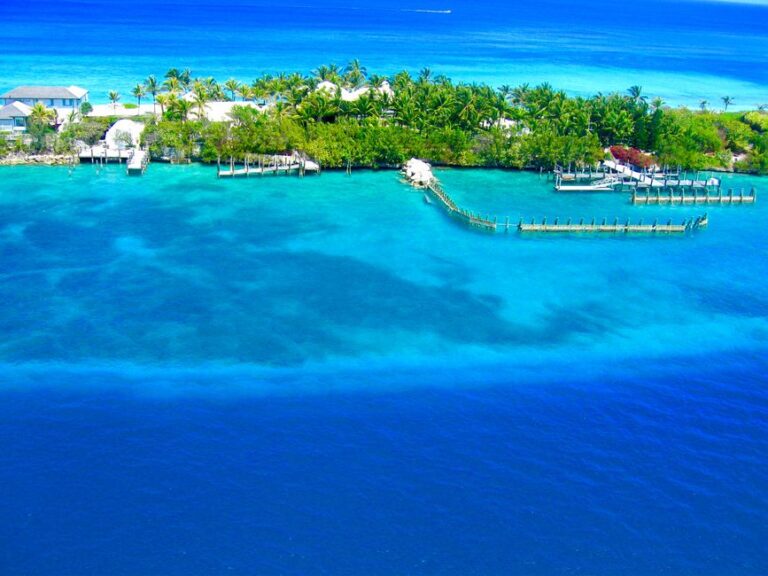
The Bahamas is an island nation of turquoise shallows, powdery white and pink sand and reefs, spread across the Atlantic from just 50 miles (80 km) off Florida almost to Cuba. Most visitors land in Nassau, the capital, on New Providence island, for its colonial forts, the Straw Market, the Fish Fry at Arawak Cay and the resorts of Cable Beach and Paradise Island. Beyond it lie the “Out Islands” or Family Islands, where life slows down: the Exumas with their swimming pigs, sandbars and the oldest marine park in the Caribbean, the pink sand of Harbour Island, the blue holes of Andros and the sailing grounds of Abaco. The Bahamian dollar is tied one to one to the US dollar and both are used everywhere, US citizens need a passport, and US-bound travelers clear US border control at Nassau airport before they fly. Come from December to April for dry, breezy weather and calm seas; June to November is hot, humid and hurricane season, with lower prices. Give a first trip a week: four days in Nassau and Paradise Island and three in the Exumas.
Right now in Bahamas
- Tue 26–29°C 80–84°F 1 mm Mostly clear
- Wed 28–29°C 82–84°F 1 mm Light showers
- Thu 28–29°C 82–84°F 1 mm Light showers
- Mon 12 Oct National Heroes' Day
Weather: MET Norway (CC BY 4.0) · Holidays: Nager.Date
Multi-day tours of Bahamas
Multi-day tours from local operators. You check dates and book on Viator, our partner; we may earn a commission at no extra cost to you. How we earn money
The Bahamas at a glance: 700 islands, one capital
The Commonwealth of The Bahamas is an independent country, a member of the Commonwealth with King Charles III as head of state, and has been independent from Britain since 10 July 1973. According to the Bahamas Ministry of Tourism, the archipelago has about 700 islands and cays, but only around 30 are inhabited and 16 are promoted as main island destinations. It stretches about 500 miles (800 km) from Grand Bahama and Bimini in the north-west, near Florida, to Inagua in the south-east, near Cuba and Haiti. About 400,000 people live in the country, and roughly three-quarters of them on New Providence, the small island that holds Nassau.
English is the official language, spoken with a lilting Bahamian accent and dialect. You drive on the left, as in Britain, but most cars are American, with the steering wheel on the left. The Bahamas is in the Eastern Time Zone and follows daylight saving time, so it keeps the same time as New York and Miami all year: daylight saving time ends on Sunday, November 1, 2026 and starts again on Sunday, March 14, 2027. Electricity is 120 volts and 60 Hz, with US-style plugs.
The island groups
- New Providence and Paradise Island: Nassau, the capital, with its forts, museums, markets and the cruise port, the resort strip of Cable Beach and Baha Mar, and Paradise Island across the harbor, home of Atlantis and Cabbage Beach.
- Grand Bahama: the second city, Freeport, with Lucaya’s beaches, Lucayan National Park and its caves, and a ferry link to Florida.
- The Exumas: a 120-mile (190 km) chain of cays south-east of Nassau, with George Town on Great Exuma, Staniel Cay, Thunderball Grotto, the swimming pigs of Big Major Cay and the Exuma Cays Land and Sea Park.
- Eleuthera and Harbour Island: a long, thin island of quiet beaches, the Glass Window Bridge and pastel Dunmore Town on Harbour Island, with its pink-sand beach.
- The Abacos: a sailing and boating hub with colorful Loyalist villages such as Hope Town; rebuilding continues after Hurricane Dorian in 2019.
- Andros, Bimini and the Berry Islands: Andros, the largest island, for bonefishing, blue holes and the third-largest barrier reef in the world; Bimini for big-game fishing and Hemingway history, only about 50 miles (80 km) from Florida.
- The southern islands: Long Island, Cat Island, San Salvador, the Acklins, Crooked Island, Mayaguana and Inagua, with its huge flamingo colony: remote, beautiful and best for divers, anglers and people who want empty beaches.
Regions
Where to go: Nassau, Paradise Island and the Out Islands
Most first-timers split their stay between New Providence and one Out Island. Nassau and Paradise Island have the international flights, the big resorts and the most to do; the Exumas, Eleuthera or Abaco add the empty beaches, boat days and clear water many people picture when they think of the Bahamas. Domestic flights and fast ferries link Nassau with the main islands.
Nassau
The capital is a busy, colorful port town of pink government buildings, colonial churches and markets, with up to several cruise ships in port on busy days. Walk downtown along Bay Street and Parliament Square, climb the 66 steps of the Queen’s Staircase to Fort Fincastle, visit Fort Charlotte, the Straw Market and the Pirates of Nassau museum, and eat conch salad at Arawak Cay’s Fish Fry or Potter’s Cay. Cable Beach and the Baha Mar resort complex are 15 to 20 minutes west of downtown. See our Nassau travel guide.
Paradise Island
Linked to downtown Nassau by two bridges, this small island is a resort enclave: the Atlantis resort with its water park and open-air marine habitat, the casino and marina, the long white sweep of Cabbage Beach, and quieter luxury hotels and gardens at its eastern end. See our Paradise Island travel guide.
The Exumas
A string of 365 islands and cays, according to the Ministry of Tourism, with some of the clearest, most luminous water in the world. Base yourself in George Town on Great Exuma or on Staniel Cay, then take a boat day through the cays: the swimming pigs at Big Major Cay, snorkeling in Thunderball Grotto, nurse sharks at Compass Cay and the protected reefs of the Exuma Cays Land and Sea Park. See our Exuma travel guide.
Eleuthera and Harbour Island
Eleuthera is 110 miles (175 km) long and in places only a mile or two wide, with the Atlantic on one side and calm, shallow water on the other. Harbour Island, just off its north coast, has the famous three-mile pink-sand beach and pretty Dunmore Town, where golf carts outnumber cars. Fly to North Eleuthera or take the fast ferry from Nassau.
Grand Bahama, Abaco and Bimini
Grand Bahama’s Freeport and Lucaya have resorts, a cruise port and Lucayan National Park, with mangroves, caves and Gold Rock Beach. Abaco is the boating capital, with sheltered water between the main island and its outer cays. Bimini is famous for sport fishing and is the closest island to Florida.
Exuma Travel Guide
Plan a trip to Exuma: George Town and Stocking Island, Great and Little Exuma, Staniel Cay, the swimming pigs of Big Major Cay, Thunderball…
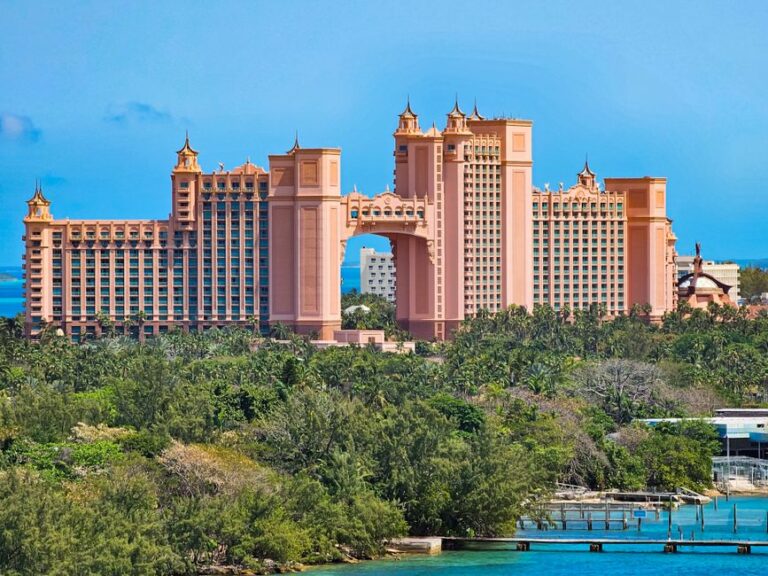
Nassau Travel Guide
Plan a trip to Nassau: downtown and Bay Street, the Queen's Staircase and Fort Fincastle, Fort Charlotte, the Straw Market and Fish Fry, Cable…
Paradise Island Travel Guide
Plan a trip to Paradise Island: Cabbage Beach, Atlantis with Aquaventure, the marine habitat and day passes for non-guests, the Versailles Gardens and cloister,…
Best time to visit the Bahamas
The Bahamas has a warm, sunny climate all year, warmer and wetter in summer and cooler, drier and breezier in winter, with the southern islands a little warmer and drier than Nassau. According to the Ministry of Tourism, winter lows average about 70 °F (21 °C) and summer highs reach the high 80s and low 90s °F (about 30–33 °C). The table uses the official 1991–2020 climate normals for Lynden Pindling International Airport in Nassau, submitted by the Bahamas Department of Meteorology to the World Meteorological Organization: average daily highs and lows, and days with at least 1 mm (0.04 in) of rain.
| Season | Average high / low | Rainy days per month | What it’s like | Good for |
|---|---|---|---|---|
| Winter (Dec–Feb) | 79–80 °F (26–27 °C) / 65–67 °F (18–20 °C) | 5–7 | Dry, sunny and breezy; cold fronts bring cooler, windy days and choppy seas; water about 75 °F (24 °C) | Peak season: beaches, sightseeing, Junkanoo |
| Spring (Mar–May) | 81–86 °F (27–30 °C) / 66–72 °F (19–22 °C) | 6–10 | Warm, mostly dry, calmer seas; showers start in May | Snorkeling, sailing, Exuma boat days, the April regatta |
| Summer (Jun–Aug) | 89–91 °F (32–33 °C) / 76–77 °F (24–25 °C) | 15–18 | Hot and humid with short, heavy showers and storms; very warm sea | Diving, family holidays, lower rates; hurricane risk rises |
| Autumn (Sep–Nov) | 90 °F falling to 83 °F (32 to 28 °C) / 76 °F falling to 70 °F (25 to 21 °C) | 17 in September, 9 in November | Peak hurricane season in September and October; pleasant again by late November | Deals and quiet beaches, with flexible bookings |
Nassau averages about 56 in (1,426 mm) of rain a year, with June the wettest month at about 8.7 in (220 mm). Rain usually comes in short, heavy showers, not all-day downpours.
Hurricane season: according to NOAA’s National Hurricane Center (NHC), the Atlantic hurricane season runs from 1 June to 30 November, with most activity between mid-August and mid-October. Hurricane Dorian, a Category 5 storm, devastated Abaco and Grand Bahama in September 2019, and in late October 2025 Hurricane Melissa made landfall on Long Island and San Salvador in the south-east as a Category 1 hurricane, flooding Long Island’s Deadman’s Cay airport and cutting power on several southern islands, according to the NHC’s report on the storm. Nassau, the Exumas and Paradise Island were not directly hit by either storm. As of early October 2026, the 2026 season had produced eight tropical storms and no hurricanes, according to the NHC. If you travel between June and November, buy travel insurance that covers hurricanes, book refundable rates where you can, and follow the Bahamas Department of Meteorology and the NHC. According to the Ministry of Tourism, many hotels have hurricane cancellation policies; ask before you book.
Sargassum: brown sargassum seaweed drifts across the Atlantic and Caribbean, mostly from spring to late summer. The Bahamas, sitting north of the main “belt”, usually gets less than the eastern Caribbean, but beaches on the islands’ east-facing (Atlantic) shores can see piles of weed in some months. According to the University of South Florida’s Sargassum Watch, 2026 is at least the second-largest sargassum year on record; amounts were falling in September and expected to keep falling until about November. Resorts clear their beaches, and the calm western and southern shores, such as Cable Beach and most of the Exuma cays’ inner beaches, are usually clean.
Crowds and prices through the year
High season runs from mid-December to mid-April, with the highest prices at Christmas, New Year (Junkanoo), Presidents’ Day weekend and US spring break in March. May and early June are a sweet spot: still dry, warm sea, lower prices. Summer is busy with families and cruise passengers, and September and October are the quietest and cheapest months, when some small hotels and restaurants in the Out Islands close for a few weeks.
Festivals and holidays
- Junkanoo (26 December and 1 January): the national street festival, with huge handmade costumes, cowbells, goatskin drums and brass parading on Bay Street in Nassau from the early hours; Junkanoo Summer festivals take place in July.
- National Family Island Regatta (April): traditional wooden sloops race in Elizabeth Harbour, George Town, Exuma, according to the Ministry of Tourism.
- Independence Day (10 July): fireworks and parades.
- Emancipation Day (first Monday of August) and Fox Hill Day a week later in Nassau.
- Public holidays also include Good Friday, Easter Monday, Whit Monday, Labour Day (first Friday in June), National Heroes’ Day (second Monday in October), Christmas and Boxing Day.
How long to stay: sample itineraries
4 days: Nassau and Paradise Island
Day one, downtown Nassau: Parliament Square, the Queen’s Staircase and Fort Fincastle, the Straw Market and dinner at the Fish Fry. Day two, Paradise Island and Cabbage Beach, or a day at Atlantis. Day three, a boat trip to Rose Island or a snorkel and dive trip off the south-west coast. Day four, Cable Beach and the Clifton Heritage National Park.
7 days: Nassau and the Exumas
Three nights in Nassau, then fly to George Town (Exuma International Airport) for four nights. Spend one day on Stocking Island across Elizabeth Harbour, one on a full-day boat tour north through the Exuma cays (swimming pigs, Thunderball Grotto, the sandbars) and one exploring Great and Little Exuma by car, including Tropic of Cancer Beach.
10–14 days: island hopping
Add Eleuthera and Harbour Island by fast ferry or plane from Nassau, or Abaco for sailing. Interisland connections almost always route through Nassau, and schedules are limited, so leave a spare night before your flight home.
Entry, money and costs
Entry rules (last reviewed October 2026)
According to the Bahamas Department of Immigration, every visitor who is not a Bahamian citizen or resident must:
- show a passport valid for at least six months on arrival; passport cards are not accepted;
- have a return or onward ticket, and the means to support themselves during the stay;
- not intend to work;
- fill in the immigration Disembarkation/Embarkation Card, usually handed out on the plane.
Citizens of the United States, Canada, the United Kingdom, all European Union countries, Australia, New Zealand and many other countries do not need a visa for a tourist stay; US citizens on a bona fide visit can stay up to eight months, according to the Ministry of Tourism. Citizens of about 75 countries, including India, the Philippines, Haiti and Cuba, need a visa in advance, and the Ministry of Tourism points out that people who would normally need a visa also need one when they arrive by cruise ship. Immigration officers decide on entry, and admittance is not automatic. If you arrive directly from a country with yellow fever risk, you need a vaccination certificate valid at least 10 days before arrival.
The Bahamas Travel Health Visa, the pandemic-era online form, no longer exists: the Ministry of Tourism scrapped it, with pre-arrival COVID-19 tests, on 19 June 2022. There is no online arrival form or e-ticket to fill in for the Bahamas as of October 2026; ignore websites that charge for one.
Cruise passengers should follow their cruise line’s document rules. US citizens on round-trip “closed-loop” cruises from US ports may be allowed by US rules to travel with a birth certificate and government photo ID, but a passport is strongly recommended in case you need to fly home from the Bahamas.
Departure tax and US preclearance
According to the Government of The Bahamas, a departure tax of B$15 (US$15) is charged to every person aged 6 and over leaving the country; for air passengers it is collected through the ticket price along with other airport charges, so you do not pay it at the airport.
If you fly to the United States from Nassau, you clear US immigration and customs in Nassau before boarding, at the US Customs and Border Protection (CBP) preclearance facility in Lynden Pindling International Airport’s US Departures Terminal. CBP lists its hours as 6 a.m. to 7 p.m. You land in the US as a domestic passenger, but you need to get to the airport early: allow at least three hours before a US flight in high season. Non-US citizens need their ESTA or US visa, just as if they were arriving in the US. See our United States travel guide for US entry rules.
Money and cards
The Bahamian dollar (B$, BSD) is fixed at par with the US dollar, and both are accepted interchangeably on all islands, according to the Ministry of Tourism. You will often get change in a mix of the two. Credit cards (Visa and Mastercard; American Express in larger hotels) are accepted in Nassau, Paradise Island and resorts, but small restaurants, taxis, water taxis and shops in the Out Islands often want cash. ATMs on the PLUS and Cirrus networks are found on the main islands, but they can be scarce or empty on small cays, so bring US dollars in small notes for the Out Islands. Bahamian dollars are hard to exchange outside the country, so spend them before you leave.
Tipping
Tipping is customary. According to the Ministry of Tourism, servers usually receive 15% and bellhops about $1 per bag; many restaurants and hotels add a gratuity automatically, often 15% or more, so check your bill before you tip again. Tip taxi drivers about 15%, boat crews and tour guides 10–20%, and housekeeping a few dollars a night.
Taxes, hotel taxes and resort fees
The Bahamas has no income tax and funds itself largely through import duties and value added tax (VAT). According to the Department of Inland Revenue, the standard VAT rate is 10%, and it applies to hotel rooms, restaurant meals, tours and most goods and services. Listed prices in shops usually include VAT; hotel and restaurant prices are often quoted before VAT and service charges. Big resorts add a daily resort fee and may add mandatory gratuities or housekeeping charges, so a room advertised at $300 can cost $370 or more a night once everything is added. Ask for the all-in price before you book. National park and marine park fees also carry 10% VAT.
Typical travel costs
The Bahamas is one of the most expensive countries in the Caribbean, because almost everything is imported. As a rough guide in 2026, expect $250–600 a night for a mid-range or upscale hotel room in Nassau or Paradise Island in high season, $15–25 for lunch at a casual restaurant or the Fish Fry, $40–80 for a dinner main at a resort, and $150–300 per person for a full-day Exuma boat tour. Groceries, alcohol and fuel cost noticeably more than in the US. Save money with summer and early autumn travel, apartment rentals with kitchens, jitney buses in Nassau, and local food.
Getting there and getting around
Arrival airports
Lynden Pindling International Airport (NAS), on the west side of New Providence, is the country’s largest and busiest airport, with direct flights from many US cities, Canada and London, and the hub of the national airline Bahamasair for flights to the Out Islands. According to the airport, taxis wait outside every terminal and use fixed zone fares for two passengers: $29 to Cable Beach, $36 to downtown Nassau and $45 to Paradise Island plus a $2 bridge toll, as of October 2026, with $5 per extra passenger and extra charges for more than two bags each. Runway 14/32 is being resurfaced until about 31 October 2026, with flights using the second runway; you shouldn’t notice any difference as a passenger.
Other airports with international flights include Grand Bahama International (FPO) in Freeport, Exuma International (GGT) near George Town, Marsh Harbour (MHH) on Abaco, North Eleuthera (ELH) for Harbour Island, and Governor’s Harbour (GHB) on Eleuthera, with direct flights mainly from Florida and other US hubs. Small island airstrips are served by Bahamasair and smaller domestic airlines.
Cruise ports
The Bahamas is one of the world’s busiest cruise destinations. Nassau Cruise Port, at Prince George Wharf in the heart of downtown, reopened after a $300 million redevelopment with a waterfront of restaurants, shops, a Junkanoo museum and an amphitheater; according to the port, it welcomed a record 33,254 cruise passengers in a single day on 8 June 2026. Freeport on Grand Bahama has its own cruise port, and cruise lines also run private island and beach destinations in the Bahamas, including Perfect Day at CocoCay (Royal Caribbean), Castaway Cay and Lookout Cay (Disney), Half Moon Cay (Holland America and Carnival), Ocean Cay (MSC) and Celebration Key on Grand Bahama (Carnival). Cruise passengers who want to see Nassau beyond Bay Street can walk to the Queen’s Staircase and Fort Fincastle in about 15 minutes or take a taxi to Cable Beach.
Interisland flights and ferries
Bahamasair and smaller airlines fly from Nassau to every inhabited island group, with flights of 30 to 75 minutes; schedules can change at short notice. Bahamas Ferries sails from Potter’s Cay Dock in Nassau to eight Bahamian destinations, including Harbour Island, Spanish Wells, Eleuthera, Abaco, Grand Bahama and Exuma, with fast ferries to Harbour Island and Eleuthera taking about two to three hours. Traditional government-contracted mailboats also carry passengers and freight to the islands; they are cheap and slow, often overnight, and sail on cargo schedules.
Getting around: jitneys, taxis and driving
In Nassau, privately run minibuses called jitneys run from early morning to about 7 p.m., costing $1.25–3.50 a ride, according to the Ministry of Tourism; pay the driver in exact change. Taxis are metered or use fixed fares; agree the price before you set off. Water taxis cross Nassau Harbour to Paradise Island.
You can rent a car on the larger islands with your national driving license for up to three months. Drive on the left, take care at roundabouts, and watch for potholes, narrow roads and scooters. On small islands such as Harbour Island and Staniel Cay, people get around by golf cart, and in the Exumas a car is useful on Great Exuma but boats are the only way through the cays.
Culture, food and everyday etiquette
Bahamian culture blends West African, British and American influences, best seen at Junkanoo, in rake-and-scrape music played with a carpenter’s saw, and in the Straw Market’s woven crafts. Church matters to many Bahamians, and Sundays are quiet outside the resorts.
Food centers on the sea: conch above all, as conch salad with lime, onion and peppers, fried “cracked” conch and conch fritters, plus grouper, snapper, spiny lobster (in season from August to March), peas and rice, macaroni and cheese baked like a pie, johnnycake and guava duff for dessert. Try Kalik and Sands beers, and a Goombay Smash or Bahama Mama cocktail. Conch stocks are under pressure in the Bahamas, so choose restaurants that serve legal-size conch and avoid buying conch shells with small, thin lips.
- Dress: swimwear is for the beach and pool; cover up in town, shops and restaurants. Some upscale restaurants have dress codes in the evening.
- Greetings: people say “good morning” or “good afternoon” before starting a conversation, in shops and on buses. It is polite to do the same.
- Photography: ask before photographing people, especially vendors in the Straw Market.
- Drugs: recreational cannabis is illegal in the Bahamas, including for tourists, whatever the laws at home.
- Nature: don’t take shells, coral or starfish from the water; the Exuma Cays Land and Sea Park is a complete no-take zone.
Safety, health, accessibility and connectivity
Safety
Most visits to the Bahamas are trouble-free, especially in resort areas and on the Out Islands, where crime is rare. Most crime happens in parts of Nassau, so take normal city precautions there: stick to busy, well-lit streets after dark, don’t walk alone at night away from the downtown waterfront, Cable Beach or Paradise Island, keep valuables out of sight and in the hotel safe, and don’t leave bags unattended on the beach. Use licensed taxis from hotel ranks or the airport and agree the fare first. Jet ski and boat operators at beaches are not always regulated, so book water sports through your hotel or an established operator.
The sea is the bigger risk for many visitors. Rip currents can be strong on Atlantic-facing beaches such as Cabbage Beach, and most beaches have no lifeguards. Wear a life jacket on boats, use sunscreen, and don’t drink and swim. On boat tours, don’t feed or touch sharks or stingrays unless your guide says it’s safe, and keep a respectful distance from the swimming pigs, which can bite and nip. In an emergency, call 919 or 911 for police, fire and ambulance.
Health
There is no compulsory vaccination except yellow fever for travelers arriving from risk countries. Mosquitoes can carry dengue in the rainy season, so use repellent. The sun is strong all year: drink water, seek shade at midday and use reef-friendly sunscreen. Tap water in Nassau and on many islands comes from desalination plants and is treated, but its taste varies; most visitors drink bottled or filtered water, and on small islands you should ask your hotel. Nassau has the main public hospital (Princess Margaret Hospital) and private hospitals; the Out Islands have only clinics, and serious cases are flown to Nassau or Florida, so buy travel insurance with medical evacuation cover.
Accessibility
Big resorts in Nassau and Paradise Island have accessible rooms, pools and beach paths, and the airport has assistance services. Elsewhere, uneven sidewalks, steps, sand and small boats make travel harder. Ask your hotel and boat operators in advance about access.
Connectivity and power
The main mobile networks are BTC and Aliv, with good 4G and 5G coverage in Nassau and on the main islands but patchy signal in remote cays. Buy a local eSIM or SIM, or check your home plan’s roaming rates, since many US plans include the Bahamas. Hotels and resorts have Wi-Fi. Electricity is 120 V and 60 Hz with US-style type A and B plugs, so US devices work without adapters, and visitors from Europe and the UK need a plug adapter. New Providence has had island-wide power outages; LPIA reported one that disrupted early-morning check-ins, so pack a power bank.
Things to do: beaches, snorkeling, diving and boat trips
- Beaches: Cabbage Beach on Paradise Island, Cable Beach in Nassau, Tropic of Cancer Beach on Little Exuma, the pink sand of Harbour Island, Gold Rock Beach on Grand Bahama and endless empty beaches on the Out Islands.
- Snorkeling: Thunderball Grotto in the Exumas, the reefs off Rose Island near Nassau, the Exuma Cays Land and Sea Park and the shallow reefs of Abaco and Eleuthera.
- Diving: shark dives and wrecks off south-west New Providence, wall dives at Andros on the edge of the Tongue of the Ocean, blue holes, and the underwater sculptures at Clifton Heritage National Park.
- Boat trips: full-day speedboat tours through the Exuma cays, sandbars, sailing in Abaco, glass-bottom and sunset cruises from Nassau, and day trips to Rose Island and Blue Lagoon Island.
- City sightseeing: Nassau’s colonial downtown, forts, churches, the Straw Market, rum distilleries and museums.
- Fishing: bonefishing on the flats of Andros, the Exumas and Abaco, and deep-sea fishing for marlin and tuna off Bimini. Visiting anglers need a Bahamas fishing license for flats fishing and boat permits for private vessels.
What to pack
Pack light, breathable clothes, swimwear, a cover-up for town, a hat, polarized sunglasses and plenty of reef-friendly sunscreen, which costs much more on the islands. Bring water shoes for rocky entries and boat landings, a dry bag and a waterproof phone case for boat days, a light sweater or jacket for air-conditioned rooms and windy winter evenings, and insect repellent. Between June and November add a light rain jacket. Carry your passport, US dollars in small notes for the Out Islands, any regular medicines and a copy of your travel insurance.
Bahamas travel FAQ
Do US citizens need a passport to go to the Bahamas?
Yes, for air travel: Bahamas Immigration requires a passport valid for at least six months and does not accept passport cards. US citizens don’t need a visa and can stay up to eight months. On round-trip cruises from US ports, follow your cruise line’s document rules.
Does the Bahamas Travel Health Visa still exist?
No. It was scrapped on 19 June 2022, together with pre-arrival COVID-19 tests. As of October 2026 there is no online form to fill in before you fly; you complete a paper immigration card on arrival.
Is there a departure tax in the Bahamas?
Yes, B$15 (US$15) per person aged 6 and over, according to the Government of The Bahamas. Air passengers pay it through their ticket price, not at the airport.
Can I use US dollars in the Bahamas?
Yes. The Bahamian dollar is pegged one to one to the US dollar and both are accepted everywhere. Bring cash in small notes for the Out Islands, where cards and ATMs are less common.
What is the hotel tax in the Bahamas?
Hotel rooms carry 10% VAT, as of October 2026. Many resorts also add a daily resort fee and automatic gratuities, so ask for the total price before booking.
What is the best time to visit the Bahamas?
December to April for dry, sunny weather, or May and early June for warm seas and lower prices. September and October are the cheapest months but the peak of hurricane season.
When is hurricane season in the Bahamas?
From 1 June to 30 November, with most storms between mid-August and mid-October. If you travel then, buy insurance that covers hurricanes and book flexible rates.
Do I clear US customs in Nassau?
Yes. US-bound flights from Nassau use CBP preclearance in the airport’s US Departures Terminal, so you arrive in the US as a domestic passenger. Allow extra time at the airport.
Is there sargassum seaweed in the Bahamas?
Sometimes, mostly from spring to late summer and mainly on Atlantic-facing beaches. 2026 is a heavy sargassum year across the region, but amounts were falling by autumn. Resorts clean their beaches, and sheltered western beaches are usually clear.
How do I get from Nassau to the Exumas?
Fly from Nassau to Exuma International Airport near George Town (about 40 minutes) or to Staniel Cay, take Bahamas Ferries from Potter’s Cay Dock, or join a full-day boat or air tour from Nassau. Several US cities also have direct flights to Exuma.
Do you drive on the left in the Bahamas?
Yes, traffic drives on the left, although most cars have the steering wheel on the left. Visitors can drive with their own license for up to three months.
Is the Bahamas safe for tourists?
Most visits are trouble-free. Take normal city precautions in Nassau, especially after dark, use licensed taxis and book water sports with established operators. The Out Islands have very little crime. The emergency number is 919 or 911.
Can you drink the tap water in the Bahamas?
Tap water in Nassau is treated and mostly desalinated, but its taste varies; most visitors drink bottled or filtered water. On small islands, ask your hotel.
What plug do I need in the Bahamas?
US-style type A and B plugs at 120 volts, so American devices work as they are. Visitors from Europe and the UK need an adapter.
Sources and last review
Researched and last reviewed on 4 October 2026. Entry requirements, passports, visas and yellow fever rules from the Bahamas Department of Immigration; the end of the Travel Health Visa, US stay limits, currency, tipping, driving, jitneys, electricity, time zone and climate notes from the Bahamas Ministry of Tourism (bahamas.com); the departure tax from the Government of The Bahamas; VAT from the Department of Inland Revenue; taxi fares, terminals and runway works from Lynden Pindling International Airport (Nassau Airport Development Company); US preclearance from US Customs and Border Protection; the cruise port from Nassau Cruise Port; ferries from Bahamas Ferries; the Exuma Cays Land and Sea Park from the Bahamas National Trust; hurricane season, Hurricane Melissa and the 2026 season from NOAA’s National Hurricane Center; sargassum from the University of South Florida’s Sargassum Watch outlook; climate from the WMO 1991–2020 normals for Lynden Pindling International Airport. Population, island counts, private cruise islands, mobile networks, costs, holidays and safety details come partly from secondary sources or general knowledge and are flagged for checking. Prices and rules change, so check the official sites before you travel. For US entry rules, see our United States travel guide.
Plan your trip
Partner links: TravelerCenter may earn a commission if you book, at no extra cost to you.