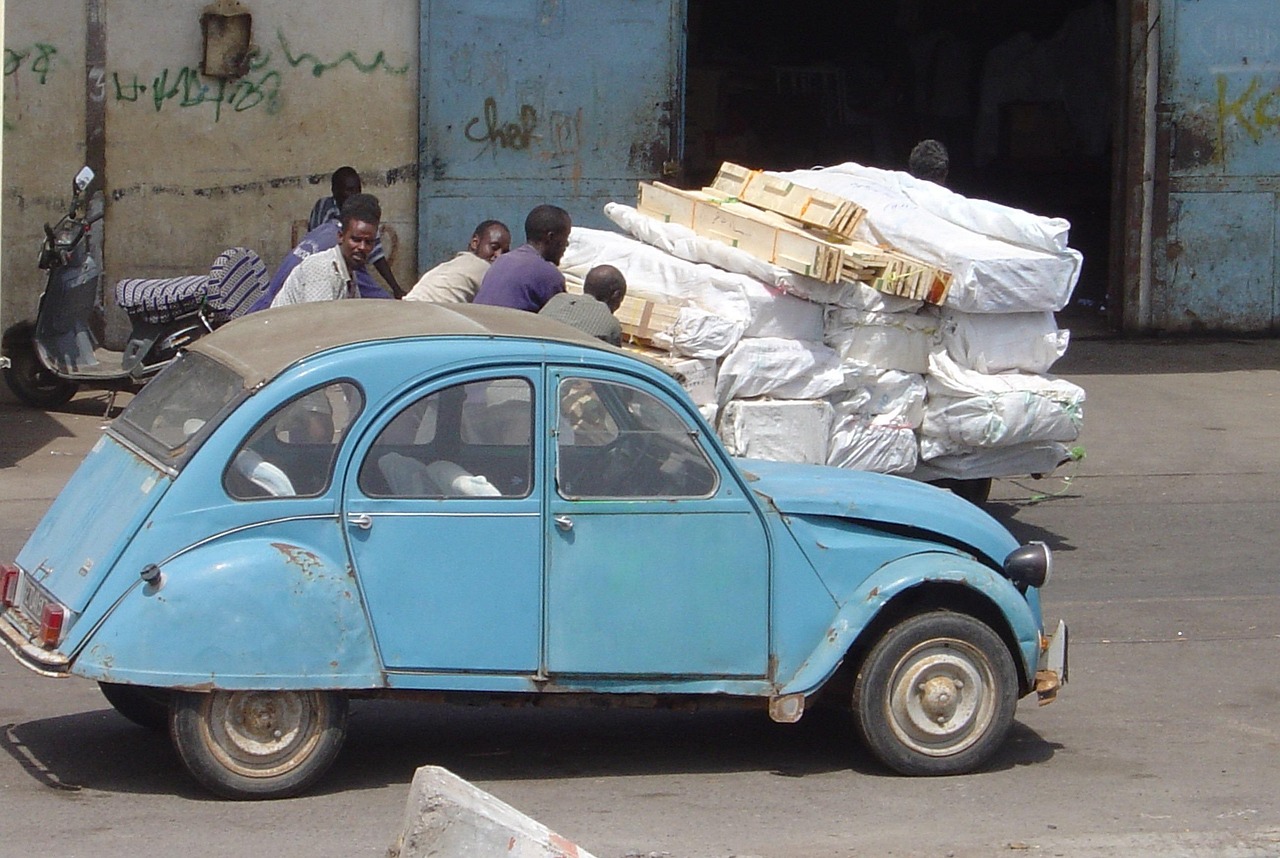
Djibouti City is the capital of Djibouti and home to most of its people, a hot, busy port town on a low peninsula on the southern shore of the Gulf of Tadjourah, where the Gulf of Aden narrows toward the Red Sea. Built at the end of the 19th century, it mixes African, Arab and French influences: whitewashed colonial buildings with arcades and shuttered windows around shady squares, a crowded market district full of spices, cloth and incense, mosques, French bakeries and seafood restaurants by the water. Most visitors come for the extraordinary landscapes and waters nearby and use the city as their base: Lake Assal, the lowest point in Africa, is about an hour and a half away by road, the coral islands of Moucha and Maskali are 45 minutes by boat, and from mid-October to the end of February, boats leave the port to snorkel with whale sharks in the gulf. Walk the Place du 27 Juin and Place Mahmoud Harbi, browse the markets, eat Yemeni-style baked fish, and watch the sunset over the gulf. The best months are November to March.
Right now in Djibouti City
- Sat25–28°C78–82°FPartly cloudy
- Sun25–28°C78–83°F1 mm rain
- Mon26–28°C80–82°F4 mm rain
Djibouti City: quick answers
- Things to do in Djibouti City
- Place du 27 Juin and the colonial center, Place Mahmoud Harbi and the markets, The National Tourism Office craft showcase, The waterfront and the port. More
- Best time to visit Djibouti City
- November to March, when it is warm rather than scorching and the seas are calm. More
- How many days in Djibouti City
- One or two days for the city itself, and three to five as a base for Lake Assal, the islands and, in season, whale sharks. More
- Where to stay in Djibouti City
- The European quarter and Place du 27 Juin, Place Mahmoud Harbi and the African quarter, Plateau du Serpent and the seafront, Îlot du Héron, Haramous and the road to the airport. More
Djibouti City at a glance
- Best for: day trips to Lake Assal and the Ghoubet, whale sharks and diving, island days, markets and seafood.
- How long: 1 to 2 nights for the city itself, 3 to 5 as a base for day trips.
- Best time: November to March, the cooler season; whale sharks from mid-October to the end of February.
- Getting there: Djibouti–Ambouli International Airport (JIB) is on the southern edge of the city; trains from Ethiopia arrive at Nagad station, west of town.
- Getting around: on foot in the center, by taxi (from 600 francs per zone) or minibus (from 50 francs), and by four-wheel drive with a driver for trips out of town.
- Money: the Djibouti franc is fixed at 177.721 to the US dollar; bring cash, as cards are accepted only in major hotels and supermarkets.
- Before you go: visas, money and general practical advice are in our Djibouti travel guide.
Explore Djibouti City in videos
Hand-picked travel videos from YouTube creators to help you picture the trip. They play from YouTube; the facts in this guide come from our own research.
The city’s areas and where to stay
Djibouti City is spread out along the shore, but the old center is compact and walkable, at least in the cooler hours.
The European quarter and Place du 27 Juin
The colonial heart of the city, a grid of arcaded white buildings, banks, cafés, restaurants and hotels around the Place du 27 Juin, formerly Place Ménélik. According to Djibouti’s National Tourism Office, the square is shady and lined with café terraces where souvenir sellers gather. It is the most convenient area for walking, eating out and finding taxis.
Place Mahmoud Harbi and the African quarter
South of the European quarter, the old market district around Place Mahmoud Harbi, formerly Place Rimbaud, is the city at its most vivid: narrow lanes of open-air stalls and bazaars, cloth and spice merchants, tea shops and the minaret of the great mosque overlooking the square, all bustling with people, according to the National Tourism Office.
Plateau du Serpent and the seafront
North of the center, a quieter residential area of villas, embassies and hotels by the water, with sea views and a breeze off the gulf.
Îlot du Héron
A small peninsula at the northern tip of the city, joined to it by a causeway, where the city’s top international hotel, the Djibouti Palace Kempinski, stands by the sea with its own beach, restaurants and marina; tour and dive boats can be arranged from here.
Haramous and the road to the airport
Newer suburbs to the southeast of the center, with modern hotels and apartments convenient for the airport.
Top things to see in Djibouti City
Place du 27 Juin and the colonial center
Start a walk at the Place du 27 Juin, the city’s main square, and wander the surrounding streets of the European quarter, with their arcaded colonial buildings from the late 19th and early 20th centuries, shuttered windows, cafés and handicraft sellers. It is liveliest in the late afternoon and evening, when the heat eases and people come out.
Place Mahmoud Harbi and the markets
A few minutes’ walk south, the market district around Place Mahmoud Harbi is crowded with stalls and small shops. According to the National Tourism Office, you can find handmade goods “made in Djibouti” here, including traditional daggers, basketwork, bags and bead necklaces, at very affordable prices. The covered central market sells fruit, vegetables, spices, frankincense and meat; go in the morning, and ask before taking photographs of people or the mosque.
The National Tourism Office craft showcase
The National Tourism Office, next to the Town Hall, has a display of local handicrafts, and its staff can help with information on trips around the country. According to the office, it is open Sunday to Thursday, from 8 a.m. to 1 p.m. and 2 p.m. to 5 p.m., and closed on Fridays and Saturdays.
The waterfront and the port
The city faces the gulf on three sides. Walk or drive along the seafront for sunsets, watch dhows and fishing boats come in, and eat fresh fish at the restaurants by the water. Photography of the port and other infrastructure is prohibited, according to the US State Department and the UK government, so keep your camera for the sea and the sunset.
More classic sights
- The great mosque: the minaret of the Hamoudi Mosque, one of the city’s oldest, overlooks Place Mahmoud Harbi; non-Muslims usually admire it from outside.
- The cathedral: the Catholic cathedral, a modern landmark in the city, is still an active church.
- The Sunday-to-Thursday city: Friday is the weekly day of rest, when many shops and offices close; markets are busiest in the morning.
- City beaches: small sandy beaches and hotel beaches along the shore for a cooling swim.
Other things to do in Djibouti City
Eating in Djibouti City
The city has the widest choice of food in the country. Try poisson yéménite, fish split open, seasoned and baked in a clay oven and served with flatbread and a spicy sauce, a local specialty in the restaurants near the market; skoudehkaris, the national dish of spiced rice with lamb or goat; fah-fah, goat soup; and lahoh pancakes for breakfast. French cafés and bakeries serve croissants and baguettes, Ethiopian restaurants serve injera, and the seafront restaurants and hotels offer seafood and international menus. Dinner starts late, especially in summer.
Nightlife
Evenings are for strolling the squares, cafés and seafront. Hotels and a few bars and restaurants in the European quarter serve alcohol, and some have live music at weekends; public drunkenness is punished, according to the UK government.
Beaches, islands and whale sharks
For swimming and snorkeling, take a boat to Moucha and Maskali, about 45 minutes away, with sandy beaches, mangroves and reefs, according to the National Tourism Office, or drive to the beaches of Khor Ambado and Arta. From mid-October to the end of February, whale-shark trips leave the city for the gulf. See our snorkeling, diving, beaches and boat trips guides.
Day trips from Djibouti City
- Lake Assal and the Ghoubet: about an hour and a half west, according to the National Tourism Office, the turquoise salt lake about 153 m (502 ft) below sea level, ringed by salt and lava, with a stop at the Ghoubet al-Kharab bay on the way.
- Moucha and Maskali: about 45 minutes by boat, beaches, mangroves and coral reefs for snorkeling and diving.
- Whale sharks: a half-day or full-day boat trip from mid-October to the end of February.
- Arta and Khor Ambado: beaches west of the city, with snorkeling and diving from the shore at Arta.
- The Grand Bara: the flat desert pan to the south, crossed on the road to Dikhil and Lac Abbé.
- Lac Abbé: a long drive southwest to the steaming limestone chimneys and flamingos on the Ethiopian border, best as an overnight trip with a dawn visit.
- Tadjourah and the Day Forest: across the gulf by road or ferry, an old whitewashed town and the mountain forest of the Goda range, best with a night away.
Getting there and getting around
From the airport
Djibouti–Ambouli International Airport (JIB) is on the southern edge of the city, about 10 to 15 minutes by taxi from the center. If you need a visa on arrival, have US dollars in cash ready; according to the US State Department, the fee is US$23. Taxis wait outside; agree on the fare before you go, and many hotels offer airport transfers. Car rental agencies have offices on the airport road.
The train from Ethiopia
Trains from Addis Ababa and Dire Dawa arrive at Nagad station, west of the city center. According to the National Tourism Office, trains run every two days on even-numbered dates, and foreign nationals pay 8,000 francs to Dire Dawa or Addis Ababa; buy tickets a day ahead at the office in Salines Ouest or at Nagad. Take a taxi between the station and the center.
Getting around the city
The center is walkable, but the heat makes long walks hard for much of the year, so plan sightseeing for early morning and late afternoon. According to the National Tourism Office, taxis start at 600 francs per zone in the capital, and minibuses and buses at 50 francs per zone; taxis may ask for more on longer trips, so agree on the price first. For trips out of town, hire a four-wheel drive with a driver through your hotel or a tour agency.
When to go and how long to stay
Djibouti City is hot all year, and very hot in summer. The cooler season, from November to March, brings average highs of about 29 to 31 °C (84 to 88 °F), warm nights and calm, clear seas, the best time for sightseeing, diving and whale sharks. From May to September, average highs climb to about 39 to 42 °C (102 to 107 °F), with humid nights and hot, dusty winds, and outdoor trips are only comfortable early in the day. Rain is scarce, about 164 mm (6.4 in) a year, mostly in brief showers between October and April. The table shows official monthly averages from the Djibouti National Meteorological Agency, published on the WMO World Weather Information Service.
| Month | Average high / low | Rain | What to expect |
|---|---|---|---|
| January | 29 / 22 °C (84 / 71 °F) | 10 mm (0.4 in) | Warm and pleasant; whale sharks |
| February | 29 / 23 °C (84 / 73 °F) | 19 mm (0.7 in) | Pleasant; whale-shark season ends |
| March | 30 / 24 °C (86 / 75 °F) | 20 mm (0.8 in) | Warming; good for diving |
| April | 32 / 25 °C (90 / 78 °F) | 29 mm (1.1 in) | Hot; the wettest month |
| May | 35 / 27 °C (95 / 81 °F) | 17 mm (0.7 in) | Hot and humid |
| June | 39 / 29 °C (102 / 85 °F) | under 1 mm | Very hot |
| July | 42 / 31 °C (107 / 88 °F) | 6 mm (0.2 in) | The hottest month |
| August | 41 / 31 °C (106 / 87 °F) | 6 mm (0.2 in) | Extreme heat |
| September | 37 / 29 °C (99 / 84 °F) | 3 mm (0.1 in) | Very hot, easing late |
| October | 33 / 26 °C (92 / 78 °F) | 20 mm (0.8 in) | Hot; whale sharks arrive mid-month |
| November | 31 / 23 °C (87 / 74 °F) | 22 mm (0.9 in) | Cool season begins |
| December | 29 / 22 °C (85 / 71 °F) | 11 mm (0.4 in) | Pleasant; peak season |
2 days in Djibouti City
Day one, walk the European quarter and Place du 27 Juin in the morning, visit the markets around Place Mahmoud Harbi, rest in the heat of the day, and have baked fish for dinner near the market. Day two, a day trip to Lake Assal and the Ghoubet, back in time for sunset on the seafront.
4 to 5 days with day trips
Add a boat day to Moucha and Maskali, a whale-shark trip in season, and an overnight trip to Lac Abbé or to Tadjourah and the Day Forest.
Where to stay in Djibouti City
- The European quarter: mid-range hotels close to the squares, cafés and restaurants.
- Plateau du Serpent and the seafront: quieter hotels with sea views.
- Îlot du Héron: the city’s top international hotel, with a beach and marina.
- Haramous and the airport road: modern business hotels convenient for flights.
What a trip to Djibouti City costs
Prices are approximate, for November 2026. The Djibouti franc is fixed at 177.721 to the US dollar by the Central Bank of Djibouti. Taxi, bus and train fares are those given by the National Tourism Office and the visa fee is from the US State Department; the rest are our estimates.
| Item | Typical cost |
|---|---|
| Visa on arrival | US$23 |
| Taxi within the city, per zone | from 600 francs (about US$3.40) |
| Minibus or bus ride, per zone | from 50 francs |
| Train to Dire Dawa or Addis Ababa (foreign nationals) | 8,000 francs (about US$45) |
| Baked fish with bread at a local restaurant | US$8–15 |
| Dinner at a mid-range restaurant | US$20–40 |
| Boat day to Moucha and Maskali | US$40–80 per person |
| Whale-shark snorkeling trip | US$80–150 per person |
| Full-day 4×4 with driver to Lake Assal | US$150–250 per vehicle |
| Mid-range hotel double, per night | US$120–200 |
Practical tips for Djibouti City
- Carry cash: francs or clean US dollar notes printed after 2006; cards work only in the bigger hotels and supermarkets.
- Beat the heat: sightsee early and late, rest at midday, and drink plenty of water.
- Mind your camera: no photos of the port, the airport, government buildings or bridges, and ask before photographing people or mosques.
- Book trips ahead: whale-shark and island trips, and 4x4s for Lake Assal and Lac Abbé, are best arranged a day or two in advance.
- Plan for Fridays: many shops and offices close; the tourism office is open Sunday to Thursday.
Safety
Everyday life in central Djibouti City is calm, and the practical risks are mostly about heat and traffic. Keep cameras and passports out of sight, as in any port city, and take a taxi late at night. Drink plenty of water, use insect repellent and have travel insurance that covers evacuation, as medical facilities are limited. Dress modestly, especially during Ramadan. For emergencies, the UK government lists 17 for the police, 18 for the fire service, and 21 35 09 62 or 21 35 27 12 for an ambulance.
What to pack for Djibouti City
Light, loose clothing that covers shoulders and knees, a wide-brimmed hat, sunglasses, high-factor reef-safe sunscreen, a refillable water bottle, swimwear and water shoes for rocky beaches and the salt crust at Lake Assal, a scarf for women visiting mosques, a light layer for air-conditioned rooms and desert nights, and a universal adapter for the European two-pin sockets at 220 V. See our travel adapters guide.
Djibouti City travel FAQ
How far is the airport from Djibouti City?
Djibouti–Ambouli International Airport is on the southern edge of the city, about 10 to 15 minutes by taxi from the center.
How many days do I need in Djibouti City?
One or two days for the city itself, and three to five as a base for Lake Assal, the islands and, in season, whale sharks.
How do I get from Djibouti City to Lake Assal?
By four-wheel drive with a driver, about an hour and a half each way, according to the National Tourism Office. Hotels and agencies arrange day trips.
When is whale-shark season in Djibouti?
From mid-October to the end of February, according to the National Tourism Office. Boats leave from the city.
How much is a taxi in Djibouti City?
From 600 francs per zone, according to the National Tourism Office; agree on the fare first for longer trips.
Can I take the train from Djibouti City to Addis Ababa?
Yes, from Nagad station, every two days on even-numbered dates; the fare for foreign nationals is 8,000 francs, according to the National Tourism Office. See our Addis Ababa guide.
What is the best time to visit Djibouti City?
November to March, when it is warm rather than scorching and the seas are calm.
Plan your trip
Partner links: TravelerCenter may earn a commission if you book, at no extra cost to you.
🇫🇷 Useful French phrases for Djibouti City
All 38 French phrases: restaurant, hotel, emergencies, romance (printable) →
Before you go: guidebooks and travel gear
Affiliate links: we may earn a commission at no extra cost to you. As an Amazon Associate we earn from qualifying purchases. We pick items for the place, not for the commission. How we earn money
Sources · last reviewed 10 November 2026
Researched and last reviewed on 10 November 2026. Squares, markets, crafts, tourism office hours, taxi and bus fares, train times and fares, Lake Assal, Moucha and Maskali and whale-shark season: Djibouti’s National Tourism Office (visitdjibouti.dj); visa-on-arrival fee, cards and banknotes, photography and SIM cards: the US State Department’s country information (updated 3 September 2026); alcohol and emergency numbers: the UK government’s information for Djibouti (updated 27 July 2026); exchange rate: the Central Bank of Djibouti; climate: the Djibouti National Meteorological Agency, via the WMO World Weather Information Service; coordinates: Wikidata. Neighborhoods, hotel areas, sight descriptions, food, airport distance, trip prices and costs are general references or estimates, flagged for checking. Fares and fees change, so check locally before you go.
Data: Weather: MET Norway (CC BY 4.0) · Sea temperature: NOAA CoastWatch · Rates: ECB · Wikidata (CC0)