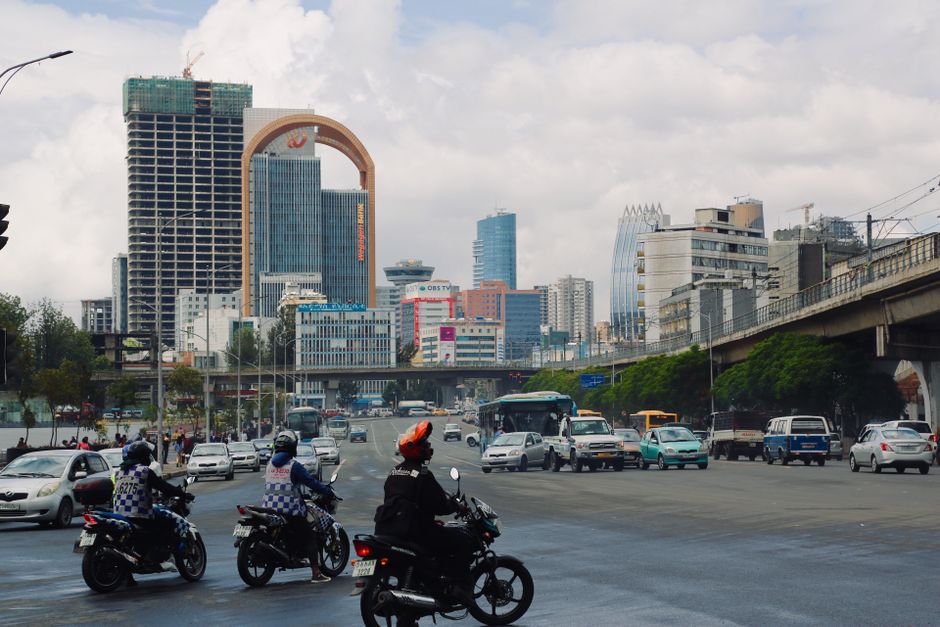
Addis Ababa, Ethiopia’s capital, sits on a high plateau at about 2,350 m (7,700 ft) at the foot of the Entoto hills, which makes it one of the highest capital cities in the world, with a mild, spring-like climate for much of the year. Its name means “new flower” in Amharic. Founded in 1886 by Emperor Menelik II and Empress Taytu, it has grown into a sprawling city of several million people and, as the seat of the African Union and the UN Economic Commission for Africa, it’s often called the diplomatic capital of Africa. For travelers, it’s the gateway to the whole country and the hub of Ethiopian Airlines, so many visitors pass through on a long layover, and the airline’s free stopover program makes a short visit easy. Even a day here is rewarding: you can meet the 3.2-million-year-old Lucy at the National Museum, visit the tomb of Emperor Haile Selassie at Holy Trinity Cathedral, explore the restored palace grounds of Unity Park, look out over the city from Entoto, and lose yourself in Merkato, one of Africa’s largest open-air markets. Above all, Addis is the place to drink coffee in the country that gave it to the world. Allow for the altitude on arrival, heavy traffic, and two calendars and clocks.
Right now in Addis Ababa
- Wed 10–23°C 50–73°F Mostly clear
- Thu 10–23°C 49–74°F Mostly clear
- Fri 12–23°C 53–73°F Clear
Weather: MET Norway (CC BY 4.0)
Top tours in Addis Ababa
See all tours for Addis Ababa →
From local operators, with prices and reviews; you check availability and book on Viator, our partner. We may earn a commission at no extra cost to you. How we earn money
Addis Ababa at a glance
- Best for: museums and Lucy, Orthodox churches, Merkato market, coffee culture, Ethiopian food and live music, and a stopover between flights.
- How long: 1–2 days, or a stopover of 8–24 hours.
- Best time: October to March, the dry season; June to September is the rainy season.
- Getting there: Bole International Airport (ADD), the hub of Ethiopian Airlines.
- Getting around: ride-hailing apps and taxis; a light rail line and minibuses for the adventurous.
- Good to know: take it easy at altitude, apply for your e-visa only at evisa.gov.et, and ask whether times are in Ethiopian or international time.
- Before you go: the visa, money and general safety are in our Ethiopia travel guide.
Addis Ababa’s areas and where to stay
Bole
Bole, around Bole Road between the airport and the center, is the modern heart of Addis Ababa, with hotels, malls, cafés, restaurants, bars and nightclubs. It’s the most convenient base for short stays and stopovers, just a few minutes from the airport.
Kazanchis and the center
Kazanchis, near the UN Economic Commission for Africa and Meskel Square, is a business district with large international hotels. It’s well placed for Unity Park, the National Palace area and the museums.
Piazza and Arat Kilo
Piazza (Arada), the old commercial center in the north, has Italian-era buildings, jewelry shops, old cafés, the octagonal St. George’s Cathedral and the historic Taitu Hotel, the city’s first hotel. Nearby Arat Kilo and Sidist Kilo are home to Addis Ababa University, the National Museum and Holy Trinity Cathedral. Accommodation here is simpler and cheaper.
Old Airport and the quieter west
The Old Airport area in the southwest is a leafy residential district with guesthouses and international restaurants, popular with longer-stay visitors.
Where to stay in Addis Ababa
- Luxury: international hotels in Bole and Kazanchis, with pools, spas and airport shuttles.
- Mid-range: modern business hotels and guesthouses in Bole and the Old Airport area.
- Budget: guesthouses around Piazza and Bole.
- At the airport: Ethiopian Airlines’ Skylight Hotel inside the terminal, with 97 rooms, for very short connections.
Top things to see in Addis Ababa
The National Museum of Ethiopia
The National Museum, near Arat Kilo, is home to the fossil remains of Lucy, known in Ethiopia as Dinkinesh (“you are marvelous”), a 3.2-million-year-old early human ancestor found in the Afar region in 1974. The basement gallery displays Lucy and other hominid fossils (the original Lucy is usually kept in a vault, with a cast on display), and the upper floors cover Aksumite and medieval artifacts, royal regalia, traditional crafts and modern Ethiopian art. Ethiopian Airlines lists the museum among the most popular stops on its stopover tours.
Holy Trinity Cathedral
Holy Trinity Cathedral (Kidist Selassie), one of Ethiopia’s most important Orthodox churches, was built in the 1940s with domes, statues and stained-glass windows. It holds the tombs of Emperor Haile Selassie and Empress Menen, and its churchyard has graves of patriots and public figures. Remove your shoes inside, dress modestly, and women should cover their hair.
Unity Park and the Grand Palace
Unity Park, opened in 2019 in the grounds of Menelik II’s Grand Palace, lets visitors see the emperor’s banquet hall, throne rooms and residences for the first time, along with gardens, cultural pavilions for each of Ethiopia’s regions and a small zoo with black-maned lions. Tickets are sold for different sections, so allow a few hours.
Entoto
The Entoto hills, which rise to more than 3,000 m (9,800 ft) on the city’s northern edge, were Menelik II’s first base before he founded Addis Ababa. Today they have eucalyptus forests, walking and cycling trails, viewpoints over the city, the round church of Entoto Maryam, where Menelik was crowned, and Entoto Park, a recreational area with cafés and activities. Ethiopian Airlines lists Entoto’s viewpoints among the popular stopover options. It’s about 30–45 minutes from the center by car. See our hiking guide.
Merkato
Merkato, west of Piazza, is one of the largest open-air markets in Africa, a maze of streets and alleys selling everything from spices, coffee and incense to baskets, textiles, recycled metal and livestock. It’s fascinating but crowded and disorienting, so go with a local guide, carry little, and keep your bag in front of you. Ethiopian Airlines includes it among its stopover highlights.
St. George’s Cathedral, Meskel Square and the Ethnological Museum
The octagonal St. George’s Cathedral in Piazza, built in 1896 after the victory at Adwa, has a small museum and colorful paintings. Meskel Square, a huge open space near the center, hosts the bonfire of the Meskel festival every September 27. On the Addis Ababa University campus, the Ethnological Museum, in Haile Selassie’s former palace, shows the cultures of Ethiopia’s many peoples and the emperor’s bedroom and bathroom, preserved as they were. Look also for the “I ❤ Ethiopia” landmark, which Ethiopian Airlines lists among its tour highlights.
Other things to do in Addis Ababa
Coffee
Ethiopia is the birthplace of coffee, and Addis Ababa runs on it. Join a traditional coffee ceremony, in which green beans are roasted over coals, ground by hand and brewed in a clay pot called a jebena, served in three rounds with incense and popcorn; Ethiopian Airlines says it’s one of the most popular things to do on a stopover. Historic cafés in Piazza serve strong espresso and macchiato, and newer specialty shops sell single-origin beans from Yirgacheffe, Sidamo, Harar and Guji to take home.
Food and drink
Addis Ababa is the best place in the world to eat Ethiopian food. Share a platter of injera, the spongy sour flatbread made from teff, topped with doro wat (spicy chicken stew), tibs (sautéed meat), shiro (chickpea stew) or kitfo (minced beef), and eat with your right hand. On Wednesdays, Fridays and during Lent, try beyaynetu, a colorful vegan fasting platter. Cultural restaurants serve dinner with traditional music and dancing from different regions. Wash it down with tej (honey wine), local beers or layered fresh fruit juices.
Music and nightlife
Addis Ababa has a lively music scene, from Ethio-jazz bands to azmari bets, small bars where singers improvise witty verses accompanied by the one-stringed masinko. Bole has bars, lounges and clubs that stay open late, especially on weekends.
Day trips from Addis Ababa
- Debre Libanos and the Blue Nile gorge: about 2½ hours north; a monastery in a dramatic gorge, an old stone bridge and gelada monkeys on the cliffs.
- Bishoftu (Debre Zeit): about an hour southeast; crater lakes with lakeside resorts, birdlife and boat rides. See our boat trips guide.
- Menagesha Suba Forest: about an hour west; one of Africa’s oldest protected forests, with walking trails among giant junipers.
- Tiya and Adadi Mariam: about 1½–2 hours south; the carved stelae of Tiya, a UNESCO World Heritage Site, and a rock-hewn church in the style of Lalibela.
- The Rift Valley lakes: Ziway and Langano are about 3–4 hours south, better as an overnight trip.
Getting there and getting around
By air, stopovers and transit
Addis Ababa Bole International Airport (ADD), on the southeastern side of the city, is the hub of Ethiopian Airlines, with flights to dozens of African cities, including Nairobi, Kigali, Entebbe, Lilongwe, Maputo, Johannesburg and Cairo, as well as Europe, the Middle East, Asia and the Americas; see our Nairobi and Kigali guides. Ethiopian Airlines says no visa is needed if you stay in the international transit area. On qualifying connections of 8 to 24 hours, with both flights on Ethiopian on one ticket, its stopover program provides a free hotel stay, usually one night with meals and transfers; the voucher is issued at your origin station, or at the transit desk in Addis Ababa if it wasn’t. The airline says these passengers are generally assisted with a transit visa, and it sells half-day, full-day and multi-day stopover tours through Ethiopian Holidays. Others leaving the airport need an e-visa from evisa.gov.et or a visa on arrival, depending on nationality. A wider “stopover tourism” policy allowing visa-free exits of 24 hours up to seven days was approved in April 2026 but, according to the airline, still awaited parliamentary ratification in August 2026. The arrivals hall has forex banks, ATMs, telecom shops, a tourist information center and hotel booking booths.
Getting around
Addis Ababa is large and spread out, with heavy traffic at rush hour. The easiest way to get around is by ride-hailing app or hotel taxi; agree the fare first with blue-and-white street taxis. The light rail runs on two lines across the city and is cheap but crowded, and blue-and-white minibuses follow fixed routes, with a conductor calling out destinations. Walking is pleasant in Bole and around the university, but sidewalks are uneven, and the altitude makes hills tiring. Ethiopia drives on the right. Remember that the Ethiopian clock starts at dawn, so confirm pickup times in international time.
When to go and how long to stay
Thanks to the altitude, Addis Ababa is mild all year, with warm, sunny days and cool nights. The dry season, from about October to March, is the most pleasant, with clear skies and the festivals of Meskel in late September and Timkat in January; nights in December and January can be close to freezing on the outskirts. The main rainy season, from about June to September, brings daily downpours, especially in July and August, and cooler, cloudier days. The table uses Ethiopian Meteorological Institute (EMI) averages for 1981–2010 for Addis Ababa, as published by the World Meteorological Organization (WMO): average daily highs and lows, monthly rainfall and days with rain.
| Month | Average high / low | Rain (rainy days) | What to expect |
|---|---|---|---|
| January | 24 °C (75 °F) / 8 °C (46 °F) | 13 mm (0.5 in), 3 days | Dry and sunny; cold nights; Genna and Timkat |
| February | 24 °C (75 °F) / 9 °C (48 °F) | 30 mm (1.2 in), 5 days | Dry and pleasant |
| March | 25 °C (77 °F) / 10 °C (50 °F) | 58 mm (2.3 in), 7 days | Warmest days; occasional showers |
| April | 24 °C (75 °F) / 11 °C (52 °F) | 82 mm (3.2 in), 10 days | Short rains; Fasika (Easter) |
| May | 25 °C (77 °F) / 11 °C (52 °F) | 84 mm (3.3 in), 10 days | Warm with showers |
| June | 23 °C (73 °F) / 10 °C (50 °F) | 138 mm (5.4 in), 20 days | Long rains begin |
| July | 21 °C (70 °F) / 10 °C (50 °F) | 280 mm (11.0 in), 27 days | Wettest and coolest; daily rain |
| August | 21 °C (70 °F) / 10 °C (50 °F) | 290 mm (11.4 in), 26 days | Very wet; green hills |
| September | 22 °C (72 °F) / 10 °C (50 °F) | 149 mm (5.9 in), 18 days | Rains ending; New Year (September 11) and Meskel (September 27) |
| October | 23 °C (73 °F) / 9 °C (48 °F) | 27 mm (1.1 in), 4 days | Dry, green and clear; great month |
| November | 23 °C (73 °F) / 7 °C (45 °F) | 7 mm (0.3 in), 1 day | Sunny; chilly nights |
| December | 23 °C (73 °F) / 7 °C (45 °F) | 7 mm (0.3 in), 1 day | Dry; busy before Genna |
A stopover, one day or two
- Stopover (8–24 hours): a coffee ceremony, the National Museum and Entoto’s viewpoints, or a guided half-day city tour.
- One day: the National Museum and Holy Trinity Cathedral in the morning, Unity Park after lunch, and a cultural dinner with music in the evening.
- Two days: add Entoto, Merkato with a guide, Piazza’s St. George’s Cathedral and the Ethnological Museum.
What a trip to Addis Ababa costs
Prices are approximate, for October 2026, converted at about ETB 160.9 to the US dollar (National Bank of Ethiopia).
| Item | Typical cost |
|---|---|
| Tourist e-visa, 30 days | US$62 (about ETB 9,980) |
| Macchiato or traditional coffee | ETB 50–120 (about US$0.30–0.75) |
| Injera with wat at a local restaurant | ETB 300–700 (about US$1.90–4.40) |
| Cultural dinner with music | ETB 2,000–5,000 (about US$12–31) |
| Ride-hailing trip, Bole to Piazza | ETB 300–800 (about US$1.90–5) |
| Light rail ticket | ETB 10–30 (about US$0.06–0.19) |
| Half-day guided city tour | about US$40–90 |
| Mid-range hotel double, per night | about US$70–160 |
| Bag of specialty coffee beans (250 g) | ETB 600–1,500 (about US$3.70–9.30) |
Practical tips for Addis Ababa
- Use the official visa site: the e-visa portal warns of fraudulent lookalike websites; apply only at evisa.gov.et.
- Rest on arrival: the altitude can cause headaches and breathlessness at first; drink water and go easy on alcohol.
- Carry birr: many cafés, taxis and markets take cash only; ATMs are common in Bole but can run out of cash.
- Dress for churches: bring socks for shoeless church visits and a scarf for women.
- Check the clock: confirm whether a time is in Ethiopian or international time.
- Allow time for the airport: traffic on Bole Road is heavy at rush hour.
Safety
Addis Ababa is generally a safe and friendly city for visitors, and ordinary city precautions avoid most problems. Altitude: at about 2,350 m, you may feel short of breath, tired or headachy for a day or two; rest, drink water and avoid heavy exertion on arrival. Pickpocketing and bag snatching happen in crowded areas such as Merkato, Piazza and around Meskel Square and minibus stops, so keep phones and wallets out of sight. Be wary of friendly strangers who offer to show you around or invite you to a “coffee ceremony” or “cultural show” that ends with an inflated bill. At night, use ride-hailing apps or hotel taxis rather than walking. Traffic is chaotic, so take care crossing roads. Health: the US CDC says malaria occurs in all areas of Ethiopia below 2,500 m, including Addis Ababa, and recommends antimalarial medicine for those areas; drink bottled or filtered water, and be cautious with raw meat dishes. Ethiopia requires a yellow fever certificate if you arrive from a risk country. Large festivals such as Meskel and Timkat draw huge crowds, so watch your belongings. In an emergency, call 991 for the police or 907 for an ambulance.
What to pack for Addis Ababa
Layers for warm days and cool to cold evenings, a warm jacket from November to January, a rain jacket or umbrella from June to September, comfortable walking shoes, socks for church visits, modest clothing and a scarf for women, sunscreen and sunglasses (the sun is strong at altitude), lip balm and moisturizer for the dry air, a small crossbody bag that closes securely, a copy of your e-visa approval, and an adapter for European two-pin sockets. See our travel adapters and rain jackets guides.
Addis Ababa travel FAQ
Can I leave the airport on an Ethiopian Airlines layover?
Yes, with a visa. On qualifying 8–24-hour connections, the airline’s stopover program includes a free hotel and, it says, generally assistance with a transit visa; otherwise you need an e-visa or visa on arrival.
Do I need a visa to stay in the transit area at Bole?
No. Ethiopian Airlines says no visa is required if you remain in the international transit area, however long the layover.
Where can I see Lucy in Addis Ababa?
At the National Museum of Ethiopia near Arat Kilo, which displays Lucy (Dinkinesh) and other early human fossils.
How high is Addis Ababa?
About 2,350 m (7,700 ft), and the Entoto hills rise above 3,000 m; take it easy on your first day.
What is the best area to stay in Addis Ababa?
Bole, near the airport, for short stays, restaurants and nightlife; Kazanchis for business hotels; Piazza for budget and history.
What is the best time to visit Addis Ababa?
October to March for dry, sunny weather, plus Meskel in late September and Timkat in January; July and August are the wettest months.
How do I get from Bole Airport to the city?
By ride-hailing app, taxi or hotel shuttle; Bole is close to the center, but allow extra time at rush hour.
Is there malaria in Addis Ababa?
The US CDC includes Addis Ababa among the areas below 2,500 m where it recommends antimalarial medicine; ask a travel-health professional.
Is Addis Ababa safe for tourists?
Generally yes. Watch for pickpockets in crowded areas, avoid friendly-stranger scams, and use ride-hailing or hotel taxis at night.
How many days should I spend in Addis Ababa?
One full day covers the main museums and a coffee ceremony; two days let you add Entoto, Merkato and Piazza.
Sources and last review
Researched and last reviewed on 5 October 2026. The stopover program, transit rules, transit visa assistance, the pending stopover-tourism policy, stopover tours and highlights, the Skylight Hotel and the arrivals hall facilities: Ethiopian Airlines; e-visa fees and fraudulent websites: Ethiopia’s official e-visa portal; malaria and yellow fever: the US CDC; climate averages: the Ethiopian Meteorological Institute via the World Meteorological Organization (Addis Ababa station); the exchange rate: the National Bank of Ethiopia; coordinates: Wikidata. The city’s altitude, founding, name, population, institutions, neighborhoods, museum and church details, Unity Park, Entoto, Merkato, light rail, taxis, day-trip times, festival dates, emergency numbers and typical prices are general references or estimates, flagged for checking. Hours and prices change, so check before you go. For the visa, money and general safety, see our Ethiopia travel guide.
Plan your trip
Partner links: TravelerCenter may earn a commission if you book, at no extra cost to you.
🇪🇹 Useful Amharic phrases for Addis Ababa
All 38 Amharic phrases: restaurant, hotel, emergencies, romance (printable) →