Short answer: Île-de-France, the Paris Region, is Paris plus everything within an easy train ride of it: the Palace of Versailles, the royal château and forest of Fontainebleau, Vaux-le-Vicomte, the medieval town of Provins, the royal tombs of Saint-Denis and Disneyland Paris. Start with four or five days in Paris, then add Versailles and one or two other day trips. One week covers the highlights; ten days lets you see the châteaux and small towns at a gentler pace.
Île-de-France is one of France’s 13 mainland regions, a roughly circular area of about 12,000 square kilometers around Paris, divided into eight departments: the city of Paris itself, the three “inner ring” departments around it and four outer departments with farmland, forests and river valleys. It is home to about 12.5 million people, nearly a fifth of the French population, according to the national statistics office, INSEE. The name, “island of France”, refers to the old heartland of the French kings between the rivers Seine, Marne, Oise and Aisne. The region is very well connected: a single public transport network covers all of it, so even the farthest châteaux are within reach without a car. For entry rules, money, tipping and national trains, see our France travel guide.
Where to go in Île-de-France
Almost every visitor stays in Paris and explores the rest of the region on day trips. The RER suburban trains and the Transilien lines run from the main Paris stations to Versailles, Saint-Germain-en-Laye, Fontainebleau, Provins and Disneyland, and one standard ticket covers the whole region except the airports. If you want a change of pace, a night in Fontainebleau or near Disneyland is easy to arrange.
Paris
The capital needs no introduction: the Eiffel Tower, the Louvre, Notre-Dame, reopened after the 2019 fire, the stained glass of the Sainte-Chapelle, the Impressionists at the Musée d’Orsay, the Arc de Triomphe at the top of the Champs-Élysées, and Sacré-Cœur on the hill of Montmartre. Beyond the sights, Paris is about its neighborhoods, cafés, markets, bookshops and walks along the Seine. Our Paris travel guide has neighborhoods, ticket prices, airport transport and where to stay.
Versailles
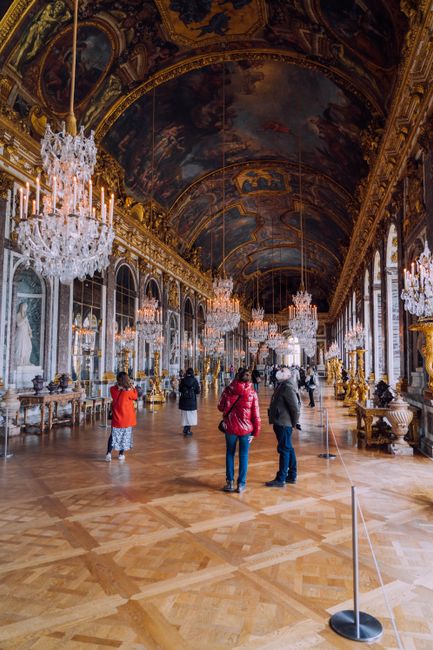
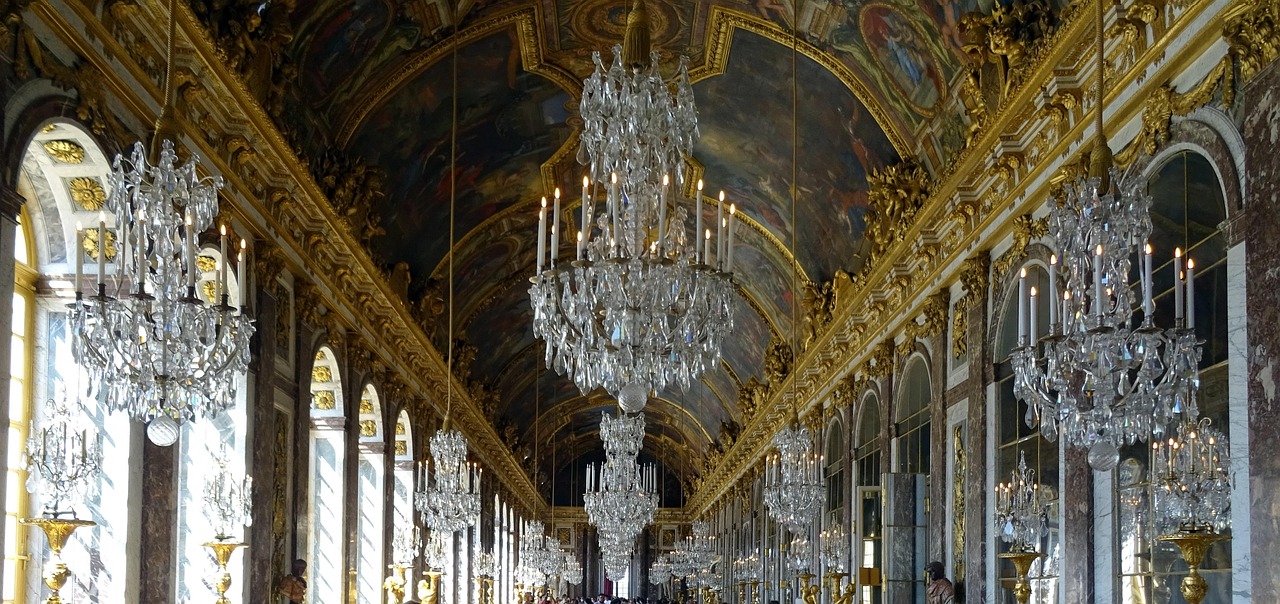
About 17 km south-west of central Paris, the Palace of Versailles was the seat of the French court from 1682 until the Revolution in 1789. Its Hall of Mirrors, the King’s and Queen’s State Apartments, the formal gardens laid out by André Le Nôtre, the Grand Canal and the smaller palaces of the Trianon and Marie-Antoinette’s estate easily fill a whole day. The town of Versailles itself, with its market and royal stables, is pleasant for lunch. Our Versailles guide covers tickets, timed entry and the best route around the estate.
Fontainebleau and Vaux-le-Vicomte
South-east of Paris, the Château de Fontainebleau was a home to French rulers for centuries, from François I, who brought Italian Renaissance artists to decorate it, to Napoleon, who said farewell to his guard in its courtyard, and Napoleon III. It is surrounded by the Forest of Fontainebleau, a vast woodland of oaks, pines and sandstone boulders that is popular for walking, cycling and bouldering. Nearby, the Château de Vaux-le-Vicomte, built in the mid-17th century for Louis XIV’s finance minister Nicolas Fouquet by the architect Louis Le Vau, the painter Charles Le Brun and the gardener André Le Nôtre, was the model for Versailles. The villages of Barbizon, home of a 19th-century school of landscape painters, and Moret-sur-Loing, painted by Alfred Sisley, are close by.
Disneyland Paris and the Marne Valley
East of Paris at Marne-la-Vallée, Disneyland Paris has two theme parks, hotels and a shopping and dining district. Its second park, formerly Walt Disney Studios Park, reopened as Disney Adventure World on 29 March 2026, with a new World of Frozen area. The RER A runs straight to Marne-la-Vallée–Chessy station at the park gates, and high-speed TGV trains from other French cities stop there too. Ticket prices vary by date, so buy online in advance for the best price.
Provins and the Brie countryside
Provins, in the far east of the region, is one of the best-preserved medieval towns in France, once the home of the great trade fairs of the Counts of Champagne. Its ramparts, the 12th-century Caesar’s Tower and the underground passages beneath the town are a UNESCO World Heritage Site, and in summer it stages medieval shows with knights and birds of prey. The surrounding countryside is Brie, the land of the famous cheeses of Meaux and Melun, with farms, wheat fields and small market towns.
Saint-Denis, Saint-Germain-en-Laye and the Seine valley
Just north of Paris, the Basilica of Saint-Denis, an early masterpiece of Gothic architecture, is the burial place of the kings and queens of France, with dozens of royal tombs and effigies. West of Paris, Saint-Germain-en-Laye, at the end of the RER A, has the château where Louis XIV was born, now a national archaeology museum, and a long terrace with views over the Seine. Along the river, Chatou and Bougival were favorite spots of the Impressionists, and to the north-west, Auvers-sur-Oise is the village where Vincent van Gogh spent his last weeks and is buried. Claude Monet’s house and garden at Giverny lie just beyond the region’s border, in Normandy.
Top things to do in Île-de-France
Spend a day at Versailles
The Passport ticket, which covers the palace with a timed entry slot, the Trianon estate, temporary exhibitions and the gardens, costs €35 in the high season (1 April to 31 October 2026) and €25 in the low season (from 1 November), or €32 and €22 for residents and nationals of the European Economic Area. Under-18s, and EEA residents and nationals under 26, get in free but still need a ticket. The palace is open from 9:00 to 18:30 in the high season and closes on Mondays, as well as on 25 December, 1 January and 1 May. On spring and summer weekends, until 1 November in 2026, the Musical Fountains Show brings the fountains to life with Baroque music. Book your palace slot online, arrive for the first entry of the day, and save the gardens and the Trianon for the afternoon.
See the great museums and monuments of Paris
As of October 2026, an adult ticket for the Louvre costs €22 for visitors from the European Economic Area and €32 for others, and the museum is closed on Tuesdays; book a time slot online. The Musée d’Orsay is closed on Mondays. Entry to Notre-Dame is free, and an elevator ride to the top of the Eiffel Tower costs €36.70 for an adult. If you plan to see many museums and monuments, including Versailles, Fontainebleau and the Saint-Denis basilica, the Paris Museum Pass costs €85 for two days, €105 for four and €125 for six, and covers more than 50 sites across the region; you still need to book time slots at the busiest ones.
Explore the royal châteaux beyond Versailles
Fontainebleau is less crowded than Versailles and, for many visitors, more charming, with rooms decorated in every style from the Renaissance to the Second Empire and a Napoleon museum. Combine it with Vaux-le-Vicomte, whose gardens and grand salon show what so impressed (and annoyed) the young Louis XIV that he built Versailles to outdo it. Both are about an hour from Paris; Fontainebleau is easy by train, while Vaux-le-Vicomte is easiest by car or on an organized tour, which often visits both in a day.
Walk and cycle in the forests and along the rivers
Île-de-France is greener than many visitors expect: almost a quarter of it is forest, and there are hundreds of kilometers of marked footpaths. The Forest of Fontainebleau is the most famous, with sandy trails among boulders that climbers come from all over Europe to tackle; the forests of Rambouillet and Saint-Germain-en-Laye are other good choices. The Chevreuse Valley regional natural park, south-west of Paris, has rolling countryside, castles and villages reached by RER. On sunny days, Parisians head to the banks of the Marne for riverside restaurants (guinguettes) and dancing.
Enjoy the Seine
The Seine ties the region together. In Paris, a sightseeing boat trip is the classic first-day orientation, and the riverbanks, a UNESCO World Heritage Site, are best explored on foot, with many stretches closed to cars. Since 2025, Parisians can swim in the river again: in 2026, the three bathing sites in central Paris, at Bras Marie, Bercy and Grenelle, were open free of charge from 4 July to 30 August. Outside the city, the river winds past the Impressionist villages west of Paris and the Château de Saint-Germain-en-Laye.
Join the festivals
The calendar is full all year. On 21 June, the Fête de la Musique fills every street and square with free concerts; on 14 July, France’s national holiday, a military parade marches down the Champs-Élysées and fireworks light up the Eiffel Tower; and in July, the Tour de France traditionally finishes in Paris. In September, the European Heritage Days open hundreds of normally closed buildings for free, and in early October, the Nuit Blanche keeps museums and art installations open all night. From late November, Christmas markets and the decorated department stores on Boulevard Haussmann brighten the winter.
When to go to Île-de-France
The Paris Region has a mild, changeable climate, with rain spread through the whole year rather than a wet season, and few extremes, although summer heatwaves have become more frequent. Winters are cool and often gray, with occasional frost but rarely lasting snow; summers are warm, with long evenings. The figures below are 1991–2020 averages from Météo-France for the Paris-Montsouris station: about 634 mm of rain a year, falling on around 109 days. The outer parts of the region are a little cooler at night than central Paris.
| Season | Paris: average high / low | Rainy days (≥1 mm) per month | What it’s like | Good for |
|---|---|---|---|---|
| Winter (Dec–Feb) | 8–9 °C / 3–4 °C | 9–11 | Cool, gray and damp, short days | Museums, fewer crowds, Christmas lights, lower hotel prices |
| Spring (Mar–May) | 13–20 °C / 6–11 °C | 9–10 | Changeable, with blossom from April; May is the wettest month | Gardens, Versailles fountains (from April), café terraces |
| Summer (Jun–Aug) | 23–26 °C / 14–16 °C | 7–8 | Warm, long evenings, occasional heatwaves and storms | Outdoor festivals, the Seine, forests, day trips |
| Autumn (Sep–Nov) | 22 °C falling to 11 °C / 13 °C falling to 6 °C | 8–10 | Often fine in September, cooler and wetter by November | Heritage Days, Nuit Blanche, autumn color in the forests |
Best overall: May, June and September, when the weather is usually pleasant, the gardens are at their best and the days are long. For lower prices and shorter lines: November to March, apart from the Christmas and New Year holidays. In July and August, the monuments are at their busiest, but the city itself is a little calmer, as many Parisians leave on vacation. Note that the Versailles Passport is cheaper in the low season, from November to March.
Getting there and getting around
Airports and trains
The region has two main airports. Paris-Charles de Gaulle (CDG), north-east of the city, handles most long-haul flights; the RER B runs to Gare du Nord and central Paris. Paris-Orly (ORY), to the south, is linked to Châtelet in the city center by metro line 14 in about 25 minutes. A special airport ticket costs €14 as of October 2026. Official taxis charge fixed fares in 2026: from CDG, €56 to the Right Bank and €65 to the Left Bank; from Orly, €45 to the Right Bank and €36 to the Left Bank. High-speed TGV and Eurostar trains arrive at Paris’s six main stations from all over France and from London, Brussels, Amsterdam, Germany and beyond.
Public transport and fares
Île-de-France Mobilités runs one integrated network of metro, RER, Transilien trains, trams and buses across the whole region. Since 2025, fares have been simplified: as of 2026, a Métro-Train-RER ticket costs €2.55 for any single trip by metro, RER or train anywhere in Île-de-France, so the same ticket takes you to Versailles, Fontainebleau, Provins or Disneyland (airports excepted). A Bus-Tram ticket costs €2.05. If you are staying a week, the Navigo weekly pass (€32.40), valid Monday to Sunday, covers the whole region, including the airports; the tourist Paris Visite pass costs €30.60 for one day or €78 for five. Old cardboard tickets have been phased out, so load your tickets onto a rechargeable Navigo Easy card or use the official app on your phone.
Driving
You do not need a car in Paris, where traffic is slow and parking scarce, and public transport reaches almost every sight in the region. A car helps for Vaux-le-Vicomte, the Chevreuse Valley and the smaller villages. Greater Paris has a low-emission zone that requires a Crit’Air sticker; rental cars normally have one. Note that the A13 motorway is closed in the Paris-to-Versailles direction from 16 November 2026 to 31 August 2027, so take the train to Versailles instead.
Tourist tax
Hotels and other accommodation charge a tourist tax (taxe de séjour) per adult per night. Since 2025, an extra 200% surcharge for Île-de-France Mobilités applies in Paris and in every town of the region, on top of the local rate, so the tax here is higher than elsewhere in France. In Paris in 2026, the total is €2.60 in one-star hotels and hostels, €5.53 in three-star hotels, €8.45 in four-star hotels and €11.70 in five-star hotels, rising to €15.93 in palace hotels. Under-18s do not pay. Rates outside Paris are set by each town and are usually lower.
Food and drink in Île-de-France
Paris is one of the world’s great food cities, and it draws on produce from all over France. Start the day at a bakery with a croissant, a pain au chocolat or a crusty baguette, whose craft UNESCO lists as intangible heritage. Lunch can be a café classic, such as a croque-monsieur, a jambon-beurre sandwich made with Paris ham, steak-frites or a salad; at dinner, bistros serve onion soup, beef bourguignon, duck confit, and desserts such as crème brûlée and Paris-Brest, a ring of choux pastry with praline cream created for a cycle race. Pastry shops sell macarons and éclairs, and Paris’s covered and street markets are a joy to wander, especially on weekend mornings.
The countryside around Paris has its own specialties. Brie de Meaux and Brie de Melun, two of France’s best-known cheeses, come from Seine-et-Marne, east of Paris, and the region grows watercress, mushrooms (the “champignon de Paris” was first grown in old quarries under the city) and apples. Montmartre still has a small vineyard with a harvest festival every October, and Champagne, just to the east, is an easy day trip; our Reims guide covers the Champagne houses. Lunch is usually from 12:00 to 14:00 and dinner from about 19:30; book ahead at popular bistros, and remember that service is included in the bill.
Plan your trip
Tell our AI trip planner how many days you have and what you enjoy, and it will build an Île-de-France itinerary from our guides, for example Paris and Versailles, or Paris, Fontainebleau and Provins. Check the forecast and monthly averages with our Destination weather tool, and use the packing list: an umbrella or light rain jacket and comfortable walking shoes are useful in every season. Continuing your trip? Our guides to the Loire Valley, Normandy and Mont-Saint-Michel are within a few hours of Paris.
Frequently asked questions
What is Île-de-France?
It is the French region around and including Paris, often called the Paris Region. It covers eight departments and about 12.5 million people, and includes Versailles, Fontainebleau, Provins, Saint-Denis and Disneyland Paris.
What is the best time to visit Île-de-France?
May, June and September are the most pleasant months, with mild weather, long days and gardens at their best. November to March is quieter and cheaper, apart from the Christmas holidays.
How do I get from Paris to Versailles?
Take the RER C to Versailles Château–Rive Gauche, about a 10-minute walk from the palace, or a train from Montparnasse or Saint-Lazare to the town’s other stations. A standard €2.55 Métro-Train-RER ticket covers the trip. The palace is closed on Mondays.
Is the Paris Museum Pass worth it?
It is worth it if you plan to visit at least three or four paid museums or monuments a day, for example the Louvre, Orsay, Sainte-Chapelle, the Arc de Triomphe and Versailles. It costs €85 for two days, €105 for four and €125 for six, but you still need to reserve time slots at the busiest sites.
Can I use one ticket for the whole Paris Region?
Yes. As of 2026, a single €2.55 Métro-Train-RER ticket covers one trip by metro, RER or train anywhere in Île-de-France, except to and from the airports, which need the €14 airport ticket. The Navigo weekly pass (€32.40) covers everything, including the airports.
Before you go: guidebooks and travel gear
Affiliate links: we may earn a commission at no extra cost to you. As an Amazon Associate we earn from qualifying purchases. We pick items for the place, not for the commission. How we earn money