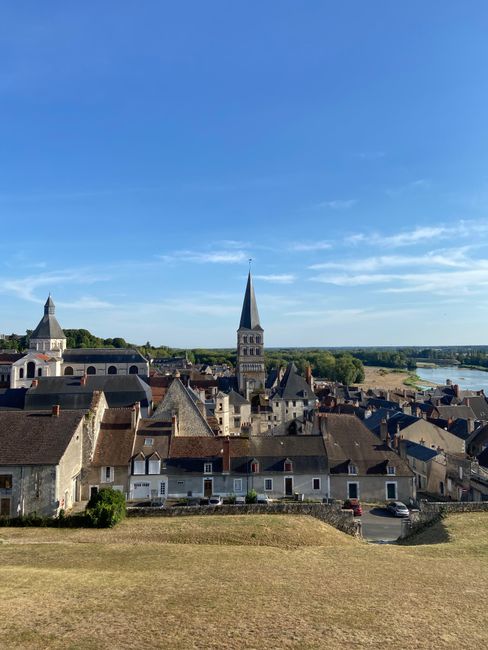
The Loire Valley is France’s valley of châteaux: a broad, slow river south-west of Paris lined with Renaissance palaces, royal towns, vineyards and gardens. You come to wander the staircases of Chambord, walk across the river through Chenonceau’s gallery, see where Leonardo da Vinci spent his last years in Amboise, and lose yourself in Villandry’s vegetable gardens. Between visits, cycle the flat riverside paths of the Loire à Vélo and taste Vouvray, Chinon and Saumur wines. Give it three or four days, or a week by bike.
Right now in Loire Valley (Tours)
- Wed14–19°C57–67°F18 mm rain
- Thu10–16°C51–61°FMostly clear
- Fri7–15°C45–59°FCloudy
Top tours in Loire Valley
See all tours for Loire Valley →
From local operators, with prices and reviews; you check availability and book on Viator, our partner. We may earn a commission at no extra cost to you. How we earn money
Loire Valley at a glance
- Best for: Renaissance châteaux and gardens, easy cycling, wine tasting, riverside villages and family trips.
- How long: 2 days for the big three (Chambord, Chenonceau, Amboise), 4 days to add Villandry, Blois and the wine villages, a week to cycle.
- Best time: May–June and September for gardens, cycling and fewer crowds; July and August are warm and busy.
- Getting in: about an hour by TGV from Paris to Tours (Saint-Pierre-des-Corps), or regional trains from Paris to Blois, Amboise and Orléans.
- Heritage: the valley between Sully-sur-Loire and Chalonnes has been a UNESCO World Heritage cultural landscape since 2000.
- Before you go: entry rules, money and general safety are in our France travel guide.
Where to base yourself in the Loire Valley
The châteaux are spread along about 280 km of the Loire and its tributaries, the Cher, the Indre and the Vienne. Most of the famous ones cluster between Blois and Chinon, so pick one or two bases rather than moving every night.
Tours
The biggest city in the heart of the valley, with a lively old quarter around Place Plumereau, plenty of hotels and restaurants, and the best train connections. Chenonceau, Villandry, Amboise and Azay-le-Rideau are all within 40 minutes. Best for: travellers without a car.
Amboise
A pretty riverside town below its royal château, with Leonardo da Vinci’s Clos Lucé at the end of the street, a Sunday market and a station on the Paris–Tours line. Chenonceau is 20 minutes away by car. Best for: couples and a first visit.
Blois
A royal town on a hill above the river, with its own château showing four centuries of architecture in one courtyard, and the gateway to Chambord and Cheverny by bus. Best for: the eastern châteaux and train travellers.
Saumur and Chinon
Further west, Saumur has a château over the river, a famous riding school and sparkling wine cellars dug into the soft white tufa rock, along with troglodyte villages. Chinon is a medieval town under a vast fortress, surrounded by red-wine vineyards, with Fontevraud Abbey nearby. Best for: wine lovers and repeat visitors.
A countryside stay
Many gîtes, B&Bs and even small châteaux rent rooms in the villages between the big sites. Wonderful for a slow trip or a family holiday, but you will want a car or bikes. Best for: families and longer stays.
The top châteaux of the Loire
Prices and hours below were checked on the official sites in October 2026. They change, so check before you go.
Chambord
The largest and most extravagant of the Loire châteaux, built for King François I as a hunting lodge in the middle of a walled forest of 5,440 hectares. Its rooftop is a skyline of chimneys and turrets, and at its heart is the famous double-helix staircase, where two people can climb without meeting, often linked to Leonardo da Vinci’s ideas. As of October 2026 it opens 9:00–18:00 until 25 October 2026, then 9:00–17:00 from 26 October to 18 December, and 9:00–18:00 again over Christmas; it closes on 1 January and 25 December.
Two-tier prices in 2026. Since 14 January 2026, on a trial basis, Chambord has charged €21 for the château and French gardens to nationals or residents of the European Economic Area, and €31 to other visitors; reduced rates are €18.50 and €28.50. These prices apply until 31 December 2026, and EEA visitors need proof of nationality or residence. Some visitors, including young EEA residents under 26, enter free. Parking is €8 a day. By train, go to Blois station, then take the Rémi line 2 shuttle to Chambord (€3.30 single as of October 2026); with a same-day train ticket you pay €18.50 instead of €21. The “Rémi Pack” combines train, shuttle and a reduced entry in one ticket. Hire a bike in the park, or watch the horse show (seasonal, until 1 November in 2026).
Chenonceau
The “ladies’ château”, shaped by a series of powerful women including Diane de Poitiers and Catherine de’ Medici, stretches across the River Cher on a two-storey gallery of arches. It has formal gardens, a maze, a vegetable garden and flowers in every room. It is open every day of the year; from 28 September to 1 November 2026 it opens 9:00–17:30, and from 2 November 9:30–16:30. As of October 2026 adult tickets cost €19 with a printed guide or €24 with an audioguide, €16 or €21 for over-65s and students, €15 or €20 for children aged 7–18, and children under 7 go free. Chenonceaux station is about 400 m from the ticket office, 25 minutes by regional train from Tours. Come at opening time or after 16:00 in summer.
Amboise: the royal château and the Clos Lucé
The Château Royal d’Amboise stands on a terrace over the Loire, with sweeping views and the Saint-Hubert chapel, where Leonardo da Vinci is buried. A ten-minute walk away, the Clos Lucé is the red-brick manor where Leonardo lived from 1516 until his death in 1519, at the invitation of François I. Its park displays models of his inventions, and galleries explore his work as a painter and architect. It is open daily except 25 December and 1 January: 9:00–19:00 in September and October, 9:00–18:00 in November and December, and 10:00–18:00 in January (as of October 2026). Tickets are €20 for adults and €15 for children aged 7–18 and students, with a family ticket (2 adults and 2 children) at €60; children under 7 go free. Combined tickets link the Clos Lucé with the royal château, and with Chambord too.
Villandry
The last great Renaissance château built on the Loire is famous for its gardens: terraces of ornamental parterres, a water garden, a sun garden, and above all a decorative vegetable garden laid out in geometric beds of cabbages, leeks and flowers. The gardens are open every day of the year except 25 December. In 2026 the château is open from 7 February to 11 November, then from 28 November to 3 January 2027. As of October 2026 tickets for the château and gardens cost €14 for adults and €8 for ages 8–17 and students under 26, or €8.50 and €5.50 for the gardens only; under-8s go free. Allow one hour for the château and an hour and a half for the gardens. Villandry is about 15 km from Tours; the Loire à Vélo passes nearby.
More châteaux worth the detour
- Blois: a royal château with Gothic, Renaissance and classical wings around one courtyard and a famous open spiral staircase.
- Cheverny: an elegant, still-inhabited classical château, the model for Marlinspike Hall in the Tintin books, with a hunting kennel.
- Azay-le-Rideau: a small Renaissance jewel reflected in the Indre.
- Chaumont-sur-Loire: a château above the river with an international garden festival every year from spring to autumn.
- Ussé, Langeais and Chinon: a fairy-tale castle, a medieval fortress and a royal stronghold of Joan of Arc’s time.
- Orléans: the eastern gateway city, where Joan of Arc lifted the English siege in 1429, with a fine cathedral and riverside quays.
- Fontevraud Abbey: one of Europe’s largest medieval abbeys, with the tombs of Henry II of England and Eleanor of Aquitaine.
Palaces
- Château de Chambord
- Château de Montsoreau
Monuments
- Château de Chenonceau
- Chinon Castle
- Fontevraud Abbey
Castles and forts
- Château de Villandry
Museums
- Clos Lucé
Tickets and château passes
There is no single pass that covers all the Loire châteaux; most are privately owned or run by different public bodies, each with its own ticket. The ways to save are:
- Combined tickets: the Clos Lucé sells combinations with the Château Royal d’Amboise, and a three-site ticket with Chambord. Tourist offices in Blois, Amboise and Tours sell other combinations, for example around Blois, Chambord and Cheverny.
- Train-plus-entry deals: the Rémi Pack for Chambord, and reduced entry when you show a same-day train ticket.
- Book online: skip-the-line e-tickets are sold on each château’s official site; in July and August they save a long wait at Chenonceau and Chambord.
- Check who goes free: under-7s or under-8s are usually free; some national sites admit young EEA residents free.
Two or three châteaux a day is plenty; more and they blur together.
The Loire by train and bike
The Loire is one of the best places in Europe for an easy cycling holiday. La Loire à Vélo is a 900 km cycle route from Cuffy, near Nevers, to Saint-Brevin-les-Pins on the Atlantic, mostly on quiet lanes and traffic-free riverside paths, well signposted and nearly flat. It is part of the EuroVelo 6 route across Europe. The stretch between Blois and Saumur passes the most famous châteaux.
How to combine train and bike
- Bring or rent a bike. Rental shops in Tours, Blois, Amboise, Saumur and many villages hire bikes and e-bikes, often with one-way returns and luggage transfers.
- Use the Train Loire à Vélo. Regional trains with extra bike space run between Orléans, Blois, Amboise, Saint-Pierre-des-Corps, Tours, Saumur, Angers and Nantes: three return trips a day on weekdays between Orléans and Nantes and two at weekends between Orléans and Le Croisic. In summer 2026 they ran on 14 weekends between 1 May and 30 August with at least 50 bike spaces.
- Reserve a bike space. In 2026 a bike reservation was compulsory for everyone on these trains from 1 May to 27 September, at €1 on top of the train ticket, through the veloabord.fr booking site. Outside that period, other trains on the line take standard bikes in limited numbers. Cargo bikes are not accepted.
- Ride one way, train back. Cycle a 30–50 km stage between two stations, visit a château on the way, and take the train back to your base.
- Châteaux by bike: Chambord’s park has bike paths and rentals; Villandry, Amboise and Chaumont are close to the route; Chenonceau is about 12 km south of the Loire.
See our cycling guide for more routes.
Things to do in the Loire Valley
Taste Loire wines
The Loire is France’s longest wine region, with fresh, food-friendly wines that are easy on the wallet. Around Tours, Vouvray and Montlouis make chenin blanc from dry to sweet and sparkling; Chinon and Bourgueil make light, fragrant cabernet franc reds; Saumur is known for its sparkling crémant, aged in tufa caves you can visit. Upriver, Sancerre and Pouilly-Fumé make sauvignon blanc, and downriver, near Nantes, Muscadet goes with oysters. Many producers welcome visitors to their cellars, often without an appointment, but call ahead for groups. See our wine tasting guide, and compare with Bordeaux.
Eat the “garden of France”
The valley’s mild climate and rich soils earned it the name “garden of France”, and the food is fresh and simple. Look for rillettes and rillons (slow-cooked pork) from Tours, goat’s cheeses such as Sainte-Maure-de-Touraine, Selles-sur-Cher and Crottin de Chavignol, river fish with beurre blanc, white asparagus in spring, and tarte Tatin, the upside-down apple tart first made near Orléans. Saturday and Sunday markets in Amboise, Tours and Chinon are the place to stock up for a riverside picnic.
Go underground in the troglodyte villages
Between Tours and Saumur, the white tufa stone used to build the châteaux was quarried from the cliffs, leaving caves that became homes, wine cellars, mushroom farms and even restaurants. Visit a troglodyte village or a sparkling-wine cellar, which stays cool even on hot days.
Get on the river
The Loire is a wild, shallow river of sandbanks and islands. In summer, short trips run on traditional flat-bottomed boats from riverside villages, and canoe rentals let you paddle downstream between beaches. On the Cher, boats glide under Chenonceau’s arches. See our boat trips guide. Don’t swim in the Loire itself: currents and shifting sandbanks are dangerous.
Float over the châteaux
Hot-air balloon flights over the valley take off at dawn or in the evening from spring to autumn, weather permitting, and are a memorable way to see Chenonceau or Amboise from above.
Activities and best months
- CyclingMarAprMayLa Loire à Vélo has 900 km of signed routes from Cuffy near Nevers to Saint-Brevin-les-Pins on the Atlantic with only 190 m of climbing in total, past Chambord, Blois, Amboise, Chenonceau and Villandry. The regional board says it suits families and recommends spring for mild weather and fewer riders.
- Wine tastingThe Loire wine route covers 800 km with more than 200 cellars open to visitors and about 25 appellations, including Chinon, Vouvray, Touraine-Chenonceaux and Sancerre; about 150 Touraine estates carry the tourist-cellar label.
Getting to the Loire Valley
From Paris by train. TGVs from Paris Montparnasse reach Saint-Pierre-des-Corps, the high-speed station next to Tours, in about an hour, with some direct TGVs from Paris Charles-de-Gaulle airport too; a shuttle train links it with Tours centre. Regional trains from Paris Austerlitz serve Orléans, Blois and Amboise; Chambord’s site puts Paris about 80 minutes away by train. From Tours, regional trains reach Chenonceaux in about 25 minutes, and Amboise, Blois, Saumur and Chinon.
By car. The A10 motorway runs from Paris to Orléans, Blois and Tours; Chenonceau is about two hours from Paris. French motorways have tolls.
By air. Most visitors fly into Paris. Tours and Nantes airports have some European flights.
Getting around the valley
- Train: good along the river (Orléans–Blois–Amboise–Tours–Saumur) and to Chenonceaux and Chinon. Not every château has a station.
- Rémi buses and château shuttles: the regional Rémi network runs shuttles from Blois station to Chambord and other sites; check seasonal timetables on the Rémi Centre-Val de Loire site.
- Bike: the most enjoyable way to link nearby châteaux, villages and wine cellars.
- Car: the most flexible for Cheverny, Azay-le-Rideau, Chinon and countryside stays. Roads are quiet and well signposted.
- Minibus tours: half-day and full-day tours from Tours and Amboise cover two or three châteaux with transport and tickets.
- Drinking and driving: France’s limit is 0.5 g/l of alcohol in the blood (0.2 g/l for new drivers); spit at tastings if you are driving.
When to go and how long to stay
The valley has a gentle climate, a little drier and sunnier than the Atlantic coast, with warm summers and cool, sometimes frosty winters. The table uses Météo-France’s 1991–2020 normals for Tours.
| Season | Average high / low | Rainy days per month | What it’s like |
|---|---|---|---|
| Spring (Mar–May) | 13–20 °C / 4–9 °C | 9 | Blossom and fresh gardens; garden festival opens; good cycling |
| Summer (Jun–Aug) | 23–26 °C / 13–14 °C | 7–8 | Warm, about 5 days a month of 30 °C or more in July and August; longest château hours; busiest |
| Autumn (Sep–Nov) | 22 °C falling to 11 °C / 11 °C falling to 5 °C | 7–8 in September, 10–11 in October–November | Grape harvest and autumn colours; quieter; shorter hours from November |
| Winter (Dec–Feb) | 8–9 °C / 2–3 °C | 10–12 | Cool and damp, frosty nights; some châteaux close or shorten hours; Christmas decorations at Chambord and Chenonceau |
Tours gets about 680 mm of rain a year, spread evenly, with the wettest months from October to January. The sweet spots are May–June and September, when gardens are at their best and cycle paths quieter.
Loire Valley in 3 days
Day 1: Chambord in the morning, Blois in the afternoon. Day 2: Chenonceau at opening time, then Amboise’s royal château and the Clos Lucé. Day 3: Villandry’s gardens and Azay-le-Rideau, with a wine tasting in Vouvray or Chinon.
Loire Valley in 5 days
Follow the 3-day plan, then move west: a day in Chinon with its fortress and a cabernet franc tasting, Ussé and Fontevraud Abbey, and a last day in Saumur with a sparkling-wine cellar and a troglodyte village. With a car, add Cheverny or Chaumont’s garden festival on the way.
Loire Valley in a week by bike
Cycle the Loire à Vélo from Blois to Saumur in five or six easy stages of 30–50 km, visiting Chaumont, Amboise, Tours, Villandry and the troglodyte villages, and use the train for any stretch you want to skip.
Weather month by month
Where to stay in the Loire Valley
- Tours: the most hotels and restaurants and the best trains; good value.
- Amboise: central and charming, between Chenonceau, Chambord and Tours.
- Blois: for Chambord, Cheverny and the eastern valley.
- Saumur or Chinon: for wine, troglodytes and Fontevraud.
- Château hotels and B&Bs: sleep in a château or a winegrower’s house; book ahead and plan on a car or bikes.
Practical tips for the Loire Valley
- Start early: be at Chenonceau or Chambord at opening time in summer, before the tour buses.
- Check seasonal hours: many châteaux shorten hours from November, and some close in January.
- Bring proof of residence if you are an EEA national or resident, to get Chambord’s lower rate in 2026.
- Leave big bags behind: for security, Chambord and other châteaux require large bags to go in lockers, and power banks are not allowed inside Chambord.
- Lunch on time: village restaurants serve from about 12:00 to 13:30; after that, options shrink.
- Sundays: trains and buses run less often, and many small shops close.
What to pack for the Loire Valley
Comfortable walking shoes for gardens, gravel paths and spiral staircases, and layers: château interiors are cool even in summer. For cycling, bring padded shorts, a light rain jacket, sunscreen, sunglasses and a refillable water bottle; rental shops usually provide helmets and panniers. In spring and autumn add a warm sweater and a waterproof. Leave room for a few bottles of Vouvray or Saumur.
What to pack
- City walking shoesQuinta visits and harvest days mean steep terraces, gravel and cellar floors.
- Rain jacketsA packable shell covers showers and wind on coastal routes outside summer.
- Water bottles and hydration packsRiding in the Algarve and Alentejo heat needs more water than you expect.
- Wine bottle travel protectorsPort and Douro wines bought at the quintas travel home safely in checked luggage with padded bottle protectors.
Loire Valley travel FAQ
How many days do you need in the Loire Valley?
Two days covers Chambord, Chenonceau and Amboise. Three or four days adds Villandry, Blois and a wine village; a week lets you cycle between them.
Which Loire châteaux are the best?
For a first visit: Chambord for grandeur, Chenonceau for romance, Amboise and the Clos Lucé for Leonardo da Vinci, and Villandry for gardens. Add Blois, Cheverny or Azay-le-Rideau if you have time.
Can I visit the Loire Valley without a car?
Yes. Base yourself in Tours, Amboise or Blois and use trains (Chenonceaux has its own station), the Rémi shuttle from Blois to Chambord, bikes and minibus tours.
How much does Chambord cost in 2026?
€21 for EEA nationals and residents and €31 for other visitors, under a trial pricing scheme valid until 31 December 2026. Reduced rates are €18.50 and €28.50, and €18.50 with a same-day train ticket.
How much is Chenonceau?
As of October 2026, €19 for adults with a printed guide or €24 with an audioguide, and €15 or €20 for children aged 7–18. Under-7s go free. It is open every day of the year.
Is there a pass for all the Loire châteaux?
No single pass covers them all. Look for combined tickets, such as the Clos Lucé with the Château Royal d’Amboise and Chambord, and train-plus-entry offers like the Rémi Pack.
How long is the Loire à Vélo?
About 900 km, from Cuffy near Nevers to Saint-Brevin-les-Pins on the Atlantic. The Blois–Saumur stretch passes the most famous châteaux and is mostly flat.
Can I take my bike on the train in the Loire Valley?
Yes. The Train Loire à Vélo has extra bike space between Orléans and Nantes. In 2026 a €1 bike reservation was compulsory from 1 May to 27 September; other trains take a limited number of bikes.
Can I visit the Loire Valley as a day trip from Paris?
Yes, with the TGV to Tours in about an hour, or a coach tour, but you will only see two châteaux. One or two nights in the valley is much better.
What is the best time to visit the Loire Valley?
May–June and September, with highs of about 20–24 °C, gardens in bloom and quieter châteaux. July and August are warm and busy.
Is the Loire Valley a UNESCO World Heritage Site?
Yes. The valley between Sully-sur-Loire and Chalonnes was listed in 2000 as a cultural landscape, and Chambord was listed earlier on its own.
Nearby destinations
- Nantes122 km
- La Rochelle150 km
- Île de Ré160 km
- Mont-Saint-Michel197 km
- Normandy215 km
- Saint-Malo223 km
- Dordogne232 km
- Brittany246 km
Plan your trip
Partner links: TravelerCenter may earn a commission if you book, at no extra cost to you.
🇫🇷 Useful French phrases for Loire Valley
All 38 French phrases: restaurant, hotel, emergencies, romance (printable) →
Sources · last reviewed 3 October 2026
Researched and last reviewed on 3 October 2026. Château hours, prices, access and combined tickets: the official sites of the Domaine national de Chambord, Château de Chenonceau, Le Clos Lucé and Château de Villandry; cycling, the Train Loire à Vélo and bike reservations: La Loire à Vélo; climate: Météo-France 1991–2020 normals for Tours; heritage: UNESCO. Prices, timetables and rules change, so check the official links before you travel. For entry rules, money and general safety, see our France travel guide.
Also: loirevalley-france.co.uk · Météo-France normals 1991–2020, Tours (climate)
Data: Weather: MET Norway (CC BY 4.0) · Rates: ECB · Costs: World Bank ICP and price levels · © OpenStreetMap contributors (ODBL) · Wikidata (CC0)