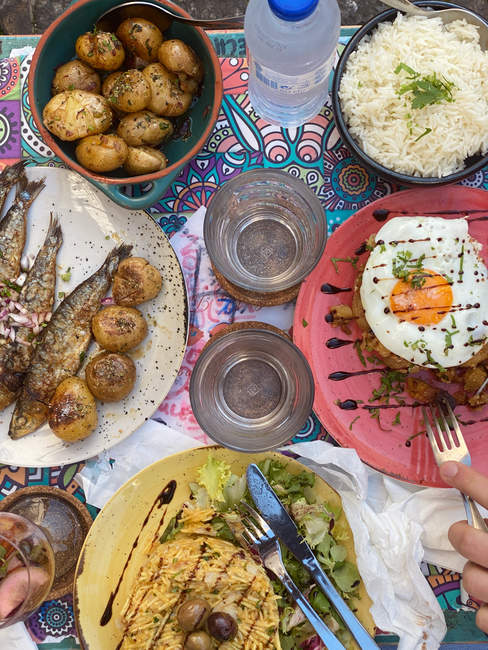
Short answer: Portugal is good value for Western Europe. Traveller-reported averages suggest about €65–75 a day per person on a tight budget and €160–170 mid-range (estimates, as of October 2026). Go between November and March, outside the holidays, when hotel rates are lowest; travel by train or coach with advance fares; eat the lunchtime prato do dia; and enjoy free viewpoints, gardens and beaches.

This guide adds the numbers behind those tips: what a day really costs, when rooms are cheapest, which sights are free, which passes pay off, and every city tourist tax you will meet. Prices come from official sources where possible and are dated; daily budgets are estimates and labelled as such. For money basics such as cards, cash and tipping, see our Portugal travel guide.
Daily budget: what a day costs
These figures are estimates per person per day, based on BudgetYourTrip’s traveller-reported averages for Portugal (about €67 budget, €165 mid-range and €387 luxury), checked October 2026. Lisbon and the Algarve in summer cost more; inland towns and the north cost less.
| Style | Estimated cost per day | What it buys |
|---|---|---|
| Shoestring / budget | about €65–75 | Hostel bed or simple guesthouse room, bakery breakfast, a set lunch, supermarket dinner or snacks, a city transport pass, free sights |
| Mid-range | about €160–170 | Half of a comfortable double room, two sit-down meals, one or two paid sights, an intercity train |
| Comfort / luxury | about €380+ | Boutique or five-star hotel, fine dining, private tours, a hire car |
Real prices on the ground
| Item | Lisbon | Porto | Source |
|---|---|---|---|
| Meal at an inexpensive restaurant | about €15 | about €12 | Numbeo, updated 2 Oct 2026 (crowd-sourced) |
| Dinner for two, mid-range restaurant | about €55 | about €50 | Numbeo |
| Cappuccino | about €2.70 | about €2.40 | Numbeo |
| Draught beer (0.5 l) | about €3 | about €3 | Numbeo |
| One city ride on a prepaid card | €1.90 (Carris/Metro) | €1.40 (Andante Z2) | Metro Lisboa, Andante |
| 24-hour city transport pass | €7.25 | €7.75 | Metro Lisboa, Andante |
A careful day in Lisbon, not counting your bed, can look like this: a €7.25 transport pass, a coffee and pastry, an inexpensive lunch of about €15, a free viewpoint at sunset and a simple dinner, so roughly €35–45 before accommodation. That is our estimate, built from the prices above.
The cheapest times to go
Accommodation is the biggest swing in any Portugal budget. Statistics Portugal (INE) publishes the average rate per occupied room across all tourist accommodation, and the seasonal gap is large:
| Month | Average room rate, all of Portugal |
|---|---|
| December 2025 | about €100 |
| January 2026 | about €92 |
| May 2026 | about €131 |
| August 2026 | about €163 (Algarve about €225) |
These are per room, not per person. The pattern is clear: November to March (outside Christmas, New Year and Carnival) is cheapest, April–May and late September–October are good-value shoulder months with warm weather, and July–August is the most expensive, especially on the coast. Madeira is a smart winter pick, with Funchal highs around 20 °C. In Lisbon, book early or avoid the 12–13 June Santo António nights, and in Porto the São João night of 23 June, when rooms fill.
Free and discounted sights
A note on “free Sundays”: Portugal’s free entry scheme for national museums and monuments, called Acesso 52, gives 52 free days a year only to Portuguese citizens and residents of Portugal, who register with their ID and tax number. Visitors from abroad pay the normal ticket at places like Jerónimos and Belém Tower, so don’t plan around free days there.
What is free or cheap for everyone (as of October 2026):
- Lisbon: the miradouros (viewpoints) such as Santa Luzia, Portas do Sol, Senhora do Monte and São Pedro de Alcântara; the Gulbenkian garden every day, and the Gulbenkian Museum free on Sundays from 14:00; the commuter ferry to Cacilhas (€2 single) for the classic view back over the city.
- Porto: São Bento station’s tiled hall; the cathedral church (only the cloister has a €3 ticket); the Dom Luís I bridge at sunset; the Palácio de Cristal gardens. Serralves has a cheaper €15 late-afternoon ticket from 17:00, Monday to Thursday.
- Douro: the tiled Pinhão station and the river views from the regional train.
- Azores: the Gorreana tea factory on São Miguel offers free visits and tastings, and most crater-lake viewpoints are free.
- Everywhere: beaches, coastal walks and most churches.
- Children: many sights are free for younger children, for example Lisbon’s São Jorge Castle up to age 12, Serralves under 12 and Porto’s Clérigos Tower up to 10.
City passes: when they pay off
Lisboa Card: €31, €51 or €62 for 24, 48 or 72 hours (prices valid until 31 March 2027). It covers city transport, the trains to Sintra and Cascais, and entry to more than 50 museums and monuments. Three days of transport plus Jerónimos, Belém Tower and the castle cost about €72 at full price, so the 72-hour card pays off if you are a busy sightseer; if you mostly walk and look, it doesn’t. Porto.CARD: off sale since July 2026 while it is restructured, according to its official booking page. Details are in our Lisbon and Porto guides.
Saving on transport
- Book long-distance trains early. CP’s advance promo fares on the Alfa Pendular and Intercidades are up to 65% off.
- Use age discounts. CP gives up to 25% off to travellers aged 25 and under and up to 50% off on fast trains to anyone 65 or over, whatever their nationality.
- Travel as a group. CP’s TrainSharing gives up to 50% off for 3–4 people travelling together on the Alfa Pendular and Intercidades.
- Compare coaches. Rede Expressos and FlixBus are often cheaper than the train, especially to places off the main line such as Lagos.
- Take the regional train, not the cruise. Regional Douro tickets are cheap, while a full-day Porto–Régua cruise is listed from about €75.
- Load prepaid cards. In Lisbon, a tram ride costs €3.30 paid on board but €1.90 on a navegante card. On Madeira, a 7-day Regional Turístico bus pass is €36.
- Skip the car in cities. If you do hire one, remember motorway tolls: about €25 for the A1 from Lisbon to Porto in 2026, though the Algarve’s A22 has been free since January 2025.
One thing that won’t help: the €20 Green Rail Pass is only for residents of Portugal. More on all of this in our getting around Portugal guide.
Eating well for less
- Make lunch your main meal. Look for the prato do dia (dish of the day) or a set lunch menu on boards outside small local restaurants (tascas). It is the best-value meal of the day.
- Watch the couvert. Bread, olives and other starters brought to the table are charged if you eat them. Send them back if you don’t want them.
- Drink tap water, which is safe everywhere, and order house wine by the jug rather than bottled wine.
- Stand at the counter for coffee and a pastry, the way locals do.
- Shop at markets such as Porto’s Bolhão for picnic supplies, and picnic at viewpoints and beaches.
- Eat a street or two back from the main squares and waterfronts, where prices drop.
- Tip lightly. Tipping is optional: rounding up in cafés and 5–10% in restaurants for good service is plenty.
Tourist taxes by city
Many Portuguese municipalities add a tourist tax (taxa turística) per guest per night, collected by your hotel or rental and usually not included in the advertised price. As of October 2026:
| Place | Per person per night | Who pays | Maximum |
|---|---|---|---|
| Lisbon | €4 | Age 13 and over | 7 nights |
| Porto | €3 | Age 13 and over | 7 nights |
| Vila Nova de Gaia (port cellars side of Porto) | €3 since 21 August 2026 | Age 16 and over (reported) | 7 nights (reported) |
| Sintra | €2 | Age 13 and over | 3 nights |
| Évora | €1.50 | Age 16 and over | 3 nights |
| Algarve municipalities (e.g. Albufeira, Faro, Portimão, Lagoa) | About €1–2, higher in the warm months | Varies | Usually 7 nights |
| Funchal (Madeira) | €2 (a rise to €4 from 2027 was under consultation) | Over 12 | 7 nights |
| São Miguel (Azores), all six municipalities | €2 | Age 13 and over | 3 nights |
Other towns, such as Cascais and Coimbra, also charge, with rules that vary; check your booking confirmation. A couple spending a week in Lisbon pays €56 in tourist tax, so it is worth adding to your sums.
Money tips that save real euros
- Always pay in euros. When a card terminal or Multibanco machine offers to charge you in your home currency, decline; the conversion rate is usually worse.
- Use a card with no foreign fees and carry a little cash for small cafés and Madeira’s cash-only on-board bus tickets.
- Book non-refundable only when sure. Madeira’s trail fees, for example, are not refunded if you change your plans because of rain or illness.
- Self-cater a few meals. Apartments with a kitchen are common, especially in the Algarve, and supermarkets are good.
Ready to plan? Our Portugal itinerary for 7, 10 and 14 days works on any budget, and our Portugal packing list helps you bring what you need instead of buying it there.
Portugal budget FAQ
How much money do I need per day in Portugal?
As an estimate, about €65–75 per person on a tight budget, €160–170 mid-range and €380 or more for luxury travel, based on traveller-reported averages checked in October 2026. Summer on the coast and Lisbon cost more.
What is the cheapest month to visit Portugal?
January, along with November, February and early March outside holidays. INE’s figures put the national average room rate at about €92 in January 2026, against about €163 in August 2026.
Are museums free on Sundays in Portugal?
Not for visitors. The national free-entry scheme (52 free days a year) is only for Portuguese citizens and residents. Some places have their own free times open to everyone, such as the Gulbenkian Museum in Lisbon on Sundays from 14:00.
Is Lisbon or Porto cheaper?
Porto is a little cheaper day to day: crowd-sourced prices put an inexpensive meal at about €12 against €15 in Lisbon, and Porto’s tourist tax is €3 a night against Lisbon’s €4.
Is the Lisboa Card worth it?
For busy sightseers, yes: the 72-hour card is €62, against about €72 for three days of transport plus Jerónimos, Belém Tower and the castle at full price. If you mostly walk and enjoy viewpoints, pay as you go.
How can I save on trains in Portugal?
Book Alfa Pendular and Intercidades early for promo fares of up to 65% off, use CP’s youth (25 and under) or senior (65+) discounts, or travel as a group of 3–4 with TrainSharing.
Do I have to pay the tourist tax in cash?
It is collected by your accommodation, usually at check-in or check-out, and how you pay depends on the property. It is charged per person per night, up to each town’s maximum number of nights.
Is Madeira or the Azores cheaper?
Madeira usually has more flight competition, with TAP, easyJet and Ryanair flying from Lisbon and Porto, while the Azores rely on TAP and Azores Airlines since Ryanair left in March 2026. On the ground, both are similar; a hire car is the main extra cost on either.
Sources
- Natural Earth · Public domain · fetched 3 Oct 2026
- © OpenStreetMap contributors · ODbL · fetched 3 Oct 2026
- Wikidata · CC0 · fetched 3 Oct 2026
Sources and last review
Researched and last reviewed by TravelerCenter on 3 October 2026. Daily budgets are estimates from BudgetYourTrip’s traveller-reported averages, and meal and drink prices are crowd-sourced Numbeo figures (updated 2 October 2026). Room rates come from Statistics Portugal (INE) releases and press reports of them. Free-entry rules come from the Portuguese government; sight prices and free times from the Gulbenkian, Castelo de São Jorge, Serralves, Clérigos and Porto Cathedral; transport fares from CP, Metro Lisboa, Carris, Transtejo, Andante and Madeira’s bus operators; tolls from Law 37/2024 and press reports of Brisa’s 2026 prices. Tourist taxes come from the councils of Lisbon, Porto, Vila Nova de Gaia, Sintra and Funchal, with Évora, the Algarve and São Miguel from regional press. Check prices before you travel.