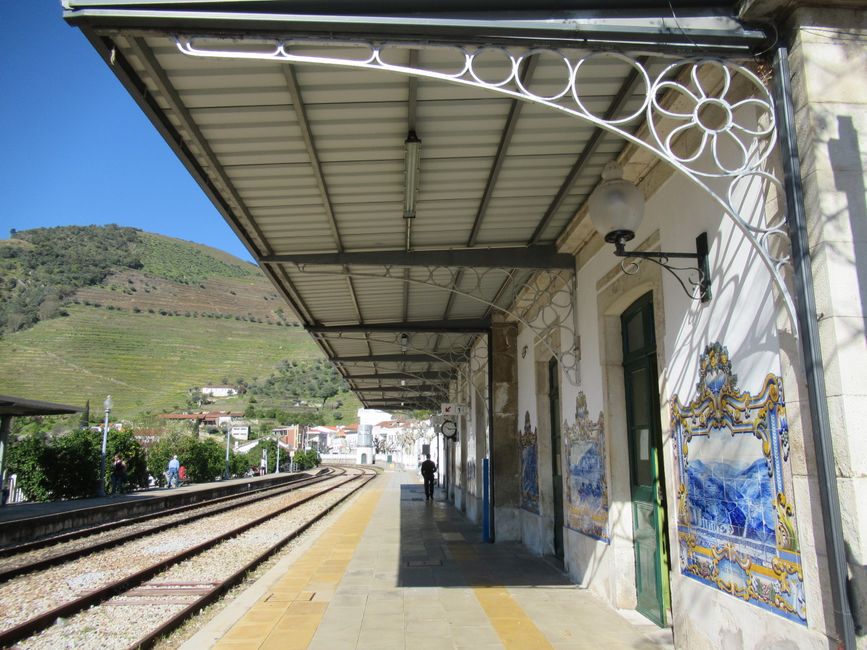
Short answer: on the mainland, take CP’s fast trains between Porto, Coimbra, Lisbon and the Algarve, and use Rede Expressos or FlixBus coaches where the rails don’t reach. In Lisbon and Porto, ride the metro with a reloadable navegante or Andante card. Hire a car only for the Douro, the Alentejo, the west Algarve and the islands. Madeira and the Azores are about two hours’ flight from Lisbon.
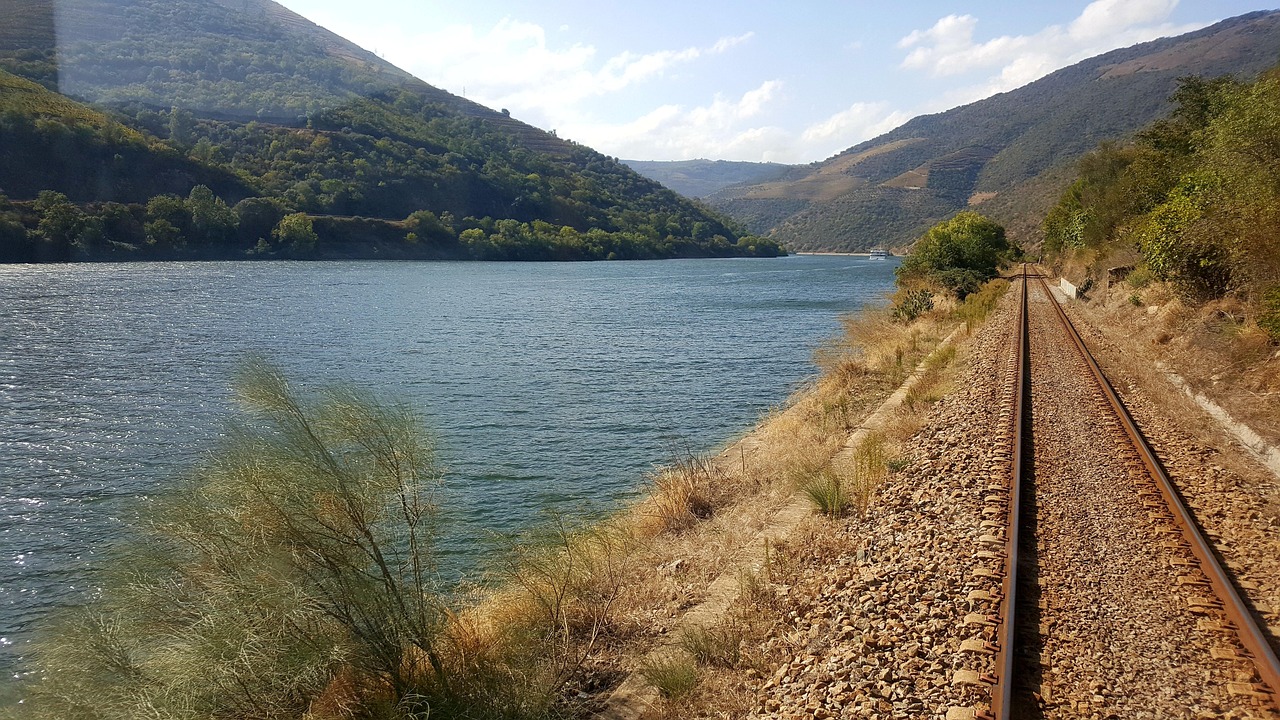
This guide explains how each option works: which train to book, when buses are better, how electronic motorway tolls catch out visitors, and how to hop between the islands. Fares and rules are as of October 2026 and come from the operators unless marked otherwise. For the big picture of the country, start with our Portugal travel guide; for ready-made routes, see our Portugal itinerary.
Which way to travel: quick comparison
| Journey | Best option | Time | Notes |
|---|---|---|---|
| Lisbon – Porto | Alfa Pendular or Intercidades train | about 2 h 40–3 h | City centre to city centre; book ahead for promo fares |
| Lisbon – Faro | Alfa Pendular or Intercidades train | about 3 h 05–3 h 30 | Change at Tunes for Lagos and Portimão |
| Lisbon – Évora | Intercidades train or coach | about 1 h 40 by train | Coaches leave from Sete Rios |
| Lisbon – Lagos | Coach | about 3 h 20–3 h 50 (approximate) | Direct; the train needs a change |
| Porto – Douro Valley | Regional train | about 1 h 50 to Régua, 2 h 15 to Pinhão | One of Europe’s prettiest rail rides |
| Évora – Algarve | Coach or car | about 3 h 40–4 h to Faro by coach (approximate) | No direct train |
| Mainland – Madeira / Azores | Flight | about 1 h 45–2 h 35 (approximate) | From Lisbon and Porto |
Trains: CP (Comboios de Portugal)
CP runs almost all of Portugal’s trains. There are four kinds you are likely to use:
- Alfa Pendular (AP): the fastest train, on the main line from Braga and Porto via Coimbra to Lisbon, with some trains running on to Faro. First (Conforto) and second (Turística) class, café-bar, free Wi-Fi.
- Intercidades (IC): slightly slower long-distance trains on more routes, including Lisbon to Évora, Beja, the Algarve, Guarda and Covilhã. Also free Wi-Fi and bike spaces.
- Regional and InterRegional: slower local trains, for example the Douro line from Porto and the Algarve coast line from Lagos to Vila Real de Santo António (electric since 19 July 2026, with direct trains end to end).
- Urban (suburban) trains: frequent commuter lines around Lisbon (to Sintra, Cascais and beyond), Porto (to Braga, Guimarães and Aveiro) and Coimbra.
How booking works
- Alfa Pendular and Intercidades have compulsory seat reservations, which come with the ticket. Buy on cp.pt, in the CP app, at ticket machines or at station ticket offices. Popular trains can fill up, especially in summer, so book a few days ahead.
- Book early for promo fares: CP sells discounted advance tickets of up to 65% off on these trains.
- Regional and urban trains have no reservations. Buy before you board at the station machine or office. In Lisbon you can use pay-as-you-go credit on a navegante card on the Sintra and Cascais lines.
- Arrive at the right station. In Lisbon, long-distance trains call at Santa Apolónia and Oriente (and southbound trains at Entrecampos and Sete Rios); Sintra trains leave from Rossio, Cascais trains from Cais do Sodré. In Porto, long-distance trains use Campanhã; most urban and Douro trains also start or call at São Bento, in the centre.
Discounts that work for visitors
| Discount | Who | How much | Trains |
|---|---|---|---|
| Youth | Aged 25 and under, any nationality | Up to 25% | AP, IC, Regional, InterRegional |
| Senior | 65 and over, any nationality or residence | Up to 50% | AP, IC |
| Advance “promo” | Anyone | Up to 65% | AP, IC |
| Return ticket | Anyone | 10% | IC |
| TrainSharing | Groups of 3–4 travelling together | Up to 50% | AP, IC |
Carry ID to prove your age. One thing visitors ask about: the €20-a-month Green Rail Pass (Passe Ferroviário Verde) is only for Portuguese citizens and foreigners resident in Portugal, so holiday-makers can’t use it.
Coaches: Rede Expressos and FlixBus
Long-distance coaches go to almost every town, are often cheaper than the train, and sometimes faster where the railway takes a detour, as on Lisbon to Lagos.
- Rede Expressos is the national network. In Lisbon most coaches leave from the Sete Rios terminal. Seats are reserved; book on rede-expressos.pt or its app, or at bus terminals.
- FlixBus runs the main corridors, such as Lisbon–Porto and Lisbon–Faro. Book in its app or online.
- Regional buses fill the gaps: Vamus in the Algarve (including the Aerobus 56 from Faro airport to Albufeira, Portimão and Lagos, when it runs), Rodoviária do Oeste to Óbidos, and Carris Metropolitana around Lisbon.
Driving and car hire
A car is the best way to see the Douro’s quintas, Alentejo villages, the wild west Algarve coast, and both island groups. In Lisbon, Porto and Sintra it is more trouble than it’s worth: parking is scarce, centres are restricted and public transport is good. Portugal drives on the right.
Car hire basics
- Licence: UK photocard licences are accepted; other non-EU drivers should check their rental terms, because many firms ask for an International Driving Permit alongside the licence.
- Deposit: rental firms usually want a credit card for the deposit; check your booking terms.
- Ask about the toll device (see below) and its daily fee when you pick up the car.
- Book early for the islands and August. On the smaller Azores islands few cars are available.
- Drink-driving: the limit is 0.5 g/l, and 0.2 g/l for drivers with less than three years’ experience. On wine days, use a driver or a tour.
- Madeira’s roads are steep, narrow and full of hairpins; choose a car with enough power and use low gears going down.
Tolls, including electronic-only motorways
Many motorways (autoestradas, “A” roads) charge tolls. There are two systems:
- Classic toll plazas on roads such as the A1 (Lisbon–Porto) and A2 (Lisbon–Algarve), where you take a ticket and pay by card or cash at the exit, or drive through the Via Verde lane if your car has a transponder.
- Electronic-only gantries on some motorways, with no booths at all. Cameras read your plate or transponder. This is where visitors get caught out.
How to pay on electronic-only roads, according to Infraestruturas de Portugal’s official toll site (pttolls.com):
| Option | Who it suits | Cost (as of Oct 2026) |
|---|---|---|
| Via Verde transponder in a hire car | Most rental customers | Rental firm’s daily fee; tolls charged to your card |
| Post-payment at CTT post offices, Payshop agents or Multibanco | Hire cars without a transponder | Pay from 48 hours after passing and within 15 working days; €0.32 admin per trip (max €2.56 per transaction) |
| EasyToll | Foreign-registered cars | Register online or at an EasyToll point; links your bank card to your plate for 30 days; €1 plus €0.32 per trip |
| TollCard | Foreign-registered cars | Prepaid €5–€40, valid one year after activation; €1 plus €0.32 per trip |
| Via Verde Go Toll | Frequent or longer stays | Monthly subscription; device works across the network |
Good news for the Algarve and the interior: under Law 37/2024, tolls were abolished from 1 January 2025 on the A22 (Via do Infante, across the Algarve), the A4 (Transmontana and Marão tunnel), the A13 and A13-1, the A23, the A24, the A25, and parts of the A28 (Esposende–Antas and Neiva–Darque). The A2 from Lisbon to the Algarve still has tolls. For 2026, Brisa’s class 1 (car) toll for the full A1 Lisbon–Porto run is €25.05, and €23.80 on the A2 Lisbon–Algarve, as reported when prices rose on 1 January 2026.
City transport and travel cards
Lisbon: navegante card
Buy a reloadable navegante occasional card (€0.50, the card once called Viva Viagem) from any Metro machine. Each person needs their own card, and it holds one type of ticket at a time.
| Ticket | Price (as of Oct 2026) |
|---|---|
| Single Carris/Metro trip (60 minutes) | €1.90 |
| “Zapping” pay-as-you-go credit, Metro trip | €1.72 |
| Contactless bank card at Metro gates | €1.92 |
| 24 h Carris/Metro | €7.25 |
| 24 h Carris/Metro + Cacilhas ferry | €10.35 |
| 24 h Carris/Metro + CP Sintra and Cascais lines | €11.40 |
| Paid on board: bus / historic tram | €2.30 / €3.30 |
The Metro runs from 6:30 to 1:00, and its red line goes straight to the airport. As of October 2026, Carris lists the Santa Justa lift as temporarily closed and the Glória, Lavra and Bica funiculars as out of service, while the Graça funicular runs; the old Aerobus airport shuttle is not operating. The Lisboa Card (€31, €51 or €62 for 24, 48 or 72 hours) adds free entry to many sights on top of transport. More in our Lisbon guide.
Porto: Andante card
One card, the blue Andante (€0.60), covers the metro, STCP buses and urban trains. You load rides by zone: a Z2 ride (€1.40, valid one hour) covers most trips in and around the centre, a Z4 ride (€2.30) reaches the airport. The Andante Tour pass costs €7.75 for 24 hours or €16.55 for 72 hours, but isn’t valid on the historic trams (lines 1, 18 and 22; €6 on board) or the Guindais funicular, which is closed for maintenance. You can also tap a contactless bank card at marked validators, with fares capped at €7.75 a day. More in our Porto guide.
Algarve, Madeira and smaller towns
In the Algarve, the coastal railway and Vamus buses link the main towns, and small ferries cross to the Ria Formosa islands; see our Algarve guide. On Madeira, the island’s buses now run as one network, SIGA. Load a Giro card (€0.50) with a “Regional Turístico” pass for €13.75 a day, €23 for three days or €36 for seven, or pay cash on board (€2.05 in Funchal, €2.65 between towns). The airport Aerobus costs €5.55 when bought in advance. See our Madeira guide. Towns like Évora, Coimbra and Sintra are best on foot, with local buses for the outskirts.
Flights to Madeira and the Azores
- Madeira (Funchal, FNC): TAP, easyJet and Ryanair fly direct from Lisbon (about 1 h 45–1 h 50) and Porto (about 2 h). Strong wind sometimes holds, diverts or cancels flights, so leave a buffer day before onward connections.
- Azores (Ponta Delgada, PDL, and Terceira, TER): Azores Airlines (SATA) and TAP fly from Lisbon (about 2 h 10–2 h 35) and Porto. Ryanair stopped flying to the Azores on 29 March 2026, so book early for summer.
- Between Madeira and the Azores: Azores Airlines flies Funchal–Ponta Delgada, and from 7 May 2026 added Terceira–Funchal (weekly, twice weekly from June to September).
- Within the mainland: flights exist (for example Lisbon–Porto), but once you add airport time the train is usually as quick, centre to centre.
Getting between the islands
Azores: SATA Air Açores and Atlânticoline ferries
Every Azores island has an airport, and SATA Air Açores links them with small turboprops; most hops take under an hour. There is no passenger ferry from São Miguel, so you fly from there. In the central group, Atlânticoline’s ferries are the fun way to hop:
- Linha Azul (Horta, Faial – Madalena, Pico): all year, about 30 minutes, with extra summer sailings. The one-way adult fare for non-residents was listed at €8.20 for 2026 (indicative).
- Linha Verde (Pico – São Jorge – Faial): all year; in summer 2026 at least two connections a day.
- Summer-only lines (June to September 2026): Linha Laranja (Velas – São Roque do Pico, 15 June–15 September), Linha Branca around the central group (Mondays and Fridays) and Linha Lilás to Terceira (Tuesdays and Saturdays).
The winter timetable from October cuts frequencies, and both boats and planes can be delayed by weather, so keep a spare day. Details are in our Azores guide.
Madeira to Porto Santo
Porto Santo Line’s ferry Lobo Marinho sails from Funchal in about 2 hours 15 minutes, with a day-trip return possible on most days; check in 30 minutes before departure. Fares, and the break in sailings from 15 to 22 October 2026, are on our Madeira guide.
Taxis and ride-hailing
Taxis wait at airports and stations, and ride-hailing apps work in the big cities, including Lisbon. They make sense late at night, with heavy bags, for hilltop hotels in Lisbon’s old quarters, or to get back to your car after a one-way hike on Madeira.
Getting around Portugal FAQ
Is it better to take the train or bus in Portugal?
The train for Lisbon–Porto, Lisbon–Coimbra, Lisbon–Évora and the Douro line: fast, comfortable and central. Coaches are better for places off the main lines, such as Lagos from Lisbon, Évora to the Algarve, and Óbidos, and are often cheaper.
Do I need to book trains in advance in Portugal?
For Alfa Pendular and Intercidades, yes if you can: seats are reserved, popular trains fill up, and advance promo fares can be up to 65% cheaper. Regional and urban trains don’t need booking.
Can tourists use the €20 Green Rail Pass?
No. CP says the Passe Ferroviário Verde is for Portuguese citizens and foreign residents of Portugal. Visitors can save with promo fares, the youth (25 and under) and senior (65+) discounts, or group TrainSharing.
Is the A22 in the Algarve still a toll road?
No. Law 37/2024 removed tolls on the A22 from 1 January 2025, along with several interior motorways. The A2 from Lisbon to the Algarve still charges tolls.
How do I pay electronic tolls in a rental car?
Ask for the Via Verde transponder at pick-up; tolls are then charged automatically. Without one, pay at a CTT post office, Payshop agent or Multibanco from 48 hours after you pass and within 15 working days.
Which travel card should I buy in Lisbon?
A €0.50 navegante card loaded with single tickets, “zapping” credit or a 24-hour pass (€7.25). Choose the €11.40 version on days you go to Sintra or Cascais. Buy the Lisboa Card only if you will also visit several paid sights.
How do I island-hop in the Azores?
Fly with SATA Air Açores between any of the nine islands, and use Atlânticoline ferries between Faial, Pico and São Jorge (year-round) and to Graciosa and Terceira in summer.
Do I need a car on Madeira?
Not for Funchal, but it makes trailheads and sunrise at Pico do Areeiro much easier. Without one, use SIGA buses with a Regional Turístico pass, plus taxis or tours for the mountains.
Sources
- Natural Earth · Public domain · fetched 3 Oct 2026
- © OpenStreetMap contributors · ODbL · fetched 3 Oct 2026
- Wikidata · CC0 · fetched 3 Oct 2026
Sources and last review
Researched and last reviewed by TravelerCenter on 3 October 2026. Train services, discounts and the Green Rail Pass rules come from CP’s own pages and timetables; Algarve rail electrification from the Portuguese government; toll payment options from Infraestruturas de Portugal (pttolls.com); toll abolition from Law 37/2024 in the Diário da República; 2026 A1 and A2 toll amounts from press reports of Brisa’s prices. City fares come from Metro Lisboa, Carris, Andante (TIP), STCP and Madeira’s bus operators. Island flights come from Azores Airlines and press reports; ferry lines from Atlânticoline’s 2026 timetables as published locally and from Porto Santo Line. Coach times and flight durations are approximate. Check with the operator before you travel.