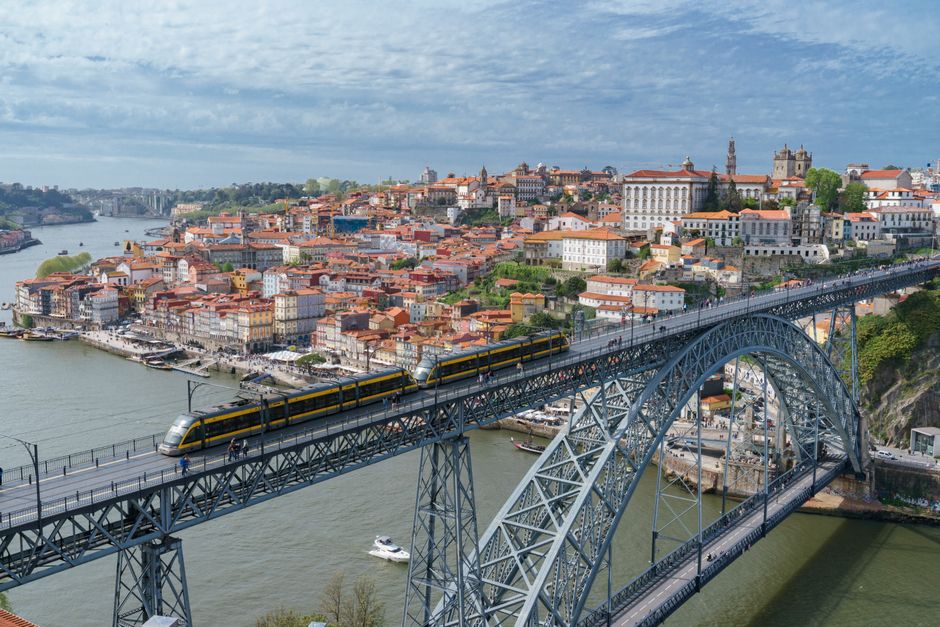
Porto is Portugal’s second city: a steep, tile-covered riverside town where you wander down to the Ribeira waterfront, cross the double-deck Dom Luís I bridge to taste port in the Gaia cellars, and finish the day with sunset on the river or the ocean at Foz. It is compact and walkable, but hilly. Give it two or three days, plus one for the Douro Valley.
Right now in Porto
- Wed 16–21°C 61–71°F 1 mm Mostly clear
- Thu 14–24°C 56–76°F Partly cloudy
- Fri 14–21°C 57–71°F Clear
Weather: MET Norway (CC BY 4.0) · Sea temperature: NOAA CoastWatch · Air quality: OpenAQ · Rates: ECB
Top tours in Porto
See all tours for Porto →
From local operators, with prices and reviews; you check availability and book on Viator, our partner. We may earn a commission at no extra cost to you. How we earn money
Porto at a glance
- Best for: port wine, river views, tiled churches, food, easy day trips to the Douro Valley.
- How long: 2 days for the highlights, 3 to add Foz and the beach, 4 with a Douro day out.
- Best time: May, June and September (warm, fewer rainy days); 23 June for the São João street party.
- Getting in: Metro line E from the airport; trains from Lisbon in about 2 hours 45 minutes to 3 hours.
- Tourist tax: €3 per person per night from age 13, up to 7 nights (as of October 2026).
- Before you go: entry rules, money and general safety are on our Portugal travel guide.
Porto’s neighbourhoods
The historic centre sits on a steep granite slope above the north bank of the Douro, and the city spreads west from there to the Atlantic. Its old core, together with the Dom Luís I bridge and the Serra do Pilar monastery across the river, has been a UNESCO World Heritage Site since 1996.
Ribeira
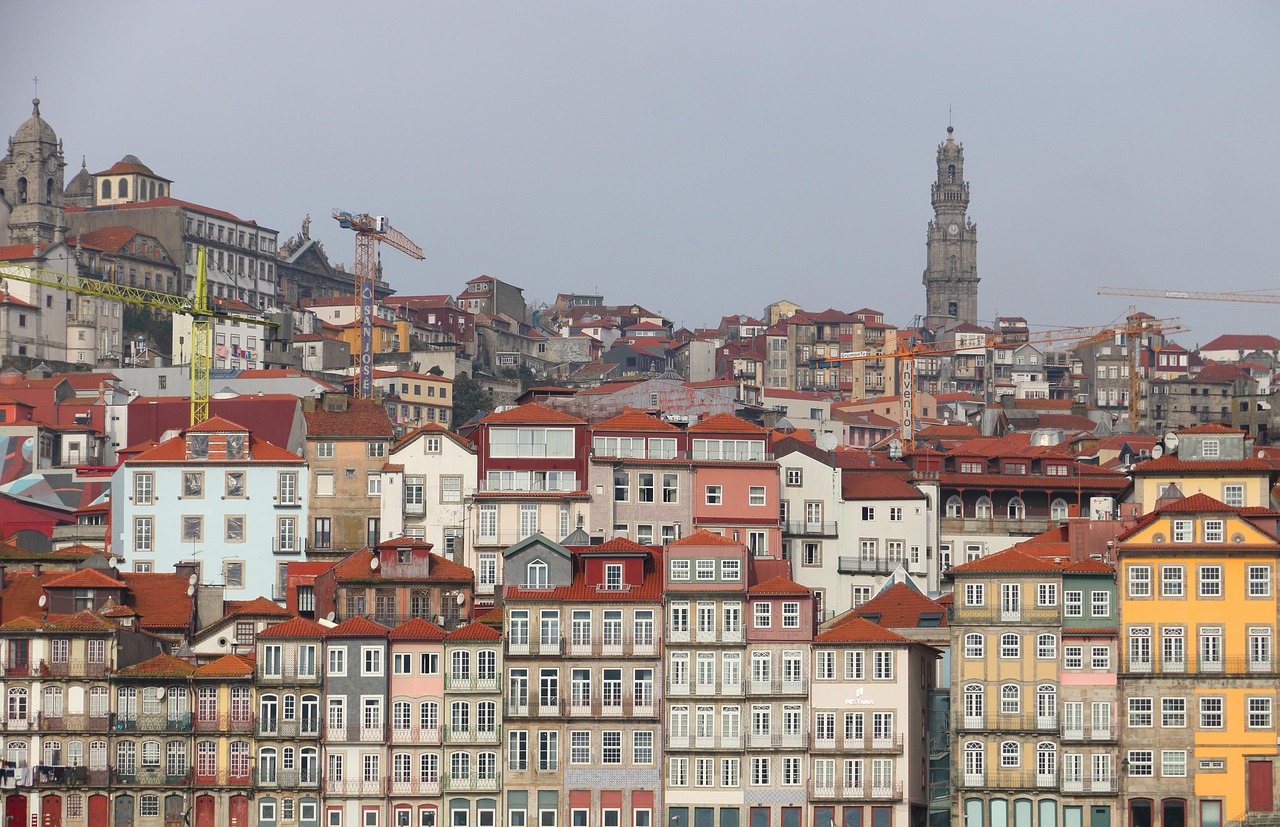
The postcard view: narrow, colourful houses stacked above the quay, laundry on balconies, café tables by the water and boats waiting to take you under the bridges. It is busy and touristy by day and lovely at dusk, when the lights come on across the river in Gaia. Stairways and alleys climb from here up to the cathedral.
Baixa (downtown)
The grand, sloping Avenida dos Aliados, São Bento station, the Clérigos Tower, Livraria Lello and the Bolhão market are all here, a few minutes’ walk apart. Rua de Santa Catarina is the main shopping street, and the side streets around Galerias de Paris fill with bars at night.
Cedofeita and Miguel Bombarda
Just west of the centre, this is Porto’s creative quarter: art galleries, design shops, vintage stores and relaxed brunch spots along Rua de Miguel Bombarda and Rua de Cedofeita. Gallery openings bring a young, local crowd out onto the street.
Foz do Douro
Where the river meets the ocean. Foz is calmer and greener, with a seafront promenade, small beaches between rocks, lighthouses at the river mouth and bars made for watching the sun go down over the Atlantic. The old tram line 1 runs here along the river from the centre.
Vila Nova de Gaia
Technically a separate city across the river, Gaia is where the port wine lodges have aged their wine for centuries. Its riverfront has cellars, terraces and the best view back to Ribeira. Above it, the Jardim do Morro garden and the Serra do Pilar viewpoint are where people gather at sunset.
Matosinhos
North of Foz, the fishing port of Matosinhos is where Porto goes for grilled fish and seafood and for a wide sandy beach popular with surfers. It is a separate municipality, reached from the centre by metro line A or by bus.
Top things to see in Porto
Prices and hours below were checked on the official sites in October 2026. They change, so check before you go.
Dom Luís I bridge
Porto’s iron landmark, finished in the 1880s, has two decks. Walk the upper deck (shared with metro line D) for a dizzy view down to the Ribeira rooftops, then take the lower deck at river level. Crossing at sunset, with the river turning gold, is one of the best free things to do in the city.
São Bento station
Even if you are not catching a train, step into the entrance hall. Its walls are covered with about 20,000 blue-and-white tiles (azulejos) by Jorge Colaço showing scenes from Portuguese history. It is a working station, free to enter, and the starting point for trains to the Douro Valley, Braga, Guimarães and Aveiro.
Clérigos Tower
Nicolau Nasoni’s baroque bell tower, finished in 1763, rises about 75 metres; 240 steps take you to a 360-degree view over the rooftops. As of October 2026 the day ticket (tower and museum) is €10, €7 for students and free up to age 10. It opens daily from 9:00 to 19:00 (last entry 30 minutes before closing), with extra night openings at Easter, in summer and at Christmas.
Livraria Lello
Open since 1906, this neo-Gothic bookshop with its twisting red staircase and stained-glass skylight is the most queued-for room in Porto. Entry is by ticket, and each ticket works as a voucher you can put towards a book. The basic ticket was €10 in October 2026, with pricier options that include priority entry. It opens daily from 9:00 to 19:30. Book online for a time slot and go at opening or in the last hour.
Porto Cathedral (Sé)
The fortress-like cathedral crowns the hill above Ribeira, with a big square and viewpoint in front. The church is free; the Gothic cloister lined with tiles has a €3 ticket. As of October 2026 it opens daily from 9:00 to 18:30 from April to October and 9:00 to 17:30 from November to March.
Palácio da Bolsa
The 19th-century stock exchange palace, still home to the city’s commercial association, is visited only on a guided tour of about 30 minutes (in Portuguese, English, Spanish or French). The highlight is the gilded Arab Room. Tours fill up, so book on the official booking page or go early to the ticket office. It occasionally closes for events.
Serralves
Out towards Foz, the Serralves Foundation combines a contemporary art museum by Álvaro Siza, a pink art deco villa and a large park with a treetop walk. As of October 2026 the general ticket for everything is €24 and the park alone is €15; children under 12 go free. A cheaper late-afternoon ticket (€15) runs Monday to Thursday from 17:00.
Casa da Música
Rem Koolhaas’s angular concert hall is worth seeing from inside. Guided tours take about an hour and cost €12 (€5 for ages 13–18, free under 12, as of October 2026). Tour times need confirming on the official site. Better still, catch a concert.
For art from the city’s own past, the Museu Nacional Soares dos Reis has Portuguese painting and sculpture in an 18th-century palace (€10, closed Mondays, as of October 2026). The Palácio de Cristal gardens next door are free and have peacocks and river views.
Monuments
- Clérigos Tower
- Livraria Lello
- Luiz I Bridge
- Palácio da Bolsa
- Church of São Francisco
- Ponte de D. Maria Pia
- Porto Cathedral
Other sights
- Casa da Música
Parks and gardens
Things to do in Porto
Taste port in the Gaia cellars
Walk across the bridge and pick a lodge. Most run visits through their barrel-lined cellars ending with a tasting of two or three ports, from fresh whites and rubies to aged tawnies. Formats differ: Taylor’s, for example, runs a self-guided audio tour in 13 languages, with its cellars open daily from 10:00 to 18:15 (as of October 2026). Book a slot online in summer, and keep the tasting for late afternoon so you can linger on a terrace afterwards.
Cruise under the six bridges
The classic boat trip runs daily from the Ribeira or Gaia quays, in a traditional rabelo-style boat, upstream and back under Porto’s six bridges. It takes about 50 minutes, and one official operator’s prices started from €18 as of October 2026. It is relaxed, good with kids and lovely in late-afternoon light.
Eat a francesinha (and everything else)
The francesinha is Porto’s famous heavy sandwich: layers of steak, ham and sausage under melted cheese, soaked in a spicy beer-and-tomato sauce, often with fries. Share one after a long walk. Also try a bifana (pork sandwich), tripas à moda do Porto (the tripe stew that gave locals their nickname, tripeiros), grilled sardines in summer, and a cimbalino (espresso) with a pastry. The restored Mercado do Bolhão is good for picnic supplies and a casual lunch. As of October 2026 the market opens Monday to Friday 8:00–20:00 and Saturday 8:00–18:00, closed Sundays.
Beaches at Foz and Matosinhos
On a warm day, do what locals do: head west to the sea. Foz has small rocky coves, the Pérgola da Foz and a long seafront promenade for walking or cycling. Further north, Matosinhos has a broad sandy beach with lifeguards in summer. The Atlantic here is cool even in August, so most people sunbathe and take quick, bracing swims. Afterwards, sit down for grilled fish in Matosinhos.
Surf at Matosinhos
Matosinhos is one of Portugal’s best beaches for learning to surf: a sandy-bottomed beach break, sheltered by the harbour wall, with many surf schools along the sand renting boards and wetsuits all year. Summer brings smaller, gentler waves for beginners; autumn to spring has bigger, more consistent swell.
Activities and best months
- Beaches and swimmingFoz beaches (Ourigo, Ingleses, Luz) hold a Blue Flag; summer sea temperature averages about 16 °C, so the water is cool. · source
- Boat tripsSix Bridges cruises on traditional rabelo boats run about 50 minutes from the historic centre upstream to Freixo and back. · source
- SurfingThe sea at Foz offers conditions for surfing and draws young surfers. · source
Day trips from Porto
Douro Valley
The terraced vineyards where port comes from are close enough for a day out. The scenic option is CP’s Douro line train: on the October 2026 timetable the faster InterRegional trains take about 1 hour 50 minutes from Porto Campanhã to Peso da Régua and about 2 hours 15 minutes to Pinhão, with the river beside you for the last stretch (sit on the right going upstream). You can also go by boat: full-day cruises sail upstream to Régua or Pinhão and bring you back by train or coach. One official booking platform listed them from €76 as of October 2026. See our Douro Valley guide to stay longer.
Guimarães
Called the “cradle of the nation”, Guimarães has a castle, a ducal palace and a beautifully kept medieval centre that UNESCO listed in 2001. Urban trains from São Bento take about 1 hour 5 minutes to 1 hour 15 minutes (2026 timetable).
Braga
One of Portugal’s oldest cities, full of churches and lively squares. Just outside it, the Bom Jesus do Monte sanctuary (UNESCO, 2019) has a monumental baroque stairway zig-zagging up the hill. Urban trains from São Bento take about 1 hour to 1 hour 15 minutes.
Aveiro
To the south, Aveiro is a lagoon town of canals, painted moliceiro boats and art nouveau facades, with striped beach houses nearby at Costa Nova. Urban trains from Campanhã take about an hour, and São Bento trains a few minutes more.
Nearby destinations
- Douro Valley92 km
- Coimbra106 km
- Rías Baixas136 km
- Nazaré177 km
- Santiago de Compostela193 km
- Salamanca248 km
- Sintra270 km
- Lisbon275 km
Getting to Porto
From the airport. Francisco Sá Carneiro airport is north of the city. Metro line E (violet) leaves from the terminal to Trindade in the centre in about half an hour. The airport is in zone Z4: a single Z4 ride costs €2.30 plus €0.60 for the rechargeable Andante card (as of October 2026). You can also tap a contactless bank card at the Aeroporto station validators marked for it and pay the same Z4 fare. STCP buses 601 and 602 run to Cordoaria in the centre from about 5:30 to midnight, roughly every 25 minutes. Taxis wait outside arrivals, and the usual ride-hailing apps work too.
From Lisbon. The train is the easy way. On CP’s September 2026 timetable the Alfa Pendular takes about 2 hours 45 minutes between Lisboa Oriente and Porto Campanhã. Intercidades trains are a little slower and cheaper. From Campanhã, take a short connecting train or the metro into the centre. More on travelling around the country is in our Portugal guide.
Getting around Porto
- Walking: the centre is small, but the hills are real: Ribeira to Aliados is a steep climb. Plan routes downhill, and use the metro or a taxi to get back up.
- Andante card: one ticket for metro, STCP buses and urban trains. Load single rides by zone; a Z2 ride (€1.40, valid 1 hour) covers most trips in and around the centre. The Andante Tour pass costs €7.75 for 24 hours or €16.55 for 72 hours (as of October 2026), but it is not valid on the historic trams or the Guindais funicular.
- Metro: six lines (A to F), with Trindade as the main interchange. Line D crosses the upper deck of the Dom Luís I bridge to Gaia. A new Pink line between São Bento and Casa da Música is not expected to open before early 2027.
- Historic trams: STCP runs three vintage lines. Line 1 follows the river to Foz, line 18 climbs from Massarelos to Carmo, and line 22 (back since summer 2026) loops through downtown. Single tickets bought on board cost €6, or €3.50 for children aged 4–12 (as of October 2026).
- Guindais funicular: it normally links Ribeira with Batalha, but STCP lists it as closed for maintenance as of October 2026. Check before relying on it.
A note on the Porto.CARD, the city’s official sightseeing pass: its official booking page says it has been off sale since July 2026 while the product is restructured. Check the official Visit Porto booking page for its return.
When to go and how long to stay
Porto is mild all year but much wetter than Lisbon. The table uses IPMA’s official 1991–2020 climate normals for the Porto/Pedras Rubras station, at the airport just north of the city: average daily highs and lows, and the number of days with at least 1 mm of rain.
| Season | Average high / low | Rainy days per month | What it’s like |
|---|---|---|---|
| Spring (Mar–May) | 17–20 °C / 9–12 °C | 9–10 | Fresh and green, with showers; good for walking and wine tastings |
| Summer (Jun–Aug) | 23–25 °C / 14–16 °C | 3–5 | Warm, not hot; São João in June; busiest months |
| Autumn (Sep–Nov) | 24 °C falling to 17 °C / 15 °C falling to 9 °C | 6 in September, 11–13 in October–November | September is lovely and harvest time in the Douro; the rain returns in October |
| Winter (Dec–Feb) | 14–15 °C / 6–8 °C | 10–13 | Cool and rainy, quiet and cheaper; cosy cellars and cafés |
Porto gets about 1,150 mm of rain a year, and November is the wettest month (about 166 mm). Its highlight event is São João: on the night of 23 June the whole city parties in the streets until morning, with grilled sardines, music stages and fireworks over the river at midnight. The 24th is the city’s holiday, and some museums close that day.
Porto in 2 days
Day 1: São Bento station, Livraria Lello at opening, the Clérigos Tower, lunch near Bolhão, then down through the cathedral to Ribeira. Cross the Dom Luís I bridge to Gaia for a cellar tasting, and finish with sunset at the Jardim do Morro. Day 2: the Palácio da Bolsa, the six bridges cruise, then the tram line 1 out to Foz for a seafront walk and dinner in Matosinhos.
Porto in 3 days
Add a slower day: the morning at Serralves, the afternoon in the Miguel Bombarda galleries and the Palácio de Cristal gardens, and a concert at Casa da Música. Or spend it in the Douro Valley by train. With a fourth day, add Guimarães or Braga.
Weather month by month
Averages from IPMA normals 1991–2020, Porto / Pedras Rubras · Last reviewed 3 Oct 2026
Where to stay in Porto
- Baixa / Aliados: the most practical base for a first visit, flat-ish, with metro, trains and most sights on foot.
- Ribeira and the Sé: atmospheric and right on the river, but noisy at night and very steep, with many stairs and few lifts in old buildings.
- Cedofeita / Bombarda: a local feel, cafés and galleries, 10–15 minutes’ walk from the centre.
- Vila Nova de Gaia: the classic view of Porto and the cellars on your doorstep; the metro and bridge take you across.
- Foz and Matosinhos: for beach days, surfing and seafood, with a metro, bus or tram ride into town.
Whatever you book, the €3 nightly tourist tax is added on top of the room rate.
Practical tips for Porto
- Beat the Lello queue: book a time slot online and go at 9:00 or in the last hour. The same goes for the Clérigos Tower in summer.
- Respect the hills: streets are steep and the granite cobbles get slippery in rain. Wear shoes with grip, and plan to walk downhill.
- Expect rain outside summer: from October to April, about one day in three is rainy. Pack a proper rain jacket rather than relying on an umbrella in the wind.
- Mondays: some museums close, including the Soares dos Reis national museum. Use Mondays for the river, the cellars and the beach.
- Sundays: the Bolhão market is closed and many small shops shut; Ribeira and Gaia stay lively.
- Sunset spots fill early: arrive 30–45 minutes ahead at Jardim do Morro or Serra do Pilar.
What to pack for Porto
Comfortable shoes with good grip come first. Add a waterproof jacket for any trip from autumn to spring, and a light sweater even in summer, because evenings by the ocean in Foz can be cool and misty. For the beach, bring sunscreen, sunglasses and a towel; surf schools provide wetsuits. A small day bag with a reusable water bottle is enough for city walks, and leave a little room for a bottle of port.
What to pack
- Day packs and anti-theft bagsCarries water, towel and sunscreen down the long stairways to Algarve coves.
- Dry bags and phone pouchesProtects phones and cameras from sand and spray on beaches reached by ferry or steep paths.
- Fleeces and warm layersIt is cooler at sea than on land, especially on morning whale-watching trips.
- Quick-dry beach towelsA sand-shedding quick-dry towel packs small for beach days and lido visits.
- Rain jacketsA windproof, waterproof shell keeps you warm on open boats, where wind and spray cool you quickly.
- Reef-friendly sunscreenSummer UV is strong on Portuguese beaches and there is little shade below the cliffs.
- Surf accessories (boots, leashes, wax)Neoprene boots keep feet warm in winter and protect them on rock and reef breaks.
- Water shoesRocky coves, lava pools and weever fish in shallow sand make water shoes useful.
- WetsuitsOn the west and north coasts the sea stays around 16–18 °C even in summer, so a thin suit helps for long swims.
Porto travel FAQ
How many days do you need in Porto?
Two days covers the main sights, the cellars and a river cruise. Three days lets you add Foz, Serralves or the beach at an easy pace, and four days leaves room for a day in the Douro Valley.
What is the best time to visit Porto?
May, June and September are best, with average highs of about 20–24 °C and fewer rainy days. July and August are warmest but busiest. From October to April expect frequent rain.
How do I get from Porto airport to the city centre?
Take metro line E from the terminal to Trindade, about half an hour. As of October 2026 it costs €2.30 for a Z4 ride plus €0.60 for the Andante card, or you can tap a contactless bank card at the marked validators. Taxis and STCP buses 601 and 602 are the alternatives.
Do I need to book Livraria Lello in advance?
It is wise to. Entry is by ticket (from €10 as of October 2026, redeemable against a book), and online time slots help you skip the longest queue. Go at opening or late in the day.
Which port wine cellar should I visit?
Any of the big Gaia lodges gives a good introduction, and they differ mostly in format: guided or self-guided, simple or premium tastings, with food pairings or without. Pick one whose visit times suit you, book online in summer, and walk between two if you are keen.
Is Porto very hilly?
Yes. The centre climbs steeply from the river, with stairways and cobbles. Plan to walk downhill, use the metro or a taxi going up, and wear shoes with grip.
Can you swim at Porto’s beaches?
Yes. Matosinhos and the beaches at Foz have lifeguards in the bathing season. The Atlantic is cool even in summer, so swims tend to be short; obey the beach flags.
Is Matosinhos good for learning to surf?
It is one of the best beginner spots in Portugal: a sandy beach break sheltered by the harbour, with surf schools open all year. Summer waves are smallest; autumn to spring brings bigger swell.
Is the Andante Tour card worth it?
Only if you ride a lot. A 24-hour Tour is €7.75 (as of October 2026), while a single Z2 ride in the centre is €1.40, so you need about six rides a day to save. It does not cover the historic trams or the funicular.
Can I do the Douro Valley as a day trip from Porto?
Yes. Trains from Campanhã reach Régua in about 1 hour 50 minutes and Pinhão in about 2 hours 15 minutes on the faster services, and boat cruises run upstream for a full day. A night in the valley is more relaxed.
When is São João in Porto?
Every year on the night of 23 June, running into the 24th, the city’s holiday. Expect crowds, street parties, grilled sardines and fireworks over the Douro at midnight. Book accommodation early.
How much is the tourist tax in Porto?
As of October 2026, €3 per guest per night for anyone aged 13 or over, charged for up to 7 nights and paid at your accommodation.
Is the Porto.CARD available?
Not at the moment. The official booking page says the Porto.CARD has been off sale since July 2026 while it is restructured. Single tickets and the Andante card work fine in the meantime.
Sources
- © OpenStreetMap contributors · ODbL · fetched 3 Oct 2026
- Wikidata · CC0 · fetched 3 Oct 2026
Sources and last review
Researched and last reviewed on 3 October 2026. Climate figures come from IPMA’s 1991–2020 normals for Porto/Pedras Rubras; fares from Andante (TIP), STCP and CP timetables; the tourist tax from Porto City Council; and opening hours and prices from the official sites of the Clérigos Tower, Livraria Lello, Porto Cathedral (Cultura Portugal), Serralves, Casa da Música, the Museu Nacional Soares dos Reis, the Bolhão market, Taylor’s and the Visit Porto and North booking platform. Prices, hours and timetables change, so check the official links before you go.
Plan your trip
Partner links: TravelerCenter may earn a commission if you book, at no extra cost to you.
🇵🇹 Useful Portuguese phrases for Porto
All 38 Portuguese phrases: restaurant, hotel, emergencies, romance (printable) →
Traveler centers in Porto
Tourist information offices, visitor centers and travel agencies in Porto, from OpenStreetMap.
- Travel agency
Inatel
- Travel agency
Top Biketours Portugal
- Tourist information office
Tourism Office – Sé (Medieval Tower)
- Travel agency
TRAVEL iNTi Free Walking Tours
- Travel agency
Citybreak Tourism Point
- Travel agency
Manos do Douro – Cruzeiros Turísticos no Douro