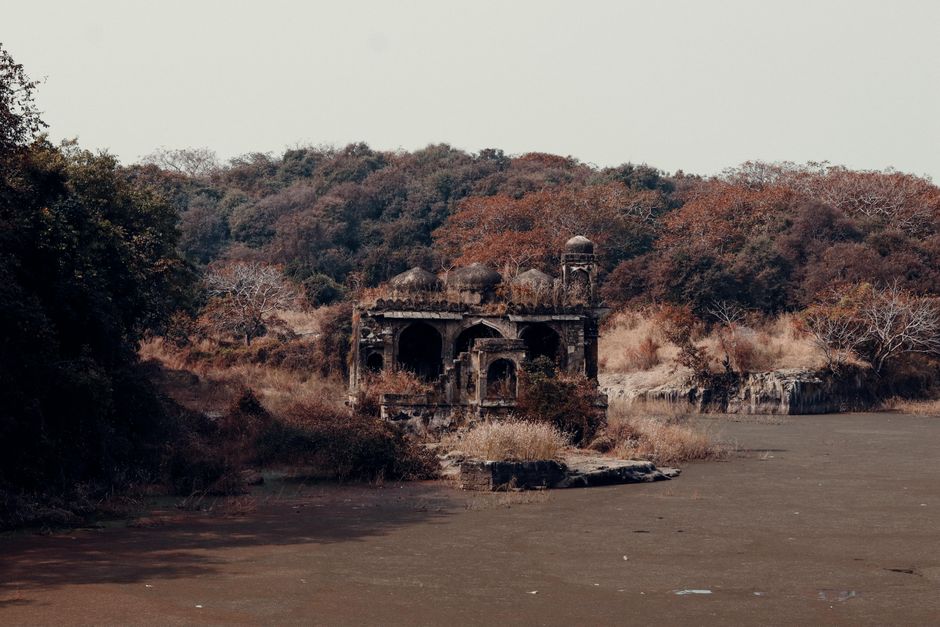
Ranthambore National Park, in eastern Rajasthan, is one of the best places in the world to see a wild tiger. Set where the Aravalli and Vindhya hills meet, its dry deciduous forest of dhok trees, banyans, grassy meadows and rocky ridges is scattered with lakes, crumbling pavilions and chhatris, and crowned by the thousand-year-old Ranthambore Fort, so tigers here are often photographed against ruins and lakeshores. Once a hunting ground of the Maharajas of Jaipur, Ranthambore became a wildlife sanctuary in 1955, one of India’s first tiger reserves under Project Tiger in 1973–74, and a national park in 1980. According to the National Tiger Conservation Authority (NTCA), the Ranthambore Tiger Reserve covers about 1,411 km² (545 sq miles), including a core of about 1,113 km² (430 sq miles), and the reserve’s official safari website counts more than 50 resident tigers. Leopards, sloth bears, striped hyenas, sambar and chital deer, mugger crocodiles and more than 300 bird species share the forest. Visitors explore in open jeeps (Gypsies) and larger canters, on morning and afternoon safaris into ten zones, booked through the Rajasthan Forest Department’s official online system. The gateway is the town of Sawai Madhopur, on the main Delhi–Mumbai railway. The park’s main zones are open from October to June and close during the monsoon, from July to September.
Right now in Ranthambore National Park (Ranthambore)
- Wed22–34°C72–94°FClear
- Thu22–34°C72–93°FClear
- Fri22–32°C72–90°FClear
Top tours in Ranthambore National Park
See all tours for Ranthambore National Park →
From local operators, with prices and reviews; you check availability and book on Viator, our partner. We may earn a commission at no extra cost to you. How we earn money
Ranthambore at a glance
- Best for: tiger safaris, leopards and sloth bears, birding, Ranthambore Fort, and photography among lakes and ruins.
- How long: 2 nights for three or four safaris; 3 or 4 nights to improve your chances and visit the fort.
- Best time: October to June; March to May, though very hot, gives the best tiger sightings as animals gather at water. Zones 1 to 5 close from July to September.
- Getting there: Sawai Madhopur is about 166 km (103 miles) from Jaipur and about 352 km (219 miles) from Delhi; trains from Delhi, Jaipur, Agra, Kota and Mumbai stop at Sawai Madhopur Junction.
- Safaris: book Gypsy or canter seats on the Forest Department’s official portal, booking.forestrajasthan.com; advance bookings open months ahead and fill fast.
- Rules to know: stay in the vehicle, keep quiet, never feed animals, carry the ID used for the booking, and take no plastic into the park.
- Before you go: the e-Visa, money, trains and general safety are in our India travel guide.
Safaris, zones and booking (as of October 2026)
Ranthambore is managed by the Rajasthan Forest Department, and all safaris inside the reserve are in Forest Department–registered vehicles, with a driver and a naturalist guide. Private cars are not allowed on the safari tracks.
Safari zones
According to the reserve’s official safari website, the park is divided into ten zones, each with its own routes, typically of 12 to 27 km (7 to 17 miles). Zones 1 to 5 cover the heart of the park, including the lakes and the fort area:
- Zone 1: Singhdwar, Raipur, Sultanpur and Kalapan, about 20 km (12 miles).
- Zone 2: Jogi Mahal, Jhalra, Kamaldhar and Gandhria, about 20 km (12 miles).
- Zone 3: Jogi Mahal, Padam Talao and Rajbagh, about 18 km (11 miles), the famous lake route.
- Zone 4: Lakarda, Berda and Adidant, about 27 km (17 miles).
- Zone 5: Jokha, Kachida, Bagdah and Bakola, about 18 km (11 miles).
- Zones 6 to 10: Kundal, Mansarovar and Guda (6); Chidikho and Kushalidarra (7); Balas, Kalibhat and Mahakho (8); Qualji, Ghati ka Tiraha and Pandu Kho (9); and Halonda, Kailashpuri and Devpura (10), on the park’s outer areas.
Zones are allocated when you book, subject to availability, and every zone has resident tigers, so sightings depend on luck rather than the zone number.
Gypsy or canter
A Gypsy (open jeep) carries up to six visitors and is quieter, more flexible and better for photography; you can book individual seats or the whole vehicle. A canter is a larger open truck with about 20 seats, cheaper per person but noisier and slower. Both carry a guide.
How to book
Book only on the Forest Department’s official portal, booking.forestrajasthan.com, where you choose the date, the morning or afternoon safari, the vehicle type, and enter the details and ID of each Indian or foreign visitor. According to the reserve’s official website, advance bookings for visits from 1 October to 31 December open on 1 August, for 1 January to 31 March on 1 November, and for 1 April to 30 June on 1 February, each at noon; “current” seats for the same afternoon or next morning open daily at 10 a.m., and Tatkal (late) bookings open daily for a week ahead at higher prices. Hotels and agents can book on your behalf for a fee. Bring the same photo ID (your passport, for foreigners) that you used to book; it is checked at the gate.
Fees and timings
Safari prices depend on nationality, vehicle and booking type and include the park entry, vehicle and guide fees; foreigners pay more than Indians. Expect roughly ₹1,800 to ₹2,600 per seat in a Gypsy for foreigners and about ₹1,100 to ₹1,700 for Indians, with canter seats cheaper; booking the whole Gypsy costs several times a single seat. These are estimates, as the official booking portal could not be checked; it shows the current price before you pay. Safaris run twice a day, in the early morning and the afternoon, each lasting about 3 hours, with times that shift with the season; the portal shows the current timings.
The monsoon closure
The park’s main season runs from 1 October to 30 June. During the monsoon, from July to September, the core zones 1 to 5 are closed to protect wildlife and because tracks wash out, while some of the outer zones, 6 to 10, may stay open, depending on the weather and Forest Department orders. If you visit in the monsoon, expect fewer options and check bookings carefully.
Wildlife and where to see it
Tigers
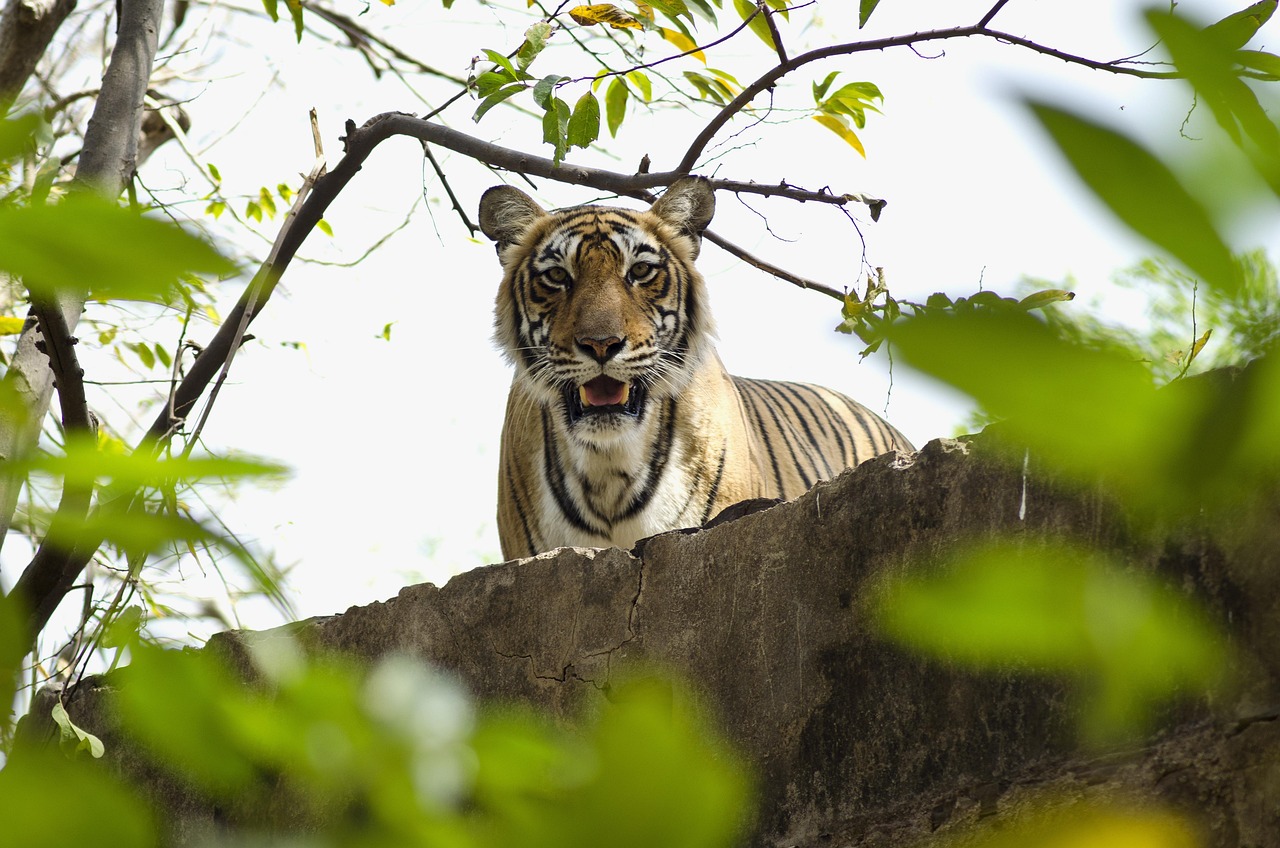
Ranthambore’s tigers became world-famous in the 1980s and 1990s for hunting by day around the lakes, and several individuals, such as the tigress Machli, the “Lady of the Lakes,” became celebrities. Today the population is spread across the core and buffer, and the reserve’s official website counts more than 50 resident tigers. Sightings are never guaranteed, but they are among the most likely in India, especially from March to May, when the grass is dry and tigers come to water. Three or four safaris give a good chance.
Leopards, sloth bears and hyenas
Leopards keep to the rocky hills and the edges of the park, away from tigers, and are often seen near the fort and in the outer zones. Sloth bears forage for termites and fruit, especially in the evenings, and striped hyenas, jungle cats, caracals and jackals are occasional sightings.
Deer, antelope and crocodiles
Sambar deer, the largest deer in India, wade in the lakes to feed on water plants; chital (spotted deer) graze in herds; and nilgai, chinkara gazelles, wild boar and langur monkeys are common. Mugger crocodiles bask around the lakes of Padam Talao, Rajbagh and Malik Talao.
Birds
With more than 300 species, Ranthambore is excellent for birding, especially in winter, when migrants arrive: painted storks, crested serpent eagles, great horned owls, Indian peafowl, paradise flycatchers, kingfishers and parakeets. Many lodges offer bird walks outside the park.
Things to do in Ranthambore
Ranthambore Fort
The fort, built from the 10th century onward on a 200 m (660 ft) hill inside the park, is part of the Hill Forts of Rajasthan UNESCO World Heritage Site. Its walls enclose gateways, palaces, step wells, Hindu and Jain temples and a mosque, with sweeping views over the forest and lakes. The Trinetra Ganesh Temple inside draws thousands of pilgrims, especially on Wednesdays and during the Ganesh Chaturthi fair. The road to the fort passes through Zone 1 but is open to visitors without a safari ticket, by day; leopards and langurs are often seen near the ramparts. Allow 2 to 3 hours, and go in the morning or late afternoon.
Lakes and ruins
On safari in Zones 3 and 4, look for Padam Talao, the largest lake, with the Jogi Mahal (a former hunting lodge) at its edge and one of India’s largest banyan trees; Rajbagh Talao, with ruined palaces and arches; and Malik Talao, with crocodiles and birds.
Village walks and crafts
The villages around the park, home to farmers and pastoralists, offer a glimpse of rural Rajasthani life. Local craft projects, set up partly to provide incomes in villages relocated from the park, sell block-printed textiles, embroidery and tiger-themed crafts.
Food and drink
Most visitors eat at their lodge, often buffets of Rajasthani and North Indian dishes: dal baati churma, gatte ki sabzi, ker sangri, laal maas, kachori and lassi. Sawai Madhopur town has simple eateries near the station. Drink bottled or filtered water, and carry it on safaris.
Around Ranthambore
- Sawai Madhopur: the gateway town, about 10 km (6 miles) from the park gates, with the station, markets and the Shilpgram craft village.
- Chambal River: the National Chambal Sanctuary, a stronghold of the rare gharial, river dolphins and skimmers, with boat trips at Palighat, about 35 km (22 miles) southeast.
- Kailadevi Wildlife Sanctuary: part of the wider tiger reserve, with forests and gorges to the northeast, seldom visited.
- Bundi: a small town of painted palaces and stepwells, about 140 km (87 miles) southwest.
- Jaipur: the Pink City is about 3 hours by train or road. See our Jaipur travel guide.
- Agra and Delhi: direct trains run to Agra and Delhi. See our Agra and Delhi travel guides.
Getting there
By train
Sawai Madhopur Junction is on the main Delhi–Mumbai line and has direct trains to Delhi (about 5 to 6 hours), Jaipur (about 2 to 3 hours), Agra, Kota, Mumbai and Udaipur. The station is about 10 km (6 miles) from the park’s main gates; lodges arrange pickups.
By air
The nearest major airport is Jaipur International Airport, about 166 km (103 miles) away, which is a designated e-Visa entry airport. From Jaipur, take a train or a car and driver (3 to 4 hours). Delhi is the main international gateway for most visitors.
By road
Good highways link Sawai Madhopur with Jaipur, Kota, Agra and Delhi, and many travelers include Ranthambore in a car-and-driver tour of Rajasthan’s Golden Triangle (Delhi, Agra and Jaipur). See our Udaipur travel guide for the western part of the state.
Getting around
The lodges are spread along the road between Sawai Madhopur and the park gates, and the safari vehicles pick you up from your hotel or from the booking office. Auto-rickshaws and taxis cover the town and the fort road. Private cars cannot enter the safari zones.
When to go and how long to stay
Ranthambore has a hot, semi-arid climate. October to February is pleasant, with highs of 23 to 34 °C (73 to 94 °F), green forest after the monsoon and cool mornings; in December and January, dawn temperatures fall to about 8 to 10 °C (46 to 49 °F), and open jeeps are very cold. March to June is hot and dry, reaching 42 °C (108 °F) in May, but this is the best time to see tigers at waterholes. The monsoon, from July to September, brings most of the year’s rain, and the core zones close. The table shows 1991–2020 normals for the Sawai Madhopur station, about 13 km (8 miles) from the park, from the India Meteorological Department (IMD), as published by the World Meteorological Organization (WMO); rainy days are days with at least 2.5 mm of rain.
| Month | Average high / low | Rain (rainy days) | What to expect |
|---|---|---|---|
| January | 23 °C (73 °F) / 8 °C (46 °F) | 8 mm (0.3 in), under 1 day | Cold mornings; good birding |
| February | 28 °C (82 °F) / 12 °C (53 °F) | 8 mm (0.3 in), under 1 day | Pleasant; good sightings |
| March | 34 °C (93 °F) / 17 °C (63 °F) | 3 mm (0.1 in), under 1 day | Warm; grass drying |
| April | 40 °C (103 °F) / 23 °C (73 °F) | 7 mm (0.3 in), under 1 day | Hot; tigers at waterholes |
| May | 42 °C (108 °F) / 28 °C (82 °F) | 10 mm (0.4 in), 1 day | Hottest; best sightings |
| June | 40 °C (105 °F) / 28 °C (82 °F) | 82 mm (3.2 in), 4 days | Very hot; last month of the season |
| July | 34 °C (94 °F) / 25 °C (77 °F) | 265 mm (10.4 in), 10 days | Monsoon; core zones closed |
| August | 32 °C (90 °F) / 24 °C (75 °F) | 275 mm (10.8 in), 12 days | Wettest; core zones closed |
| September | 34 °C (94 °F) / 24 °C (74 °F) | 107 mm (4.2 in), 5 days | Rains ending; core zones closed |
| October | 34 °C (94 °F) / 19 °C (67 °F) | 17 mm (0.7 in), under 1 day | Park reopens; lush forest |
| November | 30 °C (86 °F) / 14 °C (57 °F) | 9 mm (0.3 in), under 1 day | Pleasant; busy at Diwali |
| December | 25 °C (76 °F) / 10 °C (49 °F) | 2 mm (0.1 in), under 1 day | Cold dawns; peak holiday season |
The area gets about 790 mm (31 in) of rain a year, almost all of it from June to September.
Two nights in Ranthambore
Arrive by the morning train, take an afternoon safari, then morning and afternoon safaris on the second day, with a morning safari and the fort before leaving on the third. Book different zones or a mix of Gypsy and canter to see more of the park.
Three or four nights
Add more safaris to improve your odds of a tiger sighting, a visit to Ranthambore Fort and the Trinetra Ganesh Temple, a village or bird walk, and a half-day trip to the Chambal River for gharials.
Where to stay
Accommodation lines the Ranthambore Road between Sawai Madhopur and the park gates:
- Luxury lodges and tented camps: spacious grounds, naturalist talks and pools, some of them former hunting estates.
- Mid-range resorts: comfortable hotels close to the gates, most of which arrange safaris and pickups.
- Budget hotels and guesthouses: near the station and in town; simpler but well located for trains.
- Forest and heritage properties: a few historic hunting lodges and state-run hotels.
Book early for October to March, Christmas, New Year and Diwali, when rooms and safari seats run out.
What a trip to Ranthambore costs
Prices are approximate, for October 2026, converted at about 96 rupees (₹) to the US dollar. Safari prices are estimates, as the official booking portal could not be checked; it shows the current price before payment.
| Item | Typical cost |
|---|---|
| Gypsy safari seat, foreigners | ₹1,800–2,600 (about US$19–27) |
| Gypsy safari seat, Indians | ₹1,100–1,700 (about US$11–18) |
| Canter safari seat, foreigners | ₹1,200–1,800 (about US$13–19) |
| Whole Gypsy for a private safari (six seats) | ₹10,000–16,000 (about US$104–167) |
| Train, Jaipur to Sawai Madhopur, AC chair or sleeper | ₹300–1,000 (about US$3.10–10) |
| Car and driver from Jaipur, one way | ₹4,000–6,500 (about US$42–68) |
| Lodge buffet meal | ₹600–1,500 (about US$6.30–16) |
| Mid-range resort double, per night | ₹4,000–10,000 (about US$42–104) |
| Luxury lodge, per night with meals | ₹15,000–60,000 (about US$156–625) |
Practical tips for Ranthambore
- Book early: advance seats for October to March are released months ahead and sell out quickly.
- Use only the official portal: many look-alike websites resell safaris; the Forest Department’s portal is booking.forestrajasthan.com.
- Bring your passport: the name and ID on the booking are checked at the gate.
- Dress in muted colors: browns and greens, never white or bright colors, and layers for cold winter dawns.
- Bring binoculars: they make all the difference for leopards, birds and distant tigers.
Safety
Ranthambore is safe for visitors who follow the park’s rules. Tiger safari rules: stay inside the vehicle at all times and do not stand up when animals are close; keep quiet and turn phones to silent; never feed, call or tease animals; do not ask drivers to leave the track or crowd a tiger; carry no plastic, food wrappers or litter; and do not fly drones. Your guide’s instructions are final, and breaking the rules can lead to fines under India’s wildlife laws. Wild animals also come close to the fort road and the villages, so do not walk in the forest, and keep away from monkeys. Heat: from April to June, temperatures reach 42 °C (108 °F); wear a hat, cover up against the sun and dust in open vehicles, and drink plenty of water. Cold: winter dawns in an open jeep can feel near freezing; bring a warm jacket, hat and gloves. Monsoon: heavy rain from July to September closes the core zones and can flood roads. Roads: drive carefully at night, when cattle and wildlife cross. In an emergency, call 112.
What to pack for Ranthambore
Clothes in neutral greens and browns, a warm jacket, hat, scarf and gloves for winter safaris, a wide-brimmed hat, sunglasses and high-factor sunscreen for summer, a buff or scarf against dust, binoculars, a camera with a zoom lens, a reusable water bottle, and your passport. India uses 230 V, with round-pin plugs of types C, D and M. See our travel adapters guide.
Ranthambore travel FAQ
How do I book a Ranthambore safari?
On the Rajasthan Forest Department’s official portal, booking.forestrajasthan.com, choosing the date, morning or afternoon, Gypsy or canter, and entering each visitor’s ID.
When does Ranthambore close for the monsoon?
The main season runs from 1 October to 30 June. From July to September, core zones 1 to 5 are closed; some outer zones may stay open depending on the weather.
How much does a Ranthambore safari cost?
Expect roughly ₹1,800 to ₹2,600 per Gypsy seat for foreigners and ₹1,100 to ₹1,700 for Indians, with canter seats cheaper. The official portal shows the current price.
Which is the best zone in Ranthambore?
Every zone has resident tigers. Zones 1 to 5, around the lakes and the fort, are the classic routes, but sightings depend on luck.
Gypsy or canter: which is better?
A Gypsy carries up to six people and is quieter and better for photography; a canter carries about 20 and is cheaper per seat.
When is the best time to see tigers in Ranthambore?
March to May, when it is hot and dry and tigers come to the lakes and waterholes. October to February is more comfortable.
How many safaris should I do?
Three or four safaris over two or three days give a good chance of seeing a tiger.
How do I get from Jaipur to Ranthambore?
By train to Sawai Madhopur in about 2 to 3 hours, or by car in 3 to 4 hours.
Can I visit Ranthambore Fort without a safari?
Yes. The fort road is open by day to visitors and pilgrims to the Trinetra Ganesh Temple without a safari ticket.
Is Ranthambore safe?
Yes, if you follow the rules: stay in the vehicle, keep quiet and listen to your guide, and prepare for heat or cold.
Plan your trip
Partner links: TravelerCenter may earn a commission if you book, at no extra cost to you.
🇮🇳 Useful Hindi phrases for Ranthambore National Park
All 38 Hindi phrases: restaurant, hotel, emergencies, romance (printable) →
Sources · last reviewed 5 October 2026
Researched and last reviewed on 5 October 2026. The tiger reserve’s establishment and core, buffer and total area: the National Tiger Conservation Authority (NTCA); the ten safari zones and routes, vehicle types, booking windows and portal, the October-to-June season, the resident tiger count and road distances: the Ranthambhore Tiger Reserve’s official safari website, linked by the NTCA; the national park’s 1980 status: Wikidata; Jaipur as a designated e-Visa airport: the Bureau of Immigration; climate normals for the Sawai Madhopur station: the India Meteorological Department, via the World Meteorological Organization (1991–2020 normals archived by NOAA’s National Centers for Environmental Information); the exchange rate: the Reserve Bank of India (FBIL reference rate). The Forest Department’s booking portal and the Rajasthan government’s websites could not be reached, so safari prices and timings, the outer zones’ monsoon opening, the safari rules as stated here, the fort’s UNESCO listing, distances and typical prices are general references or estimates, flagged for checking. Prices and rules change, so check before you go. For the e-Visa, money and trains, see our India travel guide.
Data: Weather: MET Norway (CC BY 4.0) · Rates: ECB · Costs: World Bank ICP and price levels · Wikidata (CC0)