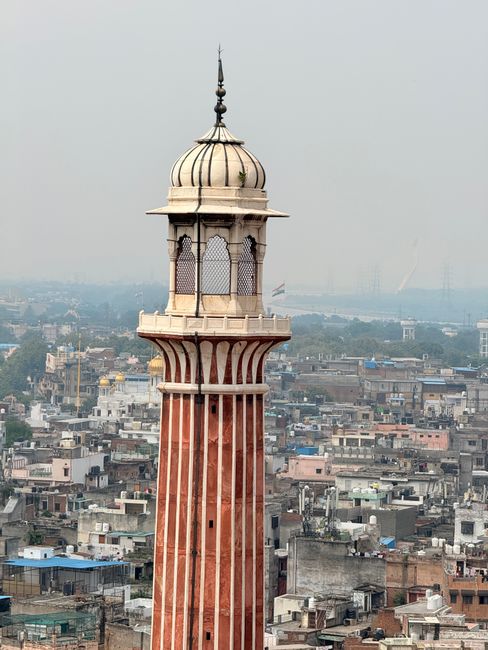
Delhi, India’s capital region, is a city of layers: a succession of historic cities built on the plains beside the Yamuna River, from the 12th-century Qutub Minar to the Mughal capital of Shahjahanabad, now Old Delhi, and the avenues of New Delhi laid out by the British in the 1920s and 1930s. Three of its monuments are UNESCO World Heritage Sites: the Red Fort, Humayun’s Tomb and the Qutub Minar complex. Around them sprawls one of the largest urban areas on Earth, with spice markets, Sikh gurdwaras, Sufi shrines, Mughal gardens and some of the best food in India. Delhi is also the main gateway for the Golden Triangle with Agra and Jaipur, linked to both by fast trains. The most comfortable months are October to March; summers are fiercely hot, and in winter, from November to January, air pollution often reaches very poor or severe levels.
Right now in Delhi
- Wed 24–33°C 74–91°F Clear
- Thu 24–33°C 75–91°F Mostly clear
- Fri 24–28°C 74–83°F 1 mm Mostly clear
Weather: MET Norway (CC BY 4.0)
Top tours in Delhi
See all tours for Delhi →
From local operators, with prices and reviews; you check availability and book on Viator, our partner. We may earn a commission at no extra cost to you. How we earn money
Delhi at a glance
- Best for: Mughal monuments, street food, markets, museums, and the start of a Golden Triangle trip to Agra and Jaipur.
- How long: 3 days for the main sights of Old and New Delhi; 4 or 5 with museums, south Delhi and a slower pace.
- Best time: October to March; February, March and October have the cleanest air of the cool season.
- Getting there: Indira Gandhi International Airport (DEL), India’s busiest airport, is about 16 km (10 miles) southwest of Connaught Place, with an express metro line to the center.
- Getting around: the Delhi Metro reaches almost every sight; use ride-hailing apps or auto-rickshaws for the gaps.
- Good to know: foreigners pay ₹550 (about US$5.70) online for each of the three World Heritage Sites; the Red Fort is closed on Mondays.
- Before you go: the e-Visa, money, trains and general safety are in our India travel guide.
Delhi’s areas and where to stay
Delhi is huge, so most first-time visitors stay in central New Delhi, close to a metro line.
Old Delhi
Shah Jahan’s walled city of the 1640s, with the Red Fort, the Jama Masjid and Chandni Chowk, is the most atmospheric and chaotic part of Delhi. A few restored havelis (mansions) offer heritage rooms; most visitors come for the day.
Connaught Place and Paharganj
Connaught Place, the white colonnaded circle at the heart of New Delhi, has hotels, restaurants and bars on two metro lines. Paharganj, beside New Delhi Railway Station, is the budget district: cheap guesthouses and rooftop cafés, but noisy and full of touts.
Karol Bagh
West of Connaught Place, Karol Bagh is a busy shopping district with many mid-range hotels popular with Indian families, on the Blue Line of the metro.
South Delhi
Leafy neighborhoods such as Defence Colony, Greater Kailash and Hauz Khas have boutique hotels, guesthouses and the city’s best restaurants and nightlife, close to the Qutub Minar and Humayun’s Tomb.
Aerocity
The hotel district beside the airport has international chain hotels and its own metro station, a practical choice for a first or last night or for an early train or flight.
Top things to see in Delhi
Red Fort (Lal Qila)
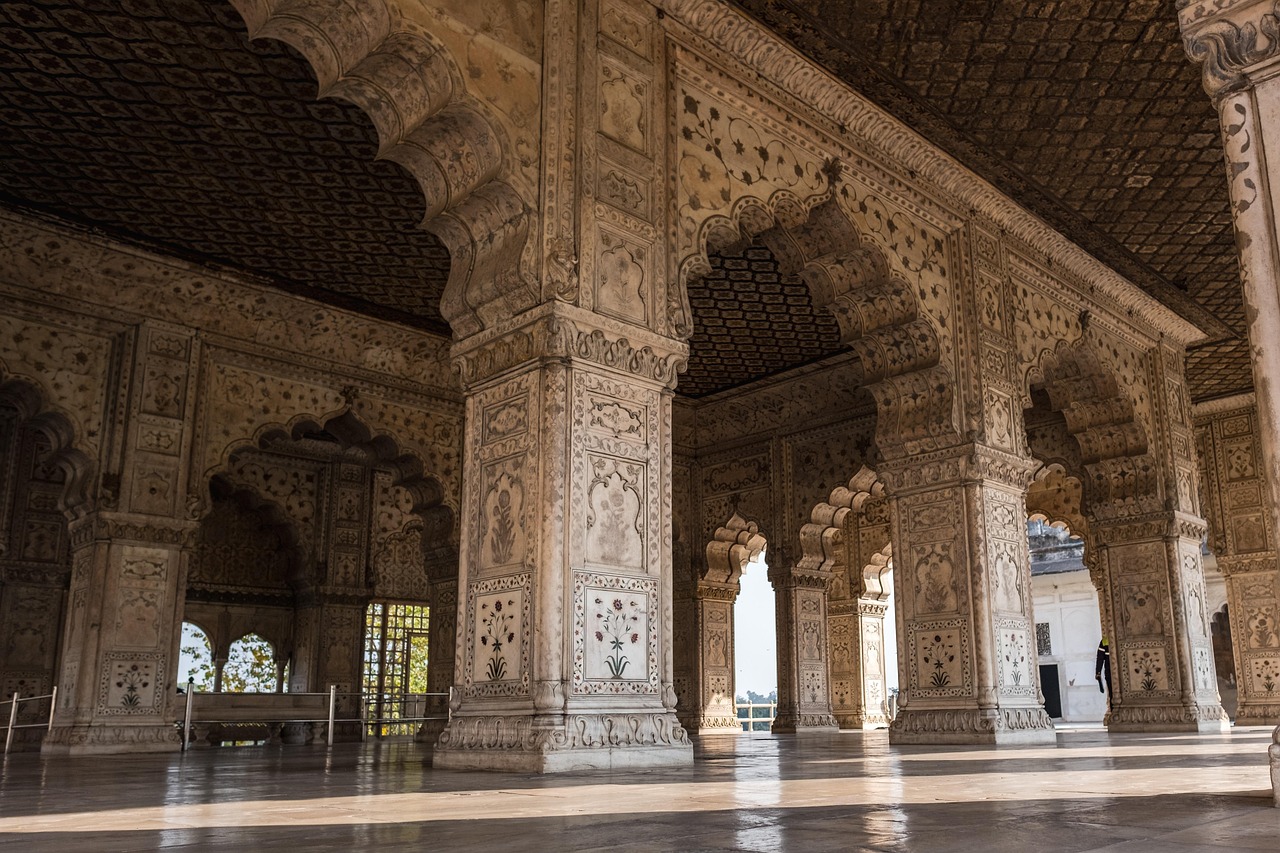
The great red sandstone fortress of the Mughal emperors, built by Shah Jahan from 1639 to 1648, is a UNESCO World Heritage Site and the symbol of independent India: the prime minister raises the flag here every Independence Day, August 15. Enter through the Lahori Gate and the covered Meena Bazaar to the Diwan-i-Am, the hall of public audience, and the white marble pavilions of the Diwan-i-Khas and Rang Mahal. According to Incredible India, the fort is open from 9:30 a.m. to 4:30 p.m. and is closed on Mondays. On the Archaeological Survey of India’s (ASI) booking site, foreigners pay ₹550 (about US$5.70) online, plus ₹320 for the museums; tickets bought in cash at the gate cost a little more.
Jama Masjid and Chandni Chowk
Opposite the Red Fort, the Jama Masjid, completed in 1656, is one of India’s largest mosques, with a courtyard that can hold some 25,000 worshippers and minarets with views over Old Delhi. Visitors are welcome outside prayer times; remove your shoes and cover your legs and shoulders (robes are lent at the gate). From here, the lanes of Chandni Chowk lead past jewelers, sari shops and the Sikh Gurudwara Sis Ganj Sahib to Khari Baoli, Asia’s largest spice market; a cycle-rickshaw ride is the classic way to see it.
Humayun’s Tomb
The garden tomb of the second Mughal emperor, completed in the 1570s, set the model that the Taj Mahal later perfected: a domed mausoleum of red sandstone and white marble at the center of a walled charbagh, a garden divided into four by water channels. It is a UNESCO World Heritage Site, with the Sunder Nursery park next door. The ASI booking site lists entry for foreigners at ₹550 online, with time slots running into the early evening.
Qutub Minar
The Qutub Minar complex in Mehrauli, in the south of the city, holds India’s tallest masonry tower: according to Incredible India, the fluted sandstone minaret rises 72.5 m (238 ft) and was begun in 1199 by Qutb-ud-din Aibak, founder of the Delhi Sultanate. Around it are the ruins of the Quwwat-ul-Islam Mosque, the 4th-century Iron Pillar and the Alai Darwaza gateway. It is a UNESCO World Heritage Site; foreigners pay ₹550 online, and the ASI booking site sells evening slots until 9 p.m., when the tower is lit up.
India Gate and Kartavya Path
New Delhi’s ceremonial axis, Kartavya Path (formerly Rajpath), runs from India Gate, a war memorial arch of 1931, to the presidential palace, Rashtrapati Bhavan, designed by Edwin Lutyens. The National War Memorial stands just east of India Gate, and the Republic Day parade passes here every January 26.
Gurudwara Bangla Sahib
Delhi’s best-known Sikh gurdwara, near Connaught Place, welcomes everyone: cover your head (scarves are provided), remove your shoes and wash your feet, then walk around the sacred pool and visit the langar, the free community kitchen that feeds thousands of people a day.
More classic sights
- Lotus Temple: the lotus-shaped Bahá’í House of Worship of 1986, open to people of all faiths for silent prayer; closed on Mondays.
- Swaminarayan Akshardham: a vast carved Hindu temple complex opened in 2005; phones and cameras must be left at the cloakroom, and it is closed on Mondays.
- Lodhi Garden: a park around 15th- and 16th-century sultans’ tombs.
- Hauz Khas Village: a medieval reservoir and madrasa surrounded by cafés and bars.
- Jantar Mantar: an 18th-century astronomical observatory near Connaught Place (₹250 online for foreigners).
- Raj Ghat: the black marble memorial where Mahatma Gandhi was cremated in 1948.
- Hazrat Nizamuddin Dargah: the shrine of a 14th-century Sufi saint, where qawwali singers perform at dusk, especially on Thursdays.
Other things to do in Delhi
Food and drink
Delhi is one of India’s great food cities. In Old Delhi, try chaat (tangy snacks of potato, chickpeas, yogurt and chutneys), stuffed parathas on Paranthe Wali Gali, jalebi, kulfi, and the kebabs and korma around the Jama Masjid. The city’s Punjabi kitchens are famous for butter chicken, dal makhani and chole bhature; Majnu ka Tilla, the Tibetan settlement, serves momos and thukpa; and south Delhi has fine-dining Indian restaurants and cocktail bars. Drink bottled or filtered water and choose busy street stalls where food is cooked fresh in front of you.
Markets and shopping
Dilli Haat has crafts from every state in one open-air market, Janpath sells cheap clothes and souvenirs, Khan Market has bookshops and boutiques, and the state emporia on Baba Kharak Singh Marg sell crafts at fixed prices. Bargain in street markets, not in shops with price tags.
Walks, parks and cycling
Early-morning heritage walks and cycle tours of Old Delhi beat the traffic and the heat, and Sunder Nursery and the Mehrauli Archaeological Park are lovely places to walk among monuments. See our city sightseeing and cycling guides.
Festivals
Diwali, the festival of lights in October or November, fills markets with lamps and sweets; the Republic Day parade passes along Kartavya Path on January 26; Holi, in March, is a riot of colored powder; and Dussehra fairs burn effigies of the demon king Ravana in autumn.
Day trips from Delhi
- Agra: the Taj Mahal and Agra Fort are about 2 hours away on the fastest trains, so a long day trip is possible, though an overnight stay is better; remember the Taj is closed on Fridays. See our Agra travel guide.
- Jaipur: the Pink City is about 4 to 5 hours by express train or road, too far for a comfortable day trip; plan at least two nights. See our Jaipur travel guide.
- Mathura and Vrindavan: the birthplace of Krishna and its temple town, on the way to Agra, busiest during Holi and Janmashtami.
- Sultanpur National Park: a wetland bird sanctuary in Haryana, about an hour southwest, best from November to March for migratory birds.
- Haridwar and Rishikesh: the Ganges pilgrimage towns at the foot of the Himalaya, about 4 to 6 hours by train or road, are better as an overnight trip.
Getting there and getting around
By air
Indira Gandhi International Airport (DEL) has three terminals: international flights use Terminal 3, and domestic flights use all three. It is a designated e-Visa entry airport; expect queues at immigration late at night, when many long-haul flights land. The Airport Express Line (Orange Line) of the metro runs from Terminal 3 to New Delhi Railway Station in about 20 minutes, for well under ₹100 (about US$1); prepaid taxi counters and app-based cabs are outside arrivals. Allow 45 minutes to 1½ hours by road to central Delhi, depending on traffic.
By train
Delhi’s main stations are New Delhi (NDLS), beside Paharganj, Old Delhi (DLI), Hazrat Nizamuddin (NZM) and Anand Vihar. Fast trains, including the Vande Bharat Express, link Delhi with Agra, Jaipur, Varanasi, Amritsar and many other cities. According to Indian Railways, the International Tourist Bureau on the first floor of New Delhi station helps foreign visitors with bookings and is open around the clock; it is the place to go if anyone in the station tells you that your ticket is invalid or that the office has moved.
Around the city
The Delhi Metro is the easiest way to get around: clean, air-conditioned and cheap, reaching the airport, the Red Fort, Chandni Chowk, Connaught Place, the Qutub Minar and most hotels. Buy QR tickets from station machines or an app; bags are scanned at every station, and the first car of each train is reserved for women. Ride-hailing apps (Uber, Ola and Rapido) are cheaper and more transparent than street taxis; auto-rickshaws should use their meter or agree a fare first; and electric rickshaws shuttle between metro stations and nearby streets. Traffic is heavy at rush hours, so allow plenty of time.
When to go and how long to stay
Delhi has a hot semi-arid climate with three distinct seasons. October to March is the best time to visit: sunny, dry days with highs of 20 to 33 °C (68 to 91 °F), though nights in December and January drop to around 7 to 8 °C (45 to 47 °F), with dense fog in the mornings and the worst air pollution of the year. April to June is very hot, with highs near 40 °C (104 °F) in May and June and dust storms. The monsoon, from late June to September, brings humid heat and heavy downpours that flood streets. The table shows 1991–2020 normals for Safdarjung, Delhi’s central weather station, from the India Meteorological Department (IMD), as published by the World Meteorological Organization (WMO); rainy days are days with at least 2.5 mm of rain.
| Month | Average high / low | Rain (rainy days) | What to expect |
|---|---|---|---|
| January | 20 °C (68 °F) / 8 °C (46 °F) | 19 mm (0.8 in), 2 days | Cool, foggy mornings; poor air quality; Republic Day |
| February | 24 °C (76 °F) / 11 °C (51 °F) | 22 mm (0.8 in), 2 days | Pleasant days; one of the best months |
| March | 30 °C (86 °F) / 16 °C (60 °F) | 19 mm (0.8 in), 2 days | Warm; Holi |
| April | 37 °C (98 °F) / 21 °C (70 °F) | 12 mm (0.5 in), 1 day | Hot and dry |
| May | 40 °C (104 °F) / 26 °C (78 °F) | 29 mm (1.2 in), 3 days | Very hot; dust storms |
| June | 39 °C (102 °F) / 28 °C (82 °F) | 81 mm (3.2 in), 5 days | Hottest nights; monsoon arrives late in the month |
| July | 36 °C (96 °F) / 28 °C (82 °F) | 196 mm (7.7 in), 10 days | Humid; heavy showers |
| August | 34 °C (94 °F) / 27 °C (80 °F) | 227 mm (8.9 in), 10 days | Wettest month; waterlogged streets |
| September | 34 °C (93 °F) / 25 °C (77 °F) | 128 mm (5.0 in), 6 days | Rains easing; still humid |
| October | 33 °C (91 °F) / 20 °C (67 °F) | 14 mm (0.6 in), 1 day | Warm and dry; Dussehra; air quality worsens late in the month |
| November | 28 °C (83 °F) / 13 °C (55 °F) | 4 mm (0.2 in), under 1 day | Mild days; smog often heaviest; Diwali in some years |
| December | 23 °C (73 °F) / 8 °C (47 °F) | 8 mm (0.3 in), 1 day | Cool, foggy and smoggy; flight and train delays |
Safdarjung gets about 760 mm (30 in) of rain a year, nearly three quarters of it from July to September.
3 days in Delhi
Day one, Old Delhi: the Red Fort when it opens, the Jama Masjid, a rickshaw ride through Chandni Chowk and Khari Baoli, and lunch on Paranthe Wali Gali, then Raj Ghat. Day two, New Delhi: Humayun’s Tomb and Sunder Nursery in the morning, Lodhi Garden, India Gate and Kartavya Path, and qawwali at Nizamuddin at dusk. Day three: the Qutub Minar and Mehrauli, Hauz Khas, and an evening at Gurudwara Bangla Sahib or Akshardham.
5 days with museums and markets
Add the National Museum, Dilli Haat, a morning heritage walk and a day trip to Sultanpur or Vrindavan before heading on to Agra and Jaipur.
Where to stay in Delhi
- Connaught Place: central hotels on two metro lines, close to restaurants and bars.
- Paharganj: the cheapest rooms, next to New Delhi Railway Station; choose carefully and read recent reviews.
- South Delhi: boutique hotels and guesthouses in quieter, greener neighborhoods with good restaurants.
- Aerocity: international hotels beside the airport, for short stays and early departures.
- Old Delhi: a few restored havelis for travelers who want to wake up among the bazaars.
Prices rise from October to March, especially around Diwali, Christmas and New Year.
What a trip to Delhi costs
Prices are approximate, for October 2026, converted at about 96 rupees (₹) to the US dollar. Monument fees are the online prices for foreigners on the Archaeological Survey of India’s booking site.
| Item | Typical cost |
|---|---|
| Red Fort, Humayun’s Tomb or Qutub Minar, foreigners | ₹550 each online (about US$5.70) |
| Red Fort museums, foreigners | ₹320 (about US$3.30) |
| Metro ride across the city | ₹20–60 (about US$0.20–0.60) |
| Airport Express, airport to New Delhi station | under ₹100 (about US$1) |
| Auto-rickshaw or app cab, short city ride | ₹100–300 (about US$1–3) |
| Street food snack or chaat | ₹50–150 (about US$0.50–1.50) |
| Dinner in a mid-range restaurant | ₹800–2,000 (about US$8–21) per person |
| Car and driver for a day of sightseeing | ₹3,000–5,000 (about US$31–52) |
| Mid-range hotel double, per night | ₹5,000–12,000 (about US$52–125) |
Practical tips for Delhi
- Plan around Mondays and Fridays: the Red Fort, Lotus Temple and Akshardham close on Mondays, and the Taj Mahal in Agra on Fridays.
- Book monument tickets online: ASI tickets cost slightly less online and save time at the gate; carry your passport.
- Dress for temples and mosques: cover shoulders and knees, carry a scarf to cover your head in gurdwaras, and be ready to remove your shoes.
- Start early: the city’s sights are least crowded and coolest in the first hours after opening.
- Ignore station touts: buy train tickets online or at the International Tourist Bureau, never from people who approach you in the street.
- Check the air quality: the Central Pollution Control Board publishes an hourly Air Quality Index (AQI) for Delhi; plan indoor days when it reaches very poor or severe.
Safety
Delhi is generally safe for visitors who take normal big-city precautions, though it has its own particular risks. Air quality is the most serious health issue: from late October to January, crop burning, traffic, dust and still winter air often push the Air Quality Index into the “very poor” (301–400) or “severe” (401–500) bands of the Central Pollution Control Board’s scale, when the authorities restrict construction and traffic; people with asthma or heart and lung conditions should limit outdoor activity and consider an N95 mask. Heat is the other extreme: from April to June, temperatures above 40 °C (104 °F) cause heat exhaustion, so drink plenty of water and sightsee early and late. Food and water: stomach upsets are common, so drink bottled or filtered water, avoid ice and raw salads from street stalls, and eat where food is freshly cooked. Scams target new arrivals: taxi and rickshaw drivers who claim your hotel has closed or burned down, fake “government tourist offices” around Connaught Place and Paharganj, and touts at New Delhi station who say your ticket is invalid. Women travelers may face staring and harassment; dress modestly, use the women-only metro car, prefer app-based cabs with trip sharing, and avoid deserted areas after dark. Road safety: traffic is heavy and undisciplined, so cross with care, ideally with locals or at signals and footbridges. In an emergency, call 112.
What to pack for Delhi
Light, loose cotton clothes for the hot months and layers for cool winter nights and mornings; a scarf or shawl for temples, gurdwaras and mosques; comfortable shoes that slip off easily; a rain jacket or umbrella for the monsoon; and an N95 mask in winter. India uses 230 V, with round-pin plugs of types C, D and M. See our rain jackets and travel adapters guides.
Delhi travel FAQ
How many days do I need in Delhi?
Three days for Old Delhi, the Red Fort, Humayun’s Tomb, the Qutub Minar and New Delhi; four or five with museums and markets.
How much are entry fees at Delhi’s monuments?
On the Archaeological Survey of India’s booking site, foreigners pay ₹550 online for each of the Red Fort, Humayun’s Tomb and the Qutub Minar, plus ₹320 for the Red Fort museums, and ₹250 for Jantar Mantar. Children under 15 enter free.
What is the best time to visit Delhi?
October to March, for dry, sunny weather. February, March and October usually have better air quality than November to January, and April to June is extremely hot.
Is the Red Fort open every day?
No. According to Incredible India, the Red Fort is closed on Mondays and open from 9:30 a.m. to 4:30 p.m. on other days.
How do I get from Delhi airport to the city?
The Airport Express metro line runs from Terminal 3 to New Delhi Railway Station in about 20 minutes. Prepaid taxis and app-based cabs take 45 minutes to 1½ hours, depending on traffic.
Where should I stay in Delhi?
Connaught Place for central hotels on the metro, south Delhi for boutique stays and restaurants, Paharganj for budget rooms near the station, and Aerocity for airport hotels.
Is Delhi safe for tourists?
Generally, yes. The main issues are winter air pollution, summer heat, stomach upsets, scams aimed at new arrivals and harassment of women.
How bad is the air pollution in Delhi?
From late October to January, the Air Quality Index often reaches the “very poor” or “severe” bands. Check the daily AQI, limit outdoor exercise on bad days and consider an N95 mask.
Can I visit Agra as a day trip from Delhi?
Yes. The fastest trains reach Agra in about 2 hours, so a long day trip is possible, but an overnight stay is more relaxed. The Taj Mahal is closed on Fridays.
Is the Delhi Metro easy for tourists?
Yes. Signs and announcements are in English and Hindi, tickets are sold from machines and apps, and the network reaches the airport and most sights.
Sources and last review
Researched and last reviewed on 4 October 2026. Monument fees, optional museum fees and ticket time slots (Red Fort, Humayun’s Tomb, Qutub Minar, Jantar Mantar): the Archaeological Survey of India’s e-ticket booking site; Red Fort opening hours and Qutub Minar facts: Incredible India (Ministry of Tourism); e-Visa entry airports: the Bureau of Immigration’s e-Visa site; the International Tourist Bureau at New Delhi station: Indian Railways; climate normals for Safdarjung: the India Meteorological Department, via the World Meteorological Organization (1991–2020 normals archived by NOAA’s National Centers for Environmental Information); the exchange rate: the Reserve Bank of India (FBIL reference rate); the Air Quality Index bands: the Central Pollution Control Board. Population, monument history, metro and airport express details and fares, temple closing days, festival dates, travel times, emergency numbers and typical prices are general references or estimates, flagged for checking. Fees and hours change, so check the official sites before you go. For the e-Visa, money and trains, see our India travel guide.
Plan your trip
Partner links: TravelerCenter may earn a commission if you book, at no extra cost to you.
🇮🇳 Useful Hindi phrases for Delhi
All 38 Hindi phrases: restaurant, hotel, emergencies, romance (printable) →