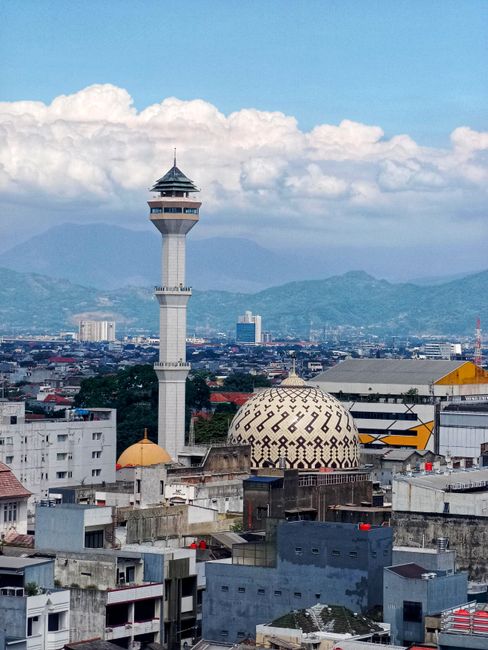
Bandung, the capital of West Java, lies in a broad highland basin at about 770 m (2,500 ft), ringed by volcanoes and tea-covered hills, 150 km (93 miles) southeast of Jakarta. Its cooler climate made it a favorite retreat in Dutch colonial times, when it was nicknamed the “Paris of Java” and filled with art deco buildings, many of which still line Braga Street and Asia Afrika Street. In 1955, it hosted the Asian-African Conference, commemorated in a museum in the Gedung Merdeka. Today Bandung is a big, young, creative city of more than 2.5 million people, home to the Bandung Institute of Technology and a lively scene of cafés, fashion, music and design, and it is famous across Indonesia for its factory outlets and Sundanese food. Jakartans pour in on weekends to shop and to visit the volcano Tangkuban Parahu, the turquoise crater lake of Kawah Putih and the tea plantations and family attractions of Lembang and Ciwidey. Since 2023, the Whoosh high-speed train has cut the trip from Jakarta to under an hour to Bandung’s outskirts. The drier months, from about June to September, are the best time to visit.
Right now in Bandung
- Wed20–31°C68–88°F3 mm rain
- Thu20–29°C68–84°F9 mm rain
- Fri22–30°C71–85°F7 mm rain
Top tours in Bandung
See all tours for Bandung →
From local operators, with prices and reviews; you check availability and book on Viator, our partner. We may earn a commission at no extra cost to you. How we earn money
Bandung at a glance
- Best for: art deco architecture, Sundanese food, cafés, shopping, volcanoes and tea plantations.
- How long: 2 days for the city; 3–4 with Lembang, Tangkuban Parahu and Ciwidey.
- Best time: June to September, the driest months; avoid weekends and holidays if you can, when traffic is very heavy.
- Getting there: the Whoosh high-speed train from Jakarta’s Halim station to Tegalluar or Padalarang, conventional KAI trains to Bandung station, or flights to Kertajati.
- Getting around: Grab and Gojek, taxis, buses and angkot minibuses, or a car with driver for day trips.
- Good to know: evenings are cool, around 18–20 °C (64–68 °F); bring a light jacket.
- Before you go: visas, the arrival card, money and general safety are in our Indonesia travel guide; see also our Jakarta guide.
Bandung’s areas and where to stay
Braga and Asia Afrika
The colonial heart of the city, south of the railway, with art deco hotels and shops on Braga Street, the Gedung Merdeka and its museum, the Great Mosque and the Alun-Alun square. Atmospheric and central, with heritage hotels and budget options.
Dago and the north
North Bandung climbs the slopes toward the mountains: Jalan Ir. H. Juanda (Dago) is lined with factory outlets, cafés and restaurants, leading up to the Taman Hutan Raya forest park and hillside hotels with views. Cooler, leafy and popular with visitors.
Gedung Sate and the civic center
The administrative quarter around Gedung Sate, the provincial government building, with parks, museums and boulevards, close to Dago and the Riau Street outlets.
Pasteur, Cihampelas and Sukajadi
The northwest, near the toll road from Jakarta, with Cihampelas Walk mall, the “jeans street,” Paris Van Java mall and many mid-range hotels.
Lembang and the highlands
About 30–60 minutes north, Lembang is a cool hill town of resorts, family attractions, strawberry farms and villas on the way to Tangkuban Parahu.
Top things to see in Bandung
Braga Street and Asia Afrika Street
The best place to see Bandung’s colonial architecture: art deco shops, cafés, the old Savoy Homann and Preanger hotels and street art, especially lively in the evening, when painters display their work along Braga.
Gedung Merdeka and the Asian-African Conference Museum
The former Societeit Concordia clubhouse, where the 1955 Asian-African Conference brought together leaders from 29 newly independent nations, now houses a museum with photographs, documents and a re-creation of the conference hall. Admission is free; check opening days, as it closes on Mondays.
Gedung Sate
West Java’s government headquarters, built in the 1920s, mixes Dutch and Indonesian styles under a roof topped by a spire said to resemble a satay skewer. A museum inside explains its history, and the lawn in front is a popular gathering place.
Saung Angklung Udjo
A cultural center founded in 1966 to preserve the angklung, a Sundanese bamboo instrument recognized by UNESCO as Intangible Cultural Heritage. Afternoon shows combine music, dance and puppetry, and end with everyone in the audience playing an angklung.
Taman Hutan Raya Djuanda and Tebing Keraton
A forest park in the hills of north Bandung, with walking paths, waterfalls and Dutch and Japanese tunnels from the colonial and wartime eras; nearby, the Tebing Keraton cliff is a sunrise viewpoint over a sea of mist and pine forest.
More classic sights
- The Great Mosque of Bandung: twin minarets with a viewing deck over Alun-Alun square.
- The Geological Museum: volcanoes, fossils and a replica of the Java Man skull.
- Bandung Institute of Technology (ITB): a campus with 1920s buildings by Henri Maclaine Pont.
- Pasar Baru: a huge market of textiles and batik.
- NuArt Sculpture Park and Selasar Sunaryo Art Space: contemporary Indonesian art in the northern hills.
- Kopi Aroma: a coffee roaster in the old Chinatown, in business since the 1930s.
Other things to do in Bandung
Food and drink
Bandung is one of Indonesia’s great food cities, and Sundanese cuisine is fresh and herb-heavy, served with raw vegetables (lalapan) and sambal. Try nasi timbel (rice wrapped in banana leaf with fried chicken, tofu and tempeh), karedok (raw vegetables in peanut sauce), batagor (fried fish dumplings), siomay, surabi (rice pancakes with sweet or savory toppings), mie kocok (noodle soup with beef tendon), spicy seblak and fermented cassava peuyeum. Cafés and coffee shops are a Bandung obsession, from hillside cafés with views in Dago and Lembang to third-wave roasters using West Java’s own beans.
Tea plantations and the highlands
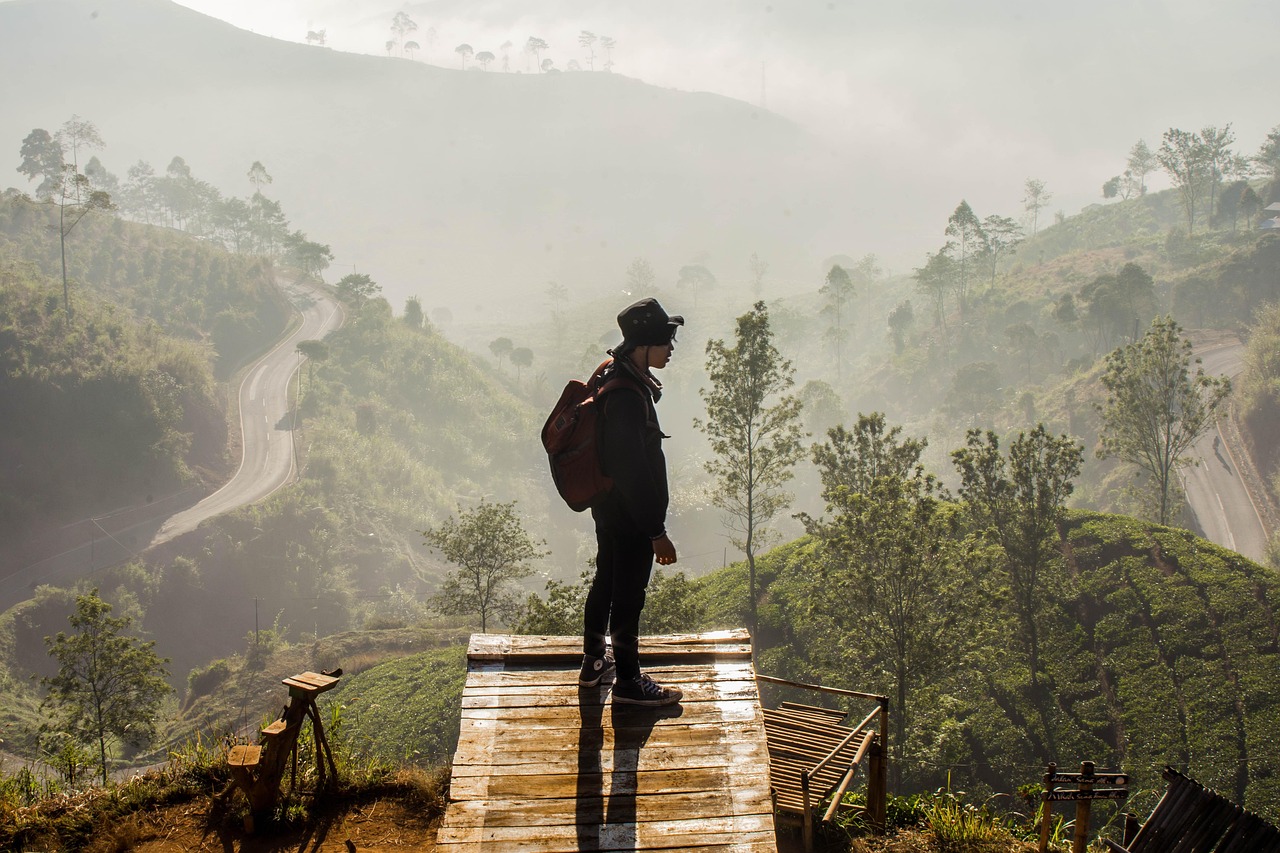
The volcanic hills around Bandung are covered with tea estates planted in Dutch times, many still producing. South of the city, the Rancabali and Malabar estates near Ciwidey and Pangalengan have neat rows of tea bushes, walking trails and simple cafés, and the lakes of Situ Patenggang and Situ Cileunca are pretty stops; north of the city, the hills above Lembang have pine forests, flower gardens and viewpoints. Early mornings bring mist and cool air, and weekdays are much quieter. Hiking trails also lead up to the forested ridges of Mount Burangrang and Mount Manglayang; go with a local guide. See our hiking guide.
Shopping
Factory outlets on Jalan Riau and Dago sell branded clothes and local fashion; Cihampelas is known for jeans; Pasar Baru for textiles; and malls such as Paris Van Java and 23 Paskal have design shops. Expect huge crowds on weekends.
Culture and nightlife
Catch angklung at Saung Angklung Udjo, wayang golek (wooden rod puppets) at cultural centers, and live music in cafés and bars around Dago and Braga. Bandung has a strong indie music and design scene.
Festivals
The city celebrates its anniversary in September, and art, fashion and music events are held through the year. During Ramadan, many restaurants close in the daytime and evening markets sell food for breaking the fast.
Day trips from Bandung
- Tangkuban Parahu: a volcano about 30 km (19 miles) north, where you can walk around the rim of the Kawah Ratu crater; check the volcano’s alert level on MAGMA Indonesia, as craters close when activity rises.
- Kawah Putih and Ciwidey: a pale turquoise crater lake about 2–2.5 hours south, with tea plantations, the lake of Situ Patenggang and hot springs nearby.
- Lembang: family attractions, farms, gardens and viewpoints in the cool hills.
- Malabar and Pangalengan: tea estates and lakes south of the city.
- Jakarta: about 45 minutes by Whoosh from Tegalluar. See our Jakarta guide.
Nearby destinations
- Jakarta120 km
Getting there and getting around
The Whoosh high-speed train
The Whoosh, Southeast Asia’s first high-speed railway, runs about 142 km (88 miles) from Halim in East Jakarta to Tegalluar, on Bandung’s eastern edge, in around 45 minutes, with stops at Karawang and Padalarang. From Padalarang, a feeder train runs to Bandung station in the city center in about 20 minutes; from Tegalluar, use buses, taxis or Grab. Book tickets on the Whoosh app or website. See our Jakarta guide for getting to Halim.
Conventional trains
KAI’s Argo Parahyangan and other trains run from Jakarta’s Gambir and Pasar Senen stations to Bandung station, in the city center, in about 3 hours, through scenic hills; others continue to Yogyakarta and Surabaya. Book on the Access by KAI app or website. See our Yogyakarta guide.
By air and road
Most commercial flights for the Bandung area now use Kertajati International Airport (KJT) in Majalengka, about 1.5–2 hours away by toll road, rather than the city’s small Husein Sastranegara Airport; check which airport your flight uses. By road, the Cipularang toll road links Jakarta and Bandung in about 2.5–4 hours, depending on traffic, and shuttle minibuses run from Jakarta’s districts and airport.
Getting around the city
Bandung has no metro. Grab and Gojek (cars and motorbike taxis) are the easiest option; metered taxis, the Trans Metro Bandung buses and small angkot minibuses also run. For Lembang, Tangkuban Parahu and Ciwidey, hire a car with a driver. Traffic jams are severe on weekends, holidays and in the evening rush hour.
When to go and how long to stay
Thanks to its altitude, Bandung is mild all year, with warm days and cool nights. The drier season runs from about June to September; the rainy season, from October to May, brings heavy afternoon thunderstorms, with the most rain in March and November. The table shows the 1991–2020 normals of BMKG’s Bandung geophysics station, at 791 m (2,595 ft), as submitted to the World Meteorological Organization; BMKG’s published normals give the average daily mean and minimum temperatures, not daily highs, so the table shows the average temperature and the night low (afternoons are typically several degrees warmer than the mean). Rain days count days with at least 1 mm.
| Month | Average temperature / night low | Rain (rain days) | What to expect |
|---|---|---|---|
| January | 24 °C (76 °F) / 20 °C (68 °F) | 214 mm (8.4 in), 19 days | Rainy afternoons; New Year crowds |
| February | 24 °C (76 °F) / 20 °C (67 °F) | 223 mm (8.8 in), 18 days | Wet; quieter |
| March | 25 °C (76 °F) / 20 °C (67 °F) | 269 mm (10.6 in), 20 days | Wettest month in the first half of the year |
| April | 25 °C (77 °F) / 20 °C (68 °F) | 242 mm (9.5 in), 19 days | Heavy storms |
| May | 25 °C (78 °F) / 20 °C (67 °F) | 161 mm (6.4 in), 15 days | Rain easing |
| June | 25 °C (77 °F) / 19 °C (66 °F) | 93 mm (3.6 in), 10 days | Drier season begins |
| July | 24 °C (76 °F) / 18 °C (65 °F) | 69 mm (2.7 in), 7 days | Cool, clear nights; school holidays |
| August | 25 °C (77 °F) / 18 °C (65 °F) | 43 mm (1.7 in), 4 days | Driest month |
| September | 26 °C (78 °F) / 19 °C (66 °F) | 88 mm (3.5 in), 8 days | Warm and mostly dry; city anniversary |
| October | 26 °C (78 °F) / 19 °C (67 °F) | 167 mm (6.6 in), 14 days | Storms return |
| November | 25 °C (77 °F) / 20 °C (67 °F) | 289 mm (11.4 in), 20 days | Wettest month |
| December | 25 °C (76 °F) / 20 °C (68 °F) | 250 mm (9.8 in), 19 days | Wet; holiday traffic |
The figures add up to about 2,110 mm (83 in) of rain a year. BMKG’s 2026–27 outlook expected the rainy season to start late across much of Java because of a very strong El Niño, with the peak around February 2027. It is noticeably colder at Tangkuban Parahu and Kawah Putih, at around 1,800–2,400 m (5,900–7,900 ft).
2 days in Bandung
Day one, Gedung Sate, Asia Afrika Street and the Gedung Merdeka museum, lunch on Sundanese food, Braga Street in the late afternoon and an angklung show at Saung Angklung Udjo. Day two, an early start for Tangkuban Parahu and Lembang, returning via a hillside café in Dago.
4 days with day trips
Add a long day to Kawah Putih, Situ Patenggang and the Ciwidey tea plantations, and a morning at Taman Hutan Raya and Tebing Keraton, with shopping at the factory outlets.
Where to stay in Bandung
- Braga and Asia Afrika: heritage and art deco hotels in the colonial center.
- Dago: mid-range and boutique hotels near cafés and outlets, cooler at night.
- Pasteur and Cihampelas: chain hotels near the toll road and malls.
- North Bandung hills and Lembang: resorts and villas with mountain views.
Prices rise sharply on weekends and Indonesian holidays, when Jakartans fill the city.
What a trip to Bandung costs
Prices are approximate, for October 2026, converted at about 17,900 rupiah to the US dollar.
| Item | Typical cost |
|---|---|
| Whoosh, Jakarta Halim to Tegalluar or Padalarang, economy | about 150,000–250,000 rupiah (about US$8.40–14) |
| KAI train, Jakarta to Bandung, executive class | about 150,000–300,000 rupiah (about US$8.40–17) |
| Grab ride across the city | 25,000–70,000 rupiah (about US$1.40–3.90) |
| Car with driver, full day | 700,000–1,000,000 rupiah (about US$39–56) |
| Saung Angklung Udjo show | about 100,000–200,000 rupiah (about US$5.60–11) |
| Tangkuban Parahu entry, foreign visitor | about 200,000–300,000 rupiah (about US$11–17) |
| Batagor or siomay from a street stall | 15,000–35,000 rupiah (about US$0.80–2) |
| Sundanese lunch with nasi timbel | 40,000–90,000 rupiah (about US$2.20–5) |
| Mid-range hotel double, per night | 500,000–1,000,000 rupiah (about US$28–56) |
| Heritage or upscale hotel double, per night | 1,200,000 rupiah and up (about US$67 and up) |
Practical tips for Bandung
- Avoid weekends: traffic into Lembang and the factory outlets can be gridlocked on Saturdays and Sundays.
- Start early: volcanoes and crater lakes are clearer in the morning, before clouds and crowds build.
- Train connections: allow time between Whoosh and the feeder train or taxi from Tegalluar or Padalarang.
- Dress: Bandung is more conservative than Bali; cover shoulders and knees at mosques.
- Ramadan: many restaurants close in daylight; evening food markets are lively.
Safety
Bandung is generally safe. Volcanoes: Tangkuban Parahu and other craters can emit dangerous gas, and their alert levels change; check MAGMA Indonesia, follow signs and don’t go beyond barriers. At Kawah Putih, limit your time near the sulfurous lake, and avoid it if you have asthma. Traffic: roads are congested, and motorbikes weave everywhere; cross carefully. Petty theft: watch your phone and bag in crowded markets, malls and angkot. Floods and landslides: heavy rain causes flooding in the south of the city and landslides on hill roads, especially from November to April. Earthquakes: West Java is seismically active; drop, cover and hold on in a strong tremor. Health: drink bottled water and use repellent against dengue. In an emergency, call 112.
What to pack for Bandung
A light jacket or sweater for cool evenings, warmer layers for the volcanoes, a compact umbrella or rain jacket, comfortable walking shoes, modest clothes for mosques, sunscreen and insect repellent. Indonesia uses 230 V and round two-pin plugs.
Bandung travel FAQ
How do I get from Jakarta to Bandung?
By the Whoosh high-speed train from Halim to Tegalluar or Padalarang in about 45 minutes or less, with a feeder train from Padalarang to Bandung station, or by KAI conventional train from Gambir in about 3 hours.
What is the Whoosh train?
Indonesia’s high-speed railway, running about 142 km (88 miles) between Halim in Jakarta and Tegalluar near Bandung in around 45 minutes, with stops at Karawang and Padalarang.
Which Whoosh station is closest to central Bandung?
Padalarang, west of the city, has a feeder train to Bandung station in the center; Tegalluar, in the east, needs a bus, taxi or Grab.
How many days do I need in Bandung?
Two days for the city; three or four to add Tangkuban Parahu, Lembang and Kawah Putih.
What is the weather like in Bandung?
Mild all year, with average temperatures around 24–26 °C (75–79 °F) and nights around 18–20 °C (64–68 °F), according to BMKG’s normals; June to September is the driest period.
Is Tangkuban Parahu open?
Usually, but access to the craters depends on the volcano’s alert level and gas conditions; check MAGMA Indonesia before you go.
What food is Bandung famous for?
Sundanese dishes such as nasi timbel and karedok, plus batagor, siomay, surabi, mie kocok and seblak, and a lively café culture.
Is Bandung worth visiting?
Yes, for its cool climate, art deco heritage, food, shopping and nearby volcanoes and tea plantations, especially as an easy trip from Jakarta.
Where is Bandung’s airport?
Most flights now use Kertajati International Airport, about 1.5–2 hours away; check whether your flight uses Kertajati or the city’s Husein Sastranegara Airport.
When should I avoid Bandung?
Weekends and Indonesian holidays, when traffic from Jakarta jams the roads and hotels and attractions are crowded.
Plan your trip
Partner links: TravelerCenter may earn a commission if you book, at no extra cost to you.
🇮🇩 Useful Indonesian phrases for Bandung
All 38 Indonesian phrases: restaurant, hotel, emergencies, romance (printable) →
Sources · last reviewed 4 October 2026
Researched and last reviewed on 4 October 2026. Climate normals (1991–2020): BMKG’s Bandung geophysics station via the World Meteorological Organization; the 2026–27 rainy season outlook: BMKG; visas and the arrival card: the Directorate General of Immigration; exchange rate: Bank Indonesia. Whoosh routes, times and fares (the operator’s website could not be read here), KAI train times, the airport situation, population, historical dates, museum hours, attraction prices and typical prices are general references or estimates, flagged for checking. Rules and schedules change, so check the official sites before you go. For entry rules, money and general safety, see our Indonesia travel guide.
Data: Weather: MET Norway (CC BY 4.0) · Rates: ECB · Costs: World Bank ICP and price levels · Wikidata (CC0)