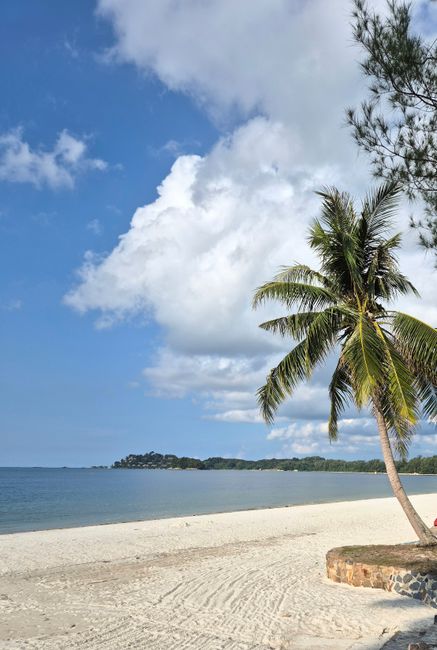
Bintan, the largest island of Indonesia’s Riau Islands, lies about 45 km (28 miles) southeast of Singapore and is three times the size of its busier neighbor, Batam. Its north coast is given over to Lagoi, a gated resort area of beach hotels, golf courses, villas and water parks reached by a one-hour ferry from Singapore’s Tanah Merah terminal, while the rest of the island is a quieter world of Malay fishing villages on stilts, mangrove rivers, red-earth bauxite pits and long, empty beaches on the east coast at Trikora. In the southwest, Tanjung Pinang, the capital of the Riau Islands province, has a busy waterfront, Chinese temples and boats to Penyengat Island, the former seat of the Riau-Lingga sultanate, where Malay literary culture flourished in the 19th century. Bintan suits families and couples looking for an easy beach break, golfers, and travelers curious about Malay heritage. It is warm and humid all year, with the most rain from November to January, when the northeast monsoon also brings rough seas to the east coast. Most visitors can use Indonesia’s visa on arrival or e-VOA at Bintan’s ferry terminals.
Right now in Bintan (Lagoi)
- Wed 23–32°C 74–90°F Partly cloudy
- Thu 21–31°C 69–88°F 4 mm Showers
- Fri 24–31°C 76–88°F 1 mm Mostly clear
Weather: MET Norway (CC BY 4.0) · Sea temperature: NOAA CoastWatch
Top tours in Bintan
See all tours for Bintan →
From local operators, with prices and reviews; you check availability and book on Viator, our partner. We may earn a commission at no extra cost to you. How we earn money
Bintan at a glance
- Best for: beach resorts, golf, water sports, mangrove tours, seafood and Malay heritage.
- How long: 2–3 nights; 4–5 with Trikora, Tanjung Pinang and Penyengat.
- Best time: March to October for calmer seas; November to February brings heavy rain and big waves on the east coast.
- Getting there: ferries from Singapore’s Tanah Merah to Bandar Bentan Telani in Lagoi (about 1 hour) or to Tanjung Pinang (about 1.5–2 hours); ferries from Batam; flights to Tanjung Pinang.
- Getting around: resort shuttles in Lagoi; elsewhere a car with driver, taxis or a rental car.
- Good to know: Bintan is on Western Indonesia Time (UTC+7), one hour behind Singapore.
- Before you go: visas, the arrival card, money and general safety are in our Indonesia travel guide.
Bintan’s areas: where things are
Bintan covers about 1,170 km² (450 sq miles). The north is the resort zone, the east has the long beaches, and the southwest holds the main town.
Lagoi (Bintan Resorts)
A 23,000-hectare resort area along the north coast, with international hotels, villas, golf courses, the Treasure Bay crystal lagoon, a ferry terminal and its own shuttle buses and security. Polished and convenient, but separate from everyday Bintan life.
Trikora and the east coast
A 30 km (19-mile) stretch of white-sand beaches, boulders and casuarina trees along the east coast road, with small beach resorts, homestays and seafood restaurants on stilts. Beautiful and quiet, especially from March to October.
Tanjung Pinang
The provincial capital, on the southwest coast, with the Sri Bintan Pura ferry terminal, markets, Chinese and Malay food, an old harbor town feel, and boats to Penyengat Island and the Senggarang temples.
Tanjung Uban and the west
The ferry port for Batam and a gateway to the resorts, with fishing villages and mangroves around the Bintan Bay.
Kijang and the southeast
A former bauxite-mining town with the province’s airport nearby and the dunes and blue pools of old mining sites.
Top things to see on Bintan
Lagoi’s beaches and resorts
The resorts’ beaches face the South China Sea, with fine sand, calm water for much of the year and water sports from kayaking to parasailing. Treasure Bay’s huge saltwater lagoon has swimming, paddleboarding and a beach club, and several resorts have spas and children’s clubs.
Trikora Beach
The east coast’s long, golden beaches are at their best at low tide, when sandbars and granite boulders appear. Small resorts and seafood shacks line the road, and boats run to snorkeling spots around nearby islets such as Pulau Beralas Pasir.
Penyengat Island
A small island off Tanjung Pinang, reached by a 15-minute boat ride, that was the royal seat of the Riau-Lingga sultanate. Its bright yellow Sultan Riau Grand Mosque, said to have been built with egg whites in the mortar, royal tombs, the palace ruins and the grave of Raja Ali Haji, the 19th-century writer whose work shaped the Malay and Indonesian languages, make it Bintan’s most important heritage site. Dress modestly.
Senggarang and the Banyan Tree Temple
Across the bay from Tanjung Pinang, the village of Senggarang has stilt houses and Chinese temples, including a small temple wrapped in the roots of a banyan tree, plus the large Vihara Dharma Sasana complex.
Mangrove tours
Boat trips on the Sebung and Lagoi rivers pass through dense mangroves, with chances to see kingfishers, monitor lizards, monkeys and, on night tours, fireflies glowing in the trees.
More classic sights
- The Busung “desert”: white sand dunes and turquoise pools left by old sand mining, popular for photos.
- Mount Bintan: forested hills with a trail to the summit and waterfalls.
- Vihara Ksitigarbha Bodhisattva: a hillside temple with hundreds of arhat statues near Tanjung Pinang.
- Tanjung Pinang’s waterfront: the Laman Boenda promenade and the Akau Potong Lembu evening food market.
- Malay stilt villages: such as those around Tanjung Uban and the islands of the Bintan Bay.
Beaches, golf and water sports
Bintan’s beaches are its main draw: Lagoi for resort swimming and water sports, Trikora for long, empty sand. The sea is calmest from about March to October; during the northeast monsoon, from November to February, waves are big on the north and east coasts and some resorts fly red flags, though surfers find small waves at Trikora. Snorkeling is fair around offshore islets, and several championship golf courses at Lagoi are among the region’s best. See our guides to beaches, snorkeling and boat trips.
Other things to do on Bintan
Food and drink
Seafood rules: crabs in chili or black-pepper sauce, steamed fish, grilled prawns and squid, eaten in stilt restaurants over the water at Trikora, Kawal and Tanjung Pinang. Try the Riau Islands’ gonggong sea snails, otak-otak fish cakes grilled in leaves, mie lendir (noodles in a thick peanut and sweet potato gravy), and luti gendang, a fried bun filled with spiced fish floss. Tanjung Pinang’s Chinese coffee shops serve strong kopi and kaya toast. Resorts serve international food and alcohol; outside them, alcohol is available but less common.
Malay culture
Bintan and Penyengat were at the heart of the Riau-Lingga sultanate, and Malay culture remains strong in language, music, dress and food. Look for traditional zapin dance performances and the gurindam poetry of Raja Ali Haji on Penyengat.
Fireflies and night tours
Bintan is one of the best places in the region to see fireflies: on calm, dark evenings, thousands of them flash in rhythm in the mangrove trees along the Sebung and Lagoi rivers. Tours leave after sunset by small boat; avoid bright full-moon nights and rainy evenings, keep your voice down, and don’t use flash photography or shine lights at the trees. Many tours combine fireflies with a seafood dinner in a stilt village.
Spas and wellness
The Lagoi resorts have destination spas, and simpler massage centers operate in Tanjung Pinang.
Day trips and side trips
- Batam: by ferry from Tanjung Uban to Telaga Punggur in about an hour, for seafood, shopping and the Barelang bridges. See our Batam guide.
- Penyengat and Senggarang: half a day from Tanjung Pinang.
- Islands of the Bintan Bay and the Lingga archipelago: remote Malay villages and the old royal capital at Daik, by boat.
- Singapore: about an hour by ferry from Lagoi. See our Singapore travel guide and our guide to Sentosa.
Nearby destinations
- Batam49 km
- Sentosa76 km
- Johor Bahru91 km
- Malacca City278 km
Getting there and getting around
Ferries from Singapore
Ferries leave Singapore’s Tanah Merah Ferry Terminal for Bandar Bentan Telani (BBT), the terminal for the Lagoi resorts, in about one hour, and for Sri Bintan Pura in Tanjung Pinang in about 1.5–2 hours; services to Tanjung Uban and other ports run on some days. Book ahead for weekends and holidays. Bintan is one hour behind Singapore.
Visas and the arrival card at Bintan’s ports
Bintan’s main seaports are official entry points for Indonesia’s visa on arrival. According to the Directorate General of Immigration’s e-Visa website, the e-VOA can be used at Bandar Bentan Telani Lagoi, Sri Bintan Pura and Sri Bayintan in Tanjung Pinang, Tanjung Uban and Bandar Seri Udana Lobam. It costs 500,000 rupiah (about US$28) for a 30-day stay, extendable once for another 30 days; buy it in advance at evisa.imigrasi.go.id, the official site. Citizens of Singapore, Malaysia and other ASEAN countries are visa-exempt for up to 30 days. Every traveler must submit the All Indonesia arrival card at allindonesia.imigrasi.go.id within three days before arrival, and passports need at least six months’ validity.
From Batam and by air
Ferries link Telaga Punggur on Batam with Tanjung Uban in about an hour, and with Tanjung Pinang. Raja Haji Fisabilillah International Airport (TNJ), near Tanjung Pinang, has flights from Jakarta and other Indonesian cities.
Getting around the island
In Lagoi, resorts run shuttle buses between hotels, the ferry terminal and Treasure Bay. Outside the resort zone, public transportation is very limited: hire a car with a driver for day trips or transfers to Trikora and Tanjung Pinang, which take 1–1.5 hours from Lagoi, or rent a car if you are comfortable driving on the left. Grab operates in Tanjung Pinang, and taxis are available at terminals.
When to go and how long to stay
Bintan has a hot, humid equatorial climate, with rain in every month and no true dry season. The northeast monsoon, from about November to February, brings the heaviest rain and strong winds and waves to the north and east coasts; March to October is calmer, with showers and thunderstorms, and occasional haze from fires on Sumatra in dry El Niño years. BMKG’s published WMO normals for Bintan’s Raja Haji Fisabilillah (Kijang) station include night lows but not daily highs or rainfall, so the table combines three official datasets: average lows are BMKG’s 1991–2020 normals for that station, average highs are 1991–2020 averages of BMKG’s observations there from NOAA’s global daily records, and rainfall and rain days (days with at least 1 mm) are the 1991–2020 normals of Singapore’s Changi station, about 45 km (28 miles) away; Bintan’s east coast is somewhat wetter during the monsoon.
| Month | Average high / low | Rain (rain days) | What to expect |
|---|---|---|---|
| January | 30 °C (86 °F) / 24 °C (74 °F) | 222 mm (8.7 in), 11 days | Monsoon winds; rough seas on the east coast |
| February | 31 °C (87 °F) / 24 °C (74 °F) | 105 mm (4.1 in), 6 days | Drier; Chinese New Year crowds |
| March | 31 °C (88 °F) / 24 °C (74 °F) | 151 mm (5.9 in), 9 days | Seas calming; good beach weather |
| April | 32 °C (89 °F) / 24 °C (75 °F) | 164 mm (6.4 in), 11 days | Hot; afternoon storms |
| May | 32 °C (89 °F) / 24 °C (76 °F) | 164 mm (6.4 in), 11 days | Calm seas; good snorkeling |
| June | 31 °C (88 °F) / 24 °C (75 °F) | 137 mm (5.4 in), 10 days | School holidays in Singapore |
| July | 31 °C (87 °F) / 24 °C (75 °F) | 145 mm (5.7 in), 10 days | Early-morning squalls possible |
| August | 31 °C (88 °F) / 24 °C (75 °F) | 149 mm (5.9 in), 11 days | Independence Day on August 17 |
| September | 31 °C (88 °F) / 24 °C (75 °F) | 125 mm (4.9 in), 10 days | Haze possible in El Niño years |
| October | 31 °C (88 °F) / 24 °C (75 °F) | 166 mm (6.6 in), 12 days | Inter-monsoon storms |
| November | 30 °C (87 °F) / 24 °C (74 °F) | 254 mm (10.0 in), 15 days | Monsoon begins; waves build |
| December | 30 °C (86 °F) / 24 °C (75 °F) | 332 mm (13.1 in), 16 days | Wettest month; holiday crowds |
The figures add up to about 2,110 mm (83 in) of rain a year. In its 2026–27 outlook, BMKG expected the rainy season to start in November 2026 in many northern parts of the country, after a very strong El Niño year.
2 nights on Bintan
Take the ferry to Lagoi, spend a day at the beach and Treasure Bay, and join an evening mangrove and firefly tour. On day two, drive to Trikora for lunch at a stilt seafood restaurant and the Busung dunes, returning for the afternoon ferry.
4 or 5 nights
Split your stay between Lagoi and a Trikora beach resort, and spend a day in Tanjung Pinang with boats to Penyengat and Senggarang; return via Batam for a night of seafood and shopping.
Where to stay on Bintan
- Lagoi: international resorts, villas and family hotels, with private beaches and golf.
- Trikora: small beach resorts and homestays, quiet and close to nature.
- Tanjung Pinang: city hotels, good value and close to Penyengat and the food markets.
- Tanjung Uban: simple hotels near the Batam ferry.
Lagoi fills up on Singapore school holidays and long weekends.
What a trip to Bintan costs
Prices are approximate, for October 2026, converted at about 17,900 rupiah to the US dollar.
| Item | Typical cost |
|---|---|
| Visa on arrival or e-VOA, 30 days | 500,000 rupiah (about US$28) |
| Ferry, Singapore to Lagoi, one way | about 450,000–800,000 rupiah (about US$25–45), often priced in Singapore dollars |
| Car with driver, full day | 600,000–1,000,000 rupiah (about US$34–56) |
| Boat to Penyengat Island, per person | about 10,000–20,000 rupiah (about US$0.60–1.10) |
| Mangrove boat tour | 250,000–500,000 rupiah (about US$14–28) |
| Seafood dinner for two at a stilt restaurant | 350,000–800,000 rupiah (about US$20–45) |
| Plate of mie lendir or otak-otak | 15,000–40,000 rupiah (about US$0.80–2.20) |
| Homestay or guesthouse double in Trikora, per night | 300,000–700,000 rupiah (about US$17–39) |
| Lagoi resort double, per night | 2,000,000 rupiah and up (about US$110 and up) |
Practical tips for Bintan
- Time difference: Bintan is one hour behind Singapore; check ferry times carefully.
- Cash: carry rupiah outside Lagoi, where resorts price in dollars and accept cards.
- e-VOA: buy it online before you travel to save time at the terminal.
- Transfers: book drivers in advance for trips outside the resort zone; public transportation is scarce.
- Dress: cover up on Penyengat, in mosques and in villages.
Safety
Bintan is calm and generally safe. The sea: during the northeast monsoon, from about November to February, strong waves and currents make swimming dangerous on exposed beaches; obey resort flags and lifeguards, and swim only in sheltered areas. Use licensed boats with life jackets for island trips. Marine life: watch for jellyfish and sea urchins, and wear water shoes on rocky beaches. Roads: the roads outside Lagoi are narrow and unlit at night; drive carefully. Haze: in dry El Niño months, smoke from fires on Sumatra can affect air quality. Health: dengue fever and other mosquito-borne diseases occur; use repellent, especially on mangrove and firefly tours. Drugs: Indonesia’s penalties are extremely severe. In an emergency, call 112.
What to pack for Bintan
Swimwear, reef-safe sunscreen, a hat and sunglasses, light clothes, a rain jacket from November to February, insect repellent, water shoes, modest clothes for Penyengat and mosques, and your passport for the ferry. Indonesia uses 230 V and round two-pin plugs.
Bintan travel FAQ
How do I get from Singapore to Bintan?
By ferry from Tanah Merah Ferry Terminal to Bandar Bentan Telani in Lagoi, in about an hour, or to Tanjung Pinang in about 1.5–2 hours.
Do I need a visa for Bintan?
Most visitors need Indonesia’s visa on arrival (500,000 rupiah for 30 days), which can be bought in advance as an e-VOA; ASEAN citizens, including Singaporeans and Malaysians, are visa-exempt for 30 days.
Can I use the e-VOA at Bintan’s ferry terminals?
Yes. The Immigration e-Visa website lists Bandar Bentan Telani Lagoi, Sri Bintan Pura, Sri Bayintan, Tanjung Uban and Bandar Seri Udana Lobam as e-VOA entry points.
Do I need the All Indonesia arrival card for Bintan?
Yes, every traveler must submit it online at allindonesia.imigrasi.go.id within three days before arrival.
What is the best time to visit Bintan?
March to October, when seas are calmer; November to February brings heavy rain and big waves on the north and east coasts.
Is Bintan good for a weekend from Singapore?
Yes. The ferry to Lagoi takes about an hour, and many resorts offer packages with transfers; two nights is enough for a relaxing break.
What is there to do on Bintan besides the beach?
Mangrove and firefly tours, golf, the Busung dunes, the heritage island of Penyengat, Chinese temples at Senggarang and seafood in Tanjung Pinang.
How do I get around Bintan?
Resort shuttles serve Lagoi; elsewhere, hire a car with a driver or take taxis, since public transportation is limited.
Is Bintan better than Batam?
Bintan has better beaches and a quieter resort feel; Batam is a busy city for shopping, seafood and nightlife. They are an hour apart by ferry.
What currency is used on Bintan?
The Indonesian rupiah, at about 17,900 to the US dollar in early October 2026; Lagoi resorts often price in Singapore or US dollars.
Sources and last review
Researched and last reviewed on 4 October 2026. Visa on arrival and e-VOA rules, fees and Bintan’s e-VOA entry points: the Directorate General of Immigration’s official e-Visa website; the arrival card: the All Indonesia platform; climate: BMKG’s 1991–2020 WMO normals for Raja Haji Fisabilillah (Kijang) station (lows), BMKG observations there via NOAA GHCN-Daily (1991–2020 average highs) and the Meteorological Service Singapore’s 1991–2020 WMO normals for Changi (rainfall); the 2026–27 seasonal outlook: BMKG; exchange rate: Bank Indonesia. Island and resort areas, ferry terminals, times and fares, history and attraction details and typical prices are general references or estimates, flagged for checking. Rules change, so check the official sites before you go. For entry rules, money and general safety, see our Indonesia travel guide.
Plan your trip
Partner links: TravelerCenter may earn a commission if you book, at no extra cost to you.
🇮🇩 Useful Indonesian phrases for Bintan
All 38 Indonesian phrases: restaurant, hotel, emergencies, romance (printable) →