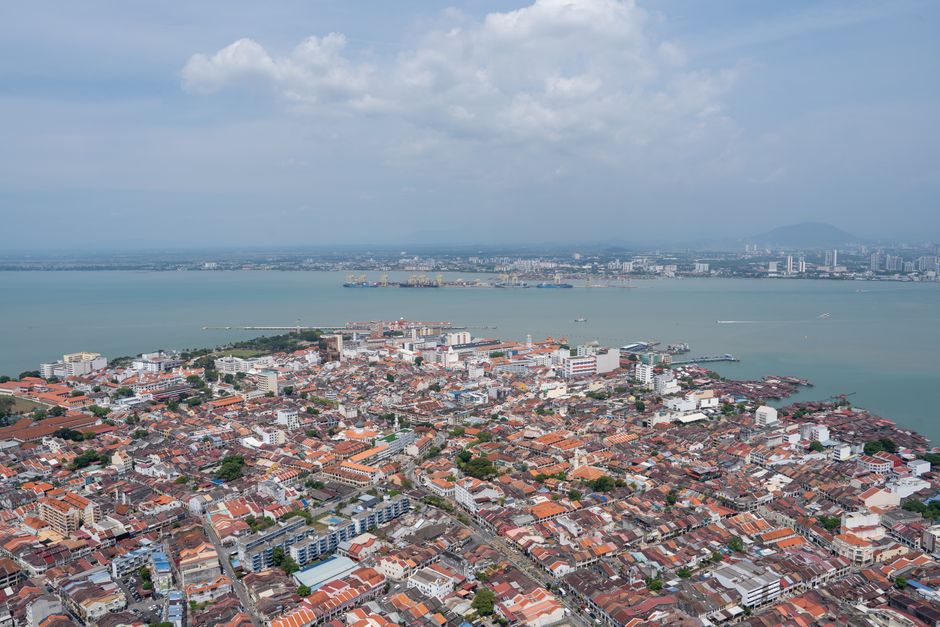
Malacca City (Melaka), on the west coast of Peninsular Malaysia, was once the richest port in Southeast Asia: the seat of a 15th-century Malay sultanate, then captured by the Portuguese in 1511, the Dutch in 1641 and the British in the 19th century. Each left its mark on a compact old town along the Malacca River, where a red Dutch town hall and church, the ruins of a Portuguese fortress and hilltop church, Chinese temples, mosques with pagoda-like minarets and lanes of Peranakan shophouses sit side by side. Together with George Town, the city was inscribed by UNESCO in 2008 as one of the Historic Cities of the Straits of Malacca. Today it is a lively, sometimes crowded weekend destination for Malaysians and Singaporeans, famous for its Nyonya cooking, its weekend night market on Jonker Street and its flamboyantly decorated trishaws. February is the driest month and November the wettest, but the city can be visited all year.
Right now in Malacca City
- Wed24–32°C75–89°F2 mm rain
- Thu25–32°C78–90°FMostly clear
- Fri26–32°C78–89°F4 mm rain
Top tours in Malacca City
See all tours for Malacca City →
From local operators, with prices and reviews; you check availability and book on Viator, our partner. We may earn a commission at no extra cost to you. How we earn money
Malacca City at a glance
- Best for: colonial and Peranakan heritage, museums, Nyonya food, the river at night and an easy, walkable city break.
- How long: 1 to 2 nights; many people visit on a long day trip from Kuala Lumpur, but evenings are the best time to be here.
- Best time: all year; February to March is the driest period, and October to November the wettest. Highs are about 31–33 °C (88–92 °F) year-round.
- Getting there: about two hours by express bus from Kuala Lumpur or KLIA to Melaka Sentral bus terminal; about four hours by bus from Singapore; the nearest ETS train stations are out of town.
- Getting around: on foot in the old town, by trishaw, river cruise, Grab or local bus.
- Good to know: weekends and school holidays are very busy; come midweek for a quieter visit and better hotel rates.
- Before you go: the Malaysia Digital Arrival Card (MDAC), visa-free stays, money and general safety are in our Malaysia travel guide.
Malacca’s areas and where to stay
The historic core is small enough to cross on foot in 15 minutes. It straddles the Malacca River: on the east bank lie Dutch Square and St. Paul’s Hill; on the west bank, the Chinese quarter around Jonker Street.
Dutch Square and St. Paul’s Hill
The administrative heart of colonial Malacca, with the Stadthuys, Christ Church, the hill with the ruined St. Paul’s Church and the gate of A Famosa, plus many of the city’s museums. Hotels here are mostly larger and modern, along the edge of the heritage zone.
Jonker Street and the Chinese quarter
Jalan Hang Jebat, better known as Jonker Street, and the parallel Jalan Tun Tan Cheng Lock (Heeren Street) and Jalan Tokong (Harmony Street) are lined with Peranakan townhouses, antique shops, cafés, temples and boutique hotels. It is the most atmospheric place to stay, though noisy on market nights.
The riverside and Kampung Morten
The river is lined with walkways, murals, cafés and bars, and is lit up at night. Upstream, Kampung Morten is a traditional Malay village of wooden stilt houses, some open as homestays.
Bandar Hilir and the coast
South and east of the old town, Bandar Hilir has malls, the Menara Taming Sari tower and larger hotels; the reclaimed island to the southwest holds the Straits Mosque. The Portuguese Settlement lies about 3 km (2 miles) east of the center.
A short history
According to tradition, Malacca was founded around 1400 by Parameswara, a prince from Sumatra, and it grew into a sultanate that controlled the spice trade through the Strait of Malacca and spread Islam across the region. Its wealth drew the Portuguese, who seized it in 1511 and built A Famosa; the Dutch took it in 1641 and the British in the early 19th century, when it became one of the Straits Settlements with Penang and Singapore. On February 20, 1956, Tunku Abdul Rahman announced the date of Malaya’s independence at Bandar Hilir in Malacca; independence itself was declared in Kuala Lumpur on August 31, 1957.
Top things to see in Malacca City
Dutch Square (Red Square)
The square at the foot of St. Paul’s Hill is Malacca’s postcard view. The Stadthuys, completed in the 1650s as the Dutch governor’s residence and town hall, is thought to be the oldest Dutch building in Asia; it now houses the History and Ethnography Museum. Next to it, the red Christ Church, built in the mid-18th century, still holds services, and the square has a clock tower and fountain. It gets crowded with trishaws and tour groups by mid-morning, so arrive early.
St. Paul’s Hill and A Famosa
Steps behind the Stadthuys climb to the roofless ruins of St. Paul’s Church, first built by the Portuguese in the 16th century, with Dutch tombstones along its walls and views over the city and the strait. On the far side, the Porta de Santiago is the only surviving gate of A Famosa, the Portuguese fortress largely demolished by the British in the early 19th century. A reconstructed Malay palace below the hill houses the Melaka Sultanate Palace Museum.
Jonker Street and the night market
By day, Jonker Street is a stroll past antique dealers, clan associations, shops selling pineapple tarts and coffee shops. On weekend evenings (usually Friday to Sunday), it becomes Jonker Walk Night Market, packed with food stalls, trinkets and buskers. Go early in the evening to avoid the worst of the crowds.
Harmony Street
Jalan Tokong holds, within a few minutes’ walk, Cheng Hoon Teng, the oldest functioning Chinese temple in Malaysia, with richly carved woodwork; the Kampung Kling Mosque, with a pagoda-style minaret and Sumatran tiered roof; and the Sri Poyatha Moorthi Temple, one of the oldest Hindu temples in the country.
Baba and Nyonya Heritage Museum
On Heeren Street, this family home of a wealthy Peranakan (Straits Chinese) family shows the opulent blend of Chinese, Malay and European styles in its carved screens, porcelain and furniture. Guided tours run throughout the day; photography inside may be restricted.
The Malacca River at night
The Melaka River Cruise runs along the river past murals, old warehouses, Kampung Morten and the lit-up bridges, a relaxing 45-minute trip that is best after dark. Walking the riverside paths in the evening, with stops at bars and cafés, is just as rewarding.
More classic sights
- Maritime Museum: a full-size replica of the Portuguese ship Flor de la Mar, which sank off Sumatra laden with treasure in 1511.
- Straits Mosque (Masjid Selat): a mosque on stilts over the sea on Pulau Melaka, especially beautiful at sunset.
- Menara Taming Sari: a revolving observation tower over Bandar Hilir.
- Portuguese Settlement: the community of Kristang-speaking descendants of Portuguese settlers, with seafood restaurants by the sea.
- Trishaws: the city’s tricycle rickshaws, covered in plastic flowers, cartoon characters and lights and playing loud music; agree on the price before setting off.
Other things to do in Malacca
Food and drink
Malacca is the heartland of Nyonya cooking, the cuisine of the Peranakan Chinese, blending Chinese ingredients with Malay spices: try ayam pongteh (chicken braised with fermented soybeans and palm sugar), Nyonya laksa, asam pedas (sour, spicy fish stew) and kuih, colorful steamed cakes. The city is also known for chicken rice balls, satay celup (skewers dipped into a bubbling peanut sauce at your table), cendol with gula Melaka, the local dark palm sugar, and Portuguese-Eurasian dishes such as devil curry and grilled seafood at the Portuguese Settlement. Many popular restaurants have long queues at weekends; go early or late.
Festivals
Chinese New Year fills Jonker Street with lanterns and lion dances, and the Cheng Hoon Teng temple is busy with worshippers; Hari Raya, Deepavali and Christmas are all celebrated in a city with mosques, temples and churches side by side. At the Portuguese Settlement, the Festa San Pedro in late June honors the patron saint of fishermen with decorated boats, music and dancing. Malaysia’s National Day (August 31) and the anniversary of the state are marked with parades around Dutch Square.
Museums
The old town has dozens of museums, from the History and Ethnography Museum in the Stadthuys to the Stamp, Architecture, Islamic and People’s museums; most are small and inexpensive, and some close one day a week.
Shopping
Antiques, Peranakan beaded slippers, batik, pineapple tarts, gula Melaka and dodol (sweet sticky cake) are typical buys on Jonker Street and Heeren Street.
Cycling and walking
Bicycles can be rented in the old town; the riverside paths and the quiet lanes early in the morning are best. See our city sightseeing and cycling guides.
Day trips from Malacca
- Kuala Lumpur: two hours by bus, for the Petronas Towers and Batu Caves. See our Kuala Lumpur guide.
- Port Dickson: the nearest beach resort to Kuala Lumpur, about 1.5 hours north by car.
- Tanjung Bidara and the coast: quieter beaches and fishing villages northwest of the city.
- Muar: a laid-back riverside town in Johor known for its food, about an hour south.
- Johor Bahru and Singapore: continue south by bus to Johor Bahru (about three hours) and Singapore. See our Johor Bahru and Singapore guides.
Nearby destinations
- Kuala Lumpur123 km
- Genting Highlands146 km
- Johor Bahru187 km
- Sentosa204 km
- Batam232 km
- Bintan278 km
- Cameron Highlands279 km
Getting there and getting around
By bus
Express buses run frequently from Kuala Lumpur’s Terminal Bersepadu Selatan (TBS) and from KLIA to Melaka Sentral, the city’s main bus terminal, in about two hours. Buses also run from Johor Bahru, Penang and Singapore (about four hours from Singapore, plus border queues). From Melaka Sentral, take a Grab (about 15 minutes) or a local bus to the old town.
By train
Malacca has no train station in the city. According to KTMB, ETS trains on the route between KL Sentral and JB Sentral stop at Pulau Sebang/Tampin and Batang Melaka, both inland; Pulau Sebang/Tampin is about 40 minutes by road from the old town. The train is a good option from Johor Bahru or if you are combining Malacca with a longer rail journey; from Kuala Lumpur, the bus is usually quicker door to door.
By air and car
Melaka International Airport has a handful of flights, but most visitors fly into KLIA, about 1.5 to 2 hours away by road. Driving is straightforward via the North–South Expressway, but parking in the old town is tight at weekends.
In town
Walk: the heritage zone is compact and mostly flat. Trishaws, river cruises and Grab cover the rest; buses link Melaka Sentral, the old town and the coast.
When to go and how long to stay
Malacca’s weather follows the pattern of Peninsular Malaysia’s southwest coast. According to the Malaysian Meteorological Department (MetMalaysia), the wettest months are October and November, February is the driest, and from May to August early-morning squall lines blowing in from Sumatra, known as “Sumatras,” bring short, violent storms. The table uses MetMalaysia’s 1991–2020 normals for its Melaka station, as submitted to the World Meteorological Organization (WMO).
| Month | Average high / low | Rain (days with 1 mm or more) | What to expect |
|---|---|---|---|
| January | 32 °C (89 °F) / 24 °C (75 °F) | 102 mm (4.0 in), 8 days | Fairly dry; Chinese New Year preparations |
| February | 33 °C (91 °F) / 24 °C (75 °F) | 80 mm (3.1 in), 6 days | The driest month |
| March | 33 °C (92 °F) / 24 °C (76 °F) | 129 mm (5.1 in), 10 days | Hot; afternoon showers return |
| April | 33 °C (91 °F) / 24 °C (76 °F) | 166 mm (6.5 in), 12 days | Inter-monsoon thunderstorms |
| May | 33 °C (91 °F) / 25 °C (76 °F) | 167 mm (6.6 in), 11 days | Hot; early-morning “Sumatra” squalls begin |
| June | 32 °C (90 °F) / 24 °C (76 °F) | 173 mm (6.8 in), 9 days | Squalls; haze possible |
| July | 32 °C (89 °F) / 24 °C (75 °F) | 196 mm (7.7 in), 12 days | School holidays bring crowds |
| August | 32 °C (89 °F) / 24 °C (75 °F) | 220 mm (8.6 in), 12 days | Wettest month of the summer; National Day on August 31 |
| September | 32 °C (89 °F) / 24 °C (75 °F) | 162 mm (6.4 in), 11 days | Quieter; haze possible |
| October | 32 °C (90 °F) / 24 °C (75 °F) | 189 mm (7.5 in), 12 days | Inter-monsoon storms |
| November | 32 °C (89 °F) / 24 °C (75 °F) | 233 mm (9.2 in), 16 days | The wettest month |
| December | 31 °C (88 °F) / 24 °C (75 °F) | 177 mm (7.0 in), 12 days | Year-end holidays; busy weekends |
Malacca gets about 1,990 mm (78 in) of rain a year, less than most of Malaysia, and rain usually comes in short, heavy bursts. The midday sun is fierce, so sightsee in the early morning and late afternoon, and spend the middle of the day in museums and cafés.
One day in Malacca
Start at Dutch Square and the Stadthuys at opening time, climb St. Paul’s Hill to A Famosa, then cross the river for Harmony Street’s temples, the Baba and Nyonya Heritage Museum and a Nyonya lunch. Spend the afternoon at the Maritime Museum, take the river cruise at dusk and finish at Jonker Walk if it is the weekend.
Two days
Add the Straits Mosque at sunset, the Portuguese Settlement for seafood, Kampung Morten and a slow morning cycling the riverside paths.
Where to stay in Malacca
- Jonker Street and Heeren Street: boutique hotels and guesthouses in Peranakan townhouses; the most atmosphere.
- The riverside: hotels and guesthouses with river views and easy access to bars.
- Bandar Hilir: larger modern hotels near the malls, a short walk from Dutch Square.
- Kampung Morten: homestays in traditional Malay houses.
Foreign guests pay Malaysia’s tourism tax of RM10 per room per night. Weekend rates are much higher than midweek, and rooms sell out during Chinese New Year and school holidays.
What a trip to Malacca costs
Prices are approximate, for October 2026, converted at about RM4.08 to the US dollar.
| Item | Typical cost |
|---|---|
| Express bus, Kuala Lumpur (TBS) to Melaka Sentral | RM12–20 (about US$3–5) |
| Grab, Melaka Sentral to the old town | RM8–15 (about US$2–3.70) |
| Trishaw ride, about one hour | RM40–60 (about US$10–15) |
| Melaka River Cruise, adult | RM30–40 (about US$7.50–10) |
| Small museum entry | RM5–20 (about US$1.20–5) |
| Chicken rice balls or Nyonya laksa | RM8–15 (about US$2–3.70) |
| Satay celup dinner for two | RM40–70 (about US$10–17) |
| Boutique hotel, per night, midweek | RM180–400 (about US$44–98) |
| Tourism tax, per room per night | RM10 (about US$2.45) |
Practical tips for Malacca
- Come midweek: weekends and holidays bring heavy traffic, queues and higher prices.
- Check museum days: some museums close one day a week; confirm before you go.
- Agree on trishaw prices first: they are charged per ride or per hour, not per person.
- Dress modestly at temples and mosques: cover shoulders and knees and remove shoes.
- Carry water and a hat: shade is limited on St. Paul’s Hill and Dutch Square.
Safety
Malacca is safe and easygoing. Watch for traffic in the narrow streets of the old town, where cars, motorcycles and trishaws share the road with pedestrians, and keep an eye on bags in the crowds of the night market. The riverside walkways have few railings in places, so take care at night. Heat exhaustion is a real risk at midday; drink plenty of water and rest in the shade. During haze episodes, check the Department of Environment’s Air Pollutant Index and limit strenuous activity. Heavy downpours can briefly flood streets. In an emergency, call 999.
What to pack for Malacca
Light clothing, a hat, sunglasses and sunscreen, comfortable walking sandals, a compact umbrella and clothing that covers shoulders and knees for temples and mosques. Malaysia uses 240 V and British-style three-pin plugs (type G). See our travel adapters guide.
Malacca City travel FAQ
Is Malacca worth visiting?
Yes. It is one of Malaysia’s two UNESCO-listed historic cities, with a compact, walkable old town, museums, temples and some of the country’s best Peranakan food.
How many days do I need in Malacca?
One full day covers the main sights; two days let you enjoy the evenings, the river and the food at a slower pace.
How do I get from Kuala Lumpur to Malacca?
Take an express bus from TBS or KLIA to Melaka Sentral, which takes about two hours, then a Grab to the old town.
Is there a train to Malacca?
Not to the city itself. ETS trains between Kuala Lumpur and Johor Bahru stop at Pulau Sebang/Tampin and Batang Melaka, both out of town.
When is the Jonker Street night market?
The Jonker Walk Night Market is usually held on Friday, Saturday and Sunday evenings; check locally, as days can change around holidays.
When did Malacca become a UNESCO World Heritage Site?
Melaka and George Town were inscribed together as the Historic Cities of the Straits of Malacca on July 7, 2008.
What food is Malacca famous for?
Nyonya dishes such as ayam pongteh and Nyonya laksa, chicken rice balls, satay celup, cendol with gula Melaka and Portuguese-Eurasian devil curry.
Can I visit Malacca as a day trip from Kuala Lumpur?
Yes, but it is a long day, with about four hours on the bus in total, and you miss the river and night market in the evening. One night is better.
When is the best time to visit Malacca?
Any time of year. February and March are the driest; October and November are the wettest. Come midweek to avoid the crowds.
How much is a trishaw ride in Malacca?
Expect about RM40 to RM60 for an hour-long ride around the old town; agree on the price and route before starting.
Plan your trip
Partner links: TravelerCenter may earn a commission if you book, at no extra cost to you.
🇲🇾 Useful Malay phrases for Malacca City
All 38 Malay phrases: restaurant, hotel, emergencies, romance (printable) →
Sources · last reviewed 4 October 2026
Researched and last reviewed on 4 October 2026. The 2008 UNESCO inscription and the description of the Historic Cities of the Straits of Malacca: George Town World Heritage Incorporated (GTWHI), the state agency that manages the George Town half of the site; ETS stations serving Malacca: Keretapi Tanah Melayu Berhad (KTMB); climate normals and rainfall patterns: the Malaysian Meteorological Department (MetMalaysia), via the World Meteorological Organization; exchange rate: the US Federal Reserve. Historical dates, museum details, night market days, bus times, the tourism tax rate and typical prices are general references or estimates, flagged for checking. Prices and hours change, so check the official sites before you go. For entry rules, money and general safety, see our Malaysia travel guide.
Data: Weather: MET Norway (CC BY 4.0) · Sea temperature: NOAA CoastWatch · Rates: ECB · Costs: World Bank ICP and price levels · Wikidata (CC0)