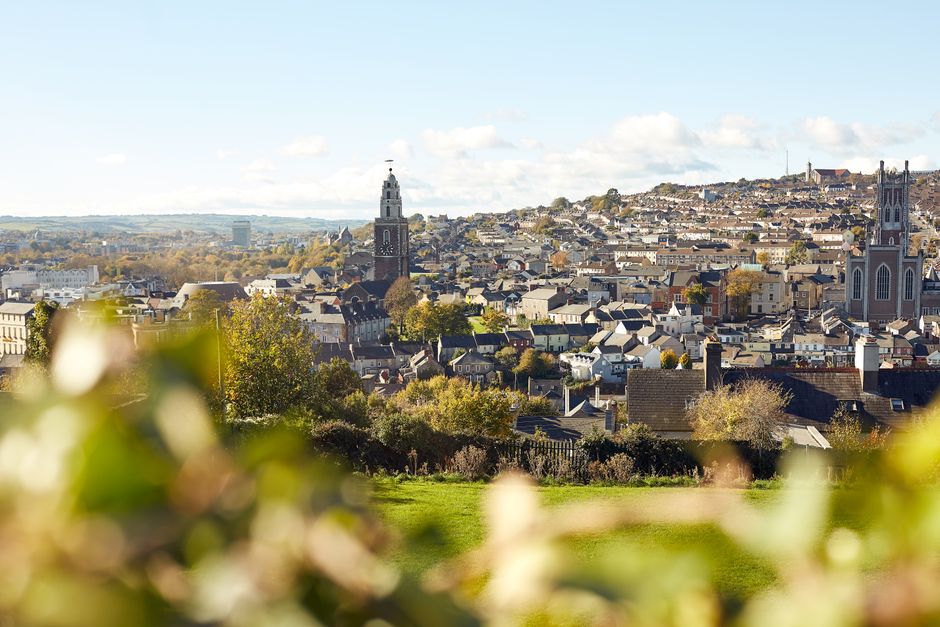
Cork is Ireland’s second city and proud of it: a compact, hilly place built on an island between two channels of the River Lee, with a covered food market that has traded since 1788, a church tower where you can ring the bells yourself, a Gothic Revival cathedral and a lively pub and music scene. You come to eat your way through the English Market, climb Shandon, hear trad music in a pub on Oliver Plunkett Street and use the city as a base for the most famous day trips in the south: kissing the stone at Blarney Castle, following the emigrants and the Titanic in Cobh, crossing to the prison fortress on Spike Island and eating seafood in Kinsale. Give it two days for the city, and three or four to add the harbour and the coast.
Right now in Cork
- Wed 7–13°C 45–55°F Partly cloudy
- Thu 7–13°C 45–56°F 2 mm Rain
- Fri 12–15°C 53–59°F 2 mm Partly cloudy
Weather: MET Norway (CC BY 4.0) · Sea temperature: NOAA CoastWatch · Rates: ECB
Top tours in Cork
See all tours for Cork →
From local operators, with prices and reviews; you check availability and book on Viator, our partner. We may earn a commission at no extra cost to you. How we earn money
Cork at a glance
- Best for: food and markets, pubs and live music, history from the Middle Ages to the War of Independence, harbour towns and easy day trips.
- How long: 2 days for the city; 3–4 days to add Blarney, Cobh and Spike Island, Kinsale or Midleton.
- Best time: May to September for the longest days and the harbour trips; late October for the Guinness Cork Jazz Festival.
- Getting in: trains from Dublin Heuston leave every hour and take about 2 hours 30 minutes; Cork Airport is about 25 minutes from the centre by bus.
- Getting around: the centre is walkable (with some steep hills on the north side); suburban trains run to Cobh and Midleton every 30 minutes on weekdays.
- Before you go: Ireland uses the euro and type G (three-pin) plugs, and it is not in the Schengen area; see our travel adapters guide.
Cork, area by area
The River Lee splits in two just west of the centre and rejoins at the docks, so the heart of Cork sits on an island crossed by bridges. Most of what you will want to see is within a 20-minute walk of St Patrick’s Street, the curving main shopping street.
The island: St Patrick’s Street to the South Mall
The flat centre between the two channels holds the English Market, Oliver Plunkett Street with its pubs and cafés, the narrow lanes of the Huguenot Quarter, the Opera House and the Georgian South Mall. Best for: first visits, eating out and nightlife.
The northside: Shandon and Sunday’s Well
Across the north channel, steep streets climb to Shandon, the old butter-trading district with St Anne’s Church and its tower, and west to Sunday’s Well and the castle-like Cork City Gaol. Best for: views, character and quieter guesthouses.
The south bank: the medieval city, St Fin Barre’s and UCC
South of the river is the oldest part of Cork, where St Finbarr is said to have founded a monastery: the cathedral, Elizabeth Fort and Barrack Street. To the west is the Victorian quadrangle of University College Cork. Best for: history walks and student-priced food.
Top things to see in Cork
Prices and hours below were checked on the official sites in October 2026. They change, so check before you go.
The English Market
A roofed food market has stood on this site since 1788, and the English Market, named because it was run by the Protestant (“English”) corporation of the city, is still the best place to understand how Cork eats. Under the cast-iron roof and around the fountain you will find fishmongers, butchers selling spiced beef and the local specialities of tripe and drisheen (a blood sausage), cheesemongers with farmhouse cheeses from West Cork, bakers, olive stalls and coffee counters. Upstairs, the Farmgate Café serves lunch made from the market’s produce. As of October 2026, the market opens Monday to Saturday from 8:00 to 18:00 and is closed on Sundays and bank holidays; stalls set their own hours within that. Entry is free.
Shandon Bells and St Anne’s Church
The red-sandstone and white-limestone tower of St Anne’s Church, finished in the 1720s and topped by a golden salmon weathervane, is the symbol of Cork. Climb 132 steps through five floors, past the clock mechanism, to the belfry, where you can play a tune on the eight bells from numbered sheet music (ear defenders are provided), and on to a balcony with views over the whole city. As of October 2026, a tower ticket costs €6 for adults, €5 for seniors and students and €3 for children aged 5 to 15, and the tower opens Monday to Saturday 10:00–16:30 and Sunday 12:00–16:30, with last entry at 16:00. It is a working church, so services can close it; allow 15 to 20 minutes for the climb.
St Fin Barre’s Cathedral
The three spires of St Fin Barre’s (Church of Ireland) rise above the south bank on the site where Cork began. The architect William Burges designed every detail of this French Gothic Revival building, from the sculpture on the west front to the stained glass, mosaics and the gilded angel above the east end; it was consecrated in 1870. As of October 2026, admission costs €8 for adults and €7 for students and seniors, and the cathedral is open to visitors Monday to Saturday 9:00–17:00, with limited hours on Sundays because of services.
Cork City Gaol
Behind a castle-like façade in Sunday’s Well, the gaol opened in 1824 and held men and women convicted in the city in the 19th century and Republican prisoners in the struggle for independence, including Countess Constance Markievicz in 1919. Wax figures and sound effects bring the cells to life. As of October 2026, tickets cost €12 for adults, €9.50 for students and seniors and €7.50 for children, and €37 for a family; it is open daily 10:00–17:00, with a guided tour at 14:00. It is a 25-minute walk from the centre, mostly uphill, or a short taxi ride.
Elizabeth Fort
Built in the early 17th century just outside the medieval walls, this star-shaped fort served as a barracks, a convict depot and later a police station until 2013. Today you can walk the ramparts for one of the best free views of the city, with the spires of St Fin Barre’s next door. Entry is free; short guided tours and audio guides cost a few euros. It usually opens Tuesday to Saturday 10:00–17:00 and Sunday 12:00–17:00 and is closed on Mondays, but check Cork City Council’s page before you go, as hours change with the season.
Crawford Art Gallery (closed until 2028)
Cork’s main art museum, next to the Opera House, holds Irish painting from Jack B. Yeats to Harry Clarke’s stained glass. It is closed for redevelopment: the doors shut on 22 September 2024, and the gallery is preparing to reopen in 2028. For art during your visit, try the Glucksman gallery at UCC.
Other sights
- English Market
Museums
- Cork Butter Museum
- Cork City Gaol
- Lewis Glucksman Gallery
Churches and cathedrals
- Saint Fin Barre's Cathedral
Castles and forts
- Blackrock Castle
- Blarney Castle
Blarney Castle and the Blarney Stone
Blarney Castle, 8 km northwest of the city, is the busiest day trip from Cork. The tower house was built by the MacCarthy clan in the 15th century, and at the top, set into the battlements, is the Blarney Stone: kiss it and, the legend says, you will never again be lost for words. To do it, you lie on your back on the parapet walk and lean backwards over a gap while an attendant holds you; the climb up the narrow spiral stairs is steep, and in summer the queue for the stone can take an hour or more, so come at opening time. The estate deserves as much time as the castle: the Poison Garden (plants that can harm or kill, some in cages), the Rock Close with its ancient trees and “wishing steps”, and lake and woodland walks.
Tickets. As of October 2026, admission costs €24 for adults, €19 for students and seniors (65 and over), €12 for children aged 6 to 16 (under 6 free) and €65 for a family of two adults and two children. You can buy online or at the gate; there are no timed slots, and tickets can be changed but not refunded. Hours: open every day except 24 and 25 December, from 9:00 to 17:00 from November to March, to 17:30 in April and October, and to 18:00 from May to September; last admission is one hour before closing. The estate recommends about three hours. Parking costs a €2 flat fee; Bus Éireann buses run from the city centre to Blarney village.
Cobh, the Titanic and Spike Island
Cobh (pronounced “cove”) is a steep, colourful harbour town on Great Island, 25 minutes from Cork by train, crowned by the granite St Colman’s Cathedral. As Queenstown, it was the departure point for about 2.5 million Irish emigrants, and the last port of call of the Titanic on 11 April 1912; survivors and victims of the Lusitania, sunk off the Old Head of Kinsale in 1915, were brought ashore here. The terraced row of houses below the cathedral, known as the “Deck of Cards”, is one of the most photographed views in Ireland.
- Titanic Experience Cobh: in the old White Star Line offices on Casement Square, where the last 123 passengers bought their tickets, a guided tour of about 40 minutes follows the people who boarded here, then a self-guided exhibition; allow an hour. As of October 2026, it opens daily 10:00–17:30 from October to March (last admission 16:30) and 9:00–18:00 from April to September; booking online is strongly recommended in summer. Check prices on the official site when you book.
- Spike Island: a ferry from Kennedy Pier, beside the Titanic Experience, crosses in 10 to 15 minutes to this island fortress: a monastic site, then a 19th-century star fort, a convict depot and a prison until 2004. As of October 2026, the ferry and fort ticket costs €27.95 for adults, €23.95 for students and seniors and €14.95 for children aged 12 and under, plus a booking fee, and includes a guided tour; plan on about 3.5 hours. Boats are small and fill up, so book ahead, and arrive on time: the ferry cannot wait. Sailings are reduced in winter.
- Fota: the train stops on the way at Fota, for Fota Wildlife Park and Fota House.
Kinsale and the Midleton distillery
Kinsale, about 25 km south of Cork, is a pretty harbour town of painted shopfronts, yachts and restaurants that has called itself Ireland’s gourmet capital for decades. Walk 3 km around the harbour along the Scilly Walk to Charles Fort, a huge star-shaped fortress of the 1670s and 1680s run by the Office of Public Works (OPW). As of October 2026, it costs €5 for adults, €4 for seniors and €3 for children and students (€13 family), and opens daily 10:00–18:00 from 16 March to 31 October (last admission 17:00) and 10:00–17:00 from 1 November to 15 March. Like many OPW sites, it is free on the first Wednesday of each month. Bus Éireann route 226 runs from Cork’s Kent Station and bus station to Kinsale via the airport, about hourly.
Midleton, 23 minutes east by train, is home to the distillery that makes Jameson, Redbreast and Midleton Very Rare. The Midleton Distillery Experience takes you through the old 18th- and 19th-century buildings, including the world’s largest pot still (now retired), and ends with a tasting; it lasts about 75 minutes and, as of October 2026, costs from €28, with longer and premium tastings available. Book online, especially in summer. Trains to Midleton leave Kent Station every 30 minutes on weekdays.
Activities and best months
- City sightseeingPure Cork lists free historical walking tours of the city: during National Heritage Week (16-23 August 2026) a former Lord Mayor led seven free tours without booking. · source
Food, pubs and the Jazz Festival
Look for Clonakilty black pudding, West Cork cheeses such as Gubbeen and Durrus, fresh fish and the city’s own stout, Murphy’s, rather than Guinness. Oliver Plunkett Street, MacCurtain Street and the lanes around the Coal Quay have the most pubs, and many host trad sessions most nights; Sin É on Coburg Street is one of the best known.
The Guinness Cork Jazz Festival, held every October bank holiday weekend since 1978, fills the city with more than 500 musicians across about 80 venues, from ticketed headline concerts to the free Guinness Music Trail in pubs and hotels. The 2026 festival runs from Thursday 22 to Monday 26 October 2026 (Monday 26 October is the October bank holiday); hotels book out months ahead, so reserve early or stay in Cobh or Kinsale. The Cork International Film Festival usually follows in November, and the Glow Christmas festival lights up the city centre in December.
Day trips from Cork
- Kinsale and the Old Head: a day of harbour walks, Charles Fort and seafood; the cliffs of the Old Head of Kinsale are beyond, though the headland itself is a private golf club.
- West Cork: by car, the coast through Clonakilty, Skibbereen, Baltimore and out to Mizen Head, Ireland’s most southwesterly point; better as an overnight trip.
- Killarney and Kerry: trains to Killarney take about 1 hour 20 minutes from Kent Station, usually with a change at Mallow, the start of the Ring of Kerry; see our Killarney guide.
Nearby destinations
- Killarney73 km
- Dingle Peninsula115 km
- Galway157 km
- Connemara198 km
- Dublin220 km
Getting to Cork
By train. Irish Rail (Iarnród Éireann) runs InterCity trains from Dublin Heuston to Cork Kent Station every hour from 6:00 to 21:00, Monday to Saturday, taking about 2 hours 30 minutes; Sunday services are fewer. As of October 2026, the standard adult single bought at the station costs €30.75 and a day return €42.20; cheaper web fares are often available if you book online in advance. Heuston is linked to the centre of Dublin by the Luas red line. Kent Station is a 10-minute walk from St Patrick’s Street.
By air. Cork Airport, 8 km south of the city, has flights from the UK and many European cities. Bus Éireann routes 225 and 226 link it with Parnell Place bus station and Kent Station in about 25 minutes, every 30 minutes on weekdays and hourly on Sundays and public holidays. There are no direct buses from Cork Airport to Dublin; change in the city centre. Many visitors fly into Dublin or Shannon instead and take the train or a coach.
By road and sea. The M8 motorway links Dublin and Cork in about 2 hours 45 minutes by car. Coaches run from Dublin city and Dublin Airport. Brittany Ferries sails between Roscoff in France and Ringaskiddy in Cork Harbour, mainly from spring to autumn.
Getting around Cork
Walk: the centre is small, though the climbs to Shandon and the gaol are steep. TFI city buses run across the city and out to Blarney, Ballincollig and the airport; a TFI Leap card gives cheaper fares than cash. Suburban trains from Kent Station run to Cobh (26 minutes) and Midleton (23 minutes) every 30 minutes on weekdays, and to Mallow. For West Cork and Kerry, a car gives you most freedom; Ireland drives on the left.
When to go and how long to stay
Cork has a mild, damp maritime climate: winters rarely freeze, summers are rarely hot, and rain is likely in any month, often as showers between sunny spells. The table uses Met Éireann’s 1991–2020 climate averages for Cork Airport, on a hill 8 km south of the city.
| Season | Average temperature | Rain per month | Sunshine per month | What it’s like |
|---|---|---|---|---|
| Winter (Dec–Feb) | 5.7–6.2 °C | 97–137 mm | 56–73 hours | Cool, wet and dark by 16:30; frost and snow are rare; Christmas markets |
| Spring (Mar–May) | 6.8 °C rising to 11.1 °C | 81–92 mm | 112–192 hours | Fresher and brighter; May is one of the sunniest months |
| Summer (Jun–Aug) | 13.6–15.2 °C | 83–95 mm | 158–183 hours | Mild, with highs of about 17–19 °C and long evenings; busiest time for Blarney and Cobh |
| Autumn (Sep–Nov) | 13.4 °C falling to 7.8 °C | 92 rising to 131 mm | 129 falling to 75 hours | September is often settled; October brings the Jazz Festival and more rain |
Cork Airport averages about 1,240 mm of rain a year, with at least 1 mm on about 162 days, and an annual mean temperature of 10 °C. Summer highs average about 18.5 °C in July and August. Pack a rain jacket in every season, and plan an indoor alternative (the gaol, the market, the Titanic Experience) for each day.
Cork in 2 days
Day 1: breakfast in the English Market, a walk across the island to St Fin Barre’s and Elizabeth Fort, lunch on the south bank, then up to Shandon to ring the bells, and a trad session on Oliver Plunkett Street in the evening. Day 2: Blarney Castle and its gardens in the morning, Cork City Gaol in the afternoon, and dinner in the city.
Cork in 4 days
Add a full day in Cobh with the Titanic Experience and Spike Island on day 3, and Kinsale and Charles Fort, or Midleton and Fota, on day 4.
Weather month by month
Averages from Met Éireann normals 1991–2020, Cork Airport · Last reviewed 4 Oct 2026
Where to stay in Cork
- The island centre: hotels near St Patrick’s Street, the South Mall and the river; everything on foot.
- MacCurtain Street and around Kent Station: Victorian hotels and guesthouses on the north bank; handy for trains and the Cobh line.
- Cobh or Kinsale: for a harbour stay with a quieter evening, especially during the Jazz Festival when city prices peak.
Practical tips for Cork
- Blarney early: arrive at 9:00 to kiss the stone before the coach tours; the queue is shortest in the first hour.
- Book Spike Island and the Titanic Experience: both have limited places and sell out on summer weekends.
- Check the Crawford: the city’s art gallery is closed for redevelopment until 2028.
- Sunday and bank holidays: the English Market is closed, and some sights open later.
- Try the local stout: order a Murphy’s or a Beamish with a spiced beef sandwich from the market.
What to pack for Cork
A waterproof jacket with a hood (umbrellas struggle in the wind), comfortable shoes with grip for steep, often wet streets and the spiral stairs at Blarney, layers for days that change from sun to showers, and a type G plug adapter. In summer, add a light sweater for evenings and the ferry to Spike Island. See our guides to rain jackets and walking shoes if you plan to explore the coast.
What to pack
- City walking shoesLisbon and Porto are steep, with polished limestone cobbles that get slippery, so grippy soles matter.
- Day packs and anti-theft bagsA small zipped or anti-theft bag makes crowded trams and viewpoints less stressful.
- Rain jacketsFrom October to April Porto and Lisbon see rain on roughly a third of days.
- Travel adapters and convertersPortugal uses Type C and F sockets at 230 V, so most visitors from outside Europe need an adapter.
Cork travel FAQ
How much does Blarney Castle cost in 2026?
As of October 2026, €24 for adults, €19 for students and seniors, €12 for children aged 6 to 16 and €65 for a family of four. There are no timed slots; allow about three hours for the castle and gardens.
Is kissing the Blarney Stone worth the queue?
If you arrive at opening time, the wait is short and the view from the battlements is worth the climb. In summer around midday, the queue can take an hour or more. The gardens, especially the Poison Garden and the Rock Close, are worth visiting either way.
When is the Cork Jazz Festival in 2026?
From Thursday 22 to Monday 26 October 2026, over the October bank holiday weekend, with ticketed concerts and the free Guinness Music Trail in pubs and hotels.
How do I get from Dublin to Cork?
By train from Dublin Heuston, hourly, in about 2 hours 30 minutes. As of October 2026, a standard adult single at the station costs €30.75; web fares booked in advance are often cheaper. By car it takes about 2 hours 45 minutes on the M8.
How do I get from Cork Airport to the city?
Bus Éireann routes 225 and 226 run to Parnell Place bus station and Kent Station in about 25 minutes, every 30 minutes on weekdays and hourly on Sundays. A taxi takes about 15 minutes.
Can you visit Cobh and Spike Island in one day from Cork?
Yes. Take a morning train to Cobh (26 minutes), visit the Titanic Experience, then the Spike Island ferry from Kennedy Pier next door; the island visit takes about 3.5 hours. As of October 2026, Spike Island costs €27.95 for adults including the ferry.
Is the Crawford Art Gallery open?
No. It closed on 22 September 2024 for a major redevelopment and expects to reopen in 2028.
When is the English Market open?
Monday to Saturday, 8:00 to 18:00; it is closed on Sundays and bank holidays. Individual stalls may open later or close earlier.
Is Kinsale worth a day trip from Cork?
Yes, for its harbour, restaurants and the walk to Charles Fort (€5 for adults as of October 2026). It is about 25 km south, around 40 minutes by car or about an hour on bus 226.
How many days do you need in Cork?
Two days for the city and Blarney; three or four to add Cobh and Spike Island, Kinsale or the Midleton distillery.
What is the weather like in Cork?
Mild and changeable. Met Éireann’s 1991–2020 averages for Cork Airport give a mean of 15.2 °C in July and 5.7 °C in January, and about 1,240 mm of rain a year spread across all months.
Sources
- © OpenStreetMap contributors · ODbL · fetched 4 Oct 2026
- Wikidata · CC0 · fetched 4 Oct 2026
Sources and last review
Researched and last reviewed on 4 October 2026. Blarney Castle tickets and hours: blarneycastle.ie; Shandon tower: St Anne’s Shandon; St Fin Barre’s: the cathedral’s site; Cork City Gaol: corkcitygaol.com; the English Market and Elizabeth Fort: Cork City Council; Crawford Art Gallery closure: crawfordartgallery.ie; Titanic Experience Cobh and Spike Island: their official sites; Charles Fort: Heritage Ireland (OPW); trains, fares and timetables: Irish Rail (Iarnród Éireann); airport buses: Cork Airport; climate: Met Éireann 1991–2020 averages for Cork Airport. The Jazz Festival dates, the Midleton distillery price and some hours come partly from secondary sources and are flagged for checking. Prices, timetables and rules change, so check the official links before you go. If you are combining Ireland with Northern Ireland, see our Belfast guide.
Plan your trip
Partner links: TravelerCenter may earn a commission if you book, at no extra cost to you.