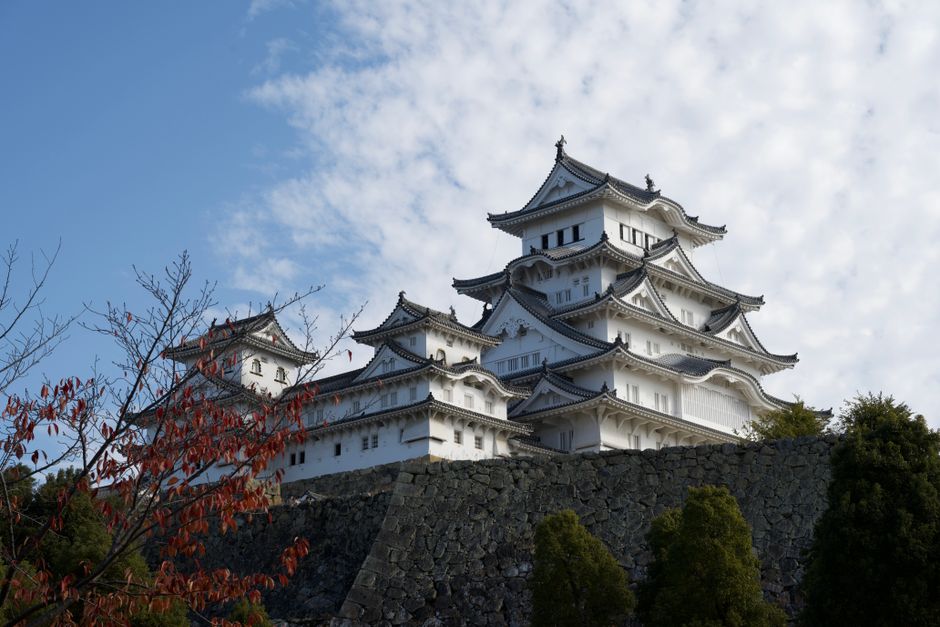
Himeji is a city of about 520,000 people in western Hyogo Prefecture, between Kobe and Okayama, and home to the finest original castle in Japan. Himeji Castle, called the “White Heron Castle” for its brilliant white plaster walls and soaring roofs, was completed in its present form in 1609 and has survived four centuries of fires, wars and the bombing of 1945 almost untouched. It was one of the first two sites in Japan inscribed on the UNESCO World Heritage List, in 1993, and is a National Treasure. Most visitors come on a day trip from Osaka, Kyoto or Kobe, but the city also has a superb Japanese garden, a mountaintop temple complex, local oden and sake, and easy access to the islands of the Seto Inland Sea. The best months are late March to May and October to November.
Right now in Himeji
- Wed 15–23°C 58–73°F Mostly clear
- Thu 13–24°C 56–75°F Clear
- Fri 17–24°C 62–75°F Clear
- Mon 12 Oct Sports Day (スポーツの日)
Weather: MET Norway (CC BY 4.0) · Sea temperature: NOAA CoastWatch · Rates: ECB · Holidays: Nager.Date
Top tours in Himeji
See all tours for Himeji →
From local operators, with prices and reviews; you check availability and book on Viator, our partner. We may earn a commission at no extra cost to you. How we earn money
Himeji at a glance
- Best for: Himeji Castle, Japanese gardens, the Engyo-ji temple on Mount Shosha, castle-town food and sake.
- How long: half a day for the castle and Koko-en; a full day with Mount Shosha; 2 days with the coast or the islands.
- Best time: late March to early April for cherry blossoms around the castle, and October to November, with highs of about 17–23 °C (63–74 °F).
- Getting there: about 1 hour by special rapid train or 30 minutes by shinkansen from Osaka; about 40 minutes by shinkansen from Kyoto.
- Getting around: walk or take a bus up the main avenue from the station to the castle; city buses for Mount Shosha.
- Fees to know: since March 1, 2026, Himeji Castle costs ¥2,500 for adults (18 and over); visitors under 18 enter free; a castle and Koko-en ticket costs ¥2,600.
- Before you go: entry rules, rail passes, money and general safety are in our Japan travel guide; combine Himeji with our Kobe, Osaka and Kyoto guides.
Himeji’s areas and where to stay
Himeji is easy to understand: from the station, the broad Otemae-dori avenue runs straight north for about 1 km (0.6 miles) to the castle, which you can see from the station’s north exit.
Around Himeji Station
The station has a terrace with a framed view of the castle, a shopping complex and the bus terminal. Most hotels are here, and it is the best base for trains to Osaka, Kobe, Okayama and Hiroshima.
Otemae-dori and the shopping arcades
The main avenue and the covered arcades of Miyuki-dori and Omizo-suji, parallel to it, have restaurants, cafés, izakaya and shops. A lively base between the station and the castle.
The castle area
The castle grounds, Koko-en garden, the Himeji City Museum of Art and the Hyogo Prefectural Museum of History. A few hotels near the castle offer views of it lit up at night.
Mount Shosha and the north
Hills about 8 km (5 miles) north of the center, with the temple complex of Engyo-ji and quiet countryside.
The coast and the Ieshima Islands
Himeji’s port at Shikama, about 15 minutes by bus from the station, has ferries to the small, quiet Ieshima Islands in the Seto Inland Sea.
Top things to see in Himeji
Himeji Castle
Himeji Castle stands on a hill about 46 m (150 ft) high, its main keep rising six stories above a stone base, linked to three smaller keeps by covered corridors. The complex is a defensive masterpiece: a maze of gates, narrowing paths and dead ends designed to confuse attackers, with walls pierced by gun and arrow holes and chutes for dropping stones. Inside the main keep, steep wooden stairs climb past massive pillars to a small shrine at the top, with views across the city. Don’t miss the long West Bailey corridor, where Princess Sen lived, and the Hyakken Roka with its exhibits.
According to the City of Himeji, since March 1, 2026, admission is ¥2,500 (about US$16) for visitors aged 18 and over, and free for anyone under 18; residents of Himeji pay ¥1,000. A combined ticket with Koko-en garden costs ¥2,600 (about US$16), and a one-year pass ¥5,000. The castle opens from 9 a.m. to 5 p.m., with last entry at 4 p.m., and closes only on December 29 and 30. To protect the building, entry to the main keep is limited to about 1,000 people an hour, so on busy days you may wait at the entrance. The city sells timed digital tickets (“Shirasagi Ticket”) online to speed up entry, though they do not guarantee priority inside. Cash, major credit cards, IC cards and several QR payments are accepted. You take off your shoes to enter the keep, and pets are no longer allowed in the paid area.
Repairs in 2026–2027: according to the city, conservation work on the Ni-no-Yagura turret, the Mizu-no-Ichimon and Mizu-no-Nimon gates and nearby walls runs from early July 2026 to about late July 2027. Scaffolding affects some views of the main keep and its evening illumination, and parts of the visiting route are narrower, but the castle remains open.
Koko-en
Next to the castle’s west moat, Koko-en is a garden of nine walled gardens in different Edo-period styles, laid out in 1992 on the site of samurai residences: a lord’s garden with a waterfall and carp pond, a tea garden, a pine garden and a bamboo garden, with the castle rising beyond. According to the garden’s operator, admission is ¥400 (about US$2.5) for adults and free for under-18s; it opens from 9 a.m. to 5 p.m. (last entry 4:30 p.m.), closing on December 29 and 30. Tea and sweets are served in the teahouse.
Engyo-ji on Mount Shosha
A thousand-year-old temple complex scattered through the forest on top of Mount Shosha, reached by a ropeway and a short walk. Its great wooden halls, the Mitsunodo, were used as a set in the film “The Last Samurai”. It is especially beautiful in the autumn leaves of November. Allow half a day, including the bus from the station.
Himeji’s museums
The Hyogo Prefectural Museum of History, by the castle, explains Japanese castles and local history, with models and costumes. The Himeji City Museum of Art, in a red-brick former army arsenal, has Japanese and European art. The Himeji City Museum of Literature is in a building by Tadao Ando.
More classic sights
- Himeji Station’s north terrace: the classic straight-on view of the castle up Otemae-dori.
- Otemon Gate and Sannomaru Square: the free outer grounds, with lawns and cherry trees around the moats.
- Senhime Peony Garden: a small garden of peonies, a short walk from the castle, best in late April and May.
- Mount Otoko: a hill west of the castle with a view across to the keep, popular at sunrise.
- Himeji Castle Night Lights: the castle is lit every evening, with special illuminations on some nights.
- Shoshazan Ropeway: the cable car to Engyo-ji, with views over the Harima plain.
Parks and gardens
- Kōko-en
Monuments
- Engyō-ji Temple
- Himeji Castle
Museums
- Himeji City Museum of Art
- Himeji City Museum of Literature
- Hyogo Prefectural Museum of History
Other sights
- Mount Shosha Ropeway
Peaks and mountains
- Mount Shosha
Other things to do in Himeji
Food and drink
Himeji’s signature dish is Himeji oden, simmered fish cakes, daikon and eggs eaten with a dipping sauce of ginger and soy sauce. Locals start the day with almond toast, thick toast spread with sweet almond butter, a Himeji café specialty. On the station platforms, try ekisoba, soba noodles in a Chinese-style broth sold since the 1940s. The Harima coast is known for anago (conger eel), oysters in winter and fine sake: the Harima region grows Yamada Nishiki, one of Japan’s most prized sake rice varieties, and several breweries nearby offer tastings. Himeji is also famous for its leather and its candy.
Crafts and shopping
Look for Myochin wind chimes, made from fire tongs, Himeji papier-mâché masks and tops, and Shosha lacquerware at the castle’s souvenir shop and in the arcades. Shops offer tax-free shopping on purchases of ¥5,000 or more; from November 1, 2026 you pay the full price and get the tax back after a customs check at the airport (see our Japan travel guide).
Festivals
The Himeji Castle Festival in early August brings a costumed parade and dancing to the main avenue. In mid-October, the Nada Fighting Festival at Matsubara Hachiman Shrine, on October 14 and 15, is one of Japan’s most dramatic, with portable shrines smashed together by teams of men. In spring, the castle grounds fill with cherry blossom picnics.
Activities and best months
- City sightseeingHimeji Castle opens 9:00-17:00 (last entry 16:00); from 1 March 2026 entry is ¥2,500 for visitors 18 and over, free for under-18s; the main keep is limited to about 1,000 visitors an hour.
Day trips from Himeji
- Kobe: the port city of Kobe beef, sake breweries and Arima Onsen, about 15 minutes by shinkansen or 40 minutes by rapid train. See our Kobe guide.
- Okayama and Kurashiki: Korakuen garden and Kurashiki’s canal-side merchant quarter, about 20 minutes by shinkansen to Okayama.
- Ako: the castle town of the 47 ronin, with a rebuilt castle and Oishi Shrine, about 30 minutes by train.
- Akashi: the fish market, octopus dumplings (akashiyaki) and views of the Akashi Kaikyo Bridge, about 30 minutes by train.
- The Ieshima Islands: small fishing islands with quiet beaches and seafood, about 30 minutes by ferry.
- Osaka and Kyoto: easy to combine with Himeji in a day of travel. See our Osaka and Kyoto guides.
Nearby destinations
Getting there and getting around
By shinkansen and train
Himeji is on the Sanyo Shinkansen, about 30 minutes from Shin-Osaka, 15 minutes from Shin-Kobe and 20 minutes from Okayama, and many Nozomi and Hikari trains stop here. The JR Kobe Line special rapid service takes about an hour from Osaka and 40 minutes from Kobe’s Sannomiya, and the private Sanyo Electric Railway runs from Kobe to Sanyo-Himeji. The Japan Rail Pass (¥50,000 (about US$316) for 7 days on the official site, as of October 2026) covers the shinkansen and JR trains. JR West’s Kansai WIDE Area Pass (¥12,000 (about US$76) for 5 days) covers the Sanyo Shinkansen between Shin-Osaka and Okayama, including Himeji, and the Kansai-Hiroshima Area Pass (¥17,000 for 5 days) extends to Hiroshima. JR West’s cheaper Kansai Area Pass, which included Himeji, went off sale on September 30, 2026 (passes bought before then can still be used), so for a single day trip from Osaka a regular ticket is often the simplest choice.
By air
The nearest airports are Kobe (about 1 hour), Itami and Kansai International (about 1.5–2 hours by train or bus), and Okayama.
Around the city
From the station, the castle is a 20-minute walk up Otemae-dori, or a short ride on a Shinki bus to the Otemon-mae stop, 5 minutes from the ticket gate. City buses run to the Shoshazan Ropeway in about 30 minutes, and bikes are available from the city’s rental stations.
When to go and how long to stay
Weather for your datesSunrise and sunset
Himeji has a mild climate on the Seto Inland Sea: cool, dry winters, a rainy early summer and hot, humid summers. The table uses the Japan Meteorological Agency’s (JMA) 1991–2020 normals for its Himeji station: average daily highs and lows, total precipitation and days with at least 0.5 mm.
| Month | Average high / low | Precipitation (days with 0.5 mm or more) | What to expect |
|---|---|---|---|
| January | 10 °C (49 °F) / 0 °C (32 °F) | 37 mm (1.5 in), 6 days | Cold and mostly dry; quiet at the castle |
| February | 10 °C (51 °F) / 0 °C (33 °F) | 49 mm (1.9 in), 7 days | Cold; plum blossoms; occasional light snow |
| March | 14 °C (57 °F) / 3 °C (38 °F) | 92 mm (3.6 in), 10 days | Warming; cherry blossoms usually open in late March |
| April | 19 °C (66 °F) / 8 °C (47 °F) | 105 mm (4.1 in), 10 days | Cherries peak early in the month; the busiest season at the castle |
| May | 24 °C (75 °F) / 14 °C (56 °F) | 127 mm (5.0 in), 10 days | Warm and pleasant; peonies; Golden Week crowds |
| June | 27 °C (80 °F) / 18 °C (65 °F) | 160 mm (6.3 in), 12 days | Rainy season usually from about June 6 |
| July | 30 °C (87 °F) / 23 °C (73 °F) | 184 mm (7.3 in), 11 days | Hot and humid; rainy season usually ends around July 19 |
| August | 32 °C (90 °F) / 24 °C (75 °F) | 105 mm (4.1 in), 8 days | The hottest month; Himeji Castle Festival early in the month |
| September | 29 °C (83 °F) / 20 °C (68 °F) | 178 mm (7.0 in), 10 days | Hot early in the month; typhoons possible |
| October | 23 °C (74 °F) / 13 °C (56 °F) | 109 mm (4.3 in), 8 days | Comfortable and dry; Nada Fighting Festival on October 14 and 15 |
| November | 17 °C (63 °F) / 7 °C (45 °F) | 61 mm (2.4 in), 6 days | Cool and clear; autumn leaves at Engyo-ji and Koko-en |
| December | 12 °C (53 °F) / 2 °C (36 °F) | 48 mm (1.9 in), 6 days | Cold and dry; maples linger early in the month |
Himeji gets about 1,250 mm (49 in) of precipitation a year, one of the drier climates in Japan, with the most rain in June, July and September. The JMA’s normal rainy season for the Kinki region runs from about June 6 to July 19; in 2026 it ran from about June 2 to July 9. Snow is rare; the JMA’s normal for the deepest snow of the season is only about 5 cm (2 in). Summer days often top 32 °C (90 °F), and the castle’s upper floors have no air conditioning, so go early.
Weather month by month
Typhoons: according to the JMA’s 1991–2020 normals, about three typhoons a year come close to the Kinki region, most often from August to October. They can stop trains and close the castle for a day.
Cherry blossoms and fall colors: the JMA no longer observes cherry trees in Himeji; at its Kobe station, the nearest, the normal date for the first blossoms is March 27, with full bloom around April 5, the same dates as in 2026. The castle grounds, with about 1,000 cherry trees, are among the most famous viewing spots in Japan. Autumn colors peak in mid to late November at Engyo-ji and Koko-en.
Crowds: Himeji Castle is busiest in the cherry blossom season, Golden Week, and weekends in spring and fall. Arrive at 9 a.m. opening, or after 2 p.m. when tour groups thin out, and buy a timed digital ticket in peak periods.
Half a day in Himeji
Walk up Otemae-dori, explore the castle and its main keep, which takes about 2 hours, then stroll through Koko-en and have tea in the teahouse before heading on to Kobe, Okayama or Hiroshima.
A full day with Mount Shosha
Add the bus and ropeway to Engyo-ji in the afternoon, and finish with Himeji oden and local sake in the arcades. With a second day, take the ferry to the Ieshima Islands or visit Ako.
Where to stay in Himeji and accommodation taxes
- Himeji Station: business and chain hotels, some with castle views from the upper floors; best for trains.
- Otemae-dori: mid-range hotels between the station and the castle, close to restaurants.
- Near the castle: a few hotels and guesthouses with views of the illuminated keep.
- Shosha and the countryside: temple lodging (shukubo) at Engyo-ji for a quiet night.
As of October 2026, neither the City of Himeji nor Hyogo Prefecture charges an accommodation tax, so the room price you see is what you pay, apart from the 10% consumption tax that is usually included. Hot spring hotels in the region add a small bathing tax.
What a trip to Himeji costs
Money exchange (JPY)Tip calculator
Prices are approximate, for October 2026, converted at about ¥158 to the US dollar.
| Item | Typical cost |
|---|---|
| Himeji Castle, adults 18 and over | ¥2,500 (about US$16); free under 18 |
| Himeji Castle and Koko-en combined ticket | ¥2,600 (about US$16) |
| Koko-en only | ¥400 (about US$2.5) |
| Shoshazan Ropeway, round trip | about ¥1,000–1,200 (about US$6.3–7.6) |
| Bowl of ekisoba on the platform | ¥450–600 (about US$2.8–3.8) |
| Himeji oden and sake in an izakaya | ¥2,500–5,000 (about US$16–32) |
| JR special rapid from Osaka, one way | about ¥1,500–1,600 (about US$9.5–10) |
| Business hotel double, per night | ¥8,000–16,000 (about US$51–101) |
Practical tips for Himeji
- Buy a timed ticket: in spring and on holidays, the castle’s digital ticket gets you through the gate faster.
- Expect stairs: the main keep’s stairs are steep and narrow, with no elevator; carry a bag for your shoes (the castle hands out shoulder bags at the entrance) and wear socks.
- Free guides: volunteer guides in English often wait just inside the entrance; Japanese-speaking guides can be booked at the ticket gate for a fee.
- Store your luggage: use the coin lockers at the station or the delivery services, as large bags are a struggle inside the castle.
- Departure tax: since July 2026, Japan’s International Tourist Tax is ¥3,000 per departure, usually included in your air fare (tickets issued by June 30, 2026 keep the old ¥1,000).
- Visitor hotline: the JNTO’s Japan Visitor Hotline, 050-3816-2787, answers in English 24 hours a day.
Safety
Himeji is a very safe city. Inside the castle, take care on the steep wooden stairs and slippery polished floors, and don’t let children climb on walls or railings. In summer, heat is a real risk: the city publishes heatstroke warnings, the keep is hot and airless, so bring water and take breaks in the shade. Natural hazards include typhoons and heavy rain from June to October, and earthquakes: the region was hit by the Great Hanshin Earthquake in 1995, centered near Kobe. If you feel strong shaking, follow staff instructions and keep the JNTO’s Safety Tips app on your phone. In an emergency, call 110 for the police or 119 for an ambulance or fire.
What to pack for Himeji
Slip-on shoes and clean socks for the castle keep, a hat, sunscreen and a water bottle in summer, a folding umbrella in the rainy season, and warm layers in winter, when the keep is unheated. Japan uses 100 V and two-pin type A plugs like the US.
What to pack
- City walking shoesLisbon and Porto are steep, with polished limestone cobbles that get slippery, so grippy soles matter.
- Day packs and anti-theft bagsA small zipped or anti-theft bag makes crowded trams and viewpoints less stressful.
- Rain jacketsFrom October to April Porto and Lisbon see rain on roughly a third of days.
- Travel adapters and convertersPortugal uses Type C and F sockets at 230 V, so most visitors from outside Europe need an adapter.
Himeji travel FAQ
How much is Himeji Castle?
¥2,500 for visitors aged 18 and over since March 1, 2026; entry is free for anyone under 18. Residents of Himeji pay ¥1,000.
What are Himeji Castle’s opening hours?
9 a.m. to 5 p.m., with last entry at 4 p.m.; the castle closes only on December 29 and 30.
Is there a combined ticket for Himeji Castle and Koko-en?
Yes, ¥2,600 for adults; Koko-en alone costs ¥400.
How long do I need at Himeji Castle?
About 2 hours for the grounds and the main keep, more on busy days when entry to the keep is limited; add an hour for Koko-en.
Is Himeji Castle under repair?
Part of it is: conservation work on the Ni-no-Yagura turret and nearby gates runs from July 2026 to about July 2027, with scaffolding near the main keep, but the castle stays open.
How do I get to Himeji from Osaka or Kyoto?
By shinkansen in about 30 minutes from Shin-Osaka or 40–50 minutes from Kyoto, or by JR special rapid train in about an hour from Osaka.
Does the JR Pass cover the trip to Himeji?
Yes, the Japan Rail Pass covers the shinkansen and JR trains; the Kansai WIDE Area Pass also covers Himeji.
When is the best time to see cherry blossoms at Himeji Castle?
Usually from late March to early April; around the nearby JMA station in Kobe, full bloom normally falls around April 5.
Is Himeji Castle original?
Yes. Its main keep and many buildings date from the early 17th century, and the castle survived the bombing of 1945; it was restored from 2009 to 2015.
Is Himeji worth an overnight stay?
A day trip is enough for the castle, but staying lets you see it lit up at night, visit Mount Shosha and enjoy Himeji oden and sake in the evening.
Plan your trip
Partner links: TravelerCenter may earn a commission if you book, at no extra cost to you.
🇯🇵 Useful Japanese phrases for Himeji
All 38 Japanese phrases: restaurant, hotel, emergencies, romance (printable) →
Sources · last reviewed 4 October 2026
Researched and last reviewed on 4 October 2026. Himeji Castle fees from March 1, 2026, hours, closing days, entry limits, payment methods, digital tickets and the 2026–2027 repairs: the City of Himeji (Himeji Castle Management Office); Koko-en fees and hours: Koko-en (Himeji City); JR West passes: JR West; JR Pass: the official Japan Rail Pass website; climate normals, rainy season, typhoon statistics and cherry blossom dates: the Japan Meteorological Agency (JMA); tax-free shopping: the Japan Tourism Agency; visitor hotline: JNTO; exchange rate: the US Federal Reserve. Population, history, sight descriptions, journey times, festival dates, the absence of an accommodation tax, other admission prices and typical prices are general references or estimates, flagged for checking. Prices and hours change, so check the official sites before you go. For entry rules, money and general safety, see our Japan travel guide.
Also: city.himeji.lg.jp · JMA normals 1991–2020, Himeji (climate)
Place data: © OpenStreetMap contributors (ODBL) · Wikidata (CC0)