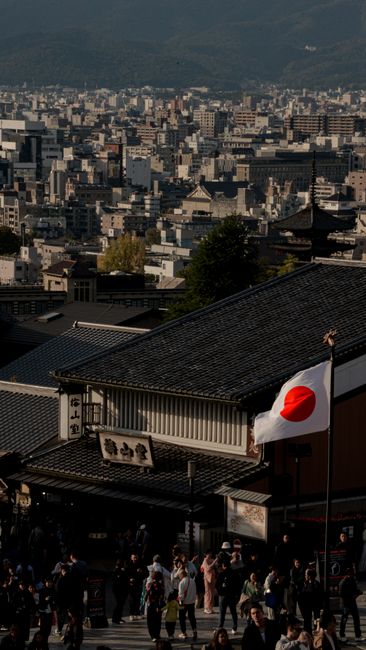
Kyoto was Japan’s imperial capital for more than a thousand years, and it still holds the country’s greatest concentration of temples, shrines, gardens and old wooden streets: about 1,600 temples, 17 places on the UNESCO World Heritage list, the geisha district of Gion and the tea houses of Higashiyama. Come for Fushimi Inari’s tunnels of red gates, the golden pavilion of Kinkaku-ji, the bamboo grove of Arashiyama and the quiet of a Zen rock garden early in the morning, and for some of Japan’s finest food. Kyoto is also very busy, so plan early starts and some less famous sights. The best seasons are spring (late March to May) and fall (October to early December), when the cherry blossoms and maples peak; summers are hot and humid, and winters cold but quiet.
Right now in Kyoto
- Wed 14–22°C 58–71°F Mostly clear
- Thu 12–24°C 54–76°F Clear
- Fri 16–26°C 60–78°F Clear
- Mon 12 Oct Sports Day (スポーツの日)
Weather: MET Norway (CC BY 4.0) · Air quality: OpenAQ · Rates: ECB · Holidays: Nager.Date
Top tours in Kyoto
See all tours for Kyoto →
From local operators, with prices and reviews; you check availability and book on Viator, our partner. We may earn a commission at no extra cost to you. How we earn money
Kyoto at a glance
- Best for: temples, shrines and gardens, traditional streets and crafts, tea, kaiseki cuisine, cherry blossoms and fall colors.
- How long: 3–4 days for the classic sights; 5 or more with day trips to Nara, Uji or Osaka.
- Best time: late March to early April and November, with highs of about 14–20 °C (57–68 °F); go in January, February or June for fewer crowds.
- Getting there: about 2 hours 15 minutes from Tokyo by Nozomi shinkansen; about 75 minutes from Kansai Airport (KIX) by the JR Haruka express.
- Getting around: subway, JR and private trains, city buses (often crowded), bicycles and walking; pay with an IC card.
- Fees to know: Kyoto’s accommodation tax rose on March 1, 2026 and now runs from ¥200 to ¥10,000 per person per night, depending on the room rate.
- Before you go: entry rules, the JR Pass, money and general safety are in our Japan travel guide; see also our Osaka and Nara guides.
Kyoto’s areas and where to stay
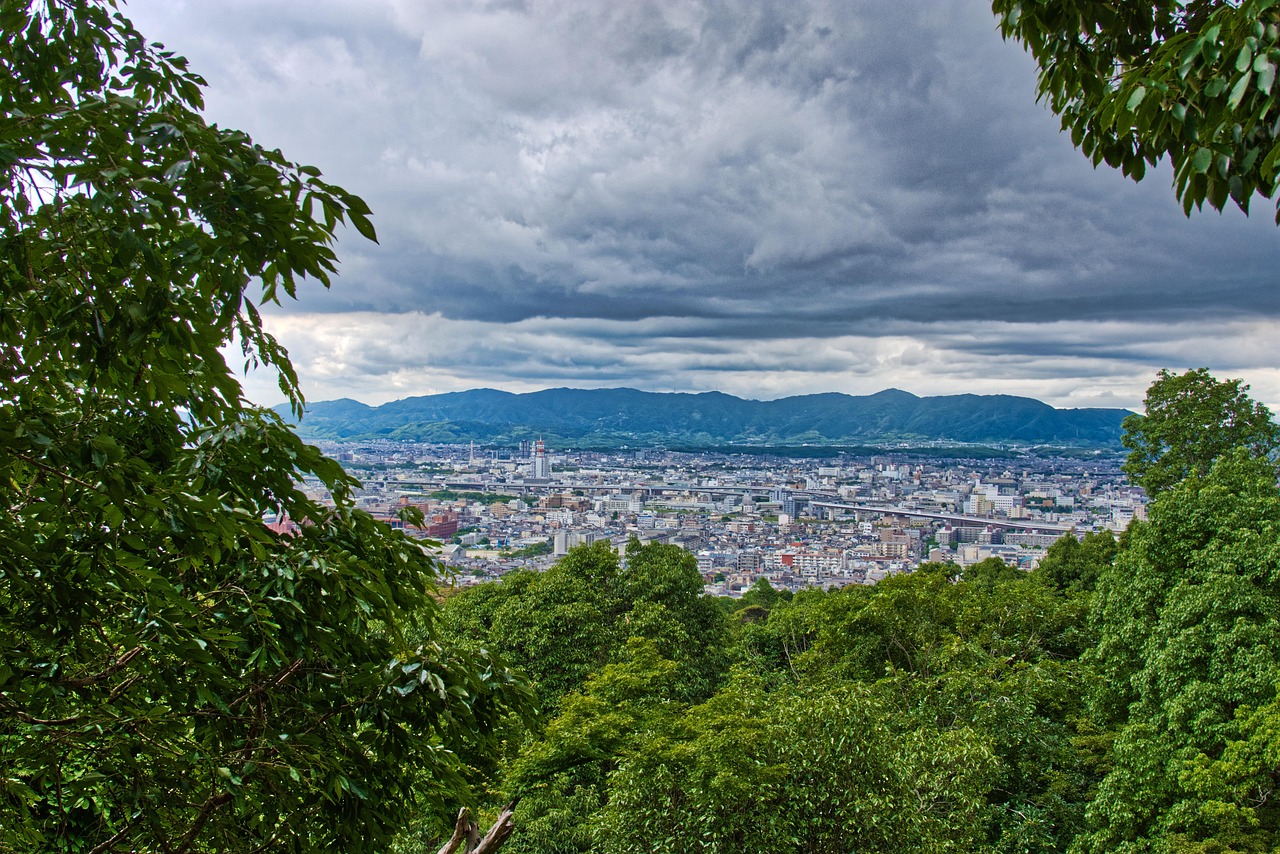
Central Kyoto lies in a flat valley ringed by wooded hills on three sides, with the Kamo River running north to south. The streets form a grid, so it is easy to find your way; most sights are on the edges, at the foot of the hills.
Downtown (Kawaramachi, Shijo and Karasuma)
The commercial center, with Nishiki Market, department stores, the covered shopping arcades and the restaurants of Pontocho alley by the river. The best base for most visitors: central, full of places to eat, and well served by trains and buses.
Gion and Higashiyama
The old east side: Gion’s teahouses and Hanamikoji Street, Yasaka Shrine, the stone lanes of Ninenzaka and Sannenzaka up to Kiyomizu-dera, and the Philosopher’s Path further north. Atmospheric and walkable, with ryokan inns and boutique hotels, but very crowded by day.
Around Kyoto Station
Modern and practical, with the shinkansen, the Haruka to Kansai Airport, the bus terminal and many chain hotels. Good for short stays and day trips, less charming for evenings; To-ji temple and Sanjusangendo are nearby.
Arashiyama and northern Kyoto
Arashiyama, in the western hills, has the bamboo grove, Tenryu-ji and riverside inns; it is magical in the evening once day-trippers leave. North-west Kyoto has Kinkaku-ji, Ryoan-ji and Daitoku-ji, and the mountain villages of Kurama and Kibune are a short train ride north.
Top things to see in Kyoto
Most temples charge a few hundred yen and many close around 4:30 or 5 p.m., earlier in winter; shrines are usually free. Arrive at opening time for the famous ones.
Fushimi Inari Taisha
The head shrine of Inari, god of rice and business, with thousands of red torii gates donated by companies and families climbing the slopes of Mount Inari. The shrine is free and open 24 hours. The crowds thin out after the first viewpoint at Yotsutsuji, about 30 to 45 minutes’ climb; the full loop to the summit takes two to three hours. It is next to JR Inari Station, five minutes from Kyoto Station.
Kiyomizu-dera
A temple on the eastern hills famous for its huge wooden stage, built without nails and projecting over the trees, with views across the city. Walk up through the old lanes of Sannenzaka and Ninenzaka, and visit at opening time or for the evening illuminations in spring and fall.
Kinkaku-ji, the Golden Pavilion
A three-story pavilion covered in gold leaf, reflected in its pond: Kyoto’s most photographed sight. According to the temple, it opens daily from 9 a.m. to 5 p.m., and entry costs ¥500 (about US$3.2) for adults as of October 2026. Combine it with Ryoan-ji’s famous rock garden, a 20-minute walk away.
Arashiyama
The towering bamboo grove is best before 8 a.m. Nearby are Tenryu-ji’s garden, the Togetsukyo bridge over the river, the monkey park on Mount Iwata and, in summer, cormorant fishing. The Sagano scenic train and boat trips down the Hozu River gorge are popular in the fall.
Gion and Higashiyama
Walk Hanamikoji Street and the Shirakawa canal at dusk, when you may glimpse a geiko or maiko on her way to an appointment. Do not follow, touch or photograph them without permission, and respect the signs banning photography in the private lanes off Hanamikoji. Yasaka Shrine, at the top of Shijo-dori, is free and lit at night.
Nijo Castle and the Imperial Palace
Nijo Castle, built for the first Tokugawa shogun, has painted rooms and “nightingale floors” that squeak to warn of intruders. The Kyoto Imperial Palace, in the large Kyoto Gyoen park, is free to visit on most days without booking.
More classic sights
- Ginkaku-ji and the Philosopher’s Path: the Silver Pavilion and its sand garden, then a 2 km (1.2-mile) canal-side walk south past smaller temples to Nanzen-ji.
- Sanjusangendo: a long hall with 1,001 statues of the Buddhist goddess of mercy.
- To-ji: a five-story pagoda, the tallest wooden tower in Japan, with a big flea market on the 21st of each month.
- Nishiki Market: a narrow covered market of pickles, tofu, sweets and knives; eat at the stalls, not while walking.
- Daitoku-ji: a complex of Zen sub-temples with some of Kyoto’s finest dry gardens.
Churches and cathedrals
- Yasaka Shrine
Palaces
- Kyoto Imperial Palace
Monuments
- Fushimi Inari-taisha
- Ginkaku-ji Temple
- Kinkaku-ji Temple
- Kiyomizu-dera
- Nijō Castle
- Ryōan-ji Temple
- Tenryū-ji Temple
Nature
- Sagano Bamboo Forest
Other things to do in Kyoto
Food and drink
Kyoto’s cooking is delicate and seasonal: multi-course kaiseki, shojin ryori (Buddhist vegetarian food) near the big temples, yudofu (simmered tofu) around Nanzen-ji and Arashiyama, obanzai home-style dishes, and wagashi sweets with matcha green tea. In summer, restaurants along the Kamo River build wooden platforms (kawayuka) over the water, and in Kibune they serve meals over the stream. Book well-known restaurants ahead; many small ones close one or two days a week.
Tea, crafts and gardens
Join a tea ceremony, try making sweets or pottery, or visit a sake brewery in Fushimi. Some of the most famous gardens, such as Saiho-ji (the moss temple) and the imperial villas of Katsura and Shugakuin, need advance reservations, the villas through the Imperial Household Agency.
Festivals
The Aoi Matsuri (May 15), the month-long Gion Matsuri in July with its float parade on July 17, the Gozan Okuribi bonfires on the mountains on August 16, and the Jidai Matsuri (October 22) are the biggest. Hotels fill up for all of them.
Activities and best months
- City sightseeingKinkaku-ji, the Golden Pavilion, opens daily 9:00-17:00; adults ¥500, according to the temple (Shokoku-ji). · source
Day trips from Kyoto
- Nara: giant Buddha at Todai-ji, Kasuga Taisha and the deer of Nara Park, about 35–45 minutes by Kintetsu or JR. See our Nara guide.
- Osaka: street food in Dotonbori, Osaka Castle and nightlife, 15 to 30 minutes by train. See our Osaka guide.
- Uji: green tea and the Byodo-in temple pictured on the ¥10 coin, about 20–30 minutes by JR or Keihan.
- Himeji Castle: Japan’s finest original castle, about 45 minutes by shinkansen.
- Kurama and Kibune: forest temples and a mountain walk between two villages, an hour north on the Eizan railway.
- Hiroshima and Miyajima: a long but popular day by shinkansen, better as an overnight trip. See our Hiroshima guide.
Nearby destinations
Getting there and getting around
From Kansai Airport and by shinkansen
Most international flights land at Kansai International Airport (KIX), south of Osaka. JR’s Haruka limited express runs direct to Kyoto Station in about 75 minutes; airport limousine buses also run to Kyoto Station. Osaka’s Itami Airport (domestic flights) has buses to Kyoto in about 55 minutes. From Tokyo, the Tokaido Shinkansen takes about 2 hours 15 minutes by Nozomi.
Rail passes
The nationwide Japan Rail Pass (¥50,000 (about US$315) for 7 days on the official site, as of October 2026) covers the Hikari and Kodama shinkansen from Tokyo and the Haruka; to ride a Nozomi you need an extra ticket, ¥4,960 (about US$31) from Tokyo to Kyoto. If you are only exploring the Kansai region, JR West’s passes are far cheaper. Its popular Kansai Area Pass stopped selling on September 30, 2026; as of October 2026 the choices are the Kansai Mini Pass, ¥3,000 (about US$19) for 3 days on JR rapid and local trains around Kyoto, Osaka, Kobe and Nara (the Haruka needs an extra ticket), and the Kansai WIDE Area Pass, ¥12,000 (about US$76) for 5 days, which adds reserved seats on the Haruka and other limited expresses and the shinkansen from Shin-Osaka to Okayama.
Buses, subway and bikes
Kyoto’s city buses reach almost every sight but are slow and packed at peak times, especially routes to Kiyomizu-dera and Kinkaku-ji. Use trains where you can: the Karasuma and Tozai subway lines, the Keihan line along the east side, the Hankyu line downtown, JR to Fushimi Inari and Arashiyama, and the Randen tram to Arashiyama. Pay with an IC card. Kyoto is flat and good for cycling; park only in official bicycle parking, because bikes left on the street are removed. For ideas, see our cycling guide.
When to go and how long to stay
Kyoto sits in a basin, so its summers are hotter and its winters colder than Osaka’s. The table uses the Japan Meteorological Agency’s (JMA) 1991–2020 normals for its Kyoto station: average daily highs and lows, total rain and days with at least 1 mm of rain.
| Month | Average high / low | Rain (days with 1 mm or more) | What to expect |
|---|---|---|---|
| January | 9 °C (48 °F) / 2 °C (35 °F) | 53 mm (2.1 in), 6 days | Cold and quiet; the cheapest month; New Year visits to shrines |
| February | 10 °C (50 °F) / 2 °C (35 °F) | 65 mm (2.6 in), 7 days | Coldest nights, occasional snow on temple roofs; plum blossoms |
| March | 14 °C (57 °F) / 4 °C (40 °F) | 106 mm (4.2 in), 10 days | Cherry blossoms usually open around Mar 26 (JMA normal) |
| April | 20 °C (68 °F) / 9 °C (49 °F) | 117 mm (4.6 in), 9 days | Full bloom around early April; peak crowds and hotel prices |
| May | 25 °C (77 °F) / 14 °C (58 °F) | 151 mm (6.0 in), 10 days | Fresh green maples; Golden Week crowds early in the month; Aoi Matsuri |
| June | 28 °C (83 °F) / 19 °C (67 °F) | 200 mm (7.9 in), 12 days | Rainy season usually from about June 6 (JMA normal for Kinki); iris and hydrangea |
| July | 32 °C (90 °F) / 24 °C (74 °F) | 224 mm (8.8 in), 12 days | Hot and humid; rainy season usually ends around July 19; Gion Matsuri |
| August | 34 °C (93 °F) / 25 °C (76 °F) | 154 mm (6.1 in), 8 days | The hottest month; Gozan Okuribi on Aug 16 |
| September | 29 °C (85 °F) / 21 °C (69 °F) | 178 mm (7.0 in), 10 days | Hot early in the month; typhoons possible |
| October | 23 °C (74 °F) / 14 °C (58 °F) | 143 mm (5.6 in), 8 days | Comfortable and dry; Jidai Matsuri on Oct 22 |
| November | 17 °C (63 °F) / 8 °C (47 °F) | 74 mm (2.9 in), 6 days | Peak maple season from mid- to late November; very busy |
| December | 12 °C (53 °F) / 4 °C (38 °F) | 57 mm (2.3 in), 7 days | Colors linger early in the month; cold, clear and quieter |
Kyoto gets about 1,520 mm (60 in) of rain a year, mostly from June to September. The JMA’s normal rainy season for the Kinki region runs from about June 6 to July 19; in 2026 it ran from about June 2 to July 9. Summer highs of 32–34 °C (90–93 °F) feel oppressive in the humidity, so plan sightseeing early and late in the day.
Weather month by month
Averages from JMA normals 1991–2020, Kyoto · Last reviewed 5 Oct 2026
Cherry blossoms and fall colors: the JMA’s normal date for the first cherry blossoms in Kyoto is March 26, with full bloom around April 4; in 2026 they opened on March 23. The maples at the JMA’s Kyoto station normally turn around December 5, but the famous temple gardens on the hills usually peak from mid-November to early December.
Crowds: Kyoto is most crowded in the cherry blossom weeks, Golden Week, and November. Go to the big sights at opening time, visit gardens in the late afternoon, and stay in the evening, when day-trippers leave.
3 days in Kyoto
Day one, Fushimi Inari at dawn, then Sanjusangendo, Kiyomizu-dera and the lanes of Higashiyama to Gion at dusk. Day two, Kinkaku-ji, Ryoan-ji and Daitoku-ji, then Nishiki Market and dinner in Pontocho. Day three, Arashiyama’s bamboo grove at 7:30 a.m., Tenryu-ji and the river, then Ginkaku-ji and the Philosopher’s Path in the afternoon.
5 days with day trips
Add a day in Nara, and half-days in Uji and Fushimi’s sake district, or the mountain walk from Kurama to Kibune.
Where to stay in Kyoto and the accommodation tax
- Downtown (Shijo and Kawaramachi): the most convenient base, with every type of hotel and lots of restaurants.
- Gion and Higashiyama: ryokan and boutique hotels in the old streets, quiet once the crowds leave.
- Kyoto Station: chain and business hotels, best for day trips and early trains.
- Arashiyama: riverside ryokan and hot spring inns for a slower stay.
Staying in a ryokan, with tatami rooms, futons and a multi-course dinner and breakfast, is one of Kyoto’s great experiences; prices usually include meals and are quoted per person.
Kyoto city charges an accommodation tax on every guest at every type of lodging, based on the room-only rate per person per night (meals and consumption tax excluded). According to the City of Kyoto, the rates since March 1, 2026 are:
| Room rate per person per night | Tax per person per night |
|---|---|
| under ¥6,000 | ¥200 (about US$1.3) |
| ¥6,000 to ¥19,999 | ¥400 (about US$2.5) |
| ¥20,000 to ¥49,999 | ¥1,000 (about US$6.3) |
| ¥50,000 to ¥99,999 | ¥4,000 (about US$25) |
| ¥100,000 or more | ¥10,000 (about US$63) |
Hot spring inns may also add a small bathing tax.
What a trip to Kyoto costs
Prices are approximate, for October 2026, converted at about ¥158 to the US dollar.
| Item | Typical cost |
|---|---|
| Temple entry (Kinkaku-ji) | ¥500 (about US$3.2) |
| Fushimi Inari, Yasaka Shrine, Imperial Palace | free |
| City bus or short subway ride | ¥230–260 (about US$1.5–1.6) |
| Set lunch, noodles or obanzai | ¥1,200–2,500 (about US$7.6–16) |
| Kaiseki dinner | ¥10,000–30,000 (about US$63–190) |
| Matcha and sweet at a tea house | ¥800–1,500 (about US$5.1–9.5) |
| Business hotel double, per night | ¥12,000–25,000 (about US$76–160) |
| Ryokan with dinner and breakfast, per person | ¥25,000–60,000 (about US$160–380) |
Practical tips for Kyoto
- Start early: the big sights are calmest from opening time until about 9 a.m.
- Luggage: large suitcases are a burden on buses; use lockers or the hands-free luggage counters at Kyoto Station, or send bags ahead.
- Gion manners: no photos in the posted private lanes, and give geiko and maiko space.
- Cash: smaller temples and some restaurants take cash only.
- Visitor hotline: the JNTO’s Japan Visitor Hotline, 050-3816-2787, answers in English 24 hours a day.
Safety
Kyoto is very safe; the main problems are crowds and heat. Heat from July to early September is intense, so carry water and rest in the shade. Typhoons, most likely from August to October, can halt trains for a day. Japan is earthquake country: if you feel strong shaking, take cover and follow staff instructions, and keep the JNTO’s Safety Tips app on your phone. Watch your step on wet stone paths and steep temple stairs. In an emergency, call 110 for the police or 119 for an ambulance or fire.
What to pack for Kyoto
Comfortable shoes you can slip off quickly at temples, socks, a hat and a folding umbrella, light clothes for summer and warm layers for winter, when unheated temple halls are cold. Japan uses 100 V and two-pin type A plugs like the US.
What to pack
- City walking shoesLisbon and Porto are steep, with polished limestone cobbles that get slippery, so grippy soles matter.
- Day packs and anti-theft bagsA small zipped or anti-theft bag makes crowded trams and viewpoints less stressful.
- Rain jacketsFrom October to April Porto and Lisbon see rain on roughly a third of days.
- Travel adapters and convertersPortugal uses Type C and F sockets at 230 V, so most visitors from outside Europe need an adapter.
Kyoto travel FAQ
How many days do I need in Kyoto?
Three days for the classic sights at a comfortable pace, four or five to add Nara, Uji or a slower day in the gardens.
How do I avoid the crowds in Kyoto?
Go to Fushimi Inari, Kiyomizu-dera and Arashiyama at or before opening time, visit in January, February or June, and explore smaller temples in the afternoon.
How much is Kyoto’s accommodation tax?
Since March 1, 2026 it is ¥200 per person per night for rooms under ¥6,000, ¥400 up to ¥19,999, ¥1,000 up to ¥49,999, ¥4,000 up to ¥99,999 and ¥10,000 from ¥100,000.
When do the cherry blossoms bloom in Kyoto?
The JMA’s normal date for the first blossoms is March 26, with full bloom around April 4; the best week usually falls between late March and early April.
When are Kyoto’s fall colors best?
Usually from mid-November to early December, starting in the northern hills and finishing in the city center.
How much is Kinkaku-ji?
¥500 (about US$3.2) for adults as of October 2026, open daily from 9 a.m. to 5 p.m.
Which rail pass is best for Kyoto?
For Kansai only, JR West’s Kansai Mini Pass (¥3,000 for 3 days) or Kansai WIDE Area Pass (¥12,000 for 5 days, including the Haruka). The old Kansai Area Pass stopped selling on September 30, 2026.
Can I take photos in Gion?
On the main streets, yes, but not in the private lanes marked with no-photo signs, and never chase or block geiko and maiko.
Is it better to stay in Kyoto or Osaka?
Stay in Kyoto to enjoy the temples early and the old streets at night; Osaka is cheaper and livelier, and only 15 to 30 minutes away by train.
How do I get from Kansai Airport to Kyoto?
Take JR’s Haruka limited express, about 75 minutes to Kyoto Station, or an airport limousine bus.
Sources
- © OpenStreetMap contributors · ODbL · fetched 5 Oct 2026
- Wikidata · CC0 · fetched 5 Oct 2026
Sources and last review
Researched and last reviewed on 4 October 2026. Accommodation tax: the City of Kyoto; Kinkaku-ji hours and fee: Rokuon-ji (Shokoku-ji); climate normals, rainy season, cherry blossom and maple dates: the Japan Meteorological Agency (JMA); JR Pass and Nozomi ticket: the official Japan Rail Pass website; Kansai Mini and WIDE passes: JR West; tax-free shopping: the Japan Tourism Agency; visitor hotline: JNTO; exchange rate: the US Federal Reserve. Journey times, sight descriptions, festival dates, bus fares and typical prices are general references or estimates, flagged for checking. Prices and hours change, so check the official sites before you go. For entry rules, money and general safety, see our Japan travel guide.
Plan your trip
Partner links: TravelerCenter may earn a commission if you book, at no extra cost to you.
🇯🇵 Useful Japanese phrases for Kyoto
All 38 Japanese phrases: restaurant, hotel, emergencies, romance (printable) →